The click beetle, belonging to the Elateridae family, showcases over 9,000 species, with sizes ranging from 2.5 to 60 mm. These beetles exhibit distinctive elongated bodies and possess a unique clicking mechanism facilitated by a specialized ventral spine. Click beetles play essential ecological roles, aiding in pollination, enriching soil health through their larvae—known as wireworms—and contributing to plant diversity. Their delicate presence often indicates environmental health. However, habitat loss and pesticide use threaten their populations, urging conservation efforts. Exploring their fascinating behaviors and survival strategies reveals deeper insights into their crucial contributions to ecosystems.
Main Points
- Click beetles belong to the Elateridae family, which includes over 9,000 species, ranging in size from 2.5 to 60 mm.
- They have a unique clicking mechanism enabled by a specialized prosternal spine, which aids in flipping themselves upright.
- Larvae, known as wireworms, have a hard exoskeleton and contribute to soil aeration and nutrient recycling.
- Click beetles play a crucial role in pollination, helping to enhance food production and biodiversity in ecosystems.
- Current threats to their populations include habitat loss, climate change, and pesticide use, necessitating conservation efforts.
Profile
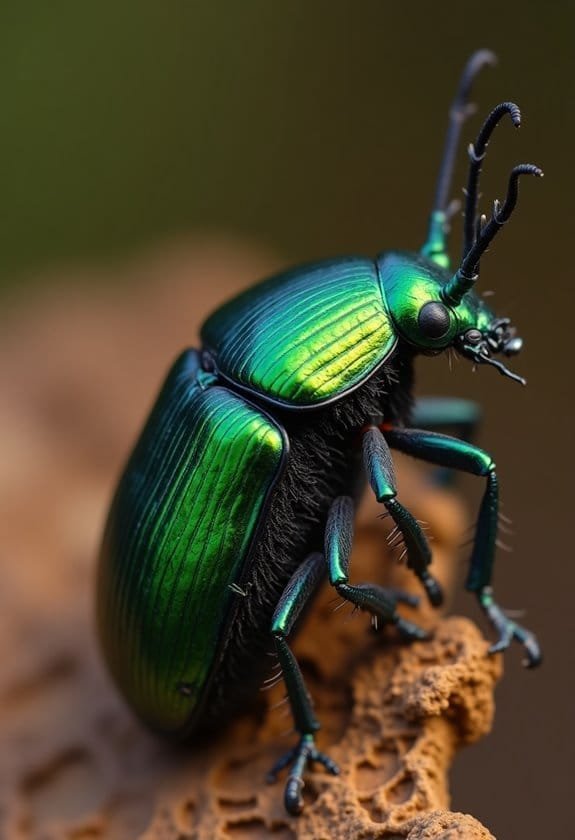
The Elateridae family, widely known as click beetles, boasts over 9,000 described species, each exhibiting unique physical features within their elongated forms. Several characteristics set click beetles apart from other insects, such as their ability to produce an audible clicking sound when they flip themselves into the air. This mechanism serves as a defense mechanism against predators. In addition, click beetles are often mistaken for scarab beetles due to their similar appearance, but they can be distinguished by their unique clicking behavior. When compared to scarab beetle facts, click beetles have a distinct adaptation that sets them apart in the insect world.
Ranging from 2.5 to 18 mm, these beetles often display muted browns or blacks, though some vibrant tropical varieties captivate with their stunning colors.
As significant pollinators, they share similarities with other insects, enhancing ecosystems by supporting plant reproduction while simultaneously participating in essential soil functions.
Common/Scientific Names
Click beetles belong to the scientific family Elateridae, a name rooted in the Greek word ἐλατήρ, which translates to "one who drives or pushes." With over 9,000 species categorized globally, this family showcases remarkable diversity. The term "click beetle" vividly depicts their distinctive behavior; these beetles can produce a clicking sound by snapping their bodies, allowing them to flip themselves upright when flipped over, or to escape predators.
Among the various genera within Elateridae, *Alaus* stands out with species like the Eyed elator (*Alaus oculatus*), known for its impressive size and striking patterns.
Additionally, some members of this fascinating family, particularly those in the genus *Pyrophorus*, exhibit bioluminescence, emitting light from specialized organs that captivate observers, adding an enchanting element to their natural allure.
The naming conventions for click beetles often reflect their behaviors or appearances, further illustrating the connection between biological characteristics and their common names.
As nature's skilled navigators and defenders, click beetles highlight the intricate relationships within ecosystems, and their nomenclature serves as a fascinating entry point into their rich biology.
Key Physical Features
Belonging to the family Elateridae, click beetles showcase several key physical features that contribute to their unique behavior and adaptability. Ranging in size from 2.5 to 18 mm in length, with some exceptional species reaching up to 60 mm, these insects exhibit bodies that are elongated and parallel-sided. Their coloration typically leans towards muted browns and blacks; however, certain tropical varieties proudly sport vivid colors or even bioluminescence.
One of the most intriguing aspects of click beetles is their unique clicking mechanism, a fascinating adaptation that resides in the thorax. This mechanism utilizes a specialized prosternal spine, enabling them to produce a distinctive clicking noise while flipping into the air when threatened. This act serves as an impressive escape tactic.
Additionally, their well-developed eyes and sensitive antennae play a vital role in their nocturnal activities, guiding them towards light sources.
The larvae, known as wireworms, complement this family's adaptive traits, possessing a hard exoskeleton and slender, cylindrical shape that allows efficient burrowing into soil and decaying wood. These features illustrate the remarkable versatility within the Coleoptera: Elateridae lineage.
Similar Pollinators
Pollinators like bees, butterflies, and certain beetles share similar habitats with click beetles, often thriving in moist environments rich with decaying organic matter. These ecosystems not only support diverse life forms but are also vital for the proliferation of flowering plants, as nearly all pollinators facilitate reproduction through pollen transfer.
Certain beetle species in the Scarabaeidae family foster mutualistic relationships with plants, further enhancing biodiversity in these habitats, much like click beetles do by improving soil health and aeration. Additionally, plants like Salad Burnet support these relationships by providing crucial nectar and pollen sources, which are essential for many pollinators. White clover's nitrogen-fixing capabilities also contribute to soil fertility in these rich ecosystems.
Though click beetles aren't primary pollinators, they subtly support pollination networks by serving as a food source for birds and other insects that actively engage in pollination. This interconnectedness illustrates the delicate balance within ecosystems.
Regrettably, both click beetles and their pollinator counterparts face significant pressures from pesticide use and habitat destruction.
These threats underscore the urgent need for integrated pest management and conservation initiatives, ensuring the survival of these species and the ecosystems they inhabit. Protecting these pollinators is essential, not only for biodiversity but also for maintaining the functionality and resilience of natural environments.
Pollination Role
Click beetles play an essential role in the pollination of various plants and crops, particularly as some species forage on nectar and pollen during their nighttime activities.
Their seasonal presence aligns with the flowering periods of many plants, optimizing their efficiency in transferring pollen, which is critical for seed production and fruiting.
The economic impact of click beetles in agricultural ecosystems is significant, as enhanced pollination rates lead to improved crop yields, highlighting their importance in the broader ecological framework.
Target Plants/Crops
While their role may often be overshadowed by more famous pollinators like bees, click beetles contribute markedly to the pollination of various crops and flowers. These insects are commonly attracted to flowering plants, where they feed on nectar and pollen, thereby facilitating the essential process of pollination. Their movement between blooms enables them to transfer pollen grains, a crucial action for promoting genetic diversity among plant species.
Notably, certain species within the genus Pyrophorus possess bioluminescent capabilities, which attract other nocturnal pollinators during the nighttime blooming period. This unique feature not only enhances their visibility but also fosters the diversity of the plant ecosystem, supporting both crop yield and resilience. In a similar manner, flowers like Dorset Heath also serve as vital nectar sources for pollinators, supporting ecological balance within their habitats.
In agricultural contexts, the presence of click beetles may be beneficial, as their pollination activities contribute to the reproductive success of various fruits and vegetables. Interestingly, common vetch is one of the important crops that benefit from enhanced pollination due to the activities of click beetles.
Research suggests that this ecological interaction supports overall ecosystem health by bolstering plant reproduction, ensuring a stable environment rich in biodiversity.
Ultimately, recognizing click beetles as valuable pollinators can enhance farming strategies, promoting sustainable practices that appreciate the myriad roles of all pollinators within our ecosystems.
Method & Efficiency
Beetles, particularly those in the family Elateridae, actively engage in pollination as they visit flowers to feed on nectar. While not as prominent as bees or butterflies, they nonetheless contribute considerably to the pollination process by inadvertently transferring pollen between blooming plants.
Their nocturnal habits enable them to participate effectively in nighttime flowering events, enhancing the reproductive success of particular plant species that bloom after dusk.
Research has shown that click beetles often exhibit preferences for specific floral traits, such as color and scent, which can enhance their pollination efficiency. For instance, vibrant colors and enticing scents attract these beetles more readily, guiding them toward the plants most likely to benefit from their services.
Curiously, certain bioluminescent species within this family utilize light emission for mate attraction, which could double as an appealing signal for potential pollination partners.
In this manner, while click beetles may not dominate the pollination landscape, their role in aiding the pollination of various flowering plants contributes to overall biodiversity and supports the health of ecosystems, making them invaluable, albeit secondary, players in these intricate processes.
Seasonal Activity
Engaging in their pollination role, click beetles demonstrate a remarkable seasonal activity that aligns with their feeding habits. As these beetles traverse various flowering plants, they feed on nectar and pollen, inadvertently contributing to the pollination process. While not primary pollinators like bees, their nocturnal activity considerably impacts night-blooming plants, as they're attracted to light and often frequent these flowers.
Certain species within the Elateridae family further enhance this seasonal activity through their attraction to decaying organic matter, which frequently includes flowering plants in decomposition stages. As the larvae of click beetles consume decaying material, they help maintain healthy soil ecosystems. This nurtures the growth of flowering flora, indirectly facilitating pollination and ensuring a robust plant community.
The presence of click beetles in an ecosystem enriches biodiversity, which is essential for effective pollination networks among various plant species. By participating in these intricate seasonal activities, click beetles play an essential, albeit subtle, role in supporting plant reproduction and ecosystem health, illustrating how each component of nature contributes to a larger harmony.
Therefore, their seemingly simple behaviors bear considerable implications for environmental stability.
Economic Impact
Many people mightn't realize that click beetles play a significant role in economic impacts through their pollination activities. Although not as prominent as bees, these nocturnal insects contribute to the pollination dynamics within various habitats, including agricultural ecosystems. By visiting flowers for nectar and pollen, specific click beetle species actually facilitate the reproductive processes of plants, enhancing food production in farming settings.
Some genera, like *Pyrophorus*, exhibit bioluminescence, attracting other pollinators and possibly increasing the effectiveness of pollination efforts during nighttime periods. Their activities align with the flowering of certain plants, leading to successful cross-pollination that supports plant diversity and, consequently, biodiversity within ecosystems.
The presence of click beetles indirectly benefits crops by ensuring healthy plant populations, which is essential for sustainable agriculture. Therefore, while they may not be major players in the pollination game, their important contributions promote a balanced ecosystem, fostering vibrant agricultural landscapes.
In this way, click beetles exhibit a fascinating economic impact, reinforcing how interconnected species can support food systems and the broader environmental tapestry. It's a subtle reminder of nature's intricate relationships that underlie both ecology and economy.
Adaptations
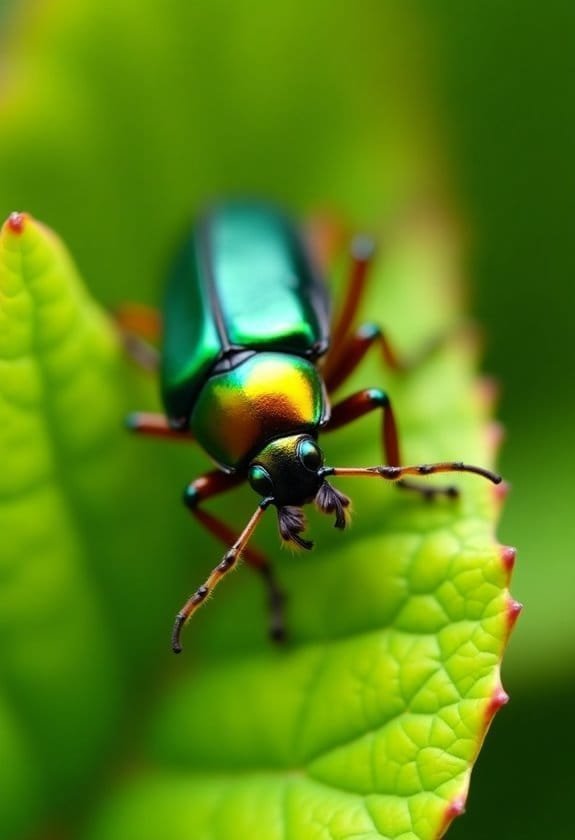
Click beetles, with their remarkable adaptations, exemplify nature's ingenuity in survival.
Their unique physical features, such as the clicking mechanism that propels them airborne, enhance their evasion tactics against predators, while their streamlined bodies facilitate movement across various habitats.
Additionally, behaviors like nocturnal foraging and bioluminescence not only increase their reproductive success but also highlight their intricate relationships with the environment, showcasing the essential roles they play in ecosystems.
Physical Features
With sizes ranging from 2.5 to 18 mm, click beetles exhibit an elongated and flattened body shape that enhances their movement and camouflage among various types of vegetation. Members of the Elateridae family possess a distinctive prothorax that harbors a unique clicking mechanism, allowing them to flip into the air when threatened, thereby cleverly evading predators. This ingenious adaptation not only aids in survival but also demonstrates their evolutionary resourcefulness.
The large, well-developed eyes and antennae greatly enhance their nocturnal vision and sensory capabilities. These features are essential for efficiently locating food sources and potential mates in low-light conditions. Many click beetles display brown or black coloration, which allows them to blend seamlessly into their natural habitats, providing an extra layer of protection from hungry predators. Notably, some tropical species showcase vibrant colors or even bioluminescence, serving as important communication signals for attraction.
In addition, the larvae, known as wireworms, demonstrate their own adaptations with a hard exoskeleton and slender, cylindrical shape. This enables them to burrow effectively through soil and decaying organic matter, reflecting the intricate relationship between physical features and ecological roles within their environments.
Behavioral Traits
The adaptations of click beetles extend beyond their impressive physical features, showcasing a range of behaviors that enhance their survival. One of the most remarkable traits is their unique clicking mechanism, which enables them to flip into the air when turned onto their backs. This rapid energy release involves a spine on the prosternum locking into a notch on the mesosternum, facilitating an agile escape from predators.
Primarily nocturnal, these beetles of the Palearctic are often attracted to light sources during the night, which increases their chances of finding sustenance and potential mates. When threatened, they exhibit a fascinating "playing dead" behavior, remaining motionless to evade detection—this clever tactic is a critical survival strategy among countless predators seeking their next meal.
Meanwhile, their larvae, known as wireworms, engage in opportunistic predatory behavior, feeding on plant roots, and solidifying their role as pests in agricultural contexts.
Specializations
Although click beetles are renowned for their distinctive clicking mechanism, their specializations encompass a variety of adaptations that considerably enhance their survival. This unique mechanism involves a specially developed prosternal spine, allowing the beetle to flip back onto its feet when inverted, markedly increasing its chances of escaping predation.
Their elongated, flattened bodies provide excellent camouflage, allowing them to blend seamlessly into their environments, whether it be dense vegetation or decaying wood.
Moreover, many species showcase fascinating bioluminescent behavior, particularly in tropical regions; this remarkable ability aids in attracting mates or deterring predators, creating a dazzling display in the lush night.
Additionally, the larvae, known as wireworm larvae, thrive on a saprophagous diet, feeding on decaying organic matter and roots, which can inadvertently damage crops.
Lastly, the nocturnal tendencies of adult click beetles, coupled with their attraction to light sources, strategically position them to exploit feeding opportunities during the night, gathering nectar and consuming rotting plant materials.
Collectively, these adaptations highlight the intricate interplay of evolutionary strategies that guarantee the survival and reproductive success of click beetles in diverse environments.
Plant Relationships
Click beetles play a significant role in plant relationships through various adaptations that impact both their feeding habits and ecological interactions. The larvae, commonly referred to as wireworms, primarily consume plant roots, which can cause considerable agricultural damage when their populations surge.
Conversely, adult click beetles contribute positively by feeding on nectar, pollen, and decaying plant materials, thereby promoting mutualistic interactions essential for pollination and nutrient cycling within their ecosystems.
Moreover, certain species have developed specific plant preferences, which influence their distribution and role in pest management practices. Their selective feeding strategies not only enhance their survival rates but also help control agricultural pests, fostering healthier crops.
Click beetles exhibit fascinating adaptations such as bioluminescence, allowing them to attract mates or potential prey in dark habitats, enhancing reproductive success.
Additionally, the remarkable clicking mechanism enables these insects to right themselves if overturned and serves as a crucial defense tactic against predators, facilitating their escape from potential threats while feeding. The extensive root system of plants like Common Yarrow helps in stabilizing the soil, which can indirectly benefit click beetles by creating a stable habitat.
Ecosystem Impact
Click beetles play a pivotal role in maintaining ecosystem balance, influencing biodiversity and food webs within their habitats.
As they contribute to essential environmental services, such as soil aeration and organic matter decomposition, these insects guarantee healthier plant growth and nutrient cycling.
Their presence not only supports various habitats but also underscores the interconnectedness of species, illustrating the delicate web of life that sustains agriculture and natural ecosystems.
Biodiversity Contribution
Contributing to ecosystem health, click beetles play an essential role in maintaining biodiversity. Their larval stage, known as wireworms, considerably enhances soil health by aerating the earth and facilitating nutrient recycling as they break down organic matter. This process not only enriches the soil but also fosters ecosystem resilience, enabling various plant species to thrive in diverse habitats.
Adult click beetles contribute further by feeding on nectar and pollen, integral to pollination. This activity supports plant reproductive processes, highlighting the importance of species interactions within their ecosystems. The presence of click beetles can be an indicator of environmental health; their populations reflect the condition of their habitats, particularly concerning pesticide use and changes in land use.
Moreover, some species exhibit bioluminescence, attracting other insects and playing critical roles in nighttime ecosystems. By preying on decaying plant material and soft-bodied insects, click beetles help regulate pest populations.
This balance not only underpins agricultural productivity but also amplifies ecological stability, illustrating their indispensable role in nurturing habitat diversity that supports a wide range of species. Consequently, click beetles embody crucial connections that sustain ecosystem health and resilience.
Food Web Position
In the complex tapestry of ecosystems, click beetles play an essential role within the food web, especially during their larval stage as wireworms. These larvae display opportunistic feeding behaviors, targeting plant roots, which can greatly impact agricultural systems by influencing crop health and productivity.
In turn, adult click beetles prey on soft-bodied insects, effectively controlling pest populations and promoting ecological balance.
Moreover, both larval and adult forms serve as important food sources for various predators, ranging from birds to mammals, intricately weaving them into the trophic dynamics of their habitats. Their involvement in the decomposition process is equally essential; click beetles assist in breaking down organic matter, thereby enhancing soil health and facilitating nutrient cycling within ecosystems.
Certain bioluminescent beetles, particularly those from the genus *Pyrophorus*, exhibit fascinating light-emitting functions, which can attract other organisms. This behavior influences local food webs by acting as a beacon of interaction, inviting various species into their vicinity for nourishment and ecological exchanges.
Consequently, click beetles embody a multifaceted role, reflecting the interrelated nature of life forms within their ecological niches.
Habitat Dependencies
Habitat dependencies of click beetles highlight their significant influence on ecosystem dynamics. These insects thrive in various environments, including forests, grasslands, and agricultural fields, demonstrating diverse habitat preferences. Their ecological roles are multifaceted; both the larvae, commonly referred to as wireworms, and adult click beetles contribute to essential soil health through their distinct feeding habits.
Wireworms, acting as decomposers, break down decaying organic matter while simultaneously posing a potential threat to agricultural crops by feeding on roots. This dual role emphasizes their importance in nutrient cycling, which is critical for maintaining ecosystem balance.
Meanwhile, adult click beetles exhibit nocturnal behaviors, often attracted to light sources, which impacts their distribution and interactions within these habitats. Additionally, some click beetle species possess bioluminescence, a fascinating trait that not only facilitates mate attraction but may also play a role in ecological interactions.
The presence and diversity of click beetles serve as environmental indicators, reflecting the overall health and quality of their ecosystems. Their interactions with the environment underline their essential position within food webs and their broader implications for biodiversity, functioning as a barometer for ecological well-being.
Environmental Services
Click beetles' role in environmental services is crucial for maintaining ecological balance. They considerably contribute to *nutrient recycling* by assisting in the decomposition of organic matter, enriching soil fertility which, in turn, supports plant growth.
Their larvae, known as wireworms, burrow through the soil, facilitating *soil aeration*. This activity enhances root growth and promotes better water infiltration, ensuring that plants access essential resources effectively.
Adult click beetles engage in *pest control*, feeding on soft-bodied insects, nectar, and decaying plant material, thereby helping to regulate insect populations and maintain healthy ecosystem dynamics. Their feeding behaviors contribute to the overall resilience of their habitats, making them indispensable players in their ecological communities.
Some click beetle species exhibit bioluminescence, a characteristic that draws in other organisms and weaves complex interactions into their ecosystems.
In addition, the diversity and presence of click beetle populations serve as indicators of environmental health. A thriving click beetle community often reflects the ecological condition, offering insights into the impacts of agricultural practices and habitat quality, highlighting their key role in sustaining vibrant ecosystems.
Conservation
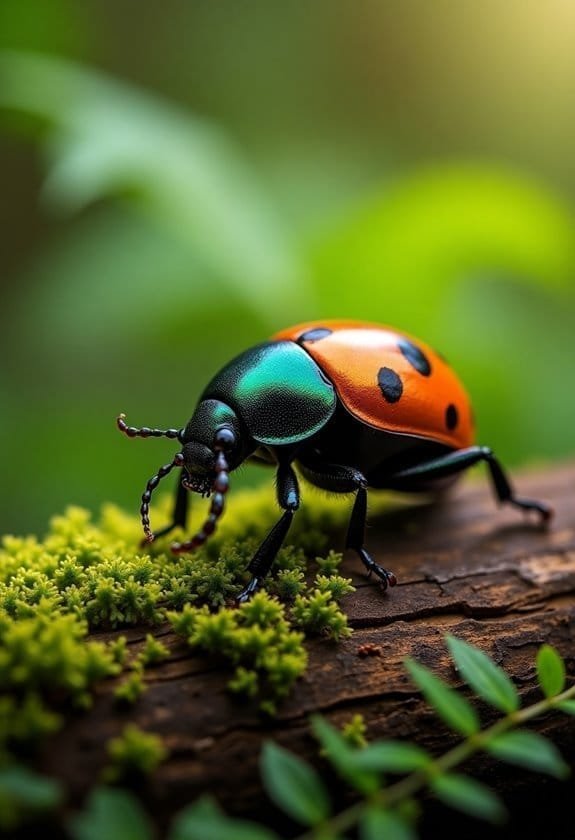
The population status of click beetles is increasingly precarious, as various species face threats from habitat loss and climate dynamics.
Agricultural practices, such as reckless pesticide application, harm not only these beetles but also their significant larval forms, the wireworms, which play essential roles in soil health.
Effective protection measures, including habitat restoration and sustainable farming techniques, are essential for mitigating these challenges and supporting the resilience of click beetle populations.
Population Status
Many species of click beetles face considerable threats to their populations due to various environmental factors. Habitat destruction, particularly in agricultural areas, reduces the availability of suitable environments, essential for their life cycles. The use of pesticides poses a direct threat, especially during the larval stage when click beetles exist as wireworms, affecting population dynamics in alarming ways. Climate change further complicates the situation, as shifting temperatures and precipitation patterns can alter habitat suitability and food sources, pushing certain species toward decline.
Conservation strategies are critical for safeguarding these insects. Efforts such as habitat restoration take precedence, aiming to revitalize altered ecosystems and promote biodiversity, which researchers indicate is key to resilience.
Implementing sustainable agricultural practices helps mitigate pesticide impacts, allowing click beetles to thrive alongside agricultural development. Additionally, establishing monitoring programs is fundamental for evaluating population health and trends over time, ensuring proactive measures can be taken.
Ultimately, fostering a more balanced ecosystem benefits the click beetle population greatly, providing a clearer path toward recovery and sustainability, linking the fate of these fascinating creatures to broader environmental well-being.
Current Threats
Conservation efforts aimed at click beetles face considerable challenges due to ongoing threats like habitat destruction, pesticide use, and climate change. Habitat fragmentation, primarily driven by agricultural expansion and urbanization, notably diminishes available environments for these insects, resulting in declining populations. As specialized creatures, click beetles depend on specific habitats, and their survival is increasingly jeopardized by the rapid loss of these ecosystems.
Moreover, pesticide applications in farming not only jeopardize adult beetles but also devastate their vulnerable larvae, known as wireworms. Curiously, some wireworms exhibit pesticide resistance, complicating management efforts. The survival of these larvae during crop treatments exemplifies the intricate balance of ecosystems and human agricultural practices.
Additionally, climate change poses a pressing threat, altering habitat suitability and food sources, which disrupts ecological niches. Click beetles struggle with climate adaptation, as rising temperatures and shifting rainfall patterns can greatly affect their reproductive cycles.
Consequently, many click beetle species are classified as threatened or endangered, underscoring the urgency for habitat restoration and sustainable agricultural practices to guarantee their survival and maintain the delicate ecological balance they influence.
Protection Measures
Habitat restoration stands at the forefront of protection measures for click beetles, addressing the severe impacts of habitat destruction and pesticide use on their populations. Conservation initiatives focus on creating healthier environments where these beetles can thrive, often through the establishment of protected areas. In these safeguarded spaces, urban development and intensive farming exert minimal pressure, allowing ecosystems to recover and flourish.
Pesticide reduction also plays a crucial role in preserving click beetle habitats, particularly through the promotion of sustainable agricultural practices. Implementing integrated pest management techniques helps reduce the reliance on chemical insecticides that may inadvertently harm click beetle larvae, enhancing both crop productivity and biodiversity.
Furthermore, farmer education is essential in conveying the ecological importance of click beetles. Awareness campaigns invite farmers and landowners to adopt practices that protect these essential insects and their habitats, fostering stewardship of natural ecosystems.
Through monitoring programs, researchers can assess the health and trends of click beetle populations, enabling timely interventions when necessary. Together, these measures create a thorough approach to conserving click beetle populations, contributing greatly to the health of broader ecological communities.
Support Guidelines
To effectively support click beetle conservation, stakeholders must focus on implementing thorough guidelines that prioritize habitat restoration and sustainable agricultural practices. These conservation strategies emphasize the necessity of preserving moist environments that are essential for click beetle life cycles; such habitats stabilize their populations. Effective habitat management includes initiatives that enhance soil structure and moisture levels, ensuring that these insects can thrive.
Additionally, monitoring programs are important for evaluating click beetle population health, especially in agricultural areas where pesticides often disrupt their ecosystems. By promoting sustainable farming practices—like reduced pesticide application and crop rotation—stakeholders can greatly diminish adverse impacts on click beetle larvae, known as wireworms, which paradoxically also pose agricultural challenges.
Furthermore, farmer education plays a significant role in conservation efforts. Educating landowners about the ecological significance of click beetles, particularly regarding soil aeration and decomposition, can lead to reduced reliance on harmful chemical interventions.
Collaborations between entomologists and conservation organizations will facilitate the development of targeted strategies for protecting threatened click beetle species and their indispensable habitats, ultimately ensuring the long-term resilience of these fascinating insects.
Research Notes
Research on click beetles reveals intriguing aspects of their biology and ecology, yet significant gaps in understanding remain.
Key studies have highlighted their role in soil aeration and organic matter decomposition, but many species, especially bioluminescent ones like Pyrophorus, lack thorough investigation regarding their behaviors and habitats.
Key Studies
Understanding click beetles has taken a significant leap forward thanks to various key studies that explore their unique biology and evolutionary traits. Research has uncovered that these fascinating insects possess a specialized clicking mechanism, enabling them to flip into the air when confronted by predators. This dynamic ability primarily serves as a remarkable form of predator evasion, enhancing their survival odds in the wild (Rines, 1920).
Further investigations into the biology of wireworm larvae, a stage in the life cycle of click beetles, reveal their unexpected resilience. These larvae can withstand exposure to insecticides and travel through soil, posing significant threats to agricultural ecosystems (Mathison, 2021).
Additionally, genetic studies have identified three derived families within the Coleoptera order, emphasizing the evolutionary adaptations that make click beetles both unique and ecologically significant (Johnson, 2009). Notable research on bioluminescent species within the genus *Pyrophorus* highlights their capacity to emit vivid light, showcasing another level of ecological adaptation that enhances their visibility and allure in nature (Dušánek & Mertlik).
Extensive guides on Nearctic genera further aid in the identification and classification of these remarkable insects (Arnett et al., 2002).
Knowledge Gaps
Numerous knowledge gaps persist in the study of click beetles that warrant urgent attention from researchers. One significant area of concern is the limited research on genetic diversity and evolutionary relationships within the Elateridae family, particularly regarding phylogenetic distinctions among its members. Understanding these relationships is vital for appreciating the complexity of their ecological roles.
In addition, the ecological impacts of wireworm larvae require thorough studies. Researchers must focus on how these larvae interact with various crops and assess the effectiveness of existing management strategies in agricultural contexts. Such insights could bolster pest control efforts.
Furthermore, the role of bioluminescence in click beetles remains partially understood. The ecological and evolutionary advantages it confers, especially for species like *Pyrophorus*, merit exploration. Researchers should also investigate the specific behaviors and mating strategies of lesser-known species to enhance our understanding of their reproductive ecology and population dynamics.
Lastly, the effects of climate change on habitat preferences and distribution patterns of click beetle species across diverse regions reflect an urgent need for research, as shifting environmental conditions may dramatically alter their habitats and ecological interactions. Addressing these gaps is essential for effective conservation efforts.
References
In the pursuit of extensive knowledge about click beetles, researchers have compiled a wealth of references that illuminate various aspects of their biology and ecology. The Elateridae family showcases remarkable diversity, with over 9,000 species scattered across temperate and tropical regions, all of which require diligent taxonomic classification. Notable references including Mathison (2021) and Arnett et al. (2002) offer insightful identification keys and thorough insights into these fascinating insects.
Further studies explore the ecological significance of click beetles, where they play essential roles in nutrient recycling and soil aeration, vital for maintaining robust ecosystems. Their presence contributes to the health of the environment, while also serving as a natural pest management strategy, particularly concerning wireworms, which are notorious agricultural pests.
Historical texts trace the etymology of "click beetle" back to the Greek word ἐλατήρ, encapsulating their unique ability to produce a clicking sound. This mechanism not only aids in their survival but also underscores their complexity.
Collectively, these references form a rich tapestry of knowledge, highlighting both the intricate biological details and broader ecological connections that link click beetles to their environments.