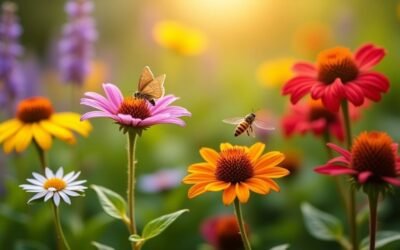
Alcea rosea, or Hollyhock, captivates gardeners with its impressive height, ranging from 5 to 8 feet, and vibrant blooms, which can reach 5 inches in diameter, showcasing colors from lavender to deep maroon. Thriving in full sun, these plants require 6 to 8 hours of direct sunlight and well-drained soil with a pH of 6.0 to 8.0. Hollyhocks greatly contribute to local ecology by attracting pollinators like bees and hummingbirds with their nectar-rich flowers. While enjoying their ornamental value, gardeners should monitor for common pests and diseases to maintain plant vigor, leading to a flourishing garden. More fascinating insights await.
Main Points
- Alcea rosea, commonly known as Hollyhock, features tall flower spikes that reach 5 to 8 feet and bloom in vibrant colors from June to August.
- It thrives in full sun, requiring 6-8 hours of direct sunlight and well-drained soil with a pH of 6.0 to 8.0.
- Hollyhocks attract pollinators like bees, butterflies, and hummingbirds, enhancing local biodiversity through their nectar-rich flowers.
- Common pests include Japanese beetles and slugs, while diseases like rust and leaf spot can affect foliage; monitoring symptoms is crucial.
- Non-toxic to pets, Hollyhocks make a safe, ornamental choice for gardens, enhancing visual appeal with their large, colorful blooms.
Introduction
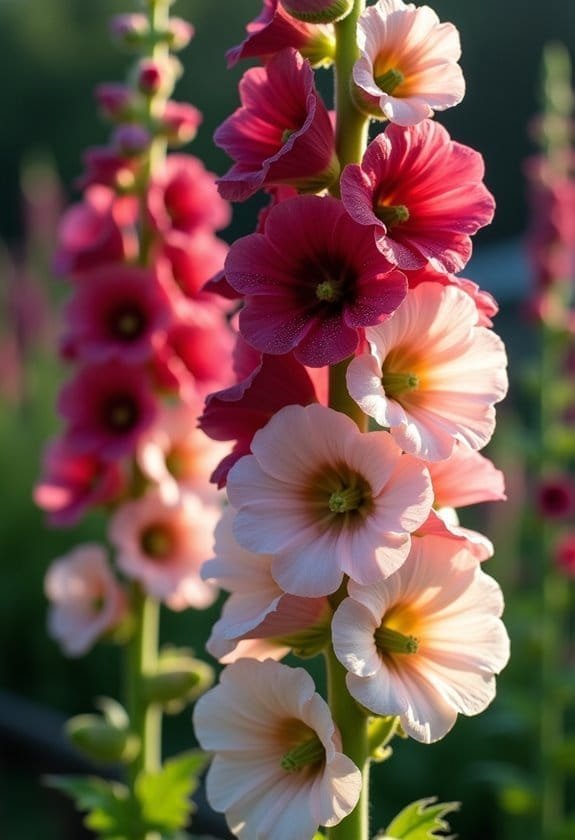
Known formally as Alcea rosea, Hollyhock captures attention with its impressive height and striking blooms.
This biennial or short-lived perennial, ranging from 5 to 8 feet tall, thrives in gardens, showcasing vibrant flowers that resemble poppies.
Enthusiasts appreciate its ability to attract pollinators, enhancing both ecological balance and visual appeal in landscapes.
Common Name
Embracing their vibrant beauty, Hollyhocks, scientifically named Alcea rosea, delight gardeners with their tall spikes adorned with large, colorful flowers.
These striking plants, characterized as herbaceous biennials or short-lived perennials, typically bloom from June to August, offering a spectacular display during the peak of summer. Reaching heights between 5 to 8 feet, Hollyhocks serve as dramatic back borders in gardens, where their elegance commands attention.
The flowers of Hollyhocks appear in an array of colors, including shades of lavender, red, yellow, and even the deep maroon variety known as 'Nigra.'
These striking blooms not only enhance the visual appeal of gardens but also play a vital role in attracting a diverse array of pollinators. The vibrant Hollyhock flowers entice hummingbirds and butterflies, creating a dynamic ecosystem of movement and life that captivates the eye and elevates the garden experience.
As gardeners cultivate Alcea rosea, they contribute to the natural world, fostering habitats for essential pollinators.
Hollyhocks, with their extraordinary beauty and ecological significance, become treasured components of both formal gardens and informal landscapes, enriching the environment with their colorful presence.
Scientific Name
The scientific name Alcea rosea, which belongs to the Malvaceae family, showcases the plant's classification and botanical lineage. Commonly known as the hollyhock, this species is often admired for its striking flowers and architectural beauty.
Previously classified under the genus Althaea, Alcea rosea has several synonyms, including Althaea rosea (L.) Cav. and Althaea sinensis Cav., reflecting its complex history in botanical nomenclature.
Characterized by its tall, rigid flower spikes, Alcea rosea can reach impressive heights of 5 to 8 feet. These magnificent floral displays bloom from June to August, offering a vibrant array of colors such as deep maroon, lavender, red, and yellow.
Such chromatic diversity not only enriches gardens but also attracts various pollinators, emphasizing its ecological importance. Additionally, the hollyhock's blooming period coincides with various pollinator activities, similar to the role of Horseshoe Vetch in pollination by attracting diverse species to support ecosystem health.
Importantly, Alcea rosea is non-toxic for pets, rendering it a safe choice for households with animals.
The inherent beauty and distinctive characteristics of the common hollyhock make it an enchanting addition to gardens, all the while providing fascinating insights into plant classification and the intricate relationships within the Malvaceae family.
Overview
Hollyhocks (Alcea rosea) draw attention in gardens with their towering spikes and vibrant blooms. These biennial or short-lived perennial plants typically reach heights of 5 to 8 feet, dominating the landscape with colorful flowers from June to August.
Hollyhocks thrive in full sun, requiring well-drained, fertile soil to flourish, preferably within a pH range of 6.0 to 8.0.
Displaying a stunning array of colors—ranging from soft pinks and bold reds to rich yellows and deep maroons—these striking plants often reseed themselves, establishing robust colonies that add charm and biodiversity to any garden. Their visual appeal isn't merely aesthetic; hollyhocks actively attract pollinators such as hummingbirds and butterflies, enhancing the ecological balance. Additionally, similar to Echinops species, hollyhocks contribute to the sustenance of local pollinator populations through their flowers.
Nevertheless, despite their beauty and hardiness, hollyhocks aren't invulnerable. They can fall prey to various diseases and pests, including rust disease and slugs, which necessitate diligent monitoring and proper care.
Key Features
Hollyhocks, or Alcea rosea, present distinct key features that enhance their appeal in gardens.
With their impressive height of 5 to 8 feet and upright flower spikes, these plants command attention, especially during the flowering season from June to August when they display large, vibrant blooms in colors such as pink, red, and deep maroon.
Their robust stature and striking appearance not only attract pollinators but also add a dramatic flair to outdoor spaces.
Growth Size
Frequently reaching impressive heights of 5 to 8 feet, Alcea rosea makes a striking addition to any garden.
These tall plants possess a robust growth habit, often classified as biennial or short-lived perennial, which indicates they might bloom during their first or second year, contingent on the prevailing growing conditions. Their overall spread typically measures 1 to 2 feet, allowing ample spacing between each specimen, consequently promoting ideal growth and health.
Interestingly, various cultivars of Hollyhocks exhibit slight height variations, with some capable of soaring to 10 to 12 feet when provided perfect conditions.
The rigid flower spikes, proud and upright, support large blooms that can reach approximately 5 inches in diameter, contributing to the plant's regal stature.
Gardeners appreciate these vibrant additions not only for their impressive height but also for the vertical interest they provide, creating stunning focal points amid other flora.
Additionally, their towering presence encourages a sense of grandeur, melding beautifully with layered plantings, and attracting pollinators to enhance the garden ecosystem.
Therefore, Alcea rosea stands as a commendable choice for those attempting to elevate their outdoor spaces.
Appearance
The striking appearance of Alcea rosea fascinates garden enthusiasts with its impressive stature and vibrant blooms. Growing between 5 to 8 feet tall, this hollyhock displays rigid flower spikes that provide vertical interest in any landscape.
Its robust structure serves as a commanding presence, drawing the eye upward.
Hollyhocks feature large, heart-shaped leaves that measure several inches across, typically showcasing a rich green hue. These leaves not only support the plant's growth but also enhance its overall aesthetic, creating a lush backdrop for the stunning flowers.
Speaking of flowers, hollyhock blooms can reach diameters of up to 5 inches, presenting a stunning array of colors such as lavender, red, yellow, and deep maroon, depending on the specific cultivar.
Notable varieties, like 'Nigra,' produce deep maroon blooms that appear almost black, while the renowned 'Chaters Double' series boasts impressive, peony-shaped double flowers that evoke a sense of romantic charm.
Therefore, with their fascinating colors and commanding height, hollyhocks become vibrant focal points in gardens, ensuring a striking seasonal display.
Flowering Season
Blooming primarily from June to August, Alcea rosea captivates with its vibrant flowers during the summer months. These flowering plants deliver a spectacular display of colors, including shades of pink, red, yellow, and an enchanting dark maroon. Each individual flower, measuring approximately 5 inches in diameter, adorns tall, rigid spikes that can soar to heights ranging from 5 to 8 feet, creating a striking visual impact in any garden.
The bloom period lasts about two months once the plants are well-established, although biennial varieties often wait until their second growing season to reveal their flowers. Conversely, some short-lived perennials may surprise gardeners by flowering in their first year if planted early enough. This versatility in blooming makes Hollyhocks a cherished addition to flower beds.
To further enhance their floral display, gardeners may prune the plants post-bloom, encouraging a second flourish of flowers that can continue into late summer and fall. Additionally, incorporating cornerstone species like Crataegus monogyna in nearby areas can provide beneficial pollinator support for thriving Hollyhocks.
The allure of Alcea rosea not only enriches the landscape but also invites admiration from all who encounter its majestic presence, reflecting nature's artistry and resilience.
Growing Requirements
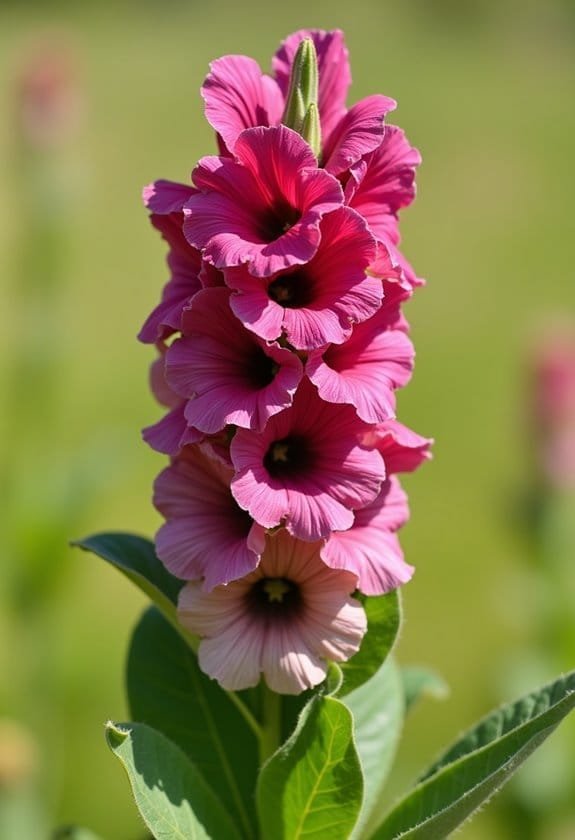
In cultivating Alcea rosea, understanding its growing requirements—light, soil, water, and temperature—is essential for nurturing robust plants.
These striking hollyhocks flourish best in full sun, while a little shade can offer relief during scorching days, much like a revitalizing breeze on a sweltering afternoon.
Additionally, they thrive in rich, well-drained soil that retains consistent moisture, which guarantees that young seedlings establish themselves without the threat of root rot lurking in overly wet conditions.
Light
When it comes to growing hollyhocks, soaking up the sun is vital for their success. These vibrant plants thrive best in full sun, requiring at least 6-8 hours of direct sunlight each day to achieve ideal growth and breathtaking blooms.
While they can tolerate partial shade, excessive darkness can lead to leggy growth, diminishing flowering potential and leaving plants struggling to demonstrate their innate beauty.
In hotter climates, however, providing some afternoon shade can help mitigate leaf wilting and heat stress, striking a balance between sun exposure and comfort. It's essential to guarantee sufficient light since adequate exposure fosters strong, upright flower spikes.
Conversely, low-light environments can hinder their development markedly. Additionally, insufficient light can compromise air circulation around the plants, rendering hollyhocks more vulnerable to disease and pest infestations.
Consequently, selecting a site that provides ample sunlight coupled with good airflow not only enhances plant vigor but also promotes overall health. By making thoughtful choices about placement, gardeners can enjoy the stunning visual impact that hollyhocks bring to any landscape, while simultaneously nurturing their well-being through appropriate light conditions.
Soil
To achieve the best results with hollyhocks, gardeners need to pay attention to soil quality alongside sunlight.
These delightful plants thrive in rich, well-drained soil with a pH range of 6.0 to 8.0, fostering ideal growth and vibrant blooms. While hollyhocks can endure various soil types, they flourish in conditions that remain consistently moist without becoming waterlogged. Excessive wetness poses a significant risk of root rot, a detrimental condition that can severely impede plant health.
To enhance poor soil, gardeners should incorporate organic matter, which boosts nutrient levels and improves drainage, promoting a healthy environment for hollyhocks.
When planting, it's crucial to maintain a spacing of 18 to 24 inches between plants. This spacing facilitates air circulation, ultimately reducing the risk of fungal diseases that might otherwise arise in a crowded setting.
Although hollyhocks possess an impressive ability to self-sow and adapt to differing soil conditions, well-nourished, well-drained soil directly contributes to more vigorous plants and striking flowers.
Investing attention and care into soil quality profoundly enhances the delightful show these majestic blooms can offer.
Water
Recognizing the significance of consistent watering, hollyhocks require regular moisture during their early growth stages to establish strong roots and healthy foliage.
In the initial phase of development, providing approximately one inch of water per week fosters the establishment of essential root systems. Once established, hollyhocks can withstand short droughts, yet it's imperative not to allow the soil to dry out completely; otherwise, their growth may suffer.
Watering should be conducted at the base of the plants, ideally in the morning, to minimize the risk of fungal diseases, such as rust, that may arise from excess moisture on the leaves.
During the blooming period from June to August, maintaining adequate moisture becomes particularly important, as it not only sustains the vibrant blossoms but also enhances the overall vigor of the plants.
However, caution is necessary; too much watering can lead to root rot, especially in winter months when soil tends to retain moisture.
Temperature
Hollyhocks flourish in temperate climates and are remarkably cold-hardy, surviving temperatures as low as 0°F (-18°C). These resilient plants prefer full sun for ideal growth, basking in sunlight to convert energy and bloom profusely.
However, in scorching areas, they can thrive in partial shade, which alleviates heat stress and promotes healthy development.
The ideal soil temperature for germination hovers between 70-75°F (21-24°C), an essential range that accelerates the sprouting process. Under such favorable conditions, hollyhock seeds typically germinate within 14-28 days. This period is critical; it sets the foundation for robust plants capable of enduring temperature fluctuations.
Once established, hollyhocks exhibit notable drought tolerance, yet they still require regular watering during prolonged dry spells to maintain their vibrancy and health. Furthermore, as a legume, they can benefit from planting alongside nitrogen-fixing plants to enrich the soil further.
In regions that experience harsh winters, gardeners can achieve successful growth by planting early in spring or starting seeds indoors, thereby providing an ideal environment for the fragile germination process.
Pollinator Criteria
Hollyhocks, or Alcea rosea, attract a diverse array of pollinators, such as bees, butterflies, and hummingbirds, drawn to their strikingly colorful blooms and ample nectar supply.
The flower's structure, characterized by large, open petals, not only provides generous landing spaces but also facilitates effective pollination through easy access to nectar, which sustains these important species. Additionally, like wild strawberries, hollyhocks also rely on diverse pollinators to ensure optimal fruit and seed development.
Attracted Pollinators
Vibrant blooms of hollyhocks play an integral role in attracting numerous pollinators, creating a lively scene in any garden. These striking flowers, with their tubular shapes, produce an abundance of nectar, enticing creatures like hummingbirds and butterflies. Particularly, painted lady butterflies find hollyhocks irresistible, which supports their life cycle and bolsters local biodiversity.
The long flowering spikes of Alcea rosea bloom from mid-summer to August, providing a consistent food source during peak pollinator activity. This period is essential, as many pollinators rely on the availability of flowers for sustenance. Hummingbirds are especially attracted to single-flower varieties, captivated by their brilliant colors and distinct shapes. In addition, the nectar-rich flowers(abundance of nectar) of hollyhocks contribute to maintaining diverse pollinator populations.
The wide array of hues, ranging from rich pinks to vibrant yellows, guarantees that hollyhocks appeal to various species, enriching the garden's ecosystem.
Additionally, hollyhocks are known for their rust-resistant properties, allowing them to thrive in diverse environments without sacrificing their attractiveness to pollinators. In order to create a truly biodiversity-supporting garden, incorporating diverse species alongside hollyhocks can further enhance the ecosystem.
Ultimately, by cultivating these enchanting blooms, gardeners not only enhance their landscapes but also foster significant habitats for these crucial creatures, promoting a healthier, more balanced environment.
Pollination Method
Pollinators are drawn to hollyhocks not only for their stunning appearance but also for their unique floral structure. The tubular shape of the flowers makes them inviting to nectar-seeking insects and birds, thereby facilitating effective pollination. Principal pollinators include bees, butterflies, and hummingbirds, all of which are attracted to the vibrant color palette of hollyhocks. Blooms in shades of pink, purple, yellow, and even black captivate a diverse array of species.
Though hollyhocks are capable of self-pollination—where pollen from the same flower fertilizes its ovules—their structural design greatly encourages cross-pollination. This process enhances genetic diversity, which is vital for the resilience and adaptation of the population. During pollination, the vivid flowers entice pollinators, who inadvertently transfer pollen between blooms, ensuring a more robust seed formation.
Ultimately, effective pollination culminates in the generation of abundant seeds, contributing to the hollyhock's natural reseeding characteristics. By promoting both self and cross-pollination, hollyhocks maintain a thriving ecosystem that not only attracts pollinators but also supports a vibrant flower garden, fostering ecological balance and aesthetic beauty.
Care & Maintenance
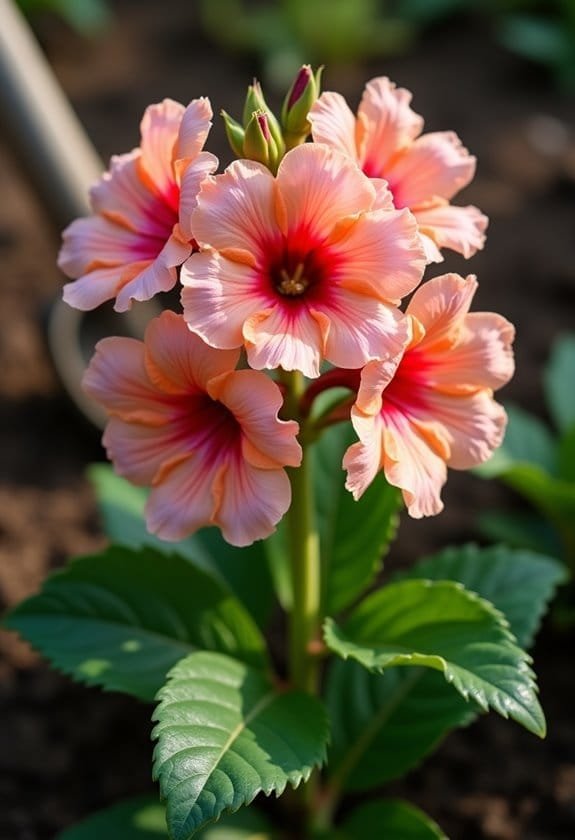
Caring for Alcea rosea, or hollyhocks, involves a series of essential practices that enhance their growth and aesthetic appeal.
Regular pruning, timely fertilization, and consistent watering not only promote health but also elevate the garden's visual harmony, providing a backdrop for their towering blooms.
Additionally, selecting suitable companion plants can amplify their splendor, creating a well-balanced ecosystem that supports both beauty and biodiversity.
Planting Tips
When it comes to planting hollyhocks, choosing the right conditions is key to encouraging their lush growth. To achieve the finest results, one should plant hollyhock seeds about ¼ inch deep and maintain a spacing of approximately 2 feet between each seedling.
Utilizing rich, well-drained soil is essential; this enhances root development and prevents waterlogging, which can adversely affect these vibrant perennials. Ideally, location matters too—selecting a site with full sun exposure guarantees ideal growth and flourishing blossoms.
For successful cultivation, it's advisable to sow seeds indoors approximately nine weeks before the last frost, or directly outdoors about a week prior to this date.
Regular watering plays a vital role, particularly during dry spells, as young plants are susceptible to drought. Once established, hollyhocks exhibit greater drought tolerance, making them more resilient over time.
Additionally, fertilizing in spring with a light application of compost or balanced fertilizer invigorates growth, especially in nutrient-poor soils.
Deadheading faded blooms encourages prolonged flowering, while cutting back stalks after blooming helps minimize reseeding, ensuring a vibrant display season after season. Furthermore, like Common Yarrow, hollyhocks can contribute to ecosystem health by attracting pollinators and enhancing biodiversity in your garden.
Ongoing Care
Ongoing maintenance plays an essential role in guaranteeing hollyhocks thrive year after year. To promote prolonged blooming, gardeners should regularly deadhead faded flowers and remove any diseased or wilted foliage, preventing complications such as rust disease.
After flowering, pruning hollyhock plants by cutting stems back to a few inches above ground can stimulate new growth and manage unwanted reseeding, contributing to a more organized garden appearance.
In spring, applying a balanced NPK fertilizer enhances growth, especially in nutrient-poor soils, setting the stage for vigorous development. Given the plant's needs, consistent watering is critical; seedlings should remain moist, while established plants require adequate hydration during dry spells.
This hydration practice not only fosters resilience but also supports overall plant health.
Additionally, vigilance against pests, such as slugs and spider mites, is essential. Implementing early detection measures helps minimize potential damage and encourages a thriving environment for hollyhocks.
Suggested Companions
Pairing hollyhocks with the right companion plants can greatly enhance both their beauty and health in the garden. For instance, Shasta daisies complement hollyhocks' towering spikes and attract essential pollinators like bees and butterflies, thereby enriching the garden's biodiversity. Additionally, the vibrant clusters of yellow flowers from companion plants like Ladys bedstraw can also draw in beneficial pollinators, further supporting this ecological balance.
Additionally, positioning clematis next to hollyhocks creates a stunning vertical effect, as the inherent climbing nature of clematis contrasts beautifully with the upright growth habit of hollyhocks, layering interest throughout the garden space.
Furthermore, combining phlox with hollyhocks introduces an array of color and bloom times, ensuring that the garden remains visually appealing throughout the seasons. This variety encapsulates the spirit of a cottage-style garden, filled with exuberance and life.
Likewise, dahlias serve as excellent companions by providing bushy foliage that contrasts with hollyhocks' slender stems, contributing to a fuller garden design.
When selecting companion plants, it's vital to evaluate their growth habits and light requirements. All chosen companions should prefer full sun, aligning with the sunlight needs of hollyhocks, to create a unified and thriving garden atmosphere, in which every flower flourishes harmoniously. Additionally, incorporating nutrient-rich soil into the planting area can further support the healthy growth of both hollyhocks and their companions.
Common Issues
Hollyhocks, or Alcea rosea, face several common challenges that can hinder their vibrant growth and stunning appearance.
Rust disease manifests in yellow-orange spots on leaves, while pests like slugs and Japanese beetles can lead to significant leaf drop and stunted development.
Addressing these issues promptly not only preserves plant health but also guarantees a flourishing garden that delights the eye throughout the growing season.
Pests/Diseases
Gardeners often face challenges when cultivating Alcea rosea due to a variety of pests and diseases that can threaten their health. Rust, a common fungal disease, manifests as unsightly yellow to orange spots on leaves, potentially leading to severe shriveling if left unchecked.
Combining this with other issues such as leaf spot and anthracnose, these fungal ailments can considerably detract from the vibrant beauty of hollyhocks.
Additionally, Japanese beetles and slugs frequently invade, causing leaf drop and stunting growth. These pests not only compromise the overall vigor of the plants but also contribute to an unkempt appearance.
Spider mites can further exacerbate problems, leaving behind a trail of damaged foliage.
To counteract these challenges, it's essential for gardeners to guarantee good air circulation and proper spacing between plants, which help reduce humidity around the leaves, creating a less favorable environment for fungal diseases.
Regular monitoring for symptoms of pests and diseases allows gardeners to take prompt action, preserving the health and aesthetic appeal of their hollyhocks. Staying vigilant against these nuisances guarantees that Alcea rosea can flourish in the garden, showering it with a burst of colorful blooms.
Solutions
Addressing the challenges posed by pests and diseases is essential for the successful cultivation of Alcea rosea. One common issue, rust disease, manifests as yellow-orange spots on foliage. Gardeners should regularly monitor hollyhocks for this telltale sign, promptly removing affected leaves to diminish additional spread.
Another concern arises with yellowing leaves, which often indicates overwatering leading to root rot. Gardeners must adjust their irrigation practices accordingly, ensuring adequate but not excessive moisture.
Moreover, evaluating soil moisture is important, as drooping leaves can signal both underwatering and overwatering, necessitating precise adjustments to maintain plant health.
In addition to these arboreal maladies, pest infestations, including slugs and spider mites, can wreak havoc on Alcea rosea. Employing natural predators or manually removing these invaders can effectively control their populations, safeguarding the plants from further damage.
Finally, curling leaves may indicate heat stress; relocating hollyhocks to shadier areas or applying a layer of mulch can mitigate this problem by moderating soil temperature and conserving essential moisture.
Summary
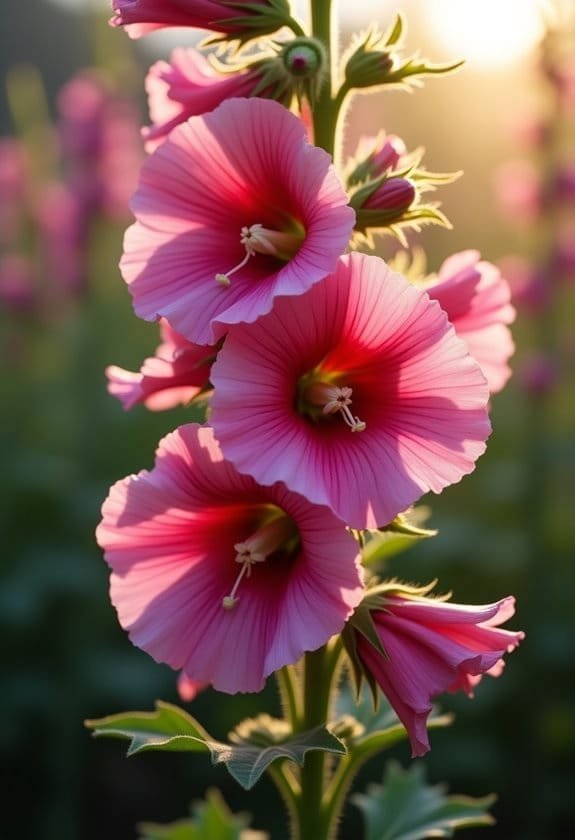
Alcea rosea, often referred to as Hollyhock, is a striking biennial herbaceous plant that can reach impressive heights of 5 to 8 feet. Renowned for its vibrant flowers, Hollyhock typically blooms from June to August, creating spectacular vertical displays in gardens.
The plant thrives in full sun and prefers rich, well-drained soil with a pH ranging from 6.0 to 8.0. Among various cultivars, 'Nigra' stands out with its deep maroon blooms, adding a dramatic flair to any landscape.
While these true perennials can establish beautiful colonies through self-seeding, their beauty isn't without challenges.
Hollyhocks may fall prey to pests like Japanese beetles and diseases such as rust, necessitating vigilant monitoring by the gardener. The texture of hollyhock leaves, large and somewhat coarse, complements the vivid flowers, attracting pollinators such as hummingbirds and butterflies.
Their ability to propagate and display rich colors continuously emphasizes their value in ornamental horticulture. To summarize, with the right care and attention, Hollyhocks can provide vibrant, long-lasting displays that invigorate any garden throughout the growing season, making them a cherished choice among flower enthusiasts.