Anchusa capensis, or Cape Alkanet, is a fascinating perennial herb indigenous to the distinctly sunny and arid regions of South Africa, Namibia, and Lesotho. This remarkable plant can attain heights of nearly 1 meter and showcases stunning blue flowers during summer, featuring five petals adorned with fine white scales. Thriving in well-drained soils, it exhibits impressive drought resistance, making it ideal for low-water gardens. Moreover, Cape Alkanet supports essential pollinators like honey bees by providing crucial nectar sources, enhancing local biodiversity. Through careful maintenance and placement, this plant promises to enrich any garden, revealing more intricate details about its care and benefits.
Main Points
- Anchusa capensis, or Cape Alkanet, is native to South Africa, Namibia, and Lesotho, thriving in dry, sunny environments.
- It is characterized by vibrant blue flowers, narrow hairy leaves, and can reach heights of nearly 1 meter.
- Cape Alkanet is drought-tolerant, preferring well-drained sandy or clay soils and full sun exposure.
- The plant attracts various pollinators, playing a vital role in supporting local ecosystems and biodiversity.
- While low-maintenance and resistant to pests, it may require monitoring for aphids and fungal diseases in moist conditions.
Introduction
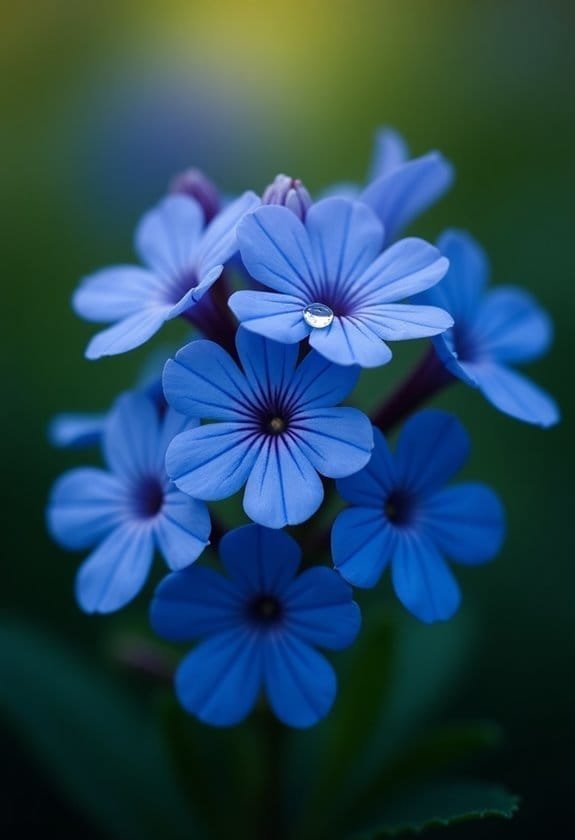
Anchusa capensis, often referred to as Cape Alkanet or Summer Forget-Me-Not, represents a remarkable member of the Boraginaceae family, flourishing largely in South Africa, Namibia, and Lesotho.
This perennial herb can achieve heights of nearly 1 meter, showcasing vibrant blue flowers that bloom in summer and attract a variety of pollinators, thereby enhancing its ecological importance.
Its stable population status, classified as Least Concern on the Red List of South African Plants, speaks to its resilience and adaptability in native habitats, making it a favored choice among landscapers and gardeners alike.
Common Name
Often admired for its striking blue blooms, Cape Forget-Me-Not, also known as Summer Forget-Me-Not and Dwarf Alkanet, captures the attention of gardeners and nature lovers alike. This enchanting plant not only showcases vibrant flowers, but it also resembles traditional forget-me-nots, inviting admiration in any garden setting.
The allure of the Cape Forget-Me-Not extends beyond aesthetics; it plays a crucial role in supporting local ecosystems. Known scientifically as Anchusa capensis, this species draws a variety of pollinators, including bees and butterflies, essential for plant reproduction and biodiversity.
In Afrikaans, it's affectionately referred to as "vergeetmynietjie" or "ossetongblaar," reflecting its cultural significance within the region. Local names, like "koringblom" in Afrikaans and "petlekheme" in Sesotho, illuminate its importance in traditional gardening and usage.
Scientific Name
The scientific name of the Cape Forget-Me-Not, *Anchusa capensis*, reveals its place within the broader classification of flowering plants. This designation reflects both its visual beauty and its taxonomic significance. The specific epithet "capensis" indicates its origin in the Cape region of Southern Africa, highlighting an intrinsic link to its native habitat.
Meanwhile, the genus name *Anchusa* groups this species with other notable members of the Boraginaceae family, which are recognized for their ornamental and ecological roles.
First described by the esteemed Swedish botanist Carl Thunberg in the 18th century, *Anchusa capensis* has a storied place in botanical literature. The vibrant blue flowers, commonly associated with the Cape Forget-Me-Not, possess an alluring charm that captivates gardeners and ecologists alike.
This species thrives in diverse environments across South Africa, Namibia, and Lesotho, showcasing remarkable adaptability.
Understanding the scientific classification of *Anchusa capensis* enhances appreciation for its ecological contributions, as well as its ornamental value. Consequently, this nomenclature serves not only a biological purpose but also fosters a deeper connection between humans and the remarkable flora of Southern Africa.
Overview
Known for its vibrant blue flowers and resilience, *Anchusa capensis*, or Cape Forget-Me-Not, is a perennial herb that thrives in the sunny and dry landscapes of Southern Africa. This remarkable plant, also referred to as Cape Alkanet, belongs to the Boraginaceae family and primarily flourishes in regions like South Africa, Namibia, and Lesotho.
Reaching heights of up to 1 meter, it features long, narrow, hairy leaves that enhance its rugged appeal. Blooming during the summer months, the plant's striking blue flowers not only capture attention but also serve as a crucial nectar source for pollinators, such as bees and butterflies, thereby supporting local ecosystems and biodiversity.
Preferring well-drained soils and full sun exposure, *Anchusa capensis* exhibits exceptional drought tolerance, making it ideally suited for dry, sandy habitats. Despite being classified as Least Concern on the South African Red List, this species has gained a reputation as an invasive species in Europe and the USA.
Its vigorous growth and adaptability illustrate nature's complexity and highlight the duality of its potential benefits and challenges within different ecosystems.
Key Features
Anchusa capensis showcases remarkable growth traits, typically reaching an impressive height of up to 1 meter.
With its striking blue flowers that reveal a unique structure of five petals adorned with feathery white scales, the plant not only captivates the eye but also provides essential environmental benefits.
Flourishing primarily in dry, sandy soils, the flowering season lasts throughout the warmer months, allowing it to thrive at elevations ranging from 60 to 3,200 meters, ensuring its adaptability and resilience.
Growth Size
Reaching a height of 30-45 cm (12-18 inches), Cape Alkanet showcases a compact growth habit that's perfect for garden aesthetics. This vibrant herbaceous plant, known scientifically as Anchusa capensis, typically spreads 20-30 cm (8-12 inches) across, establishing a delightful presence in various landscapes.
Its long, narrow leaves are soft yet rough and hairy, enhancing the plant's vigorous growth form while adding texture to the garden.
While Cape Alkanet can reach heights of up to 1 meter under ideal conditions, it's mainly appreciated for its more compact stature in cultivated environments. This adaptability allows it to harmonize beautifully with surrounding flora, making it an excellent choice for gardeners seeking to complement their designs without overshadowing other plants.
Characterized by a medium growth rate, Cape Alkanet flourishes steadily, ensuring its place in diverse planting schemes. This steady growth can be particularly rewarding, as it provides ample opportunity for observation and enjoyment of the gradual transformation of the garden space.
Appearance
Cape Alkanet stands out with its stunning deep blue flowers, each featuring five delicate petals accompanied by feathery white scales. This plant, scientifically known as Anchusa capensis, reaches impressive heights of up to 1 meter (approximately 3.3 feet), showcasing its vigorous growth.
The foliage consists of long, narrow leaves, characterized by a soft yet rough texture, covered with tiny hairs that lend the plant a unique tactile quality. The grey-green color of the leaves contrasts beautifully with the small flower heads, enhancing the plant's overall delicate appearance.
The vibrant blooms create a magnificent display, which serves not only as an aesthetic delight for garden enthusiasts but also attracts an array of pollinators, including bees and butterflies. Additionally, Cape Alkanet is renowned for its drought tolerance, making it a resilient choice for various landscapes.
Interestingly, Anchusa capensis possesses the ability to self-seed, ensuring that it can reappear in subsequent years when conditions are favorable. Gardeners interested in cultivating this plant can consider collecting Anchusa capensis flower seeds, allowing for the continuation of its enchanting presence in their gardens.
Flowering Season
When does this stunning plant come to life? Anchusa capensis, widely known as Cape Alkanet or Summer Forget-Me-Not, bursts forth from early summer to late summer, enchanting observers with its vibrant gentian blue flowers.
During this flourishing season, the species showcases peak blooming activity, dominating summer gardens with its striking aesthetic appeal.
Each flower features five delicately arranged petals, complemented by five feathery white scales that enhance its visual charm and attract pollinators. The flowering stems can rise impressively up to 1 meter in height, allowing these beautiful blooms to stand out prominently amidst garden landscapes.
Moreover, Anchusa capensis possesses a unique ability to self-seed, which can lead to a continuous display of lush flowers in subsequent years, depending on conditions. This characteristic not only guarantees that gardeners enjoy the Cape Alkanet's charm year after year but also contributes to the plant's resilience and adaptability in various environments.
Growing Requirements
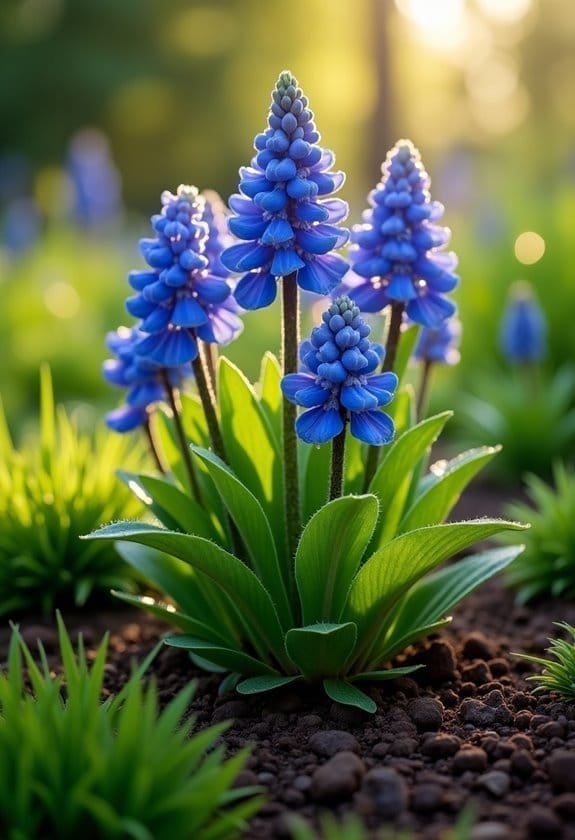
Anchusa capensis flourishes under full sun exposure, benefiting from well-drained soil that accommodates a range of pH levels.
This resilient plant demonstrates drought tolerance once established, thriving in average to dry moisture conditions and requiring minimal intervention.
Light
To thrive, Anchusa capensis really needs full sun, basking in at least six hours of direct sunlight each day. This exposure is essential not just for healthy growth but also for the production of its striking deep blue blooms. Ideal light conditions, particularly around 70°F, considerably enhance seed germination, making light a critical element in the plant's life cycle.
When nurtured in full sun, the plant demonstrates remarkable drought tolerance once it becomes established, allowing it to flourish even in less than ideal watering conditions. Such robust light availability also plays a pivotal role in attracting beneficial pollinators, including bees and butterflies.
These creatures are drawn to the vibrancy of the blooms, ensuring successful reproduction cycles for Anchusa capensis. Additionally, high light levels help maintain the plant's vigor, enabling it to outperform in both sandy and clay soils.
Therefore, for growers looking to cultivate this striking perennial, providing full sun isn't merely a suggestion; it's a fundamental necessity that underpins the overall health and beauty of this enchanting species.
Soil
For ideal growth, Anchusa capensis thrives in well-drained soil that suits a variety of types, including sandy and clay soils. This adaptability allows the plant to flourish in diverse environments, enhancing its appeal among gardeners.
Anchusa capensis can withstand different soil pH levels, ranging from neutral to both alkaline and acidic conditions. However, it greatly prefers dry soil moisture conditions, establishing a crucial drought tolerance once its roots are settled.
To promote vibrant health in this plant, gardeners should avoid any excessively wet or poorly drained areas, as these conditions increase the risk of root rot, a serious threat to its overall health.
Carefully evaluating soil drainage is paramount; amending heavy soils, if necessary, guarantees that moisture levels remain excellent and promotes robust growth. By enhancing soil structure, gardeners can create an ideal habitat for Anchusa capensis, allowing its vibrant hues and resilient nature to shine.
Incorporating organic matter or sand into the soil can further improve drainage and texture, making it even more accommodating to this extraordinary plant. Silverweed, which also requires well-drained sandy or gravelly soils, demonstrates similar preferences for optimal growth conditions.
With such diligent attention to soil conditions, gardeners can enjoy a flourishing display of Cape Alkanet throughout the growing season.
Water
With its drought-tolerant nature, Anchusa capensis excels in low-water gardens where minimal irrigation is needed. This remarkable plant thrives in well-drained soil, favoring dry conditions that mimic its sandy native habitats.
Once established, it can endure prolonged periods without significant water, demonstrating resilience akin to a sailor steering through arid seas. Nevertheless, during the summer months when the plant experiences active growth, it benefits from regular watering. This practice not only promotes ideal health but also enhances its stunning blue flowers, creating a vibrant display that captivates onlookers.
Gardeners should be cautious to avoid overwatering, as excessive moisture can lead to root rot—an affliction detrimental to this hardy species. Providing just enough water guarantees that the plant can flourish, revealing its striking blue blooms while still remaining true to its drought-resistant roots.
Consequently, managing the watering needs of Anchusa capensis requires a delicate balance; the plant's adaptability allows it to thrive under dry conditions, yet careful attention during peak growth periods yields a more lavish floral showcase.
Ultimately, with the right watering regimen, gardeners can enjoy the beauty of this resilient blue beauty while embracing sustainable practices in their landscapes.
Temperature
Anchusa capensis, commonly known as Cape Alkanet, thrives best within USDA hardiness zones 3 to 9, making it adaptable to various climates. This remarkable plant exhibits ideal growth temperatures around 70°F (21°C) for seed germination, which typically occurs within 14 to 21 days.
For vigorous growth, capensis requires full sun exposure, demanding at least six hours of direct sunlight daily. Although it flourishes in warm conditions, Cape Alkanet showcases resilience, as it can tolerate light frosts in the spring. Consequently, it's often cultivated as a biennial or annual in cooler regions, emphasizing its versatility across different environments.
Once established, this plant becomes drought-tolerant, allowing it to withstand higher temperatures while necessitating minimal watering. The ability to thrive in both moderate and elevated temperatures makes capensis an excellent choice for gardeners seeking a hardy addition to their landscapes.
Pollinator Criteria
Anchusa capensis distinctly attracts a variety of pollinators, particularly honey bees and butterflies, due to its vibrant blue flowers that serve as an essential nectar source. These pollinators, vital for maintaining ecological balance, employ a generalized method of pollination, transferring pollen as they navigate the flower's structure. Additionally, like Salad Burnet, this plant contributes to the stability of garden ecosystems by providing crucial resources for local wildlife. Moreover, the presence of nectar-rich flowers in the garden enhances biodiversity and supports a wider range of beneficial insects.
Attracted Pollinators
Cape Alkanet's vibrant deep blue flowers attract a diverse array of pollinators, particularly bees and butterflies, making it an invaluable asset in any garden. This remarkable plant, scientifically known as Anchusa capensis, serves as a significant nectar source during its blooming season in summer. The intense blue coloration of Cape Alkanet not only catches the eye but also signals to pollinators like honey bees that a plentiful resource awaits.
With a structure that provides easy access to nectar and pollen, Cape Alkanet enhances its attractiveness to these important creatures. Honey bees, in their quest for sustenance, flock to the blooms, encouraged by the consistent availability of resources for foraging. By supporting these populations, Cape Alkanet contributes to increased biodiversity and ecological stability. Additionally, similar to Common Yarrow(#), this plant also serves as a vital food source for various pollinators, further enriching the garden ecosystem.
This adaptable plant thrives in sunny locations, promoting maximum pollinator activity and ensuring a flourishing ecosystem. Its drought tolerance and low maintenance needs make it a preferred choice for gardeners seeking to create an inviting, pollinator-friendly environment.
Fundamentally, Cape Alkanet not only beautifies spaces but also serves as an essential link within the natural world, nurturing both flora and fauna through its bountiful offerings.
Pollination Method
The remarkable structure of Cape Alkanet's flowers plays an essential role in its pollination method, attracting a variety of insects that fulfill its reproductive needs.
With five distinct petals and five feathery white scales, the flowers provide perfect landing platforms for bees and butterflies, ensuring efficient pollination. As these pollinators visit, lured by the abundant nectar, they engage in a mutualistic interaction—pollinators obtain food while facilitating plant reproduction.
Blooming primarily during the summer months, the striking blue flowers of Anchusa capensis serve as a visual magnet, drawing in insects at their peak activity times.
The plant thrives in dry, sandy habitats, often outcompeting less nectar-rich flora, which guarantees a steady influx of pollinators. This preference for arid environments enhances its ability to sustain peak pollination rates.
Beyond its individual reproduction, insect pollination considerably contributes to Anchusa capensis's seed production, fostering genetic diversity within the plant population.
Consequently, this plant plays an important role in supporting local ecosystems, maintaining biodiversity through the intricate web of life that stems from effective pollination, ultimately underpinning a balanced and vibrant natural community.
Care & Maintenance
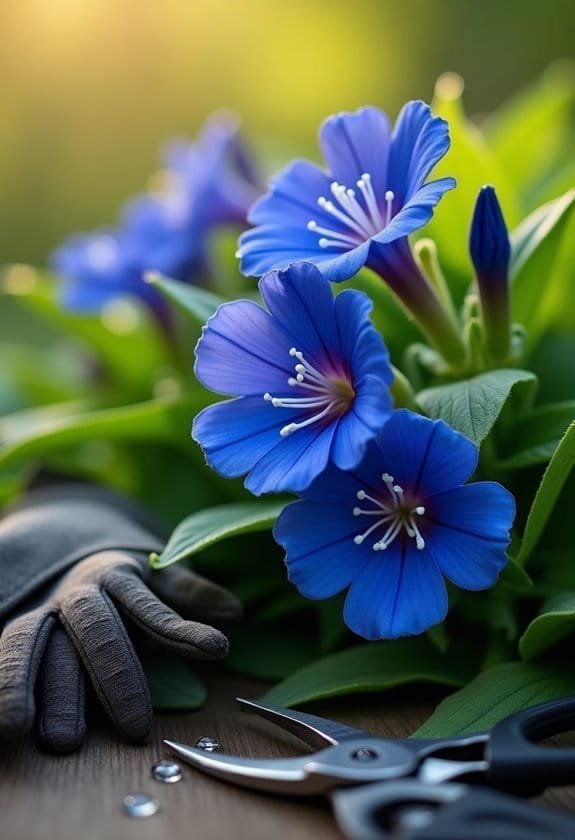
Caring for Anchusa capensis requires attention to its specific needs regarding planting and ongoing maintenance.
Once established, these resilient plants favor full sunlight and well-drained soil, thriving when given minimal watering, particularly during the scorching summer months.
To enhance their liveliness, regular pruning and cutting back encourage a fuller, bushier growth habit, making them visually appealing companions in any garden setting.
Planting Tips
When planting Anchusa capensis, aiming for well-drained soil is essential, as this guarantees ideal germination. To achieve this, gardeners should sow the Anchusa capensis flower seeds of Cape in a loose, sandy medium that permits excess moisture to escape, preventing root rot. The seeds should be barely covered, ensuring they receive adequate light, which typically enhances germination occurring within 14-21 days when maintained at approximately 70°F. Additionally, ensuring a consistent moisture supply during early growth can lead to stronger plants, similar to strategies used with Yellow Rattle in meadow restoration.
To encourage robust growth, it's advisable to space the seeds at 10-12 inches apart, grouping them in clusters of 3-4 seeds. This configuration promotes healthy competition among seedlings, resulting in stronger plants.
While Anchusa capensis develops excellent drought tolerance once established, regular watering during the summer months can protect the plants from desiccation during dry spells.
In their second year, pruning is highly beneficial, allowing for bushier growth and a well-kept garden appearance. To expand a garden's collection, propagating additional specimens via cuttings from mature plants serves as an effective alternative, ensuring vibrant blooms and sustaining the plant's aesthetic appeal.
Incorporating these thoughtful planting tips will lead to a flourishing display of Cape Alkanet in any garden space. Additionally, this plant can thrive alongside pollinator-friendly plants that enhance biodiversity in the garden.
Ongoing Care
Ongoing care for Anchusa capensis, or Cape Alkanet, plays an essential role in guaranteeing its vibrant growth and resilience.
This perennial plant thrives best under full sun exposure and in well-drained, sandy or loamy soil, making its growing environment vital. Once established, Cape Alkanet requires minimal watering; however, during summer droughts, regular hydration is essential to prevent dieback, showcasing its impressive drought tolerance. Additionally, it can be paired with drought-resistant species that complement its growth.
Maintenance practices include cutting back plants in their second year to address untidiness and promote bushier growth, enhancing both aesthetic appeal and health. Additionally, healthy propagation through seeds or cuttings can occur at any time of the year, encouraging continuous flowering and a thriving garden landscape.
While Cape Alkanet is relatively low-maintenance, vigilance against pests and diseases is important. The plant's ability to attract diverse pollinators enhances garden biodiversity, greatly boosting the surrounding ecosystem.
Integrating regular care routines guarantees that this beautiful plant not only flourishes but also contributes to a sustainable garden environment. By merging attentive care with natural resilience, gardeners can enjoy the vibrant blossoms and striking foliage that the Cape Alkanet generously provides.
Suggested Companions
Creating a vibrant garden with Anchusa capensis is easier when you select companion plants that share similar care requirements. This Cape native, also known as Blue Italian Alkanet, flourishes best alongside drought-tolerant companions.
Plants like lavender and sage thrive in sunny, dry conditions, guaranteeing compatibility and aesthetic appeal. The vivid blue blooms of Anchusa are beautifully complemented by contrasting foliage plants, such as heuchera or ornamental grasses, which enhance texture and visual interest within the surrounding landscape. Additionally, Horseshoe Vetch is an example of a plant that thrives in similar ecosystems, supporting the biodiversity of local habitats.
Moreover, incorporating pollinator-friendly species like echinacea or butterfly bush attracts essential wildlife, encouraging a healthy ecosystem within the garden. These choices not only support local bee and butterfly populations but also contribute to the overall vibrancy of the space. Furthermore, the use of native plants like Salix aegyptiaca can support local ecosystems by providing habitats and food sources for various wildlife.
In mixed containers, annuals like petunias or marigolds provide lively seasonal color, harmonizing strikingly with the deep blue hues of the Cape Alkanet.
To promote healthy growth, it's significant to ascertain all companion plants exhibit similar watering needs, facilitating ease of maintenance and resilience against drought conditions.
This thoughtful approach to plant selection fosters a flourishing garden, elevating the beauty of Anchusa capensis while creating a sanctuary for various pollinators.
Common Issues
Despite its low-maintenance nature, Anchusa capensis encounters specific challenges that gardeners should be aware of.
Pest infestations remain rare, yet the potential for invasive behavior outside its native range could pose significant agricultural and ecological issues, particularly in Europe and the USA.
Additionally, ensuring that the plant thrives requires attention to environmental factors, as extremes in weather and improper watering can lead to not only unsightly growth but also underlying root diseases, compromising the overall health of this resilient species.
Pests/Diseases
Although Anchusa capensis is generally resistant to pests and diseases, it can occasionally attract aphids, which are easily manageable. These small sap-sucking insects pose little threat to the overall health of the plant but can become a nuisance if their numbers increase considerably. Natural control methods, such as using insecticidal soap or introducing beneficial insects like ladybugs, effectively mitigate this issue.
Fungal diseases are rare but can emerge in overly damp conditions, underscoring the necessity of maintaining proper drainage in garden beds. Wet soil can lead to root rot, a serious condition that disrupts the crucial nutrient uptake process, threatening the plant's health.
Additionally, the plant's hairy leaves serve as a successful deterrent against common garden pests, offering an ingenious form of defense that makes it less appealing to herbivores.
To guarantee the long-term health of Anchusa capensis, careful monitoring for any signs of root rot, particularly in overly saturated soils, coupled with prudent watering practices, becomes essential. This diligence not only safeguards the plant's beauty but also secures its role as a low-maintenance garden option.
Solutions
Effective solutions for common issues related to Anchusa capensis focus on promoting healthy growth and mitigating potential problems.
To foster robust development, it's crucial to plant Cape Alkanet in well-drained soil, ideally situated in an area that receives full sunlight. During the first growing season, minimal watering is necessary, as this plant is drought-tolerant once established.
Regular pruning plays an essential role in maintaining a bushier growth habit, especially as the plant matures in its second year. This practice not only enhances aesthetics but also prevents an untidy appearance that can detract from its beauty.
To mitigate the risk of invasive spread, gardeners should diligently deadhead spent flowers before they set seed, managing seed production effectively.
While pests and diseases are seldom reported for Cape Alkanet, maintaining a clean environment surrounding the plant can considerably contribute to its overall health. Removing debris and fallen leaves helps prevent potential issues.
Summary
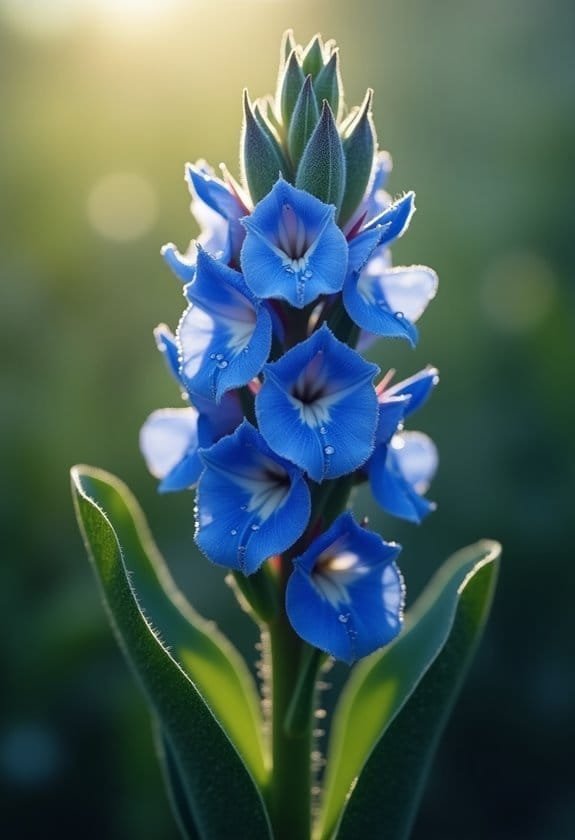
Anchusa capensis, popularly known as Cape Alkanet, is a striking biennial herb that delights gardeners with its vibrant gentian blue flowers throughout the summer months. Hailing from the Boraginaceae family, this plant showcases a remarkable visual appeal, achieving an impressive score of 4.9 out of 5 in aesthetic ratings.
Thriving in dry, sandy habitats across South Africa, Namibia, and Lesotho, Cape Alkanet can reach heights of up to 1 meter, adorned with long, hairy leaves that contribute to its textural interest.
Once established, this hardy plant demonstrates exceptional drought tolerance and minimal water requirements, making it an ideal candidate for low-maintenance gardens, particularly in arid regions.
Beyond its ornamental value, Anchusa capensis plays a crucial role in the ecosystem by attracting essential pollinators such as bees and butterflies, enhancing biodiversity within garden landscapes.
Encouragingly, it's classified as Least Concern on the Red List of South African Plants, indicating a stable population.
With its distinctive flowers and ecological benefits, Cape Alkanet stands out not only as a gardening favorite but also as a resilient ally in the fight for sustainable cultivation practices.