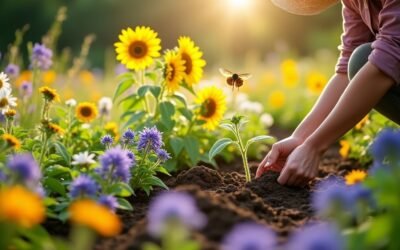
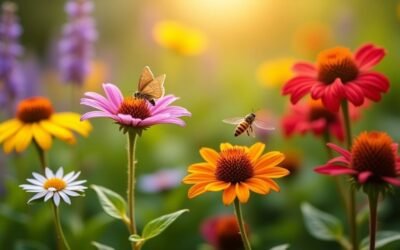
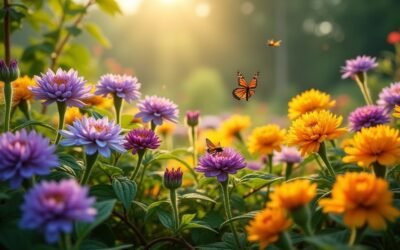
Argemone platyceras, or the crested poppy, is an alluring perennial, thriving in Mexico's sun-drenched prairies. With its spiny blue-green leaves reaching up to 35 cm and solitary white flowers expanding to 12 cm in diameter, it captivates gardeners. Each bloom's vibrant yellow or red center creates striking visual interest. This plant flourishes in well-drained sandy soils, requiring full sun and minimal watering once established. It markedly attracts pollinators like bees and butterflies, enhancing biodiversity. However, caution is necessary due to its spiny capsules. Learning more about its aesthetic appeal and care requirements could enhance garden liveliness and ecological balance.
Main Points
- Argemone platyceras, or Crested Poppy, features spiny blue-green leaves and solitary white flowers with yellow or red centers, reaching up to 12 cm in diameter.
- This short-lived perennial thrives in sunny, drought-prone prairies of Mexico, requiring well-drained sandy soils for optimal growth.
- It attracts pollinators like bees and butterflies, enhancing local biodiversity and contributing to habitat health.
- The plant flourishes in hardiness zones 8a to 10b, needing at least six hours of direct sunlight daily to thrive.
- Regular monitoring of soil moisture and removal of spent seed heads help prevent root rot and overcrowding.
Introduction
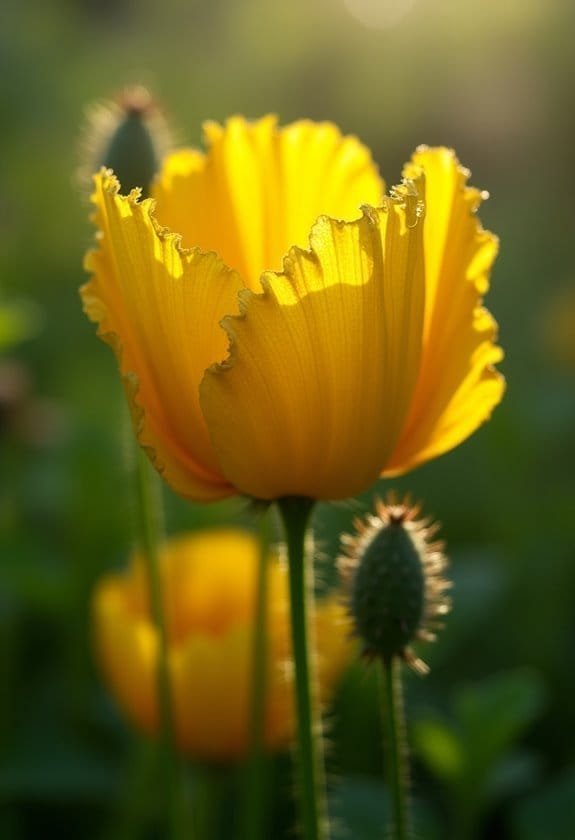
Argemone platyceras, widely known as the Crested Poppy, represents a remarkable example of resilient flora, native to the sun-soaked prairies of Mexico.
This short-lived perennial, with striking spiny blue-green leaves and stunning solitary white flowers, showcases a unique blend of aesthetic appeal and ecological function.
Its adaptations, including drought tolerance and attractive fruiting bodies, underscore the plant's essential role in attracting pollinators, illustrating the intricate relationships within its habitat.
Common Name
Often referred to by several common names, Argemone platyceras grabs attention with its vibrant flowers and distinctive foliage. Known as the Prickly Poppy, Blessed Thistle, Crested Poppy, and Chicalote Poppy, this plant showcases a fascinating array of attributes.
Its striking white flowers, reaching up to 12 cm in diameter, boast a dramatic yellow or red center, inviting admiration from both casual observers and botanical enthusiasts alike.
The spiny blue-green leaves of Argemone platyceras add an intriguing textural contrast, as they're pinnatifid and can grow up to 35 cm long. This unique morphology not only enhances its aesthetic appeal but also serves a functional purpose in the wild.
Native to the prairies of Mexico, this species finds itself comfortably at home in its natural habitat, thriving in sunny, open areas.
Moreover, the ecological importance of Argemone platyceras can't be overstated. Its radiant flowers attract a diverse range of pollinating insects, thereby contributing considerably to local biodiversity and ecological balance.
As a result, understanding these common names helps appreciate the value of this enchanting plant in nature.
Scientific Name
The scientific name for the Crested Poppy, Argemone platyceras, reflects both its botanical lineage and unique characteristics. This name derives from the genus Argemone, which is rooted in Greek, alluding to the plant's historical medicinal uses, particularly in treating cataracts. Such a lineage indicates the plant's valued role in traditional remedies, showcasing its importance to cultural practices.
The species name, platyceras, combines two Greek words: "platus," meaning broad, and "kerasths," meaning horned. This nomenclature aptly describes the morphology of Argemone platyceras, particularly its distinctive leaf shapes and characteristics, which contribute to its striking appearance.
Native to Mexico, this resilient plant is recognized for its spiny blue-green leaves and prominent large white flowers, often adorned with vibrant yellow to red centers.
Additionally, Argemone platyceras is synonymous with Argemone mexicana var. aculeatissima, emphasizing the diversity within the Argemone species. The intricate taxonomy not only enhances the understanding of its natural classification but also underlines the plant's potential in both medicinal and ornamental contexts, affirming its multifaceted significance in the botanical world.
Overview
Native to the vibrant landscapes of Mexico, the Crested Poppy, known scientifically as Argemone platyceras, stands out as a striking addition to any garden or natural prairie setting.
This short-lived deciduous perennial flourishes particularly well in prairie-type habitats, exhibiting its distinctive spiny blue-green leaves, which can reach lengths of up to 35 centimeters. These leaves provide an intriguing contrast to the solitary white flowers the plant produces, which may extend to 12 centimeters across, often adorned with an enchanting yellow or red center.
Thriving in full sun and well-drained soil, Argemone platyceras demonstrates impressive drought tolerance once established, making it suitable for hardiness zones 8a to 10b.
Its alluring flowers not only beautify the landscape but also play a crucial role in supporting local ecosystems; they attract a variety of pollinating insects, thereby enhancing biodiversity in gardens and natural settings alike.
To guarantee ideal growth and minimize excessive self-seeding, regular removal of spent seed heads is recommended.
Key Features
Argemone platyceras stands out with its impressive height, often reaching around 1 meter tall while extending nearly 90 centimeters in width.
The plant's visual appeal lies in its spiny, blue-green leaves, which can grow up to 35 centimeters long, and its striking white flowers, each measuring up to 12 centimeters in diameter, often adorned with vibrant yellow or red centers.
Blooming primarily in the warm seasons, this perennial not only enhances garden aesthetics but also provides essential habitats for a variety of pollinators.
Growth Size
Reaching impressive heights, Argemone platyceras typically stands about 1 meter tall, with a potential spread of up to 90 centimeters. This remarkable plant not only captures attention with its height but also showcases resilience through its exceptional drought tolerance, a critical feature for enduring prairie environments.
After establishing itself with suitable moisture conditions, it comfortably withstands periods of limited water supply, making it a valuable addition to dry landscapes.
The spiny, pinnatifid green leaves, extending up to 35 centimeters in length, serve both functional and aesthetic purposes. These leaves, while offering a striking contrast against the sunlit backdrop of the plant, also reduce water loss by minimizing the surface area in direct sunlight.
In addition, the combination of height and leaf structure enhances the plant's ability to thrive in challenging conditions.
As a short-lived perennial, Argemone platyceras exhibits unique characteristics that contribute to its growth. With solitary white flowers, measuring up to 12 centimeters across, this poppy stands as a symbol of nature's adaptability, seamlessly blending beauty and resilience within its prairie habitat.
Its overall growth size embodies the essence of thriving under both sun and scarcity.
Appearance
The striking appearance of Argemone platyceras, or Crested Poppy, makes it a standout choice in any garden setting. This eye-catching plant features spiny blue-green leaves, which can grow up to 35 centimeters in length, displaying a unique pinnatifid structure that evokes intricate lacework in nature.
When it comes to flowering, the Crested Poppy produces solitary white flowers, reaching up to 12 centimeters across, adorned with vibrant yellow or red centers that seem to radiate warmth and energy.
Typically growing to a height of 1 meter and spreading up to 90 centimeters, it commands attention in any floral arrangement. The spiny fruit capsules, measuring around 5 centimeters long and 2.5 centimeters broad, contribute further to its distinctive profile, resembling tiny, armored globes nestled among lush foliage.
Additionally, Argemone platyceras exhibits remarkable drought tolerance, thriving in environments with full sun exposure and well-drained soils. This resilience allows it to adapt well to prairie-type habitats, making it an ideal choice for gardens where easy maintenance and bold aesthetic appeal are desirable.
Its unique features create a fascinating display, promising to enhance the beauty of any outdoor space.
Flowering Season
Although many plants have a defined blooming period, Argemone platyceras stands out with its vibrant flowers that grace gardens from late spring through summer, peaking between June and August. This stunning plant produces large, white flowers, often stretching up to 12 centimeters across, with striking yellow or red centers that captivate onlookers and pollinating insects alike.
The flowering season is essential not only for aesthetic appreciation but also for ecological health, as it attracts various pollinators important for maintaining local biodiversity.
While each bloom lasts merely a few days, the potential for continuous blooming is significant. Gardeners can encourage this persistence by employing deadheading practices, which involve the removal of spent flowers to stimulate further growth.
The result is a longer-lasting display of beauty, with flowers consistently appealing to pollinators during their journey through the garden.
After the flowering season, the Crested Poppy develops spiny fruit capsules, measuring up to 5 centimeters long, which house several seeds. If these seeds are allowed to remain, they can lead to self-seeding, creating a legacy of vibrant blooms in future seasons.
Therefore, the flowering season of Argemone platyceras plays an important role in sustaining its life cycle and enhancing garden vitality.
Growing Requirements
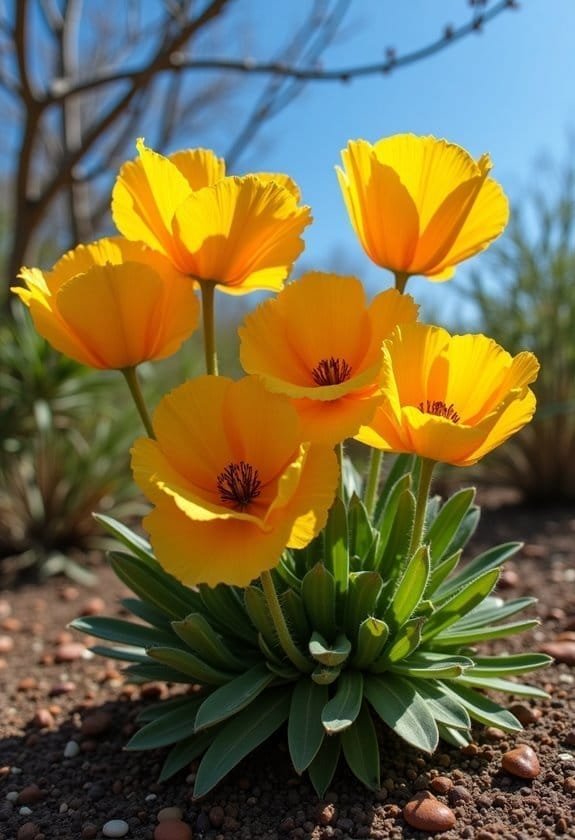
To cultivate Argemone platyceras successfully, understanding its growing requirements is essential.
This vibrant species flourishes in full sunlight, prefers moist, well-drained soil, and adapts to diverse pH levels, revealing its resilient nature.
Once established, it not only withstands drought conditions but also enhances low-maintenance gardens, beckoning those who appreciate striking yet manageable landscapes.
Light
Providing ample sunlight is essential for the healthy growth of Argemone platyceras. This resilient plant thrives when given a minimum of six hours of direct sunlight each day, which is critical for its development and overall flourishing.
During the initial growth phase, adequate sunlight helps the plant establish a robust root system, important for supporting its drought-tolerant nature later on. Moreover, full sun exposure enhances the flowering potential of Argemone platyceras, resulting in vibrant blooms that captivate the eye.
In contrast, inadequate light exposure can lead to leggy growth, characterized by elongated stems and sparse foliage, ultimately diminishing the flowering display. For ideal growth, it's important to plant Argemone platyceras in well-drained, sandy, or gravelly soils, ensuring those soil conditions are supplemented by full sun exposure to avoid moisture retention, which can stifle growth.
Soil
Argemone platyceras demands well-drained sandy or gravelly soils to thrive effectively. This plant thrives in conditions that guarantee adequate soil drainage; poor drainage can lead to excess moisture, which may compromise root health and increase susceptibility to disease.
While it exhibits a remarkable adaptability to varying soil pH levels, it generally flourishes in conditions that are neutral to slightly acidic, contributing further to its resilience.
During its establishment phase, it requires moist soil to encourage robust root development; however, once established, it showcases impressive drought tolerance, allowing it to endure less favorable conditions.
Maintaining soil quality is paramount, as the regular removal of spent seed heads helps control self-seeding, which can foster unwanted crowding and negatively impact the plant's overall growth efficacy. Horseshoe Vetch also thrives in stable soil structures, similar to that of Argemone platyceras, enhancing local biodiversity.
Water
When it comes to water requirements, Argemone platyceras thrives in conditions that maintain a delicate balance between moisture retention and drainage. This stunning plant prefers well-drained soil and shouldn't be subjected to overly wet conditions that could lead to disastrous root rot.
An ideal environment allows for sufficient soil moisture while preventing saturation, enabling the plant to flourish. During the initial growth phase, regular monitoring of soil moisture becomes critical, ensuring that the roots establish without drowning in excess water.
Once fully established, Argemone platyceras exhibits impressive drought tolerance, making it an exceptional choice for xeriscaping projects where water conservation is key.
While this plant enjoys moist conditions, striking the right moisture balance is essential; it won't thrive in persistently soggy soil. Adequate sunlight exposure further enhances its health, as Argemone platyceras flourishes in full sun.
Consequently, gardeners should prioritize both proper watering techniques and attention to environmental factors to cultivate this resilient beauty successfully, ultimately reaping the rewards of determined care and understanding.
Temperature
Perfect temperature conditions play a crucial role in the growth and significance of Argemone platyceras. This remarkable plant thrives best in hardiness zones 8a, 8b, 9a, 9b, 10a, and 10b, indicating a clear preference for warmer climates. It requires full sun exposure to promote ideal growth and vibrant flowering, embodying the essence of sun-loving flora.
The drought-tolerant nature of Argemone platyceras enables it to withstand extreme heat once established, making it a stellar candidate for xeriscaping projects that prioritize water conservation.
While it can endure various pH levels, the plant notably favors well-drained sandy or gravelly soils to achieve peak performance. This preference reinforces the significance of appropriate soil conditions, as excessive moisture can hinder its development and lead to root rot.
For perfect growth, the soil should remain moist but never saturated, emphasizing the balance needed for this resilient species.
To conclude, understanding the temperature and environmental requirements of Argemone platyceras not only enhances cultivation success but also emphasizes its adaptability and resilience in diverse landscapes, showcasing the plant's crucial role in sustainable gardening practices.
Pollinator Criteria
Argemone platyceras captivates an array of pollinators, prominently bees and butterflies, thanks to its vibrant white flowers and compelling yellow and red centers.
During its peak bloom from late spring to early summer, these large solitary flowers, measuring up to 12 cm across, present a rich source of nectar and abundant pollen, encouraging effective cross-pollination among species.
Attracted Pollinators
The vibrant white flowers of Argemone platyceras, adorned with striking yellow and red centers, serve as beacons for a diverse array of pollinators like bees and butterflies. Flowering from late spring to early summer, this plant provides a consistent, nectar-rich food source, essential for the nourishment of visiting pollinating insects. Each bloom features a structure that not only attracts these beneficial creatures but also guides them towards the life-sustaining nectar, a fundamental resource they rely on. Rich in nutrients, the pollen of Argemone platyceras further enhances its appeal, making it a preferred stop for a variety of insects. The visual cues these colorful flowers offer play an important role in directing pollinators to their rewards, facilitating not just individual insect survival but fostering an interconnected ecosystem. Furthermore, the resemblance of its flower structure to those of other plants, such as self-pollination strategy, highlights its evolutionary adaptation for maximizing pollinator attraction.
Pollination Method
Pollination occurs primarily through the visits of various insect species that are drawn to the showy flowers of Argemone platyceras. This plant features wide, open blooms that facilitate pollinator activity, allowing bees and butterflies to access the abundant nectar. The striking white petals, accented with golden and reddish centers, attract these insect visitors, enhancing the overall pollen transfer efficiency during the flourishing season, which typically spans from late spring to summer.
As pollinators engage with the flowers, they inadvertently collect and redistribute pollen, essential for the successful fertilization of Argemone platyceras. Each visit not only aids in pollen transfer but also promotes seed production, which is critical for the reproduction and sustainability of the species.
The plant's spiny capsules, containing the seeds, serve as an additional enticement, visually appealing to its insect partners. Ultimately, the effective reproductive strategy of the Crested Poppy highlights the interconnectedness of its existence with pollinators, underscoring the significance of maintaining biodiversity in local ecosystems.
Care & Maintenance
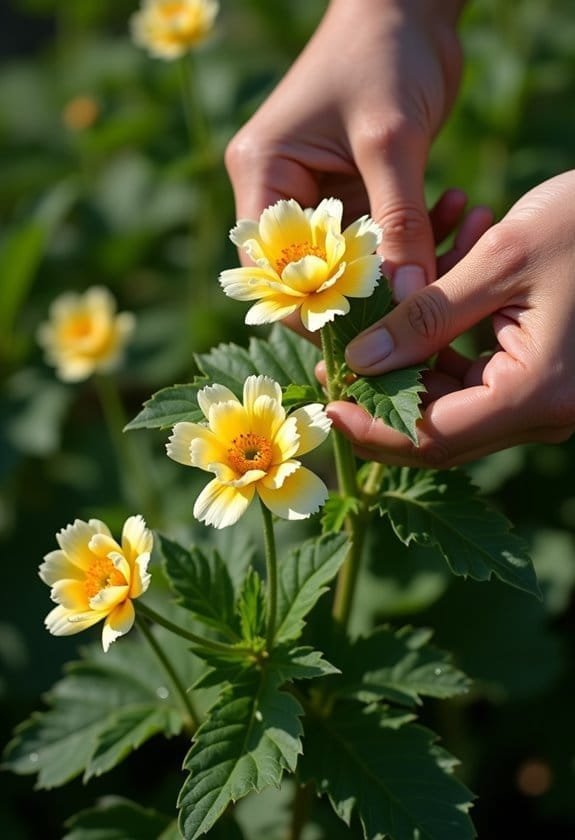
When caring for Argemone platyceras, understanding its specific needs is essential for fostering its vibrant growth.
This resilient perennial flourishes in well-drained sandy or gravelly soils bathed in full sunlight, allowing enthusiasts to create a striking landscape.
Planting Tips
Choosing the right location is essential for successfully planting Argemone platyceras. This striking plant flourishes in full sun and prefers well-drained soils, such as sandy or gravelly types. Evaluating soil conditions prior to planting plays a pivotal role in fostering a healthy environment for growth. If the soil retains excess moisture, the roots may rot, compromising the plant's vigor.
As Argemone platyceras establishes itself, it showcases remarkable drought tolerance, requiring minimal watering once settled. However, during its initial growth period, consistent moisture may be beneficial.
Gardeners should also consider the plant's taproot, which makes transplanting somewhat challenging; handling the plant carefully during this process can greatly enhance survival rates.
To encourage a continuous display of blooms, regular deadheading of spent flowers is recommended. This practice not only promotes reblooming but also helps control uncontrolled self-seeding, leading to a tidier garden appearance.
Additionally, removing seed heads after flowering contributes to overall plant health. Finally, gardeners should stay vigilant for pests and diseases, which can threaten the Argemone platyceras, thereby securing its place as an eye-catching addition to their landscape. Salad Burnet's self-seeding ability can serve as a useful comparison for understanding the propagation behaviors of various plants.
Ongoing Care
How can gardeners guarantee the longevity and vibrancy of their Argemone platyceras? Proper ongoing care is crucial for this striking plant to flourish. Initially, these poppies have specific watering needs. During their establishment phase, they require consistent moisture, but once established, they become remarkably drought tolerant.
Gardeners should prioritize well-drained soil, aligning with the species' soil preferences; sandy or gravelly substrates work best, as overly wet conditions may lead to root rot.
Regular deadheading is pivotal to maintaining the plant's visual charm. Removing spent flowers encourages continuous blooming throughout the growing season, while also managing unwanted self-seeding. However, leaving some seed heads intact can facilitate natural propagation if desired.
In terms of sunlight requirements, Argemone platyceras thrives best in full sun, where it can absorb abundant light, thereby promoting ideal growth.
With minimal maintenance beyond watering and periodic deadheading, gardeners can enjoy a robust display of vibrant blooms. Fundamentally, attentive care focused on these key aspects—watering needs, soil preferences, and strategic deadheading—will guarantee that Argemone platyceras remains a mesmerizing presence in any garden.
Suggested Companions
Argemone platyceras thrives alongside a variety of drought-tolerant companions, creating a vibrant and harmonious garden ecosystem.
For ideal companion planting, consider integrating plants like Lavender (Lavandula) and Salvia, both of which flourish in similar conditions of well-drained soil and full sun. These companions not only enhance the garden's visual appeal but also contribute to a cohesive aesthetic that balances the Crested Poppy's striking, spiny foliage. Moreover, selecting these plants supports the garden's biodiversity, fostering a rich environment for beneficial insects.
Incorporating ornamental grasses, such as Blue Fescue (Festuca glauca), introduces contrasting textures and height, allowing for a richer landscape while maintaining harmony with Argemone platyceras.
Additionally, Echinacea (Coneflower), known for attracting pollinators, complements the flowering period of the Crested Poppy brilliantly. Companion plants like these can enhance the ecosystem by attracting essential pollinators, proving beneficial for the overall health of the garden.
Gardeners must carefully avoid planting Argemone platyceras next to moisture-loving species to prevent root rot, as it prefers less humid environments.
Regularly removing seed heads from the Crested Poppy proves beneficial, as this practice encourages further blooming and maintains control over potential self-seeding of both the Argemone and its companions.
With these suggestions, gardeners can create a thriving and ecologically balanced space, celebrated for its beauty and resilience.
Common Issues
Argemone platyceras faces several common challenges that can impact its health and aesthetics in any garden setting.
This species can suffer from root rot in excessively moist conditions, highlighting the importance of well-draining soil, while self-seeding may lead to overcrowding if seed heads aren't removed promptly.
Additionally, observing for pests such as aphids, which may occasionally infest the plant, is essential for maintaining its vigor, as timely intervention can prevent further complications.
Pests/Diseases
When it comes to pests and diseases, Argemone platyceras shows a remarkable resilience, but it isn't completely immune to issues. While generally robust, the plant can experience attacks from pests like aphids, whose feeding may sap its vigor and, more troublingly, transmit various diseases.
In particularly humid conditions, fungal infections such as powdery mildew can emerge, leading to unsightly leaf discoloration and deformation, thereby hindering the plant's aesthetic appeal and overall health.
Furthermore, root rot poses a significant concern, especially when the soil becomes overly saturated, emphasizing the necessity for well-drained conditions. This disease not only compromises the root system but can ultimately affect the plant's stability and growth.
In addition, spider mites often become problematic during hot, dry weather, as their infestations cause stippling on the leaves, which can drastically impair the plant's ability to photosynthesize efficiently. Regular inspections and maintaining good air circulation play crucial roles in mitigating these common issues associated with pests and diseases. Additionally, monitoring for signs of watermark disease, prevalent in similar plants like Grey Willow, can help prevent further complications.
Solutions
To effectively combat the common challenges faced by Argemone platyceras, gardeners can adopt several proactive measures.
One significant issue is overwatering, which can lead to root rot, compromising the plant's overall health. It's vital to plant Argemone in well-drained soil, allowing moisture to circulate and preventing excessive retention. Regularly monitoring the moisture levels guarantees that plants receive adequate hydration, especially in their early growth stages.
Self-seeding can also become problematic, as uncontrolled seedlings may overcrowd garden spaces, ultimately stifling growth. Gardeners should routinely remove seed heads after blooming, which serves to manage population density effectively.
Pest problems, particularly from aphids or spider mites, are another concern. Implementing a regular monitoring schedule can help in the early detection of infestations. If necessary, applying insecticidal soap can mitigate these issues sustainably.
Finally, awareness of the spiny capsules' potential hazard is fundamental, particularly in areas frequented by children or pets.
Thoughtful placement and diligent management of Argemone platyceras create a safer and more enjoyable garden environment, highlighting the impressive beauty of this unique plant while minimizing risks.
What are the differences between the Crested Poppy and California Poppy?
The main difference between the Crested Poppy and the California Poppy flower is their appearance. The California poppy flower has four petals and is orange or yellow, while the Crested Poppy is a biennial or ephemeral herb. Both flowers are beautiful additions to any garden or landscape.
Summary
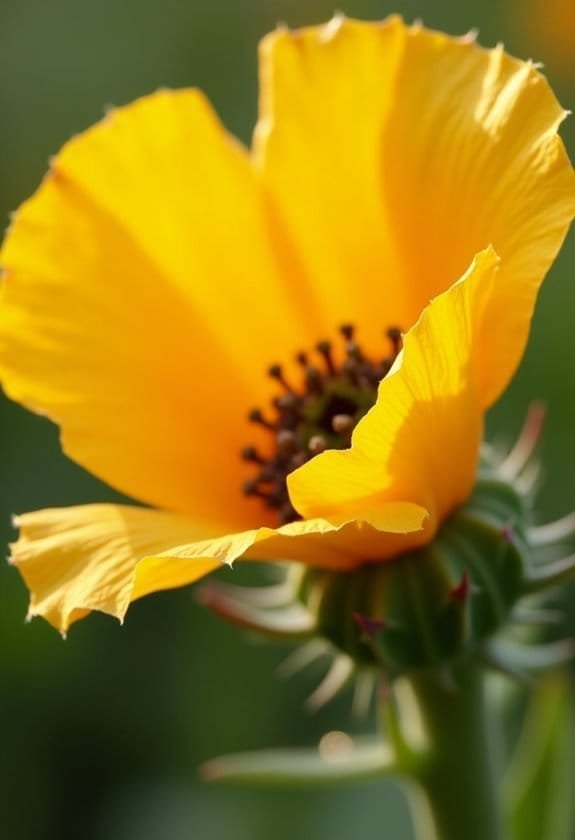
Known as the Crested Poppy, Argemone platyceras is a short-lived perennial plant native to Mexico that thrives in prairie habitats. This striking species showcases spiny blue-green leaves that can reach 35 centimeters in length, and solitary white flowers that bloom impressively, measuring up to 12 centimeters across. Each flower's stunning yellow or red center adds burst to its visual appeal.
Growing to heights of approximately 1 meter and spreading up to 90 centimeters, the Crested Poppy flourishes in well-drained sandy or gravelly soils and full sunlight. Once established, it exhibits remarkable drought tolerance, making it an excellent choice for sustainable gardening practices.
Additionally, this plant plays a critical role in the ecosystem by attracting various pollinating insects, thereby enhancing local biodiversity. Minimal maintenance is required, although removing seed heads is advisable to curb excessive self-seeding.
The Crested Poppy exemplifies resilience and ecological contribution, embodying the delicate balance inherent in native prairie environments. This impressive perennial not only beautifies landscapes but also supports essential pollinators, making it a significant inclusion in any garden or restoration project aimed at preserving biodiversity.