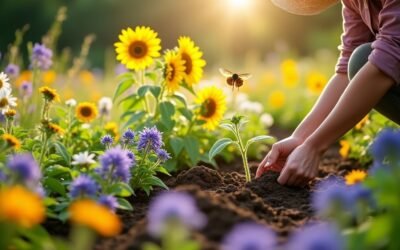
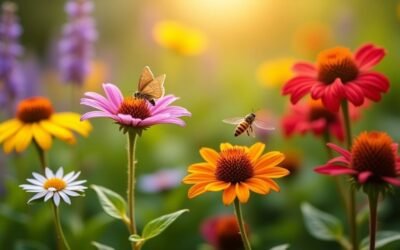
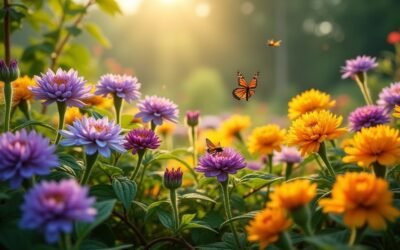
Borago officinalis, or borage, is a striking herb celebrated for its vibrant blue, star-shaped flowers and culinary versatility. This plant, growing 60 to 100 cm tall and thriving in well-drained, slightly acidic soil, exhibits self-seeding properties, requiring minimal maintenance while fostering biodiversity by attracting essential pollinators like bees. With a rejuvenating cucumber-like flavor, both the leaves and flowers enhance various dishes, though moderation is essential due to potential toxicity from pyrrolizidine alkaloids. Borage's impressive adaptability and ecological benefits make it a garden staple. Exploring its herbal uses and care requirements reveals even more delightful insights waiting to be uncovered.
Main Points
- Borago officinalis, commonly known as borage or starflower, grows 60 to 100 cm tall with cucumbers-flavored leaves and star-shaped blue flowers.
- This plant attracts pollinators like bees and butterflies, promoting garden biodiversity and supporting local ecosystems.
- Borage is edible; its leaves and flowers can enhance salads, cocktails, and teas but should be consumed in moderation due to potential toxicity.
- Thriving in full sunlight and well-drained soil, borage is drought-tolerant once established and exhibits self-seeding characteristics for easy maintenance.
- It pairs well with tomatoes and brassicas, aiding in pest deterrence and pollinator attraction while requiring minimal care and monitoring for pests.
Introduction
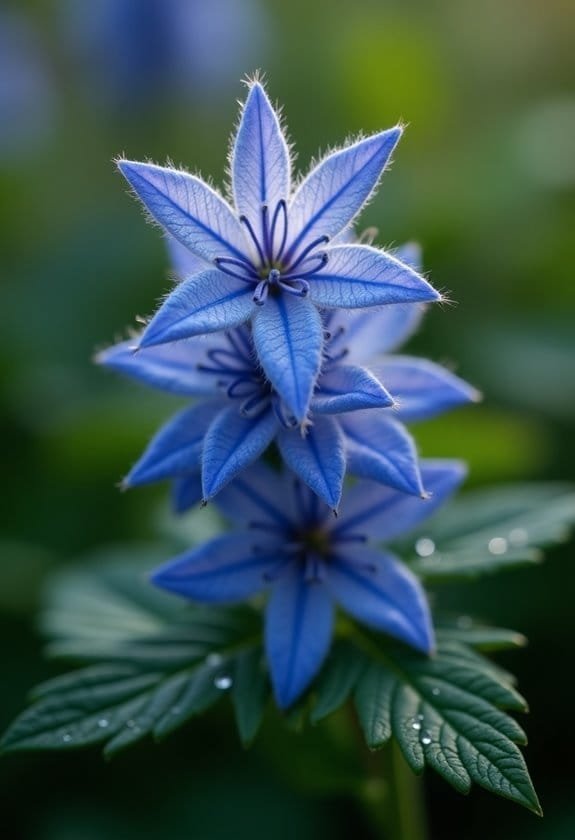
Commonly known as borage, Borago officinalis is an annual herb cherished for its striking blue star-shaped flowers and distinctively hairy leaves.
Originating from the Mediterranean region, this versatile plant reaches heights of 60 to 100 centimeters and showcases its blooms from June to September, enriching gardens with both beauty and culinary potential.
Its leaves and flowers, noted for their invigorating, cucumber-like flavor, not only enhance various dishes but also carry a rich historical significance in traditional medicine, although caution must be exercised due to certain health risks associated with its consumption.
Common Name
Borago officinalis, known for its vibrant star-shaped blue flowers, is commonly referred to as "borage" or "starflower." This annual herb, which can reach heights of 60 to 100 cm (2 to 3+12 ft), not only captivates with its appearance but also boasts a fresh cucumber-like flavor that enhances salads and beverages.
Borage's culinary appeal extends beyond its unique taste, as it evokes memories of summer gardens and fresh produce. In addition to "borage" and "starflower," the plant is also historically known as "tailwort." This alternate common name harkens back to the herb's traditional uses, particularly in folk medicine.
The wrinkled gray-green leaves of the starflower are also edible when prepared correctly, offering further versatility in the kitchen. Furthermore, borage's pollinator-friendly nature greatly contributes to its popularity in gardens, as it attracts an array of beneficial insects, including bees, butterflies, and hummingbirds.
This interaction not only enhances biodiversity but also demonstrates the integral role borage plays in nourishing both ecosystems and culinary traditions. Consequently, borage, the charming starflower, remains a beloved addition to culinary landscapes and natural gardens alike.
Scientific Name
The scientific name for borage, Borago officinalis L., reflects its classification and historical significance.
Classified in the family Boraginaceae, this plant's origins are steeped in traditional use across the Mediterranean region. The genus name, "Borago," derives from the Latin term "burra," which aptly describes its distinctive coarse and hairy leaves. These features contribute to its unique identity and appeal as a culinary herb.
The species name, "officinalis," reveals borage's long-standing role in herbal medicine, showcasing its importance beyond mere aesthetics. With its striking star-shaped blue flowers earning it the common name "starflower," Borago officinalis captures not only the eye but also the palate and tradition.
Historically cultivated for centuries, this herb serves various culinary applications, ranging from fresh salads to infused beverages, enhancing flavors with its mild, cucumber-like taste.
Additionally, its medicinal properties, ranging from anti-inflammatory to soothing effects, underline the plant's versatility. By examining the scientific classification and etymology of Borago officinalis, one can appreciate the rich tapestry of cultural and practical significance that this enchanting plant embodies.
Overview
Borage, an annual herb native to the Mediterranean, captivates with its vibrant star-shaped blue flowers and unique flavor profile. Typically growing between 1 to 3 feet tall, borage (Borago officinalis) boasts leaves resembling cucumbers in taste, making them a delightful addition to salads, teas, and cocktails.
The plant's wrinkled gray-green leaves are distinctively covered in bristly hairs, adding to its visual appeal and sensory texture. Esteemed for its rich history of both culinary and medicinal applications, borage also benefits gardeners by attracting essential pollinators, such as bees and butterflies, thereby enhancing biodiversity.
Its self-seeding nature allows it to thrive year after year, establishing a reliable presence in gardens without annual replanting. This resilience not only conserves gardening efforts but also supports local ecosystems by providing habitat and sustenance for pollinator species.
The interplay of borage's aesthetic beauty and practical uses underscores its invaluable role in both culinary pursuits and ecological health, making Borago officinalis a cherished choice for any garden enthusiast seeking to enrich their horticultural experience.
Key Features
Borago officinalis, commonly known as borage, typically reaches heights of 60 to 100 centimeters, displaying bristly, hairy stems alongside vibrant, star-shaped flowers.
The plant showcases blue flowers, which dominate genetically, blooming during the warmer months and attracting pollinators with their striking appearance and cucumber-like flavor.
Its adaptability to various gardening conditions makes borage a resilient addition, allowing it to flourish even in less than ideal soil and lighting while adding aesthetic and ecological value to landscapes.
Growth Size
Growing to heights of 60–100 cm (approximately 2–3 feet tall), this plant can also spread out to a width of 30–45 cm (1–1.5 feet wide). Borage (Borago officinalis) embodies a vigorous growth size that makes it a notable presence in gardens. As an annual plant, its life cycle typically concludes within a year; nevertheless, borage showcases a remarkable ability for self-seeding. This characteristic allows it to flourish year after year, offering continuity in garden landscapes.
The plant thrives in various well-drained soil types, demonstrating adaptability that many other species lack. Borage prefers full sunlight, drawing energy from the sun to fuel its growth.
During its flourishing season from June to September, the robust plant not only gains height but also forms a visually arresting display, attracting enthusiastic pollinators like bees and butterflies. The rough, hairy stems and bristly leaves, ranging from 5–15 cm (2–6 in) in length, contribute to its distinctive texture.
Appearance
Typically reaching heights of 60–100 cm (2–3 feet), this plant showcases an eye-catching presence in garden landscapes. Borage (Borago officinalis) stands out with its distinct hairy, bristly stems that contribute to its unique texture.
The leaves, which measure 5–15 cm (2–6 inches) long, display a greenish-gray color and are covered in prickly hairs. These leaves not only add visual interest but also possess a salty, cucumber-like flavor, making them a delightful addition to salads or other dishes.
One of the most engaging features of borage is its star-shaped blue flowers, characterized by five narrow, triangular-pointed petals. While blue is the predominant hue, these flowers can occasionally bloom in shades of pink or white. Their vibrant color attracts a variety of pollinators, underscoring borage's ecological significance.
As a self-seeding annual, this plant's ability to persist in gardens contributes to its lasting charm, ensuring a continual display of striking blue flowers year after year. With its combination of texture, flavor, and colorful blooms, borage inherently enhances any garden environment, beckoning both gardeners and curious visitors alike.
Flowering Season
During the summer months, borage bursts into a vibrant display from June to September in temperate climates. This flowering plant showcases its unique beauty through flowers characterized by five narrow, triangular-pointed petals. The colors of these blossoms range from stunning blue to soft pink and crisp white, with the blue flowers genetically dominating the others, illustrating the intriguing genetic variation within the species.
Borage flowers aren't only visually striking; they also play a crucial role in attracting pollinators such as bees and butterflies, thereby enhancing the biodiversity of the surrounding garden ecosystem. This interaction underscores the fundamental relationship between flowering plants and their pollinator counterparts.
Interestingly, a high degree of geitonogamy, or self-pollination, is observed in borage's flowering process. This means that the plant often relies on its own blooms for reproduction, allowing it to thrive even when pollinator activity varies.
Consequently, borage not only contributes to the visual splendor of summer gardens but also guarantees its own reproductive success, creating a cyclical harmony within the ecological landscape. Essentially, borage represents a stunning example of nature's intricate dance between beauty and survival.
Growing Requirements
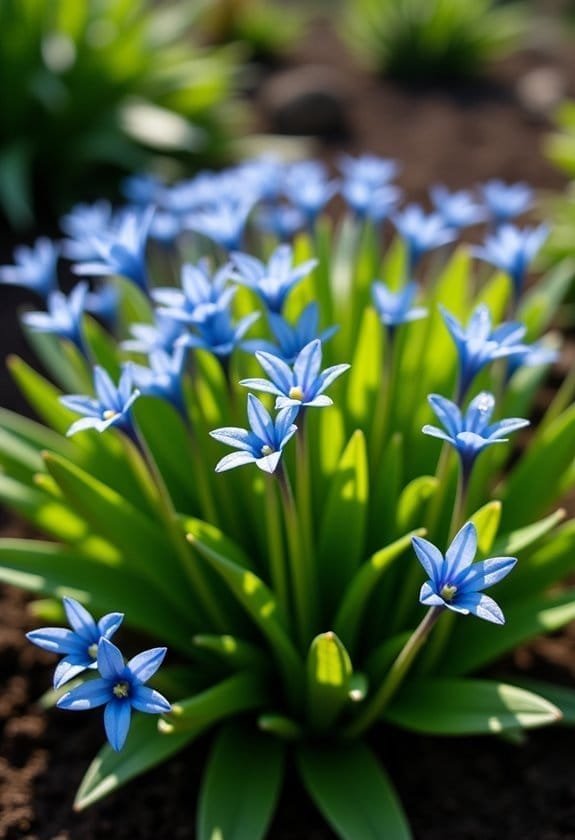
Borage requires specific growing conditions to flourish, making it vital for cultivators to understand its needs.
This resilient herb prefers well-drained, slightly acidic soil, receiving at least four hours of direct sunlight daily to stimulate its vibrant blooms.
Regular attention to watering practices, particularly letting the soil dry between uses, guarantees plants thrive without succumbing to disease, ultimately leading to a flourishing garden.
Light
To achieve ideal growth and vibrant blooms, borage needs full sun exposure, requiring at least four hours of direct sunlight each day. This plant thrives in environments bathed in sunshine, as robust light is essential for maximizing its flowering potential and overall health.
While it can tolerate light shade, the lush, vibrant blossoms and vigorous growth occur mainly in well-drained, sunny locations.
In fact, borage expresses a marked preference for fertile, slightly acidic soils that facilitate drainage and promote healthy root systems. Conversely, heavy, soggy soils can devastate borage's energy, leading to detrimental root rot.
Significantly, adequate air circulation, along with ideal light exposure, serves as a crucial defense against fungal diseases like powdery mildew, which can compromise the plant's beauty and durability.
Therefore, gardeners should prioritize sunny placements when cultivating borage, making sure that the plants bask in nourishing sunlight while avoiding overly shaded areas that may hinder their blooming abilities.
Successfully accommodating borage's light requirements helps secure a bountiful bloom, enhancing both garden aesthetics and overall productivity, thereby inviting beneficial pollinators to feast on its striking flowers.
Soil
Healthy soil is fundamental for borage's growth and prosperity. A well-drained soil structure is important, as borage flourishes in slightly acidic to neutral pH levels, demonstrating remarkable adaptability to various soil types, even poorer soils. Incorporating organic matter—such as compost or well-rotted manure—enhances soil fertility and moisture retention, greatly benefiting borage's development.
When planting, borage seeds should be carefully sown at a depth of 1/4 to 1/2 inch, ensuring that seedlings are spaced 18-24 inches apart. This spacing allows for proper air circulation and best growth potential.
Although young borage plants require regular watering to establish roots, they become remarkably drought-tolerant once mature, capable of enduring dry spells with ease. Additionally, borage can thrive in similar moist environments to those preferred by brooklime, making these plants suitable companions in wetland gardens.
Borage's sensitivity to hard frost demands thoughtful site selection—avoiding frost pockets is essential for successful cultivation. Ideally, borage should receive at least 4 hours of direct sunlight daily, although it can also thrive in light shade.
Water
Maintaining consistent moisture is imperative for borage during its establishment phase. New borage plants thrive when watered regularly, as evenly moist soil encourages their healthy growth. Gardeners should aim to consistently keep the soil at about 50-75% moisture, which supports borage's initial development. Additionally, proper watering practices are crucial due to borage's similar growth requirements, ensuring its success alongside other garden plants.
Once established, borage showcases remarkable drought tolerance, allowing the soil to dry out between watering sessions without compromising plant health. This resilience permits the plant to thrive in various conditions, from dry gardens to more humid environments.
However, container-grown borage plants require more diligent watering than those planted in the ground, as their soil dries out more quickly, necessitating frequent checks on soil moisture.
It's essential to monitor these levels carefully; overwatering can result in sogginess, which can cause disease issues threatening plant health. Borage flourishes best in full sun but can tolerate partial shade. This adaptability influences its water requirements and overall vigor, making environmental conditions a significant factor in the plant's health. Additionally, Salad Burnet's drought tolerance complements its appeal as a garden companion for borage.
Temperature
Temperatures play an essential role in the growth and development of borage (Borago officinalis). This hardy plant thrives best in regions that bask in at least four hours of daily direct sunlight.
While borage can tolerate some temperature fluctuations, its sensitivity to hard frost necessitates careful timing for planting, particularly in cooler climates. Ideally, the soil has warmed to above 60°F (15°C) to foster ideal seed germination, where warmth nurtures the tiny seeds into robust seedlings.
During its initial growth stage, borage requires regular watering to establish itself effectively. Once established, however, it exhibits remarkable drought tolerance, relying on its deep-rooted system to access moisture.
Temperature extremes can pose a challenge; prolonged exposure to excessive cold can greatly hinder borage growth and flower production. Consequently, gardeners should vigilantly monitor temperature conditions to mitigate adverse effects. Additionally, much like wild strawberries, borage benefits from well-draining soil to thrive in various conditions.
Pollinator Criteria
Borage (Borago officinalis) greatly attracts a diverse array of pollinators, particularly honeybees, due to its vibrant blue, star-shaped flowers that are rich in nectar.
During its blooming period from June to September, the plant employs a self-pollination method, enhancing pollinator efficiency while also promoting cross-pollination when various pollinators visit its blossoms.
This unique combination of appealing morphology and generous nectar production makes borage an essential resource for maintaining and enhancing pollinator populations in natural ecosystems.
Attracted Pollinators
Plants like borage (Borago officinalis) serve as a beacon for pollinators, drawing in honeybees with their vibrant blue, star-shaped flowers.
These plants produce an abundance of nectar and pollen, providing a rich sustenance zone that honeybees and other pollinators, such as butterflies and hummingbirds, keenly seek. Blooming from June to September, borage flowers offer a consistent food source during the peak growing season in temperate climates.
The accessibility of borage's flowering structure makes it incredibly inviting for foraging pollinators. Its self-pollinating nature guarantees that borage efficiently produces seeds while simultaneously attracting a variety of beneficial insects, thereby enhancing the local ecosystem. Additionally, borage can also attract essential pollinators like bumblebees, which are known for their vital role in pollination.
Furthermore, when homeowners include borage plants in their gardens, they actively contribute to increasing local biodiversity. Additionally, plants like Water Forget-Me-Not can also attract pollinators with their extended blooming period, making them valuable companions in the garden.
This friendly relationship between borage and pollinators plays a significant role in maintaining ecosystem health. By supporting diverse pollinator populations, borage aids in the reproduction of various flowering plants, thereby fostering a thriving environmental community.
Essentially, borage acts as an essential partner in the interconnected web of nature, nurturing life and sustaining balance in gardens across the globe.
Pollination Method
The method of pollination for borage (Borago officinalis) relies heavily on its self-pollinating capabilities, which allow the plant to thrive even in the absence of external pollinators. This self-sufficiency enhances reproductive efficiency, ensuring seed production without reliance on other plants. Borage flowers, characterized by their bright blue, star-shaped appearance, contain both male and female reproductive organs, facilitating geitonogamy—the transfer of pollen within the same flower or across flowers on the same plant.
While self-pollination sustains borage, it also plays an important role in fostering pollinator diversity in the surrounding environment. The flowering period spans from June to September, optimizing nectar availability for bees, hummingbirds, and butterflies, which are naturally drawn to these vibrant blooms.
The abundant nectar not only attracts these beneficial insects but also contributes to local ecosystems by promoting pest control and enhancing pollination services for adjacent crops.
In this way, borage serves as an essential species, utilizing its unique pollination method while simultaneously supporting biodiversity and ecosystem health. Its ability to thrive independently, complemented by its attractiveness to various pollinators, makes borage a significant player in the garden's dynamic.
Care & Maintenance
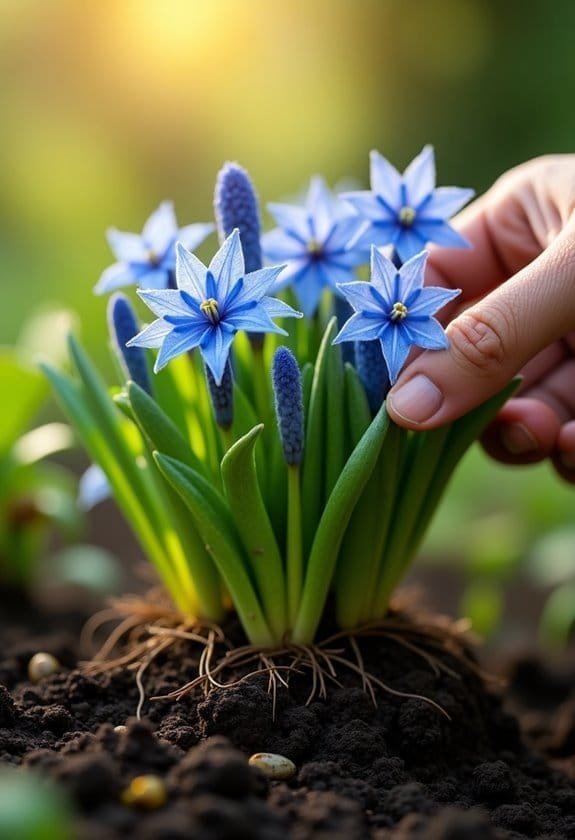
To guarantee the vibrant growth of Borago officinalis, proper care and maintenance are essential.
These plants flourish in full sun, relishing at least four hours of direct sunlight daily, while well-drained, slightly acidic soil provides an ideal habitat for their roots.
Additionally, understanding their watering needs and the importance of companion planting will promote a thriving, resilient garden environment.
Planting Tips
Borage flourishes in perfect growing conditions, making care and maintenance essential for its vibrant display. To successfully plant borage, begin by selecting a location that receives full sun exposure. This herb thrives in well-drained, slightly acidic soil, demanding at least four hours of direct sunlight daily for best growth.
When sowing seeds, bury them 1/4 to 1/2 inch deep, ensuring a spacing of 18-24 inches apart. This spacing allows adequate air circulation and encourages healthy development when the seedlings reach a height of 6-8 inches.
During the establishment phase, it's vital to keep the soil evenly moist. Once mature, borage exhibits impressive drought tolerance, requiring less frequent watering. However, for container plants, regular moisture is a necessity.
To promote an abundance of flourishing leaves and striking blue flowers, fertilize with a high phosphorus edible plant fertilizer, which aids overall plant health.
Additionally, gardeners should deadhead spent flowers consistently and prune back by half in midsummer. This practice stimulates new leaf growth and prolongs the blooming period, ensuring that borage maintains its enchanting appearance throughout the summer season.
Ongoing Care
While growing borage can be straightforward, ongoing care is important to guarantee vibrant and healthy plants. Borage thrives in full sun and requires at least four hours of direct sunlight daily to maximize its blooms.
During the plant's establishment, it's essential to maintain evenly moist soil; however, once mature, gardeners should allow the soil to dry between waterings to prevent root rot, as container plants may need more frequent hydration.
Fertilizing borage with an edible plant fertilizer high in phosphorus enhances its flowering capacity and plant health. Regular deadheading of spent blooms encourages prolonged flowering, providing a constant supply of this lovely herb.
In midsummer, pruning back the plants by half can stimulate new leaf growth, allowing for later harvests throughout the season.
It's important to monitor for symptoms of powdery mildew, particularly under poor growing conditions, which can arise from excessive humidity or overcrowding.
Ensuring adequate air circulation helps mitigate risks associated with both overwatering and underwatering, promoting a robust, annual bounty of borage. A little attention to these details can lead to a flourishing garden, filled with blooming, aromatic plants.
Suggested Companions
Integrating borage into the garden can enhance not only its own growth but also that of its companions. A good companion plant, borage thrives when grown alongside tomatoes, as it's known to improve their flavor and deter destructive pests like hornworms.
Additionally, borage contributes positively to brassicas such as cabbage and kale, attracting pollinators that enhance both pollination and pest control. Its ability to draw in vital pollinators is essential for supporting high pollination rates in flowering plants.
Planting borage with strawberries is another exceptional choice; the presence of borage can significantly increase the growth and yield of strawberries while simultaneously attracting beneficial insects.
However, gardeners should avoid planting borage near members of the mint family, as these plants may compete fiercely for essential nutrients and space, hampering growth.
To maintain ideal conditions for companion plants, regular deadheading and thinning of borage are recommended. This practice allows for better airflow, reducing the risk of diseases that can compromise the overall health of the garden. Furthermore, ensuring proper care of companion plants like borage helps support the health benefits of nitrogen-fixing plants in enriching soil fertility.
Common Issues
Borage, while resilient, can encounter several common issues that every gardener should address.
This herb is prone to pests like aphids and diseases such as powdery mildew, especially in poor growth conditions; therefore, vigilant monitoring for these threats is essential.
Additionally, its natural tendency to self-seed can lead to uncontrolled growth, necessitating regular management to maintain a healthy garden ecosystem.
Pests/Diseases
Many gardeners find that borage is remarkably resilient to pests and diseases, making it a preferred choice for low-maintenance landscaping. This hardy plant typically thrives without major issues; however, gardeners should be vigilant about certain conditions.
One notable problem is powdery mildew, a fungal disease that may arise in poorly ventilated environments or when plants are overwatered. This white, powdery coating can hinder borage's overall health if allowed to proliferate.
While borage doesn't attract significant pests, occasional monitoring for signs of stress is advisable. Underwatering or overwatering can lead to weakened plants, which might attract unwanted insects.
Gardeners can appreciate that borage's native characteristics often encourage beneficial insects and pollinators, which serve as natural allies in pest control, ensuring the plant not only survives but thrives in its environment.
Furthermore, borage presents no significant invasive tendencies, allowing it to flourish alongside other plants harmoniously. By fostering a balanced ecosystem, borage contributes to a vibrant garden setting, enhancing both aesthetic appeal and ecological stability, without burdening gardeners with excessive upkeep.
Consequently, while some issues may arise, they're minimal compared to the plant's numerous benefits.
Solutions
Gardeners seeking to address common issues with borage can implement several practical solutions. To prevent potential liver toxicity from small amounts of pyrrolizidine, it's vital to limit borage leaf consumption, particularly for pregnant or nursing women.
Monitoring plants for symptoms of distress is essential; they can be vulnerable to powdery mildew, often a consequence of poor air circulation and improper watering practices. Ensuring proper spacing between plants can greatly enhance airflow and mitigate this risk.
Borage flourishes in well-drained soil and full sun exposure. If gardeners notice stunted growth, checking soil drainage and light conditions should be a priority.
Additionally, deadheading borage flowers regularly not only promotes continuous blooming but also enhances the plant's ornamental value, delaying seed set and sustaining vigor.
Staggering the planting of borage seeds can effectively address pollination challenges, extending the blooming period throughout the growing season, which ensures a bountiful harvest.
Can Geum species be used for the same medicinal purposes as Borago officinalis?
There is limited research on whether Geum species can be used for the same medicinal purposes as Borago officinalis. However, some studies suggest that certain Geum species may have medicinal properties similar to those of Borago officinalis. More research is needed to fully understand the potential medicinal uses of Geum species. For more information, you can refer to a geum species (avens) article.
Summary
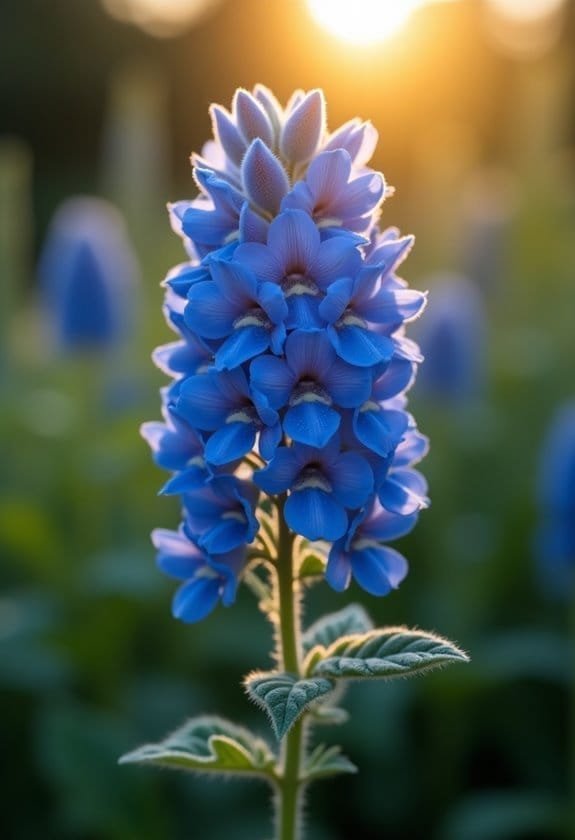
This annual herb, known for its striking blue star-shaped flowers, thrives in Mediterranean climates and stands between 60 to 100 cm tall. Borage (Borago officinalis) isn't only visually engaging, but it also boasts culinary applications, with its edible leaves and flowers offering a rejuvenating flavor reminiscent of cucumber. These components are commonly utilized in salads, teas, and as garnishes, enriching a range of dishes.
However, consumers should exercise caution due to the presence of pyrrolizidine alkaloids, which can be toxic in excessive quantities, potentially resulting in severe liver damage and other health problems. As a result, moderated consumption is essential.
Additionally, borage seeds yield oil that's rich in gamma-linolenic acid (GLA), known for its possible anti-inflammatory properties and therapeutic effects.
Thriving in well-drained soil and full sun, borage attracts pollinators like bees, enhancing garden biodiversity. The intersection of aesthetic beauty and practical use makes borage a valuable asset in both culinary and ecological contexts, yet awareness of its chemical constituents guarantees safe and responsible enjoyment.
This delightful herb combines nourishment, beauty, and ecology in a single, vibrant package.