Buddleja globosa, or the Chilean Orange Ball Tree, is a stunning shrub native to the Andes, typically growing 10-15 feet tall and 8-12 feet wide. Its spherical clusters of bright orange to yellow flowers bloom in early to mid-summer, attracting essential pollinators such as bees and butterflies with their sweet, honey-like fragrance. This hardy plant thrives in full sun, requiring 6-8 hours of direct light daily and prefers well-drained fertile loamy soil with a pH of 6.0 to 8.0. Its ecological benefits and ornamental charm make it a beloved choice for gardens, offering much to explore regarding its care and maintenance.
Main Points
- Buddleja globosa, or Chilean Orange Ball Tree, features bright orange-yellow flowers that bloom from early to mid-summer.
- It thrives in full sun and well-drained, fertile loamy soil, preferring a pH of 6.0 to 8.0.
- The tree is drought-tolerant and low maintenance, attracting pollinators like bees and butterflies with its fragrant nectar-rich flowers.
- Regular pruning after blooming promotes new growth and improves flowering duration, while good air circulation helps prevent issues like powdery mildew.
- Buddleja globosa enhances biodiversity, supports local ecosystems, and offers ornamental value, recognized with the RHS Award of Garden Merit.
Introduction
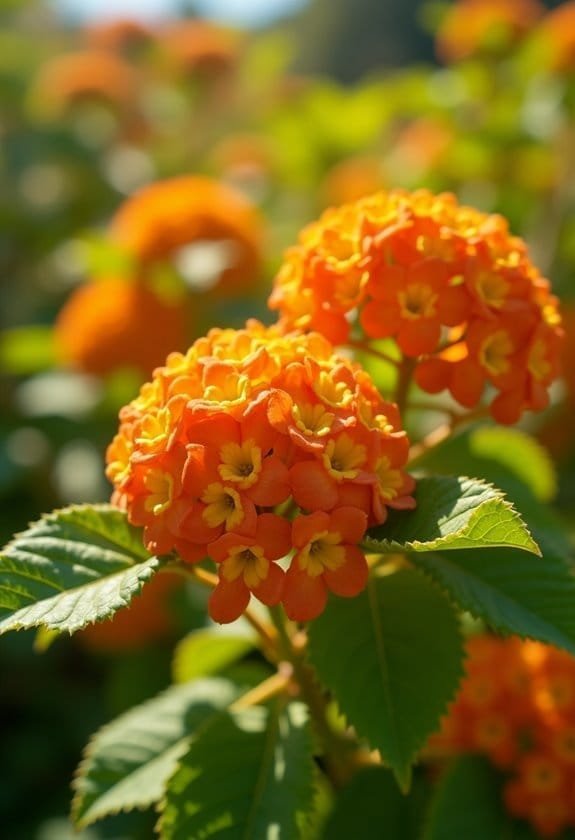
Buddleja globosa, often referred to as the Chilean Orange Ball Tree, stands out as a striking perennial that thrives in South America's diverse ecosystems.
Known for its vibrant, spherical clusters of bright orange to yellow flowers that bloom in early summer, this shrub not only enhances visual landscapes but also serves essential roles in attracting various pollinators.
Common Name
Known for its vibrant orange blooms, the Chilean Orange Ball Tree captures attention in any garden setting. This striking plant, scientifically known as Buddleja globosa, showcases round clusters of orange flowers, creating a dazzling spectacle that mesmerizes onlookers.
Fondly referred to as the Orange Butterfly Bush, it effectively attracts butterflies and other pollinators, making it a favorite for nature enthusiasts keen to enhance biodiversity in their gardens.
Native to the Andes regions of Chile, Peru, and Argentina, the Orange Ball thrives in full sun and typically reaches heights of 10 to 15 feet. Its globose blooms emit a sweet fragrance, drawing a myriad of wildlife, further solidifying its appeal as a garden staple.
This woody perennial exhibits a robust structure, ensuring longevity and resilience in various climates.
Beyond its ornamental beauty, the Orange Ball contributes to the ecosystem by providing essential resources for pollinators, thereby supporting a thriving local wildlife community.
As garden lovers seek to create vibrant, sustainable environments, the Orange Butterfly Bush stands as a representation of the union of aesthetic pleasure and ecological responsibility.
In this synergy, the Chilean Orange Ball Tree truly flourishes.
Scientific Name
The scientific name of the Chilean Orange Ball Tree, Buddleja globosa, reflects both its unique characteristics and its botanical heritage. The genus name, Buddleja, honors Rev. Adam Buddle, an early botanist, while "globosa" describes the spherical shape of the tree's distinctive flower clusters, resembling vibrant orange and yellow orbs. This semi-evergreen shrub, native to the Andes regions encompassing Chile, Peru, and Argentina, typically grows to heights of 10 to 15 feet, making it an attractive addition to gardens as either a large shrub or a small tree.
Belonging to the figwort family, Buddleja globosa showcases woody perennial traits, ensuring significance and resilience in various forest environments. Its fragrant flowers not only engage the eye with their bright colors but also invite pollinators during blooming seasons, playing a critical role in the ecosystem.
The scientific name consequently serves a dual purpose, encapsulating both the origin of the species and its remarkable floral architecture. Understanding its nomenclature can deepen one's appreciation for this exotic species, revealing how closely its identity is intertwined with the very essence of its natural habitat.
Overview
With its striking spherical blooms and vibrant colors, the Chilean Orange Ball Tree (Buddleja globosa) captivates gardeners and nature lovers alike. Native to the Andes of Chile, Peru, and Argentina, this remarkable shrub reaches heights of 10 to 15 feet, showcasing clusters of fragrant, bright yellow to orange flowers that mainly emerge in early summer.
With a preference for full sun, Buddleja globosa flourishes in well-drained, fertile loamy soil, maintaining ideal growth within a pH range of 6.0 to 8.0. Characteristically drought-tolerant, the plant minimizes water needs, making it an appealing choice for environmentally conscious gardeners.
Its dark green foliage provides a stunning backdrop to its colorful blooms while serving as an essential habitat for pollinators such as bees, butterflies, and hummingbirds, thereby enhancing garden biodiversity. Additionally, its resistance to deer and minimal maintenance requirements make it a practical choice for many.
To promote healthy growth and vibrant flowering in subsequent seasons, a gentle pruning post-bloom is recommended. With these features, Buddleja globosa emerges as an exceptional component of any garden, harmonizing beauty with ecological responsibility.
Key Features
Buddleja globosa, commonly known as the Chilean Orange Ball Tree, boasts impressive growth, reaching heights of 10-15 feet and widths of 8-12 feet, which grants it an open-structured yet vibrant presence in any garden.
Its stunning clusters of bright yellow to orange flowers, each approximately 1.5 inches across, bloom from early summer to mid-summer, exuding a delightful fragrance that attracts various pollinators.
With dark green, velvety-textured leaves measuring between 8-20 cm long, this drought-tolerant shrub not only adds visual interest but also supports biodiversity in ecological landscapes.
Growth Size
Reaching heights of 10-15 feet and widths of 8-12 feet, the Orange Ball Tree makes a striking addition to any garden. This flowering shrub exhibits open-form growth habits, making it particularly appealing as a large ornamental specimen. Characterized by erect stems and broadleaf foliage, the leaves of the Buddleja globosa measure between 8-20 cm, presenting a rugged dark green appearance that complements its vibrant blooms.
Size variations often depend on environmental conditions, and the plant thrives in various moisture levels, demonstrating its adaptability. It can endure temperatures as low as 0º F, showcasing resilience in diverse climates.
To maintain ideal size and shape, gardeners should employ prudent pruning techniques, ideally performed after flowering. This practice encourages new growth, allowing the Orange Ball Tree to replenish its height by the following summer.
With proper care and strategic pruning, the growth potential of the Orange Ball Tree transforms any landscape into a vibrant display of nature's beauty, inviting admiration and awe from all who encounter its presence.
Appearance
In gardens across various landscapes, the Orange Ball Tree stands out with its striking appearance.
Typically reaching heights of 10 to 15 feet and spreading 8 to 12 feet wide, its dimensions create a substantial focal point in various garden aesthetics. The plant features distinctive, dark green, velvety leaves that are oval to lanceolate in shape, measuring between 8 and 20 centimeters long, and they're arranged oppositely along the branches, adding notable leaf texture.
The true allure of Buddleja globosa lies in its enchanting spherical clusters of bright orange flowers, each about 1 inch in diameter. These blossoms emit a delightful, honey-like fragrance, enticing pollinators and enhancing the sensory experience of any garden setting.
While the blooming period occurs in early summer, the semi-evergreen foliage continues to provide visual interest throughout the seasons, ensuring the plant remains a stunning element in garden design.
With its low maintenance requirements and dynamic features, the Orange Ball Tree not only thrives but also elevates the aesthetic appeal of the spaces it inhabits, serving as a vivid reminder of nature's splendor.
Flowering Season
When early summer arrives, the Chilean Orange Ball Tree bursts into a vibrant display of color, enchanting onlookers with its striking orange to yellow flowers. This remarkable flowering season typically spans from early summer to midsummer, lasting about six weeks, although some seasonal variations may occur based on local climate conditions.
The small, tubular flowers, measuring approximately one inch in length, gather in unique globose heads, creating an eye-catching visual feast. When in full bloom, these spherical clusters draw a diverse array of pollinators, such as butterflies and bees, thereby promoting biodiversity within garden ecosystems.
The bloom frequency is impressive, with each cluster offering numerous flowers that release a sweet, honey-like fragrance, making them a sensory delight for both humans and wildlife. Particularly, flowering occurs on the previous season's wood, which necessitates careful pruning after the blooms fade, thereby encouraging healthier growth in the upcoming year.
Consequently, proper maintenance can extend the flowering duration, ensuring that the Chilean Orange Ball Tree continues to delight its audience year after year.
Growing Requirements
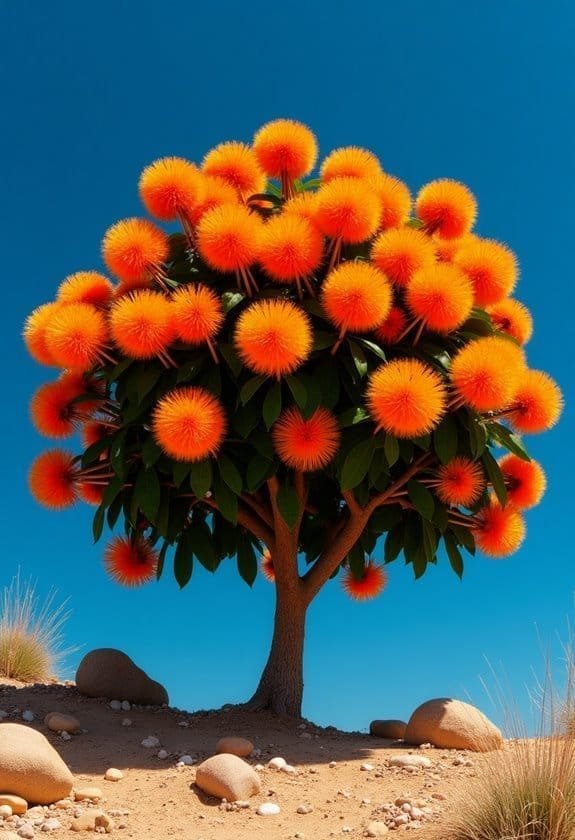
Buddleja globosa requires specific growing conditions to flourish, as it thrives best in full sunlight and well-drained, fertile loamy soil enriched with moisture.
Once established, this resilient plant can tolerate drought and adapt to varying garden conditions, showcasing its versatility.
Understanding its temperature resilience, which includes hardiness to USDA Zone 7 and minimum temperatures of 0°F, as well as the importance of timely pruning, sets the foundation for cultivating a vibrant and healthy specimen.
Light
To thrive and produce its vibrant blooms, the Chilean Orange Ball Tree needs full sun exposure, ideally basking in at least 6 to 8 hours of direct sunlight each day. This requirement for light duration is essential, as the tree's health and flowering directly correlate with the light intensity provided. Inadequate sunlight can lead to leggy growth, impeding the plant's ability to showcase its stunning orange-yellow spherical blossoms.
While Buddleja globosa exhibits remarkable light adaptations, enabling it to withstand varied light conditions, its optimum performance arises from abundant sunlight. In extremely hot climates, offering some afternoon shade can actually enhance its growth, preventing stress from excessive heat.
With the right balance of exposure, the tree flourishes, gracefully managing water loss due to its drought-tolerant characteristics. Consequently, gardeners must prioritize these growing requirements to guarantee a thriving Chilean Orange Ball Tree in their landscape.
Proper light management not only boosts flowering potential but also supports overall plant vigor, creating a beautiful focal point composed of rich, aromatic blooms that attract pollinators to gardens. Hence, understanding the nuances of light exposure is paramount for successful cultivation.
Soil
Adequate light exposure plays an essential role in the growth of the Chilean Orange Ball Tree, but the right soil conditions are equally important for its flourishing.
Buddleja globosa thrives in well-drained, loamy soil that maintains moist and fertile attributes, crucial for ideal growth. The importance of drainage can't be overstated, as compacted or poorly drained soil can impede root development, leading to detrimental health issues for the plant.
Soil nutrition is critical; it supports the plant's development and vibrant blooming cycle. Buddleja globosa exhibits impressive pH adaptability, tolerating a spectrum from acidic, around pH 6.0, to alkaline conditions, reaching up to pH 8.0. This remarkable flexibility enables it to flourish in diverse environments, provided other soil conditions are met.
Once established, the Chilean Orange Ball Tree proves drought-tolerant, needing only intermittent watering during prolonged dry periods.
Regular post-flowering pruning combined with attentive management of soil moisture levels greatly contributes to its robust growth habit. This careful balance of soil characteristics not only enhances the health of Buddleja globosa but also fosters its enchanting display of vivid blossoms.
Water
Watering is vital during the initial growth phase of Buddleja globosa, as young plants need consistent moisture to establish a robust root system. A regular watering schedule guarantees that the soil moisture remains adequate, promoting healthy growth and vibrant flowering.
In general, Buddleja globosa thrives in well-drained, moist soil. While it can adapt to various soil types, including clay, it's important to avoid waterlogged conditions, which can hinder root development.
Once established, this remarkable plant demonstrates impressive drought adaptation, requiring only intermittent watering during dry spells to sustain itself. However, in extreme heat, providing shade during the afternoon can alleviate water stress, allowing the plant to continue flourishing.
Regular checks on soil moisture are vital; the roots prefer slightly moist conditions, particularly in the early establishment days.
Implementing a thoughtful watering routine helps Buddleja globosa settle into its environment, paving the way for its stunning blooms.
As gardeners nurture this resilient species, they play an integral role in its growth and success, cultivating not just a plant, but a vibrant part of the ecosystem.
With the right care, this tree will reward one's efforts with its striking beauty and adaptability.
Temperature
Temperature plays a notable role in the growth and health of Buddleja globosa, commonly known as the Orange Ball Tree. This resilient plant thrives in USDA Zone 7 and above, exhibiting hardiness down to a minimum temperature of 0º F.
However, temperature extremes can pose challenges, particularly during harsh winter months. It's critical for gardeners to anticipate seasonal variations, as the Orange Ball Tree's well-being may fluctuate alongside changing climatic conditions.
To guarantee ideal growth and flowering, providing frost protection becomes paramount. Engaging in protective measures, such as applying mulch around its base or using windbreaks, can safeguard it against the damaging effects of cold winds and frost.
Additionally, this species flourishes in full sun, receiving at least six hours of sunlight daily, further enhancing its vitality.
Once established, Buddleja globosa demonstrates remarkable drought tolerance, though it still requires intermittent watering during dry spells to maintain its verdant health. The tree's preference for well-drained, moist soil further underscores the importance of temperature regulation in fostering robust growth and enchanting floral displays throughout its growing season.
Adaptive measures, thus, considerably impact the plant's resilience and aesthetic appeal.
Pollinator Criteria
Buddleja globosa, or the Orange Ball Tree, serves as an important resource for a variety of pollinators, including bees, butterflies, and hummingbirds, which are drawn to its aromatic, nectar-rich flowers.
The plant's bloom from May into summer guarantees these creatures find ample sustenance, consequently enhancing their populations and supporting biodiversity within garden ecosystems.
Understanding the specific attracted pollinators and the methods through which Buddleja globosa achieves pollination is crucial for appreciating its ecological role and contribution to wildlife conservation efforts.
Attracted Pollinators
The vibrant blooms of Buddleja globosa create a buzzing sanctuary for pollinators such as bees, butterflies, and hummingbirds. These striking, globose clusters of bright orange and yellow flowers emit a delightful fragrance and are rich in nectar, making them an irresistible source of sustenance during the early summer months. This period is essential for these pollinators, as many other plants also bloom, enhancing habitat availability.
The ecological importance of Buddleja globosa can't be overstated, as it fosters beneficial relationships between plants and their pollinators. By providing habitats and nourishment, this tree plays a pivotal role in sustaining local ecosystems and promoting biodiversity. Each flower's attractive features enhance its visibility, inviting various species to forage and contribute to necessary pollination processes. Additionally, similar to how purple loosestrife competes with native species, Buddleja globosa can also face challenges such as invasive plants that may disrupt pollinator access.
Additionally, the presence of nectar-rich plants such as Common Yarrow grows in various conditions that support diverse pollinator populations helps create a more resilient ecosystem.
In turn, these pollinators create a network of interdependence that supports garden health and productivity. The thriving populations of bees and butterflies boost the pollination of numerous other plants, ensuring the resilience of the overall environment.
Through this dynamic interaction, Buddleja globosa exemplifies the crucial interplay between flora and fauna and emphasizes the need for conservation efforts to protect these incredible species.
Pollination Method
Many pollinators are drawn to the vibrant blooms of Buddleja globosa, utilizing a variety of methods to achieve successful pollination. The flower structure, characterized by its fragrant and nectar-rich panicles about one inch in diameter, provides both visibility and accessibility for various species.
Bees, butterflies, and hummingbirds find the spherical clusters irresistible due to the concentrated nectar rewards available within each grouping. This abundance of nectar encourages pollinators to visit multiple flowers, effectively aiding in pollen distribution.
When a pollinator lands on a bloom, they collect pollen on their bodies, transferring it to other flowers as they move, thereby facilitating cross-pollination. This process is essential for the reproductive success of Buddleja globosa, as it promotes genetic diversity and resilience in the plant population.
Additionally, the drought-tolerant nature of this tree allows it to thrive in diverse environments, ensuring consistent support for local pollinator populations and contributing to the overall ecological health of the area.
Care & Maintenance
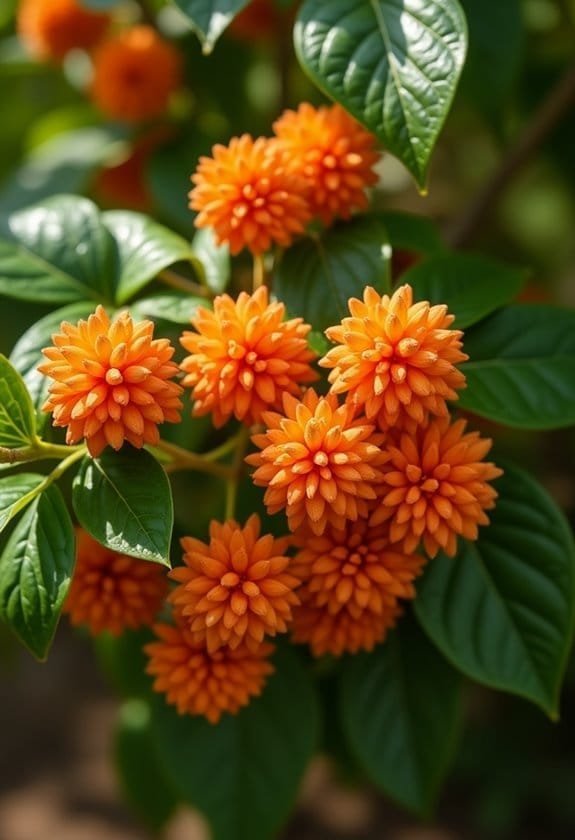
Caring for Buddleja globosa involves several essential practices that guarantee its vibrant growth and longevity.
Regularly pruning about a quarter of old stems post-flowering encourages vigorous new shoots, while planting it in well-drained soil optimizes its drought tolerance once established.
Additionally, pairing this resilient plant with suitable companions can enhance the overall aesthetic and health of the garden, creating a harmonious ecosystem where each plant thrives.
Planting Tips
To confirm a thriving Buddleja globosa, start by selecting well-drained, fertile soil with a pH between 6.0 and 8.0. Employing effective planting strategies is crucial. When planting, ascertain ideal spacing of at least three to four feet between individual plants, allowing for appropriate air circulation and room for growth. This sufficient distance promotes a healthier ecosystem and reduces competition for nutrients.
During the initial establishment phase, water the plant regularly to support its root development, but once established, Buddleja globosa is drought-tolerant; therefore, it's important to allow the soil to dry out between waterings. To enhance soil quality and moisture retention, incorporating a layer of organic mulch around the base offers several benefits: it suppresses weeds, maintains soil temperature, and gradually enriches the soil as it decomposes.
Position the Orange Ball Tree in a location that receives full sun—ideally at least six hours each day—since ample sunlight is crucial for robust blooming and overall vitality.
Ongoing Care
Ongoing care for Buddleja globosa guarantees the plant remains healthy and vibrant throughout the growing season. Regular pruning techniques are essential; gardeners should prune approximately a quarter of the old stems to the base annually, encouraging new growth and enhancing flowering.
After flowering, cutting back flowered shoots to a strong bud proves fundamental to maintain a balanced structure.
In terms of fertilization tips, applying a balanced fertilizer in spring greatly enhances both flowering and overall plant vigor, especially in nutrient-poor soils. This addition nourishes the plant, promoting robust growth and more brilliant blooms.
Drought management is an important aspect of maintenance for the Chilean Orange Ball Tree. Once established, the plant exhibits drought tolerance, yet it may require occasional watering during prolonged dry spells to support sustained growth.
Effective monitoring for pests and diseases further contributes to plant health, as resilient specimens tend to withstand challenges more adeptly. By implementing these care strategies, gardeners can enjoy a thriving display of Buddleja globosa, showcasing its stunning orange blooms against lush greenery, while ensuring its longevity and vitality in any garden setting.
Suggested Companions
Buddleja globosa's vibrant blooms create a stunning focal point in any garden, and pairing it with complementary plants can enhance both beauty and biodiversity. Ideal companions include pollinator-friendly options, such as Echinacea and Rudbeckia, which not only create attractive color combinations but also provide significant wildlife benefits. These plants attract bees and butterflies, enriching the ecosystem further, particularly as they bloom alongside other native species that support local pollinator populations.
When selecting companions, it's crucial to verify they share light requirements, as Buddleja globosa flourishes in full sun. Grouping it with sun-loving species like Lavender and Salvia fosters a harmonious garden environment.
For visual interest, consider plants that bloom at different times. Since Buddleja globosa flowers in early summer, incorporating fall-blooming species can guarantee continuous color throughout the seasons.
Layering plant textures enhances the aesthetic appeal; mixing taller plants like the Chilean Orange Ball Tree with ornamental grasses or low-growing groundcovers achieves dynamic height variations.
Additionally, regular pruning of Buddleja globosa helps maintain air circulation and light for neighboring plants, creating a thriving ecosystem. With thoughtful combinations, gardeners can achieve a vibrant, well-rounded botanical masterpiece that supports both beauty and biodiversity. Corncockle also plays an important role in attracting pollinators to gardens, thereby further supporting overall ecological health.
Common Issues
Buddleja globosa, while robust, isn't immune to common issues that can impede its growth and vigor. Pests like aphids and spider mites may target its leaves, leading to decreased health.
As a result, proactive monitoring and the application of organic insecticides can effectively manage these infestations. In addition, root rot often occurs in poorly drained soil, underscoring the importance for well-aerated conditions to guarantee the shrub flourishes without hindrance.
Pests/Diseases
Despite its resilience, the Orange Ball Tree can face several common issues related to pests and diseases. Though generally robust, Buddleja globosa may occasionally attract aphids, pests that can be effectively managed using insecticidal soap or neem oil, an organic alternative.
Additionally, in humid conditions, fungal diseases like powdery mildew can manifest, illustrating the significance of effective air circulation and the use of disease prevention techniques such as avoiding overhead watering.
Moreover, leaf spot diseases can affect its foliage, often stemming from excessive moisture. In such cases, removing infected leaves can mitigate the spread, thereby enhancing overall plant health.
The plant, while resistant to deer, may still draw some pests like spider mites during hot, arid spells, underscoring the essential nature of routine plant health monitoring.
Lastly, practitioners must be wary of root rot, which can develop if the plant is overwatered or placed in poorly drained soil. Such conditions emphasize the necessity for well-draining planting environments, reinforcing that proactive pest management strategies and disease prevention tactics are fundamental for the enduring vigor of the Orange Ball Tree.
Solutions
To effectively address common issues that arise with the Orange Ball Tree, proactive care and maintenance are essential. This stunning plant exhibits impressive drought resilience, enabling it to thrive in arid conditions provided that it's planted in well-drained soil.
However, over-watering can lead to detrimental root rot, necessitating vigilance in the watering regimen.
Employing prudent pruning techniques enhances the tree's longevity and flowering capacity. Ideally, one should prune about a quarter of old stems each year, immediately after flowering, to stimulate a compact growth habit that fosters new blooms.
Additionally, keeping an eye on leaf health is critical; yellowing or the presence of leaf spots may indicate fungal infections, which can be mitigated by ensuring adequate air circulation and controlling moisture levels.
Furthermore, full sun exposure promotes ideal growth, but providing some afternoon shade can protect the tree in warmer climates.
Regular pest control measures are also essential; routine inspections for pests like aphids or spider mites can help prevent infestations. When necessary, insecticidal soap serves as an effective remedy, ensuring the Orange Ball Tree remains robust and visually enchanting.
What are the similarities and differences between Buddleja Globosa and Buddleja Davidii?
Buddleja globosa and Buddleja davidii, also known as butterfly bush, both belong to the Buddleja genus. Both plants are popular for their colorful flowers and ability to attract butterflies and other pollinators. However, the globosa has larger, rounder flowers and is better suited for warmer climates, while the davidii has longer, slender flowers and can thrive in a wider range of conditions.
Summary
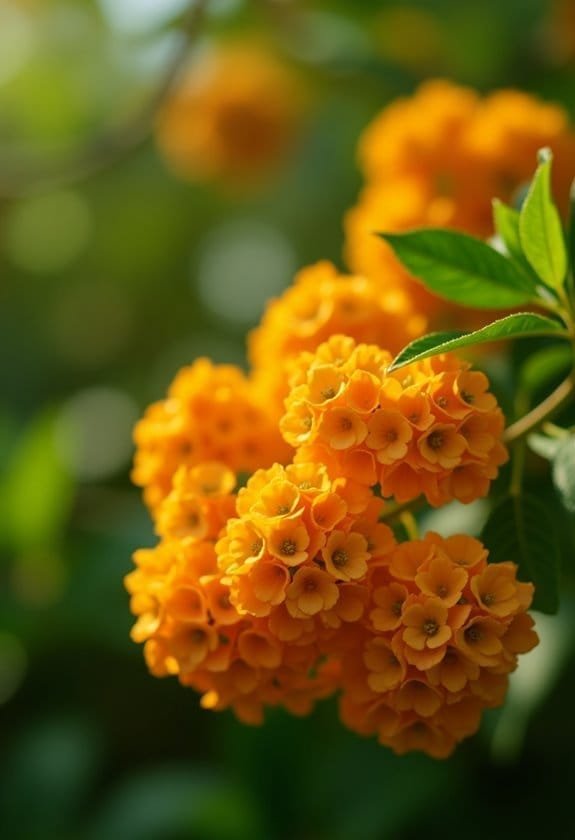
Originating from the Andes of South America, the Buddleja globosa, or Chilean Orange Ball Tree, stands out with its vibrant orange-yellow flower clusters and sweet honey-like fragrance. This striking woody perennial, reaching heights of 10-15 feet and widths of 8-12 feet, not only enhances landscape design but also boasts cultural significance in areas where it thrives. Traditionally, its flowers have been utilized to attract pollinators, thereby fostering sustainable garden ecosystems.
The Buddleja globosa is drought-tolerant, preferring fertile, well-drained soil and full sun exposure, making it an excellent choice for various climates. Its ability to resist deer adds to its appeal, ensuring that gardens remain lush without the threat of browsing wildlife.
Ecologically, this species promotes biodiversity by attracting beneficial insects like bees and butterflies, which play essential roles in pollination. Recognized with the RHS Award of Garden Merit, the Chilean Orange Ball Tree isn't just visually enchanting; it contributes ecologically and culturally, making it a valuable addition to any garden.
Its traditional uses and ornamental attributes serve to inspire gardeners and landscape designers, enhancing outdoor spaces while fulfilling ecological needs.