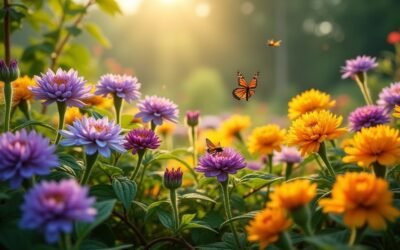
Calamintha nepeta, or Lesser Calamint, is a charming perennial herb in the Lamiaceae family, known for its aromatic gray-green leaves and striking pale lavender to white tubular flowers. Typically, it grows between 9 to 15 inches tall and spreads 12 to 18 inches wide. Preferring full sun but also tolerating partial shade, it thrives in well-drained soils across USDA zones 4 to 7, making it an ideal choice for gardens. Its dense mats enhance biodiversity, attracting pollinators and deterring pests. With minimal maintenance, Calamintha nepeta offers culinary versatility and ecological benefits, encouraging an enriched understanding of sustainable gardening practices.
Main Points
- Lesser calamint (Calamintha nepeta) is an aromatic perennial herb that grows 9-15 inches tall, with gray-green leaves and tubular lavender to white flowers.
- This plant thrives in full sun and well-drained soils, tolerating drought and suitable for USDA zones 4 to 7.
- Its culinary uses include flavoring salads, sauces, and roasted dishes, making it a popular choice in herb gardens.
- Lesser calamint supports local ecosystems by attracting pollinators like bees and butterflies, enhancing biodiversity in gardens.
- Minimal maintenance is required, with seasonal pruning and monitoring for pests being essential for optimal growth and flowering.
Introduction
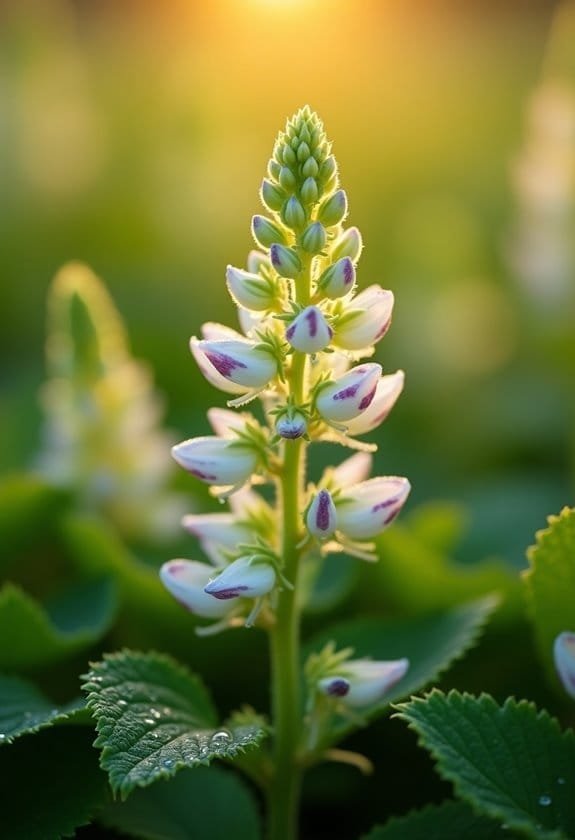
Calamintha nepeta, more commonly referred to as Lesser Calamint, offers a fascinating glimpse into the world of perennial plants.
Known for its compact growth, forming a dense mat that thrives in various light conditions, this shrub not only attracts pollinators with its exquisite tubular flowers but also provides aromatic foliage that releases a delightful minty-lemon scent.
Its hardy nature and adaptability make it an excellent choice for a variety of garden settings, ensuring robust beauty throughout the growing season.
Common Name
Lesser Calamint, a perennial herb in the mint family Lamiaceae, is cherished for its aromatic gray-green leaves and delicate flowers. This plant, often identified by its pleasant fragrance, showcases small tubular blossoms that can shift in hue from pale lavender to striking white. Among gardening enthusiasts and culinary aficionados alike, lesser calamint captures attention for its fragrant foliage, which offers an invigorating scent that complements various outdoor spaces and dishes.
Additionally, due to its ability to attract a myriad of pollinators, including the industrious bees and graceful butterflies, lesser calamint is an ideal choice for those aiming to create vibrant pollinator gardens. Its deer-resistant nature only heightens its desirability, allowing gardeners to cultivate this delightful herb without the fear of wildlife interference.
In culinary contexts, individuals often refer to lesser calamint as "nepita" or "mentuccia," particularly within Italian and Corsican cuisine, where its aromatic leaves infuse numerous dishes with depth and character. Consequently, lesser calamint not only enchants with its beauty and fragrance but also enriches gardens and plates alike, establishing it as a cherished staple in various culinary traditions.
Scientific Name
Known scientifically as Calamintha nepeta, this perennial herb was first described by Carl Linnaeus in 1753 under the name Melissa nepeta. Taxonomically classified within the family Lamiaceae, lesser calamint shares its lineage with herbs such as mint, showcasing the diverse characteristics of this botanical group.
Over time, Calamintha nepeta has evolved in nomenclature, now accepted under the genus Clinopodium by the World Checklist of Selected Plant Families, reflecting ongoing developments in botanical classification.
This herb is native to regions across southern Europe, where it thrives under the sun's warm embrace, flourishing in well-drained soils and displaying a penchant for habitat diversity. Lesser calamint comprises several recognized subspecies, including Clinopodium nepeta subsp. nepeta, Clinopodium nepeta subsp. spruneri, and Clinopodium nepeta subsp. subisodontum, each of which exhibits unique geographical distributions and specific morphological traits.
The versatility of Calamintha nepeta extends beyond mere classification; its culinary applications enhance Italian and Corsican cuisines, showcasing the plant's significance within cultural gastronomies.
This duality of scientific interest and culinary use underscores the enduring relationship between human culture and the natural world.
Overview
This perennial garden favorite, commonly referred to as lesser calamint, captivates both gardeners and nature enthusiasts alike with its vibrant blooms and aromatic foliage.
Calamintha nepeta blooms from summer through frost, showcasing delicate pale lavender to white tubular flowers that attract beneficial pollinators such as bees and butterflies. Typically growing to a height of 9 to 15 inches and spreading 12 to 18 inches wide, this compact plant forms a thick mat over time through its rhizomatic growth.
Lesser calamint thrives in full sun, requiring at least six hours of direct sunlight daily, although it can tolerate partial shade. It flourishes best in moist, well-drained soil and exhibits remarkable adaptability, comfortably enduring clay conditions and occasional drought.
The aromatic gray-green, egg-shaped leaves release a fragrant scent that serves as a natural deterrent against deer and rabbits.
Recognized as the 2021 Perennial Plant of the Year, lesser calamint's low maintenance requirements and ornamental qualities make it an excellent choice for diverse garden settings, providing not only beauty but also ecological benefits through its role in attracting essential pollinators.
Key Features
Lesser calamint, known scientifically as Calamintha nepeta, showcases a compact growth size, typically reaching heights between 9 and 15 inches.
Its dense, bushy form creates a lush, textured landscape while producing alluring tubular flowers that bloom from late summer into frost, enticing a variety of pollinators.
With aromatic gray-green leaves that impart a minty-lemon scent when crushed, this perennial not only offers visual appeal but also enriches sensory experiences in the garden.
Growth Size
With its compact, bushy appearance, Calamintha nepeta—commonly known as lesser calamint—typically grows to a height of 9 to 15 inches and spreads about 12 to 18 inches wide. Under ideal conditions, this perennial can reach up to 24 inches tall, showcasing its robust growth potential.
Lesser calamint thrives in full sun, preferring a location that receives 4 to 6 hours of sunlight daily but can graciously tolerate partial shade.
This plant exhibits a moderate growth rate, achieving density through rhizomatous spreading, which allows it to form dense mats over time. Lesser calamint's versatility shines through its adaptability to various soil types, though it demands well-drained soil for optimal health. It prefers evenly moist conditions, striking a delicate balance that enhances its resilience.
In garden landscapes, its growth size contributes considerably to design aesthetics, allowing for effective layering and combination with other perennials. Gardeners often appreciate lesser calamint for its ability to occupy space without overwhelming neighboring plants, providing an intriguing texture and robust presence that enriches any garden setting.
Therefore, this plant becomes not just a decoration, but a strategic component of landscape design.
Appearance
Calamintha nepeta captivates gardeners with its unique appearance and aromatic qualities. This charming perennial features small, egg-shaped, gray-green leaves that release a revitalizing minty-lemon fragrance when crushed. Typically growing to a height of 9 to 15 inches, lesser calamint can spread to form a dense mat, approximately 12 to 18 inches wide, making it a superb option for creating natural-looking borders along retaining walls or for enhancing rock gardens.
Its compact, bushy growth habit provides an excellent foundation for various garden landscapes.
The plant produces loose clusters of tubular, two-lipped flowers that bloom from late summer until frost, presenting a delightful array of colors from pale lavender to pristine white. Each flower, while striking in appearance, plays a vital role in attracting essential pollinators such as honeybees and butterflies, enhancing biodiversity in the garden.
This dynamic interplay of foliage and bloom creates an inviting atmosphere, encouraging exploration and appreciation of the outdoors. Overall, Calamintha nepeta's appealing aesthetic, combined with its versatility in landscaping, contributes greatly to its status among avid gardeners and landscape designers alike.
Flowering Season
The flowering season of Calamintha nepeta usually runs from late summer until frost, showcasing its charming pale lavender to white flowers. During this period, which can extend for several weeks, the plant produces clusters of tubular blooms that exhibit remarkable ornamental appeal.
Each flower not only captivates the eye but also emits a delightful minty-lemon fragrance, enhancing the sensory experience of any garden space. These fragrant blooms play an essential role in attracting important pollinators, such as honeybees and butterflies, thereby promoting ecological health within the garden ecosystem. The flower duration guarantees that these creatures have a continuous food source leading into the cooler months.
After flowering, it's advisable to cut back the plant to maintain tidiness and encourage vigorous regrowth; this method also helps manage the small, rounded pods that form post-bloom and contain light brown seeds, essential for the plant's self-seeding capabilities.
Growing Requirements
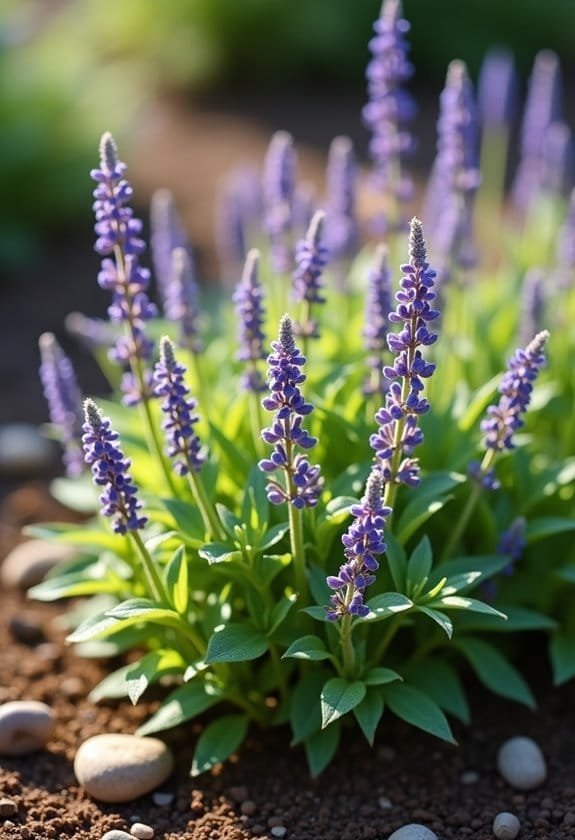
Lesser calamint flourishes in conditions that provide ample sunlight, ideally basking in at least six hours of direct light daily.
Its preference for well-drained soils guarantees healthy growth, as this plant demonstrates remarkable adaptability to both clay and occasional drought.
Understanding its temperature resilience, especially within USDA zones 4 to 7, allows gardeners to select ideal planting locations, promoting a thriving display of this perennial herb.
Light
Full sun exposure is crucial for the best growth and blooming of lesser calamint, requiring at least 6 hours of sunlight daily. This robust plant thrives in regions that enjoy reliable summer sun, particularly in USDA hardiness zones 4 to 7.
The sunlight impact on lesser calamint is profound; adequate light enhances not only the plant's aromatic foliage but also the vibrant colors of its flowers, making for a visually stunning display.
While lesser calamint prefers full sun, it can still tolerate partial sun or even shade. In fact, achieving satisfactory growth with 4 to 6 hours of sunlight showcases its shade tolerance.
However, in hot-summer climates, providing some shade can be beneficial, as it prevents stress on the plant and allows it to maintain its energy during peak heat.
For prime exposure, gardeners should carefully assess their growing conditions to guarantee lesser calamint accesses sufficient sunlight while balancing the potential stress of extreme heat.
Understanding these light requirements is crucial for fostering a robust, healthy, and beautifully blooming lesser calamint that remains a cherished addition to any garden.
Soil
When cultivating calamintha nepeta, providing moist, well-drained soil is essential for its ideal growth and vigor. This delightful plant prefers a soil composition that balances organic matter with minerals, favoring a slightly alkaline pH.
Although calamintha nepeta can tolerate clay soil, proper soil drainage is critical since waterlogged conditions can impede root development, ultimately leading to diminished plant health.
Incorporating soil amendments, such as compost or well-rotted manure, can greatly enhance the soil structure, enhancing drainage and providing essential nutrients. These components work synergistically, creating an environment conducive to the root system's expansion and resilience.
It's important to regularly monitor soil drainage to prevent any stagnation of water, which might lead to stress during its growth cycle.
While calamintha nepeta can endure occasional drought, it truly thrives in conditions that mimic its native habitats, avoiding hot, moist environments.
After flowering, cutting back the plant not only fosters tidiness but also allows it to regenerate effectively in well-drained soil. Consequently, ensuring the appropriate soil conditions paves the way for a robust calamintha nepeta that flourishes and captivates with its charm.
Water
Consistent moisture is essential for the thriving of calamintha nepeta, as it prefers a well-balanced water supply to support its growth and flowering. This aromatic herb flourishes in moist, well-drained soil, making careful watering techniques imperative.
While lesser calamint can endure sporadic drought conditions, sustained moisture maximizes its health and vigor, fostering prolific flowering throughout the growing season. Gardeners must employ effective moisture monitoring methods to avoid potential waterlogging, which can adversely affect plant robustness.
Regularly checking soil moisture levels helps maintain the delicate balance necessary for peak performance. Excessive dampness, particularly in hot, humid climates, can create a detrimental environment, leading to stunted growth and potential diseases.
Seasonal adjustments are significant in watering regimens, especially during the height of summer when calamintha nepeta becomes actively engaged in growth. During this period, ensuring the soil remains sufficiently moist enhances the plant's resilience and aesthetic appeal.
Temperature
Temperature plays a critical role in the growth of calamintha nepeta, as this aromatic herb thrives best in USDA hardiness zones 4 to 7. These zones provide a balanced environment with moderate winter temperatures and warm summers, aligning with its temperature preferences.
The plant flourishes in full sun, requiring at least six hours of direct sunlight daily to achieve ideal growth, although it can struggle in the face of extreme humidity.
Temperature fluctuations can greatly affect lesser calamint's health, particularly during the shifting seasons. Maintaining a consistent range between 60°F and 75°F aids in preventing stress and encourages robust blooming during summer.
While lesser calamint tolerates occasional drought, it performs best in well-drained soils that retain even moisture.
In hotter climates, providing some afternoon shade can mitigate temperature impacts, lessening the stress induced by elevated heat in summer.
Ultimately, gardeners should be attentive to temperature conditions, as a stable environment enhances root development and supports the plant's aromatic qualities. By understanding and accommodating these needs, they can cultivate a thriving patch of calamintha nepeta.
Pollinator Criteria
Lesser calamint (Calamintha nepeta) serves as an essential resource for a variety of pollinators, particularly honeybees and butterflies, thanks to its aromatic, tubular flowers that bloom abundantly from late summer until the frost arrives.
These pale lavender to white blossoms not only produce generous nectar but also present an inviting habitat, supporting diverse pollination methods that enhance garden biodiversity. Additionally, the extended flowering period of Wild Thyme attracts beneficial pollinators to the garden, ensuring a thriving ecosystem. The compatibility of Lesser calamint with Dorset Heath promotes increased resilience against environmental challenges, further benefiting local habitats.
Attracted Pollinators
Calamintha nepeta, commonly known as lesser calamint, effectively attracts a variety of pollinators through its striking pale lavender to white tubular flowers that bloom from late summer until frost.
These nectar-rich offerings lure crucial pollinators, including bees and butterflies, facilitating remarkable pollinator diversity within ecosystems. Additionally, the plant's aromatic foliage emits an invigorating minty-lemon fragrance when crushed, enhancing its allure for visiting pollinators. Wild strawberries also play a significant role in attracting pollinators due to their abundant flower structures, which support the varied needs of these essential species.
Beyond mere attraction, lesser calamint considerably contributes to habitat creation. The dense mat formed by this plant provides an important shelter for pollinators, offering refuge as they seek food and protection.
Thriving in well-drained soil and sunny locations, lesser calamint also supports the health and survival of various pollinator species, ensuring their ongoing presence in local environments. Importantly, optimal growth conditions are crucial for the plant's ability to attract and sustain pollinator populations.
The low-maintenance and drought-tolerant nature of lesser calamint makes it a precious addition to pollinator gardens, allowing for stable nectar sources throughout the blooming season.
Pollination Method
Attracting pollinators hinges on specific characteristics that enhance the effectiveness of flower visitation. Lesser calamint exhibits distinct flower morphology with tubular shapes that cater to the nectar preferences of bees and butterflies. These fragrant blooms emit enticing aromas, attracting these essential pollinators, particularly during their flowering period that lasts from late summer until frost.
The pale lavender to white coloration of the blossoms increases visibility, ensuring that pollinators can easily locate these nutrient-rich food sources.
Moreover, the dense mats formed by the plant's growth habit allow pollinators to access multiple flowers with minimal effort, optimizing their foraging activities. This ease of access greatly influences pollinator behavior, encouraging regular visitation and contributing to the overall pollination process.
The intricate relationship between lesser calamint's physical traits and the needs of its pollinators illustrates the plant's critical role in supporting local biodiversity and ecosystem health.
Care & Maintenance
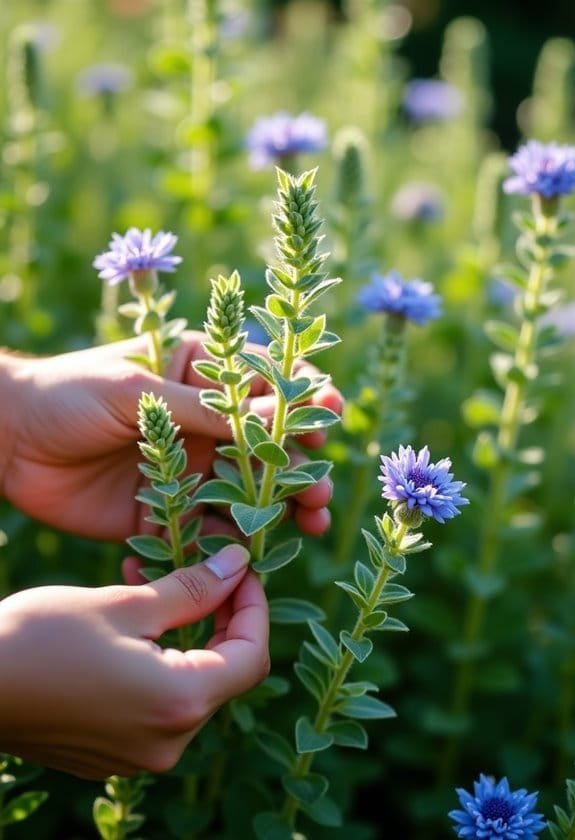
Caring for Calamintha nepeta involves a thoughtful approach, focusing on both planting and ongoing maintenance.
To guarantee the plant thrives, gardeners should provide well-drained soil and regularly monitor for self-seeding, particularly in fertile cultivars, while also cutting back the stems to promote healthy growth.
Pairing this hardy herb with suitable companions can enhance both visual appeal and ecological benefits, creating a balanced garden environment.
Planting Tips
Successful planting of Lesser Calamint relies on a few key considerations that enhance its growth and maintenance. First, selecting an appropriate planting location is essential. The plant thrives in well-drained soil that maintains moisture yet can withstand occasional drought. It's crucial to avoid overly moist or excessively hot conditions, as these can hinder its development. Additionally, Agrimony's ecological preferences highlight the importance of suitable soil conditions for plant health.
Additionally, positioning the plant to receive full sun for at least six hours daily, or four to six hours of partial sunlight, promotes robust growth and abundant blooms that attract pollinators.
Companion planting can also bolster Lesser Calamint's health. Placing it near plants that share its moisture and light requirements can create a harmonious garden ecosystem. For optimal results, gardeners should make seasonal adjustments by cutting back the plants to about six inches during fall or spring, maintaining a tidy appearance while encouraging healthy regrowth after flowering.
Moreover, monitoring for self-seeding is vital, as removing spent flower heads can help control its spread, especially in areas where reseeding may not be desired. To manage its growth effectively, consider dividing the plants in early spring, ensuring rejuvenation and continued health. Additionally, understanding pollinator attraction can further enhance its contribution to the local ecosystem.
Ongoing Care
Maintaining the significance of Lesser Calamint involves consistent care and attention to its specific needs. To guarantee healthy growth, gardeners should employ effective pruning techniques, cutting back the plant to about 6 inches after flowering. This practice not only maintains tidiness but also promotes robust regrowth for the next season.
It's essential to manage self-seeding by regularly removing spent flower heads, as this plant can self-sow prolifically if not properly controlled.
In early spring, dividing the mature plants enhances blooming while revitalizing the root system, allowing for better overall health and vigor. Additionally, maintaining evenly moist soil is fundamental for peak growth. While Lesser Calamint prefers well-drained conditions, it can tolerate slight drought, making it relatively adaptable.
Mildew prevention is important, especially in overly moist environments. Gardeners should remain vigilant, addressing any signs of powdery mildew promptly to uphold the plant's longevity and liveliness.
Suggested Companions
Pairing Lesser Calamint with the right companion plants can greatly enhance the garden's visual appeal and ecological balance. Its thriving partnerships with plants like lavender and catmint not only fulfill similar sun and soil requirements but also contribute aesthetic layers of color and texture.
These planting combinations create a harmonious and vibrant garden, enchanting the senses and inviting admiration.
Integrating native pollinator-friendly species, such as echinacea and rudbeckia, elevates the ecological impact of Lesser Calamint by attracting bees and butterflies, which enjoy its nectar. This mutually beneficial relationship exemplifies the companion benefits of such diverse flora.
Additionally, due to Lesser Calamint's spreading nature, combining it with low-growing plants like creeping thyme can produce an attractive contrast while preserving spatial organization.
To maintain an appealing garden appearance, gardeners should prune overgrown companions, encouraging new growth and ensuring a tidy environment.
The soil needs of Lesser Calamint align seamlessly with herbs such as oregano and thyme, making them complementary in moisture management and ultimately fostering a cohesive herbal garden. This partnership can also prove beneficial by supporting healthy pollinator populations, enhancing the ecological balance within the garden.
Each thoughtful companion choice enriches the garden's aesthetic while supporting local ecosystems, leading to a thriving green space.
Common Issues
Lesser calamint can face several common issues, primarily involving pests and diseases that threaten its growth and health.
For instance, while it boasts resistance to deer and rabbits, it remains vulnerable to powdery mildew in humid conditions and may attract other pests, necessitating vigilant monitoring and informed pest control measures.
Additionally, cultivating the plant in regions with harsh winters requires protective strategies to shield it from extreme cold, ensuring it thrives for seasons to come.
Pests/Diseases
Although generally resilient, lesser calamint isn't completely immune to pests and diseases. This aromatic perennial can occasionally suffer from powdery mildew, particularly in humid conditions where moisture accumulation fosters fungal growth.
Implementing effective pest management strategies, such as ensuring adequate air circulation, is essential for disease prevention. By avoiding overhead watering and maintaining a well-draining soil, growers can greatly minimize the risk of such fungal afflictions.
While deer and rabbits are typically deterred by lesser calamint's potent fragrance, aphids may occasionally target the plant, particularly when the environment is conducive to their proliferation.
Vigilant monitoring for these pests is crucial to maintain the health of the plant.
Furthermore, self-seeding control is important, as lesser calamint can spread vigorously under favorable conditions, leading to overcrowding.
When left unchecked, this can increase susceptibility to diseases, as dense growth often limits air circulation.
To prevent this, regular maintenance, such as cutting back after flowering, is recommended.
Solutions
Effective management of common issues with lesser calamint involves a combination of proactive care and maintenance strategies. This approach aligns seamlessly with sustainable gardening practices, emphasizing harmony with nature.
To combat the susceptibility of lesser calamint to powdery mildew, gardeners should guarantee that plants enjoy adequate air circulation, achieved by spacing them appropriately and avoiding overhead watering. Additionally, seasonal pruning is invaluable; consistently cutting back flowering stems post-bloom promotes a neat appearance while curbing disease risks.
As lesser calamint can self-seed vigorously, removing spent flower heads before they mature will notably control its spread within the garden, preserving both beauty and order. Soil moisture also warrants attention; although this herb tolerates occasional drought, consistently well-drained soils promote robust growth and vibrant flowering.
Implementing these principles of pest management and mindful soil observation can lead to healthier plants. Furthermore, opting for sterile cultivars such as 'Montrose White' can greatly limit aggressive reseeding, simplifying maintenance tasks.
With these strategies, gardeners can cultivate a thriving lesser calamint display that flourishes sustainably, embraces biodiversity, and minimizes ecological disruption, guaranteeing a harmonious blend of beauty and practicality in their gardens.
Can Giant Larkspur and Lesser Calamint Be Planted Together in a Garden?
Yes, Giant Larkspur and Lesser Calamint can be planted together in a garden. When planting, be sure to consider the specific growing conditions and ensure that both plants have enough space to thrive. For more giant larkspur flower information, consult a horticulturist or gardening guide for best results.
Summary
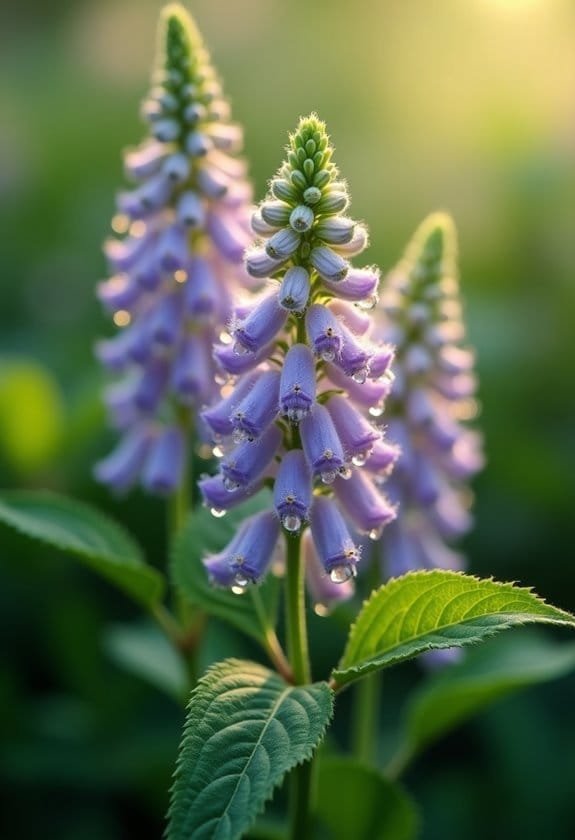
Calamintha nepeta, frequently referred to as lesser calamint, is a versatile perennial that grows between 9 to 15 inches tall and features aromatic, egg-shaped, gray-green leaves. This plant flourishes in full sun and well-drained soil, making it an excellent choice for low-maintenance gardens.
Its delicate pale lavender to white flowers bloom from late summer until frost, attracting beneficial pollinators such as bees and butterflies, which underscores its ecological benefits.
The aromatic properties of lesser calamint resemble those of oregano, giving it several culinary uses. This delightful herb can enhance salads, sauces, or roasted dishes with its fragrant flavor.
Additionally, its moderate growth rate and ability to spread via rhizomes allow it to form dense mats, providing ground cover that resists deer and rabbits, thereby promoting sustainable gardening practices.
Multiple cultivars, such as the sterile 'Montrose White,' prevent aggressive reseeding, allowing gardeners to enjoy its beauty without overwhelming proliferation.