Caryopteris × clandonensis, commonly known as Bluebeard or Blue Mist Shrub, is a striking hybrid that thrives in USDA Zones 5-9, reaching heights of 2 to 3 feet. It produces vibrant deep blue flowers from July to September, attracting pollinators like bees and butterflies. This hardy plant prefers full sun, requiring at least six hours of light daily, while thriving in well-drained loamy soil. With glossy, aromatic gray-green leaves and minimal care needs, Caryopteris enhances garden aesthetics and supports local ecosystems. Understanding its requirements and common challenges can greatly enrich garden dynamics and health, ensuring robust growth throughout the seasons.
Main Points
- Caryopteris × clandonensis, commonly known as Bluebeard or Blue Mist Shrub, features deep blue flowers from July to September.
- This hybrid thrives in USDA Zones 5-9 and prefers full sun with well-drained, loamy soil.
- Regular spring pruning enhances its dense form and blooming potential, requiring minimal maintenance once established.
- Its fragrant flowers attract pollinators like bees and butterflies, supporting local ecosystems, especially in late summer and fall.
- Awareness of issues like root rot and powdery mildew is essential for maintaining plant health and aesthetics.
Introduction
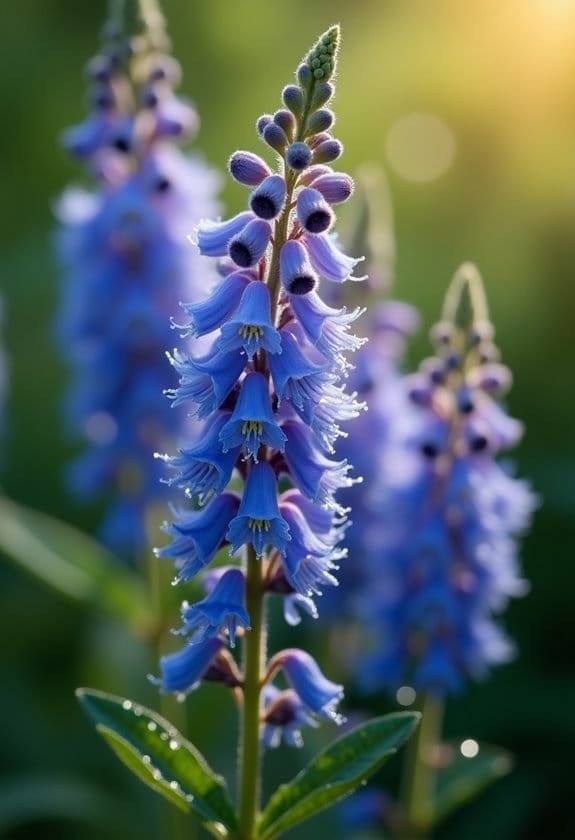
Caryopteris × clandonensis, affectionately known as Bluebeard, represents a remarkable hybrid between Caryopteris incana and Caryopteris mongholica.
This deciduous shrub captures attention with its striking blue flowers and aromatic gray-green foliage, thriving in well-drained, loamy soil under full sun.
With a mature height of 2 to 3 feet, Bluebeard not only enhances smaller gardens but also plays a vital role in attracting beneficial pollinators, thereby enriching garden biodiversity.
Common Name
Known for its enchanting display, Caryopteris × Clandonensis is commonly called Bluebeard or Blue Mist Shrub due to its striking blue flowers and aromatic foliage. This hybrid plant captivates gardeners and landscape designers alike with its vibrant hues and appealing scent.
Often referred to as Blue Spirea, Caryopteris × Clandonensis showcases exotic qualities, making it a favored choice among horticultural enthusiasts.
The plant typically grows to a compact height of 2 to 3 feet, boasting a dense form that fits well in smaller gardens or urban landscapes.
From late summer to early fall, its dazzling blue blooms emerge, enriching the garden with color at a time when many plants have already lost their petals. Furthermore, its resistance to deer enhances its allure, as it thrives in low-maintenance, pollinator-friendly environments.
This shrub supports local ecosystems by attracting bees and butterflies, creating a harmonious balance between aesthetics and ecological health.
Scientific Name
The scientific name Caryopteris × clandonensis designates a hybrid shrub created from the crossbreeding of Caryopteris incana and Caryopteris mongholica. This remarkable plant, popularly known as Bluebeard or Blue Mist Shrub, showcases a stunning display of vibrant blue flowers that grace its aromatic foliage.
Typically, Caryopteris x clandonensis reaches a height of 24 to 48 inches and a width of 24 to 36 inches, ensuring a tidy, compact form ideal for various landscapes.
Hardy in USDA Zones 5-9, this hybrid thrives best in well-drained soils and full sun conditions, making it a resilient choice for many gardeners.
The late summer blooming period stands out, as these bright blooms attract a delightful array of pollinators, including bees and butterflies, enhancing the ecological value of any garden.
The unique combination of two parent species contributes not only to its enchanting beauty but also to its robust nature.
Overview
This hybrid shrub captivates garden enthusiasts with its striking appearance and low maintenance needs. Caryopteris × clandonensis, commonly known as Bluebeard, results from the cross between Caryopteris incana and Caryopteris mongholica. Typically ranging from 2 to 4 feet in height, this deciduous shrub showcases vibrant blue flowers that release a fragrant aroma from late summer through early fall, creating an enchanting visual and olfactory experience.
Thriving in USDA hardiness zones 5 to 9, Caryopteris × clandonensis flourishes in full sun and well-drained soil, ensuring optimal growth while preventing root rot. Its remarkable drought tolerance makes it a prime candidate for gardeners seeking low-maintenance options.
Once established in suitable conditions, this shrub requires minimal care, allowing homeowners to enjoy its beauty without excessive effort.
Beyond its aesthetic appeal, Bluebeard plays an essential role in supporting local ecosystems by attracting pollinators such as bees and butterflies. This interaction not only enhances biodiversity within garden settings, but also contributes to the overall health of the surrounding environment.
Consequently, Caryopteris × clandonensis stands out as a versatile and valuable addition to any garden landscape, combining beauty, practicality, and ecological importance.
Key Features
Caryopteris × clandonensis, commonly known as Bluebeard, presents a compact growth size, typically reaching heights and widths of 2 to 3 feet.
Its visually striking appearance features glossy, aromatic leaves with a striking blue-green hue above and silvery undersides, complemented by dark blue, fragrant flowers that bloom from late summer through early fall.
These key features not only enhance garden aesthetics but also support diverse ecosystems by attracting essential pollinators, such as bees and butterflies.
Growth Size
With its compact, mounding habit, Caryopteris × clandonensis grows to a height of 2 to 3 feet while spreading 2 to 4 feet wide, depending on the variety. This shrub's growth size makes it an excellent choice for smaller gardens, where space can be at a premium.
After establishment, these Bluebeard shrubs exhibit a tidy, upright growth habit, developing dense stems that showcase their vibrant blue flowers blooming in late summer. This provides not only a visually appealing display but also an indication of the plant's health and vigor.
Maintaining an ideal growth size requires regular pruning in spring, which encourages sturdier, denser growth and sustains the desired dimensions over time.
As the plant matures, its compactness allows for efficient use of space, making it a perfect candidate for mixed-border plantings or as a standalone specimen. The moderate growth rate means that gardeners can enjoy the beauty of its elaborate blooms without the concern of rapid overgrowth.
Consequently, Caryopteris × clandonensis stands out not just for its ornamental value but also for its manageable growth size, making it a versatile addition to many landscapes.
Appearance
A striking feature of Caryopteris × clandonensis is its dark, glossy foliage, which serves as a perfect backdrop for the vibrant blue flowers that bloom from late summer to early fall. This deciduous shrub typically achieves a height of 36 to 48 inches and a width of up to 48 inches, making it a compact yet impactful presence in any garden.
The leaves, ovate and measuring 1 to 2 inches long, display an elegant silvery underside, contrasting beautifully against the plant's gray-silver stems, which have a distinct square cross-section.
Upon crushing the aromatic foliage, one releases a delightful scent that enhances the sensory experience of the garden. The blue flowers, appearing in axillary inflorescences, not only brighten the landscape, but also attract a myriad of pollinators, including bees and butterflies.
This ecological benefit underscores the species' contribution to a balanced garden ecosystem. As a visually appealing and fragrant addition, Caryopteris × clandonensis offers both aesthetic allure and practical advantages, making it a cherished choice for gardeners seeking a blend of beauty and functionality.
Flowering Season
During the late summer to early fall flowering season, Caryopteris × clandonensis captivates gardeners with its vibrant blue blooms, typically appearing from July to September. These stunning blue flowers in late summer showcase the plant's ability to attract a diverse array of pollinators, including bees and butterflies, crucial for maintaining ecological balance.
Flowering occurs primarily on new wood, underscoring the importance of proper spring pruning, which promotes robust blooming potential. The blossoms emerge from axillary inflorescences, creating an eye-catching display that enhances garden landscapes, bringing visual allure during the season when many plants start to wane.
Each cluster of intense blue flowers stands in stark contrast to the plant's green foliage, making it an increasingly popular choice among landscape designers and gardening enthusiasts alike. As they reach their peak, these vibrant blooms not only provide a burst of color but also support crucial wildlife interactions, proving essential for the overall biodiversity in the garden ecosystem.
Therefore, the flowering season of Caryopteris × clandonensis serves as a vivid reminder that gardens can thrive even as the summer days begin to cool.
Growing Requirements
Caryopteris × clandonensis requires specific growing conditions to flourish. It thrives in full sun, demanding at least six hours of direct sunlight daily, while well-drained, loamy soil is vital for preventing root rot.
Understanding these light and soil needs, along with ideal watering and temperature considerations, is essential for gardening enthusiasts aiming to cultivate this vibrant perennial successfully.
Light
Full sun is crucial for the thriving development of Caryopteris × clandonensis, as this plant requires at least six hours of direct sunlight daily for ideal growth and flowering.
While Caryopteris can tolerate partial shade, consistent exposure to full sun greatly enhances its compact growth habit and the vibrancy of its blue flowers. This strong sunlight encourages photosynthesis, promoting robust health and overall energy.
Inadequate light combined with heavy, soggy soil creates an environment conducive to root rot, a serious issue for this species.
Light conditions play a critical role in the plant's blooming cycle; reduced sunlight often results in fewer blooms and a less vigorous appearance, which can impact the aesthetic appeal of any garden displaying this lovely shrub.
Regular monitoring of sunlight exposure proves crucial for ensuring healthy development.
As Caryopteris thrives in the embrace of full sun, it attracts beneficial pollinators, enhancing the ecosystem within the garden.
As a result, enthusiasts must select an appropriate location, considering the plant's light preferences, to enjoy the dynamic beauty and environmental benefits that Caryopteris × clandonensis offers.
Soil
To guarantee healthy growth, Caryopteris × clandonensis demands loose, well-drained loamy soil that prevents root rot and promotes ideal conditions. This plant thrives best in a well-drained soil mix, rich in organic matter and composed of sand and gravel, which enhances drainage while offering essential nutrients.
Heavy, wet clay soils should be avoided, as their saturation can greatly hinder growth and lead to diseases like root rot, proving detrimental to the plant's overall health.
In less than ideal soil types, incorporating soil conditioners like compost or perlite can notably improve drainage, making it more suitable for Caryopteris. Initially, while this plant prefers dry to medium-dry conditions, adequate moisture is fundamental during the establishment phase; once settled, it exhibits remarkable drought tolerance, adapting well to various environmental challenges.
Properly prepared well-drained soil contributes greatly to the plant's vitality, creating a hospitable environment that encourages robust growth and blooming potential.
To summarize, providing Caryopteris with not only well-drained soil but also enriching components can lead to flourishing, vibrant displays, enhancing any garden or landscape. Proper soil management is, consequently, an essential element of successful Caryopteris cultivation.
Water
Achieving the right watering balance for Caryopteris × clandonensis is important for its growth and health. This plant thrives in well-drained soils; soggy conditions can lead to root rot, severely impairing plant vigor.
Once established, Caryopteris prefers drier environments, necessitating moderate watering that corresponds with the soil's moisture level. During the establishment phase, regular monitoring of soil moisture is essential, guaranteeing it doesn't become overly dry.
Caryopteris is particularly sensitive to heavy, wet clay, which can worsen drainage issues. When planting in such substrates, using soil conditioners can dramatically improve drainage and contribute to the plant's overall well-being.
A deep watering approach, conducted less frequently, fosters a robust root system, promoting increased drought tolerance over time.
To cultivate a thriving Caryopteris, gardeners should aim for a balance that prevents both under- and over-watering. Carefully evaluating the soil's moisture helps avoid detrimental conditions that can stunt growth or complicate maintenance.
Ultimately, understanding these water requirements not only enhances the plant's resilience but also guarantees it flourishes in diverse environments, creating a stunning addition to any garden.
Temperature
Caryopteris × clandonensis flourishes in USDA hardiness zones 5-9, where temperatures remain favorable for growth. This hybrid, often known as blue mist spirea, thrives best in environments that avoid extreme winter conditions, particularly in zone 5.
Ideally, it requires a minimum of six hours of direct sunlight daily; this exposure is essential for stimulating healthy growth and abundant flowering.
Once established, Caryopteris demonstrates resilience against dry to medium-dry soils, yet it often struggles in heavy, wet clay, which can lead to detrimental root rot.
Timing is significant; planting should occur in spring to early summer within recommended zones to allow adequate root establishment before the rigors of winter emerge.
Gardeners should consider pruning techniques to enhance plant vigor and hardiness. Light pruning in late autumn helps prepare the blue mist spirea for climatic fluctuations, while more substantial spring pruning encourages new growth.
These practices not only improve the plant's resilience to temperature variations but also foster an aesthetically appealing structure. Therefore, understanding and managing temperature requirements is critical for sustaining the health and beauty of Caryopteris × clandonensis in diverse environments.
Pollinator Criteria
Caryopteris × clandonensis entices a variety of pollinators, particularly bees and butterflies, with its nectar-rich blue flowers during late summer and early fall. This allure not only supports these essential insect populations but also fosters biodiversity in garden ecosystems, making it a valuable addition to urban and suburban landscapes. Additionally, plants like hogweed can provide a sustained food source for pollinators, enhancing the overall ecosystem health. The presence of nectar sources like Wild Candytuft in nearby gardens can further boost pollinator activity and support a thriving ecosystem.
Attracted Pollinators
Several factors make Caryopteris × Clandonensis a magnet for pollinators. Its striking deep blue flowers bloom from late summer to early fall, providing fundamental nectar sources for various insects, particularly bees and butterflies. These beautifully fragrant flowers not only allure pollinators with their vibrant hue but also serve as a key food source during a time when other plants have relinquished their resources.
This timing is significant, as many pollinator populations rely on these late blooms to sustain their activity and health. Caryopteris × Clandonensis contributes considerably to honeybees' foraging behavior, helping enhance their survival amid diminishing food supplies. The nectar-rich structure of the flowers facilitates efficient feeding, ensuring these essential pollinators receive ample nourishment.
In addition, the plant's remarkable resistance to deer browsing guarantees that its alluring flowers aren't excessively consumed by herbivores, allowing pollinators continued access without substantial disruption. Ultimately, Caryopteris × Clandonensis stands out as a fundamental player in promoting biodiversity, enriching gardens not only with beauty in its vivid blue colors but also with key support for local ecosystems.
Consequently, this unique plant exemplifies dynamic relationships between flora and pollinators.
Pollination Method
The method of pollination for Caryopteris × clandonensis primarily involves a diverse range of pollinators, particularly bees and butterflies, drawn in by the plant's rich nectar and vivid blue blooms. These enchanting flowers appear in late summer and continue to flourish into early fall, creating an essential source of sustenance for pollinators during this critical period.
The aromatic foliage of Caryopteris emits enticing scents that further enhance its allure, ensuring that pollinators are naturally directed towards the blooming flowers. Thriving in full sun conditions, Caryopteris × clandonensis optimizes nectar production, which is necessary for the visiting insects. Each flower can be a veritable treasure trove of nutrition, facilitating the transfer of pollen as bees and butterflies flit from one bloom to the next.
While it excels in attracting various beneficial insects, it's crucial to mention that these plants don't provide nectar for hummingbirds, limiting their clientele.
Planting Caryopteris in masses not only creates a vibrant tapestry of color but also considerably supports biodiversity. This strategy helps to foster healthier ecosystems by ensuring that a variety of pollinators thrive, thereby solidifying Caryopteris × clandonensis's role in pollination and ecological balance.
Care & Maintenance
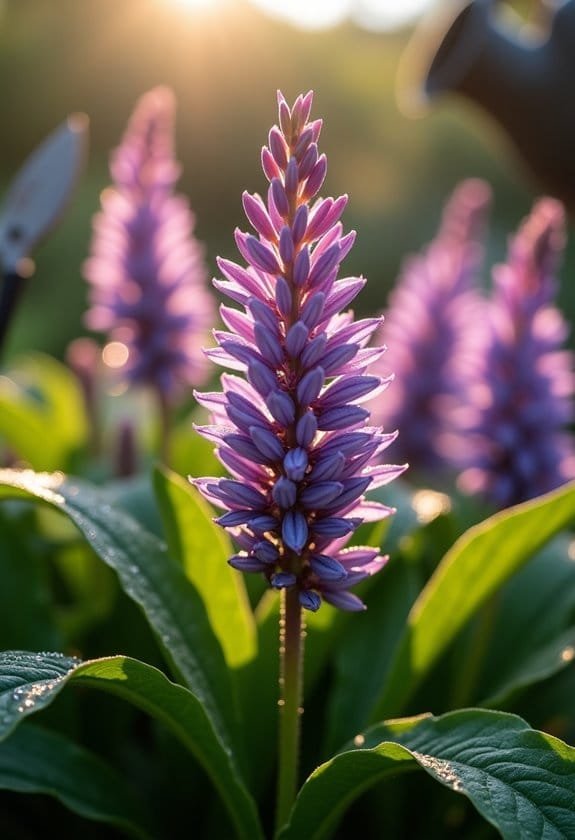
Caryopteris × clandonensis requires attentive care and maintenance to flourish in garden settings.
For ideal growth, it's essential to plant this hybrid in well-drained soil and provide direct sunlight for at least six hours a day, ensuring strong and vibrant blooms.
Additionally, pairing it with compatible plants can enhance its aesthetic appeal while fostering a healthy ecosystem, promoting biodiversity within the landscape.
Planting Tips
When planning to plant Caryopteris × clandonensis, timing and location play vital roles in ensuring the plant thrives. Ideally, sow this adaptable perennial in early spring, allowing ample time for its roots to establish before the chilling grip of winter sets in.
Best suited for hardiness zones 5-9, Caryopteris × clandonensis can transform a summer landscape with its striking blue flowers.
Selecting a proper planting site is essential; avoid heavy wet clay since it leads to waterlogged conditions detrimental to root health. Instead, opt for well-drained soils, enhancing drainage with soil conditioners when necessary.
To achieve ideal growth, moderate watering during the establishment phase keeps the plant healthy, as it shows impressive drought tolerance once matured.
Additionally, regular spring pruning promotes a compact form by eliminating dead stems, encouraging lush, dense growth.
Observers will delight in the plant's ability to attract bees and butterflies, a feature that enhances its role in the ecosystem. Agrimony's ecological preferences also highlight the importance of understanding plant needs, ensuring successful garden integration. Strategically positioning Caryopteris × clandonensis not only beautifies any garden but also fosters pollinator activity, enriching the biodiversity of the surrounding environment.
Ongoing Care
Ongoing care for Caryopteris × clandonensis guarantees its vibrant display and health during the growing season. This hybrid plant flourishes best in well-drained soil, so it's crucial to avoid heavy clay that retains moisture which can lead to detrimental root rot.
With an eye on soil moisture levels, gardeners should verify they avoid overwatering, as drier conditions foster healthier growth and establish robust roots.
Each spring, a regular pruning routine helps promote denser, sturdy growth, while light trimming in late autumn assists in managing blooms effectively. Initially, planting in hardiness zones 5-9 allows roots to establish properly before winter's chill sets in.
Once established, Caryopteris × clandonensis requires minimal maintenance; it becomes a drought-resistant and pest-resistant wonder. Additionally, this resilient plant is rabbit resistant and rarely browsed by deer, making it a magnificent choice for gardeners seeking low-maintenance solutions.
Ultimately, ongoing care, which includes appropriate pruning and soil monitoring, enhances not only the health of Caryopteris × clandonensis but also its stunning visual appeal, rewarding gardeners with a beautiful, thriving addition to their landscapes.
Suggested Companions
Creating a harmonious garden often involves thoughtful plant pairings, and Caryopteris × clandonensis is an excellent focal point around which to design. When planning a garden, it's wise to interplant Caryopteris with drought-tolerant companions like Agastache or Echinacea. These resilient plants thrive in similar growing conditions, particularly during late summer when heat can be intense.
Incorporating ornamental grasses such as Calamagrostis or Miscanthus enhances textural contrast, creating a visually stimulating landscape with varying heights. This combination not only stabilizes the garden but also adds movement and grace.
Additionally, pairing Caryopteris with lighter-colored flowering plants like Sedum or Achillea creates a striking visual dynamic, allowing the deep blue flowers to pop against softer tones. For those aiming to cultivate a pollinator-friendly environment, combining Caryopteris with nectar-rich species like Monarda or Salvia can attract diverse butterflies and bees, which enrich the ecosystem.
Ensuring these companion plants share similar requirements—preferably well-drained, sandy, or loamy soil—will help maintain a harmonious and thriving garden in both early spring and late summer.
This approach embraces the essence of a well-planned ecological landscape.
Common Issues
Caryopteris × clandonensis faces common issues that can compromise its health and growth.
Among these, pests and diseases can emerge, often exacerbated by environmental stressors and inadequate care, leading to increased vulnerability in certain conditions.
Effective solutions, such as timely pruning and proper watering techniques, can mitigate these challenges, ensuring this plant thrives with vigor and blooms profusely.
Pests/Diseases
While Caryopteris × Clandonensis is largely resistant to pests and diseases, gardeners should still be aware of a few common issues.
Root rot can become problematic, particularly in poorly drained soils or during prolonged wet conditions, undermining the plant's vigor. Additionally, powdery mildew may occasionally manifest on the foliage, especially in humid climates; it thrives in stagnant air and can be mitigated through proper air circulation and adequate spacing between plants.
Leaf miners represent another potential challenge, as these pests create unsightly tunnels within the leaves, detracting from the overall aesthetic appeal. Regular monitoring is key in managing this issue, allowing for early detection and intervention.
Despite its inherent resilience, over-fertilization is a concern, as it can weaken growth and render the plant more susceptible to pests and diseases.
Ultimately, while Caryopteris × Clandonensis exhibits low-maintenance traits, vigilance is important. Understanding these common pests and diseases not only fosters a healthier garden but also guarantees that the stunning blue blooms of Caryopteris remain a focal point in the landscape.
Any gardener can appreciate the beauty of this plant when it's thriving and free from issues.
Solutions
Effective solutions for common issues with Caryopteris × Clandonensis hinge on proper cultural practices.
To mitigate the risk of root rot, ensuring that clandonensis is planted in extremely well-drained soil is essential—soggy conditions must be avoided at all costs.
Spring pruning is important, as it fosters dense growth and curtails any inclination toward legginess, while light trimming in late autumn aids in effective bloom management.
In regions characterized by harsher winters, early planting during seasons 5 and 6 greatly enhances root establishment, thereby increasing survival odds.
If residents encounter challenges during extreme winter spells, applying protective mulch or relocating the clandonensis to a more sheltered location may prove beneficial.
Sunlight is another essential factor; ensuring the plant receives at least six hours of sunlight daily can prevent poor growth and lackluster flowering, optimizing its performance throughout the growing season.
Can China Aster and Caryopteris be planted together in the same garden?
Yes, China aster and Caryopteris can be planted together in the same garden. Proper China aster plant care involves giving it full sun and well-drained soil, which is also suitable for Caryopteris. Both plants can complement each other aesthetically and grow well in similar conditions.
Summary
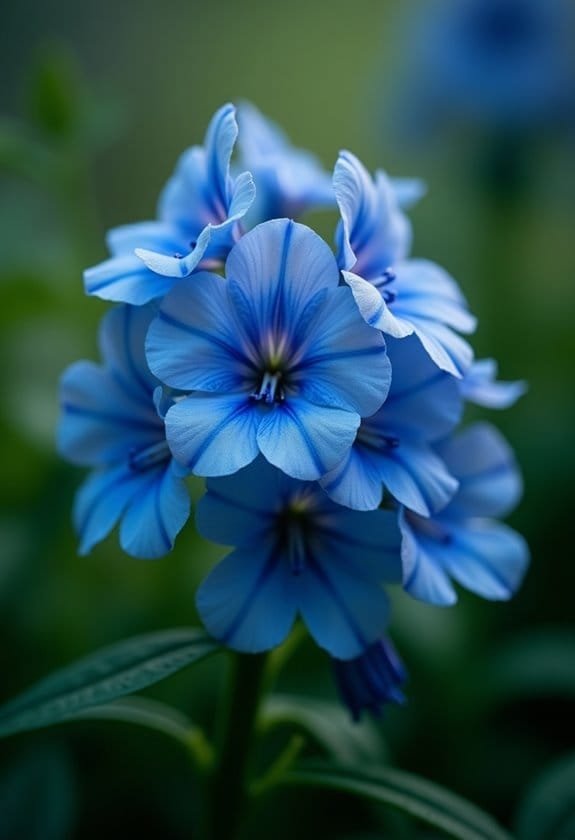
Offering stunning visual appeal, Caryopteris × Clandonensis, commonly known as Bluebeard, is a vibrant hybrid shrub celebrated for its deep blue flowers and aromatic gray-silver leaves. Growing between 2 and 3 feet tall and wide, this remarkable plant thrives in hardiness zones 5-9, favoring well-drained soils and abundant sunlight.
With regular spring pruning, it attains peak growth, showcasing its delightful blooms during the late summer to early fall.
Caryopteris × Clandonensis not only enchants gardeners with its striking aesthetics but also serves as an ecological asset. Its flowers attract a multitude of pollinators, including bees and butterflies, thereby promoting biodiversity in various landscapes. Additionally, this resilient shrub exhibits deer and rabbit resistance, making it a practical choice for gardens and public spaces.
Renowned for drought tolerance and low-maintenance needs, Bluebeard fits seamlessly in urban gardens, traffic islands, and pollinator-friendly environments.
As an enchanting addition to any landscape, Caryopteris × Clandonensis exemplifies the beauty of nature intertwined with the necessity of ecological stewardship, creating vibrant displays while encouraging a sustainable ecosystem.