Centratherum punctatum, renowned as Manaos Beauty, is a enchanting perennial from the Asteraceae family, flourishing in tropical and subtropical zones. Standing 1-2 feet tall and expanding up to 3 feet wide, it showcases striking blue-purple flowers, 1-1.25 inches in diameter, blooming from late spring to fall. This plant attracts essential pollinators, enhancing ecological diversity while emitting a delightful pineapple scent from its leaves. Thriving in well-drained, fertile soil with a neutral pH, it requires full sun and consistent moisture. Remarkably resilient, Manaos Beauty self-seeds effectively. For those intrigued by its enchanting features and care requirements, further insights await.
Main Points
- Centratherum punctatum, commonly known as Manaos Beauty, features striking blue-purple flowers and emits a pleasant pineapple scent when leaves are crushed.
- This plant thrives in tropical and subtropical climates, ideally in USDA Zones 9B to 11, requiring full sun and well-drained soil.
- It attracts essential pollinators like bees and butterflies, enhancing local biodiversity and supporting ecosystems.
- Flowering occurs from late spring through fall, providing a consistent nectar source for pollinators throughout the growing season.
- Companion plants such as sunset hibiscus and tall salvias can enhance growth, requiring spacing of 18-24 inches for optimal health.
Introduction
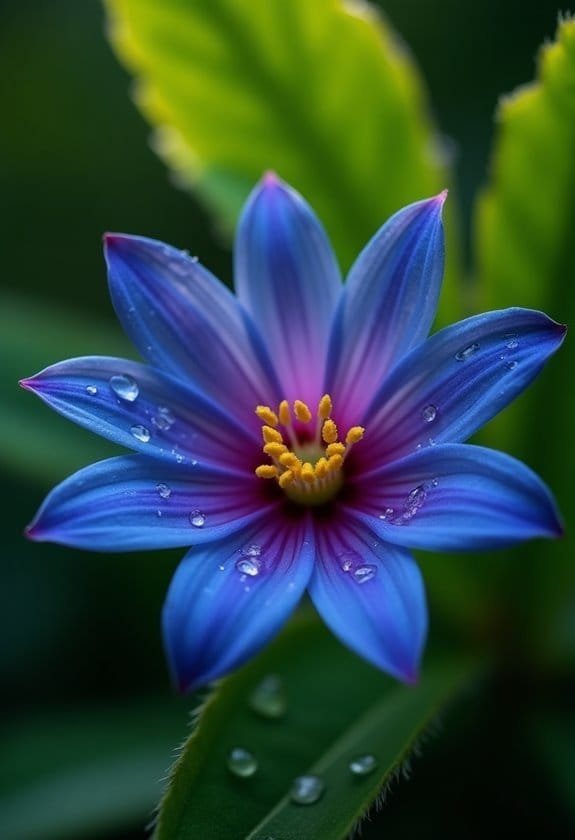
Centratherum punctatum, widely recognized as Manaos Beauty, embodies both resilience and allure within the Asteraceae family.
Native to regions such as South America, Australia, and the Philippines, this tender perennial flourishes with striking blue-purple flowers that attract essential pollinators like bees and butterflies.
Its compact growth, reaching heights of 1 to 2 feet and spreading up to 3 feet wide, makes it an ideal choice for ornamental gardens, whether as a vibrant groundcover or a standout specimen.
Common Name
Known by several common names, Centratherum punctatum is often referred to as Manaos Beauty, Brazilian Bachelors Button, and Pineapple Thistle. These names reflect the plant's tropical origins and its appealing attributes. The Brazilian Bachelors Button, for instance, not only emphasizes the plant's vibrant flowers but also hints at its casual charm, making it a popular choice for gardens and landscapes.
Belonging to the Asteraceae family, which includes the familiar sunflowers, Manaos Beauty flourishes in warm climates, thriving particularly well in USDA Hardiness Zones 9 to 11. This adaptability to tropical regions of South America, Australia, and the Philippines showcases its resilience and versatility.
Its leaves, with their coarse texture and olive green color, release a delightful pineapple fragrance when crushed, infusing gardens with a sensory enchantment.
The flowers, measuring approximately one inch in diameter, bloom in striking blue-purple hues, mesmerizing pollinators and enhancing biodiversity.
Ultimately, the varied names of Centratherum punctatum not only represent its botanical features but also underscore its significance in creating vibrant, aromatic, and dynamic garden environments. The Brazilian Bachelors Button truly embodies nature's artistry.
Scientific Name
The scientific name Centratherum punctatum represents a fascinating specimen within the Asteraceae family, which is often called the daisy family. This plant's elegant name reflects its unique position in the expansive domain of flowering plants. Additionally, Centratherum punctatum is sometimes referred to by the synonym Centratherum intermedium, emphasizing the taxonomic nuances that exist within botanical classifications.
Originating from South America, Brazil, Australia, and the Philippines, this species thrives particularly well in tropical and subtropical climates. The plant typically reaches an appealing height of 1 to 2 feet, gracing gardens or landscapes with its vibrant blue-purple flower heads.
These enchanting blooms not only please the eye but also attract various pollinators, such as bees and butterflies, which are crucial for ecological balance.
In addition to its aesthetic qualities, Centratherum punctatum emits a distinct pineapple scent when its leaves are crushed, adding an aromatic dimension that enhances its allure.
Overview
Originating from the lush landscapes of South America, Centratherum punctatum, commonly referred to as Manaos Beauty, captivates gardeners and nature enthusiasts alike with its striking blue-purple flowers. This tender perennial, a member of the Asteraceae family, showcases button-like blooms approximately 1.25 inches in diameter that flourish abundantly from spring to fall, often exhibiting year-round flowering in tropical settings.
Hailing primarily from Brazil, Manaos Beauty has successfully naturalized in regions such as Florida and Hawaii, adapting well to USDA Hardiness Zones 9B to 11. This resilient plant can grow up to 2 feet tall and wide, adorned with coarsely toothed leaves that emit a delightful pineapple fragrance when crushed, enhancing its allure.
Manaos Beauty's long flowering period not only enriches garden aesthetics but also supports local ecosystems by attracting pollinators. Its propagation largely occurs through seeds, with a significant ability to reseed itself in favorable conditions, promoting sustainability and adaptability within diverse environments.
Key Features
Centratherum punctatum showcases remarkable characteristics that make it a standout in gardens.
It typically reaches heights of 1 to 2 feet, forming broad mounds adorned with coarsely toothed, fragrant leaves, while its striking blue-purple, button-shaped flowers bloom from spring to fall.
This plant not only attracts pollinators but also thrives in well-drained, fertile soil, exemplifying resilience through self-seeding capabilities that enhance biodiversity.
Growth Size
Often reaching heights of 1 to 2 feet, Centratherum punctatum typically spreads 2 to 3 feet wide under favorable growing conditions. This tender perennial often finds itself cultivated as an annual in cooler climates, due to its sensitivity to frost.
The growth habit exhibits broad mounds, showcasing medium green leaves characterized by their distinctively toothed edges, which can grow up to 3 inches in length.
Centratherum punctatum's impressive growth isn't just limited to its foliage; the plant also produces visually striking blue-purple, button-shaped flowers that measure approximately 1 inch in diameter.
These blossoms attract a variety of pollinators, contributing to a vibrant ecosystem in the garden.
For ideal growth, Centratherum punctatum requires fertile, well-drained soil and thrives in sunlight, preferably basking in full sun to partly sunny conditions.
This combination of light and nurturing substrate allows the plant to flourish, resulting in a vigorous and lush appearance.
When planted in the right environment, its enchanting presence can elevate any landscape, making Centratherum punctatum a striking choice for enthusiastic gardeners seeking versatile and flourishing flora.
Appearance
Showcasing its beauty, Centratherum punctatum, also known as Manaos Beauty or Brazilian Button Flower, features striking 1¼-inch blue-purple fluffy button-shaped flowers that entice a variety of pollinators, including butterflies and bees.
This charming plant typically reaches heights of 1 to 2 feet, while its width can span 2 to 3 feet, resulting in a lush, mound-like appearance that adds substantial visual appeal to any garden.
The leaves of the Brazilian Button Flower are equally notable, measuring approximately 3 inches in length. These olive green leaves present coarsely toothed margins, offering a textural contrast to the vibrant flowers.
Interestingly, when crushed, the foliage emits a delightful scent reminiscent of pineapples, enchanting those who tend to or simply admire the plant.
As a perennial, Centratherum punctatum not only stands out during its blooming period but also exhibits a remarkable ability to reseed itself, ensuring its presence in suitable environments year after year.
With its appealing characteristics and ecological benefits, the Brazilian Button Flower contributes to a thriving garden ecosystem, attracting essential pollinators while showcasing nature's artistry.
Flowering Season
The flowering season of Manaos Beauty typically begins in late spring and continues through fall, with some plants blooming year-round in tropical climates. This vibrant spectacle, featuring attractive lavender-blue, button-shaped flowers measuring about 1 to 1.25 inches in diameter, captivates gardeners and nature enthusiasts alike. The blossoms possess a fluffy appearance, adding texture and color to any landscape.
During the flowering season, larger, mature Manaos Beauty plants often display extended blooming periods, as ideal conditions appreciably enhance resource availability for prolific flowering. In USDA Hardiness Zones 9 to 11, these plants flourish, requiring moist soil and abundant sunlight to achieve their full bloom potential from June until the first frost.
Moreover, the vibrant blooms not only serve aesthetic purposes but also play a crucial role in supporting local biodiversity. They attract a variety of pollinators, particularly bees and butterflies, enhancing the ecosystem. Their role as a nectar source is necessary, as these pollinators contribute to the fertilization and reproduction of numerous nearby plants.
Consequently, the flowering season of Manaos Beauty proves to be an integral aspect of its lifecycle, enriching both gardens and natural habitats alike.
Growing Requirements
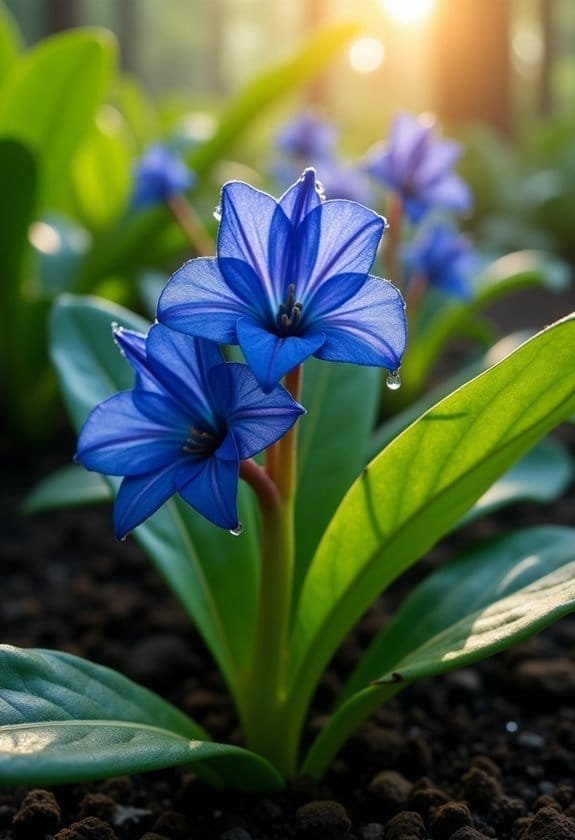
Centratherum punctatum flourishes under full sun to partly sunny conditions, demanding well-drained, fertile soil for ideal development.
This plant's growing environment should maintain average moisture levels during its active growing seasons, ensuring young roots establish effectively, while mature specimens gain improved drought resistance.
As it thrives best in USDA Zones 9B to 11, understanding its light, soil, and water requirements plays a critical role in successfully cultivating this vibrant species.
Light
Full sun conditions are vital for the healthy growth of Centratherum punctatum, also known as Manaos Beauty. This vibrant plant requires at least six hours of direct sunlight each day to thrive effectively. Under these bright conditions, it flourishes, showcasing its colorful blooms and rich foliage.
Significantly, Centratherum punctatum is adaptable, as it can tolerate partly sunny spots with a limited amount of direct sunlight, allowing gardeners some flexibility in placement.
Establishing this beauty in spring, just after the last frost, guarantees it benefits from sufficient sunlight during its primary growing phase. Light, an indispensable ingredient for photosynthesis, fuels the plant's growth and encourages prolific flowering.
While Centratherum punctatum exhibits some drought resistance once established, providing consistent moisture throughout the growing season remains essential. This support not only enhances flowering but also bolsters overall health, enabling the plant to showcase its full potential.
In short, ample sunlight is the lifeblood of Centratherum punctatum, enabling it to flourish in various garden settings and attract admiration from all who encounter it. Investing in its light needs will yield magnificent results, enriching any landscape it adorns.
Soil
For a thriving Centratherum punctatum, choosing the right soil is imperative. This plant flourishes in well-drained, fertile soil, which greatly influences its overall growth and wellness.
A mildly acidic to neutral pH range of 5.6 to 7.3 proves ideal for establishing roots and promoting splendid flowering. During the initial growth phases, maintaining moist soil conditions is essential, as average moisture levels support robust development.
Once established, the Manaos Beauty exhibits some drought tolerance; however, it continues to require adequate moisture for peak performance.
A significant aspect of nurturing this plant involves enhancing soil health through the addition of organic mulch. Not only does this practice enrich the soil, but it also aids in retaining moisture around the roots, creating a nurturing environment crucial for Centratherum punctatum's sustained health.
Water
Consistently providing adequate moisture is essential for Centratherum punctatum, especially during its main growing seasons. This vibrant Manaos Beauty flourishes in average to moist soil conditions, which help facilitate ideal establishment and growth. Consequently, ensuring that the soil remains neither too dry nor overly saturated encourages vigorous development and stunning flowering displays.
As the Manaos Beauty matures, its drought resistance improves, enabling it to endure drier conditions with greater ease. However, achieving this robust state necessitates careful early maintenance, particularly during the flowering period. Regular watering during this phase is crucial for encouraging abundant blooms that attract pollinators, thereby enhancing the plant's ecological role.
The plant's preference for well-drained and fertile soils can't be understated, as this promotes both its resilience and aesthetic appeal. It's important to avoid overwatering, which can lead to detrimental waterlogged conditions—an enemy to the Manaos Beauty's overall health.
Therefore, maintaining a balanced moisture level becomes imperative, ensuring that the plant thrives while preventing root rot or other moisture-related issues. By adhering to these requirements, gardeners can cultivate a flourishing display of Centratherum punctatum, showcasing its remarkable beauty and ecological benefits.
Temperature
Although Centratherum punctatum thrives in warm climates, understanding its temperature requirements is essential for successful growth. This tender perennial flourishes in USDA Cold Hardiness Zones 9B, 10, and 11, exhibiting some resilience in Zone 8B under ideal conditions.
Preferring warm temperatures, the plant excels in sunny, hot environments, particularly throughout the growing season. Gardeners need to be vigilant, as frost can adversely affect the foliage, making it critical to protect Centratherum punctatum from temperatures below 25 degrees Fahrenheit.
The prime time for planting spans from early spring, post-frost, to mid-summer, as these warmer temperatures greatly enhance establishment and growth efficiency.
Once the plant is established, it demonstrates notable drought resistance, thus reinforcing its adaptability to varying temperature conditions. However, sustained exposure to extreme heat or cold can still impede its vigor.
The interplay between temperature, light, and soil moisture contributes remarkably to the overall health of Centratherum punctatum. Consequently, maintaining an awareness of these factors allows gardeners to create ideal growing environments, ensuring this tropical beauty can reach its full potential.
Pollinator Criteria
Centratherum punctatum attracts a diverse array of pollinators, particularly bees and butterflies, thanks to its vibrant blue-purple, button-shaped flowers that measure around 1 inch in diameter.
The plant employs a fascinating pollination method, utilizing its long flowering period to provide ample nectar and pollen, ensuring a consistent food source that supports the life cycles of beneficial insects.
Attracted Pollinators
Numerous pollinators flock to Manaos Beauty due to its striking blue-purple flowers and long blooming season. These button-shaped blossoms, measuring approximately one inch in diameter, attract a diverse array of pollinators, particularly bees and butterflies. Throughout its extended flowering period, which can last from spring to fall—or even year-round in warmer climates—these vibrant blooms serve as a critical food source, sustaining numerous pollinator populations.
The aromatic leaves of Manaos Beauty, reminiscent of pineapple's sweet fragrance, not only allure bees and butterflies but also draw additional beneficial insects, fostering a thriving ecosystem. By providing habitats and food, this plant enhances local biodiversity, promoting healthier interactions among various species.
Additionally, its notable adaptability allows it to flourish in disturbed areas and across different environments, ensuring a consistent attraction for pollinators in numerous garden settings.
In nurturing these relationships, Manaos Beauty contributes substantially to the local ecosystem, highlighting the intricate connections within nature. Its ability to supply sustenance over an extended period underscores its ecological importance, instilling a sense of balance within the habitats it adorns and supporting vibrant wildlife communities.
Pollination Method
The impressive array of pollinators attracted to Manaos Beauty is a reflection of its efficient pollination methods. Centratherum punctatum, with its stunning 1-inch blue-purple button-shaped flowers, entices various pollinators, particularly bees and butterflies. This diversity in pollinators is crucial, as those insects carry pollen from one bloom to another, guaranteeing genetic diversity and robust plant populations.
Manaos Beauty's flowering period, stretching from spring to fall, provides a continuous food source, enhancing its appeal to these indispensable creatures. The plant's coarsely toothed leaves give off a sweet, pineapple-like scent when crushed, suggesting that unique fragrances further engage specific pollinators.
For ideal flowering and pollination, Manaos Beauty thrives in well-drained, fertile soil and requires full sun exposure, maximizing resource allocation for its vibrant blooms.
Moreover, the presence of Manaos Beauty in gardens plays a significant role in fostering local biodiversity. By supporting the populations of crucial pollinators, this plant contributes positively to the ecosystem's health and stability.
Therefore, the remarkable pollination method employed by Manaos Beauty not only guarantees its survival but also underlines its significance in the broader environmental tapestry.
Care & Maintenance
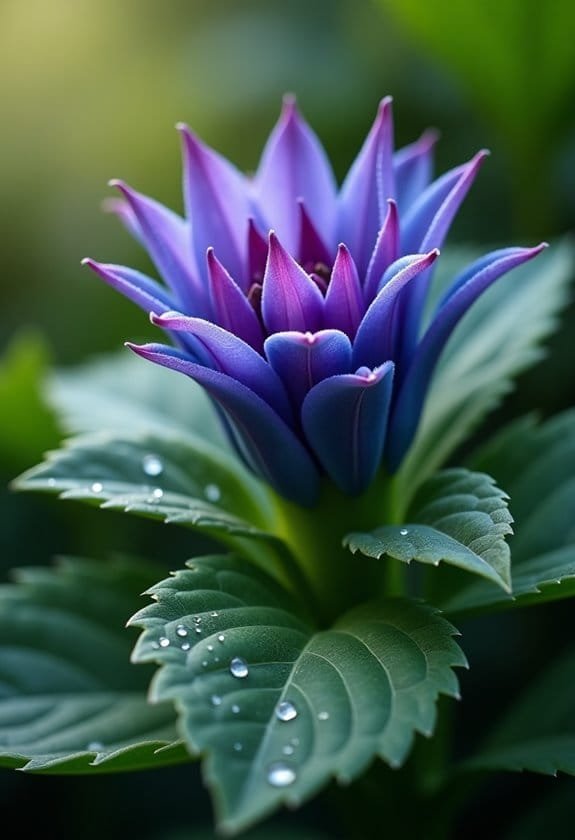
Centratherum punctatum requires specific care and maintenance practices to flourish, emphasizing the importance of planting techniques, sustained upkeep, and plant companions.
Ideal growth conditions include well-drained, fertile soil with ample sunlight, underscoring the need for careful attention during the establishment phase, particularly in spring and summer when consistent moisture is essential.
Engaging with suitable companion plants can enhance growth while creating a vibrant garden ecosystem, allowing gardeners to cultivate a bountiful and harmonious landscape.
Planting Tips
When planting Centratherum punctatum, it's essential to choose well-drained, fertile soil and position them in full sun to partly sunny areas for best growth. Ideally, planting occurs from spring, post-frost, until mid-summer, allowing the plants to establish effectively during warmer conditions. Additionally, Salad Burnet thrives in similar conditions, showcasing its adaptability to various environments.
Proper soil preparation involves incorporating organic matter to enhance fertility and drainage, providing a nourishing environment for the root system.
Establishing Centratherum punctatum requires maintaining average moist to moist soil conditions, especially during primary growing seasons, guaranteeing adequate moisture promotes vigorous growth and flowering. Supplemental watering may be necessary during dry spells to sustain hydration levels.
Additionally, utilizing breathable organic mulch contributes to improved soil quality while moderating temperatures, fostering an ideal environment.
For plants in containers, transplanting can occur year-round, provided care is taken to guarantee that environmental conditions—such as temperature and light—align with the plant's needs.
Pruning may also be beneficial, as it helps maintain the desired shape and encourages prolific blooming.
Fertilizing six weeks prior to bud break with a slow-release fertilizer, like Scotts Osmocote, provides essential nutrients, enhancing overall health and vigor. Furthermore, introducing drought tolerance in care practices can enhance resilience in varying environmental conditions.
Ongoing Care
Ongoing care is essential for maintaining the health and beauty of Centratherum punctatum after the initial planting phase. This vibrant species thrives in well-drained, fertile soil with a pH range of 5.6 to 7.3, which supports optimal growth and flowering.
During the establishment phase, regular watering is critical to keep the soil conditions average to moist; however, allowance for increased drought resistance develops as the plant matures.
To enhance soil quality and moisture retention, applying breathable organic mulch proves advantageous. Such mulch not only nurtures the plant but also aids in thwarting weed growth, creating a thriving environment.
It's essential to fertilize Centratherum punctatum with slow-release products like Scotts Osmocote from six weeks before bud break to six weeks before frost—this schedule promotes vigorous growth and colorful blooms.
Additionally, pruning may be necessary to maintain a desirable shape and encourage abundant flowering. Larger plants considerably benefit from periodic maintenance, ensuring they don't become unruly while enhancing their visual appeal.
With consistent ongoing care, even a novice gardener can enjoy the enchanting beauty that Centratherum punctatum brings to their landscape.
Suggested Companions
Pairing Centratherum punctatum, commonly known as Manaos Beauty, with carefully selected companion plants can greatly enhance a garden's aesthetic and ecological balance. This vibrant perennial thrives alongside late-blooming flowers, such as sunset hibiscus and tall salvias, that mirror its striking blue-purple hues.
With its extended flowering period from June until frost, Manaos Beauty serves as a delightful filler, offering continuous color and interest.
Moreover, it thrives alongside pollinator-friendly species, enriching garden biodiversity. By collaborating with butterflies and bees, companion plants amplify the ecological benefits while creating a dynamic visual effect.
The resilience of Centratherum punctatum also allows it to coexist harmoniously with more delicate plants, providing height and vibrancy without overshadowing them. The plant's ability to support local pollinators, such as bees and butterflies, further enhances its value in the garden ecosystem.
To guarantee peak health and visual coherence, proper spacing is essential—planting Manaos Beauty approximately 18-24 inches apart will prevent overcrowding while allowing for air circulation.
Regular but minimal deadheading enhances its blooming capacity, assuring those rich colors thrive throughout the growing season.
Common Issues
Common issues affecting Centratherum punctatum primarily involve pests and diseases, which can compromise the plant's health.
Although typically resilient, inadequate drainage can exacerbate root rot, while excessive shade may stunt growth, impeding the plant's floral displays.
Gardeners should remain vigilant, implementing timely interventions like proper watering techniques and pest control measures to guarantee the plant flourishes in its preferred environment.
Pests/Diseases
Centratherum punctatum is largely resilient to pests, yet it can attract aphids, which may sap its vigor if left unmanaged. These small, sap-sucking insects typically thrive in warmer conditions, making regular monitoring essential for gardeners.
When aphid populations become too substantial, they can stress the plant, affecting overall health and growth.
Fungal diseases represent another concern, especially in overly moist environments. Such conditions can lead to root rot, underscoring the necessity of well-drained soil. Maintaining appropriate moisture levels is vital in promoting a healthy root system.
Interestingly, the strong pineapple scent emitted by the plant's foliage serves as a natural deterrent against common garden pests like deer and rabbits. This characteristic not only enhances its appeal but also serves a functional purpose in protecting the plant.
In hotter, drier weather, spider mites can pose additional challenges. Monitoring for these pests is advisable, as significant infestations can lead to considerable stress and damage.
Consequently, through vigilant observation and maintaining healthy plants via proper care and cultural practices, gardeners can minimize potential pest and disease issues, supporting robust growth and longevity.
Solutions
While gardeners may encounter issues with Centratherum punctatum, effective solutions can guarantee its thriving presence. One key factor for success lies in ensuring well-drained, fertile soil; waterlogged conditions can lead to root rot, compromising the plant's health. Ideal soil conditions allow the olive green foliage to flourish, supporting its lively blooms from spring through fall.
Gardening enthusiasts should position Centratherum punctatum in full sun to partly sunny areas, as this maximizes its growth potential. Regular watering during the main growing seasons is essential, fostering establishment and enhancing drought resistance over time. Gardeners must also monitor moisture levels, ensuring that plants don't suffer from extremes of wetness or dryness.
Particularly vigilant caretakers should be aware of the plant's potential to reseed aggressively, which could lead to competition with native flora. Careful monitoring and timely management can help mitigate this issue, preserving the biodiversity of the garden.
Fortunately, the distinctive pineapple scent emitted by the foliage offers a natural advantage, acting as a deterrent to deer and rabbits. This makes Centratherum punctatum an excellent addition to gardens prone to wildlife disturbances.
Summary
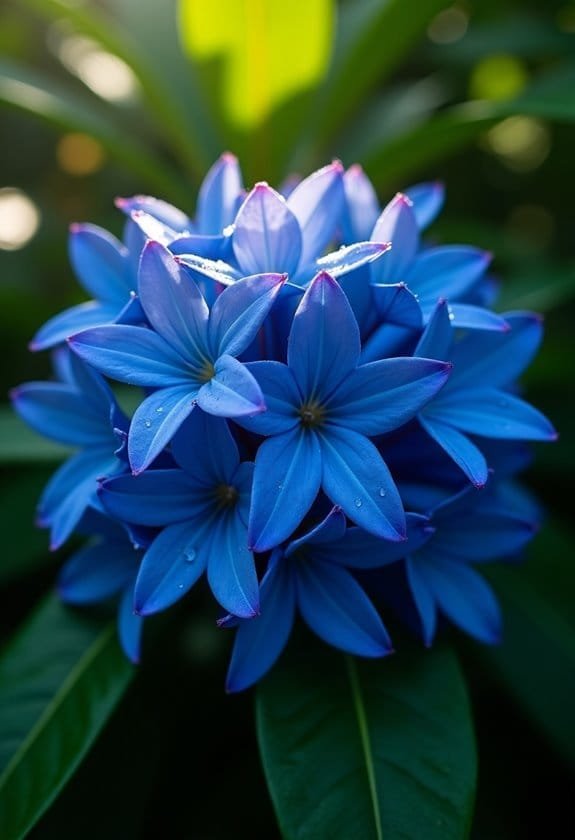
What makes Centratherum punctatum, or Manaos Beauty, a standout choice for gardens? This tender perennial, thriving in USDA Hardiness Zones 9B to 11, typically reaches heights of 1 to 2 feet while spreading up to 3 feet wide. It captivates with its stunning blue-purple, button-shaped flowers, which bloom from spring to frost, peaking in vibrant displays between June and fall.
Additionally, Manaos Beauty thrives under full sun or partial sunlight conditions, favoring well-drained, fertile soil. Its ability to attract pollinators, such as butterflies and bees, adds ecological value to gardens, promoting biodiversity throughout the growing season.
The leaves of Centratherum punctatum offer a distinctive aroma, releasing a scent reminiscent of pineapple when crushed, enhancing the sensory experience of any garden setting.
Remarkably, this species can reseed itself in disturbed locales, showcasing its adaptability to various climates while supporting the surrounding flora.
As gardeners seek plants that aren't only visually appealing but also environmentally beneficial, Manaos Beauty stands out as an excellent choice, providing both beauty and practicality in creating diverse and vibrant outdoor spaces.