Clematis vitalba, known as Old Man's Beard, is a robust climbing plant native to Eurasia and North Africa. This species can soar up to 90 feet (30 meters) in height, showcasing its pinnately compound leaves with 3-5 serrated leaflets and cream-colored flowers from June to September. Preferring sunny, well-drained alkaline soils, it exhibits remarkable adaptability, thriving in varied environments. While it plays an important role in supporting pollinators like bees and hoverflies through its nectar-rich blooms, its invasive nature poses a threat to local flora. Effective management is essential to balance its beauty with ecological responsibility, leading to fascinating consequences.
Main Points
- Clematis vitalba, commonly known as Old Man's Beard, is a climbing plant native to Eurasia and North Africa, reaching up to 90 feet in height.
- This plant produces cream-colored flowers from June to September, followed by feathery-haired fruits that enhance its aesthetic appeal.
- Old Man's Beard is recognized for its invasive potential, capable of producing over 100,000 seeds and competing aggressively with native flora.
- It thrives in sunny, moist, well-drained alkaline soils and attracts various pollinators, playing a significant role in local ecosystems.
- Management strategies, including manual removal and collaboration with conservation organizations, are essential to control its spread and protect local biodiversity.
Introduction
Clematis vitalba, more commonly known as Old Man's Beard, represents a fascinating climbing shrub renowned for its impressive length and distinctive features.
This hardy plant, native to Eurasia and North Africa, showcases pinnately compound leaves adorned with elliptical leaflets and produces cream-colored flowers during the warm months.
Its rapid growth and ability to thrive in certain conditions make it both an intriguing specimen for study and a potential challenge for ecosystems it invades.
Common Name
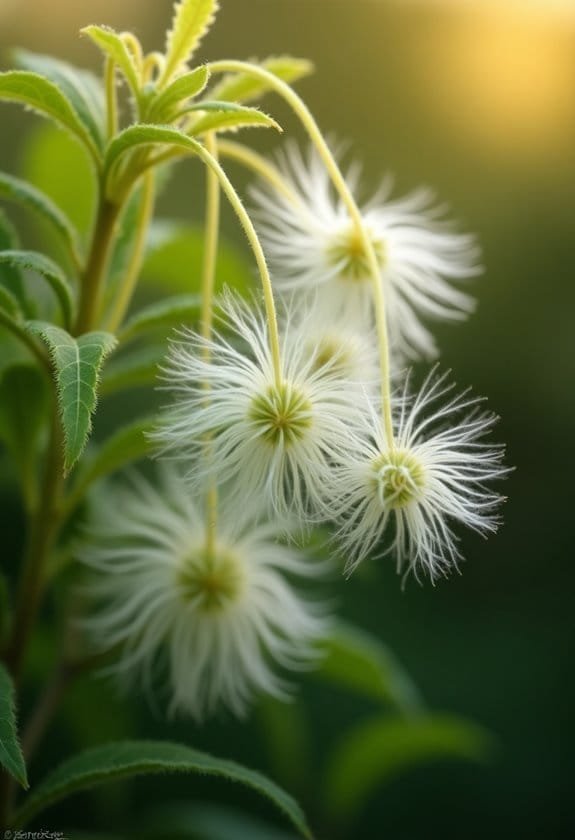
What makes the common name "Old Man's Beard" so fitting for Clematis crucialba? This name aptly describes the plant's unique seed heads, which, with their elongated, fluffy appendages, mimic the appearance of an elderly man's beard, wispy and voluminous.
Known for its climbing prowess, Clematis crucialba can ascend up to 90 feet (30 meters), creating stunning vertical displays that can transform landscapes. This perennial vine offers a bloom period from June to September, ensuring its presence remains significant year-round, contributing rich texture and visual interest.
Moreover, "Old Man's Beard" reveals more than just aesthetic value; it also embodies the plant's invasive characteristics, capable of overshadowing and competing with native species for resources.
In historical contexts, this plant has also been dubbed "Traveller's Joy," underscoring its frequent presence along rural pathways, where it provides both beauty and a touch of nostalgia for idyllic countryside landscapes.
Thus, the name reflects both the charming yet challenging nature of Clematis crucialba, symbolizing its contributions to the natural world while hinting at its potential to disrupt ecosystems if left unchecked.
Scientific Name
Known scientifically as Clematis vitalba, the plant belongs to the Ranunculaceae family, highlighting its botanical classification and relationships within the broader plant kingdom.
This perennial climbing shrub exhibits branched, grooved stems that can reach impressive lengths, allowing it to gracefully ascend various structures. Named for its distinctive floral characteristics, Clematis vitalba showcases clusters of small, cream-colored flowers from June to September. These flowers are often misidentified as petals; however, they possess sepals that give the plant its unique charm.
The seeds of Clematis vitalba are particularly fascinating, adorned with long, silky appendages that drift serenely on the breeze, evoking the imagery of an "old man's beard." This characteristic not only contributes to its common name but also plays an essential role in seed dispersal.
Native to Eurasia and North Africa, Clematis vitalba is recognized for its invasive potential in non-native regions, where it can rapidly establish itself, outcompeting local flora. Such traits reveal the complex dynamics of this species, merging elegance with ecological implications, as it navigates its interactions within diverse ecosystems. Additionally, like Goat Willow's role in supporting local biodiversity, Clematis vitalba interacts with various pollinators and wildlife, highlighting the ecological connections among plant species.
Overview
Elegant yet resilient, Clematis vitalba, or Old Man's Beard, captivates with its climbing nature and distinctive appearance. This perennial climbing shrub boasts branched, grooved stems that can ascend to heights of 90 feet (30 meters), making it an impressive sight in gardens and natural settings.
The leaves, characterized by a luminous lime green color, are pinnately compound, featuring 3-5 serrated leaflets that contribute to its overall allure.
From June to September, Old Man's Beard produces small, cream-colored flowers that cluster loosely, attracting a variety of pollinators, including bees and hoverflies. While it thrives in base-rich alkaline soils, particularly common in regions of England south of the River Mersey and Humber, its invasive potential is significant.
A single Clematis vitalba plant can generate over 100,000 seeds, leading to expansive growth that can quickly overwhelm native flora in non-native territories.
Recognized not only for its beauty but also for its ecological impact, Old Man's Beard warrants careful consideration in landscaping and conservation efforts, highlighting the dual nature of this remarkable climbing plant.
Key Features
Clematis vitalba showcases striking features that contribute to its distinctive charm. Growing effortlessly up to an impressive 90 feet, its branched and grooved stems support enchanting leaves arranged in an opposite pattern, each adorned with serrated edges.
From June to September, the plant delights observers with its cream-colored flowers clustered in loose formations, eventually giving rise to feathery achenes that embody its nickname, "Old Man's Beard."
Growth Size
Reaching impressive heights of up to 90 feet (30 meters), Old Man's Beard is a remarkable climbing shrub that thrives in various environments. Its vigorous growth size distinguishes it within the Clematis genus, allowing it to rapidly cover structures and landscapes.
The sturdy, decaying woody stems feature easily felt grooves, a characteristic that sets it apart from many other climbing plants, adding to its unique structure.
With its deciduous leaves arranged oppositely, the plant showcases compound foliage that consists of 3-5 elliptical leaflets, adorned with rough-toothed margins. This leaf configuration not only contributes to its lush appearance but also supports its impressive growth size by maximizing photosynthesis.
During the blooming period from June to September, the plant produces small cream-colored flowers gathered in loose clusters, enhancing its visual charm while demonstrating the breadth of its growing capacity.
Furthermore, the feathery-haired fruit that follows the flowering phase aids in wind dispersal, showcasing how its growth size plays a critical role in reproductive success.
Appearance
Old Man's Beard enchants with its distinct appearance and essential features. Clematis vitalba, commonly known as this climbing shrub, displays a striking array of characteristics that enhance its visual appeal.
Its deciduous leaves consist of compound structures, typically featuring 3-5 elongated leaflets that are elegantly arranged oppositely along the stem. This organized foliage contributes to its aesthetic charm.
The plant showcases small, cream-colored flowers, blooming in loose clusters from June to September, though they remain understated in size compared to the overall presence of the shrub.
One of its most remarkable features is the long, silky seed appendages that develop post-bloom, giving the fruits a fluffy appearance evocative of an old man's beard. This natural design not only enhances visual interest but also facilitates wind dispersion, ensuring effective seed propagation.
Clematis vitalba is notable for its impressive growth, capable of reaching heights up to 90 feet (30 meters). The stems, which bear distinct grooves, add a tactile element that further characterizes this fascinating plant.
Collectively, these features position Old Man's Beard as an enchanting addition to any natural landscape.
Flowering Season
During the flowering season, which spans from June to September, Clematis vitalba, or Old Man's Beard, captivates with its small, cream-colored blossoms. These delicate flowers, often mistaken for traditional petals, actually consist of four sepals, creating a distinctive visual appeal.
Arranged in loose clusters, they blanket the plant, creating an ethereal, inviting presence in the garden.
During this blooming period, Old Man's Beard attracts a diverse array of pollinators, including bees and hoverflies. These insects are drawn to the nectar-rich flowers, which play a significant role in the plant's reproductive cycle.
The activity of pollinators guarantees successful fertilization, ultimately leading to the formation of achenes—seed clusters adorned with feathery appendages. This feature gives rise to the plant's whimsical nickname, evoking the image of an old man's beard swaying in the breeze.
As the flowering season concludes, considerable seed production occurs. Each plant can generate over 100,000 seeds, further aiding its spread throughout various environments.
This reproductive success exemplifies the tenacity and adaptability of Clematis vitalba, reinforcing its role in local ecosystems.
Growing Requirements
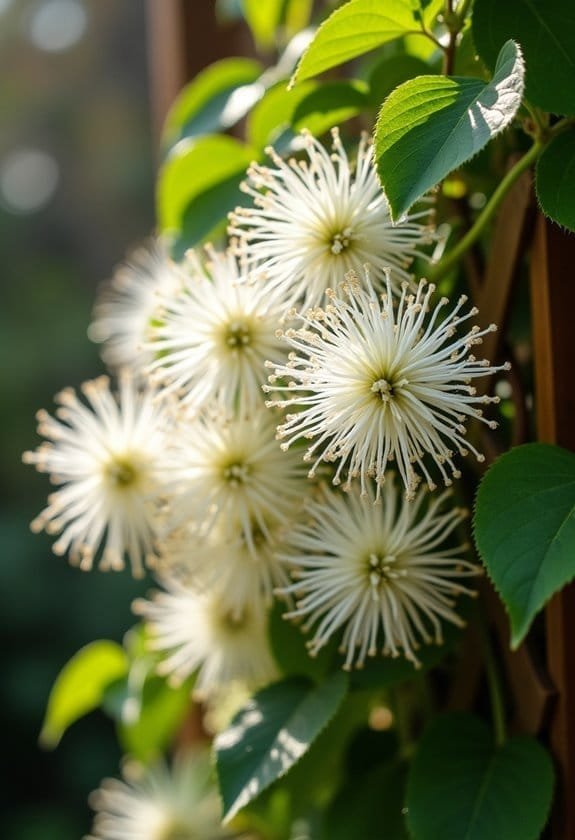
Clematis vitalba demonstrates specific growing requirements that greatly influence its vitality.
This remarkable perennial thrives in sunny positions and benefits from well-drained, alkaline soils, where it can potentially reach heights of up to 90 feet.
Adequate moisture is essential for root establishment, particularly during the planting phases in spring or fall, ensuring the plant's robust development while also necessitating careful monitoring to manage its invasive tendencies.
Light
One can see that Clematis vitalba, commonly known as Old Man's Beard, flourishes in sunny environments, making it suitable for growth in areas like forest edges and roadsides. This climbing shrub thrives best when it receives full sunlight, which typically nurtures its vigorous growth and enables it to outcompete surrounding vegetation.
The plant's aggressive tendency is largely enhanced by its access to abundant light, allowing it to colonize disturbed areas rapidly, particularly in non-native settings where it can become invasive.
Old Man's Beard does show some adaptability concerning light levels; however, it exhibits considerable preferences for bright, sunny conditions. Plants receiving ideal sunlight regularly develop denser foliage, creating a lush, expansive green cover that not only beautifies the landscape but also supports local ecosystems.
In contrast, shaded areas inhibit its growth potential and can stifle its overall vigor, markedly reducing its ability to thrive and expand. As a result, for gardeners and conservationists alike, ensuring that Clematis vitalba has access to generous light levels will directly influence its success and ecological impact within its environment.
Soil
The successful growth of Clematis vitalba largely depends on its soil conditions. This climbing shrub flourishes in base-rich alkaline soils, which provide a strong foundation for its vibrant, aggressive growth. While it adapts well to varying soil types, its vigor dramatically increases in fertile, well-drained soils that consist of ample nutrients and exhibit moisture retention. Ideally, these soils are found in regions with warm summers, creating a favorable environment for the plant to thrive.
Clematis vitalba is often discovered in disturbed areas, such as along forest edges and riparian zones, where the soil is typically rich in organic matter. Significantly, the plant requires a delicate balance; it relishes moist conditions but demands good drainage to stave off the risk of root rot.
This need signifies the essential role that soil health plays in supporting its rapid colonization abilities. Essentially, the interplay of soil quality and moisture availability forms the bedrock of successful cultivation, ensuring that Clematis vitalba not only survives but flourishes, intertwining seamlessly within its natural habitat.
Water
Securing adequate water supply is essential for the thriving of Clematis vitalba, as the plant flourishes in moist climates with well-drained, nutrient-rich soils.
Regular watering is particularly important during dry spells, especially when the mans are newly planted, as this promotes their establishment and encourages robust growth. In the initial stages, maintaining a consistent moisture level helps the delicate roots adapt to their environment.
Once established, these climbing plants can tolerate brief periods of drought, but it's important to provide consistent water to optimize their health and lush foliage.
Clematis vitalba tends to thrive when planted in spring or fall, as soil moisture levels are generally higher during these times. Introducing a layer of mulch around the base acts as an effective technique to retain soil moisture, reduce evaporation, and suppress competing weeds that could hinder growth.
When considering watering techniques, applying approximately one inch of water per week can support the plant's development, but adjustments may be necessary based on rainfall.
Temperature
For ideal growth, Clematis vitalba thrives in a temperature range of 15-25°C (59-77°F) during its active growing season. This temperature zone fosters vibrant growth and prolific flowering, essential for the plant's aesthetic appeal.
Although Clematis vitalba can tolerate cooler temperatures typical of temperate regions, it's important to highlight that frost damage can occur, especially in late spring when new growth emerges.
To optimize its flourishing, this species thrives best in warm climates where summer temperatures consistently hover around the recommended range. Adequate moisture is essential; with proper hydration, the plant can endure short spells of heat but will truly flourish during cooler evenings that alleviate daytime heat stress.
As a result, gardeners in warmer regions must guarantee their plants receive ample water while providing the right temperature conditions.
The aggressive growth of Clematis vitalba is remarkably enhanced in these warm, moisture-rich environments, leading to more robust foliage and breathtaking blooms.
Pollinator Criteria
Clematis vitalba's enchanting white flowers serve as a beacon for various pollinators, mainly bees and hoverflies, crucial for effective pollination. Boasting a blooming period from June to September, these blooms offer an abundant food source at a critical time when pollinator activity peaks. This mutualistic relationship not only bolsters the plant's reproductive success but also plays an essential role in sustaining local biodiversity and enhancing ecosystem resilience. Additionally, the clusters of blooms create critical feeding stations for pollinators, mirroring the ecological contributions of other flowering plants like water mint. The plant's vibrant flowers contribute to attracting various pollinators that thrive on its nectar and pollen, boosting genetic diversity in local ecosystems.
Attracted Pollinators
Old Man's Beard, or Clematis vitalba, proves to be a magnet for pollinators, especially bees and hoverflies, thanks to its fragrant white flowers. These blossoms bloom from June to September, during which time they provide a significant food source for various pollinators. Their sweet aroma and rich nectar attract these insects, markedly contributing to the plant's reproductive success by facilitating pollen transfer.
Pollinators, including the pretty chalk carpet moth and the small waved umber, don't merely rely on Old Man's Beard for nectar; they inhabit the plant as well, using its dense foliage for shelter and breeding grounds. Such relationships enhance ecological stability, making this plant an essential component of its native habitats. Furthermore, the plant's ability to thrive in well-drained conditions allows it to flourish in diverse settings, bolstering its role in the ecosystem.
Moreover, the plant's vigorous growth and prolific flowering support diverse pollinator populations, which play an integral role in maintaining biodiversity. By fostering a variety of pollinators, Old Man's Beard helps guarantee its own survival while promoting a thriving ecosystem. Additionally, the presence of Old Man's Beard in natural areas can support pollinator attraction due to its ability to provide a crucial nectar source during peak flowering periods.
The interdependence between the flowering plant and its pollinators illustrates a delicate balance, one that reflects nature's intricate web of life, where every species holds importance.
Pollination Method
Attracting a variety of pollinators, the flowering structure of Old Man's Beard provides clear criteria for effective pollination. Primarily reliant on bees and hoverflies, this plant boasts sweet-scented creamy-white flowers which bloom between June and September, a period marked by peak pollinator activity.
Each flower, adorned with four petal-like sepals measuring approximately 2 cm wide, serves as a landing pad, facilitating the efficient transfer of pollen.
The pollination method employed by Clematis crucial is one of mutual benefit; as pollinators visit for nectar, they inadvertently gather and transport pollen from flower to flower, ensuring genetic diversity among plants. Additionally, the plant's dense foliage offers shelter, enhancing the local microhabitat for these essential organisms and fostering increased pollinator interaction.
Successful pollination culminates in the formation of fluffy seed heads, which not only aid in seed dispersion but also draw birds, thereby creating a vibrant interconnected ecosystem. This dynamic interaction underscores the significance of Old Man's Beard, highlighting its role in promoting biodiversity and ecological balance within its habitat. Furthermore, like selfheal, Clematis Vitalba's dense foliage provides habitat and resources for pollinators, further supporting local biodiversity.
Care & Maintenance
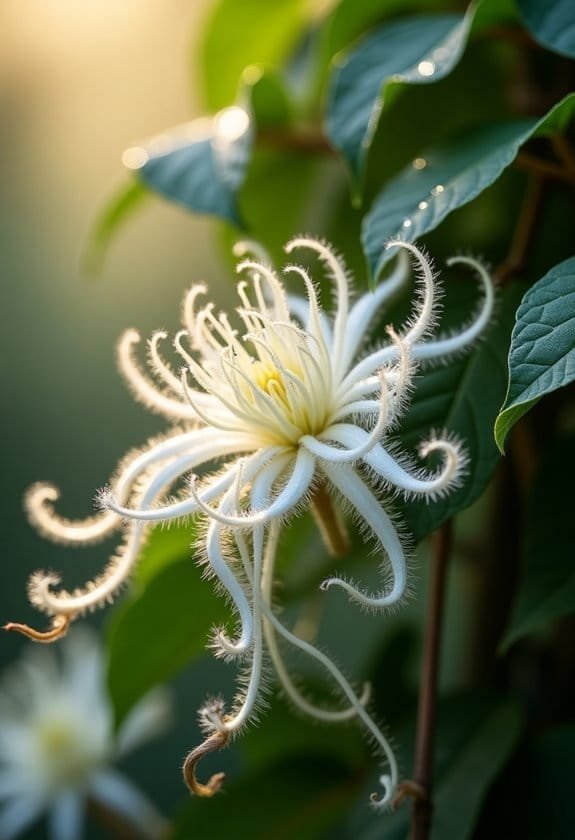
In managing Clematis Vitalba, it's crucial to take into account effective planting methods and ongoing care to guarantee its compatibility in garden settings.
Selecting suitable companions can enhance its growth while providing visual interest, creating a harmonious ecosystem.
Planting Tips
Choosing the right conditions when planting Clematis vitalba is crucial for its successful establishment and growth. This vigorous climbing plant thrives best in well-drained, damp alkaline soil, which promotes not just healthy development but also an abundance of stunning flowers.
Timing matters too; planting in spring or fall allows the roots to establish effectively when the soil retains adequate moisture, creating a prime environment for the young plant.
To further support its health, gardeners should apply mulch around the base of the plant, retaining moisture while suppressing weed growth that might compete for nutrients and water.
It's also important to realize that Clematis vitalba can be aggressive in its growth. Regular pruning helps manage its size, preventing it from smothering nearby plants or structures, allowing for a harmonious garden landscape.
Gardeners must keep an eye on newly planted specimens, watching for signs of rapid colonization, and taking proactive measures to control its spread in nearby areas. Additionally, being aware of the toxic compounds in other plants like the spindle tree common in gardens can help gardeners avoid introducing harmful species.
With proper planting techniques and initial care, Clematis vitalba can become a thriving and beautiful addition to any garden.
Ongoing Care
Ongoing care for Clematis vitalba is just as important as the initial planting efforts. Regular monitoring is essential to identify new growth and prevent this vigorous vine's aggressive expansion into native habitats.
Gardeners should maintain ongoing vigilance, particularly during spring and fall, as these seasons present the ideal conditions for hand-pulling seedlings. It's imperative to remove the entire root system during damp soil conditions, ensuring successful eradication.
For established vines, cutting them back to chest height minimizes damage to surrounding flora, while disposal in tied plastic bags prevents further dispersal—composting isn't advisable.
Furthermore, periodic assessments of areas that have been previously treated remain essential; these checks help to prevent re-establishments of Old Man's Beard, potentially requiring additional removal efforts.
To enhance long-term management strategies, gardeners can utilize mulch surrounding native plants, serving a dual purpose: it retains moisture while suppressing competing weeds, including any resurgence of Clematis vitalba.
Through meticulous care and awareness, one can effectively control this tenacious climber, ensuring the health of the surrounding ecosystem and the significance of native species.
Suggested Companions
Pairing Clematis vitalba with resilient native species can greatly enhance the aesthetic and ecological significance of a garden. By selecting companions like honeysuckle or dogwood, gardeners can maintain biodiversity while guaranteeing that the old man's beard thrives without overwhelming its neighbors. These native plants tend to withstand competitive growth, contributing to a balanced ecosystem. Additionally, the fragrant ivory flowers of Common Honeysuckle attract diverse pollinators, benefiting both plant species.
To cultivate a healthy environment for both Clematis vitalba and its companions, regular pruning in early spring is essential. This practice not only manages growth but also stimulates blooming, preventing the old man's beard from dominating the landscape.
Providing proper irrigation is important during dry spells; Clematis vitalba prefers moist conditions but shouldn't be subjected to waterlogging, which may cause root rot. Additionally, incorporating honey-scented blooms can attract beneficial pollinators that support both plant species in the garden.
Mulching around the base of the plants helps retain moisture, suppress weeds, and enhances soil health. Given the potential invasive tendencies of Clematis vitalba, vigilance is critical. Frequent monitoring and management can prevent the old man's beard from outcompeting other flora.
Common Issues
Clematis vitalba, or Old Man's Beard, faces a range of common issues, particularly from pests and diseases that can impair its growth and spread. When infested, this resilient vine might succumb to aphids or powdery mildew, leading to reduced vigor and compromised aesthetics. Fortunately, effective solutions exist, including targeted pest management strategies and careful cultural practices that can mitigate these challenges, ensuring that this invasive plant isn't unchecked in its proliferation. Additionally, like Alder Buckthorn, it can also experience issues from invasive species that disrupt local ecosystems. The presence of Common Hawthorn can create dense thickets that further complicate management efforts for invasive species like Clematis vitalba.
Pests/Diseases
What common issues should gardeners be aware of when growing Clematis essentialis?
Although Clematis vitalba, often referred to as Old Man's Beard, displays a robust resistance to pests and diseases, it isn't invulnerable. One prevalent issue is powdery mildew, particularly during humid conditions, where the plant's foliage may appear white and dusty.
Aphids, small sap-sucking insects, can also become problematic. Their presence leads to stunted growth and distorted leaves, although the overall health of the plant often remains intact.
Furthermore, gardeners might encounter leaf spot diseases, typically instigated by various fungi, which cause unsightly discolored patches on the leaves. Good air circulation generally mitigates this concern.
In contrast, root rot may afflict Clematis vitalba if planted in poorly draining soils, highlighting the necessity for exceptional drainage to uphold its importance.
Additionally, slugs and snails, while not primary pests of this plant, may occasionally feast on the tender young foliage, necessitating increased vigilance in shelters where these mollusks thrive.
Solutions
Gardeners facing issues with Clematis crucialis can implement several effective strategies to manage pests and diseases. One important approach involves manually removing seedlings and established vines of Clematis vitalba. This removal is most effective when performed in spring or fall, as the moist soil simplifies the extraction process, allowing for complete root removal to prevent future regrowth.
Once the plants are uprooted, it's important to dispose of all materials promptly. Using tied plastic bags guarantees that the remnants don't spread, as composting may contribute to an unintended resurgence of growth in the local ecosystem.
Post-removal vigilance is key; gardeners should consistently monitor the areas for any signs of re-establishment and address new growth immediately.
Additionally, gardeners can collaborate with local conservation organizations by reporting sightings of Clematis vitalba. This proactive measure assists in tracking and managing the spread of this non-native species, ultimately protecting local biodiversity.
With persistence and community effort, it's possible to mitigate the challenges posed by this vigorous climber, preserving the ecological balance while enjoying the beauty that well-managed gardens can provide.
Are Glandularia × Hybrida (Garden Verbena) and Clematis Vitalba (Old Man’s Beard) Related in Any Way?
garden verbena hybrid plants and Clematis vitalba (Old Man’s Beard) are not related in any way. While both are beautiful garden additions, they belong to entirely different plant families. Garden Verbena is a flowering perennial in the Verbenaceae family, while Old Man’s Beard is a woody vine in the Ranunculaceae family.
Summary
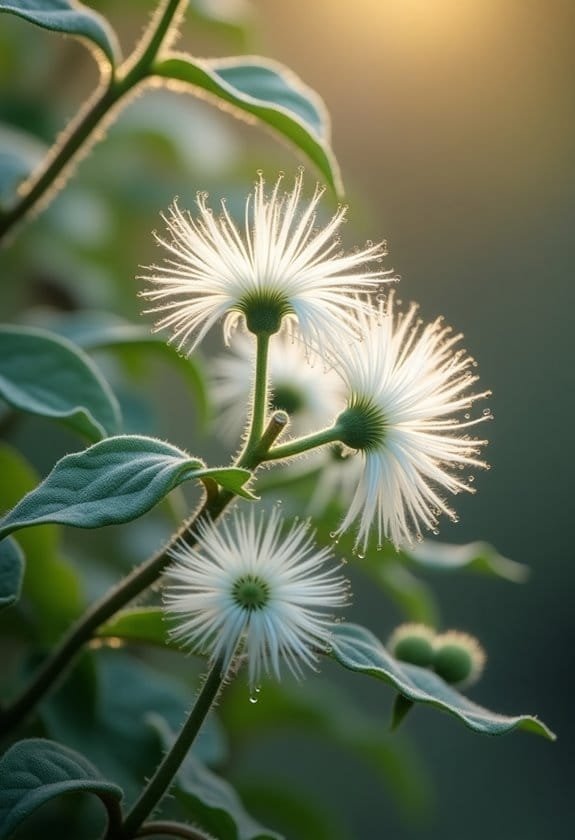
Old Man's Beard, recognized for its striking feathery seed clusters, is a climbing shrub that thrives in sunny, well-drained areas. Known scientifically as Clematis important, this perennial vine can extend up to an impressive 90 feet (30 meters). From June to September, it showcases small, cream-colored flowers that eventually transform into distinctively fluffy seed structures, resembling an old man's beard—an evocative image that aptly captures its essence.
Originating from Eurasia and North Africa, Old Man's Beard has become an invasive species, particularly in regions such as New Zealand, where it outcompetes local flora by forming dense canopies that restrict light penetration.
Preferentially growing in moist, base-rich alkaline soils, it often invades disturbed landscapes, presenting a challenge for biodiversity.
In its ecological role, Clematis important provides nourishment to various moth larvae, highlighting its importance within certain habitats. However, its aggressive growth can smother native plants, creating significant long-term implications for local ecosystems.
Consequently, while Old Man's Beard possesses aesthetic qualities, its invasive nature necessitates careful management to safeguard native biodiversity and maintain ecological balance.