Cuphea ignea, or the Cigar Flower, enchants with its vibrant reddish-orange, tubular flowers, typically measuring 1 to 3 inches long, exuding visual appeal in gardens. Growing to a height of 12 to 18 inches and spreading 2 to 3 feet, this plant thrives in USDA zones 10-12, preferring well-drained soil and 6 to 8 hours of sunlight daily. It attracts hummingbirds and butterflies, showcasing its role in local ecosystems. While generally resilient against pests, it requires proper watering and occasional pruning for ideal growth. For those enthusiastic to explore its cultivation intricacies and ecological benefits, further insights await.
Main Points
- Cuphea ignea, also known as the Cigar Flower, features striking reddish-orange tubular flowers that attract hummingbirds and butterflies.
- This plant thrives in warm climates, flourishing in USDA zones 10-12 with ideal temperatures between 65°F and 85°F.
- Cigar Flowers prefer full sun for 6 to 8 hours daily, with well-drained soil and regular watering to promote optimal growth.
- Regular pruning after flowering enhances bushiness, while propagation can be achieved via seed planting or stem cuttings.
- The Cigar Flower is also recognized for its ecological benefits, providing vital nectar resources to local pollinators throughout its blooming season.
Introduction
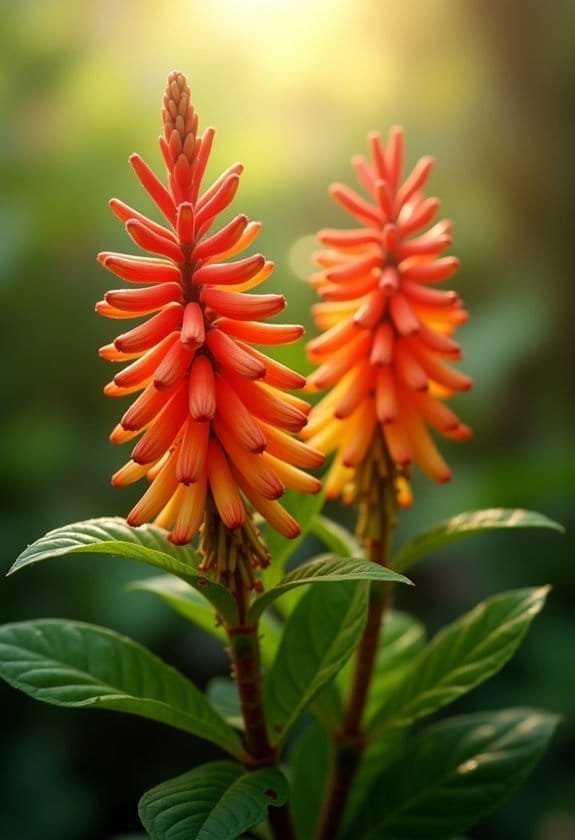
Cuphea ignea, often called the Cigar Flower or Firecracker Plant, captivates with its striking orange, tubular blossoms that boast unique white tips and deep purple-black petals.
Originating from the warm climates of Mexico and Jamaica, this plant typically grows to a height of 12 to 18 inches and spreads 2 to 3 feet wide, creating an eye-catching, bushy display in gardens.
Valued for its ability to attract hummingbirds and butterflies, Cuphea ignea not only enhances aesthetic appeal but also enriches local biodiversity.
Common Name
The vibrant common names for Cuphea ignea—Cigar Flower and Firecracker Plant—highlight its distinctive tubular blooms. This alluring plant, often referred to as the Mexican Cigar Plant, features striking reddish-orange flowers adorned with white-tipped petals.
These eye-catching blooms not only enhance any garden aesthetic but also attract hummingbirds and butterflies, creating a lively, dynamic environment. In temperate climates, the Cigar Flower is typically grown as an annual, thriving during the warm months. However, in frost-free regions, it flourishes as a tender perennial, allowing gardeners to enjoy its beauty year after year.
For ideal growth, Cuphea ignea requires well-drained soil that prevents water logging, which can be detrimental to its health. The cigar-shaped flowers, combined with its rounded, bushy habit, make this plant a popular choice for tropical-themed gardens or decorative landscapes.
Gardeners appreciate how the Cigar Flower adds a bold splash of color while being relatively low-maintenance. Overall, the common names evoke a sense of whimsy, underscoring the plant's unique characteristics and its delightful role in enhancing biodiversity and garden charm.
Scientific Name
Among flowering plants, Cuphea ignea stands out for its unique beauty and ecological contributions. Commonly known as the Cigar Flower, this species belongs to the Cuphea genus and is characterized by its striking, cigar-shaped flowers.
These vivid reddish-orange blooms, adorned with black tips and white edges, create an eye-catching display in tropical and subtropical gardens. Remarkably native to regions such as Mexico and Jamaica, Cuphea ignea typically reaches heights and widths between 12 to 30 inches (30 to 75 cm).
In addition to its aesthetic appeal, this plant thrives in gardens while often being somewhat drought tolerant, making it a practical choice for various climates. To guarantee ideal growth, gardeners may apply fertilizer at planting, supporting the development of its bushy, rounded habit.
Additionally, Cuphea ignea plays a significant role in the ecosystem by attracting pollinators like hummingbirds and butterflies. These interactions not only enhance the beauty of the garden but also contribute to the health of local biodiversity.
Through its vibrant presence and ecological significance, Cuphea ignea truly embodies the harmonious connection between beauty and nature.
Overview
Bringing vibrant color to gardens, Cuphea ignea, also known as the Cigar Flower, captivates with its stunning reddish-orange blooms. This hardy perennial, often referred to as the Cigar Plant, typically grows to a height of 12 to 18 inches and spreads 2 to 3 feet across. Its lush, dark green foliage creates a picturesque backdrop for the tubular flowers adorned with white-tipped petals, which attract hummingbirds and butterflies, enhancing the garden's lively atmosphere.
Thriving in sunny conditions, Cuphea ignea requires 6 to 8 hours of direct sunlight each day and prefers well-drained, medium-moisture soil to flourish. Its remarkable adaptability allows it to bloom year-round in warmer climates, making it an excellent candidate for tropical-themed gardens where vibrant colors reign supreme.
The propagation of the Cigar Flower occurs mainly through seeds or stem cuttings, with prime cutting times during the fall and winter months when growth is more controllable.
Thriving in USDA zones 10-12, this resilient plant not only beautifies outdoor spaces but also fosters important ecological interactions, bridging the gap between horticulture and nature.
Key Features
Cuphea ignea, or Cigar Flower, captivates with its vibrant reddish-orange tubular blossoms and bushy growth habit, reaching heights between 12 to 30 inches.
Blooming consistently from late spring to the first frosts, these plants not only enhance gardens aesthetically but also serve as a magnet for hummingbirds and butterflies.
Their adaptability to various soil types and conditions makes them a resilient choice for gardeners seeking both beauty and ease of maintenance.
Growth Size
The Cigar Flower, or Cuphea ignea, typically reaches a height of 12 to 18 inches (30 to 45 cm) and spreads between 18 to 24 inches (46 to 61 cm). This moderate growth size demonstrates its adaptability to a variety of growth habitats, particularly in hardy zones 9 to 11, where it flourishes under ideal conditions. The plant exhibits a relatively fast growth rate, thriving best in sunny locations with 6 to 8 hours of direct sunlight daily.
Cuphea ignea's growth patterns reflect a neat, rounded shape that makes it an attractive addition to any garden. Its lance-shaped to oval dark green leaves, each measuring around 1.5 inches, create a lush backdrop for the striking reddish-orange tubular flowers, which range from 1 to 3 inches.
This unique growth structure not only enhances the aesthetic appeal of landscapes but also encourages biodiversity by attracting hummingbirds and butterflies, providing essential resources for these pollinators.
In essence, the Cigar Flower's well-defined growth size and patterns exemplify its resilience and utility in garden designs, making it a cherished choice for both novice and experienced gardeners.
Appearance
Often admired for its vibrant flowers, the Cigar Flower showcases distinctive cigar-shaped blooms in a striking reddish-orange hue, accented by black tips and white edges. This alluring morphology captivates onlookers and creates a vivid focal point in any garden.
Typically reaching a height of 12 to 30 inches, the plant's bushy habit enriches its overall aesthetic appeal, complementing its impressive visual impact. The leaves of Cuphea ignea are lance-shaped to oval, measuring approximately 1.5 inches, and exhibit a lush dark green color that harmonizes beautifully with the rich tones of the flowers.
While the primary color variations are mainly reddish-orange, subtle differences can occur depending on environmental factors, enhancing its appeal to gardening enthusiasts. The tubular structure of the flowers not only draws human admiration but also attracts hummingbirds and butterflies, adding dynamic life to the garden scene.
Cuphea ignea, with its striking beauty and relatively easy growth, has been honored with the Award of Garden Merit from the Royal Horticultural Society. This recognition further emphasizes its remarkable ability to enhance spaces with color and texture, proving its worth as a delightful addition to any landscape.
Flowering Season
Blooming vibrantly from late spring until the first frosts of autumn, Cuphea ignea, better known as the Cigar Flower, offers an extended flowering season that delights gardeners and wildlife alike. With exceptional flowering patterns, this plant showcases an impressive profusion of vibrant reddish-orange tubular flowers, each measuring 1 to 3 inches and characterized by striking black tips and white edges.
These stunning blooms appear singly in leaf axils, enhancing its ornamental appeal and attracting hummingbirds and butterflies, making it a favorite in garden settings.
To maintain ideal bloom duration, seasonal care is essential. Gardeners should verify regular watering and provide adequate sunlight, both of which greatly enhance the blooming potential throughout its flowering season.
The duration of blooms can extend for several months, offering continuous visual interest and ecological benefits. As the Cigar Flower gracefully shifts from late spring into the burgeoning warmth of summer, its steadfast commitment to flowering transforms gardens into vibrant havens of color, elevating the aesthetic and ecological value.
This flowering season not only enriches the garden landscape but also nourishes local wildlife, reinforcing the interconnectedness of these natural ecosystems.
Growing Requirements
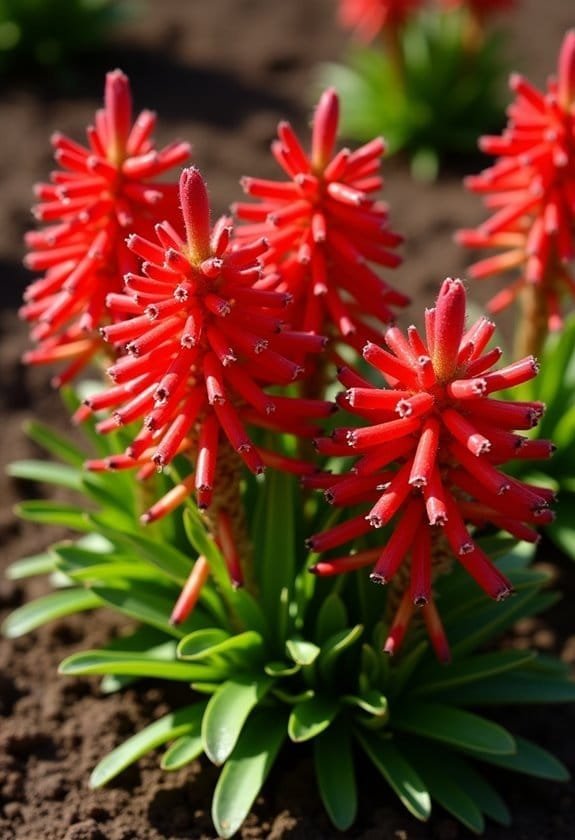
Cuphea ignea flourishes when provided with the right conditions, specifically 6 to 8 hours of direct sunlight each day, which fuels its vibrant growth and prolific flowering.
This resilient plant favors well-drained soils with medium moisture, and while it shows some drought tolerance, adequate watering greatly enhances its vigor.
Thriving best in USDA zones 10 to 12, Cuphea ignea not only favors hot and humid climates but also embraces its low-maintenance nature, requiring minimal pest and disease interventions.
Light
For ideal growth and abundant flowering, Cuphea ignea, commonly known as Cigar Flower, demands full sun exposure. This vibrant plant thrives best when it receives 6 to 8 hours of direct sunlight daily, as adequate sunlight duration enhances its flowering potential, elevating nectar production and fostering a delightful environment for hummingbirds and butterflies.
However, in extremely hot summer climates, the plant exhibits a degree of shade tolerance and benefits from part shade, which helps prevent leaf scorch while maintaining overall health.
The light intensity effects on Cuphea ignea are apparent; insufficient sunlight can lead to legginess, characterized by elongated stems and sparse blooms, detracting from the plant's aesthetic appeal.
To cultivate flourishing specimens, gardeners must monitor and adjust planting locations accordingly, ensuring the right balance of sunlight and moisture. While Cuphea ignea is somewhat drought-tolerant, providing consistent exposure to sunlight, combined with moderate moisture levels, greatly supports the plant's health.
In this way, the pursuit of prime light conditions remains essential, for without it, the Cigar Flower can't fully reveal its vibrant beauty and ecological contributions.
Soil
Healthy growth of Cigar Flower hinges on well-drained, light soil that retains adequate moisture. This plant, known scientifically as Cuphea ignea, demonstrates remarkable adaptability to various soil types, including acidic, sandy, loamy, and even clay.
However, the drainage importance can't be overstated; excess moisture can lead to root rot, potentially jeopardizing the plant's health and liveliness.
Optimal growth occurs when the soil pH levels range from 6.0 to 8.0, ensuring that essential nutrients remain accessible for the plant's development. At this pH, not only do nutrients dissolve better, but they also become available for uptake, fostering robust growth and stunning blooms.
While Cigar Flower exhibits a degree of drought tolerance, it truly flourishes with consistent watering, striking a balance that maintains soil moisture without saturation.
To further encourage flourishing roots and enhance flowering potential, employing a slow-release granular fertilizer during planting can prove beneficial. This method enriches the soil gradually, supplying nutrients over time, akin to a well-timed rainfall nourishing thirsty earth.
Cigar Flower thrives in conditions that respect its preferences, greatly amplifying garden beauty and biodiversity.
Water
When it comes to watering, the Cigar Flower requires a balanced approach to meet its medium water needs. This vibrant plant thrives with regular watering, but it's essential to avoid soil saturation that could lead to root rot.
Effective moisture management is important, especially since the Cigar Flower has some drought tolerance; however, it truly excels with consistent moisture throughout the growing season, which enhances its ability to produce beautiful blooms.
Watering techniques should adapt according to the plant's phase; during propagation using stem cuttings, it's wise to reduce watering to encourage healthy root development.
Opt for well-drained soils that facilitate proper water movement, preventing accumulation around the roots, which can compromise the plant's health.
Regular monitoring of moisture levels is recommended, as it allows gardeners to create ideal conditions for growth. Using a moisture meter or simply checking the top inch of soil can help determine when to water.
Temperature
Temperature plays an important role in the thriving of Cuphea ignea, also known as the Cigar Flower. This fascinating plant flourishes within an ideal temperature range of 65°F to 85°F (18°C to 29°C), a sweet spot that guarantees robust growth and vibrant flowering.
In regions outside this range, Cuphea ignea may experience noticeable temperature fluctuation effects, which can hinder its performance and overall health.
For those cultivating this species in cooler areas, winter temperature care becomes significant. It's crucial to protect the plant from frost and extreme cold, ideally bringing it indoors when temperatures dip. Placing it in a sunny location indoors allows it to continue thriving during these chilly months, helping to maintain its vigor.
The Cigar Flower's adaptability to various climates allows it to thrive in USDA hardiness zones 10 to 12. However, gardeners must remain attentive to environmental changes to prevent stress on the plant.
Consistent warmth and ample sunlight are important, too, with a recommendation of 6 to 8 hours of direct sunlight daily, ensuring that Cuphea ignea continues to bloom and shine in its beautiful splendor.
Pollinator Criteria
Cuphea ignea serves as a beacon for specific pollinators, particularly hummingbirds and butterflies, drawn to its brightly colored, tubular flowers.
The plant's design—tubular with varied hues—facilitates a unique pollination method, relying primarily on these agile contributors to transfer pollen effectively.
This partnership between plant and pollinator not only sustains the species but also enhances the garden's biodiversity, creating a vibrant ecosystem.
Attracted Pollinators
The Cigar Flower is recognized for its remarkable ability to attract various pollinators, particularly hummingbirds and butterflies. Its bright, tubular flowers, which can reach lengths of two to three inches, deliver a rich nectar source that entices these creatures. Pollinator behavior is considerably influenced by the flower's distinctive shape and vivid colors, allowing them to be easily spotted from a distance.
In gardens where Cuphea ignea thrives, nectar competition occurs, as multiple pollinators vie for the abundant rewards, thereby enhancing interaction and activity among species. The year-round blooming of the Cigar Flower, particularly in suitable climates, guarantees a reliable food source that sustains local pollinator populations.
By incorporating this plant, gardeners not only attract individuals seeking sustenance but also contribute to habitat enhancement, fostering biodiversity and the stabilization of local ecosystems. Each visit from a hummingbird or butterfly bolsters pollination processes, highlighting the crucial role Cuphea ignea plays in creating a vibrant garden atmosphere.
This synergy between plant and pollinator ultimately nurtures a flourishing ecosystem, making the Cigar Flower an essential component of sustainable gardening practices that support life in all its forms.
Pollination Method
Pollination in Cuphea ignea occurs primarily through its specialized relationship with pollinators like hummingbirds and butterflies, which are attracted to its bright red, tubular flowers. The flowers' unique floral morphology, characterized by slender shapes, is perfectly adapted for these pollinators, allowing them to access the nectar efficiently. As these creatures visit the flowers, they become unwitting agents of pollination, transferring pollen from one bloom to another, thereby facilitating reproduction.
Nectar availability plays an essential role in attracting these critical pollinators. Cuphea ignea produces nectar-rich flowers, making them an appealing food source during its blooming period, which typically extends from late spring until the first frosts. This guarantees that pollinators are consistently rewarded and, in turn, promotes biodiversity within garden ecosystems.
The plant thrives in full sun conditions, where pollinator activity peaks, underscoring the importance of environmental context in pollination mechanics. The striking reddish-orange flowers, adorned with white tips, not only entice hummingbirds and butterflies but also enhance floral signaling, making certain that these charismatic visitors are readily lured.
Fundamentally, Cuphea ignea illustrates a beautifully interwoven relationship between flora and fauna, essential for ecological balance.
Care & Maintenance
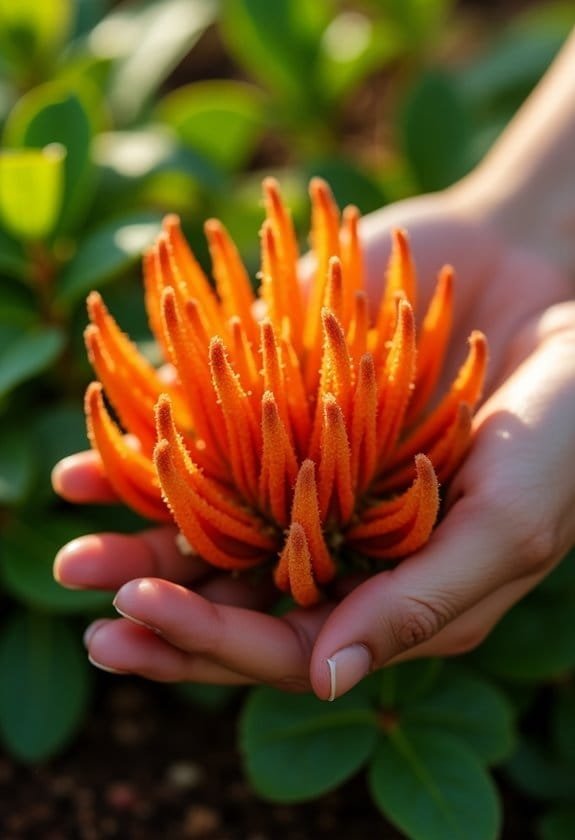
Proper care and maintenance of Cuphea ignea is essential for its vibrant growth and blooming. With meticulous attention to planting tips, ongoing care, and suitable companions, this plant can thrive beautifully in the garden, bringing life and color.
Understanding its specific water, light, and nutrient requirements guarantees that it remains a stunning focal point, attracting both admiration and pollinators alike.
Planting Tips
To guarantee Cuphea ignea flourishes, plant it in a location that receives full sun for at least 6 to 8 hours each day. This vibrant perennial thrives best in well-drained soil, which can be enhanced through the addition of soil amendments, like organic compost or peat moss, to improve fertility and structure.
Proper planting techniques are essential for optimum growth; dig a hole that's twice as wide as the root ball, ensuring the top of the root ball is level with the soil surface.
Maintaining appropriate moisture levels is vital. Cuphea ignea thrives in conditions that are somewhat drought-tolerant but flourishes with regular watering, thereby avoiding saturation that can lead to root rot.
Encouraging companion planting can also be beneficial; consider pairing this flowering plant with others that enjoy similar light and water requirements, creating a harmonious garden environment. Large Thyme, for example, pairs well with these conditions, enhancing both drainage and aesthetics in the garden.
After the flowering season, it's important to prune the plant to maintain its health and shape, promoting robust growth for the following bloom period.
Additionally, applying a slow-release granular fertilizer at planting will support vigorous growth throughout the season, ensuring an impressive display of vibrant blooms.
Ongoing Care
Consistent care is key to guaranteeing Cuphea ignea remains vibrant and healthy throughout its growing season.
Regularly monitoring the watering schedule is fundamental; the soil should be kept moist but never saturated, as overly wet conditions can lead to root rot. This delicate balance promotes ideal growth and flowering.
Pruning techniques are also important for maintaining the desired shape and encouraging bushier growth. It's best to prune immediately after flowering to stimulate new growth and improve air circulation, ultimately benefiting the plant's health.
In terms of nutrients, Cuphea ignea thrives with the application of slow-release granular fertilizers. Applying these fertilizers at planting and mid-season guarantees enhanced blooming and overall liveliness, providing a steady supply of essential nutrients.
Moreover, re-evaluating the planting location is significant, as this sun-loving flower requires 6 to 8 hours of direct sunlight daily for best results.
Fortunately, the Cigar Flower boasts remarkable disease resistance and is virtually pest-free, reducing the need for extensive chemical treatments.
Regular attention to these care elements assures a flourishing, colorful display, enriching any garden space with vibrant hues.
Suggested Companions
When choosing companions for Cuphea ignea, consider vibrant tropical vines like passion flower that enhance the garden's visual appeal. Their sprawling growth and intricate blossoms create delightful contrasts with the cigar flower's bold orange hues.
Additionally, Mexican heather serves as an excellent complementary plant, establishing a lush, green backdrop that accentuates the vivid colors of Cuphea ignea.
Incorporating marigolds into these plant pairings results in eye-catching mass plantings, as their bright yellow and orange blooms can produce striking color combinations. By interspersing these species in the garden, gardeners achieve not only aesthetic pleasure but also essential biodiversity benefits, attracting various pollinators like hummingbirds and butterflies. These creatures play a significant role in promoting a thriving ecosystem within the garden.
To guarantee prime growth and maintenance of Cuphea ignea alongside companion plants, gardeners should routinely monitor moisture and sunlight exposure. By doing so, they can create a harmonious garden environment, where each species flourishes.
Engaging with these plant pairings won't only beautify spaces but also support ecological balance, enriching the overall landscape with diversity and vibrancy.
Common Issues
While Cuphea ignea is largely pest-free and resilient against diseases, gardeners must remain vigilant to prevent common issues that could threaten its vibrant growth.
Overwatering can cause disastrous root rot, so ensuring well-drained soil and appropriate watering practices is essential, especially during extreme heat.
Additionally, the strategic pruning of spent blooms not only promotes healthy new growth but can also enhance the plant's overall form, allowing it to thrive beautifully in the garden.
Pests/Diseases
Cuphea ignea, commonly known as Cigar Flowers, proves to be a resilient choice for gardeners, as it generally resists pests and diseases. However, some common insect issues, such as aphids and spider mites, may occasionally arise, though infestations are rare. When they do occur, effective insect control methods, such as insecticidal soap, can manage these pests without significant harm to the plant.
While fungal diseases are uncommon in Cigar Flowers, proper care is essential for root rot prevention. Overwatering is the primary culprit in this scenario, so using well-drained soil is necessary for healthy growth. Additionally, gardeners should be aware that Creeping Buttercup's aggressive growth can displace other plants in the garden, potentially interfering with the overall ecosystem balance.
Regular pruning not only promotes air circulation but also helps deter potential pest problems, maintaining overall plant vitality.
Implementing diligent monitoring techniques, such as checking for leaf discoloration or wilting, allows gardeners to identify early signs of stress or pest infestations. This proactive approach enables the swift intervention required to mitigate potential issues before they escalate into significant challenges.
Solutions
Cigar Flowers aren't only resilient against pests and diseases but also respond well to specific care strategies that enhance their growth. To tackle growth challenges, make certain they receive 6 to 8 hours of direct sunlight daily, particularly during the growing season.
Monitoring their watering needs is vital, as Cuphea ignea thrives in medium moisture and well-drained soil; avoiding water saturation is essential to prevent detrimental root rot.
Regular pruning after flowering not only maintains the plant's shape but also promotes healthier growth, especially in humid climates. While largely disease-resistant, Cigar Flowers can occasionally attract pests like aphids or spider mites. Regular inspections can catch these potential issues early, making sure the plant remains vigorous.
To address legginess, a common challenge, pinch the tips of the stems; this action encourages a bushier growth habit, preventing overextension and enhancing the plant's overall aesthetic appeal.
Utilizing appropriate propagation methods, such as cuttings, can further enrich a garden, allowing enthusiasts to share these beautiful plants. By implementing effective care techniques, cultivators maximize their success with Cigar Flowers, fostering a thriving display of vibrant blooms.
What are the similarities between Cuphea Ignea and Catananche Caerulea?
Cuphea Ignea and catananche caerulea blue cupidone both belong to the family of flowering plants and share some similarities. They both produce vibrant and colorful blooms, with Catananche Caerulea Blue Cupidone having distinctive blue flowers and Cuphea Ignea known for its red or orange tubular flowers.
Summary
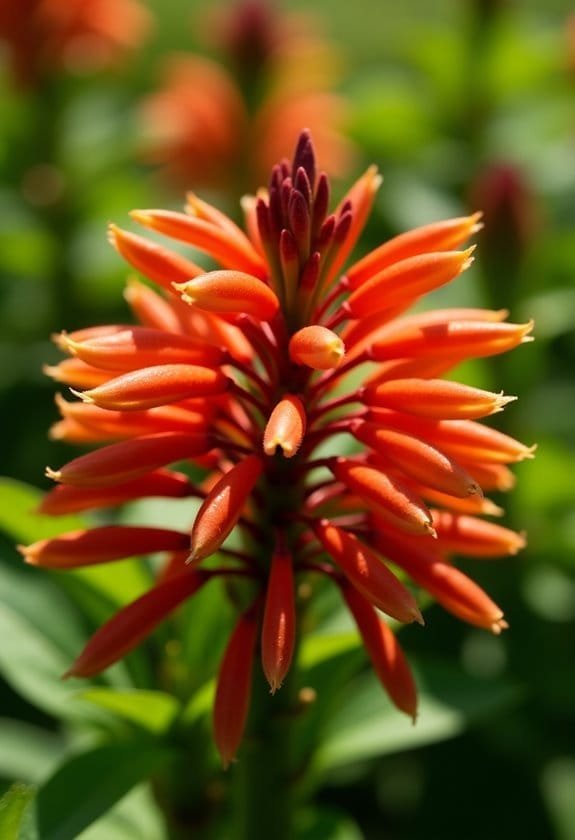
The Cigar Flower, or Firecracker Plant, captivates with its striking reddish-orange tubular blooms that feature distinctive white tips, making it a popular choice among gardeners. This perennial, often grown as an annual in cooler regions, achieves a height of 12 to 18 inches, exhibiting a bushy, rounded habit that enhances plant aesthetics in any garden.
Thriving in full sun, it requires 6 to 8 hours of direct sunlight, along with well-drained, moderately moist soil; once established, it demonstrates some drought tolerance.
The ecological benefits of Cuphea ignea are notable, as its blooms attract hummingbirds and butterflies throughout the blooming season, which lasts from late spring until the first frosts. These vibrant flowers provide essential nectar to pollinators, contributing to the local ecosystem's health.
Gardeners may employ propagation methods such as seed planting or stem cuttings, best undertaken during fall and winter. A recommended practice includes pinch-pruning, which helps maintain the plant's shape and prevents legginess.
With its vivid colors and ecological contributions, the Cigar Flower not only enlivens gardens but also supports biodiversity, ensuring its place in the hearts of plant enthusiasts.