Delosperma floribundum, often referred to as Ice Plant, is an enchanting succulent renowned for its bright pink flowers that bloom from June to fall. This hardy specimen thrives in full sunlight, requiring 6 to 8 hours a day, and grows between 3 to 6 inches tall while spreading up to 30 inches. It adapts excellently to arid regions, flourishing in well-draining sandy or gravelly soils within USDA hardiness zones 5 to 9. Ice Plant not only enhances landscaping with its vibrant display but also supports local ecosystems by attracting pollinators like bees and butterflies. There's much more to discover about its care and ecological benefits.
Main Points
- Delosperma floribundum, or Ice Plant, is a hardy succulent known for its vibrant pink flowers blooming from June to fall.
- This plant thrives in full sunlight and well-draining sandy soil, making it ideal for arid environments.
- It is drought-tolerant once established and requires moderate summer watering, decreasing before winter dormancy.
- Ice Plant serves as an essential nectar source for pollinators like bees and butterflies, enhancing local biodiversity.
- Minimal maintenance is needed, involving regular watering during establishment, gravel mulch application, and occasional dead foliage removal in spring.
Introduction
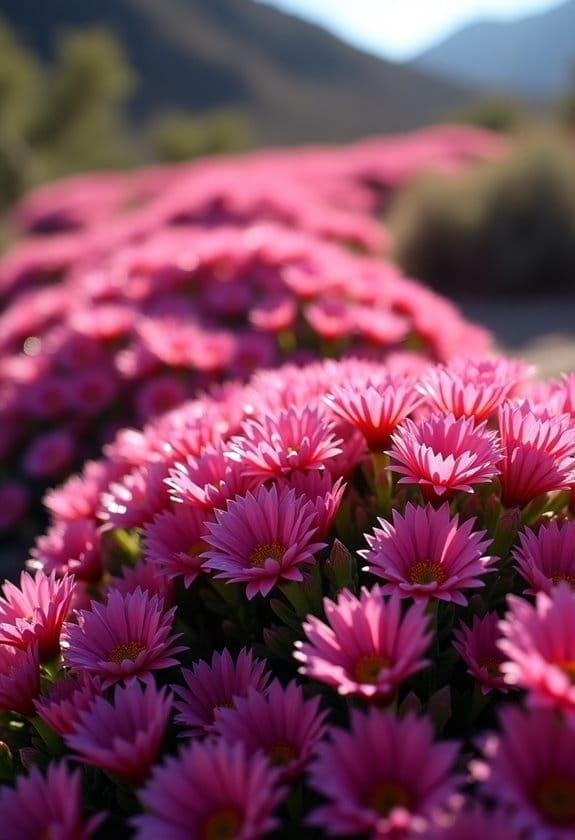
Delosperma floribundum, widely recognized as the ice plant, captivates with its vibrant pink flowers, which bloom profusely from June until fall.
This resilient perennial thrives in full sunlight and well-draining, sandy soil, making it especially suited for arid regions, particularly within the western United States.
Known for its ability to cover ground without invasive behavior, this plant presents an ideal option for gardeners seeking a low-maintenance, yet visually stunning addition to their landscapes.
Common Name
Many gardeners know the Hardy Ice Plant, a name that perfectly captures its impressive resilience and adaptability in various climates. This plant is commonly referred to simply as "ice plant," emphasizing its succulent, icy appearance and remarkable ability to thrive in dry conditions.
Prominently, the ice plant boasts vibrant bright pink flowers with delightful white centers that bloom from June through fall, injecting a lively burst of color into any garden setting.
Characterized by its clumping growth habit, the Hardy Ice Plant serves as an exceptional choice for ground cover and landscaping edges, creating visually appealing and functional outdoor spaces. Its common name reflects not only its aesthetic charm but also its essential traits, such as drought tolerance and ideal performance in full sunlight and well-draining soils.
Gardeners can appreciate the ice plant's ability to flourish with minimal care, making it a favorite for those seeking low-maintenance options.
Scientific Name
Recognized in botanical circles as Delosperma floribundum, the Hardy Ice Plant is celebrated for its stunning blooms and hardy nature. As a member of the Aizoaceae family, this species showcases succulent foliage that thrives in challenging environments.
Its vibrant, bright pink flowers, adorned with delicate white centers, create a striking visual appeal that enchants gardeners.
Originating from Southern Africa, Delosperma floribundum has adapted remarkably to dry, arid climates. This adaptation allows the plant to flourish even in less-than-ideal soil conditions.
The resilience of this Cold Hardy Ice Plant enables it to endure temperatures typically found in USDA hardiness zones 5–9, creating opportunities for a range of gardeners to incorporate this beauty into their landscapes.
Additionally, the unique characteristics of this genus not only contribute to its decorative value but also play a role in supporting local ecosystems.
The succulent leaves store water, showcasing a brilliant example of nature's ingenuity. Consequently, Delosperma floribundum serves as both an ornamental delight and a confirmation of the adaptability of life in extreme conditions, highlighting the delicate balance between beauty and resilience.
Overview
Known for its enchanting beauty and resilience, the Hardy Ice Plant (Delosperma floribundum) brings a vibrant touch to any garden. This fascinating species is commonly recognized for its striking bright pink flowers, which bloom from June to fall, creating an eye-catching display that captivates onlookers. Each flower features a shimmering, metallic appearance with a distinct white center, enhancing its visual allure.
Thriving in full sun, ice plants flourish in well-drained, sandy soils, making them particularly suitable for arid environments, especially within the western United States. Their ability to spread freely allows Delosperma floribundum to effectively function as an excellent ground cover or edging solution, achieving a mature height of only 3 to 6 inches. This unique characteristic blankets the ground in lush foliage while adding a splash of color.
Despite being low-maintenance, these ice plants do require specific care; they don't tolerate bark mulch well, opting instead for gravel mulch to retain moisture and support winter resilience.
Emphasizing a symbiotic relationship with their environment, Delosperma floribundum not only beautifies landscapes but also contributes considerably to sustainable gardening practices.
Key Features
Delosperma floribundum presents an impressive growth size, typically ranging from 6 to 12 inches in height while spreading widely, which makes it a fantastic choice for groundcover.
The plant's eye-catching appearance, with radiant pink flowers adorned with white centers and a shimmering metallic texture, adds a unique charm to any landscape and lasts from June until fall.
This resilient succulent thrives in full sun and tolerates arid conditions, making it perfect for gardeners seeking vibrant, low-maintenance additions to their outdoor spaces.
Growth Size
While this ice plant typically grows to a height of 3 to 6 inches, it can spread impressively, reaching widths of 12 to 30 inches and forming a dense mat. This substantial growth size allows Delosperma floribundum to create effective ground cover, filling in spaces and offering an aesthetically pleasing landscape feature.
Its vigorous growth habit is notable, as it has the potential to double in size during its first year after establishment, quickly transforming bare areas into vibrant carpets of green.
Ideal for well-draining sandy or gravelly soils, this resilient plant thrives best when its roots remain dry during the winter months to prevent die-back.
Delosperma floribundum's clumping growth form not only contributes to its attractiveness but also plays an essential role in erosion control. Given its lifespan of 5 to 10 years, it proves to be a durable option for low-maintenance landscaping.
In any garden landscape, the ice plant serves as a steadfast companion, harmonizing beauty with functionality by establishing robust ground cover that withstands the test of time, all while requiring minimal intervention from gardeners.
Appearance
Bursting into vibrant color, the ice plant showcases bright pink flowers adorned with striking white centers that bloom from June through fall. These flowers don't just catch the eye; their petals exhibit a shimmering, metallic quality that enhances any garden landscape, drawing attention like the sparkling waves of a sunlit ocean.
Typically clumping to a height of 3-6 inches, Delosperma floribundum can spread 12-30 inches wide, forming a dense and impactful ground cover. This hardy plant thrives in various conditions but truly flourishes in sunny locales with well-draining soil, proving resilient against the challenges of drought.
The aesthetic appeal of its unique foliage, combined with its bold flowering, makes the ice plant ideal for small-scale ground cover or edging in gardens, transforming dry, sunny areas into vibrant displays.
Incorporating this plant into a landscape not only brightens the environment but also promotes ecological balance, providing a habitat for local pollinators. With its visually striking appearance and versatility, the ice plant stands as a representation of nature's ability to beautifully adapt to varying conditions, inspiring admiration and enhancing outdoor spaces.
Flowering Season
From June until fall, the flowering season of Delosperma floribundum enchants with its vibrant displays of bright pink blooms featuring striking white centers. This enchanting ice plant variety showcases a breathtaking array of magenta-pink flowers that create a stunning ground cover, enhancing landscapes with their beauty.
Each flower exhibits a unique shimmering, metallic appearance that draws the eye and adds depth to garden beds, making it a favored choice among horticulturists. This flowering season lasts for several months, ensuring continuous color and interest throughout the summer and into autumn.
When grown in ideal conditions—full sun and moderate moisture—the duration and vibrancy of the bloom period notably improve. Such ideal environments encourage the prolific nature of the blossoms, as the plant thrives and produces copious amounts of flowers, transforming any outdoor space into a vivid tapestry of color.
For those seeking to elevate their landscaping, the Delosperma floribundum offers a reliable source of cheerful blooms that harmonize beautifully with other plants while requiring minimal maintenance. Consequently, it remains an outstanding choice for gardeners enthusiastic to enjoy a long-lasting display of nature's brilliance.
Growing Requirements
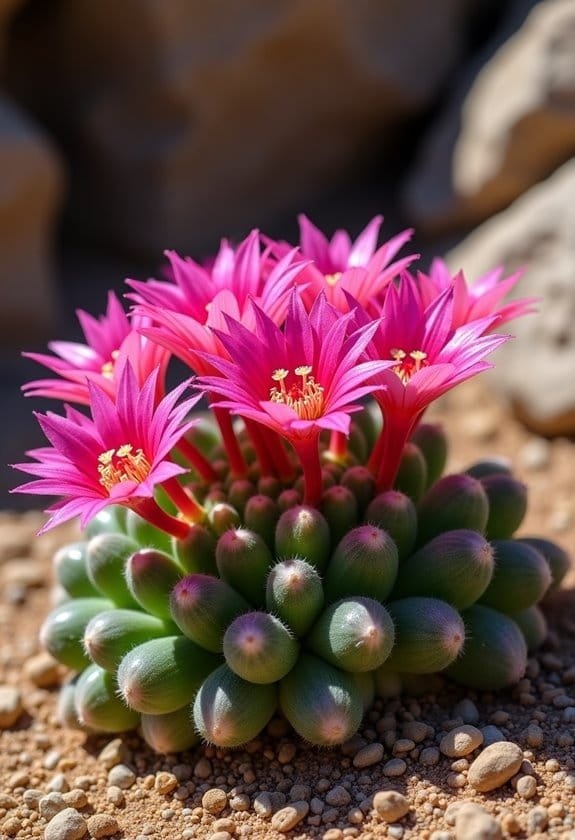
Delosperma floribundum flourishes under the embrace of full sun, needing approximately 6 to 8 hours of direct sunlight daily to produce its vibrant blooms.
This resilient plant thrives in well-draining soils, such as sandy or gravelly mixtures, which are essential for preventing detrimental root rot during its growth.
Maintaining a balance in moisture—moderate during the dry summer months—ensures not only survival but an abundant display of its colorful flowers.
Light
For ideal growth and vibrant blooms, Delosperma floribundum needs 6 to 8 hours of direct sunlight each day. Thriving in full sun, this resilient plant showcases its bright green foliage when sufficiently exposed to sunlight. If light levels are inadequate, the plant struggles, resulting in poor blooming and leggy growth. Consequently, an appropriate sunlight regimen is pivotal for fostering healthy development.
In cooler climates, timing the planting during mid-summer is advantageous, as it lets the plants establish prior to winter and soak up essential sunlight during their critical growth phase. This proactive measure guarantees that Delosperma floribundum can maximize its potential, as the sunlight enhances its vibrant flowers and robust structure.
Additionally, its preference for fast-draining soil complements its light requirements, preventing root rot while supporting healthy growth under full sunlight conditions.
Delosperma floribundum demonstrates a remarkable ability to endure poor soil; however, it truly excels in well-drained sandy or gravelly soils that permit peak sunlight absorption.
Ultimately, providing this sun-loving plant with the proper light exposure fosters the stunning visual displays gardeners seek.
Soil
The ideal growing environment for Delosperma floribundum hinges on well-drained soil, preferably sandy or gravelly. Such conditions are crucial, as they prevent root rot and facilitate healthy plant growth. The best soil pH for this ice plant is neutral, typically ranging from 6.0 to 7.0, promoting efficient nutrient uptake necessary for thriving plants.
Amending the soil with compost during planting greatly enhances drainage and introduces essential nutrients that aid in establishment.
Delosperma floribundum appreciates dry to moderate moisture levels, particularly in the summer months. As a result, it requires minimal watering to flourish, aligning with its natural habitat.
Incorporating gravel mulch around the plant serves a dual purpose; it helps maintain moisture at the roots while allowing the delicate foliage to dry, minimizing the risk of fungal diseases. Additionally, ensuring that the plant is positioned in full sun exposure mimics its native habitat found in chalk and limestone grasslands, further supporting its growth.
By prioritizing well-structured soil conditions, gardeners can create an environment where Delosperma floribundum can exhibit its full potential, encompassing vibrant blooms and robust foliage.
Adhering to these growing requirements guarantees this resilient plant will thrive, enhancing landscape aesthetics with its colorful, cascading flowers.
Water
During the growing season, providing adequate water is vital for Delosperma floribundum to establish itself and thrive. This succulent requires moderate moisture during the dry summer months, necessitating regular watering to support healthy growth.
Once established, this hardy plant exhibits remarkable drought tolerance, allowing it to flourish even under low-water conditions, particularly during winter dormancy. However, gardeners must strike a balance; overwatering can be detrimental, leading to root rot and potential winter die-back due to excessive wetness.
To maintain ideal moisture levels without the risks associated with over-saturation, incorporating gravel mulch is advisable. This technique not only conserves root moisture but also guarantees that the foliage remains dry, greatly reducing the likelihood of disease and promoting vigorous growth.
As fall approaches, it's important to gradually reduce irrigation to prepare Delosperma floribundum for its winter resting phase. This deliberate decrease minimizes the risk of rot from persistently wet conditions, ensuring the plant stays healthy during colder months.
Temperature
Understanding the temperature requirements of Delosperma floribundum is key to its successful cultivation. This resilient plant thrives best in Hardiness Zones 5-9, making it well-suited for a variety of temperate climates. Its ability to adapt is impressive; it can tolerate maximum elevations of up to 6200 feet, demonstrating versatility in differing conditions.
In colder climates, gardeners must be cautious during the winter months. Excessive moisture can lead to die-back, particularly when temperatures drop, underscoring the need for careful watering practices. Limiting water during this period is essential to prevent root rot.
Once established, Delosperma floribundum exhibits remarkable drought tolerance, yet it still requires regular watering during dry summer spells to maintain its vibrant appearance.
Sufficient sunlight plays an essential role in the plant's growth. Delosperma cooperi, a close relative, similarly flourishes under full sun exposure, necessitating at least 6-8 hours of direct sunlight each day.
Consequently, effectively managing temperature and moisture is critical, ensuring that Delosperma floribundum grows robustly and blooms profusely, inviting beauty into any garden setting.
Pollinator Criteria
Delosperma floribundum thrives as an essential nectar source, drawing a variety of pollinators, particularly bees and butterflies, with its striking pink flowers adorned with white centers. This plant employs a fascinating pollination method primarily based on the attraction of these species, who efficiently transfer pollen as they feast on the abundant nectar provided. Additionally, Amphibious Bistort (Persicaria amphibia), known for its flowering characteristics, supports a diverse array of pollinators, contributing to ecosystem biodiversity alongside the Ice Plant. Consequently, the symbiotic relationship between the Ice Plant and its pollinators reinforces the ecological balance, enhancing the habitat's biodiversity and supporting the life cycles of these crucial creatures. Additionally, many pollinators, including bumblebees and butterflies, are attracted to various plants like Ajuga reptans, establishing diverse feeding stations that benefit local ecosystems.
Attracted Pollinators
Many pollinators are drawn to the vibrant blooms of Delosperma floribundum, commonly known as the ice plant. Its bright pink flowers, adorned with white centers, captivate not only human gardeners but also vital pollinators like bees and butterflies.
Blooming from June through fall, these flowers provide a lasting source of nectar and pollen, which is essential for sustaining local insect populations. The metallic shimmer of the petals enhances visual appeal, making the flowers more noticeable, and encourages visits from these beneficial creatures.
Thriving in full sun environments, ice plants create ideal conditions where pollinators are most active, ensuring a feast for much of the growing season. Their open structure facilitates easy access, allowing pollinators to efficiently gather nectar and pollen, enhancing their foraging efficiency.
With a long blooming period, Delosperma floribundum plays a vital role in promoting biodiversity within garden ecosystems, as it attracts various species and supports their lifecycles. This connection between the ice plant and its pollinators underscores the importance of preserving such resilient and vibrant species in our yards and natural landscapes. Additionally, the ice plant can thrive in well-drained, moist soils, which contributes to its success in diverse garden environments.
Pollination Method
Pollination of Delosperma floribundum relies heavily on its attractive flowers, which entice bees and other insects with their vibrant colors and rich nectar. The bright pink petals, possessing a metallic sheen, brilliantly reflect sunlight, capturing the attention of pollinators in sunny habitats. This visual appeal complements the plant's pollinator-friendly characteristics, which include the substantial height of the blooms that provides easy landing sites for insects.
The long blooming season, extending from June into the fall, guarantees a continuous food source for local pollinators. During this time, the ice plant flourishes, offering abundant nectar and pollen, crucial resources for the sustenance of bees throughout the summer months.
Furthermore, the clumping growth habit of Delosperma floribundum creates dense mats of flowers; this formation allows for convenient access, encouraging more frequent visits from pollinators.
Such ecological interactions illuminate the significant role of Delosperma floribundum in supporting local wildlife. By cultivating this versatile plant in garden landscapes, individuals can foster environments that promote the health of bee populations and contribute to biodiversity.
Care & Maintenance
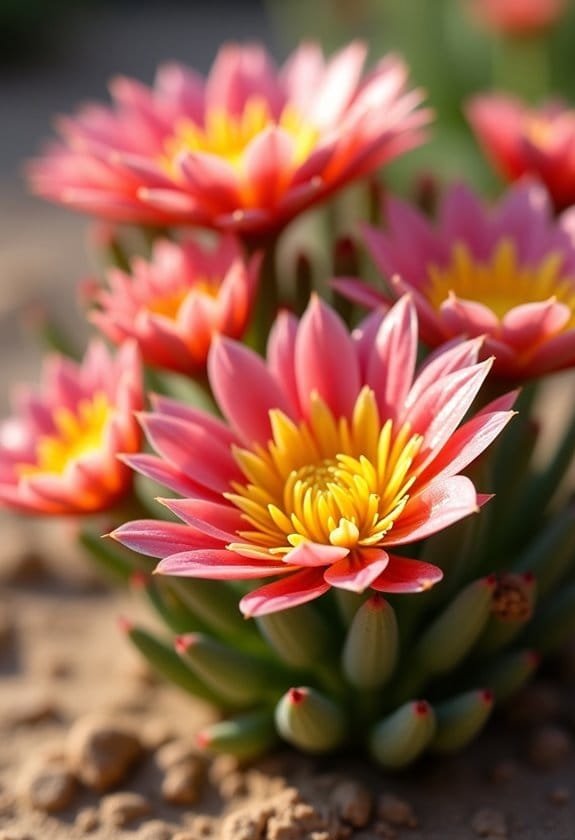
Caring for Delosperma floribundum involves simple yet strategic practices that enhance its health and resilience.
While this hardy succulent thrives with minimal upkeep, attentive considerations during its establishment phase, like regular watering and appropriate mulching, prove essential for long-term success; utilizing gravel mulch effectively maintains soil moisture while preventing unwanted rot.
Understanding suggested companions can also enrich a garden's aesthetic and ecological harmony, making thoughtful plant pairings advantageous for maximum growth.
Planting Tips
To achieve peak growth and vibrant blooms, plant Delosperma floribundum in well-drained soil and confirm it receives full sun. This resilient Ice Plant thrives in hot, arid environments, making it an excellent choice for rock gardens or sandy areas.
When planting, spread the plants 1 to 2 feet apart to allow their sprawling nature to flourish without overcrowding, guaranteeing each specimen can expand freely.
During the summer months, regular watering is essential for maintaining proper hydration levels, therefore promoting abundant flowering from June into fall. However, in winter, reduce watering considerably to prevent root rot and allow the plant to enter dormancy, a natural survival strategy in harsher conditions.
Consider using gravel mulch around the base, as it effectively retains moisture while preventing the foliage from remaining damp—a vital step to confirm the longevity of the plant.
Minimal pruning is necessary; simply remove dead foliage in spring to encourage tidy growth. This careful attention to planting conditions sets the stage for a lively display of color, capturing the heart of any garden and providing a robust, low-maintenance landscape option.
Ongoing Care
After establishing a solid foundation for Delosperma floribundum, ongoing care is simple and straightforward. This resilient succulent performs beautifully in well-drained, sandy soil, requiring full sun exposure to thrive. Regular watering during dry summer months addresses the plant's needs, while irrigation should be tapered in the fall to facilitate its winter dormancy.
To protect delicate roots and maintain foliage, gravel mulch is preferable over bark mulch, which Delosperma can't tolerate. Although deadheading isn't essential, the practice can enhance the plant's visual appeal, making the landscape more inviting. Additionally, if any gaps appear in the ground cover, planting new specimens can efficiently fill the space.
While Delosperma floribundum is generally resistant to typical pests, occasional monitoring guarantees it remains healthy and vigorous. These modest ongoing care requirements highlight its adaptability, making it an ideal choice for both novice gardeners and seasoned horticulturists.
Engaging with this delightful, drought-tolerant marvel transforms a garden into a vibrant oasis, showcasing nature's resilience and beauty while demanding minimal attention.
Suggested Companions
Delosperma floribundum thrives beautifully when paired with companion plants that share its love for well-draining soil and full sun.
A splendid choice includes creeping thyme and lavender, both of which not only flourish under similar conditions but also highlight the vibrant hues of ice plants with their subtle blooms. For a dynamic landscape design, integrating ornamental grasses can introduce contrasting textures and colors, enhancing visual appeal.
Moreover, succulent varieties like sedum and saxifrage align perfectly with the drought-tolerant nature of ice plants, creating a harmonious balance within a rock garden setting. Their ability to conserve water complements the needs of Delosperma floribundum, ensuring a resilient and thriving garden. This adaptability mirrors the drought tolerance exhibited by creeping buttercup, allowing plants with similar traits to thrive together.
Mixing these ice plants with dianthus offers a splendorous spectrum of colors and varying bloom times, promoting extended visual interest throughout the growing season.
Furthermore, for those grappling with erosion issues on sloped terrains, grouping Delosperma floribundum with other low-growing groundcovers can maximize coverage, effectively preventing soil loss. This strategy not only enhances aesthetic appeal but also bolsters ecological stability, showcasing the thoughtful interdependence of these companion plants. Additionally, incorporating pollinator-friendly plants alongside ice plants can further support local biodiversity and ecosystem health.
Common Issues
In the domain of Delosperma floribundum cultivation, gardeners face several common challenges that can impede the plant's health.
Overwatering remains a significant concern, as this succulent favors arid conditions; excess moisture can trigger root rot while inviting various pests, such as aphids and mealybugs, which may weaken the plant over time.
Addressing these issues involves implementing effective monitoring strategies and ensuring well-drained soil, particularly in climates prone to excessive humidity or dampness, ultimately fostering a healthier environment for this resilient species.
Pests/Diseases
Gardening enthusiasts caring for Delosperma floribundum may encounter a few challenges despite this species' general resilience. Though it is largely resistant to pests and diseases, it is not entirely immune.
Gardeners might face minor infestations from pests such as aphids or mealybugs. These invaders are usually manageable with the application of insecticidal soap or neem oil, ensuring that the plant's ornamental qualities remain intact.
Another essential concern is root rot, which often arises from overwatering or planting in poorly draining soil. It's important for gardeners to adopt proper watering practices, watering only when the soil dries out considerably between sessions.
Poorly ventilated foliage can also invite fungal diseases, which emerge when wet conditions persist. Hence, ensuring good air circulation and spacing during planting is important; adequate spacing helps prevent moisture accumulation on leaves.
Regular monitoring is indispensable for detecting any signs of pests or diseases early. By promptly addressing these issues, gardeners can foster the health and longevity of Delosperma floribundum, transforming potential challenges into opportunities for successful horticultural stewardship.
Consequently, understanding these common pests and diseases is essential for nurturing this enthralling succulent effectively.
Solutions
Gardeners can tackle common issues with Delosperma floribundum by following a few effective solutions. This resilient ice plant flourishes in well-drained soil, making proper drainage fundamental to circumvent root rot, particularly during the colder months.
To guarantee healthy evergreen foliage, regular watering is imperative, especially during dry summer spells; however, gardens must avoid excessive moisture or humidity that stresses the plant.
Implementing gravel mulch can be especially beneficial—this helps maintain root dryness while still preserving necessary moisture around the foliage, in stark contrast to conventional bark mulch, which Delosperma floribundum can't tolerate.
While pest issues are generally minor, vigilant gardeners should keep an eye out for potential intruders like aphids and mealybugs, which can hinder the plant's health.
If gaps or holes emerge in the ground cover, replanting new specimens is a straightforward remedy that restores uniformity and liveliness to your garden.
How to Care for Elaeagnus Angustifolia (Oleaster) Similar to Delosperma Floribundum (Ice Plant)
When it comes to caring for Elaeagnus angustifolia (oleaster) plants, similar techniques used for Delosperma floribundum (ice plant) can be applied. Both plants thrive in well-draining soil and require minimal watering. Elaegnus angustifolia (oleaster) information and uses suggest its hardiness and drought tolerance, making it an ideal low-maintenance plant for any garden.
Summary
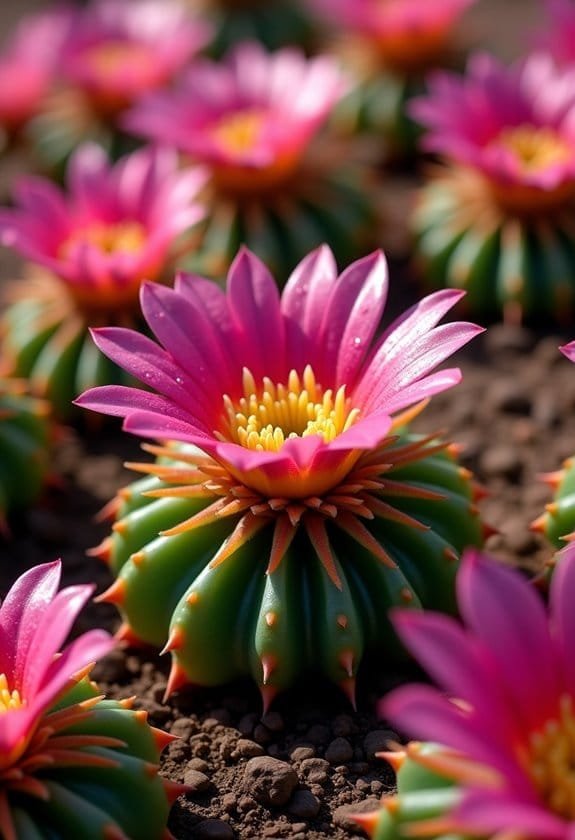
Delosperma floribundum, known as the Hardy Ice Plant, offers vibrant bright pink flowers with white centers, blooming from June through fall.
As a clumping perennial, this resilient plant thrives in full sun and well-drained, sandy soils, making it particularly suited for drier climates across the western U.S. It can flourish at elevations of up to 6,200 feet and displays remarkable adaptability, even surviving in summer monsoon conditions.
This hardy ice plant serves as a durable groundcover, capable of living 5 to 10 years with minimal maintenance. Its spreading nature allows it to create lush, colorful displays over time.
To cultivate Delosperma floribundum effectively, gardeners should avoid using bark mulch, opting instead for gravel, which helps maintain the appropriate moisture levels during scorching summers. This simple practice prevents die-back during winter, ensuring that the plant remains vigorous and healthy.