Elaeagnus angustifolia, commonly called Russian Olive or Oleaster, is a deciduous shrub or tree that typically grows up to 30 feet, occasionally reaching 35 feet. Its silvery-green, lanceolate leaves (4-9 cm long) grace the landscape, while fragrant yellow flowers, about 1 cm in size, bloom before the leaves appear, attracting pollinators like bees. This species thrives in various soils, preferring slightly alkaline conditions, and demonstrates drought resistance. Significantly, its nitrogen-fixing capabilities enhance soil fertility, though it's considered invasive in some regions. Continued exploration will reveal the ecological impact and care techniques for this fascinating plant.
Main Points
- Elaeagnus angustifolia, commonly known as Russian Olive, is a deciduous shrub/tree native to Central/South Asia and eastern Europe.
- This plant features silvery-green leaves, fragrant yellow flowers that bloom before leaves, and produces small orange-red fruits resembling cherries.
- Russian Olive is known for its invasive tendencies, impacting native ecosystems and altering the balance in riparian zones.
- It thrives in various soil types, prefers slightly alkaline to neutral pH, and exhibits impressive drought resistance, suitable for arid landscapes.
- Regular pruning and initial consistent watering are essential for ensuring strong growth and blooming in this plant.
Introduction
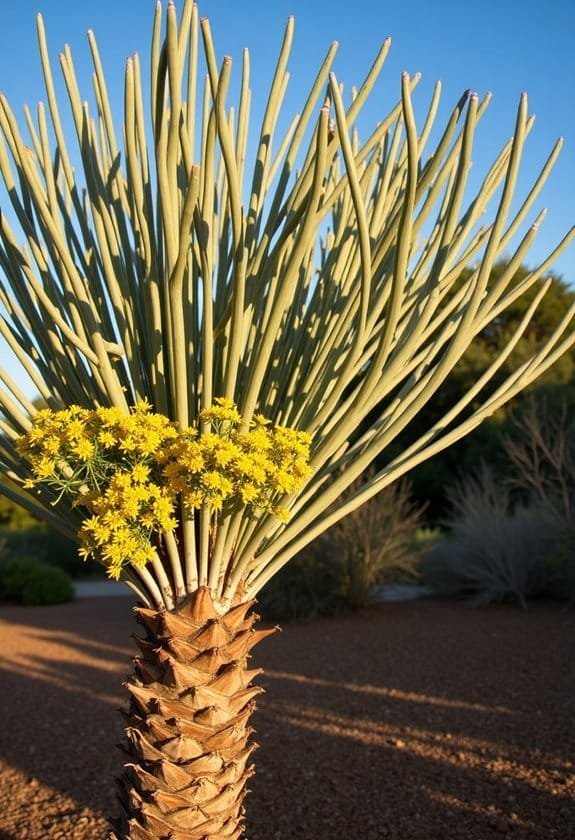
Elaeagnus angustifolia, commonly referred to as Russian Olive or Oleaster, embodies a unique blend of beauty and resilience.
This deciduous shrub, which can reach heights of up to 30 feet, captivates with its silvery-green lanceolate leaves and fragrant yellow blooms, while demonstrating exceptional tolerance to drought and saline conditions.
However, its widespread introduction to North America for ornamental purposes has raised concerns, as this species exhibits invasive tendencies, often outcompeting native plants in various ecosystems.
Common Name
Known primarily as Russian Olive, this species boasts an olive-like appearance that contributes to its distinctive identity. Its scientific name, Elaeagnus angustifolia, reflects the plant's thin, elongated leaves that resemble those of the true olive, making it a visually appealing addition to diverse landscapes.
Originating from regions with ecological conditions akin to North America's, the name Russian Olive emerged during its introduction in the late 19th century, where it gained popularity for ornamental uses.
Additionally, in various cultures, this resilient plant is known by alternate names such as oleaster, showcasing its adaptability and significance across different geographic areas. Russian Olive trees can grow up to 30 feet tall and thrive in a range of soil types, adding to their ornamental value.
Beyond aesthetics, they provide essential benefits, including erosion control and habitat for wildlife, particularly birds that appreciate their nutrient-rich berries.
While its many applications highlight its ecological importance, Russian Olive's beauty in landscaping continues to enchant gardeners and ecologists alike. The balance of these qualities illustrates how Russian Olive can enrich both natural ecosystems and cultivated environments, demonstrating a remarkable synergy with nature.
Scientific Name
The scientific name for Russian Olive, Elaeagnus angustifolia, provides insight into its classification and characteristics. First described by the renowned botanist Carl Linnaeus in 1753, this species belongs to the Elaeagnaceae family.
This family is notable for its plants' remarkable nitrogen-fixing abilities, which enhance soil fertility, as well as their extraordinary tolerance to saline environments.
Elaeagnus angustifolia, native to Central and South Asia and eastern Europe, has also established disjunct populations in Myanmar and Assam, India. The common name "Russian Olive" stems from its superficial resemblance to true olives, which belong to the Oleaceae family, yet these species diverge considerably in botanical classification.
Introduced to North America in the late 19th century primarily for ornamental purposes, the plant has since become invasive due to its capacity for rapid growth and extensive spread.
The ecological implications of its introduction are notable, as its proliferation can disrupt local ecosystems, demonstrating the power and impact of the scientific name in understanding plant behavior and environmental interactions.
Consequently, Elaeagnus angustifolia serves as a compelling example of how scientific nomenclature conveys deeper ecological narratives.
Overview
By providing both ecological benefits and challenges, Russian Olive, or Elaeagnus angustifolia, plays a complex role in its introduced environments. This deciduous shrub or small tree can reach heights of up to thirty feet, boasting thorny branches and silver-green foliage that attract attention.
Native to the Irano-Turanian region in Asia, it was introduced to North America in the late 19th century for ornamental purposes, but its presence raised concerns as it's now classified as an invasive species.
Russian Olive produces fragrant yellow flowers, which bloom in clusters, and small orange-red fruits that various bird species enthusiastically consume, aiding in seed dispersion.
Despite its appealing aspects, this plant's aggressive growth enables it to outcompete native flora, particularly in riparian zones, disrupting local ecosystems.
Interestingly, it also holds positive attributes, including drought resistance and nitrogen-fixing capabilities that enhance soil quality.
Additionally, traditional medicinal practices value it for treating arthritic conditions, further illustrating its complex profile.
Understanding its dual nature is essential for effective management strategies in ecosystems facing the ongoing challenges presented by invasive species like the Russian Olive.
Key Features
Elaeagnus angustifolia, or Russian Olive, impresses with its striking attributes, growing up to 8 meters tall and featuring thorny branches adorned with silvery-green, lanceolate leaves.
During the flowering season, it produces clusters of aromatic, creamy yellow flowers that bloom in late spring, attracting various pollinators and enhancing its visual appeal.
Additionally, its small, cherry-like drupes, ripening from August to October, not only provide aesthetic interest but also contribute ecological benefits, making this species a significant addition to diverse environments.
Growth Size
Reaching impressive heights, Russian olive can grow up to 8 meters (26 feet), and in some cases, it even stretches to 11 meters (35 feet). This notable growth size positions Elaeagnus angustifolia as a prominent feature in various landscapes, making it an attractive choice for both ornamental and functional plantings.
With its rounded, thorny form, the tree often takes on a leggy, irregular appearance, which can add a visually striking dimension to gardens or natural areas.
The growth pattern is particularly interesting due to its alternate arrangement of lanceolate leaves, measuring between 4 to 9 cm long and 1 to 2.5 cm wide. Their distinctive silver-green coloration not only accentuates the tree's overall aesthetic but also provides a unique contrast against the surrounding flora.
In addition, the aromatic clusters of small flowers, along with its cherry-like drupe fruit varying from 1 to 1.7 cm in length, enhance the ecological value of Russian olive, attracting various pollinators and wildlife.
Appearance
With its impressive size and unique characteristics, Russian olive stands out in any landscape. This deciduous tree can reach heights of up to 8 meters (35 feet) and showcases a thorny framework that adds to its distinctiveness.
The leaves, which grow alternately, are lanceolate in shape, measuring between 4–9 cm in length and 1–2.5 cm in width. Their enchanting silver-green hue, a result of silvery scales, contributes to the olive tree's ornamental appeal.
The tree's highly aromatic flowers grow in clusters of one to three, each approximately 1 cm in size and adorned with a creamy yellow calyx. This adds another layer of beauty and allure, enchanting both passersby and pollinators alike.
Additionally, the small, cherry-like fruit, known as a drupe, measures between 1–1.7 cm long, ripening in breathtaking shades of orange-red from August to October. Covered in a silvery scale, these fruits not only enhance the visual complexity but also attract various wildlife, making the Russian olive a vital component of its ecosystem.
Its remarkable drought resistance and tolerance for poor soil conditions underscore its adaptability, promising resilience amidst environmental challenges.
Flowering Season
During late spring to early summer, Russian olive (Elaeagnus angustifolia) captivates with its vibrant display of aromatic flowers, primarily peaking in May and June. The tree showcases clusters of one to three highly fragrant flowers, each featuring a creamy yellow calyx that measures about 1 cm in length.
Curiously, these blossoms emerge before the leaves fully unfurl, which allows for greater visibility and allure to pollinators like bees and butterflies. This flowering season not only enhances the aesthetic appeal of the Russian olive but also signifies a vital period in its lifecycle, as each flower ultimately produces a small drupe that matures between August and October.
With its stunning visuals and inviting scents, Elaeagnus angustifolia entices gardeners and landscape designers alike. However, its invasive nature poses significant ecological concerns, as this species can outcompete native flora, disrupting local ecosystems.
While the blooms enrich gardens, stakeholders must remain vigilant about their spread to guarantee that the beauty of the Russian olive doesn't lead to environmental imbalance. Consequently, understanding the flowering season is essential not only for appreciation but also for responsible horticultural practices.
Growing Requirements
Elaeagnus angustifolia requires specific conditions to flourish, particularly favoring well-draining sandy or loamy soils that allow for ideal root health.
This resilient species thrives in full sun, needing at least six hours of direct sunlight each day, while exhibiting impressive drought tolerance that makes it an excellent choice for arid landscapes.
In addition, understanding its temperature preferences and water needs plays a significant role in ensuring robust growth and longevity.
Light
For ideal growth, Elaeagnus angustifolia thrives in full sun, needing at least six hours of direct sunlight each day. This species, commonly known as Russian olive, flourishes in bright light, which is essential to its vitality and productivity. Adequate light enables the tree to produce abundant flowers and fruit, showcasing its reproductive success.
While it shows some tolerance to varying light conditions, insufficient exposure can lead to leggy growth, characterized by elongated stems and diminished foliage. Consequently, when planted in partial shade, E. angustifolia often exhibits slower growth rates and decreased vigor, denying gardeners the desired robust appearance.
When choosing a planting site, it's important to balance light exposure with protection against extreme summer heat. The tree's preference for well-draining sandy or loamy soils accentuates its need for ample sunlight, further enhancing its resilience and overall health.
Therefore, to cultivate Elaeagnus angustifolia effectively, one must prioritize a location that provides bright.
Soil
Healthy growth of Elaeagnus angustifolia relies on soil conditions, particularly the need for well-draining sandy or loamy substrates. This plant thrives in slightly alkaline to neutral soil pH, yet demonstrates remarkable adaptability to a variety of soil types, including saline soils, which makes it a resilient choice for diverse environments.
Its nitrogen-fixing ability renders it tolerant of poorer soil conditions, promoting healthier growth even where nutrients may be lacking.
Moreover, Elaeagnus angustifolia exhibits significant drought resistance, thriving in arid and semi-arid locales where water availability is limited. This quality allows it to flourish in regions characterized by challenging soil conditions and scarce rainfall.
However, while the species can endure disturbances, its invasive behavior often escalates due to its rapid regeneration capabilities in disturbed soils, posing potential threats to native plant communities.
Ultimately, understanding and nurturing the soil in which Elaeagnus angustifolia is planted will enhance its growth potential. A well-prepared, adequately draining soil environment guarantees that this remarkable species can fully showcase its distinctive characteristics, flourishing in full sun exposure and contributing positively to the ecosystem.
Water
In the early stages of growth, water management plays an essential role in the development of Elaeagnus angustifolia. This species, commonly known as Russian olive, thrives in well-draining sandy or loamy soils, demonstrating remarkable drought tolerance.
Initially, consistent watering encourages strong root establishment, paving the way for resilient growth. However, once established, this tree requires minimal irrigation, as it can sustain itself through periods of dryness and fluctuating water conditions.
While moderate moisture levels can enhance ideal growth, Elaeagnus angustifolia can withstand salinity, making it particularly suited for arid and saline environments where many other plants struggle.
It's vital to avoid overwatering, as excessive moisture can lead to root rot and other detrimental issues. As a result, allowing the soil to dry out between watering sessions protects the tree's health.
Moreover, placing the tree in full sun not only maximizes its growth but also enhances its overall water efficiency.
Temperature
Elaeagnus angustifolia thrives best within a temperature range of 10°C to 30°C (50°F to 86°F), showcasing its ability to adapt to diverse climatic conditions.
This resilient species demonstrates remarkable adaptability, allowing it to flourish in areas experiencing extreme summer heat or harsh winter frost. Its tolerance for varied temperatures contributes considerably to its widespread cultivation.
The Russian olive prefers full sun exposure, which enhances its growth and overall vigor.
Although it can endure poor soil conditions, Elaeagnus angustifolia exhibits improved health and faster growth rates when provided with moderate irrigation and nutrient availability.
Additionally, this plant shows a significant resistance to salinity, making it suitable for coastal or salt-affected regions where many other species struggle.
Pollinator Criteria
Elaeagnus angustifolia's fragrant, nectar-rich flowers are a beacon for various pollinators, particularly bees and butterflies.
These highly aromatic blooms, which flourish from late spring to early summer, provide an essential resource for pollinators during their peak activity periods. The presence of nectar-rich blooms draws in diverse pollinator species, enhancing the ecosystem's health. Through its unique floral morphology, the plant guarantees efficient pollen transfer, considerably contributing to both its reproductive success and the overall biodiversity of its ecosystem. Additionally, the attraction of essential pollinators bolsters local biodiversity, similar to the role corncockle plays in its ecosystem.
Attracted Pollinators
Attracting a variety of pollinators, Elaeagnus angustifolia boasts highly aromatic cream-colored flowers that are particularly enticing to bees and butterflies. Blooming from late spring to early summer, the plant offers an essential food source for these creatures during critical months when forage can be scarce. The flowers, arranged in clusters of one to three, enhance visibility and accessibility, drawing in pollinators searching for nectar.
The creamy yellow calyx starkly contrasts with the silver-green foliage, creating a vibrant display that beckons pollinators from afar. This appealing contrast not only attracts bees and butterflies but also helps sustain a robust ecosystem.
While the fruit of Elaeagnus angustifolia mainly nourishes birds, it plays a significant role in maintaining a diverse habitat, indirectly benefiting the attracted pollinators. As insects visit the fragrant blooms, they engage in a mutualistic relationship, facilitating the plant's reproductive processes while satisfying their dietary needs.
In turn, the Russian olive's presence supports numerous species, showcasing its importance in maintaining ecological balance. Consequently, the attraction of pollinators to Elaeagnus angustifolia exemplifies a critical interaction within the vibrant tapestry of nature.
Pollination Method
Possessing highly fragrant flowers, Elaeagnus angustifolia relies on insect pollination for reproduction. This pollination method primarily involves various insects, particularly bees and butterflies, which are drawn to the tree's highly aromatic blooms.
These flowers, typically blossoming in spring, align perfectly with the peak activity of many pollinators, guaranteeing a greater chance of fertilization.
The configuration of the flowers—arranged in clusters of one to three—serves to enhance their visibility for these pollinators, minimizing the effort required to locate them. The creamy yellow calyx, combined with the enchanting scent, plays a significant role in attracting the needed insects, effectively functioning as nature's beacon.
Successful pollination results in fruit set, which leads to the formation of small cherry-like drupes that are essential for wildlife, as they provide nourishment and facilitate seed dispersal.
Consequently, the intricate relationship between Elaeagnus angustifolia and its pollinators not only guarantees the tree's reproductive success but also contributes to the broader ecosystem by supporting diverse animal species.
This harmonious connection underscores the importance of preserving both the plant and its pollinators to maintain ecological balance.
Care & Maintenance
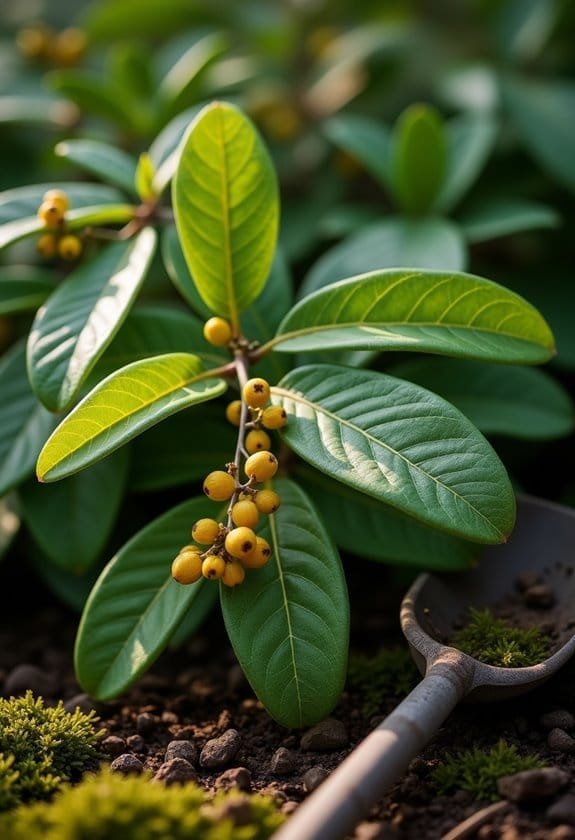
When caring for Elaeagnus angustifolia, understanding its environmental needs and growth habits is essential.
This hardy shrub prefers full sun and well-draining sandy or loamy soils, thriving effortlessly in arid settings where other plants might struggle.
Regular maintenance, including strategic pruning and monitoring for potential diseases like canker, can greatly impact its longevity and vitality, ensuring it remains a resilient and striking addition to any landscape.
Planting Tips
Establishing Elaeagnus angustifolia in a suitable location simplifies its care and maintenance. This resilient plant flourishes in full sun and well-draining sandy or loamy soils. Selecting the right site is essential for ideal growth, as it not only supports robust development but also minimizes the likelihood of issues associated with nutrient-poor soils.
Though this tree is drought-tolerant, regular watering during the establishment phase enhances root development, ensuring a strong foundation.
Pruning remains a crucial aspect of maintenance; it helps maintain the plant's shape and keeps its vigorous growth in check. It's important to note that the future blossoms will emerge on old growth, making thoughtful pruning particularly significant.
Fertilization should be approached cautiously, given the tree's natural nitrogen-fixing capabilities. Understanding nitrogen fixation can further enhance soil quality and plant health.
Monitoring for canker disease is advisable, as it can affect Elaeagnus angustifolia, often leading to decay. The invasive plant council suggests careful management of such diseases; promptly removing infected branches can help mitigate spread and maintain the health of the overall plant.
Ongoing Care
After planting *Elaeagnus angustifolia* and ensuring its initial success, ongoing care becomes crucial for maintaining its health and beauty. This resilient species flourishes in full sun, thriving with little water, yet it's important to monitor its growth regularly.
Although it's relatively low-maintenance, its aggressive growth rate necessitates management to prevent it from overtaking native plants in the vicinity.
Regular pruning is recommended to shape the plant and to promote blooming, as future blossoms will emerge on older growth. As part of maintenance, gardeners should remain vigilant for any signs of canker disease, which can challenge the plant's health. Early detection is key, allowing for timely intervention and preserving vigor.
To mitigate its invasiveness, consider incorporating native species within the landscape, enhancing biodiversity while sustaining balance. Additionally, frequent assessments of the area will help control *Elaeagnus angustifolia's* spread, ensuring it remains an attractive element in the garden without overshadowing local flora.
Through diligent ongoing care and thoughtful maintenance practices, *Elaeagnus angustifolia* can flourish beautifully, ultimately enriching the surrounding ecosystem.
Suggested Companions
Integrating companion plants with *Elaeagnus angustifolia* can enhance both the garden's aesthetics and its ecological balance. By selecting drought-tolerant species like lavender (Lavandula spp.) and sage (Salvia spp.) that thrive in similar well-draining soil conditions, gardeners can create a vibrant, cohesive landscape that flourishes under full sun.
Additionally, incorporating nitrogen-fixing plants such as clover (Trifolium spp.) or other legumes can greatly improve soil fertility, complementing the natural abilities of Russian olive.
To foster a diverse ecosystem, introducing native plant species like echinacea (Echinacea spp.) or milkweed (Asclepias spp.) serves to mitigate the invasive tendencies of *Elaeagnus angustifolia*, while simultaneously supporting local wildlife. Furthermore, planting pollinator-attracting plants like Sea Campion can enhance biodiversity and provide sustenance for beneficial insects.
Careful management is essential, as routine pruning and maintenance of these companion plants is necessary to prevent them from being overshadowed by the aggressive growth of Russian olive.
Moreover, monitoring soil moisture levels guarantees that companion plants receive appropriate hydration, which is particularly important since *Elaeagnus angustifolia* prefers well-draining sandy or loamy soils that can affect its neighbors' water requirements.
Common Issues
Elaeagnus angustifolia faces several common issues that can substantially impact its health and the surrounding ecosystem.
Although it often thrives in various conditions, factors such as pests, diseases, and mechanical management challenges can inhibit its growth and regeneration; for instance, canker disease can weaken the tree, requiring astute monitoring and intervention.
Understanding these challenges is essential, as they not only affect the tree's vitality but can also disrupt the ecological balance, complicating efforts to maintain native biodiversity in affected areas.
Pests/Diseases
While generally resilient, Elaeagnus angustifolia can encounter several pests and diseases that threaten its health. One of the primary culprits is aphids, small sap-sucking insects that weaken the plant by extracting crucial nutrients from its vascular system. Their populations tend to thrive in warm conditions, leading to a rapid increase that can severely impact the tree's vigor.
Another concern involves scale insects, which attach firmly to the stems and leaves of the Russian olive. This attachment not only robs the plant of essential nutrients but also can result in leaf drop, further compromising the tree's health.
In addition, canker diseases pose a serious threat, resulting in decay and dieback in branches, thereby diminishing the overall structure of the plant. Fungal infections, such as powdery mildew, can also manifest, especially in humid environments. This disease presents as whitish, powdery spots on the foliage, detracting from the tree's visual appeal and potentially decreasing photosynthetic efficiency.
Regular monitoring and maintenance are essential to manage these pests and diseases effectively, ensuring that Elaeagnus angustifolia remains healthy and vigorous throughout its lifespan.
Solutions
Managing pests and diseases that affect Elaeagnus angustifolia is just one aspect of ensuring the plant's overall health. However, this invasive species poses substantial challenges to local ecosystems, necessitating effective management strategies to control its spread.
Due to its rapid growth and nitrogen-fixing ability, Elaeagnus angustifolia quickly outcompetes native flora, particularly in riparian areas where it thrives in poor soil conditions.
Employing management strategies such as mechanical removal and targeted herbicide application has proven effective in curtailing its proliferation. Mechanical methods involve cutting or uprooting the plants, while herbicides can suppress their re-emergence.
Equally important is enhancing the planting of native species, as this not only restores local biodiversity but also strengthens the resilience of ecosystems against further invasions.
Continuous monitoring by conservation organizations is essential, ensuring that restoration efforts are both vigilant and adaptive. Collaboration fosters an extensive understanding of the ecological impacts, while promoting healthy habitats for native flora.
Can Siberian Wallflowers and Oleasters Be Planted Together in a Garden?
Yes, Siberian wallflower plants and Oleasters can be planted together in a garden. Both are hardy, low-maintenance plants that can thrive in various soil conditions. They also complement each other well, with the vibrant yellow flowers of the Siberian wallflower plant contrasting beautifully with the dense foliage of the Oleasters.
Summary
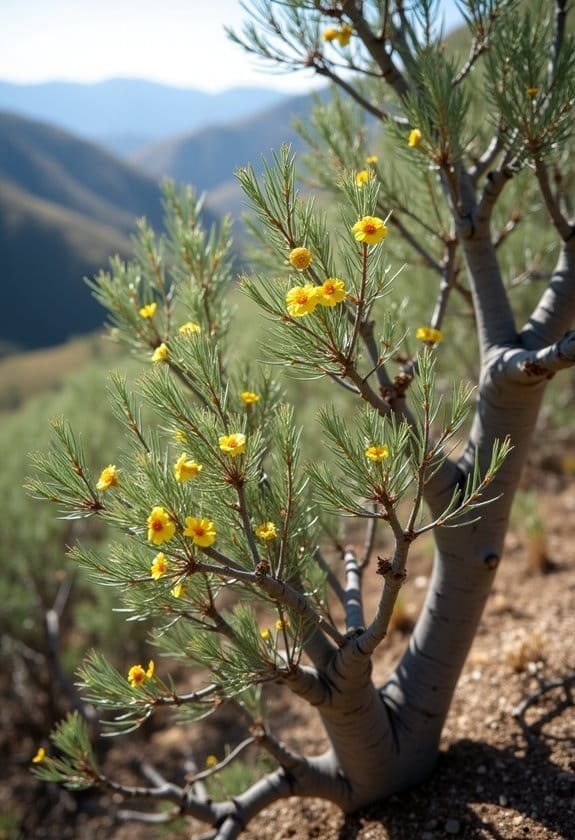
Known for its striking silver-green leaves and fragrant yellow flowers, Elaeagnus angustifolia, or Russian Olive, is a thorny deciduous tree that reaches heights of up to 35 feet. Originally from Central and South Asia, this species was introduced into North America in the late 19th century, where its aggressive growth turned it into an invasive threat.
With the ability to thrive in poor soils and withstand high salinity, Russian Olive often occupies riparian zones, altering local habitats and outcompeting native flora. The small cherry-like, orange-red drupes produced by the tree attract various bird species, facilitating seed dispersal. While this interaction seems beneficial, it greatly disrupts native ecosystems. Additionally, Elaeagnus angustifolia enhances soil quality through nitrogen fixation, a mechanism that can, paradoxically, contribute to its invasive nature.
Traditionally, this plant has served medicinal purposes, addressing issues like rheumatoid arthritis and cough, thanks to its bioactive compounds which may possess antioxidant and anti-inflammatory properties.