*Erica vagans*, or Cornish Heath, thrives on the Lizard Peninsula in Cornwall, showcasing distinctive needle-like leaves in whorls of four or five. Growing between 1 to 3 feet, it flourishes in well-drained, acidic soils with a pH of 5.0 to 6.5, requiring full sun to partial shade for at least six hours daily. This beautiful shrub, blooming from July to September with pink to lilac flowers, plays a pivotal ecological role by attracting pollinators, particularly bees. Its cultural significance as Cornwall's county flower emphasizes the need for mindful conservation practices. Discovering more about its care and ecological importance will reveal further insights.
Main Points
- Cornish Heath (*Erica vagans*) is native to the Lizard Peninsula in Cornwall and is the county flower of Cornwall since 2002.
- It thrives in well-drained, acidic soils with a pH of 5.0 to 6.5 and requires full sun to partial shade.
- This plant blooms from July to September, featuring pink to lilac globular flowers that attract various pollinators, particularly bees.
- Cornish Heath provides essential habitat for wildlife and supports ecosystem health, indicating biodiversity within heathland environments.
- Regular care involves watering, deadheading, and managing pests like aphids and spider mites to maintain plant vitality and health.
Introduction
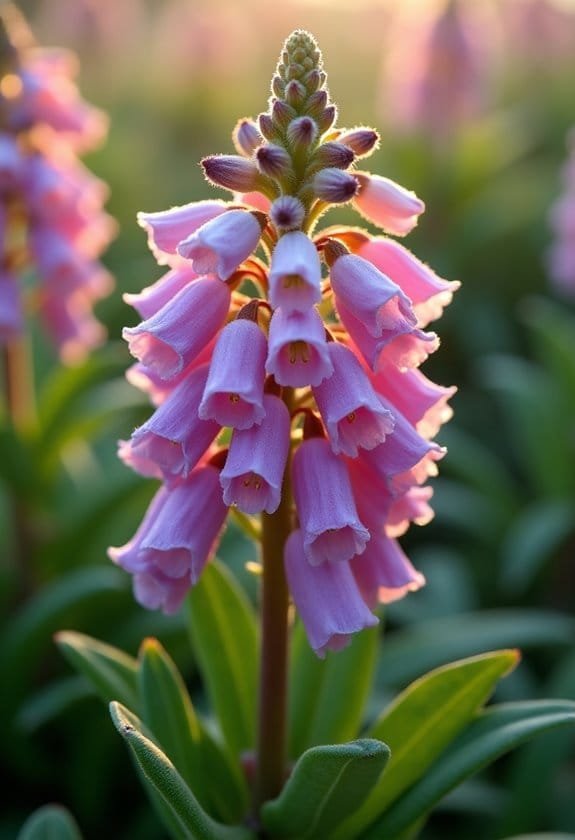
Erica vagans, commonly known as Cornish Heath, is a remarkable evergreen subshrub native to the Lizard Peninsula in southern Cornwall.
This hardy plant, reaching heights of 1 to 3 feet, thrives in acidic environments, evident in its distinctive small, whorled leaves and beautifully rounded pink to lilac flowers that bloom from July to September.
Recognized as Cornwall's county flower since 2002, its allure extends beyond mere aesthetics; it embodies cultural significance and ecological resilience in the region.
Common Name
Known commonly as Cornish Heath, this unique plant is native to the picturesque Lizard Peninsula in southern Cornwall. Its exclusive distribution reflects the region's distinctive climate and habitat, characterized by acid soils that support a rich diversity of flora.
Recognized as the county flower of Cornwall since 2002, Cornish Heath symbolizes the area's unique natural heritage, embodying both beauty and ecological significance. The plant's growth habits, similar to those of Lesser Celandine's aggressive growth through underground tubers, highlight the importance of understanding native versus invasive species.
With its lovely inflorescence of pink or lilac globular flowers, which bloom from July to September, the Cornish Heath plays a crucial role in attracting local pollinators, contributing to the ecosystem's health. This enchanting plant captures the imagination, often linked to local legends, including tales of Joseph of Arimathea's arrival in Cornwall, adding a layer of cultural significance to its already alluring presence.
Cornish Heath belongs to the Ericaceae family, which features various heath and flowering species, further emphasizing its ecological and botanical relevance. By thriving in the challenging conditions of its native landscape, it showcases the resilience of life and the delicate balance of the ecosystems it inhabits. Notably, as a member of the Ericaceae family, it shares similarities with other heath plants like Heather (Calluna vulgaris), which also contribute to the health of their respective ecosystems.
This remarkable plant stands not only as a proof of Cornwall's biodiversity but also as a cherished symbol of its natural beauty.
Scientific Name
The scientific name of Cornish Heath, Erica vagans, highlights its botanical classification within the diverse genus Erica and the family Ericaceae. This intriguing subshrub is primarily found on the Lizard peninsula in Cornwall, where it flourishes in the unique serpentine, acidic soils that characterize the region.
Growing to a height of 1 to 3 feet (30 to 90 cm), Erica vagans showcases a delicate splendor, with small, needle-like leaves that are arranged in whorls of four or five.
The plant's inflorescence consists of long-stalked, globular flowers that bloom from July to September, displaying enchanting shades of pink or lilac, with their distinct brown stamens adding a touch of contrast. This remarkable adaptation allows it to thrive even in the most challenging conditions, illustrating nature's ability to rise to the acid present in its environment.
Recognized as the County flower of Cornwall since 2002, Cornish Heath holds significant cultural importance, serving as a symbol of regional identity.
The scientific nomenclature not only embodies its genetic lineage but also reflects its deep-rooted connection to the Cornish landscape.
Overview
Cornish Heath, or Erica vagans, stands out as a remarkable feature of the Lizard Peninsula in Cornwall. This evergreen subshrub, native exclusively to the region, thrives in acidic soils, reaching heights between 1 to 3 feet (30 to 90 cm).
Its small, needle-like leaves, adorned with pale undersides, form whorls of four or five, creating a unique visual appeal. From July to September, it blooms profusely, showcasing long-stalked, globular flowers in enchanting shades of pink to lilac, contrasted beautifully by distinctive brown stamens.
The ecological significance of Cornish Heath can't be overlooked; it provides crucial habitat for various wildlife species while enriching the biodiversity of Cornwall's heathland ecosystems.
In addition, its cultural importance is profound, as it has been recognized as the County Flower of Cornwall since 2002. Local legends, many intertwined with the roots of the region's history, often associate this enchanting plant with Joseph of Arimathea, enhancing its mystique.
Ultimately, Erica vagans serves as a thriving demonstration of Cornwall's rich natural history, making it a cherished symbol for both locals and visitors alike.
Key Features
Erica vagans, or Cornish heath, stands as a compelling subshrub, reaching heights between 1 to 3 feet.
With its small, needle-like leaves forming whorls and its unique globular flowers blooming from July to September, this plant showcases both aesthetic beauty and ecological significance.
Its adaptability to acidic or neutral soils enhances its thriving presence on the Lizard Peninsula, where it symbolizes the region's rich biodiversity.
Growth Size
Typically, Erica vagans reaches heights between 1 and 3 feet (30 to 90 cm). This plant exhibits a remarkable ability to showcase height variations, largely influenced by its growth habitat, which primarily includes sandy, acidic soils typical of heathlands and coastal areas.
The growth of Erica vagans is often seasonal, thriving during the warm months when moisture levels are adequate, which supports its lush development.
The Cornish Heath reveals straggly shrub characteristics as its hairless, ribbed stems extend upward, allowing for unique leaf arrangements. Small, needle-like leaves measuring 5 to 10 mm are organized in whorls of four or five along the stems. This structure not only aids in maximizing sunlight capture but also enhances moisture retention.
In favorable conditions, this flowering shrub can create dense patches, showcasing its adaptability to different environmental influences. The blooming of long-stalked, cup-shaped flowers occurs from July to September, further adding to the plant's seasonal growth dynamics.
Consequently, understanding the growth size of Erica vagans provides insights into its ecological role within its native habitat, illustrating the intricate relationship between plant size, soil type, and seasonal environmental changes.
Appearance
One of the striking features of Erica vagans is its evergreen subshrub form, which reaches heights between 1 and 3 feet (30 to 90 cm). This plant showcases fascinating color variations in its delicate flowers, mainly seen in shades of pink and lilac, enhancing its visual appeal in natural landscapes.
The leaf structure of Erica vagans is equally remarkable; it features small, linear, needle-like leaves that measure approximately 5 to 10 mm long. These leaves are arranged in whorls of four or five, exhibiting pale undersides that add an intriguing contrast.
The uniqueness of this species is also evident in the shape of its flowers. The long-stalked, bell-shaped blooms exhibit a cupuliform corolla, measuring between 2.5 and 3.5 mm in length, distinguishing it from closely related species.
This distinct morphology not only fascinates onlookers but also attracts various pollinators, particularly bees. By producing distinctive brown stamens, Erica vagans guarantees a vibrant display fueling ecological interactions.
Consequently, from its characteristic evergreen stature to its enchanting flower shapes and leaf structure, the overall appearance of Cornish heath is a harmonious blend of beauty and functionality, supporting its role in the ecosystem.
Flowering Season
During the late summer months from July to September, Cornish heath bursts into a vibrant display of color, enchanting onlookers with its blooms. During this flowering season, the plant showcases globular flowers in stunning shades of pink or lilac, measuring between 2.5 to 3.5 mm in length.
These long-stalked inflorescences rest elegantly atop leafy spikes, contributing to their striking appearance. The blooming impact of Cornish heath is significant, as it plays a fundamental role in attracting essential pollinators like bees, which depend on the nectar provided by these flowers. Additionally, the nectar content of plants plays a critical role in supporting local biodiversity, highlighting the importance of healthy ecosystems.
The seasonal variations of this plant also introduce additional color significance, with cultivars presenting alluring hues of white, mauve, and deeper purple, thereby enhancing its decorative appeal in gardens and natural habitats alike.
This color diversity not only enriches the visual landscape but also signifies the health of surrounding ecosystems, linking vibrant floral displays to ecological stability. As the flowers bloom, they not only provide aesthetic pleasure but also serve as a reminder of the interconnectedness of all living organisms reliant on seasonal patterns and native flora. This interconnectedness is vital for the health of pollinator populations attracting Nettle-Leaved Bellflower, which shares a similar role in their ecosystems.
Growing Requirements
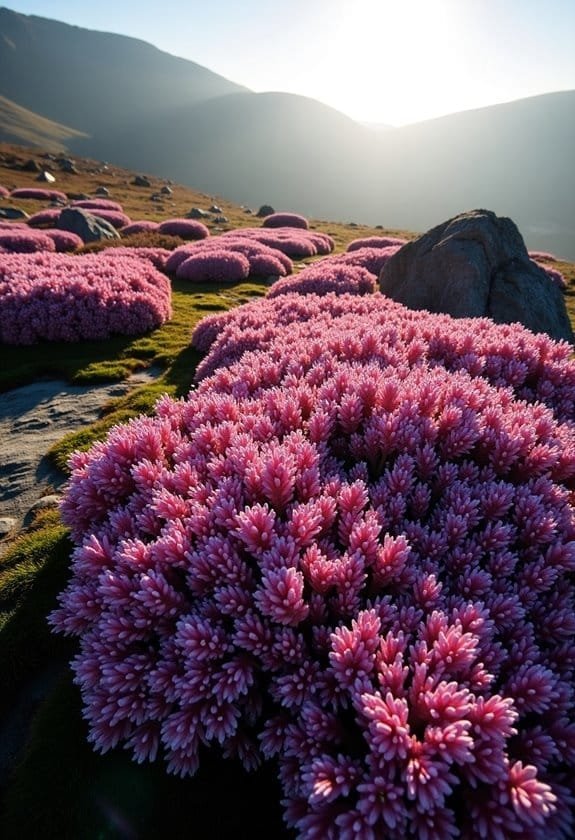
To cultivate Erica vagans effectively, one must consider significant factors such as light, soil, water, and temperature.
This charming evergreen subshrub flourishes in well-drained, acidic to neutral soils, ideally under full sun to partial shade conditions, which are vital for ideal growth.
Ensuring adequate moisture while avoiding waterlogged conditions will promote a vibrant, healthy plant, creating a stunning addition to any garden landscape.
Light
Bright, full sunlight is essential for the thriving of Cornish heath (Erica vagans) in garden settings. This plant flourishes with ideal brightness, necessitating at least six hours of direct sunlight exposure daily. Cornish heath's light requirements make it an excellent choice for sun-drenched spaces, where its vibrant blooms can fully express their potential. When cultivated in less luminous conditions, however, the plant can exhibit stunted growth and diminished flowering.
The importance of adequate light can't be overstated, as it plays a significant role in photosynthesis, the process by which plants convert sunlight into energy. Inadequate exposure can hinder the plant's ability to produce the sugars needed for development and longevity. Consequently, gardeners in shaded areas should consider relocating their Cornish heath to sunnier spots, or using techniques such as pruning nearby trees to increase light penetration.
Moreover, while ensuring sufficient light, it's also essential to monitor water levels. Cornish heath appreciates consistent hydration, especially during dry spells, balancing between moisture retention and avoiding waterlogging.
With the right care, including ideal sunlight exposure, this resilient plant can truly shine in any landscape.
Soil
Cornish heath (Erica vagans) typically thrives in acidic or neutral soils, mirroring the conditions of its native environments on the Lizard Peninsula in Cornwall.
These plants flourish best when the soil pH ranges from 5.0 to 6.5, highlighting their sensitivity to alkalinity. In alkaline soils, growth can be severely hindered, but gardeners can mitigate this by using containers filled with ericaceous compost, which guarantees the essential acidic conditions are met.
Preferred soil conditions encompass well-drained, sandy, or peat-rich substrates that promote excellent soil moisture retention while preventing waterlogging.
Cornish heath's preference for these soil types stems from the unique geological composition of its native habitat, allowing it to adapt and thrive effectively. This adaptability is particularly crucial when introducing the plant to non-native regions, such as New England, where soil amendments may be necessary to recreate its ideal growing conditions.
Adding organic matter, such as compost or peat moss, can improve the soil's structure, enhancing both drainage and moisture retention.
Water
Frequently, Cornish heath (Erica vagans) demands a careful balance of moisture to truly thrive.
This hardy plant flourishes best in well-drained, acidic soils, which are essential for both root health and nutrient absorption. As it's adapted to temperate maritime climates, Cornish heath tends to shun waterlogged conditions, preferring environments where soil moisture remains consistent yet not overly saturated. Additionally, it mirrors the growth requirements of its relative, Dorset Heath, in needing moist, well-draining soils for optimal development. Such conditions are crucial for avoiding issues like Phytophthora root diseases, which can severely impact root systems in saturated environments.
Temperature
Growing Cornish heath (Erica vagans) requires a focus on mild temperatures that mimic its native temperate maritime climate. This species flourishes best in conditions that align with the moderate climate of the Lizard Peninsula, where it originates. Severe temperature fluctuations can adversely affect growth, as extreme cold may hinder its development and survival.
While Cornish heath exhibits frost tolerance, it benefits greatly from frost protection, especially during prolonged freezing periods to safeguard its vitality.
Ideal growing conditions for this resilient plant encompass well-drained, acidic soils that allow for effective temperature regulation and moisture retention. During the blooming period from July to September, maintaining a consistently warm environment becomes essential. Such conditions not only enhance flower development but also promote overall health, leading to a more vibrant display.
Gardeners should therefore consider the climate impact on their cultivation efforts, utilizing protective measures like fleece or strategically placed barriers to shield the delicate flora from harsh winter conditions.
To conclude, understanding and addressing temperature requirements is fundamental for successfully nurturing Cornish heath, guaranteeing its robust growth and lush blooms thrive amid nature's unpredictable whims.
Pollinator Criteria
Erica vagans thrives in heathland ecosystems, thanks to its ability to attract a variety of pollinators, especially bees.
The tubular flowers, ranging in color from delightful pink to lilac, feature a globular shape, which invites these essential insects, aiding in effective cross-pollination. Additionally, its extended flowering period ensures a steady food supply for pollinators, similar to Creeping Buttercup's reliable nectar resources.
This interaction not only bolsters the species' reproduction but also enriches the biodiversity of its coastal habitats, creating a delicate balance within these unique ecosystems. The presence of Erica vagans indicates healthy ecosystems, as it supports various pollinators and encourages ecological stability.
Attracted Pollinators
Attracting a diverse array of pollinators, Cornish heath (Erica vagans) plays an indispensable role in its ecosystem. Its tubular flowers bloom from July to September, coinciding with the peak activity periods of various pollinators. The vibrant colors, ranging from soft pink to delicate white, not only add visual appeal but also effectively guide pollinators toward their nectar benefits. This plant's dense structure is reminiscent of white clover(Trifolium repens), which also attracts essential pollinators and contributes to local biodiversity.
Studies show that this plant specifically enhances bee diversity, offering essential nourishment through its abundant pollen and nectar. The structure of Cornish heath, characterized by long-stalked, globular flowers, facilitates easy access for insects, promoting interactions that enhance successful pollination.
As these pollinators engage with the flowers, they contribute to a mosaic of pollinator habitats within the landscape, fostering biological diversity. Through its role as a food resource, Cornish heath supports specialized insect populations, creating a rich environment that bolsters local ecosystems. Additionally, it shares attributes with other plants like Campanula glomerata(Campanula glomerata), which also attract vital pollinators and promote biodiversity.
This interdependence between plants and pollinators underscores the significance of preserving such species, ensuring they continue to thrive and sustain the delicate balance of nature. Consequently, Erica vagans not only beautifies the landscape but also embodies the intricate web of life fundamental for ecological health.
Pollination Method
Pollination is a critical process for Cornish heath (Erica vagans), primarily facilitated by bees drawn to its tubular flowers. The design of these flowers, with corollas measuring between 2.5 to 3.5 mm, specifically accommodates the proboscis of various pollinators, enhancing pollination efficiency.
From July to September, when the flowers bloom, they coincide with peak insect activity, allowing for maximum pollen transfer. The protruding anthers of the Cornish heath flowers provide easy access to pollen for visiting bees, who exhibit distinct nectar preferences, often favoring the nutrient-rich offering of these blossoms. Brooklime (Veronica beccabunga), with its long flowering period, serves as an excellent companion in enhancing pollinator habitats.
This synergy between flower structure and pollinator behavior not only guarantees effective reproduction for the plant but also fosters a diverse ecosystem. By attracting specialized insect populations, Cornish heath greatly impacts biodiversity in its local environment. Additionally, its relationship with pollinators mirrors the pollination dynamics seen in Malus floribunda(Malus floribunda) and other flowering plants.
Thus, the intricate relationships between Erica vagans and its pollinators exemplify the essential balance in nature, illustrating how each species contributes to a thriving ecosystem. The loss of such plants could ripple through the environment, highlighting their invaluable role in supporting both insect life and the overall health of ecosystems.
Care & Maintenance
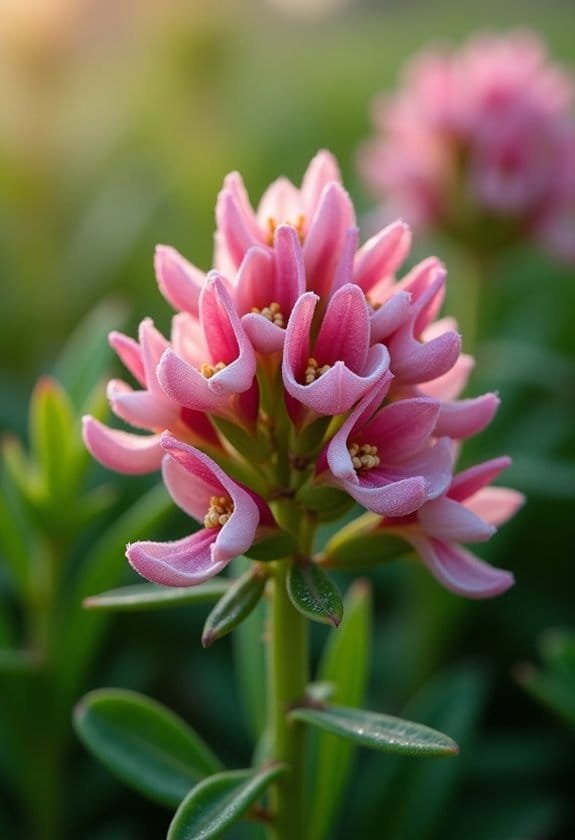
In cultivating Cornish heath (Erica vagans), understanding the essentials of care and maintenance guarantees robust growth and vibrant blooms.
This plant flourishes in acidic to neutral soils and benefits from specific planting techniques, such as using containers filled with ericaceous compost when faced with alkaline conditions.
Ongoing care includes regular watering during dry spells, deadheading spent flowers for enhanced aesthetics, and light trimming to foster bushier growth, ultimately allowing this resilient species to thrive alongside compatible companions in an enriching landscape.
Planting Tips
When planting Cornish heath (Erica vagans), choosing the right soil is essential for its health and vigor. This plant flourishes in well-drained, acidic or neutral soil, making soil amendment strategies important, especially if you're dealing with alkaline conditions.
Gardeners can enhance their growing medium by incorporating ericaceous compost, which not only supports the plant's specific soil preferences but also guarantees adequate drainage.
For those utilizing container gardening techniques, it's crucial to select pots with drainage holes, as Cornish heath isn't fond of waterlogged roots.
Watering should be moderate; striking a balance will help establish healthy growth, reflective of its native habitats.
Post-blooming, employing prudent pruning methods can maintain the shrub's shape and encourage a bushier appearance in subsequent years. Such trimming should focus on removing faded flowers and any dead or weak stems, thereby promoting better airflow and growth.
In spring, consider fertilizing sparingly with a low-nitrogen fertilizer to support the flowering process, keeping in mind that excessive fertilization can lead to detrimental effects on the plant's health, so moderation is key to its overall success.
Ongoing Care
Maintaining the health and appearance of Cornish heath requires ongoing care, particularly after pruning and initial planting. This resilient shrub flourishes best in well-drained, acidic or neutral soils, often necessitating planting alternatives like ericaceous compost if placed in alkaline environments. Additionally, it should be noted that Blackthorn Sloe's essential habitat for wildlife creates a balanced ecosystem, which can enhance the overall health of neighboring plants like Cornish heath.
To foster vigorous blooms each season, regular pruning post-flowering is crucial, promoting a compact shape and encouraging new growth.
Seasonal challenges, such as dry spells, demand attention; light watering during these periods makes certain the plant remains hydrated, but caution must be exercised to avoid overwatering, which can lead to root rot in poorly drained soils.
Good airflow around the shrub is essential, as overcrowding with other plants can invite pests and diseases that threaten its health. Additionally, planting alongside acid-loving species can enhance biodiversity and improve growth conditions for the Cornish heath.
Moreover, fertilizing with a balanced, low-nitrogen formulation in early spring can greatly enhance flower production, aligning with the nutrient requirements of acid-loving plants.
Propagation techniques, including cuttings or division, can further expand one's garden, making certain the longevity and splendor of Erica Vagans.
Careful attention to these elements secures a flourishing display, transforming gardens into vibrant ecosystems filled with life and beauty.
Suggested Companions
Choosing the right companions for Cornish heath can considerably enhance its growth and visual appeal. Planting Erica vagans alongside acid-loving companion plants like azaleas, rhododendrons, or other heathers creates a harmonious environment, effectively maintaining the acidic or neutral soil conditions Cornish heath thrives in. This strategic selection mirrors nature's own ecosystems, promoting healthy competition among plants.
For garden aesthetics, incorporating low-growing perennials such as sedums or ornamental grasses can complement Erica's evergreen structure, while their varied textures and colors bring visual interest to the landscape.
Additionally, ensuring adequate drainage is vital; hence, pairing Cornish heath with drought-tolerant species like lavender or thyme aids in effective soil management, preventing waterlogging that could damage roots. It is also important to consider soil pH requirements as Cornish heath prefers acidic conditions similar to those required by cross-leaved heath.
To retain moisture and enhance the acidic environment, mulching with pine needles or bark is beneficial. This not only enriches the soil but also provides a cozy habitat for beneficial organisms.
Regular pruning after the blooming season fosters robust new growth and encourages synergy between Cornish heath and its neighbors, thereby enriching both aesthetics and health in the garden.
Common Issues
Cornish heath, or Erica vagans, faces several common issues that can jeopardize its health, such as pests and diseases that weaken its resilience.
These threats can stem from environmental changes or even cultivation practices, requiring vigilant management and informed solutions to restore energy.
Identifying specific pests, like aphids or fungal infections, allows for targeted responses, ensuring this rare plant thrives despite ongoing challenges.
Pests/Diseases
Pests and diseases can pose considerable challenges for Erica vagans, especially when the plants are grown in unsuitable conditions.
Root rot is a common affliction, particularly prevalent in poorly drained soils, which greatly compromises the plant's overall health. Additionally, pest issues like aphids and spider mites wreak havoc, leading to stunted growth and unsightly leaf damage if not promptly controlled.
Fungal diseases such as powdery mildew and leaf spot thrive in humid environments or areas with inadequate air circulation, making them a constant threat to healthy foliage.
Implementing effective pest management strategies, including regular inspections and timely interventions, can help mitigate these risks. Employing disease identification techniques enables gardeners to recognize signs early, preventing further spread.
Moreover, adopting preventive care methods like proper spacing and pruning not only enhances air circulation but also reduces potential overcrowding, which can foster disease prevalence.
Regular monitoring is essential; diligent observation allows for early intervention that can safeguard the health of Erica vagans.
In understanding these issues, gardeners can better appreciate the resilience of Cornish heath and its requirements for ideal growth.
Solutions
To address the challenges faced by Erica vagans, gardeners should focus on creating suitable growing conditions and proactive management strategies. First, confirming that the soil remains acidic or neutral is essential. Amending alkaline soils with ericaceous compost can enhance the plant's growth and resilience.
Additionally, the threat of overgrazing necessitates the implementation of sustainable land management practices in its native habitat, particularly on the Lizard Peninsula.
Habitat loss, driven by climate change, underscores the urgency for conservation strategies aimed at preserving the unique environment and genetic diversity of Cornish heath. By prioritizing habitat restoration efforts, such as reestablishing indigenous plant communities, gardeners and conservationists can create the ideal conditions for Erica vagans to thrive.
Monitoring the health of Cornish heath populations through regular assessments enables the identification of potential declines, informing effective conservation strategies. Furthermore, controlling invasive species is essential, as these non-native plants can disrupt the delicate ecosystems that support Erica vagans.
How Do Erica Cinerea (Bell Heather) and Erica Vagans (Cornish Heath) Differ in Appearance and Care?
Erica cinerea plants and Erica vagans plants differ in appearance and care. Erica cinerea plants typically have darker foliage and bloom in midsummer, while Erica vagans plants have lighter foliage and bloom in late summer. Both plants require well-draining acidic soil and full sun for optimal growth.
Summary
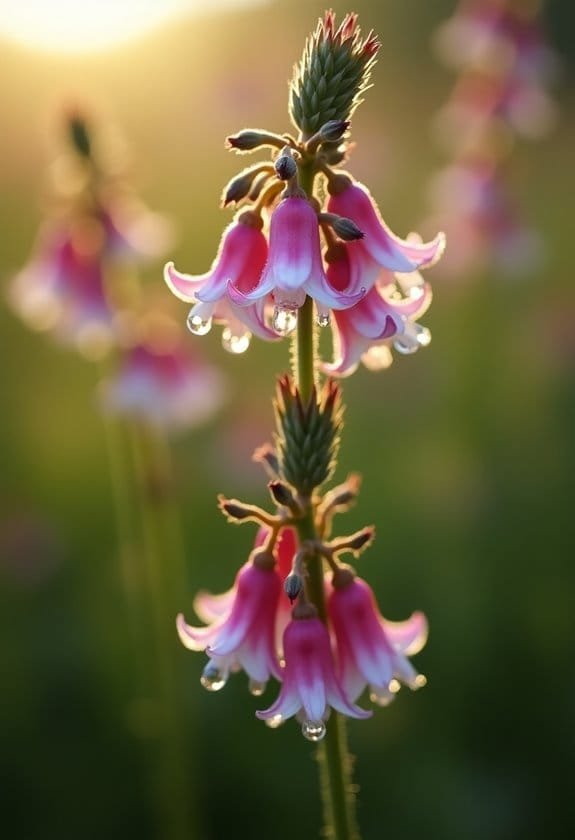
Erica vagans, known as Cornish Heath, is an evergreen subshrub that thrives exclusively on the Lizard Peninsula in Cornwall. This resilient plant can grow between 1 and 3 feet tall, exhibiting needle-like leaves arranged in whorls of four or five, which are adapted to its challenging coastal habitat. Its bell-shaped flowers bloom from July to September, showcasing alluring shades of pink or lilac, thereby attracting crucial pollinators like bees.
Cornish Heath holds significant cultural importance as it was designated the County flower of Cornwall in 2002. Beyond its aesthetic appeal, it provides essential environmental benefits. The plant stabilizes local ecosystems by offering habitat for diverse wildlife, which enhances the unique biodiversity characteristic of heathland environments.
For gardeners, Erica vagans serves as an exemplary choice, with several cultivars, including 'Mrs D.F. Maxwell' and 'Cornish Cream', being recognized by the Royal Horticultural Society for their ornamental qualities. Effective gardening techniques can help cultivate this subshrub in acidic soils, ensuring it thrives while contributing positively to the environment.