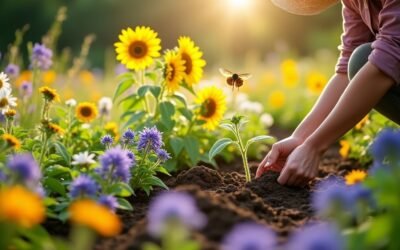
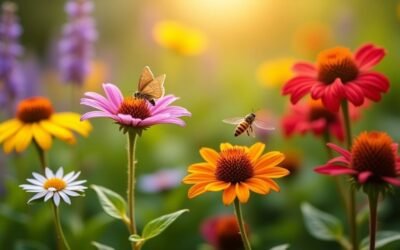
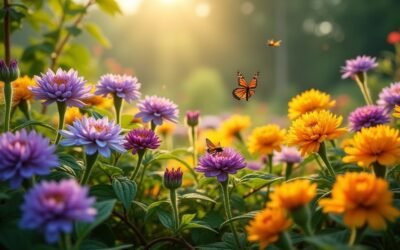
Eriophyllum lanatum, known as Golden Yarrow, is a resilient perennial thriving in arid environments. Typically reaching heights of 30 to 60 cm (12 to 24 inches), it boasts vibrant yellow flowers from May to August, which consist of 6 to 14 ray flowers surrounding a central disk. Preferring well-drained soil, this species exhibits remarkable drought tolerance and minimal maintenance requirements. In addition, it attracts various pollinators, enhancing local biodiversity. It flourishes in USDA Hardiness Zones 5 to 8 and can adapt to varying temperatures. Understanding its ecological significance and maintenance needs can lead to more sustainable gardening choices.
Main Points
- Eriophyllum lanatum, or Golden Yarrow, features bright yellow flowers and thrives in arid, well-drained environments.
- It grows 30-90 cm tall and is drought-tolerant, requiring minimal water once established.
- Optimal growth occurs in USDA Zones 5 to 8, with a preference for sandy or rocky soils.
- Golden Yarrow attracts diverse pollinators, promoting local biodiversity and enhancing garden aesthetics.
- It can be easily propagated from seeds or division and benefits from deadheading to extend blooming.
Introduction
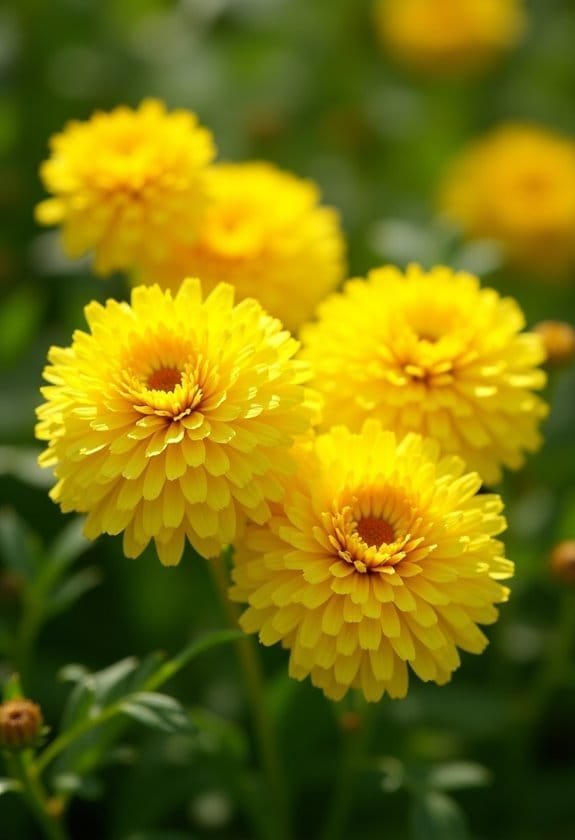
Eriophyllum lanatum, commonly known as Golden Yarrow, represents a fascinating example of nature's resilience in western North America.
This perennial herb, reaching heights of up to 90 cm and adorned with striking yellow flowers, thrives in arid conditions while fulfilling essential roles in its ecosystem.
Its ability to attract pollinators and stabilize soil makes it an invaluable addition to both natural landscapes and cultivated gardens.
Common Name
Often celebrated for its vibrant appearance, Golden Yarrow is a fitting name for Eriophyllum lanatum, a plant known for its eye-catching bright yellow flower heads that bloom from late spring to summer. This striking floral display, characterized by clusters of golden yellow blossoms, captures the attention of gardeners and nature enthusiasts alike, making it a popular addition to native plant landscapes.
In addition to its common name, Golden Yarrow, this plant is also referred to as the common woolly sunflower due to its woolly gray-haired stems and leaves. These unique features not only contribute to its aesthetic appeal but also enhance its ability to withstand drought, making it a resilient choice for various habitats like chaparral and grasslands.
Eriophyllum lanatum typically reaches heights of 30 to 60 centimeters (12 to 24 inches), although under ideal conditions, it can soar up to 90 centimeters.
Beyond beauty, Golden Yarrow plays a crucial role in biodiversity, attracting a myriad of pollinators such as bees and butterflies. Its presence in local ecosystems fosters a rich array of life, underlining the importance of this remarkable plant in supporting environmental health.
Scientific Name
Classified under the scientific name Eriophyllum lanatum, Golden Yarrow embodies a rich botanical heritage in the Asteraceae family.
First identified by Frederick Traugott Pursh in 1813 as Actinella lanata, this perennial herb flourishes primarily in western North America, especially in the diverse ecosystems of California.
With flowering typically occurring from May to August, Eriophyllum lanatum showcases striking, golden, daisy-like blooms that can reach up to 5 cm wide, enchanting gardeners and nature enthusiasts alike.
The plant's leaves and stems are distinguished by their woolly gray hairs, which enhance its ability to thrive in arid conditions.
This unique feature renders Golden Yarrow significantly drought tolerant, allowing it to flourish even amidst the challenging summers typical of its native habitat.
Among its eight recognized varieties, such as var. croceum and var. lanceolatum, Eriophyllum lanatum displays adaptations that help it succeed in specific geographic regions, including areas drenched in the warm embrace of Oregon sunshine.
Overview
Golden Yarrow, known scientifically as Eriophyllum lanatum, stands out as a remarkable perennial herb native to western North America. Typically reaching heights of 30 to 60 cm (12 to 24 inches), it can grow up to 90 cm (35 inches) in favorable conditions.
This striking plant features bright yellow daisy-like flowers, with heads measuring up to 5 cm (2 inches) across, which bloom from May to August. These flowers not only captivate the eye but also attract diverse pollinators, including bees and butterflies, thereby enhancing local ecosystems.
Eriophyllum lanatum showcases a unique adaptability, thriving in dry, open habitats like chaparral and grasslands at elevations below 3,000 meters (10,000 feet). Its drought-resistant nature is underscored by the woolly gray hairs that cover its stems and leaves, effectively conserving precious moisture.
This quality makes it an excellent candidate for xeriscaping and low-water gardens, where full sun exposure is abundant. Additionally, the plant reproduces through achenes with tufted hairs, which facilitate wind dispersion, promoting efficient propagation across its native range.
Through these attributes, Golden Yarrow exemplifies resilience and beauty in arid environments.
Key Features
Eriophyllum lanatum, or Golden Yarrow, typically grows between 30 and 60 cm tall, with some specimens reaching an impressive 90 cm.
This perennial herb graces gardens with bright yellow, daisy-like flowers that bloom from May to August, showcasing a harmonious blend of 6–14 ray flowers and numerous disk flowers.
Its woolly gray-haired leaves not only add to its visual charm but also play a vital role in water conservation, making this plant both aesthetically pleasing and ecologically significant.
Growth Size
Growing between 30 to 60 cm (12 to 24 inches) tall, Eriophyllum lanatum showcases a compact growth habit that makes it an appealing choice for various landscapes. Its overall width mirrors its height, typically expanding to a similar range of 30 to 60 cm (1 to 2 feet). This harmonious balance creates low cushions that are visually striking, enriched by its silvery leaves.
The plant's stems and leaves exhibit distinct features; the leaves measure 2.5–7.5 cm (1–3 inches) long, presenting linear shapes on the upper stems and a slender, pinnately lobed form on the lower stems. This differentiation not only contributes to the plant's aesthetic appeal but also serves functional purposes, including drought resistance.
Eriophyllum lanatum's stems are adorned with woolly gray hairs, enhancing its unique texture and protection against environmental stressors. Sometimes, the plant can reach up to 90 cm, though this height is less common.
The combination of its growth size, with its characteristic growth habit and silvery leaves, renders Eriophyllum lanatum a resilient and attractive option for gardens and naturalized areas alike.
Appearance
The striking appearance of Eriophyllum lanatum is defined by its vibrant yellow daisy-like flowers, which can reach up to 2 inches (5 cm) in diameter. Thriving in western North America, particularly in regions like British Columbia, this perennial showcases a beautiful array of flower heads. Each flower features between 6 to 14 ray flowers radiating from a central disk, resembling true sunflowers and contributing to its stunning visual impact.
Measuring between 30 to 60 cm (12 to 24 inches) in height, this resilient plant can even reach up to 90 cm under ideal conditions. Its grayish-green leaves, typically measuring 2.5 to 7.5 cm (1 to 3 inches) long, display a linear shape on the upper stems while the lower stems exhibit pinnately lobed patterns.
Covered in soft, woolly hairs, these leaves help conserve water, allowing the plant to thrive in diverse environments.
The unique achene produced by Eriophyllum lanatum boasts tufted hairs, enhancing its wind dispersal capabilities. This feature not only aids in propagation but also guarantees that the striking presence of Golden Yarrow continues to brighten landscapes throughout its natural habitat.
Flowering Season
Blooming from May to August, Eriophyllum lanatum captivates onlookers with its vibrant yellow flowers during the summer months.
Its blooms, featuring daisy-like heads that can grow up to 5 cm (2 inches) in diameter, usually possess 6–14 rays surrounding numerous disk flowers. This striking display not only enhances garden aesthetics but also creates a haven for pollinators, as bees and butterflies are drawn to the abundant nectar.
Furthermore, Eriophyllum lanatum thrives in arid conditions, as it needs very little water, making it an excellent choice for low-maintenance landscaping.
The flowering season serves a critical ecological role, as each plant produces achenes equipped with tufted hairs to facilitate wind-based dispersion. This natural method guarantees the propagation of fresh generations after blooming.
To maintain the vibrancy of the plant and control its spread in cultivated areas, gardeners should consider deadheading the flowers. By removing spent blooms, the plant can continue to put forth new flowers throughout the summer, making it a resilient and alluring choice for gardens in various climates.
Consequently, Eriophyllum lanatum embodies both beauty and functionality in botanical design.
Growing Requirements
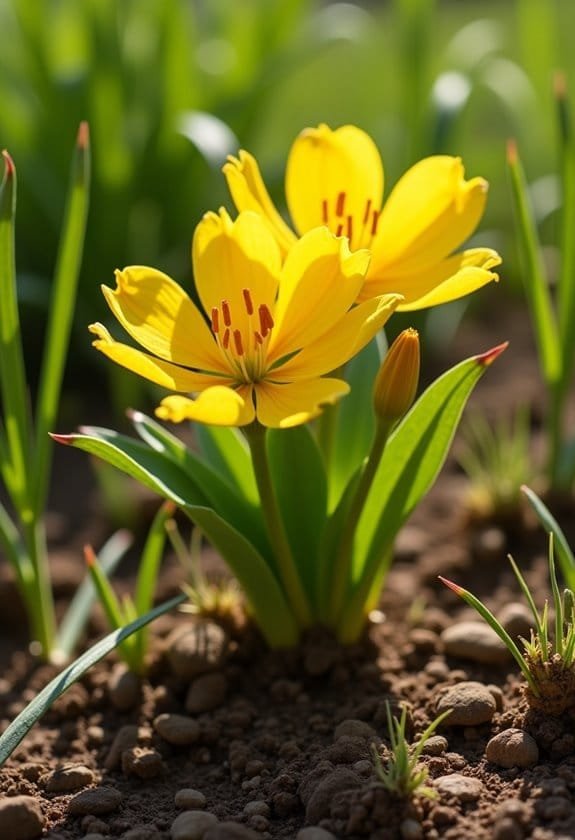
Eriophyllum lanatum flourishes under specific conditions that guarantee its vigorous growth and vibrant blooms.
Requiring full sun to light shade, this hardy plant performs best in well-drained soil, particularly in rocky or sandy environments, where its roots can spread freely.
Once established, it thrives with minimal moisture, showcasing significant drought tolerance, which makes it an excellent choice for low-maintenance gardens.
Light
Ideal growth of Eriophyllum lanatum, commonly known as golden yarrow, hinges on sufficient light exposure, which plays an essential role in the plant's overall health and blooming potential. Thriving best under full sun, this species requires at least six hours of direct sunlight daily to flourish.
While it can adapt to light shade conditions, it typically produces more vibrant blooms when basking in sunny locations. Without adequate sunlight exposure, Eriophyllum lanatum may develop leggy growth, greatly reducing its flowering and, consequently, its overall aesthetic appeal.
As a drought-tolerant plant, once established, it has adapted light strategies that help it withstand dry, sunny environments, though it continues to require sunlight for peak vitality.
When planted in shaded areas, golden yarrow faces light competition effects against taller surrounding plants, prompting careful monitoring. The interaction with other species can influence its ability to gather the necessary sunlight, which is crucial for its health and growth.
To summarize, providing Eriophyllum lanatum with sufficient sunlight not only enhances its beauty but also guarantees its resilience and longevity in the garden.
Soil
Golden yarrow flourishes in soil that drains well, thriving in conditions that reflect its native western North American habitats. This remarkable plant demonstrates adaptability to various soil types, including rocky and sandy substrates, making it an excellent choice for gardens plagued by poor soil quality or low fertility.
Eriophyllum lanatum prefers dry to medium conditions, ideally within a soil pH range of 5.0 to 8.0, which allows it to flourish without complications. Additionally, like Orpine, this plant exhibits excellent drought resistance due to its specialized water-storing mechanisms, ensuring its survival in challenging environments.
To guarantee proper establishment, gardeners might consider implementing drainage techniques, such as raised beds or incorporating gravel into the planting mix, to enhance soil permeability. Soil amendments, like compost or aged manure, can improve fertility without compromising drainage, thereby promoting peak growth.
Once established, golden yarrow requires minimal watering; its drought-resistant characteristics enable it to thrive, even in dry summers.
However, during the initial growth phase, regular observation of soil moisture is vital to avoid over-watering, which could lead to root rot.
Water
Water management is essential for the successful growth of Eriophyllum lanatum. This resilient species thrives in dry environments, demonstrating remarkable drought tolerance once established. During the initial establishment phase, consistent watering—approximately twice per month—is vital. After this period, watering frequency should decrease, allowing the plant to acclimate to its arid surroundings.
Eriophyllum lanatum flourishes in dry to medium, well-drained soils, making it particularly suitable for rocky or sandy conditions. Employing water conservation tips, such as using mulch to retain soil moisture, can further enhance the plant's ability to withstand dry spells.
Additionally, utilizing effective watering techniques—like deep watering rather than frequent shallow applications—encourages deeper root growth, fortifying the plant against drought.
As a preferred choice for xeriscaping and low-water gardens, this species showcases effective drought resilience strategies. By minimizing water needs, Eriophyllum lanatum not only contributes aesthetic value to gardens but also promotes sustainable landscaping practices.
With its ability to withstand harsher conditions than many traditional garden plants, this golden yarrow exemplifies both beauty and utility in water-sensitive environments.
Temperature
Eriophyllum lanatum thrives in a range of temperatures, making it well-suited for diverse climates. This hardy plant flourishes in USDA Hardiness Zones 5 to 8, showcasing remarkable climate adaptability. It withstands temperature extremes, tolerating lows around 28.2°F (-2°C) during winter and highs reaching 83.3°F (28.5°C) in summer.
Despite these variations, Eriophyllum lanatum performs best in regions where average summer temperatures hover between 49.8°F (9.9°C) and 54.4°F (12.5°C).
Climate adaptability is further enhanced by its preference for full sun exposure and dry conditions. This golden yarrow thrives in arid environments, where minimal water is necessary once established.
The plant's resilience allows it to endure seasonal variations without compromising its growth. In fact, Eriophyllum lanatum flourishes during dry summers, where temperature fluctuations create an ideal setting for robust development.
Pollinator Criteria
Eriophyllum lanatum, with its vibrant yellow blooms, attracts a diverse array of pollinators, including honey bees and various native species.
Its unique structure, featuring wide landing pads and nectar-rich flowers, facilitates efficient pollination, ensuring reproductive success for the plant while supporting ecological dynamics.
As these pollinators engage with the flowers from May to August, they contribute to the thriving biodiversity essential for healthy ecosystems.
Attracted Pollinators
Golden Yarrow's vibrant flowers play an essential role in attracting a diverse array of pollinators. This species, Eriophyllum lanatum, boasts striking yellow blooms that flourish from May to August, providing vital nectar sources during the growing season.
The presence of these abundant floral resources not only delights pollinators but also facilitates significant pollinator benefits, as they encourage the sustained interaction between insects and plants necessary for ecosystem health.
Native bee species and honey bees are particularly drawn to Golden Yarrow, lured by its rich nectar and plentiful pollen. The plant's distinctive arrangement of multiple disk flowers, surrounded by daisy-like rays, enhances accessibility, making it a prime destination for butterflies and other beneficial insects.
Thriving in dry, open habitats, Eriophyllum lanatum supports local pollinator populations, especially in drought-prone areas where other food sources may be scarce.
Pollination Method
Attracting a multitude of pollinators, Golden Yarrow employs unique floral traits to enhance its pollination efficiency. The plant's bright yellow blooms, resembling tiny daisies, create a visually striking target for pollinators like honey bees and butterflies. These species interact with the flowers through specialized pollination mechanics, where pollen is transferred from the male stamens to the female pistils, guaranteeing successful fertilization.
During its flowering period from May to August, Eriophyllum lanatum provides essential nectar rewards, crucial for nourishing pollinators and sustaining their populations. Each bloom can host up to 30 flower heads, offering ample opportunities for pollinator interaction. This ability to supply food supports not only local honey bee colonies but also promotes greater biodiversity within ecosystems, as various visiting species contribute to cross-pollination.
Furthermore, Golden Yarrow's resilience in drought conditions highlights its significant role in maintaining pollinator habitats in arid landscapes. By thriving under such stress, Eriophyllum lanatum guarantees that important food sources remain accessible during challenging times, ultimately aiding in the conservation of future generations of both plants and pollinators alike.
Care & Maintenance
Understanding the care and maintenance of Eriophyllum lanatum is essential for ensuring its robust growth and vibrant blooms.
This resilient plant flourishes best in well-drained soils, requiring minimal watering once established, yet benefits from occasional deadheading to encourage further flowering.
Gardeners should also consider suitable companions that harmonize with the Golden Yarrow, promoting a dynamic and diverse garden ecosystem.
Planting Tips
When planting Eriophyllum lanatum, gardeners should prioritize well-drained soil and full sunlight to secure the plant thrives. This resilient species excels in environments with sandy or rocky conditions, making it an excellent choice for low-maintenance gardens. Additionally, Eriophyllum lanatum can thrive alongside other native species, thus contributing to the enhanced biodiversity of your garden.
To enhance its aesthetic benefits, consider employing massed planting arrangements; grouping multiple plants together not only creates a striking visual impact but also attracts valuable pollinators, enriching the ecosystem.
When selecting companion plants, choose other drought-tolerant varieties that flourish in similar conditions, such as lavender or salvia, to create a harmonious landscape. These combinations can elevate the overall beauty of the garden while promoting biodiversity.
Eriophyllum lanatum can adapt well to various habitats, including chaparral and grasslands below 3,000 meters elevation, showcasing its versatility. Additionally, incorporating plants like Betony can further support pollinator-friendly gardens, enhancing both aesthetics and ecological value.
Successful planting requires proper spacing to assure adequate air circulation and minimize competition for nutrients. Regular deadheading during the blooming season will prolong flower production, allowing the plant to maintain its vibrant appearance.
Ongoing Care
Eriophyllum lanatum requires just a few ongoing care practices to thrive in the garden. As a low-maintenance plant, it excels in USDA Hardiness Zones 5 to 8, making it an excellent option for gardeners seeking simplicity. Seasonal adjustments to care depend on bloom periods, which typically span from May to August.
During this time, routine deadheading enhances both the longevity of blooms and the plant's aesthetic appeal. Pruning methods should focus on removing spent flowers, allowing for enhanced air circulation and promoting healthier growth. Additionally, golden yarrow's blooming period closely mirrors that of Solidago virgaurea, a popular pollinator-attracting plant known for its bright yellow flowers.
Although Eriophyllum is drought-tolerant once established, monitoring soil moisture guarantees optimum conditions. While the plant flourishes with minimal watering, it's advisable to occasionally check for signs of stress during extended dry spells.
Fertilizer options remain limited, as excessive feeding can disrupt its natural resilience; however, a balanced, slow-release fertilizer applied in early spring may encourage vigor. Additionally, controlling its prolific seed production through careful monitoring will prevent unwanted spread.
Just like its relative Common Yarrow, which also attracts pollinators like bees, Eriophyllum lanatum will certainly contribute to a vibrant, low-maintenance garden, showcasing its brilliant yellow flowers with grace and resilience.
Suggested Companions
Choosing the right companions for Golden Yarrow can enhance not only its visual appeal but also the overall health of the garden. Ideal plant combinations include Arbutus menziesii (Madrone) and Sisyrinchium bellum (Blue-Eyed Grass), as these species thrive in similar habitats. The vibrant tapestry of colors they create elevates the aesthetic benefits of the landscape, especially in native or cottage gardens.
When strategically grouped with Golden Yarrow, these companions encourage additional pollinators, fostering essential ecosystem diversity. The diverse palette enhances not just beauty but also ecological resilience, enriching the environment.
It's crucial, however, to monitor growth regularly, as Eriophyllum lanatum can spread rapidly through prolific seed production. In preventing overcrowding, gardeners maintain a balanced growth.
These companions are generally low-maintenance, simplifying care routines. Occasional deadheading of Golden Yarrow and its allies can extend blooming periods and promote healthier growth, establishing a continuous display of color.
Common Issues
Eriophyllum lanatum, while generally resilient, isn't completely immune to common challenges that could impact its significance.
Overwatering can lead to root rot in otherwise well-drained soils, while the plant also struggles with insufficient sunlight, requiring at least six hours of direct exposure daily for ideal growth and flourishing beauty.
Although pests like aphids are infrequent visitors, their presence can signal underlying health issues in nearby flora, prompting careful observation and, when necessary, strategic interventions to preserve this vibrant species. Additionally, like Field Scabious, drought tolerance contributes to Eriophyllum lanatum's ability to thrive in challenging conditions.
Pests/Diseases
When it comes to pests and diseases, Eriophyllum lanatum demonstrates impressive resilience, making it an ideal low-maintenance option for gardeners. Although generally resistant, this plant can occasionally attract pests like aphids and spider mites, yet these populations can often be controlled through effective pest management strategies, including regular monitoring and, where necessary, organic treatments. Fungal infections can occur in overly moist conditions, highlighting the importance of soil drainage for fungal infection prevention. Ensuring well-drained soil not only minimizes the risk of root rot but also promotes healthy growth overall. Additionally, understanding the invasive nature of surrounding plants is important for maintaining a balanced garden ecosystem, as neighboring aggressive species may compete for resources. While deer typically steer clear of Eriophyllum lanatum due to its fuzzy texture, they may be tempted when other food sources are scarce. Consequently, employing deer deterrent methods, such as using repellents or physical barriers, can safeguard plants from unintended browsing. Moreover, ensuring well-draining, calcium-rich soil aligns with Salad Burnet's growing requirements, ultimately contributing to a thriving garden environment. Though diseases are rare, maintaining good air circulation and avoiding overcrowding are essential practices that contribute to a healthy environment, ultimately reducing the likelihood of any potential issues developing.
Solutions
To tackle common issues with Eriophyllum lanatum, gardeners can look to several practical solutions that enhance the plant's performance and longevity. This drought-resistant species thrives with minimal irrigation after establishment, making it a significant element in drought tolerant landscaping.
Implementing effective plant propagation techniques guarantees healthy growth, while regular deadheading extends blooming periods and curbs excessive spread resulting from prolific seed production.
Proper soil enhancement methods are important, as Eriophyllum lanatum prefers well-drained, rocky, or sandy soils. Such soil management not only fosters ideal growth conditions but also helps prevent root rot, a common concern for many garden plants.
Monitoring the plant's growth is essential; vigilant care allows gardeners to control its spread. Removing flower heads, for instance, can effectively manage its proliferation in suitable habitats.
While Eriophyllum lanatum faces no serious pest or disease issues, fostering good air circulation is crucial. This practice minimizes potential health threats, guaranteeing the plant remains robust and vibrant.
Are Golden Yarrow and Corn Marigold Related in Any Way?
Yes, Golden Yarrow and Corn Marigold are related in a way. Both belong to the Asteraceae family, but Golden Yarrow is in the Achillea genus, while Corn Marigold is in the Glebionis genus. This difference in genus indicates that they are not closely related despite being in the same plant family. For more information, check out the “glebionis segetum (corn marigold) article“.
Summary
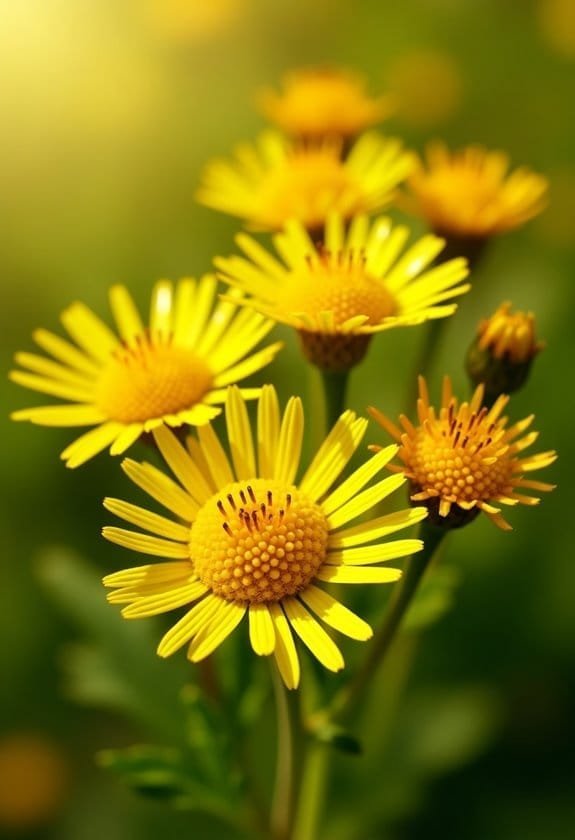
What makes Eriophyllum lanatum a standout choice for native plant gardens? This drought-resistant perennial, reaching heights of 30 to 60 cm with occasional peaks of 90 cm, presents vibrant yellow daisy-like blooms that can measure up to 5 cm across. Flowering from May to August, it draws a host of pollinators, enriching local ecosystems.
This ecological benefit not only supports biodiversity but also underscores the plant's suitability for landscape design, particularly in arid regions. Additionally, the plant's ability to attract essential pollinators enhances the pollination process, contributing to genetic diversity in surrounding flora.
Moreover, Eriophyllum lanatum holds cultural significance, especially in Western North America, where it thrives in the chaparral and grasslands. Gardeners appreciate its ease of propagation through seeds or division, allowing for sustainable cultivation.
The plant's ability to flourish with minimal water once established makes it an excellent choice for environmentally conscious landscaping.
With eight recognized varieties, such as var. croceum and var. lanceolatum, Eriophyllum lanatum offers versatility in native gardens. This adaptability, coupled with its stunning aesthetic appeal, guarantees that it enhances both the beauty and function of outdoor spaces.
As native plant gardeners work towards ecological harmony, Golden Yarrow emerges as an invaluable asset.