Eryngium giganteum, affectionately termed Miss Willmott's Ghost, is a striking biennial or short-lived perennial renowned for its enchanting silvery-blue thistle heads. These dramatic flower heads, encircled by translucent silver-white bracts, reach heights of 3 to 4 feet, adding architectural elegance to diverse gardens. Native to the Caucasus region, this resilient plant thrives in well-drained, sandy soils under full sunlight. Additionally, it attracts various pollinators, enriching local ecosystems with its nectar from mid-summer through early autumn. With minimal care and remarkable drought tolerance, Miss Willmott's Ghost remains a garden favorite, promising more delightful insights for enthusiasts seeking to cultivate its allure.
Main Points
- Eryngium giganteum, or Miss Willmott's Ghost, features striking steel-blue thistle heads surrounded by translucent silver-white bracts.
- Named after horticulturist Ellen Willmott, this plant symbolizes her whimsical legacy in gardening.
- It thrives in well-drained, sandy soils with full sunlight and minimal water once established.
- Flowering from mid-summer to early autumn, it attracts pollinators like honey bees and butterflies.
- Minimal maintenance is needed, primarily deadheading and occasional pest management to ensure plant health.
Introduction
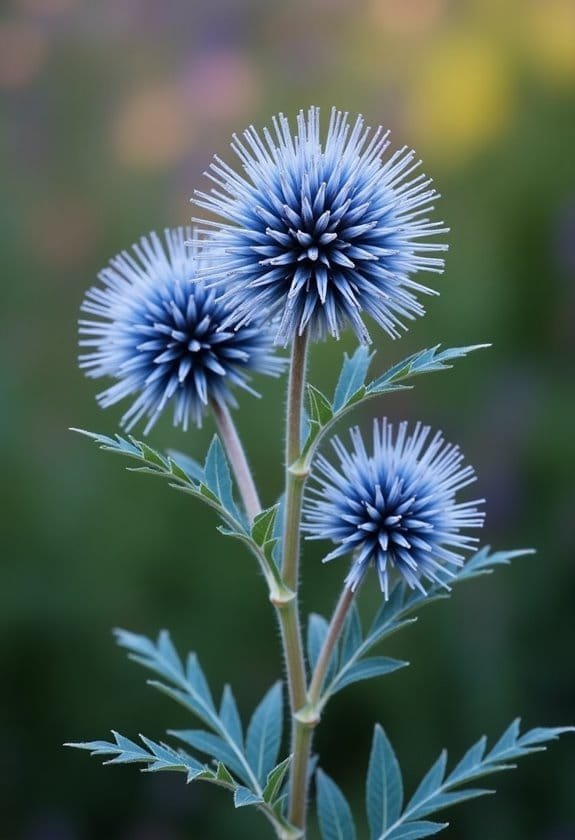
Eryngium giganteum, widely recognized as Miss Willmott's Ghost, captivates gardeners with its vibrant silvery-blue thistle heads, originating from the rugged Caucasus region.
Standing at an impressive height of 3 to 4 feet, this biennial plant not only enhances ornamental gardens but also thrives in well-drained, dry soils, showcasing resilience and low maintenance.
Named in honor of the eccentric horticulturist Ellen Willmott, its self-seeding nature and appeal to pollinators solidify its revered status among garden enthusiasts.
Common Name
Often referred to as Miss Willmott's Ghost, Eryngium giganteum carries a name steeped in horticultural lore, tied to the influential gardener Ellen Willmott. This intriguing moniker stems from Willmott's penchant for scattering Eryngium seeds in the gardens of friends and unsuspecting admirers, creating a whimsical tale of her ghostly presence lingering wherever the plant flourished.
This romanticized association lends a touch of mystique to a plant celebrated for its striking silvery-blue thistle heads, which elegantly change from pale green to steel-blue as they mature.
Native to the Caucasus region, Miss Willmott's Ghost (Eryngium) thrives in various garden settings, making it a favored choice among gardeners seeking unique visual interest and durability.
With a remarkable architectural form, it withstands drought conditions, showcasing resilience and adaptability, qualities esteemed in the horticultural community.
Additionally, the Royal Horticultural Society has awarded both Eryngium giganteum and its cultivar Silver Ghost with the Award of Garden Merit, cementing their status as staples in ornamental gardening.
This recognition speaks to the plant's aesthetic appeal and its ability to captivate those fortunate enough to incorporate it into their green spaces.
Scientific Name
With a scientific name of Eryngium giganteum, this remarkable plant captures attention in ornamental gardening circles. Originating from the rugged Caucasus region, Eryngium giganteum thrives as a biennial or short-lived perennial, making it a unique addition to diverse environments. The plant, often referred to as Miss Willmott's Ghost, showcases striking silvery-blue thistle heads that bloom during summer, enthralling the eye.
Characteristically, Eryngium giganteum features distinctive egg-shaped flower heads enveloped by silver-white bracts. These bracts evolve from a delicate pale green to a striking steel-blue as they mature, creating a stunning visual spectacle in gardens.
First documented by the botanist Fredrich August Marschall Von Bieberstein in 1808, Eryngium giganteum has since gained horticultural acclaim, becoming a favorite among gardeners and landscape designers alike.
In recognition of its aesthetic appeal and outstanding performance, both Eryngium giganteum and its cultivar, Silver Ghost, have received the prestigious Royal Horticultural Society's Award of Garden Merit. This accolade solidifies the plant's reputation, showcasing its significant role in contemporary ornamental gardening, where beauty meets botanical excellence.
Overview
Known for its enchanting beauty and robust nature, Eryngium giganteum, or Miss Willmott's Ghost, has gained prominence in the world of ornamental gardening. This biennial or short-lived perennial captivates enthusiasts with its striking silvery-blue thistle heads, surrounded by distinctive, prickly bracts that add a dramatic flair to any landscape.
Eryngium giganteum thrives best in well-drained, sandy soil, achieving a mature height of 3 to 4 feet, making it a striking presence in garden borders and prairie-style arrangements.
One of the most appealing characteristics of Eryngium giganteum is its ability to self-sow generously, ensuring a vibrant display year after year. The plant's extended flowering season provides nectar for a variety of pollinators, including honey bees and butterflies, making it an ecological boon for any garden.
Historically, this plant is linked to the horticulturist Ellen Willmott, who, according to lore, scattered its seeds in gardens far and wide, earning it the delightful moniker of "Miss Willmott's Ghost."
Ultimately, Eryngium giganteum stands as a symbol of both natural beauty and historical intrigue, appealing to both novice gardeners and seasoned horticulturalists alike.
Key Features
Eryngium giganteum, or Miss Willmott's Ghost, showcases impressive growth, reaching heights of 3 to 4 feet and spreading 1.5 to 2 feet wide.
Its striking silvery-blue thistle heads, adorned with translucent, prickly bracts, create an enchanting display that evolves from pale green to a rich steel-blue as it blooms.
This biennial plant thrives in well-drained, dry soil and full sunlight, making it a sturdy choice for resilient garden designs.
Growth Size
One might notice that Eryngium giganteum, also known as Miss Willmott's Ghost, typically reaches a height of 3 to 4 feet (90 to 120 cm) when fully matured. This robust biennial or short-lived perennial grows in clumps, exhibiting a spread of approximately 1.5 to 2 feet, with erect, branched stems that contribute to its distinctive presence in garden settings.
The upper structure of Eryngium giganteum showcases its remarkable adaptation to various environments, as the plant self-sows generously when conditions are favorable. This trait allows for naturalized plantings, enhancing its utility in both cottage and modern gardens alike.
As the growing season progresses, the silvery-blue thistle heads emerge, evolving from a soft pale green to a striking steel-blue, enchanting onlookers with their changing hues. An intriguing characteristic, the translucent, prickly bracts surrounding the flowers not only serve a protective function but also add to the plant's overall allure.
The combination of height, spread, and unique flowering attributes makes Eryngium giganteum a notable specimen in horticulture, creating visual interest while maintaining its resilience in diverse landscapes.
Appearance
Standing out in any garden, Miss Willmott's Ghost displays unique features that captivate observers. Eryngium giganteum, with its silvery-white bracts, encircles egg-shaped flower heads, creating a striking visual effect that draws attention. As these exquisite blooms mature, they shift gracefully from a delicate pale green to an eye-catching steel-blue hue, enhancing the plant's aesthetic appeal in diverse garden settings.
This visually arresting plant is characterized by erect, branched stems that can reach astounding heights of 3 to 4 feet (90-120 cm). These tall structures form attractive clusters, exuding an architectural formality that complements other garden elements.
Eryngium giganteum is classified as a biennial or short-lived perennial, renowned for its generous self-seeding behavior. As it flourishes, its unique, prickly ruff provides a tactile quality, inviting exploration while serving as a striking focal point among more conventional flora.
This distinctive character, combined with the stunning silvery-blue thistle heads, makes Miss Willmott's Ghost an enduring favorite in ornamental gardens, ensuring it remains a compelling presence throughout the seasons and enlivening any landscape with its charismatic charm.
Flowering Season
The flowering season of Eryngium giganteum, commonly known as Miss Willmott's Ghost, captivates garden enthusiasts with its extended display from mid-summer to early autumn. During this period, the plant showcases striking silvery-blue thistle heads that shift from a delicate pale green to a rich steel-blue as they mature. This transformation creates a visually stunning spectacle, drawing admiration from all who encounter it.
The unique, translucent bracts of Eryngium giganteum provide a ruffled appearance around the flower heads, enhancing their ornamental appeal in any garden setting. Additionally, the upright flower stems can soar to heights of 3-4 feet, contributing height and structure to flower beds and borders, while also guaranteeing it stands out in mixed plantings.
As a biennial plant, Eryngium giganteum often self-seeds, resulting in new growth in subsequent seasons. This characteristic not only guarantees the plant's enduring beauty but also fosters a sense of continuity within garden landscapes.
Growing Requirements
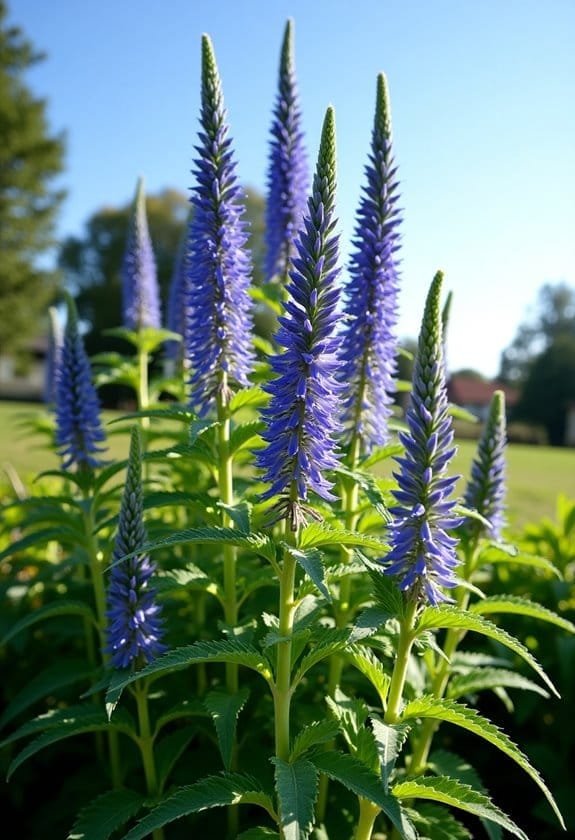
Eryngium giganteum flourishes under the warm embrace of full sunlight, requiring well-drained sandy or poor soil to guarantee robust root health and prevent rot.
This remarkable plant thrives with minimal water once established, yet it benefits from regular irrigation during dry periods, which is vital for its initial growth stages.
As it germinates, careful temperature management, including a chilling period for seeds, plays a pivotal role in its successful cultivation. Additionally, ensuring acidic soil conditions can foster healthier growth and resilience against pests and diseases.
Light
Typically, Eryngium giganteum thrives best in full sun, requiring at least six hours of direct sunlight each day for ideal growth. This robust perennial adores light and, when positioned appropriately, showcases its striking upright structure to great effect.
When basking in the sun, Eryngium giganteum not only flourishes but also becomes a magnet for beneficial pollinators like bees and butterflies, enriching garden biodiversity.
Exposure to adequate light is critical; insufficient sunlight can lead to weak, leggy growth and diminished flower production. In sunny locales, the plant's distinctive silver-blue spiky flowers become vibrant focal points, enhancing the overall garden aesthetic.
While Eryngium giganteum can adapt to less-than-ideal conditions, providing appropriate light exposure guarantees that it reaches its full potential. Moreover, gardens with well-drained, dry soil complement the light requirements, as the plant doesn't tolerate excess moisture.
Regular watering is primarily essential during its early growth phase, allowing it to establish a drought-tolerant nature. Consequently, thoughtful placement, particularly in sunny locations, can amplify the overall garden's charm while nurturing this exquisite species effectively. Additionally, incorporating companion plants like Birds Foot Trefoil can improve soil quality through nitrogen fixation.
Soil
Ideal growth for Eryngium giganteum hinges on its preference for dry, well-drained soil, making it perfectly suited for poor soil conditions. This remarkable plant flourishes in sandy or gravelly substrates, as they facilitate excellent drainage, fundamental for its health and vigor.
It's essential to avoid moist, fertile areas, which can lead to detrimental root rot due to excess moisture.
Eryngium giganteum requires minimal fertilization; in fact, an overabundance of nutrients can adversely affect its growth, resulting in weak stems and reduced flowering potential. This species thrives on neglect, often finding enrichment in low-nutrient environments that many other plants might eschew.
Drought tolerance is a key characteristic of Miss Willmott's Ghost, particularly once established; accordingly, care should focus on regular watering during extended dry spells, ensuring its survival and vibrant presence.
Full sun exposure further enhances its development, encouraging robust growth and splendid blooms.
Ultimately, understanding the specific soil requirements of Eryngium giganteum not only fosters healthier plants but also contributes to a flourishing garden ecosystem, celebrating its unique beauty and resilience.
Water
To thrive, Miss Willmott's Ghost requires careful attention to watering, especially during its initial establishment period.
Eryngium giganteum demands regular hydration to support healthy growth and prevent stress, particularly in hot, dry spells when moisture levels can plummet. While it flourishes in well-drained or sandy soil, which minimizes the risk of root rot from excess moisture, maintaining a consistent watering schedule is essential in the early stages of development.
Gardeners must guarantee that the soil is well-prepared to drain any surplus water effectively. Overhead watering should be avoided, as this method can inadvertently lead to waterlogging; instead, watering directly at the base of the plant proves beneficial. This targeted approach preserves optimal moisture levels without saturating the delicate root system.
Once established, Eryngium giganteum exhibits impressive drought tolerance, requiring considerably less water.
This adaptability not only enhances its resilience in challenging conditions but also makes it an excellent choice for low-maintenance landscapes. Emphasizing appropriate watering techniques guarantees that gardeners can enjoy the enchanting beauty of Miss Willmott's Ghost while supporting its robust growth in various environments.
Temperature
Eryngium giganteum, or Miss Willmott's Ghost, flourishes in warm conditions, thriving in full sun to achieve ideal growth. This remarkable plant requires a minimum of six hours of direct sunlight each day, maximizing its ability to photosynthesize and develop robustly.
While Eryngium giganteum can withstand a variety of temperatures, it's vital to plant it outdoors only after the last frost, allowing for favorable conditions that promote healthy development.
During its initial germination phase, which occurs approximately 60 days after chilling, the plant benefits from cooler temperatures. This chilling period stimulates seed development, demonstrating that temperature plays a critical role in its life cycle.
Once established, Eryngium giganteum exhibits impressive drought tolerance, making it particularly suited to environments that experience dry spells, such as coastal and cottage gardens.
While this species prefers dry, well-drained soils, it thrives best in poor soil conditions, as overly fertile environments can inhibit its growth.
Ultimately, understanding the implications of temperature on this plant guarantees a resilient and flourishing addition to any garden space. By respecting its growing requirements, gardeners can cultivate an extraordinary specimen that brings beauty and rarity to landscapes.
Pollinator Criteria
Eryngium giganteum distinctly attracts a range of pollinators, such as honey bees, butterflies, and hoverflies, due to its long flowering season and accessible floral structure.
The unique arrangement of its blossoms not only facilitates effective pollen transfer but also encourages a thriving ecosystem by supporting diverse insect populations.
With its drought-tolerant nature, this remarkable plant guarantees that pollinators find sustenance even in challenging conditions, enhancing both biodiversity and valuable ecological interactions within garden settings.
Attracted Pollinators
Attracting a variety of pollinators, Eryngium giganteum, or Miss Willmott's Ghost, creates a vibrant ecosystem in gardens with its striking silvery-blue flower heads. This perennial plant flourishes during an extended flowering season, luring honey bees, butterflies, and hoverflies. Its architectural form and unique coloration act as visual beacons, effectively guiding these beneficial insects to the nectar-rich blooms.
Thriving in full sun, Eryngium giganteum presents an ideal addition to garden borders, where diverse insect populations often gather. The upright stems not only support the plant but also serve as shelters for overwintering insects, thereby bolstering pollinator populations year-round. Additionally, the ecological role of Eryngium giganteum is enhanced by providing food for pollinators, which further supports local biodiversity. The moisture-retaining qualities of the surrounding soil also contribute to soil stabilization, promoting the overall health of the ecosystem.
Gardeners cultivating Eryngium giganteum contribute considerably to creating inviting habitats, especially when they minimize pesticide use.
Furthermore, this low-maintenance plant offers an effective means of fostering ecological balance within urban and rural settings alike. By incorporating Eryngium giganteum into their landscapes, individuals help establish a habitat that encourages healthy pollinator communities.
The presence of these essential insects enhances biodiversity, demonstrating that seemingly simple choices in gardening can yield substantial environmental benefits and promote the flourishing of nature's interconnected web.
Pollination Method
The diverse array of pollinators drawn to this plant showcases its effectiveness in supporting garden ecosystems. Eryngium giganteum, commonly known as Miss Willmott's Ghost, employs a strategic pollination method that capitalizes on its visually striking silvery-blue thistle heads. These unique flower structures not only attract honey bees, butterflies, and hoverflies, but also facilitate efficient pollen exchange.
The upright stems of Eryngium giganteum rise prominently, providing accessible nectar and pollen for these indispensable visitors, thereby fostering a vibrant and productive environment. The long flowering season, spanning from summer into early autumn, guarantees a consistent food source, which is essential for sustaining pollinator populations.
Furthermore, the plant's resilience—requiring minimal maintenance and free from harmful pesticides—encourages biodiversity. This ecological balance is critical, as the health of pollinator communities directly affects the productivity of garden ecosystems.
Care & Maintenance
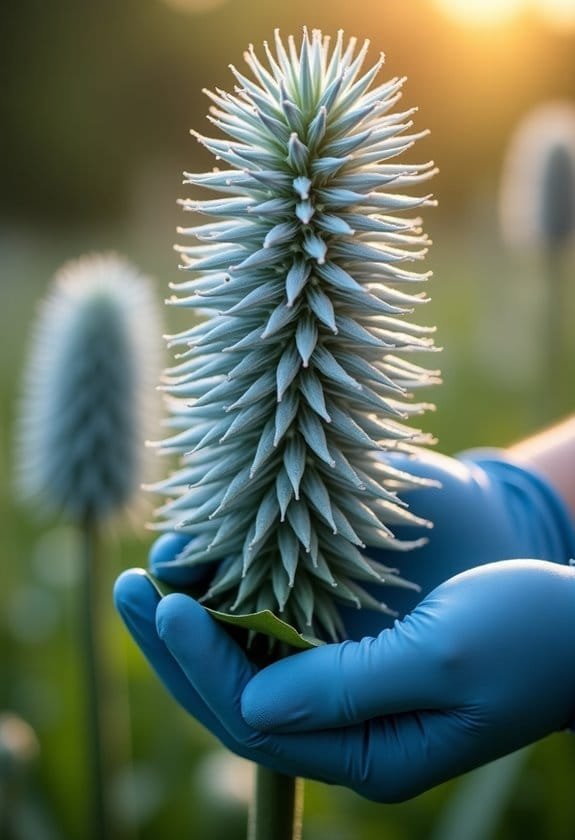
Eryngium giganteum, known as Miss Willmott's Ghost, thrives when planted in well-drained, sandy soil under full sun.
Ongoing care includes minimal watering once established, strategic deadheading to curtail self-seeding, and targeted pest management, such as using insecticidal soap for aphids.
Selecting companions that share similar growing conditions can enhance not only the plant's health but also the visual appeal of any garden setting.
Planting Tips
For a thriving Eryngium giganteum, or Miss Willmott's Ghost, gardeners should focus on excellent planting conditions and maintenance. This striking plant flourishes in full sun and prefers dry, well-drained soils, making it particularly suitable for coastal and cottage gardens.
When considering planting tips, direct sowing in late summer or fall is critical, as it allows the seeds to establish during the cooler months. For peak germination, planting should occur outside after the last frost, which typically takes around 60 days post-chill.
Gardeners can initiate indoor sowing by maintaining a constant temperature of 70°F for three weeks, followed by a period of stratification.
Once established, Miss Willmott's Ghost is remarkably drought-tolerant, requiring only minimal care. Watering should primarily take place during particularly hot, dry spells.
To promote robustness and prevent excessive self-seeding, it's advisable to deadhead spent flowers regularly. This practice encourages not only the healthy development of the plant but also vibrant blooms for the following season.
Ongoing Care
Ongoing care for Miss Willmott's Ghost is essential to guarantee its continued vigor and stunning appearance in the garden. This remarkable biennial, Eryngium giganteum, flourishes in well-drained or sandy soil, demonstrating remarkable resilience even in poor conditions.
Once established, it exhibits drought tolerance, yet regular watering during hot, arid spells is critical to maintain ideal health.
Minimal pest and disease concerns arise, but vigilant gardeners may encounter aphids. These unwanted guests can be controlled effectively using water sprays or insecticidal soap, ensuring the plants remain unharmed.
To promote a tidy appearance and manage self-seeding tendencies, gardeners should engage in deadheading spent flowers, a simple yet beneficial practice benefiting both plant and aesthetic.
Fertilizer application becomes important only after the first year, as premature feeding can cause excessive nutrient buildup, diminishing the plant's overall growth.
With this understanding of ongoing care, gardeners can foster an environment where Miss Willmott's Ghost continues to thrive, greatly contributing to the garden's allure and vibrant ecosystem. Additionally, the plant can benefit from nitrogen-fixing capabilities, which improve soil health and support surrounding flora.
Cultivating awareness around these specific necessities guarantees that the distinctive charm of this extraordinary plant remains an enduring feature in any landscape.
Suggested Companions
Selecting the right companions for Miss Willmott's Ghost can elevate any garden's visual appeal and health. Eryngium giganteum thrives best alongside drought-tolerant companions like Sedum and Echinacea, as their resilience complements the striking bluish-silver bracts of this formidable perennial. Additionally, Eryngium species can coexist beautifully with Echinops species, which also attract a variety of pollinators.
The unconventional form of Eryngium giganteum creates an intriguing counterpoint to the softer, feathery textures of plants such as Achillea and ornamental grasses, fostering a dynamic visual experience.
When choosing companions, it's crucial to confirm that all plants flourish in full sun and well-drained soil, promoting a harmonious garden ecosystem.
Surrounding Eryngium giganteum with low-growing perennials, such as Thyme or Catmint, introduces layers and rich visual interest that captivates the eye. These choices not only enhance aesthetic harmony but also contribute to biodiversity, encouraging beneficial insect activity. Additionally, considering plants like Vipers Bugloss with their extended flowering period can further attract pollinators and enrich the ecosystem.
To maintain garden aesthetics and manage the potential for self-seeding, a
Common Issues
Eryngium giganteum stands out for its resilience, encountering few pest and disease challenges, which makes it a popular choice among gardeners seeking low maintenance.
When aphids appear, with a diligent approach, they can be effectively managed using a straightforward application of water or insecticidal soap, while snails and slugs may require diatomaceous earth as a protective barrier.
To prevent uncontrolled growth, practitioners should consider the practice of deadheading, which not only curtails self-seeding but also encourages healthier and more robust flowering in subsequent seasons.
Pests/Diseases
Often considered a resilient choice for gardeners, Eryngium giganteum, commonly known as Miss Willmott's Ghost, faces few pest and disease problems. This striking perennial exhibits remarkable hardiness, thriving in various conditions while maintaining its health.
Though largely pest-free, gardeners may occasionally encounter aphids, small sap-sucking insects that, while not typically harmful, can weaken the plant. Fortunately, these pests can be effectively managed through simple techniques such as targeted water sprays or the use of insecticidal soap.
In addition to aphids, snails and slugs might invade, particularly in moist environments. These gastropods can damage foliage, but their presence can be minimized by applying diatomaceous earth around the plant's base, creating a barrier that deters their movement.
Overall, the relatively low incidence of pests in Eryngium giganteum enhances its status as an environmentally friendly option, reducing reliance on chemical interventions.
Regular monitoring plays an essential role in preserving the plant's vigor, as prompt attention to minor issues can prevent larger infestations. By taking these proactive measures, gardeners can guarantee that Miss Willmott's Ghost continues to flourish, showcasing its striking beauty throughout the growing season.
Solutions
Managing common issues with Eryngium giganteum requires awareness and timely action. Though generally pest and disease-free, this biennial plant can occasionally face challenges. For instance, aphids might invade, but gardeners can combat them efficiently with a gentle spray of water or insecticidal soap. These methods don't harm the importance of Eryngium giganteum, preserving its enchanting presence in the garden.
Moreover, protecting against snails and slugs is necessary for maintaining plant health. A perimeter of diatomaceous earth, with its sharply abrasive texture, acts as a formidable barrier, deterring these pests with ease.
Additionally, deadheading spent flowers is significant; this not only curbs the plant's tendency to self-seed excessively but also enhances its overall aesthetic appeal.
During hot, dry spells, sufficient watering remains essential. Ensuring Eryngium giganteum receives hydration during these periods fosters ideal growth, as established plants develop remarkable drought resistance once fully rooted. Additionally, regular monitoring for pests such as aphids is crucial to maintain the plant's health, preventing any potential infestations from escalating.
Are Miss Willmott’s Ghost and Candle Larkspur Similar in Care Requirements?
Both Miss Willmott’s Ghost and Candle Larkspur are stunning delphinium elatum varieties that require similar care. They thrive in full sun and well-drained soil, and benefit from regular watering and fertilization. For more detailed care instructions, refer to a delphinium elatum information guide.
Summary
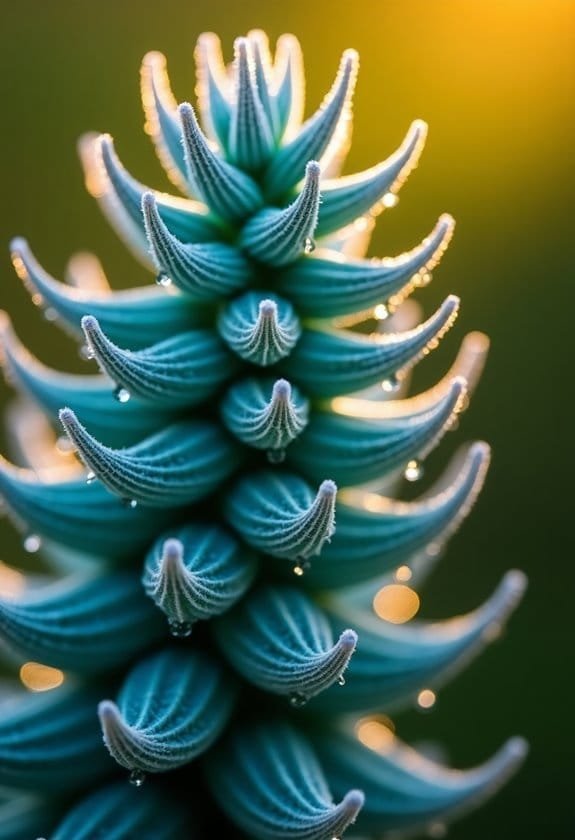
Known for its eye-catching silvery-blue thistle heads, Eryngium giganteum, or Miss Willmott's Ghost, is a biennial plant that can thrive in diverse garden settings. Reaching heights of 3 to 4 feet, this striking addition captivates gardeners and passersby alike.
Thriving in full sun and well-drained soil, Eryngium giganteum requires minimal care, making it ideal for coastal and cottage gardens.
Miss Willmott's Ghost not only enhances a garden's aesthetic but also plays a crucial role in supporting local biodiversity. Its blossoms attract essential pollinators, such as bees and butterflies, underscoring its ecological importance.
Historically, the name is steeped in lore surrounding the eccentric gardener Ellen Willmott, who's believed to have scattered its seeds across various gardens, leaving an indelible mark on horticulture.
Recognized for its ornamental value, Eryngium giganteum has earned the Royal Horticultural Society's Award of Garden Merit, underscoring its robust growth characteristics and adaptability.
Ultimately, this remarkable plant not only adds beauty to outdoor spaces but also fosters a thriving ecosystem, making it an irreplaceable asset to any garden enthusiast.