The Escallonia genus consists of evergreen shrubs and trees native to the Americas, valued for their lush foliage and vibrant flowers. Typically growing between 1.5 and 4 meters, they thrive in well-drained soil under full sunlight. Flowering from June to October, these plants display stunning pink, white, and crimson blooms, attracting crucial pollinators like bees. Escallonia varieties require careful maintenance, including annual pruning and proper fertilization, to flourish. Their ecological benefits extend beyond aesthetics, providing shelter and nourishment for various insects. Discovering the nuances of Escallonia's cultivation can greatly enhance gardening success and biodiversity.
Main Points
- Escallonia encompasses evergreen shrubs and trees native to the Americas, known for their lush foliage and vibrant flowers.
- Notable species include Escallonia rubra, bifida, and Iveyi, each with unique traits and ornamental appeal.
- They thrive in well-drained soil, full sunlight, and are drought-tolerant once established, ideal for coastal gardening.
- The flowering season from June to October showcases pink, white, and crimson blooms, attracting pollinators and enhancing biodiversity.
- Unique cultivars like Apple Blossom and Rubra Macrantha are popular for their striking colors and forms in ornamental settings.
Introduction
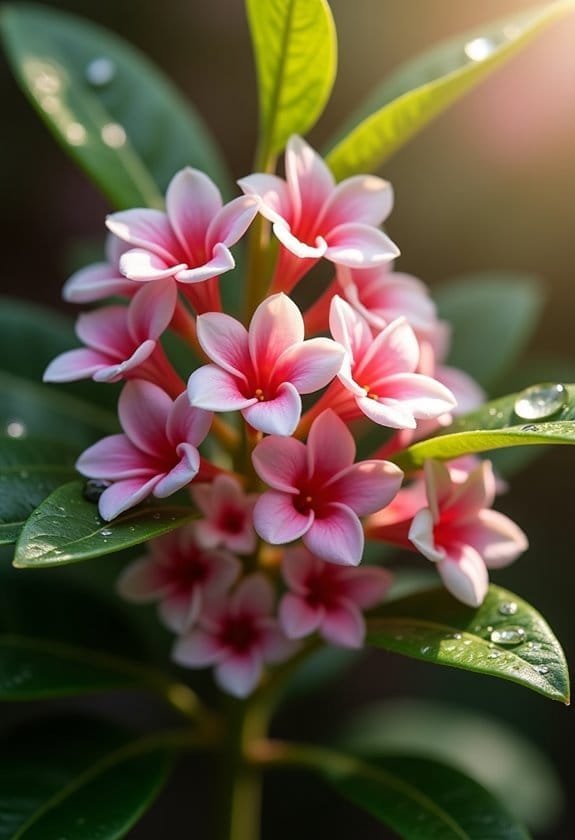
Escallonia, often admired for its lush foliage and striking blossoms, encompasses a diverse genus of evergreen shrubs and trees native primarily to South and North America.
Scientifically classified within the Escallonia genus, these plants showcase various species that flourish in well-drained soil and full sunlight, enhancing landscapes from Chile to temperate regions.
With growth heights ranging from 1.5 to 3 meters, Escallonia species serve not only as ornamental features but also play a crucial role in ecological balance, inviting pollinators with their fragrant flowers.
Common Name
Known collectively as Escallonia, these evergreen shrubs bring beauty to gardens with their lush foliage and vibrant blooms. Native to North and South America, Escallonia species are particularly celebrated for their ornamental appeal in coastal environments. They thrive in these regions, showcasing their resilience and adaptability, which endears them to many gardeners seeking reliable hedging plants.
Flowering from June to October, Escallonia plants produce an array of fragrant flowers, lending a sweet aroma to the landscape. Their blooms can be strikingly pink, crisp white, or rich crimson, attracting bees and other pollinators keen for sustenance. Remarkable cultivars like Escallonia Apple Blossom, Escallonia Iveyi, and Escallonia Rubra Macrantha each possess unique characteristics, featuring varying flower colors and growth habits that cater to diverse gardening preferences.
As evergreen shrubs, Escallonia not only provide year-round greenery but also contribute greatly to garden aesthetics. Versatile in their ability to adapt to various soil types and environmental conditions, these plants guarantee that coastal gardens burst with color and life, making them a popular choice for gardeners aiming for vibrancy and stability in their landscapes.
Scientific Name
Representing a diverse group of shrubs and small trees, the genus Escallonia encompasses multiple species within the family Escalloniaceae.
Primarily native to South and North America, Escallonia comprises various species, with notable examples including Escallonia rubra, Escallonia bifida, and Escallonia Iveyi. Each of these species demonstrates unique characteristics, such as growth habits and floral displays, showcasing the incredible diversity within this genus.
Typically, Escallonia species are recognized for their glossy evergreen leaves that contribute to their year-round aesthetic appeal.
Their arching branches provide a graceful structure, adding to their landscape value. Flowering from June to October, these plants produce blooms in stunning colors, including rich pink, bright white, and vibrant crimson.
With an impressive average growth rate ranging from 25 to 45 cm per year, mature heights can reach from 1.5 m to 4 m, varying according to species and environmental conditions.
These hardy plants adapt remarkably well to coastal environments, making them a popular choice for gardens and landscapes, where they offer both visual beauty and practical benefits.
Overview
The allure of Escallonia species captivates both gardeners and landscape designers alike, thanks to their striking appearance and adaptability. This genus comprises evergreen shrubs and trees belonging to the family Escalloniaceae, flourishing in a range of environments across North and South America.
Towering between 1.5 to 3 meters (5 to 10 feet), these plants exhibit an average growth rate of approximately 30 cm (12 inches) annually. Their small, glossy green leaves serve as a vibrant backdrop to their stunning flowers, which bloom from June to October in hues of pink, white, and crimson.
Escallonia thrives in well-drained soil, requiring full sun exposure to reach its utmost potential, thereby making it an excellent choice for coastal regions or varied garden settings. Regular pruning not only enhances their shape but also encourages abundant flowering, transforming any landscape into a colorful oasis.
Remarkably resilient, Escallonia can withstand challenging planting conditions, including salt spray, which often plagues coastal gardens. With their remarkable versatility and eye-catching qualities, Escallonia plants offer a splendid addition to both ornamental and practical horticultural endeavors.
Key Features
Escallonia species stand out for their impressive growth size, typically reaching between 1.5 to 3 meters, or 5 to 10 feet, depending on the variety.
These evergreen shrubs and trees boast glossy green foliage complemented by vibrant flowers, often blooming in striking shades of pink, white, or crimson from June to October.
The overall appeal of Escallonia is enhanced by its adaptability to different environments and its capacity to thrive in well-drained soil, making it a versatile choice for ornamental planting.
Growth Size
Typically reaching heights between 1.5 to 3 meters (5 to 10 feet), Escallonia species showcase impressive growth characteristics that attract gardeners and landscapers alike. Their growth size varies considerably among different varieties. For instance, some selections, such as Escallonia rubra 'Crimson Spire,' can ascend to remarkable heights of up to 4 meters (13 feet), making them perfect for creating stunning focal points in landscaped areas.
On average, Escallonia exhibits a growth rate of about 30 centimeters (12 inches) per year under ideal conditions, a feature that highlights its vigorous nature. Certain compact forms, like 'Gold Brian,' reach a more modest stature of approximately 1.2 to 1.5 meters (4 to 5 feet) tall, appealing to those desiring a more restrained presence in their gardens.
Planting these shrubs 30-40 centimeters apart encourages strong root development, fostering a dense hedge that can effectively provide privacy or windbreaks. Additionally, varieties such as Escallonia bifida not only attain heights of up to 3 meters (10 feet) but also tolerate heavy pruning, which further enhances their attractiveness for diverse landscaping needs.
Appearance
Characterized by their glossy green leaves, Escallonia species present a lush and vibrant appearance year-round. The small, oval-shaped foliage not only creates a dense canopy but also reflects light, enhancing the plant's visual appeal, making it a preferred choice for ornamental purposes.
These evergreen varieties maintain their glossy leaves throughout various seasons, guaranteeing gardens remain visually striking regardless of changing climates.
The growth habit of Escallonia features gracefully arching branches, contributing to an elegant silhouette that can reach heights ranging from 1.5 to 4 meters (5 to 13 feet). With an average growth rate of about 30 centimeters (12 inches) annually, this plant quickly transforms landscape spaces into lush retreats.
Its ornamental aspects extend beyond mere foliage; the structure and form provide an ideal backdrop for garden aesthetics, particularly when used in hedging.
Moreover, the evergreen nature of Escallonia guarantees that it doesn't succumb to seasonal dormancy, allowing it to stand out in diverse environments.
As it flourishes, this resilient and attractive shrub embodies the essence of vibrant landscaping, proving itself indispensable in both residential and public gardens.
Flowering Season
The flowering season of Escallonia species brings a burst of color to gardens from June to October in the Northern Hemisphere. During this vibrant period, many varieties present an impressive array of blooms, ranging from delicate pinks to striking reds and pristine whites.
These colorful flowers not only enhance garden aesthetics but also draw attention for their fragrance, attracting essential pollinators like bees, thereby supporting local ecosystems.
Typically, the flowering season extends into autumn for numerous species, providing prolonged visual interest as the days gradually shorten. This extended blooming can be particularly beneficial for gardeners seeking to maintain a dynamic landscape throughout the warmer months.
However, for ideal flowering, it's essential that these plants receive adequate sunlight; insufficient light can markedly hinder bloom production in some Escallonia varieties.
Growing Requirements
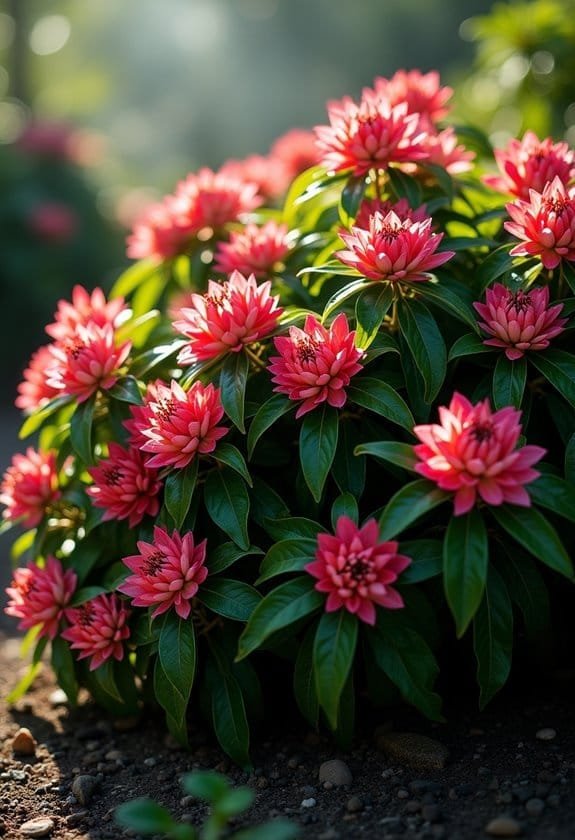
Escallonia requires specific growing conditions to thrive, emphasizing the importance of light, soil, water, and temperature.
These plants flourish in well-drained soil under full sun, with an ideal pH range of 6.0 to 7.0, promoting robust growth and flowering.
Regular watering during dry spells supports their health, while established specimens exhibit impressive drought tolerance, making them versatile companions in various climates.
Light
To thrive, Escallonia species need ample sunlight, ideally basking in at least six hours of direct light each day. These vibrant plants flourish best in full sun, where they can achieve their potential for robust growth and spectacular flowering. While they can tolerate partial shade, insufficient sunlight leads to reduced flowering and the development of leggy structures, detracting from their aesthetic appeal.
Coastal varieties of Escallonia are particularly well-suited to sunny environments, making them a fantastic choice for seaside gardens where they can soak up abundant rays. Bright, open spaces are essential for promoting healthy foliage and ensuring the production of rich blooms, particularly during their peak blooming period from June to October in the Northern Hemisphere.
Providing adequate light conditions is essential for maintaining the overall health of these plants. Prolonged periods of shade can hinder growth, resulting in less vigorous plants that struggle to thrive.
Soil
Well-drained soil is vital for Escallonia species, as it prevents root rot and supports their overall health. These plants exhibit remarkable adaptability, thriving in various soil types, including sandy, loamy, and even clay soils, provided drainage remains satisfactory.
Their ability to flourish in diverse environments showcases their resilience and versatility.
While soil pH isn't critically restrictive, a slightly acidic to neutral range, approximately pH 6.0 to 7.0, generally fosters ideal growth. Such conditions promote nutrient availability, which is significant for vibrant foliage and flowering.
To enhance soil health, mulching around Escallonia plants is beneficial; it retains moisture, suppresses weeds, and creates a stable microenvironment, allowing the roots to establish securely.
Moreover, regular monitoring of soil moisture levels is important, particularly during dry periods. This careful oversight guarantees the plants receive sufficient hydration without risking overwatering, allowing them to thrive in their selected conditions. Additionally, these plants prefer moisture-rich environments, which can also benefit their growth and development.
Water
Ensuring adequate water supply is essential for the healthy growth of Escallonia species, particularly during dry spells. These evergreen plants thrive with moderate watering, especially when nurtured after being established. During initial growth phases, consistent water application is crucial, as young plants require moisture to develop robust root systems firmly anchored within the soil.
However, it's important to allow the soil to dry slightly between waterings; overwatering often leads to root rot, a condition detrimental to the glossy leaves that these species are known for. Gardeners may find that mulching around the base helps retain soil moisture, reducing the burden of frequent watering while enhancing overall plant health.
Once established, Escallonia plants exhibit impressive resilience to drought, needing little additional water, particularly in well-drained soils. Achieving a balance in watering not only sustains robust growth but also supports abundant blooming, enhancing the aesthetic appeal of any garden.
Consequently, understanding the water needs of Escallonia contributes not only to the vitality of individual plants but also enriches the surrounding landscape, creating a thriving environment for both flora and fauna.
Temperature
Escallonia species flourish best in mild climates, specifically within USDA hardiness zones 7b and 8a, where temperatures range from 10°F to 15°F. These conditions allow these resilient plants to thrive, showcasing their vibrant foliage and striking flowers.
While they possess moderate cold hardiness, extreme frost can greatly impact certain varieties, emphasizing the need for selecting climate-appropriate options.
Typically, established Escallonia demonstrates considerable resilience to temperature fluctuations. However, younger plants often require protection from harsh temperatures to guarantee their survival and growth.
Achieving peak growth also hinges on providing full sun exposure, which enables these plants to produce an impressive array of blossoms during the growing season.
Moreover, gardeners must be mindful of proper drainage, as overwatering and poor soil humidity can lead to detrimental root issues, particularly during the colder, wetter months.
Consequently, successful cultivation of Escallonia necessitates a careful balance between temperature management, sunlight provision, and soil conditions. By understanding these requirements, gardeners can cultivate a thriving habitat for these beautiful plants, maximizing their potential to enhance gardens with their luxurious aesthetics.
Pollinator Criteria
Escallonia species captivate a diverse array of pollinators, most significantly bees and butterflies, through their fragrant and vibrantly colored flowers.
With a flowering season from June to October, these plants offer a reliable nectar source, enhancing pollination efficiency and benefiting the broader ecosystem. The mutual relationship between the plants and pollinators is vital for plant reproduction and contributes to environmental health and stability.
The intricate shapes of the blooms, coupled with the dense foliage that provides essential habitat, create an inviting environment for these vital species, supporting their populations and promoting biodiversity. Additionally, similar to Guelder Rose, Escallonia flowers also play a crucial role in attracting various pollinators, providing essential resources for their survival and reproduction.
Attracted Pollinators
With their fragrant, nectar-rich flowers, Escallonia species effectively attract a diverse array of pollinators, including bees and butterflies.
The stunning colors of these flowers, which range from soft pinks to vivid whites and deep crimsons, entice these essential creatures during the blooming period from June to October. This seasonal abundance provides a crucial food source for pollinators in the warm months, supporting their health and vitality.
Honeybees, particularly drawn to the sweet nectar, demonstrate effective foraging behavior among Escallonia flowers. As they collect nectar, they inadvertently facilitate cross-pollination, enhancing genetic diversity within plant populations.
Additionally, the dense foliage of Escallonia hedges offers both shelter and nesting sites for various insects, enriching local ecosystems.
Pollination Method
Many Escallonia species rely heavily on insects for pollination, particularly bees, which are naturally drawn to their vibrant, fragrant flowers. The flowers of Escallonia exhibit small tubular shapes, perfectly designed for attracting these pollinators. This tubular form allows bees and other insects to easily access the sweet nectar hidden within, while also facilitating pollen transfer.
Blooming primarily from June to October, Escallonia offers an extended floral availability, creating an attractive foraging landscape for various pollinators throughout the growing season. The presence of both nectar and pollen in the flowers serves as a dual food source, enhancing their appeal to a diverse range of insects.
This dependence on insect pollination leads to cross-pollination, which plays a vital role in promoting genetic diversity. Such genetic variation enhances the resilience and overall health of Escallonia populations, enabling them to thrive in varying environmental conditions.
Additionally, by supporting a strong ecosystem of pollinators, these plants contribute to the broader web of life, ensuring that the harmony of their surroundings remains intact. Consequently, Escallonia's pollination methods not only sustain its life cycle but also greatly enrich the ecosystem in which it exists.
Care & Maintenance
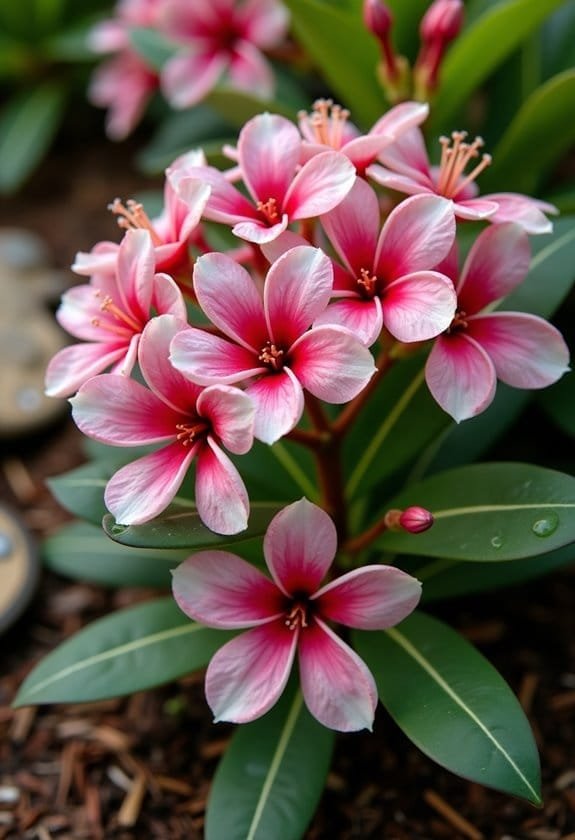
In caring for Escallonia species, gardeners must consider essential practices like proper planting, ongoing maintenance, and companion planting strategies to guarantee vibrant growth.
Regular watering, especially in arid spells, coupled with annual pruning post-bloom, promotes not only a well-maintained appearance but also encourages generous flowering for the next season.
Planting Tips
Planting Escallonia requires attention to specific environmental and care needs to guarantee vibrant growth and blooming.
To start, these plants thrive in well-drained soil, necessitating full sun exposure for at least six hours daily. This sunlight catalyzes the production of lush, green foliage and promotes robust flowering, leading to visually enchanting displays.
When planting, it's crucial to space Escallonia varieties 30-40 cm apart. This spacing facilitates strong root development and allows adequate airflow, reducing the risk of fungal diseases.
During the growing season, consistent watering is critical, particularly during dry spells, as these plants prefer moist, well-drained soil. Too much water, however, may lead to root rot—an issue to avoid at all costs.
Additionally, applying a balanced slow-release fertilizer in spring can bolster healthy growth and blooming; however, over-fertilization should be avoided to prevent excessive leaf development that could overshadow potential blossoms.
If nurtured properly, Escallonia will reward gardeners with a stunning display of vibrant flowers and lush green foliage, creating an enchanting environment.
Therefore, understanding these planting tips lays the foundation for a flourishing garden.
Ongoing Care
Caring for Escallonia plants requires consistent attention to their specific needs throughout the growing season. Regular pruning, ideally conducted once a year after flowering, helps maintain the shape of these beautiful plants while promoting healthy growth. This act of trimming not only encourages fuller foliage but also allows for better air circulation, which is indispensable for overall plant vitality.
Soil moisture is another essential aspect to monitor. During dry spells, Escallonia demands occasional watering, but it's imperative to confirm the soil feels dry to the touch before re-watering to avoid the dreaded root rot.
Additionally, employing a balanced slow-release fertilizer in the spring supports robust growth and vibrant flowering, yet gardeners should be cautious not to over-fertilize, as this can lead to excessive leaf growth at the expense of blossoms.
Applying a layer of mulch around the base of the plants aids in moisture retention, suppresses pesky weeds, and enhances soil quality over time.
In addition, vigilant monitoring for pests like aphids and scale insects, alongside proactive measures against leaf spot disease, contributes considerably to maintaining the health and longevity of Escallonia species.
Suggested Companions
For a thriving garden, pairing Escallonia with compatible companions can greatly enhance aesthetics and plant health. Drought-tolerant plants, such as lavender and rosemary, work excellently alongside Escallonia, sharing similar soil and water requirements crucial for ideal growth.
This harmonious combination not only guarantees sustainability but also promotes resilience against climatic challenges.
Incorporating ornamental grasses with Escallonia adds visual dynamism to the landscape. The gentle sway of grasses creates movement, enhancing the garden's texture while contrasting beautifully with Escallonia's vibrant blooms.
Additionally, flowering shrubs like hydrangeas contribute a complementary array of colors, enriching the visual spectrum alongside Escallonia's pink, white, or red flowers.
To maintain a balanced ecosystem, it's prudent to avoid heavy feeders as companions since they can compete with Escallonia for essential nutrients. Opting for plants with moderate nutrient demands aligns well with Escallonia's needs.
Moreover, situating Escallonia near native plants fosters local biodiversity, attracting beneficial pollinators like bees and butterflies, thereby guaranteeing ecological harmony.
Furthermore, including plants like bell heather can attract a variety of pollinator species, enhancing the overall ecological balance and supporting wildlife populations.
Such thoughtful pairings not only enhance beauty but also support an inviting environment for both flora and fauna alike.
Common Issues
Escallonia plants can encounter various pests and diseases that threaten their lush appearance and overall health. Notable concerns include aphids, spider mites, and leaf spot disease, which can diminish foliage vigor and flower production if left unchecked.
To mitigate these issues, vigilant monitoring and proper cultural practices, such as ensuring adequate air circulation and employing organic pest controls, can greatly enhance plant resilience.
Pests/Diseases
Several common pests and diseases threaten the health of Escallonia species, making awareness vital for their maintenance. Aphids, small sap-sucking insects, can distort the leaves, leading to stunted growth and potential damage if left uncontrolled.
Scale insects, with their protective shells, attach themselves to the stems and leaves, causing considerable stress and leaf drop; therefore, regular monitoring becomes essential for early detection.
Fungal diseases such as powdery mildew manifest as a white, powdery coating on leaves, especially under humid conditions, reducing photosynthesis effectiveness. Proper air circulation and adequate spacing are important to counteract this issue.
Additionally, Escallonia plants are susceptible to root rot, a serious condition caused by overwatering and poorly drained soil; well-drained conditions and allowing the soil to dry out are vital preventive measures.
Leaf spot disease may also inflict dark spots on leaves, commonly resulting from excess moisture; maintaining sound watering practices and promptly removing affected leaves can greatly reduce its occurrence.
With these pests and diseases posing various threats, vigilance and proactive monitoring are paramount for maintaining the health and resilience of Escallonia species.
Solutions
Addressing common issues with Escallonia involves identifying symptoms early and taking appropriate action. One of the most noticeable signs of distress is yellow leaves, often indicating overwatering. When soil remains consistently moist, roots struggle to breathe, leading to potential root rot; therefore, allowing the soil to dry out between waterings is essential.
Additionally, yellowing leaves can stem from nutrient deficiencies, particularly nitrogen. In such cases, applying a balanced, slow-release fertilizer can nourish the plant and restore its vibrant green foliage. Conversely, over-fertilizing with high-nitrogen products may prompt excessive leaf growth, ultimately sacrificing the plant's flowering capacity. A balanced fertilizer remains fundamental for peak health and bloom production.
Moreover, ensuring adequate sunlight is critical. Escallonia thrives in full sun exposure, essential for proper flowering. Insufficient light can stifle growth and reduce bloom quality.
Regularly monitoring for pests like aphids and scale insects is significant, as these invaders can distort leaves, further impacting the plant's aesthetics. By understanding these fundamental principles, gardeners can successfully cultivate healthy Escallonia, fostering an environment where these beautiful plants flourish.
What are the similarities between Escallonia and Euphorbia Sarawschanica in terms of care and maintenance?
Both Escallonia and Euphorbia Sarawschanica require similar care and maintenance. They both thrive in well-drained soil and full sun to partial shade. Regular watering and occasional fertilization are important for their growth. Additionally, pruning and shaping will help to keep both plants looking their best. For more euphorbia sarawschanica information, always consult a reliable source.
Summary
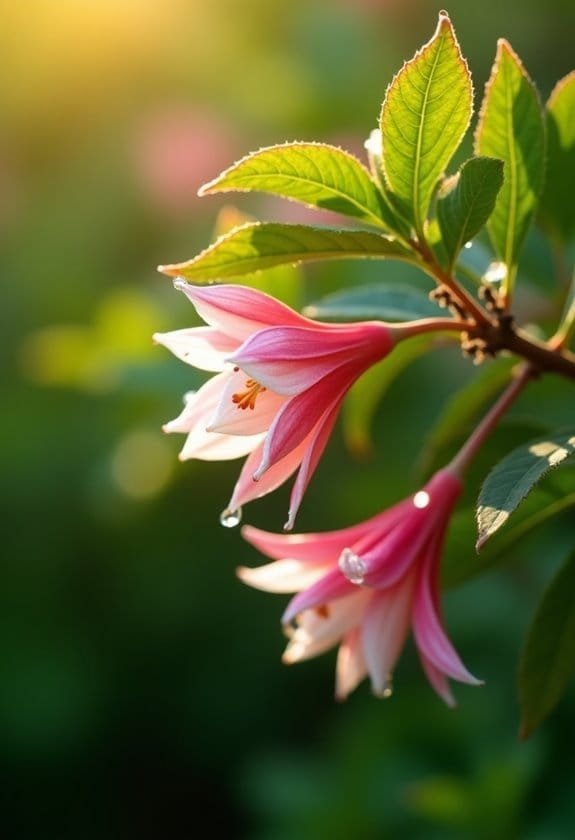
One can find Escallonia, a genus of evergreen shrubs and trees, thriving in coastal regions of North and South America. This enchanting plant belongs to the family Escalloniaceae, showcasing a remarkable adaptability to various environments. With its arching branches adorned with small, glossy green leaves, Escallonia not only enchants the eye but also serves as a valuable ornamental asset.
The plants produce fragrant flowers from June to October in vibrant shades of pink, white, or crimson, transforming landscapes into colorful displays. Growing at an average rate of 30 cm (12 in) per year, they can achieve heights ranging from 1.5 to 3 meters (5 to 10 ft).
Full sun exposure and well-drained soil perfectly align with their growth requirements, while their hardiness allows them to flourish in diverse climate conditions, though some varieties may falter in extreme cold.
Noteworthy species, such as Apple Blossom, Iveyi, and Rubra Crimson Spire, each bring unique aesthetic qualities and growth characteristics, rendering them ideal for hedging and ornamental purposes.
Ultimately, Escallonia showcases both functional beauty and environmental resilience, making it a cherished choice for gardeners and landscapers alike.