Eschscholzia californica, or the California poppy, is a stunning perennial that flourishes in sunny, well-drained environments, showcasing brilliant golden-yellow flowers. It grows 1 to 2 feet tall, featuring silky petals that bloom from February to September, signifying California's natural allure. This adaptable plant thrives in diverse soil types and exhibits drought tolerance due to its fleshy taproot. With remarkable seed production, each capsule can contain thousands of seeds, facilitating propagation. It's also crucial for local ecosystems, attracting essential pollinators like bees and butterflies. By uncovering further insights, one can discover more about its ecological roles and care requirements.
Main Points
- Eschscholzia californica, known as the California Poppy, is California's state flower, showcasing bright yellow to orange blooms.
- This drought-tolerant plant thrives in fast-draining soils, requiring minimal care after establishment.
- Native to California, it attracts pollinators like bees and butterflies, enhancing local ecosystems.
- Each plant can produce thousands of seeds, supporting biodiversity and self-seeding capabilities.
- Common challenges include pests like aphids and fungal infections, necessitating regular monitoring for plant health.
Introduction
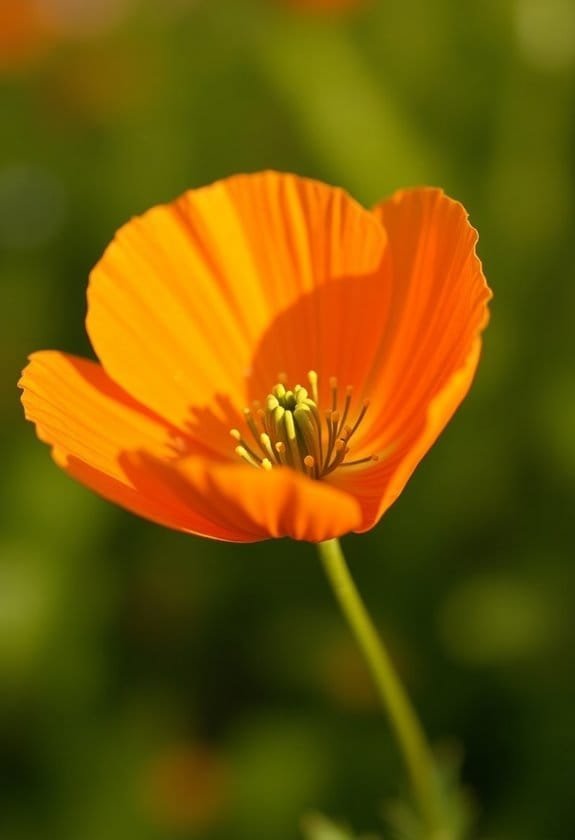
The California poppy, known scientifically as Eschscholzia californica, stands as a vibrant symbol of California's natural beauty, officially designated as the state flower in 1903.
This herbaceous plant captivates with its striking orange to yellow blooms and feathery blue-green leaves, flourishing in sunlight and well-draining soil.
Beyond their aesthetic appeal, these flowers play an essential ecological role, supporting local wildlife and enhancing soil health with their robust root systems.
Common Name
Known widely as the California poppy, Eschscholzia californica has captured hearts and imaginations since it was designated the state flower of California in 1903. This iconic flower bursts forth with brilliant shades of orange to yellow, creating a stunning display in its native habitat. The California poppy typically reaches heights of 1 to 2 feet, showcasing feathery blue-green foliage that complements its vibrant blossoms.
Thriving in open grasslands and disturbed areas, the California poppy extends its range beyond California, gracing parts of neighboring states with its beauty. The plant blooms from February to September, offering a visual feast that symbolizes California's natural allure. Its common name, aptly reflecting its origins, draws attention to the stunning landscapes in which it flourishes.
Beyond its aesthetic appeal, the California poppy serves as a significant emblem of California's cultural identity and ecological diversity. The vibrant flowers not only attract pollinators, enhancing local ecosystems, but also encourage admiration for the state's enchanting flora.
Through its remarkable presence, the California poppy continues to inspire a deeper appreciation for nature's resilience and colorful artistry.
Scientific Name
Eschscholzia californica, the scientific name for the California poppy, highlights the plant's botanical significance and its connection to the vibrant landscapes of California. First documented by the botanist Adelbert von Chamisso, this striking species belongs to the family Papaveraceae and is classified as a dicot angiosperm. The California poppy is renowned for its bright orange or yellow flowers, which feature four petals, blooming energetically from February to September in the northern hemisphere.
Interestingly, Eschscholzia californica exhibits a remarkable degree of morphological variability, with over 90 synonymous taxa identified. This diversity showcases the plant's adaptability across various habitats, indicating its resilience in different climates. Botanists have even recognized two distinct subspecies, further validating its ecological versatility.
Such classifications not only enhance the understanding of the California poppy's traits but also reflect the intricate relationships within its ecosystem. The scientific name, Eschscholzia californica, serves as a gateway into the discussions surrounding its propagation, ecological impact, and potential applications in horticulture.
Consequently, this scientific nomenclature deepens appreciation for the California poppy's beauty and ecological importance.
Overview
Since its designation as California's state flower in 1903, the California poppy (Eschscholzia californica) has symbolized the region's stunning natural beauty and rich history. This herbaceous annual or short-lived perennial typically grows between 1 to 2 feet tall, displaying feathery blue-green foliage that elegantly complements its vibrant yellow to bright orange flowers. The blooms, which grace the landscape from February to September, have made the California poppy a hallmark of the state's diverse flora.
Native to California, this resilient plant extends into parts of Oregon, Washington, and Mexico. Thriving in well-drained soils and open grassy habitats, the California poppy often flourishes in iconic locations like the Antelope Valley California Poppy Reserve. Its remarkable drought tolerance and self-seeding capabilities allow it to quickly establish and spread in suitable environments, although these traits can lead to invasiveness in certain areas.
Ecologically significant, California poppies attract various pollinators, enhancing biodiversity while supporting local ecosystems. Their resistance to browsing by deer further facilitates their proliferation, showcasing their essential role in maintaining the delicate balance of California's natural landscapes.
Key Features
The California poppy stands at an impressive height of 1 to 2 feet, adorned with delicate, feathery foliage that boasts a bluish-green hue.
Its striking flowers, known for their vibrant yellow to bright orange tones, bloom from February to September, creating a breathtaking display that attracts essential pollinators like bees and butterflies.
This plant's remarkable resilience in various soil types, coupled with its drought tolerance, underscores its adaptability and charm as a staple of California's natural landscape.
Growth Size
Reaching heights of 5 to 12 inches (13 to 30 cm), California poppies can grow up to 2 feet (60 cm) tall under ideal conditions. The plant's growth is remarkably robust, as its fleshy orange taproot penetrates the soil, enabling the California poppies to access essential underground water sources. This unique adaptation not only supports their height but also contributes to their ability to thrive in various environments, particularly arid regions.
Typically, California poppies display feathery blue-green foliage, with leaves intricately divided into round, lobed segments that enhance their overall appearance.
While their height remains impressive, the full allure of these plants unfolds during their blooming season. From February to September, California poppies produce vibrant flowers, characterized by their striking orange or yellow petals, which can measure up to 3 inches (7.6 cm) in diameter.
These plants exhibit prolific seed production, with each capable of generating thousands of seeds housed in slender capsules measuring between 3 and 9 cm (1.2 to 3.5 inches) long.
Such remarkable growth traits not only define their resilience but also secure their position in diverse ecosystems, promoting biodiversity.
Appearance
With its striking appearance, the California poppy (Eschscholzia californica) enthralls onlookers from February to September. This enchanting plant typically reaches heights between 5 to 12 inches (13 to 30 cm), crowned with feathery, blue-green foliage adorned by finely divided leaves. Each solitary bloom features four silky petals that range in vibrant hues from bright orange to cheerful yellow, standing out against the lush greenery.
The California poppy's unique structure includes multiple stamens, contributing to its rich biodiversity, with over 90 recognized synonymous taxa highlighting its extensive genetic variation. As the plant matures, it develops a slender capsule, measuring between 3 to 9 cm (1.2 to 3.5 inches) in length, which contains small, dark seeds that disperse once dried.
Beneath the surface, it possesses a fleshy orange taproot that enables it to thrive in less-than-ideal soil conditions, showcasing remarkable resilience. Additionally, the distinctive milky sap serves as a subtle reminder of the plant's potential medicinal properties.
The enthralling features of the California poppy not only make it a visual delight but also reflect its adaptability and ecological significance, serving as a symbol of strength in the natural world.
Flowering Season
Blooming during the vibrant months of February to September, California poppies captivate observers with their eye-catching colors and delicate silky petals. Their flowering season showcases a stunning display, primarily in rich orange hues, though variations of yellow exist. Each poppy flower features four distinct petals, which not only enhance its aesthetic appeal but also attract essential pollinators.
The California poppy's blooming phenomenon benefits from ample sunlight. This extraordinary plant unfurls its blossoms in full sun and retreats into a closed posture during overcast or rainy days, demonstrating an innate responsiveness to environmental cues.
For peak flowering, these poppies thrive in well-draining soils, as poor drainage can impede their growth. The interplay between sunlight and soil type greatly influences bloom production, ensuring a robust flowering season filled with vibrancy.
During peak months, California poppies create a breathtaking tapestry across landscapes, embodying the core of spring and summer. Their ability to flourish while gracing gardens and wild spaces underlines their integral role in native ecosystems.
Ultimately, the California poppy's flowering season is a delightful celebration of nature's brilliance, harmonizing beauty, ecology, and resilience.
Growing Requirements
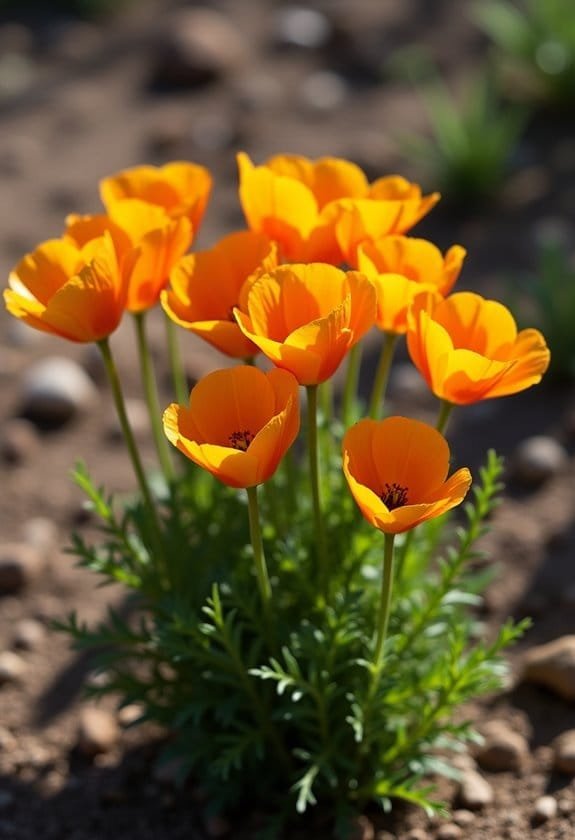
California poppies thrive best in full sun, harmonizing beautifully with well-draining soil that enhances their resilience, even in less-than-ideal conditions like clay.
They flourish with minimal care, needing initial watering only until their root systems establish, which supports their remarkable drought tolerance.
As they grow, understanding their light, soil, water, and temperature preferences becomes essential for gardeners wanting to cultivate these vibrant, self-seeding beauties effectively.
Light
The California poppy flourishes in full sun, needing at least six hours of direct sunlight each day to achieve ideal growth and vibrant blooms. An abundance of light not only stimulates robust flowering but also guarantees the plant's overall health.
When deprived of sufficient sunlight, California poppies may adapt by developing elongated stems as they stretch toward brighter areas, ultimately sacrificing strength and structural integrity.
While these resilient flowers can tolerate part shade, reduced light exposure leads to fewer blossoms and weaker plants, making it crucial for gardeners to prioritize sunlight. Adequate light is critical for initiating bloom opening, as California poppy flowers famously close during cloudy or rainy conditions, a mechanism that conserves energy during adverse weather.
Moreover, proper light conditions promote the development of deeper root systems, which greatly enhances the plant's drought tolerance—a crucial trait for thriving in dry climates.
Therefore, cultivating California poppies in locations that guarantee plentiful sunlight establishes not only their beauty but also their resilience, allowing these vibrant flowers to flourish even in challenging environments. By honoring their need for light, gardeners can enjoy a spectacular display of color throughout the growing season.
Soil
For ideal growth, California poppies thrive in fast-draining soil that allows excess moisture to quickly escape. This remarkable plant demonstrates resilience, flourishing even in less than favorable conditions, such as clay or sandy soils that often repel moisture.
The California poppy's adaptability extends to its light requirements, favoring full sun while also tolerating part shade, enabling it to thrive in a variety of garden environments.
When planting, it's essential to place seeds directly on the soil surface without covering them with soil or mulch, as this facilitates peak germination. To foster healthy establishment, regular watering is important, especially in arid climates where rainfall can be scarce.
Initially important, this hydration supports the California poppy as it develops its deep taproot system. This unique root structure allows the plant to access underground water sources, ensuring its survival even in dry spells.
Ultimately, understanding these soil requirements forms a foundation for successfully cultivating California poppies. By providing fast-draining soil and appropriate planting techniques, gardeners can witness the enchanting blooms flourish, adding beauty and liveliness to their landscapes.
Water
Growing successfully, California poppies require careful attention to their water needs, particularly during their early stages. These vibrant plants thrive in well-draining soil and exhibit remarkable drought tolerance, making them ideal for various gardens.
Initially, young California poppy plants necessitate consistent watering during their first few weeks after planting to facilitate establishment; however, maintaining proper moisture is essential.
While seeds are commonly sown in fall, they generally rely on natural rainfall for germination and growth during the rainy season. Once established, California poppies require minimal water, as overwatering can lead to detrimental root rot.
Hence, gardeners should avoid soggy soil conditions, ensuring that the environment remains adequately dry for healthy plant development.
The California poppy's love for full sunshine complements its low water requirements, as ample sunlight is crucial for vibrant blooms and overall vitality.
Notably, even though poppies can tolerate part shade, inadequate sunlight may hinder their growth.
Fundamentally, understanding water management is imperative for cultivating this stunning species, ultimately yielding flourishing gardens adorned with these striking flowers, a true reflection of nature's elegance.
Temperature
California poppies flourish in a range of temperatures, balancing their need for warmth with resilience to cooler conditions. This plant thrives best when the coldest month temperatures range from 28.2 to 54.4°F, while the hottest month temperatures can span from 49.8 to 83.3°F. Providing full sun exposure greatly enhances ideal growth and flowering during its impressive blooming period from February to September.
Although the California poppy showcases remarkable adaptability to diverse temperature ranges, extreme frost or excessive heat can hinder its germination and growth. Such fluctuations could stress the plant and impede its vibrant display.
Additionally, these poppies are particularly well-suited for regions receiving annual precipitation between 0 and 167.94 inches, facilitating the establishment of robust root systems.
Due to the deep taproot characteristic of the California poppy, it exhibits drought tolerance, accessing underground moisture even in warmer temperatures. This extraordinary ability not only roots the plant in varying climates but also underscores its resilience, making it a beloved choice for gardens across diverse landscapes.
Understanding these temperature preferences is essential for gardeners seeking to cultivate this splendid species successfully.
Pollinator Criteria
The California poppy's allure stems from its abundant pollen, which draws diverse pollinators like bees and butterflies into its open blooms.
Though it lacks nectar, its structure enhances visibility and access, ensuring that these insects can efficiently engage in cross-pollination.
Attracted Pollinators
Attracting a diverse array of pollinators, the California poppy serves as a vital nectar source for various insects despite lacking nectar production. Instead, it entices these visitors with its abundant pollen, ensuring that pollinators like bees and butterflies find it irresistible.
The design of the California poppy's flowers allows them to open in sunlight and close during overcast conditions, maximizing pollen availability. This strategic behavior effectively aligns with the foraging habits of active pollinators.
Furthermore, the California poppy's petals reflect longer wavelengths of light while absorbing ultraviolet radiation, which enhances visibility to bees, guiding them to its vibrant blooms. As a pollinator generalist, the California poppy attracts a wide variety of species, thereby supporting resilient insect populations within its ecosystem.
Blooming from February to September, the California poppy coincides perfectly with the peak activity periods of many essential pollinators, providing vital food resources. This synchronization highlights the poppy's integral role in fostering biodiversity and sustaining healthy pollinator communities, demonstrating how one plant can greatly contribute to ecological balance and provide indispensable support for nature's tireless workers.
Pollination Method
Pollination in California poppies mainly hinges on insects, especially bees and butterflies, which are drawn to the flowers' copious pollen. Despite the absence of nectar, these insects are incentivized by the vibrant color and remarkable structure of the petals.
California poppies reflect longer wavelengths of light while absorbing ultraviolet (UV) radiation, creating visual cues that guide pollinators effectively towards the blooms.
Visible UV patterns lead insects directly to the reproductive structures, greatly enhancing their chances of successful pollination. This interplay of colors guarantees that pollination occurs with remarkable efficiency, essential for the flower's reproductive success.
Blooming from February to September, the California poppy aligns its flowering period with the peak activity of various pollinators, strategically maximizing opportunities for reproduction.
Furthermore, the capacity of California poppies to produce thousands of seeds rapidly establishes them as a crucial resource in springtime ecosystems. By supporting thriving populations of bees and butterflies, these flowers play an essential role in maintaining biodiversity.
As a result, the pollination method of California poppies not only secures their survival but also contributes greatly to the health of their surrounding habitats, underscoring the intricate connections within nature.
Care & Maintenance
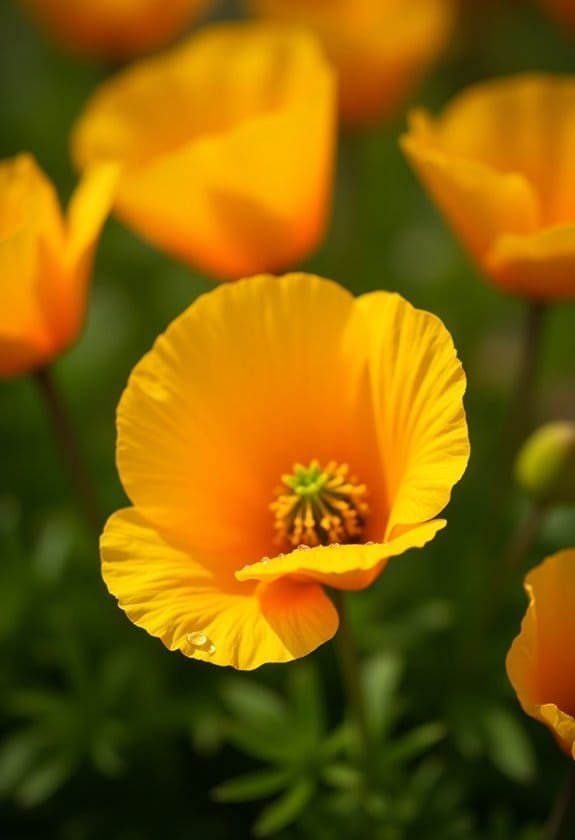
When cultivating California poppies, proper planting and ongoing care are essential for their thriving presence in the garden.
These vibrant blooms flourish in full sunlight and well-draining soil while exhibiting remarkable drought tolerance once established, revealing their resilience against challenging conditions.
Additionally, pairing them with complementary species like Lupinus spp. can elevate both biodiversity and aesthetic appeal, creating a harmonious ecosystem amidst their cheerful blossoms.
Planting Tips
To successfully cultivate California poppies, gardeners should sow seeds in the fall as the rainy season begins, guaranteeing they remain uncovered for maximum germination. This unique approach allows the seeds of Eschscholzia californica to absorb moisture directly from the environment.
Choosing a location that receives full sun is vital, as these flowers thrive in bright light, although they can tolerate part shade when necessary.
When planting, selecting fast-draining soils is essential; California poppies can flourish even in poor soil conditions, including clayey substrates. Watering the newly sown seeds lightly is advisable until the plants establish themselves.
However, once mature, California poppies exhibit impressive drought tolerance, so overwatering should be avoided at all costs.
Transplanting seedlings warrants special attention, as California poppies possess long, sensitive roots that require meticulous handling. Careful relocation guarantees the plants continue to grow robustly without interruption.
Ongoing Care
Throughout the growing season, ongoing care for California poppies involves minimal yet vital tasks that guarantee their health and vibrancy. These resilient plants thrive in full sun, necessitating a well-drained soil environment to prevent the dreaded root rot.
Initially, care requires consistent watering until the poppies are fully established, after which they exhibit impressive drought tolerance, requiring little attention.
An important aspect of ongoing care involves allowing the California poppies to self-seed, as their seeds require light for germination. Hence, when sowing, it's essential to avoid covering them with soil or mulch.
Regular deadheading of spent flowers can greatly enhance flowering duration while simultaneously refining the garden's overall aesthetic appeal.
While monitoring for potential pest issues such as aphids, it's reassuring to note that California poppies generally exhibit resistance to deer and are less likely to attract most grazing animals.
By engaging in these ongoing care practices, gardeners can cultivate a thriving display of California poppies that not only sustains beauty but also contributes to biodiversity within their environments.
These tasks, though minimal, culminate in a vibrant and resilient garden.
Suggested Companions
Which plants can enhance the beauty and health of California poppies? Selecting compatible companions can greatly elevate both aesthetics and ecological balance in the garden.
Ideal companions include Lupinus spp., Phacelia spp., Clarkia spp., California Fuchsia, and White Sage. These species contribute to biodiversity and attract various pollinators, thereby boosting the garden's overall vigor.
When planning, it's essential that all chosen plants prefer full sun and well-draining soil, mirroring the California poppy's growing conditions. This synergy promotes healthy growth for all plants involved, enabling them to flourish together.
Moreover, companion planting offers numerous benefits beyond mere aesthetics. It can improve garden health by attracting beneficial insects and providing diverse habitats for pollinators, which, in turn, supports the thriving ecosystem.
During the California poppy's blooming season, which spans from February to September, gardeners can enjoy a riot of colors as these companions bloom in concert.
However, maintenance requires vigilance; overly vigorous companion plants may compete for sunlight and nutrients. Monitoring growth and ensuring balanced plant relationships are essential for maintaining harmonious co-existence and maximizing the garden's potential.
Common Issues
The California poppy faces several common issues related to pests and diseases that can undermine its growth and aesthetic appeal.
As the vibrant flowers attract various insects, they can become susceptible to aphids and fungal infections, leading to diminished vigor.
Understanding these challenges not only aids in maintaining healthy poppy populations but also fosters a balanced ecosystem that supports both these iconic flowers and the surrounding biodiversity.
Pests/Diseases
While California poppies are largely resilient, they can occasionally face challenges from pests and diseases. These cheerful blooms typically thrive in well-drained soils and full sun, rendering them low-maintenance delights in gardens.
However, common pests like aphids and spider mites may emerge, although they rarely inflict significant damage on healthy plants. These tiny invaders may draw sap from stems, but with diligent monitoring, poppies can withstand their presence.
Fungal diseases, specifically powdery mildew, may develop during overly moist conditions, particularly when plants are overcrowded or spaced too closely, compromising airflow. Such circumstances create a favorable environment for this fungal growth.
Additionally, nematodes, microscopic roundworms found in soil, can threaten root health, though infestations are uncommon, as the adaptability of California poppies allows them to flourish even in poor soils.
Maintaining ideal growing conditions, including appropriate spacing and regular monitoring, guarantees that these vibrant flowers remain robust and vibrant.
The interplay between environmental factors and pest presence highlights the importance of nurturing the health of California poppies while also appreciating their inherent resilience in the garden landscape.
Solutions
California poppies can pose notable challenges in ecosystems where they become overly dominant. As a self-seeding annual, the California poppy (Eschscholzia californica) can quickly overwhelm native flora, altering habitats and disrupting local ecosystems. Management strategies, such as controlled burns, are fundamental to mitigate their proliferation and restore ecological balance.
These vibrant flowers thrive in poor soil and arid conditions, allowing them to spread rapidly while outcompeting native plant species. Consequently, restoration projects are imperative to reviving these local species and enhancing habitat diversity in affected areas.
Additionally, landowners find grazing land rendered unusable due to excessive poppy growth, greatly limiting livestock forage availability. Farmers are increasingly adopting sustainable practices to reclaim their land from this invasive threat.
Public education campaigns play an essential role in raising awareness about the invasiveness of California poppies. By promoting responsible gardening practices, these initiatives can help protect native ecosystems.
Moreover, monitoring programs are fundamental for tracking the population dynamics of California poppy and evaluating their impacts on local wildlife and ranching operations. Addressing these issues holistically guarantees the preservation of native biodiversity while managing the challenges posed by this resilient plant.
What are the differences between California Poppy and Escallonia species?
California Poppy and Escallonia species are vastly different in terms of appearance, habitat, and growing conditions. California Poppy is a vibrant orange wildflower found in California, while Escallonia species are evergreen shrubs native to South America. For more escallonia species information, consult a botanist or horticulturist.
Summary
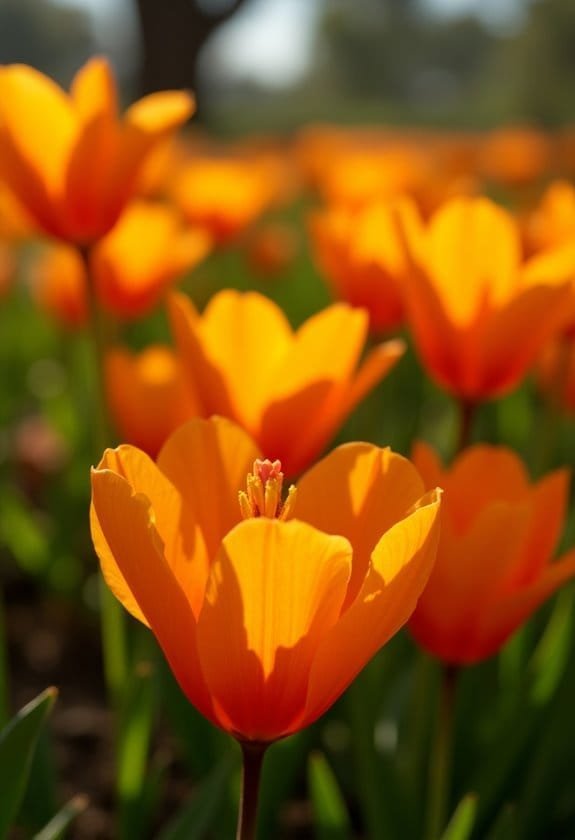
Recognized for its vibrant blooms and resilience, the California poppy (Eschscholzia californica) serves as a symbol of the state's natural beauty. Officially designated as California's state flower in 1903, this herbaceous annual captures the hearts of many with its dazzling yellow to bright orange flowers that flourish from February to September.
Thriving in well-drained soils and soaking up full sunlight, the California poppy exhibits remarkable drought tolerance, making it a suitable choice for California's variable climate.
Native to California but extending its reach into parts of Oregon, Nevada, and Mexico, this remarkable flower prefers open grasslands and can adapt to elevations ranging from sea level to 1,200 meters.
The California poppy's self-seeding ability contributes to its often invasive nature, enhancing its distribution across various habitats while simultaneously supporting crucial pollinator populations, including bees and butterflies.