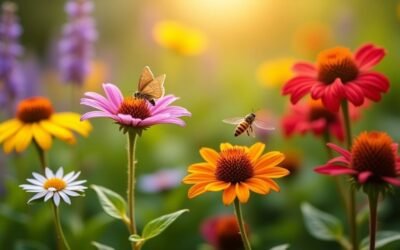
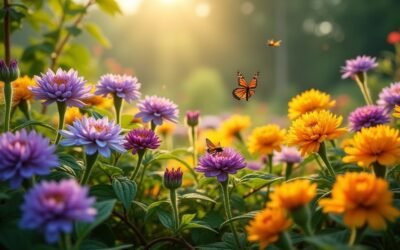
Eupatorium maculatum, known as Joe Pye Weed, enchants with its impressive stature of 4 to 6 feet and striking deep rose-colored flower clusters. This robust perennial thrives in rich, moist soils, often found along streambanks and in wetlands, requiring full sun to partial shade for ideal growth. Its purple-splotched stems enhance its visual allure while attracting crucial pollinators like butterflies and bees, supporting local ecosystems. Care involves ensuring consistent moisture and monitoring for pests, while companion planting with moisture-loving species enhances biodiversity. Joe Pye Weed's presence enriches gardens, fostering flourishing habitats; exploring its attributes reveals even more impressive advantages.
Main Points
- Eupatorium maculatum, or Spotted Joe Pye Weed, is a native plant found in the eastern United States, thriving in moist environments.
- It grows 4 to 6 feet tall, featuring deep rose-colored flowers and purple-splotched stems, appealing to various pollinators.
- This plant prefers rich, moist soils and full sun to partial shade, requiring consistent moisture for healthy growth and flowering.
- Regular maintenance includes deadheading, dividing clumps, and monitoring for pests like aphids and spider mites to ensure plant vigor.
- Companion plants such as Marsh Marigold and Goldenrod enhance biodiversity and visual appeal while benefiting wildlife gardens.
Introduction
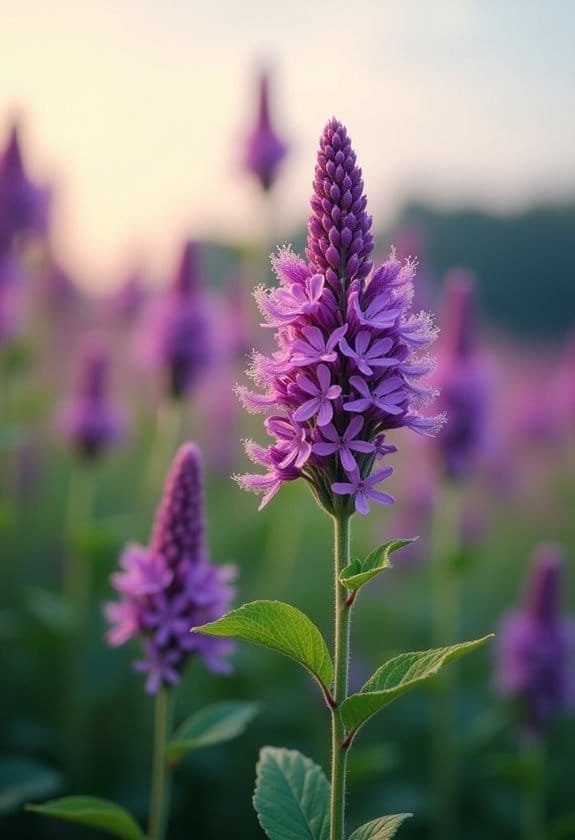
Eupatorium maculatum, more commonly known as Spotted Joe Pye Weed, is a striking perennial that captivates both gardeners and pollinators alike.
Reaching impressive heights of 4 to 6 feet, this native wildflower showcases deep rose-colored flower clusters that bloom during the warm months of mid to late summer.
With its distinct purple-splotched stems and broad leaves, this plant not only enhances garden aesthetics but also plays an essential role in supporting local ecosystems.
Common Name
Known commonly as Joe Pye Weed, this striking plant also goes by several other names, including Spotted Joe Pye Weed, Queen of the Meadow, and Spotted Trumpet Weed. The term "Spotted Joe Pye Weed" aptly reflects the plant's distinctive, dotted stems and its ability to draw attention in any garden or natural landscape.
This perennial herb, often found thriving in wetland ecosystems, highlights the versatility and resilience of native flora. As it flourishes, the plant produces deep rose-colored flower clusters that bloom from late summer into fall, creating a breathtaking display that not only captivates human onlookers but also attracts a variety of beneficial pollinators, including butterflies and bees.
The multiple common names further emphasize its ecological roles and unique characteristics. "Queen of the Meadow" evokes a sense of majesty, while "Spotted Trumpet Weed" suggests a celebration of nature's beauty, inviting admiration and exploration of its stunning form.
Scientific Name
The scientific name for Joe Pye Weed, Eupatorium maculatum, reflects its classification within the Asteraceae family. This genus, Eupatorium, encompasses various herbaceous plants commonly found in damp, grassy areas.
Previously, Eupatorium maculatum was classified as Eupatoriadelphus maculatus, highlighting the evolving understanding within botanical taxonomy. Such reclassification demonstrates the fluid nature of scientific nomenclature, wherein species names can change as new information emerges.
Eupatorium maculatum, often referred to as Spotted Joe Pye Weed or Queen of the Meadow, captivates gardeners with its tall stature, often reaching heights of up to 7 feet. Its pronounced purple-spotted stems make it easily identifiable, adding an attractive element to any landscape.
Phonetically, Eupatorium maculatum is pronounced yoo-TRO-kee-um mak-yuh-LAY-tum, which aids enthusiasts and horticulturists alike in its proper identification.
Native to specific regions in the eastern United States, Eupatorium maculatum thrives in a variety of U.S. plant hardiness zones, showcasing its adaptability. By understanding the scientific name and classifications, gardeners can better appreciate the plant's ecological significance and cultivate it successfully in various settings.
Overview
In gardens and natural landscapes, Spotted Joe Pye Weed (Eupatorium maculatum) stands out with its impressive height and vibrant clusters of deep rose-colored flowers. This tall perennial plant typically reaches heights of 4 to 6 feet, making it a striking presence in any setting.
Thriving in moist to wet soil, Spotted Joe Pye Weed prefers full sun to partial shade, rendering it particularly suitable for damp areas like streambanks and rain gardens.
The plant displays broad, lance-shaped leaves adorned with distinctive purple spots on its stems, contributing both beauty and visual interest to its surroundings. Its fragrant blossoms attract a variety of pollinators, especially butterflies and bees, during their blooming period from mid-summer to fall.
As a native species, Eupatorium maculatum plays an essential role in supporting local ecosystems, offering food and habitat for wildlife.
Key Features
Eupatorium maculatum, or Spotted Joe Pye Weed, reaches an impressive height of 4 to 6 feet, commanding attention in any garden setting.
This striking perennial showcases large clusters of bright pink to rose-colored flowers during mid to late summer, creating a vibrant habitat for essential pollinators like butterflies and bees.
With its visually appealing purple-spotted stems and broad, lance-shaped leaves, this plant not only enhances aesthetic value but also thrives in rich, moist soil, exemplifying resilience and adaptability in diverse landscapes.
Growth Size
Reaching impressive heights of 4 to 6 feet, Spotted Joe Pye Weed stands out in any garden setting thanks to its robust stature. This perennial plant thrives particularly well in rich, moist soils, which supports its vigorous growth size. Its strong and sturdy stems eliminate the need for staking in most conditions, allowing it to maintain a graceful presence without excessive support.
The broad, lance-shaped leaves grow in clumps, creating an eye-catching foliage display through the growing season. This growth habit not only enhances its aesthetic appeal but also contributes to the plant's overall health and resilience.
The fibrous, rhizomatous root system further augments the plant's establishment in the landscape, allowing it to form small clonal colonies, which effectively expand its visual footprint.
Appearance
While standing tall at 4 to 6 feet, Spotted Joe Pye Weed captivates with its large, showy clusters of deep rose-colored flowers that bloom from mid to late summer. This perennial showcases a remarkable appearance, characterized by broad, lance-shaped leaves that emerge from sturdy, often purplish stems.
These stems may display distinguishing purple spots, lending an added layer of visual intrigue. The arrangement of stems and leaves forms a robust structure, grounding the plant within rich, moist soils, where it thrives.
The clusters of rose-colored flowers, comprised of numerous small blossoms, create a striking display that commands attention in any garden setting. This vibrant color not only enhances the plant's aesthetic appeal but also attracts a diverse array of pollinators, including bees and butterflies, enthusiastic to gather nectar from the fragrant blooms.
Its fibrous, rhizomatous root system allows Spotted Joe Pye Weed to form small clonal colonies, effectively weaving a tapestry of color and life within the landscape. This feature not only enriches the overall visual composition but also guarantees the species' resilience and liveliness in the environment.
Flowering Season
During the flowering season, typically from August to November, Spotted Joe Pye Weed showcases a stunning display that captivates gardeners and pollinators alike. This remarkable plant, known scientifically as Eupatorium maculatum, blooms primarily during late summer and into the fall, emphasizing its role in attracting a myriad of butterflies and other beneficial insects.
The flowers form large, deep rose-colored clusters, which can measure several inches wide, creating a visually striking presence in both cultivated gardens and natural landscapes. Standing tall, the stems of Spotted Joe Pye Weed can reach heights of 4 to 6 feet, adding vertical interest and a prominent focal point.
Thriving in moist to wet soil conditions, this perennial plant flourishes under both full sun and partial shade, thereby enhancing its vigorous flowering season.
Gardeners who select ideal conditions for planting can enjoy the full splendor of these stunning blooms, which not only beautify their spaces but also contribute to the local ecosystem.
Therefore, the flowering season of Spotted Joe Pye Weed plays an essential role in supporting pollinator populations while enchanting those fortunate enough to witness its grandeur.
Growing Requirements
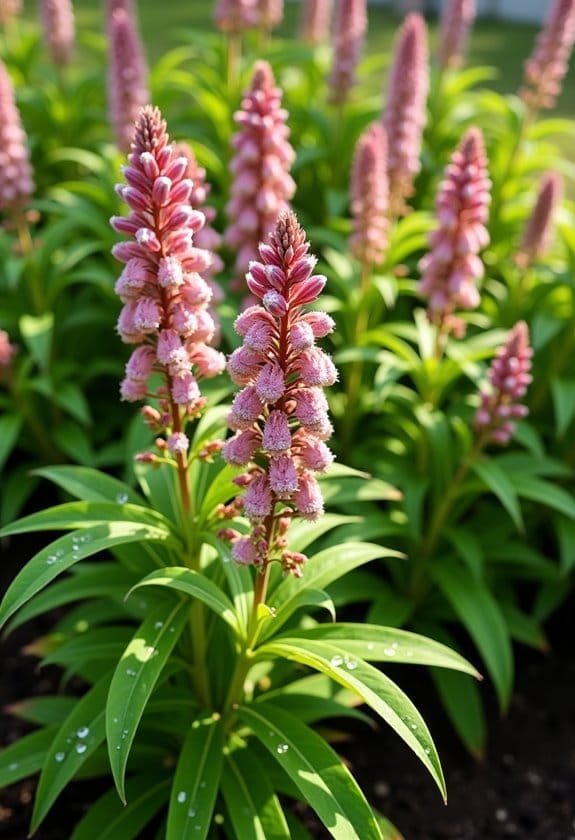
Growing Eupatorium maculatum, commonly known as Joe Pye Weed, requires careful attention to its specific needs for light, soil, and water.
This remarkable perennial flourishes in rich, moist soils under full sun exposure, ideally reaching heights of 4 to 6 feet when conditions are met.
Light
Light plays an essential role in the health and growth of Eupatorium maculatum, commonly known as Spotted Joe Pye Weed. This robust perennial flourishes under full sun to partial shade, yet its ideal development occurs in locations that receive a minimum of six hours of direct sunlight daily.
Sunlight not only drives photosynthesis but also enhances the plant's overall vigor, allowing it to reach impressive heights of 5 to 7 feet.
While Eupatorium maculatum can tolerate some shade, particularly when moisture levels are high, it truly thrives in full sun conditions, especially in environments without competing tree species. In such settings, the full exposure to sunlight encourages lush foliage and abundant flower clusters that attract pollinators.
Conversely, inadequate sunlight may hinder growth, leading to diminished flowering and weaker stems. Furthermore, in drier soils, the foliage tends to scorch, emphasizing the importance of keeping the soil consistently moist to support the plant's health.
For gardeners aiming to cultivate this species successfully, ensuring sufficient light is pivotal, as it greatly influences resilience, aesthetic appeal, and ecological contributions.
Soil
Eupatorium maculatum flourishes best in rich, moist to wet soil, making it an excellent choice for gardens that naturally retain high moisture levels. This perennial plant thrives in average to medium wet soils, which provide the necessary moisture without becoming excessively soggy. Inadequate moisture can lead to leaf scorching, emphasizing the need for a consistently moist environment to maintain peak health and vigor.
The ideal soil composition supports nutrient retention, allowing Joe Pye Weed to establish a robust root system. Indeed, gardeners can enhance the growing environment by incorporating organic matter, which improves soil structure and moisture retention.
While full sun to partial shade fosters peak growth, the emphasis on moist to wet conditions can't be overstated. Additionally, maintaining proper drainage prevents issues like root rot that can arise with overly saturated conditions.
Moreover, Eupatorium maculatum can be propagated through division in spring or fall, requiring nutrient-rich soil to guarantee successful establishment. As the plants develop, they contribute to the garden's ecosystem, attracting pollinators with their fragrant blooms.
Consequently, attention to soil quality not only supports individual plant health but enhances the overall vigor of the garden's landscape, creating a harmonious and thriving environment.
Water
Consistent moisture is essential for the health of Joe Pye Weed, as it thrives in moist to wet conditions. This perennial plant flourishes especially well in wet soils found near drainage areas, streambanks, and pond edges, where the rich organic matter supports its vigorous growth. Its preference for these environments highlights the significance of retaining water in the soil, ensuring that moisture levels remain high during critical developmental phases.
In dry conditions, Joe Pye Weed can experience stress, which leads to diminished flower production and overall vitality. As a result, maintaining ideal moisture is essential for robust flowering, with plants requiring significant water intake, especially in full sun locations.
While Joe Pye Weed tolerates partial shade, particularly in hotter climates, lacking adequate water can cause leaf scorching, resulting in an unsightly appearance.
Additionally, gardeners can promote healthy growth by implementing divisions in the spring or fall, allowing for greater control over soil moisture during establishment. By strategically planting Joe Pye Weed in locations with consistent access to wet soils, one can harness its beautiful blooms and lush foliage, consequently enriching any landscape it graces with its presence.
Temperature
Maintaining ideal moisture levels not only supports Joe Pye Weed's health but also complements its temperature requirements for peak growth. Eupatorium maculatum thrives across USDA hardiness zones 4 to 9, gracefully adapting to a variety of climates. Its optimal growth occurs when daytime temperatures hover between 70°F and 85°F, promoting vigorous development and robust flowering.
While this perennial exhibits a remarkable ability to tolerate temperature fluctuations, it's important to be mindful of prolonged exposure to extreme cold or intense heat, as these conditions can adversely affect its growth and flowering capacity. Joe Pye Weed flourishes in full sun, where it receives ample warmth; therefore, cooler temperatures combined with insufficient sunlight may lead to stunted growth and less vibrant blooms.
Moreover, the relationship between temperature and moisture is significant. In warmer temperatures, adequate moisture retention in the soil becomes paramount, helping to prevent leaf scorching and ensuring the plant retains its vitality.
Consequently, for gardeners aiming to cultivate thriving Joe Pye Weed, focusing on both temperate conditions and moisture management will create an environment conducive to flourishing growth and aesthetic appeal.
Pollinator Criteria
Eupatorium maculatum, or Spotted Joe Pye Weed, primarily attracts butterflies and bees, making it essential for pollinator support.
Its fragrant blooms, which can reach heights of 6 feet, offer an enchanting visual and olfactory experience, effectively enticing these pollinators, particularly during their active fall foraging season from August to November. Additionally, similar to white clover, it supports essential pollinators and contributes to enhancing local biodiversity.
Attracted Pollinators
With its vibrant flower clusters and enticing fragrance, Spotted Joe Pye Weed naturally attracts a diverse range of pollinators, including butterflies and bees. Blooming from late summer to fall, this plant provides a dependable source of nectar and pollen during an important time when many pollinators search for food before winter. The colorful display, featuring bright pink to deep rose flowers, visually appeals to various species, enhancing biodiversity in both gardens and natural habitats. Additionally, it can complement other pollinator-friendly plants like Common Yarrow to create a more inviting environment for these beneficial insects.
Additionally, Spotted Joe Pye Weed serves as a host plant for the Great Tiger moth and the Three Lined Flower moth, fulfilling essential roles in their life cycles. The presence of these pollinators not only supports plant reproduction but also nurtures a wider ecosystem.
By cultivating Joe Pye Weed, gardeners can actively contribute to local biodiversity while enjoying its aesthetic charm. Incorporating such plants into landscapes cultivates a haven for pollinators, making a significant difference in ecological health. Japanese barberry, in contrast, poses a threat to this balance by altering local ecosystems and outcompeting native flora, thereby increasing tick populations.
As a result, planting Spotted Joe Pye Weed becomes not just an ornamental choice, but a meaningful step towards fostering vibrant, flourishing ecosystems beneficial for countless pollinators.
Pollination Method
Although Joe Pye Weed's vibrant flowers attract many pollinators, its unique pollination method enhances its effectiveness in supporting these essential species. The plant blooms from mid-summer to fall, ensuring a crucial food source of nectar and pollen for late-season pollinators like bees and butterflies.
The flower structure, characterized by fragrant clusters of deep rose blossoms, facilitates easy access for insects, encouraging their foraging behavior. This floral architecture not only supports direct pollination but also provides habitats for specific moth species, such as the Great Tiger moth and the Three Lined Flower moth, thereby contributing to local biodiversity.
The arrangement of the flowers promotes a high rate of cross-pollination, crucial for genetic diversity among the plant population. As pollinators move from one blossom to another, they inadvertently transfer pollen, enhancing seed-set rates and ensuring vigorous plant health.
In urban and rural gardens alike, incorporating Joe Pye Weed can greatly bolster ecological health, fostering diverse insect populations and promoting invaluable pollination services.
Care & Maintenance
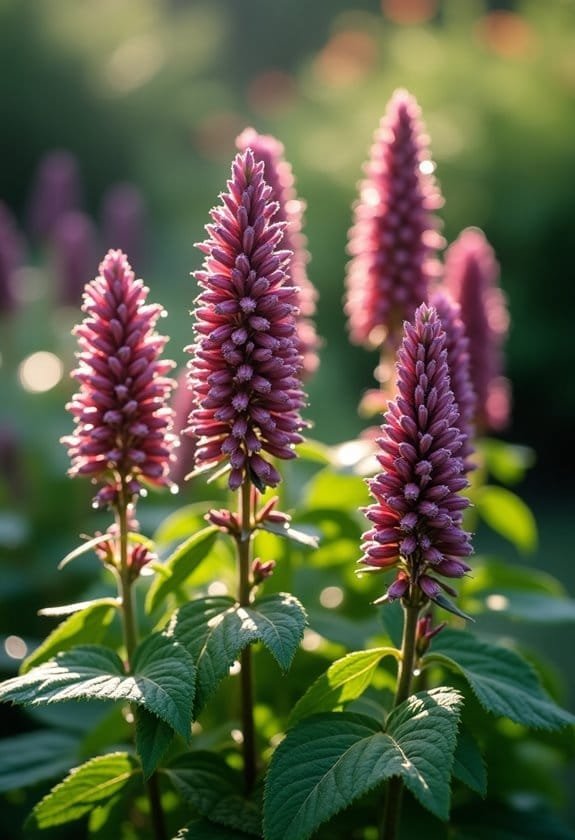
Caring for Eupatorium maculatum, commonly known as Joe Pye Weed, involves understanding its specific needs to thrive.
This remarkable plant flourishes in rich, moist soils and requires consistent watering, particularly during dry periods, while benefiting from full sun to partial shade for ideal growth.
Additionally, regular maintenance practices, such as deadheading and dividing clumps every few years, enhance its visual appeal and promote vigorous expansion in the garden landscape.
Planting Tips
When planting Joe Pye Weed, gardeners should prioritize its need for rich, moist soils and plenty of sunlight. Ideally, this perennial thrives in full sun to partial shade, allowing for optimal growth and vibrant blooms.
Maintaining adequate moisture levels is essential, especially during sweltering summer months, as insufficient water can lead to scorching leaves that detract from the plant's health.
Gardeners looking to establish new plants may consider dividing established clumps in either spring or fall. This technique is effective due to Joe Pye Weed's fibrous, rhizomatous root system, which allows for easier propagation and transplantation.
When placing their plant orders, individuals should select healthy specimens that exhibit robust growth patterns.
It's also vital to monitor for competing vegetation, as Joe Pye Weed's vigorous growth can be hindered if overshadowed, particularly in shaded areas where sunlight is scarce.
To keep the garden appealing and promote continued blooming, pruning spent flower heads after the initial bloom can lead to a neatly maintained appearance and even encourage flowering into late summer and fall.
Ultimately, attention to these planting tips lays the foundation for a flourishing Joe Pye Weed display.
Ongoing Care
To keep Joe Pye Weed thriving after establishing it in the garden, ongoing care plays a noteworthy role. It's essential to maintain consistently moist to wet soil, so regular watering, especially during dry spells, becomes indispensable to prevent leaf scorching.
Proper care involves deadheading spent flowers, which not only promotes additional blooming but also curtails unwanted self-seeding, guaranteeing the plant's beauty endures throughout the growing season.
In early spring, thinning out crowded stems is imperative for improving airflow and mitigating the risk of fungal diseases. This practice fosters healthy growth, allowing the plant to flourish robustly.
Additionally, occasional fertilization with a balanced, slow-release fertilizer during the growing season can greatly encourage vigorous growth and vibrant blooms, enhancing the plant's overall appeal.
Mulching around the base of Joe Pye Weed is another key aspect of care. A well-chosen layer of mulch helps retain soil moisture, suppresses weeds, and provides a stable environment for the root system.
To conclude, diligent ongoing care guarantees that Joe Pye Weed not only survives but thrives, delivering a striking display of flowers season after season.
Suggested Companions
Harmony in the garden can be achieved by pairing Joe Pye Weed (Eupatorium maculatum) with moisture-loving companions like Marsh Marigold (Caltha palustris) and Cardinal Flower (Lobelia cardinalis). These plants thrive in similar wet soils and require similar light conditions, creating a cohesive ecosystem. Incorporating Brooklime's adaptability to various moisture levels can further enhance the overall success of this gardening scheme.
Introducing Sweet Joe Pye, along with tall grasses such as Switchgrass (Panicum virgatum) or Big Bluestem (Andropogon gerardii), adds height and visual interest, generating a rich textural contrast.
Furthermore, incorporating vibrant wildflowers like Goldenrod (Solidago spp.) and Asters (Symphyotrichum spp.) guarantees a prolonged blooming period, providing essential nourishment for pollinators during late summer and fall, which coincides beautifully with Joe Pye Weed's flowers. This diverse planting strategy mirrors the ecological role of Meadow Thistle, supporting various wildlife species and enhancing garden resilience.
Regular garden maintenance becomes straightforward with these complementary companions, as deadheading spent blooms can stimulate additional flowering across the board, promoting aesthetic appeal.
Additionally, Sweet Black Eyed Susan (Rudbeckia subtomentosa) further enriches the garden, attracting similar butterfly species, enhancing both biodiversity and visual delight.
Common Issues
Joe Pye Weed, while a resilient plant, faces several common challenges that can hinder its growth and liveliness.
Pests and diseases, such as fungal infections, often arise from overcrowded conditions or inconsistent moisture levels, demanding careful attention to the plant's environment.
In addition, understanding the potential impacts of surrounding flora, like the juglone produced by black walnut trees, is essential as it can severely limit this species' ability to flourish in its designated habitat.
Pests/Diseases
Managing pests and diseases is essential for maintaining the health of Eupatorium maculatum, commonly known as Joe Pye Weed. Although this perennial exhibits remarkable resistance to deer, it can occasionally attract certain pests that may threaten its vigor.
Aphids and spider mites are the most frequent offenders, but these pests can usually be controlled effectively with treatments such as insecticidal soap or neem oil, which act swiftly to minimize infestations.
In addition to these pests, Joe Pye Weed may encounter fungal diseases, particularly powdery mildew, thriving in humid conditions. Poor air circulation exacerbates this issue, making proper spacing and careful site selection imperative to promote airflow around the plants.
Moreover, root rot can arise from overly saturated or poorly drained soils, underscoring the importance of selecting appropriate planting locations.
Leaf spots, often resulting from bacterial infections, can also trouble Joe Pye Weed. Maintaining plant hygiene—such as removing debris and avoiding overhead watering—significantly reduces the risk of these ailments taking hold.
Consequently, understanding and monitoring these potential issues can enable gardeners to maintain a robust and thriving display of Joe Pye Weed in their landscapes. Additionally, incorporating companion plants like tormentil(Potentilla Erecta) alongside Joe Pye Weed can support local biodiversity and enhance health.
Solutions
Proper care helps address the common issues faced by Eupatorium maculatum, especially when it comes to environmental factors, spacing, and monitoring.
Joe Pye Weed flourishes in moist to wet soil, and it's vital to try to avoid dry conditions, which can lead to leaf scorching and stunted growth. Placing the plant in locations with full sun to partial shade guarantees strong growth and vibrant blooms. Insufficient sunlight often results in weak, spindly plants that may fail to impress.
The plant's fibrous, rhizomatous root system allows it to form extensive colonies, which can contribute to stability, yet it may necessitate control to prevent overcrowding. Ideal spacing of at least 18 to 24 inches between each plant improves air circulation and reduces humidity around the foliage, thereby mitigating the risk of diseases.
Regularly monitoring for pests, such as aphids and caterpillars, is essential. Since Joe Pye Weed attracts numerous beneficial pollinators, prompt action against any infestations can guarantee the plant maintains its rightful place in the ecosystem.
What Are the Similarities and Differences Between Joe Pye Weed and Giant Knapweed?
Joe Pye weed and Giant Knapweed, also known as Centaurea macrocephala, are both perennial plants with tall flower spikes. However, Joe Pye weed has smaller yellow flowers compared to the larger, yellow globular flower heads of Centaurea macrocephala giant knapweed. Both plants are hardy and drought-tolerant but have different flower structures.
Summary
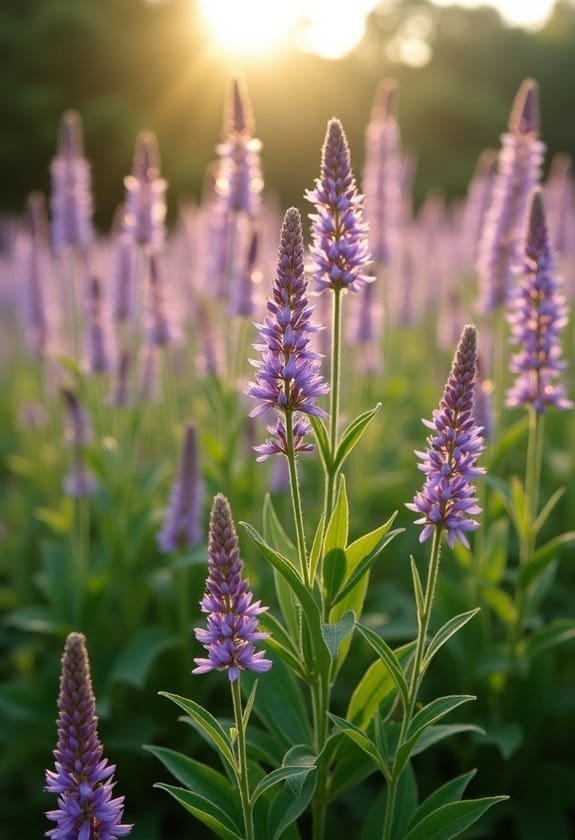
Eupatorium maculatum, or Spotted Joe Pye Weed, stands out as a striking perennial that reaches heights of up to 6 feet, adorned with stunning dusty rose flower clusters from late summer to fall.
This remarkable plant thrives in moist to wet soil, flourishing in sunny to partially shaded areas common to wet meadows and streambanks. Gardening enthusiasts will find that Eupatorium maculatum is especially attractive to pollinators, especially butterflies, enhancing local ecosystems and biodiversity.
Known for its resilient root system, Spotted Joe Pye Weed can form small clonal colonies, providing considerable visual impact in garden settings.
For those considering alternatives, try Sweet Joe Pye, a related species that also captivates with its distinctive beauty. These two plants can be grown in tandem to create vibrant, pollinator-friendly landscapes.
Furthermore, the long blooming season from August to November makes Eupatorium maculatum a favored choice for wildlife gardens and rain gardens.
With the capability to tolerate juglone, Spotted Joe Pye Weed showcases its adaptability, making it a versatile total plant in horticultural design.
Its inclusion in gardens not only enriches the aesthetic appeal but also contributes significantly to ecological health.