*Euphorbia sarawschanica*, or Zeravshan Spurge, is an extraordinary perennial native to Central Asia's Zarafshan mountains. This sturdy plant typically reaches heights of up to 80 cm and features striking lime-yellow flower heads that bloom from mid to late summer, attracting various pollinators. Thriving in arid conditions and rocky soils, it requires full sun and well-draining, moisture-retentive soil for ideal growth. While its sap offers potential therapeutic benefits, caution is warranted due to possible skin irritation. This remarkable species contributes to ecological balance, and understanding its care can enhance any garden's aesthetic and biodiversity—further insights await discovery.
Main Points
- *Euphorbia sarawschanica*, or Zeravshan Spurge, is native to Central Asia, thriving in arid conditions and rocky soils.
- This plant reaches heights of up to 80 cm and produces striking yellowish-green flowers that attract pollinators.
- It prefers well-draining soil, full sun to partial shade, and requires regular watering during establishment.
- The plant symbolizes resilience and contributes to local ecosystems by supporting biodiversity and soil stabilization.
- Common challenges include pests and diseases, which can be managed through careful monitoring and companion planting.
Introduction
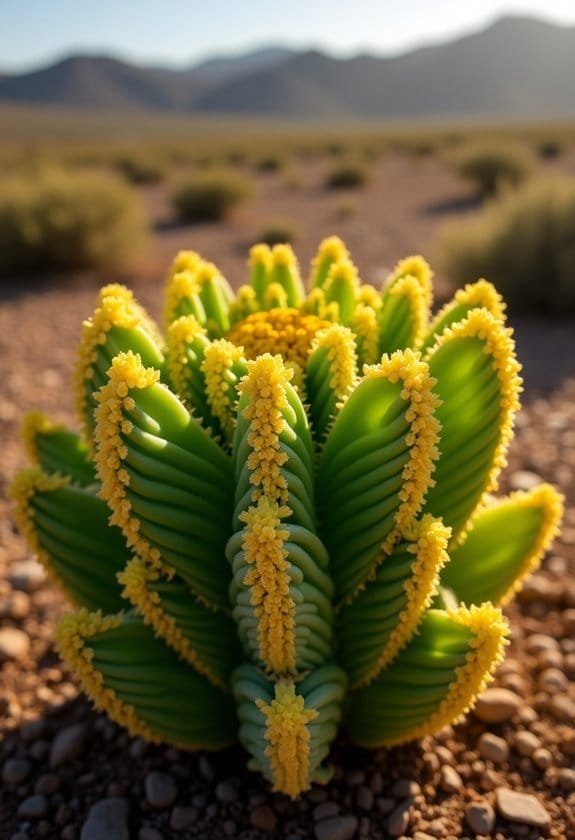
Euphorbia sarawschanica, more commonly known as Zeravshan Spurge, stands out as a remarkable flowering plant native to the rugged landscapes of the Zarafshan mountain range in Central Asia.
With its impressive height of up to 1.2 meters and striking lime-yellow flower heads that flourish in mid to late summer, this species embodies resilience and beauty amidst arid environments.
Adapted to thrive in rocky and sandy soils, Zeravshan Spurge not only showcases its aesthetic appeal but also plays a significant role in supporting local biodiversity through its habitat and nourishment for various wildlife species.
Common Name
Known for its vibrant appearance, Zeravshan Spurge is a flowering plant native to the mountainous terrains of Central Asia, particularly the Zarafshan mountain range. This remarkable member of the Euphorbiaceae family is distinguished by its striking chartreuse yellow flower heads that bloom in mid to late summer, adding a splash of color to its arid and semi-arid environment.
Reaching up to 80 cm in height and spanning about 50 cm, Zeravshan Spurge stands out as a prominent feature within its native habitat, showcasing its adaptability to rocky and sandy soils.
As a valuable contributor to local ecosystems, Zeravshan Spurge plays a significant role by providing nectar and pollen for various pollinators, thereby supporting biodiversity. Its ability to thrive in harsh conditions not only enhances garden aesthetics but also promotes ecological balance in the regions it inhabits.
The plant's resilience exemplifies nature's ability to flourish in adversity, making it an inspiring subject of study for botanists and enthusiasts alike. In appreciating Zeravshan Spurge, one recognizes the intricate relationships that sustain life, illustrating the importance of preserving unique species in our ever-changing world.
Scientific Name
While many plants are recognized by their common names, their scientific names provide essential clarity and specificity in botanical classification. The scientific designation of Zeravshan Spurge is *Euphorbia sarawschanica*, reflecting its membership in the Euphorbiaceae family. This plant is classified as an angiosperm within the eudicot group, highlighting its flowering characteristics and complex evolutionary lineage.
Native to Central Asia, *Euphorbia sarawschanica* thrives particularly in the Zarafshan mountain range, adapting effortlessly to its environment year round.
With a herbaceous growth habit, this spurge is characterized by erect, branching stems adorned with alternate, oblong leaves that add aesthetic appeal. Upon maturity, it typically reaches a height of up to 80 cm and can spread up to 50 cm, establishing a presence in its native habitat.
The plant also produces abundant clusters of small, yellowish-green flowers, which further enhance its allure.
Through its scientific naming, *Euphorbia sarawschanica* not only signifies its unique traits but also facilitates essential communication among botanists and plant enthusiasts, ensuring a shared understanding of this remarkable species.
Overview
This remarkable species, *Euphorbia sarawschanica*, commonly referred to as Zeravshan Spurge, serves as an excellent example of the unique flora native to Central Asia. Thriving in the arid and semi-arid regions, particularly within the Zarafshan mountain range, this plant showcases tall, upright stems and narrow sage-green leaves, resembling willow foliage. It can reach impressive heights of approximately 80 cm and a spread of around 50 cm at maturity.
Beyond its aesthetic appeal, characterized by abundant lime-yellow flower heads that emerge from mid to late summer, Zeravshan Spurge holds cultural significance for local communities, often symbolizing resilience and adaptability in harsh climates.
It also possesses various medicinal uses, with traditional practices utilizing its properties for diverse treatments.
Moreover, its landscaping benefits are notable, enhancing gardens while supporting local biodiversity through its capacity to provide nectar and pollen for essential pollinators.
This species contributes to soil stabilization, illustrating its vital role in environmental health. Collectively, these features underscore *Euphorbia sarawschanica*'s importance, offering both ecological and aesthetic value to its native landscapes.
Key Features
Euphorbia sarawschanica, or Zeravshan Spurge, showcases remarkable attributes that enhance its appeal in various garden settings.
Reaching a height of 80 cm with a spread of 50 cm, this hardy perennial exhibits narrow sage-green leaves that resemble willows, contributing to its unique aesthetic.
From mid to late summer, it produces abundant umbels of striking chartreuse yellow flowers, providing a vibrant focal point against its lush foliage.
Growth Size
At maturity, Euphorbia sarawschanica typically reaches a height of about 80 cm and spreads up to 50 cm. Its growth patterns exhibit a robust and upright structure, characterized by branched stems that contribute to its overall stature. The plant's size variations can be influenced by several environmental factors, including sunlight exposure and soil quality. Euphorbia sarawschanica thrives best in full sun to partial shade, which allows for ideal growth.
Furthermore, this species is remarkably resilient, withstanding harsh conditions and temperatures as low as -29°C. This hardiness guarantees that, in colder climates, the plant can still flourish, often reaching its full height.
The narrow, sage-green leaves, styled in a willow-like arrangement along the stems, complement its growth by maximizing sunlight capture for photosynthesis.
When cultivated in well-draining soil enriched with organic matter, Euphorbia sarawschanica demonstrates enhanced growth and vigor. Consequently, gardeners can expect a visually striking presence in their landscapes as the plant grows, reflecting the interplay between environmental influences and its innate capabilities.
Appearance
With its impressive height and unique foliage, Euphorbia sarawschanica, known as Zeravshan Spurge, boasts a striking appearance that makes it a standout in any garden. The plant reaches an impressive stem height of up to 80 cm, providing a robust and upright presence.
Its narrow, sage-green leaves, reminiscent of willow foliage, exhibit a fascinating leaf structure that contributes to the plant's overall elegance. These leaves are arranged alternately along the tall stems, creating an attractive visual flow.
The combination of the lush green leaves against the striking lime-yellow flowers, which bloom in mid to late summer, offers a vibrant color contrast that captivates the eye. While the blossoms themselves are a highlight, it's the bushy foliage that creates a lush backdrop, enhancing the overall aesthetic appeal of the landscape.
Typically spreading to about 50 cm at maturity, Euphorbia sarawschanica forms a full, bushy clump, making it suitable for various garden designs. Hardy to temperatures as low as -29°C, this resilient plant adds both beauty and character, adapting seamlessly to rocky and arid environments.
In short, it's a compelling choice for any garden enthusiast seeking both visual interest and durability.
Flowering Season
During the mid to late summer months, Zeravshan Spurge bursts into bloom, producing large, bright lime-yellow flower heads that can elevate any garden's color palette. This flowering season typically spans from June to August, saturating outdoor spaces with vibrant hues while enhancing seasonal colors.
The flowers, arranged in abundant umbels, not only create a striking visual display but also serve a significant role in the ecosystem by attracting various pollinators, including bees and butterflies.
The flowering benefits don't stop at aesthetics; as the plant reaches heights of approximately 1.2 meters during this phase, it becomes a prominent feature in any landscape. Pollination importance plays a key role here, as these blooms facilitate cross-pollination, guaranteeing genetic diversity among plants.
Once the flowering spectacle concludes, the plant requires careful maintenance to support its health and prepare for future cycles. Gardeners should focus on post-flowering care to make certain that Euphorbia sarawschanica remains robust and ready to dazzle again.
In this dance of growth and renewal, every bloom holds the promise of another vibrant season, echoing the cycles of nature itself.
Growing Requirements
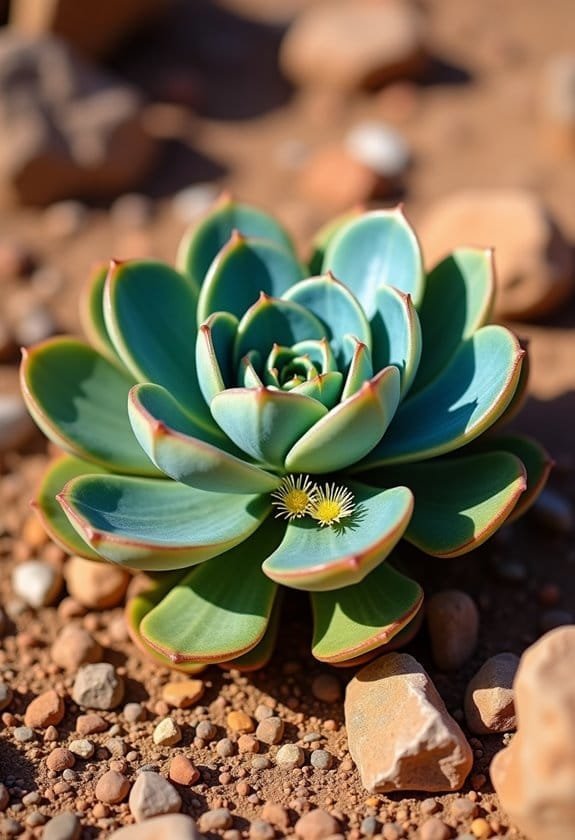
Euphorbia sarawschanica flourishes under specific conditions that are essential for its development.
Preferring consistently moist soil during its initial establishment phase of two to three years, this plant thrives best in environments with full sun to partial shade exposure, promoting ideal growth.
Additionally, it exhibits remarkable resilience, tolerating temperatures as low as -29°C, making it an excellent choice for diverse climatic conditions.
Light
To thrive, Euphorbia sarawschanica needs full sun to partial shade, requiring at least six hours of direct sunlight each day for ideal growth. The light intensity effects markedly influence the plant's overall health and aesthetics; environments with bright, consistent light foster vibrant foliage and prolific flowering.
Conversely, reduced light duration impacts blooming capacity, leading to fewer blossoms in shaded areas. This makes adequate light exposure essential, as decreased flowering not only diminishes the plant's visual appeal but also affects its liveliness.
Additionally, Euphorbia sarawschanica employs sunlight adaptation strategies, enhancing its resilience against pests and diseases when cultivated in ideal light settings. During its establishment phase, typically spanning two to three years, ensuring consistent light conditions is particularly important for developing a robust root system and erect shoots.
A vigorous plant imbued with strength is ultimately better equipped to thrive within diverse garden ecosystems, contributing positively to the landscape.
In essence, for Euphorbia sarawschanica to flourish, gardeners must appreciate the profound impact that light—both in intensity and duration—has on its performance, beauty, and energy throughout its life cycle.
Soil
For ideal growth, well-drained, moist soil is essential for Euphorbia sarawschanica.
This remarkable plant thrives best in soil types that mimic its native habitats, specifically rocky and sandy substrates found in Central Asia's arid regions.
Soil amendments can enhance soil structure and fertility, particularly during the initial establishment phase, which spans approximately two to three years.
During this time, consistent soil moisture is critical, especially in hotter weather, to support healthy root development.
Once established, Euphorbia sarawschanica demonstrates impressive xerophytic adaptations, enabling it to endure low-water conditions.
Maintaining a neutral to slightly alkaline soil pH level is paramount, as this balance fosters ideal nutrient availability and overall plant health.
Gardeners should regularly monitor and amend their soil accordingly, ensuring that nutrients are accessible without compromising drainage.
Water
Moisture levels play an essential role in the growth of Euphorbia sarawschanica, particularly during its initial 2 to 3 years of establishment. This plant thrives in conditions that offer consistent soil hydration, as moist soil is fundamental for its ideal development.
During hot weather, careful attention to watering frequency becomes important; without adequate moisture, Euphorbia sarawschanica can experience stress that adversely affects its growth.
To enhance moisture retention, gardeners should consider grouping pots together, which helps create a microclimate that reduces evaporation. By minimizing the need for frequent watering, this approach proves advantageous in sustaining soil hydration.
It's imperative to avoid allowing the soil to dry out completely, as such extreme dehydration can be detrimental to this sensitive species.
Conversely, caution is needed to prevent overwatering, as Euphorbia sarawschanica also reacts poorly to soggy conditions.
As a result, monitoring soil moisture levels diligently maintains a harmonious balance—one that fosters healthy growth while avoiding the pitfalls of both drought and flooding.
Ultimately, understanding these water requirements helps cultivate this striking plant successfully, enriching garden landscapes with its unique beauty.
Temperature
During its establishment phase, Euphorbia sarawschanica flourishes best in temperature ranges that reflect its native mountainous origins. This remarkable plant exhibits cold tolerance, thriving in environments with temperatures as low as -29°C, therefore making it ideal for colder climates.
Temperatures that offer both warmth and brightness greatly enhance its growth, which typically stabilizes over an establishment period of approximately two to three years.
Moreover, Euphorbia sarawschanica demonstrates impressive resilience to temperature fluctuations, showcasing its ability to adapt to varying environmental conditions synonymous with its mountainous habitat.
However, while this spurge can withstand cold spells, it's essential to manage heat stress during the hotter months. Providing adequate moisture during these instances not only safeguards its health but also fosters best growth conditions.
Pollinator Criteria
Euphorbia sarawschanica not only showcases striking yellow flower heads but also plays an important role in attracting various pollinators, particularly bees, which are essential for effective pollination.
Its nectar and pollen serve as fundamental food sources, fostering interactions that enhance local biodiversity.
Understanding the pollination methods facilitated by this plant underscores its significance in supporting declining pollinator populations and maintaining healthy ecosystems.
Attracted Pollinators
Attracting a range of pollinators, Euphorbia sarawschanica stands out as an important contributor to local ecosystems. This remarkable plant offers abundant nectar and pollen, two food sources essential for supporting diverse pollinating insects, including native bees. Its unique floral structure enhances pollinator preferences, creating an inviting environment for these crucial creatures.
Flowering from mid to late summer aligns perfectly with the peak activity periods of many pollinators, maximizing their interactions with the plant. This synchronization not only fosters effective pollination but also improves habitat enhancement, making gardens more resilient to ecological pressures.
Registered within the RHS Plants for Pollinators initiative, Euphorbia sarawschanica reinforces its status as an important resource for sustaining declining pollinator populations.
Gardeners who incorporate this spurge into their landscapes contribute to the health of pollinator networks, enhancing biodiversity within their local ecosystems. By cultivating Euphorbia sarawschanica, enthusiasts can create sanctuary-like habitats, empowering struggling pollinator species to thrive.
As these beneficial insects flourish, they, in turn, support the broader array of plant life, embodying the intricate interdependencies that characterize a robust ecosystem.
Pollination Method
The unique floral structure of Euphorbia sarawschanica plays a significant role in its pollination method, particularly in attracting various pollinators. Its lime-yellow flower heads aren't only visually striking but also strategically designed to enhance nectar production, enticing bees and other insects that are essential for effective cross pollination.
The flowering period, spanning from mid to late summer, perfectly aligns with the peak activity of these pollinators, ensuring that pollen transfer occurs at an ideal time.
The plant's floral morphology, characterized by its cluster formations, facilitates easy access to nectar and pollen. These adaptations create an inviting environment, making it easier for pollinators to gather food while simultaneously ensuring the successful transfer of genetic material from one plant to another.
This process cultivates cross pollination benefits, such as increased genetic diversity, which is fundamental for the resilience of plant populations.
Additionally, the presence of Euphorbia sarawschanica contributes to supporting declining pollinator populations, as recognized by the RHS Plants for Pollinators initiative.
Care & Maintenance
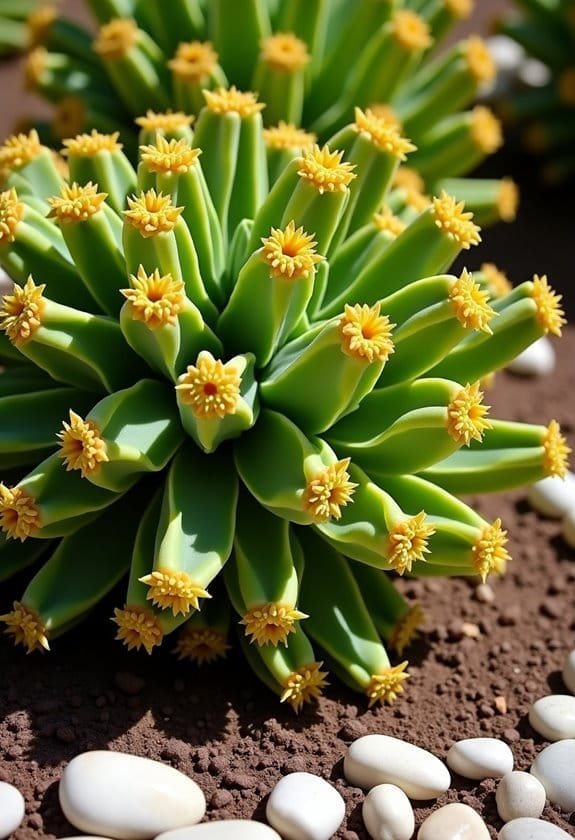
Euphorbia sarawschanica requires careful attention regarding its care and maintenance to thrive within various garden environments. It demands moist soil and consistent watering, particularly during sweltering conditions, while also favoring sun or partial shade exposure for ideal growth.
Additionally, pairing it with compatible companions not only enhances aesthetic appeal but also promotes overall garden health, creating a harmonious ecosystem that benefits both plants and pollinators.
Planting Tips
For successful planting and maintenance of Euphorbia sarawschanica, ensuring the right conditions is key. Selecting a suitable planting location is essential; prime spots include sheltered, shaded areas that provide respite during the plant's formative growth phase.
Soil preparation plays a significant role, as Euphorbia sarawschanica flourishes in well-drained, moisture-retentive soil. Incorporating organic matter can enhance both drainage and nutrient availability, setting a strong foundation for healthy root development.
Initial watering is vital, particularly in warm weather, since consistent moisture helps the plant acclimate. Grouping pots can be an effective strategy for retaining moisture, allowing the plants to benefit from a microclimate that fosters ideal growth.
Cultivating Euphorbia sarawschanica requires patience, as it demands an establishment period of two to three years before significant growth becomes apparent. During this time, gardeners should consider pruning the herbaceous parts in late winter to minimize water stress and invigorate growth.
Moreover, it's wise to wear protective gloves when handling this plant, as contact with its sap can cause skin irritation. By adhering to these planting tips, one can create a thriving environment for Euphorbia sarawschanica, promoting a flourishing and resilient garden.
Ongoing Care
Successful planting leads to the ongoing care that Euphorbia sarawschanica thrives on, requiring regular attention to guarantee it reaches its full potential.
To ascertain plant longevity, this species benefits from consistent maintenance during its establishment period of two to three years. Adequate watering techniques are crucial; the plant prefers moist soil, so increasing watering frequency during hot weather supports robust growth.
Additionally, Euphorbia sarawschanica flourishes in sunny to partially shaded environments, making it versatile for diverse garden settings.
However, guardians must wear gloves while tending to the plant, as its sap can act as a skin irritant, potentially inciting adverse reactions upon contact.
Regular maintenance tasks, including pruning and cutting back surrounding herbaceous plants, can notably reduce water stress. This established practice not only encourages overall health but also fortifies the plant against pests.
Employing pest prevention measures, such as inspecting for unwanted insects and maintaining proper spacing, contributes to its vitality.
Suggested Companions
What plants pair well with Euphorbia sarawschanica to create a thriving garden environment? Companion plantings such as sedums and dwarf perennials flourish alongside this spurge, as they both share preferences for sun exposure and drought tolerance.
Pairing Euphorbia sarawschanica with xerophytes like lavender or ornamental grasses not only enhances moisture retention but also adds aesthetic variety to the landscape.
For ideal growth, it's essential to select companions with established root systems, ensuring minimal competition for water during the plant's critical establishment period, which spans two to three years.
Maintaining a diverse plant community around Euphorbia sarawschanica fosters improved soil health and attracts beneficial insects, which naturally prey on garden pests, creating a balanced ecosystem.
When designing a garden, consider plants that mimic Euphorbia's height at around 80 cm to achieve cohesive visual layers. This approach not only provides aesthetic harmony but also serves to emphasize the striking chartreuse yellow flowers of the Zeravshan Spurge, creating a vibrant display.
Common Issues
Euphorbia sarawschanica faces a few common issues that can impact its growth and health.
Among these are susceptibility to pests such as aphids and mealybugs, which can diminish the plant's energy, as well as the potential for root rot from excessive watering.
Understanding these challenges allows growers to implement effective solutions, ensuring the vigorous development of this resilient species.
Pests/Diseases
While Euphorbia sarawschanica can thrive in various conditions, it's vulnerable to several pests and diseases that threaten its health. Common pests include aphids, spider mites, and whiteflies. If left unchecked, these pests can lead to stunted growth and leaf discoloration, ultimately compromising the plant's liveliness.
Additionally, in overly humid environments, fungal diseases like powdery mildew can flourish, especially if airflow around the plant is restricted.
Root rot poses another significant concern, often caused by overwatering or using poorly draining soil. This highlights the significance of employing pest management strategies and disease prevention techniques. Regular monitoring is essential; by promptly removing affected leaves, gardeners can mitigate pest issues and bolster Euphorbia sarawschanica's defense.
Natural pest control measures, such as introducing ladybugs to combat aphid infestations, offer a sustainable approach to maintaining plant health. For more severe infestations, insecticidal soaps can provide effective treatment.
Solutions
To effectively manage the common issues associated with Euphorbia sarawschanica, gardeners should prioritize proper soil drainage to prevent root rot. This resilient plant thrives in well-draining soil, promoting healthy root systems and vigorous growth.
Additionally, employing effective propagation techniques can guarantee a robust population of these aesthetically pleasing specimens, known for their striking foliage and unique appearance.
Seasonal care is fundamental to maintaining Euphorbia sarawschanica's vitality. During hot weather, consistent watering becomes essential; gardeners should cluster pots to retain moisture and alleviate water stress.
Moreover, this species can be sensitive to frost; consequently, providing shelter during extreme cold spells can protect it from damage. Regularly cutting back herbaceous stems not only enhances new growth but also mitigates stressors, reinforcing the plant's resilience against disease and environmental challenges.
Gardeners must also handle Euphorbia sarawschanica with care to prevent skin irritations from its sap; wearing gloves during maintenance is advisable.
Are Spider Flowers and Zeravshan Spurge Related in Any Way?
Yes, Cleome hassleriana spider flower and Zeravshan spurge are not related. Cleome hassleriana, commonly known as spider flower, belongs to the Cleomaceae family, while Zeravshan spurge is a member of the Euphorbiaceae family. These two plants have different characteristics and are not closely related in any way.
Summary
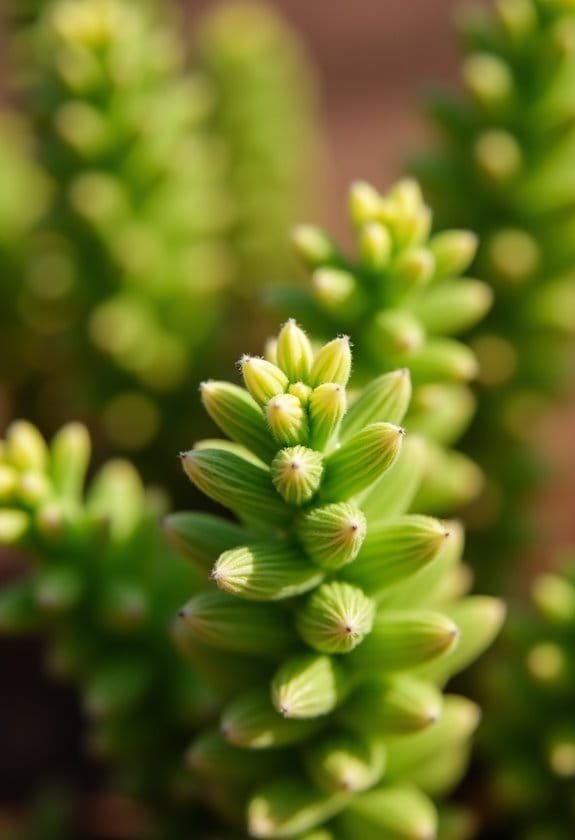
Known as Zeravshan Spurge, Euphorbia sarawschanica thrives in the dry terrains of Central Asia's Zarafshan mountain range. This flowering plant, capable of reaching heights of approximately 80 cm and a spread of 50 cm, flourishes in arid and semi-arid environments.
Known for its abundant umbels of striking chartreuse yellow flowers, this species plays a significant role in local ecosystems, contributing to the ecological balance. Its hardiness, enduring temperatures as low as -29°C, allows it to survive harsh conditions that many other plants cannot.
In addition to its ecological significance, Zeravshan Spurge possesses several medicinal uses, although caution is advised due to its potential to cause skin irritations. Proper handling with gloves guarantees safety while exploring its therapeutic properties.
Cultivar variations of this resilient plant also exist, potentially enhancing its adaptability and aesthetic appeal for gardeners and researchers alike.