Foeniculum vulgare, or common fennel, is a striking herbaceous plant, often reaching heights of up to 6 feet, with finely dissected dark green leaves and clusters of bright yellow umbels. Thriving in full sun and well-drained, organically rich soils, it flourishes with consistent moisture but demonstrates drought tolerance when established. Pollination, primarily by insects, enhances its ecological role, attracting beneficial butterflies. Edible leaves, seeds, and bulbs add a unique anise-like flavor to culinary dishes, while its visual appeal enhances garden aesthetics. Understanding its growth and care may reveal further insights into this charismatic plant's cultivation and ecological benefits.
Main Points
- Foeniculum vulgare, commonly known as Sweet Fennel, is part of the Apiaceae family and is known for its aromatic leaves and bulbs.
- This plant thrives in full sun, prefers well-drained soil, and requires consistent moisture for optimal growth.
- Fennel flowers from July to August, producing yellow clusters that attract beneficial pollinators like butterflies.
- It features a large taproot that aids nutrient access, enabling drought resistance once established.
- Common issues include pests and powdery mildew, which can be managed through organic methods and proper care.
Introduction
Foeniculum vulgare, widely recognized as Common Fennel or Sweet Fennel, stands as a fascinating herb native to the sun-drenched landscapes of the Mediterranean.
This short-lived perennial, with its remarkable height of up to 6 feet, showcases finely dissected leaves that evoke the look of dill, all while boasting a distinct anise-like flavor.
Its striking yellow flowers, blooming in the warmth of summer, not only enthrall the eye but also attract a variety of beneficial pollinators, cementing its role in both culinary and ecological spheres.
Common Name
Sweet Fennel, also known as Finocchio, is a perennial herb cherished for its aromatic qualities and versatility in the kitchen. Renowned as common fennel, Foeniculum vulgare showcases the delightful anise flavor present in its edible leaves, seeds, and flowers. The name "fennel" traces its roots to the Old French term "fenoil" and Latin "faeniculum," highlighting its agricultural significance throughout Mediterranean regions.
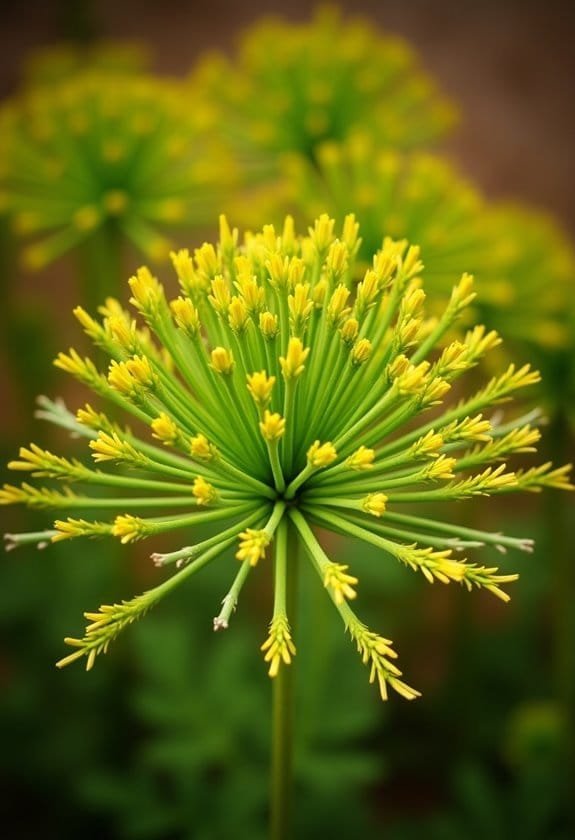
Growing up to 6 feet tall, common fennel features finely dissected dark green leaves that serve as a striking backdrop to its small, bright yellow flowers. These blossoms appear in terminal compound umbels, creating a visually enchanting display.
Beyond its culinary versatility, fennel plays an essential ecological role; it attracts beneficial insects, establishing itself as a host plant for the delicate caterpillars of the Black and Anise Swallowtail butterflies.
The aromatic compounds emanating from this herb not only enhance numerous dishes but also evoke a sense of warmth and comfort in the culinary world.
Therefore, the significance of common fennel extends well beyond mere flavor, intertwining with the intricate tapestry of nature and nourishment.
Scientific Name
The scientific name of common fennel is *Foeniculum vulgare*, a member of the Apiaceae family, widely recognized for its aromatic and culinary significance. This species features distinctive aromatic foliage that resembles anise, contributing to its popularity in various culinary traditions. Growing up to 6 feet tall, *Foeniculum vulgare* is a robust plant, capable of thriving in diverse environments.
Native to southern Europe, particularly around the Mediterranean region, common fennel has been cultivated and naturalized globally, showcasing its adaptability. This unique herb develops small, bright yellow flowers arranged in terminal compound umbels, a characteristic reproductive structure typical of the Apiaceae family. These flowers not only enhance the plant's visual appeal but also attract pollinators.
The edible parts of *Foeniculum vulgare* include its leaves, seeds, and the bulb, which serve as versatile ingredients in numerous dishes worldwide. The plant's culinary uses further emphasize its importance, allowing cooks to explore flavors that range from sweet to savory.
Overview
Common fennel, an aromatic herb with culinary and ecological value, belongs to the Apiaceae family and has its roots in the Mediterranean region. Scientifically known as Foeniculum vulgare, this perennial plant is often cultivated as an annual due to its adaptability.
It can grow impressively tall, reaching heights of up to 6 feet, characterized by its finely dissected dark green leaves and small, bright yellow flowers that bloom in attractive compound umbels.
The sweet fennel's flavor profile is reminiscent of anise, contributing to its popularity in various culinary applications. Chefs and home cooks alike utilize its edible leaves, seeds, and bulbous stems to enhance dishes such as fish, salads, and breads, adding both flavor and nutrition.
While it thrives in full sun and well-drained soil, fennel is also drought-resistant once established, although it requires consistent moisture to develop efficiently.
Beyond its culinary uses, the aromatic herb draws beneficial wildlife, particularly pollinators like bees and butterflies, and serves as host to the larvae of the black swallowtail butterfly, underscoring its ecological significance.
Key Features
Common fennel, or Foeniculum vulgare, reaches an impressive height of 3 to 6 feet, showcasing its stature as a robust perennial herb.
Its striking appearance features finely dissected, aromatic dark green leaves and vibrant yellow flowers that emerge in large, flattened clusters known as umbels.
The flowering season typically occurs in midsummer, adding charm to gardens while providing edible foliage and seeds that enhance culinary creations with a light anise flavor.
Growth Size
Standing tall, Foeniculum vulgare typically reaches heights between 3 to 6 feet and spans widths of 1.5 to 3.25 feet. This impressive growth size positions common fennel as a significant addition to gardens and landscapes.
The plant features finely dissected, aromatic dark green leaves, which can extend up to 16 inches in length. These leaves not only contribute to the plant's height but also enhance its visual appeal.
As it flourishes, common fennel develops a deep, large white tap root. This robust root system effectively accesses nutrients and moisture from the soil, fostering sustained growth even in less favorable conditions.
Typically, it produces small, bright yellow flowers that bloom in large, flattened umbels during mid to late summer, providing a striking contrast against its lush foliage.
The ability of common fennel to thrive in diverse environments makes it a viable option for gardeners. When well-grown, this versatile plant offers both aesthetic beauty and functionality, appealing to culinary enthusiasts and ornamental gardeners alike.
Consequently, understanding its growth size and supporting factors enriches one's appreciation of Foeniculum vulgare's value in gardens.
Appearance
With its striking visual characteristics, Foeniculum vulgare captures attention in garden settings. This robust plant can reach heights of up to six feet, showcasing its aromatic, finely dissected dark green leaves.
These leaves bear a resemblance to dill but are significantly thinner, enhancing the plant's intricate appearance. Fennel plants produce clusters of tiny yellow flowers, which are arranged in large, flattened terminal compound umbels measuring between 5 and 17.5 centimeters wide.
The flowers add a splash of color, contrasting beautifully with the deep green foliage. An interesting feature of F. vulgare is its hollow stems that rise erect, contributing to the plant's upright habit.
These stems not only serve a structural purpose but also evoke the image of elegant silhouettes swaying gently in the breeze. In addition, the deep white taproot anchors the plant securely, enabling it to flourish in well-drained soils under full sun conditions.
For those who appreciate visual beauty with functional applications, varieties like Florence fennel stand out, distinguished by their swollen, bulb-like stem base and culinary versatility.
Flowering Season
The flowering season of Foeniculum vulgare unfolds from July to August, creating a vibrant display of tiny yellow flowers. These small yellow flowers emerge in large, flattened compound umbels, each measuring between 5 to 17.5 centimeters (2 to 7 inches) in width. Each umbel comprises 20 to 50 individual flowers, attracting various pollinators, including bees and butterflies, vital for their survival.
The timing of the flowering season is significant; it guarantees seed production, with seeds—often mistakenly referred to as fruits—developing one to two months after flowering.
During this period, common fennel can grow impressively tall, reaching heights of up to 6 feet, making it a striking presence in gardens and natural areas alike. Following this productive phase, fennel exhibits a remarkable ability to self-seed freely, contributing to its reputation as a resilient and adaptable plant.
As the small yellow flowers fade, they pave the way for the establishment of future generations, illustrating nature's capacity for renewal and growth. Such attributes not only enhance biodiversity but also enrich the floral landscapes that common fennel inhabits.
Growing Requirements
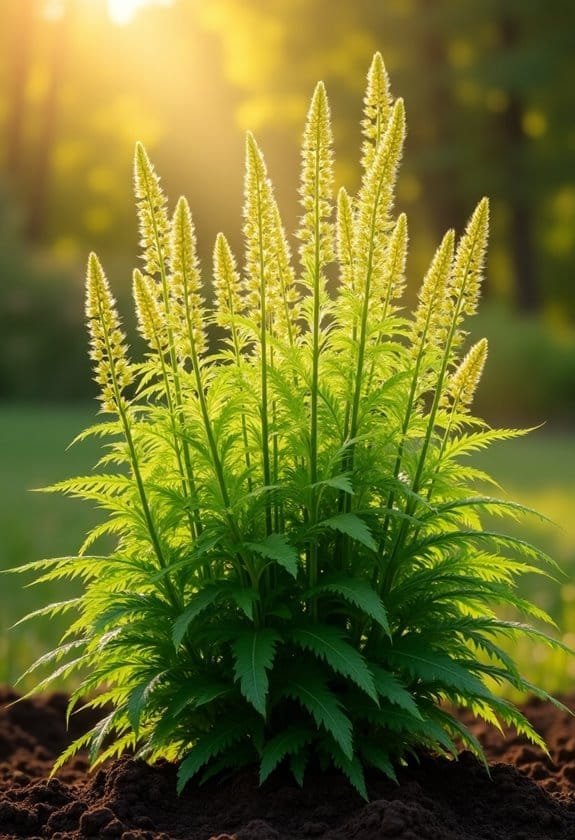
Common fennel (Foeniculum vulgare) flourishes best in full sunlight, requiring maximum exposure to promote healthy growth and development.
This perennial herb prefers well-drained, moisture-retentive soil rich in organic matter, which not only enhances its flavor but also supports its overall vigor.
During its early growth phase, fennel needs consistent moisture, but once established, it grows increasingly drought-tolerant, making it adaptable to various garden conditions.
Light
During the growing season, fennel thrives in full sun, requiring at least 6-8 hours of direct sunlight each day to achieve ideal growth and flavor development. This abundance of light not only fosters its upright growth but also enhances the aromatic qualities of its foliage and the beauty of its flowering umbels.
When planted in well-drained soil, fennel minimizes the risk of root rot, which could hinder its growth and liveliness. The combination of full sun and proper drainage enables the plant to develop a robust root system, essential for supporting its substantial height.
While fennel can endure partial shade, insufficient light conditions generally result in reduced flavor intensity and elongated, stretched growth, which may compromise its culinary applications. As a result, gardeners should prioritize locations that maximize sunlight exposure, particularly when starting fennel from seed in the spring.
Such careful planning guarantees strong seedling growth and early maturity, allowing for a bountiful harvest. Consequently, providing fennel with the right light conditions plays a significant role in achieving its full potential, reminding growers that nature's ingredients are often intertwined with the elements of care and attention they provide.
Soil
Fennel consistently flourishes in well-drained, moist, and organically rich soils, making soil quality a critical factor for its growth. This culinary herb demonstrates adaptability, thriving in various soil types, including sandy and clay compositions, though it shows a marked preference for enriched environments. Soil fertility plays a significant role in determining the herb's flavor profile; overly rich soils may yield less flavorful results.
For ideal growth and particularly bulb development—especially in Florence fennel which demands richer conditions—consistent moisture is essential. Ensuring the soil remains sufficiently moist throughout the growing season is imperative, as it helps maximize the plant's potential.
When sown to a depth of about ¼ inch, fennel seeds typically germinate within one to two weeks, ideally occurring after the final frost. Given its drought resistance once established, fennel may still withstand periods of dryness; however, gardeners should aim to maintain well-drained conditions in addition to providing that consistently moist environment essential for robust growth.
This careful balance in soil quality allows the enchanting flavors of fennel to flourish, enriching culinary creations while promoting overall plant health.
Water
Maintaining appropriate water levels is essential for Foeniculum vulgare, especially during its early growth stages when consistent moisture supports ideal development. This herb thrives in well-drained soil, and achieving the right balance of moisture is vital for avoiding waterlogged conditions, which can lead to root rot.
Consequently, guaranteeing good drainage is paramount to prevent detrimental water accumulation around the roots.
Once established, fennel demonstrates remarkable drought tolerance and can withstand periods of dry conditions without significant impact on its growth or flavor profile.
However, to optimize its aromatic qualities, gardeners should aim to cultivate fennel in less fertile soils. Overly rich substrates can dilute these enticing characteristics, making it necessary to avoid excess nutrients.
When irrigating, gardeners should employ deep but infrequent watering practices. This method encourages the development of deep roots, as the plants seek moisture below the surface, enhancing overall health and resilience.
By fostering a dedicated watering approach that respects the plant's requirements, cultivators can guarantee that Foeniculum vulgare flourishes, producing flavorful, aromatic foliage that enriches their culinary endeavors.
Ultimately, understanding the interplay between water and drainage lays the foundation for a successful fennel cultivation experience.
Temperature
For ideal growth, Foeniculum vulgare thrives in a range of temperatures, ideally between 60°F to 70°F (15°C to 21°C). This hardy plant flourishes in USDA hardiness zones 4-9, accommodating various temperate climates.
Guaranteeing ideal conditions is essential, as Fennel is particularly sensitive to frost. Consequently, gardeners should sow seeds 2-3 weeks before the last frost, or in early fall, to maximize growth potential.
In these temperature ranges, Fennel can develop its characteristic aromatic flavor and sturdy structure. It prefers full sun exposure, needing at least six hours of direct sunlight each day to guarantee proper growth and flavor enhancement.
While this herbaceous plant demonstrates drought resistance once established, it requires consistent moisture during its initial growth phases—a necessity for its development.
Adapting to various soil types, including clay and sandy soils, Fennel performs best in well-drained, moist, and organically rich substrates.
Successful cultivation hinges not only on temperature but also on careful attention to frost periods and moisture levels, creating a harmonious environment in which Foeniculum vulgare can truly thrive.
Pollinator Criteria
Foeniculum vulgare attracts a plethora of pollinators, including bees and butterflies, due to its abundant nectar-rich flowers.
The plant employs a wind-assisted pollination method, where its small, bright yellow blooms form flattened umbels, providing easy access and enhancing the likelihood of cross-pollination.
Attracted Pollinators
Fennel's vibrant, aromatic flowers are a magnet for various pollinators, making it an essential addition to any garden focused on supporting local wildlife. The tiny yellow flowers of Foeniculum vulgare are arranged in large, flattened umbels that create an inviting sight while serving as a prolific nectar source. This arrangement not only attracts bees but also entices butterflies, including the splendid Black Swallowtail and Anise Swallowtail, which rely on fennel as a critical host plant for their caterpillars.
During the peak summer months of July and August, fennel's blooms coincide perfectly with heightened pollinator activity, ensuring ample resources for these essential insects. By fostering an environment rich in biodiversity, fennel indirectly promotes the health of local ecosystems, as a diverse range of species can thrive around its alluring flowers.
Gardeners who incorporate fennel into their landscapes contribute to the sustainability of pollinator populations, enabling natural pest management through increased predation. Ultimately, fennel's role as a beacon for pollinators not only enhances the beauty of gardens but nurtures an interconnected web of life crucial for our ecological balance.
Pollination Method
While many plants depend on wind or self-pollination, common fennel (Foeniculum vulgare) primarily attracts insect pollinators to guarantee effective reproduction. This perennial herb features aromatic yellow flowers, which bloom in terminal compound umbels, providing stunning visual displays that draw pollinators like bees and butterflies to its nectar-rich blooms.
During its flourishing period from July to August, these flowers align perfectly with the peak activity of numerous pollinators, facilitating successful pollination.
Insect pollination plays a critical role in fennel's reproductive success, as it enhances genetic diversity through cross-pollination. The accessibility of fennel's flowers, combined with their vibrant appearance, makes them particularly appealing to local pollinator species, including the Black and Anise Swallowtail butterflies, which find refuge and nourishment in this plant.
By offering both a habitat and a food source, fennel greatly contributes to supporting local pollinator populations.
The presence of common fennel in gardens not only promotes biodiversity but also fosters a healthy ecosystem, proving invaluable for wildlife-friendly gardens aimed at enhancing pollinator habitats.
Consequently, cultivating fennel benefits both human gardeners and the myriad of pollinators that flourish in their environment.
Care & Maintenance
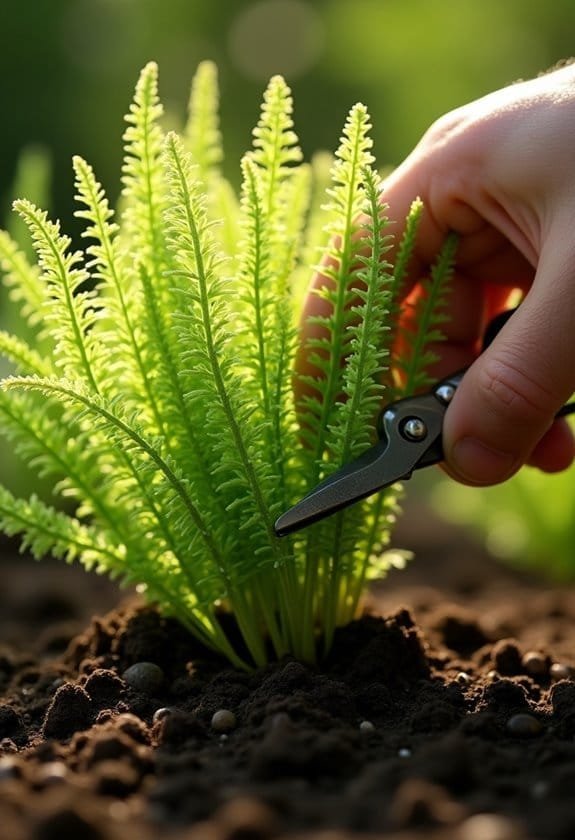
To guarantee successful growth of Foeniculum vulgare, proper planting and ongoing care are essential.
Fennel requires full sun, well-drained soil, and consistent moisture during its early stages, thriving when seeds are sown about ¼ inch deep, ideally 2-3 weeks prior to the last frost.
Additionally, companion planting can enhance fennel's health and flavor, making it a valuable addition to any garden ecosystem.
Planting Tips
Typically, gardeners should sow fennel seeds about ¼ inch deep in well-drained soil 2-3 weeks before the last frost to assure ideal germination. This timing allows the seeds to take advantage of the warm soil temperatures that promote sprouting.
To plant fennel effectively, choosing a location with full sun is essential, as the plant thrives under bright, direct sunlight, which greatly enhances its growth potential.
Once the seedlings reach a height of 3 to 4 inches, it's important to thin them to a spacing of 4 to 6 inches apart. This guarantees that each plant has sufficient room to grow and develop robustly, helping to prevent overcrowding, which can stunt growth.
For varieties like Florence fennel, maintaining consistent moisture in the soil is particularly important, as they require rich soil and regular watering to form their characteristic bulbs.
Moreover, removing spent flowers can prevent unwanted self-seeding, as fennel has a tendency to naturalize outside its intended areas if left unmanaged.
Ongoing Care
For ideal growth and health, ongoing care for Foeniculum vulgare involves consistent watering and attention to soil conditions. Regular watering, especially during the early growth stages, is essential for maintaining consistently moist soil, which supports healthy development and prolific bulb formation, particularly for Florence fennel.
A well-drained soil enriched with organic matter suitably adjusts to pH levels between 6.0 and 7.0, enhancing flavor without excessive fertility that can dilute taste. Fennel also thrives with full sun exposure, requiring at least 6-8 hours of sunlight each day to foster peak growth and mitigate the risk of bolting in warmer climates.
In addition to watering and soil care, deadheading spent flowers is recommended. This practice prevents self-seeding and unwarranted spreading, allowing the plant to concentrate its energy on foliage and bulb production.
Lastly, while fennel generally proves hardy against pests, monitoring for occasional aphids and caterpillars—like the anise swallowtail—is advisable.
Suggested Companions
Often regarded as a versatile companion plant, Foeniculum vulgare harmonizes well with tomatoes, carrots, and cabbage. These plants benefit from fennel's pest-repelling properties, which create a healthier gardening environment. By attracting beneficial insects, such as ladybugs and lacewings, fennel enhances the overall biodiversity in mixed gardens.
However, gardeners should avoid planting fennel near dill, as both plants can hinder one another's growth, ultimately resulting in inferior flavor development.
Regarding structure, fennel typically reaches heights of 3 to 6 feet, providing an excellent backdrop for shorter companion plants.
To maintain an ideal growing environment, make sure fennel is spaced 4 to 6 inches apart. This spacing promotes adequate air circulation, a critical factor in preventing disease while allowing each plant sufficient room to thrive.
Additionally, gardeners should regularly remove spent flowers after blooming. This practice controls self-seeding, keeping fennel from becoming overly invasive and maintaining desired growth within garden borders.
Common Issues
When cultivating Foeniculum vulgare, gardeners must remain vigilant about common issues that can impact the plant's health and productivity.
Pests like aphids can invade and cause significant damage, requiring proactive management strategies, while diseases such as powdery mildew thrive in humid environments, highlighting the importance of proper air circulation and spacing.
Additionally, over-fertilization may result in an abundance of foliage that lacks flavor, emphasizing the need for balanced soil nutrients to maintain culinary quality.
Pests/Diseases
Dealing with pests and diseases is essential to maintaining healthy fennel plants. While fennel generally faces few pest issues, it can attract unwanted visitors like aphids, spider mites, and the notorious tomato hornworm. These pests tend to sap energy from the plants, potentially stunting their growth.
Additionally, anise swallowtail caterpillars are frequent patrons of fennel foliage as they depend on it for nourishment; fortunately, they rarely inflict considerable damage.
Fungal diseases, such as powdery mildew, pose another threat, especially in humid conditions or when plants are overcrowded. This fungal ailment manifests as a white, powdery coating, inhibiting photosynthesis and overall plant health. To combat these diseases, maintaining good air circulation around plants is critical. Avoiding overhead watering can greatly reduce humidity levels that favor disease development.
Regular monitoring of plants is essential. By swiftly removing affected plant parts, gardeners can limit pests and diseases, allowing fennel to thrive.
Consequently, ongoing vigilance enhances the resilience of these aromatic herbs, ensuring they remain vibrant and productive despite potential challenges in the garden.
Solutions
While fennel typically faces few pest issues, gardeners can adopt effective solutions to address common concerns.
Aphids and swallowtail caterpillars, particularly the black and anise varieties, may pose challenges, especially for those aiming to preserve lush foliage. Utilizing insecticidal soaps or introducing beneficial insects like ladybugs can considerably mitigate pest populations. Effective pest management involves maintaining a balanced ecosystem that deters harmful invaders while allowing fennel to thrive. Additionally, regular flower removal helps to promote healthier growth and diversify plant health.
In terms of soil health, ensuring well-drained substrates is essential to prevent root rot—a common risk associated with overwatering.
Gardeners should cultivate fennel in moderate, less fertile soils to enhance its distinctive anise-like flavor, as higher soil fertility may dilute taste intensity. Regular monitoring and adjustment of watering practices increase the likelihood of ideal growth.
Moreover, fennel's propensity for self-seeding can lead to invasiveness if not properly managed. To combat this, timely removal of spent flowers can prevent unwanted spread, keeping the garden orderly and facilitating better management of soil fertility and plant health. Additionally, understanding the effects of invasive plants on local ecosystems can help gardeners make informed decisions about their planting choices.
Summary
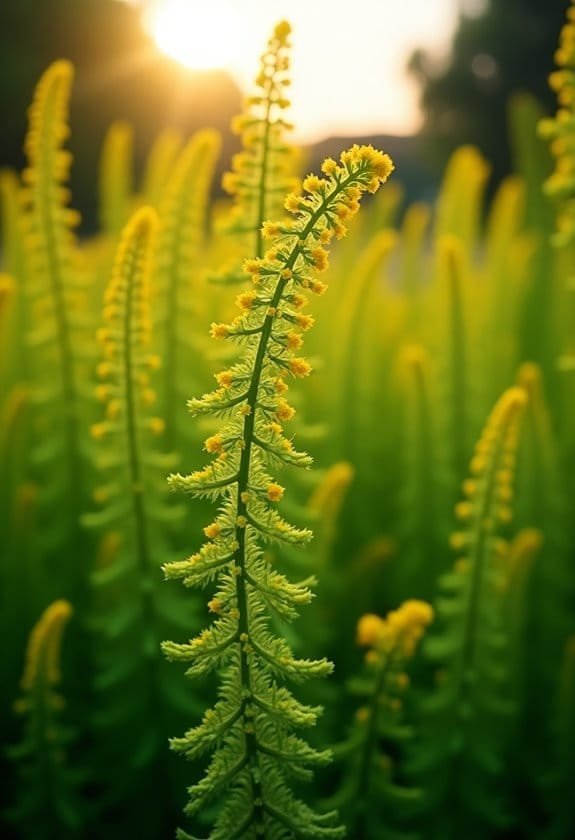
Foeniculum vulgare, or common fennel, is a versatile herbaceous perennial native to the Mediterranean region, valued for its aromatic leaves, seeds, and bulb-like stems.
This remarkable plant can reach heights of up to 6 feet, showcasing finely dissected dark green leaves that enhance the aesthetic appeal of gardens. Its small golden-yellow flowers, arranged in terminal compound umbels, not only captivate the eye but also attract various pollinators, particularly the lively swallowtail butterflies.
Fennel's edible components serve a variety of culinary purposes; the fragrant leaves find their way into salads and complement fish dishes, while the seeds, often ground into spice blends, add a distinct flavor profile. The bulbs from Florence fennel are versatile enough to be enjoyed both raw and cooked.
Thriving in full sun and well-drained soil, fennel germinates from seeds in approximately 1-2 weeks, demonstrating drought tolerance once established, albeit favoring consistent moisture for ideal bulb development.
As a perennial herb, fennel plays an essential role in fostering local biodiversity and enhancing the ecological vibrancy of gardens, making it a cherished addition for both culinary and environmental enthusiasts alike.