Hardy fuchsias, a enchanting group within the Fuchsia genus, encompass over 100 distinct species, each showcasing splendid bi-colored blooms that flourish even in colder climates. Adaptable to USDA Hardiness Zones 6 to 9, these resilient plants can endure temperatures as low as -10ºF (-23ºC). They thrive in well-drained, fertile soil, ideally under six hours of sunlight daily, which spurs their vibrant flowering from late spring until the first frost. These stunning flowers, appealing to hummingbirds and other pollinators, create dynamic visual interest in gardens. For those keen to cultivate these beauties, further insights await discovery.
Main Points
- Over 100 species of hardy fuchsias exist, valued for their vibrant, bi-colored blooms.
- Notable species include Fuchsia magellanica, known for hardiness and continuous blooming.
- Fuchsia Debrons Black Cherry exhibits diverse growth habits, suitable for various gardening styles.
- Hardy fuchsias thrive in USDA Zones 6 to 9, tolerating cold down to -10ºF (-23ºC).
- Compact varieties are ideal for borders, while taller types can form effective hedges in landscapes.
Introduction
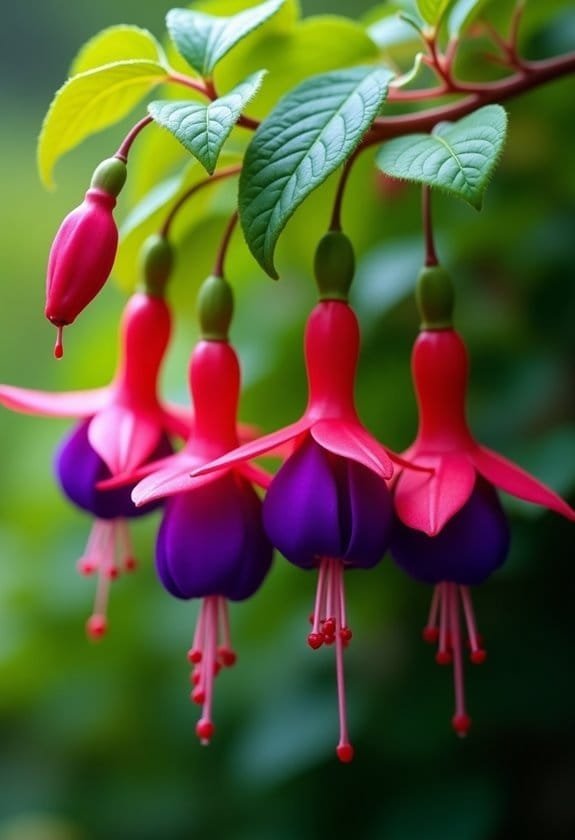
The Fuchsia genus, with its enchanting diversity, captivates both gardeners and nature enthusiasts alike. Comprising over 100 species, these flowering plants, commonly known as hardy fuchsias, are scientifically recognized for their vibrant bi-colored blooms that flourish in USDA Hardiness Zones 6 to 9.
Common Name
Often referred to by their common name, hardy fuchsias are beloved for their stunning blooms and remarkable resilience. These perennial plants can endure the unpredictable weather of most UK gardens without requiring winter protection, making them a favorite among gardeners.
Characterized by their upright growth habit and arching stems—often weighed down by clusters of vibrant flowers—hardy fuchsias appear like miniature ballerinas gracefully dancing in hues of pink, red, and violet-purple.
Thriving in moist-but-well-drained soil, hardy fuchsias prefer sunny or lightly shaded areas, while their ideal growth is usually supported by sheltering them from cold winds. Common varieties such as Fuchsia magellanica and Fuchsia magellanica 'Hawkshead' are particularly notable not only for their hardiness but also for being exceptionally attractive to essential pollinators like bees and hummingbirds, thereby contributing to a thriving garden ecosystem.
Regular maintenance, including punctual pruning in mid to late April and diligent watering, is essential in promoting vigorous growth and abundant blooming throughout the growing season.
As a result, the hardy fuchsia serves both aesthetic and ecological purposes, enriching outdoor spaces with their beauty and vibrancy.
Scientific Name
Fuchsia species encompass a diverse range of plants within the genus Fuchsia, which boasts over 100 species characterized by their unique flower colors, shapes, and growth habits. Among these, Fuchsia magellanica stands out as a quintessential example of hardy fuchsias, celebrated for its remarkable cold tolerance that allows it to endure winter temperatures as low as -10ºF (-23ºC).
Scientific classifications of this genus categorize species based on various attributes, including their growth forms—be it upright or trailing—and the morphology of their flowers, which can be single, semi-double, or double.
Fuchsia magellanica, in particular, is beloved for its stunning bi-colored flowers that not only bring beauty but also attract essential pollinators like bees and hummingbirds, promoting thriving biodiversity in gardens.
Significant varieties, such as Fuchsia magellanica Aurea, showcase delightful greenish-gold leaves paired with vibrant red and purple blossoms, making them a striking addition to any landscape.
The intricate classification and adaptability of these species highlight their ecological significance and appeal, inviting both gardening enthusiasts and scientists to explore their enchanting world.
Overview
A vibrant display of colors and forms, hardy fuchsias captivate gardeners and nature enthusiasts alike. These remarkable plants include numerous species that primarily thrive in USDA Hardiness Zones 6 to 9, showcasing exceptional resilience, particularly in cooler climates.
One of the most esteemed varieties, Fuchsia magellanica, can endure frigid temperatures plummeting to -10ºF (-23ºC), highlighting the adaptability of hardy fuchsias.
Characterized by their strikingly vibrant flowers, these plants bloom continuously from late spring until the first frost, revealing a delightful palette of pink, purple, white, and peach hues.
Hardy fuchsias exhibit various growth habits, including upright, trailing, and bushy forms, making them versatile for garden beds, hanging baskets, and containers alike.
Once established, hardy fuchsias require relatively low maintenance, preferring fertile, well-drained soil and regular watering. They thrive with the added benefit of mulch during the winter months, which helps insulate their roots and retain moisture.
Key Features
Hardy fuchsia species present remarkable features that enhance their appeal in various gardens.
These plants typically reach heights of 2 to 4 feet, exhibiting diverse growth habits such as upright forms, lax spreading, and trailing options, all while showcasing delightful bi-colored flowers in vibrant hues.
Their flowering season primarily spans from late spring to early fall, offering a continuous display of color that not only beautifies landscapes but also invites pollinators like hummingbirds to partake in their nectar.
Growth Size
While various species showcase different growth sizes, compact varieties like Fuchsia magellanica Aurea typically reach around 3 feet, making them perfect for low borders and containers.
These hardy fuchsias not only provide versatility in garden design but also display a delightful array of blooms. On the other hand, taller species, such as Fuchsia Debrons Black Cherry, can grow up to 5 feet, positioning them as excellent choices for flowering hedges or back borders, where they create a striking visual impact.
Many hardy fuchsias exhibit either an upright or arching growth habit, enabling them to fill flower beds effectively, enhancing the overall landscape aesthetics.
The growth size is vital as it influences flowering abundance; bushier varieties often yield more blooms due to increased side shoots, which contribute to a more profuse floral display.
Compact fuchsia types, designated as D (Dwarf), excel in small gardens or container arrangements, ideal for those aiming to make a statement in vertical gardening.
Essentially, understanding the growth sizes of hardy fuchsias allows gardeners to select the perfect variety for their specific landscape needs, ensuring both beauty and functionality.
Appearance
In gardens, hardy fuchsias stand out with their vibrant, bi-colored flowers that dangle in clusters, often resembling tiny ballerinas. These breathtaking blooms typically showcase shades of pink, red, purple, and white, earning them a distinguished spot in garden design and aesthetics. The allure of hardy varieties lies not just in their striking flowers, but also in their lush, green foliage, which can exhibit either opposite or alternate leaf arrangements.
On average, these hardy fuchsias achieve a height of 2 to 5 feet, depending on the particular cultivar and its growth conditions. Their growth habits can be bushy or trailing, allowing for versatile gardening applications.
Gardeners appreciate these hardy varieties for their adaptability, whether for eye-catching container displays or as flowering hedges that define spaces.
The unique combination of striking colors and diverse forms invites admiration and offers a delightful contrast to other garden plants. By incorporating hardy fuchsias, one can create a dynamic focal point, enhancing the visual appeal of any landscape.
Ultimately, their elegant appearance makes these plants a prized addition to any gardener's palette, blending beauty with resilience.
Flowering Season
From late spring to the first frost, hardy fuchsias light up gardens with their vibrant blooms. Their flowering season typically commences in May or June, heralding a spectacle of colors that brightens landscapes and attracts a variety of pollinators. Depending on climate and specific variety, they extend their blooming period until colder temperatures set in.
The flower colors of fuchsias range magnificently from delicate pinks and deep purples to pristine whites and warm peaches, creating stunning visual impacts that captivate both gardeners and wildlife alike. Among the many varieties, Fuchsia magellanica stands out for its hardiness, flourishing even in cooler conditions.
For those nurturing fuchsias, the potential for continuous bloom exists, as some varieties can produce flowers abundantly through dedicated care, including proper watering and fertilization. This commitment guarantees a flourishing display, enriching gardens with beauty and life throughout the flowering season.
With their resilience and the brilliance of their blooms, hardy fuchsias serve not just as a garden ornament but as an essential component of any biodiverse habitat, inviting nature's wonders into our cultivated spaces.
Growing Requirements
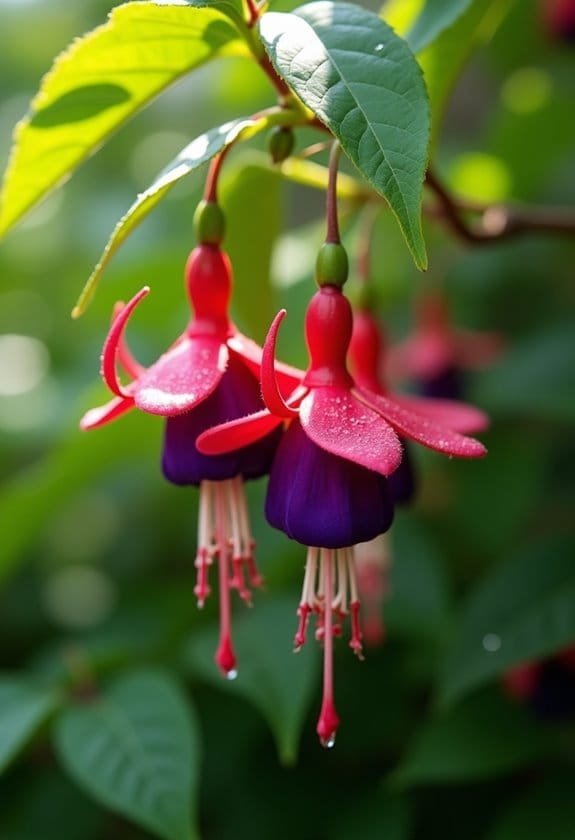
In growing hardy fuchsias, understanding their requirements is essential for healthy development and vibrant blooms.
These plants flourish in well-drained, fertile soil enriched with organic matter and thrive in locations that receive at least half a day of sunlight, balancing light and shade for peak growth.
Additionally, maintaining adequate moisture through regular watering, particularly during dry spells, guarantees the roots remain hydrated while protecting them from extreme temperatures.
Light
Light plays an essential role in the growth and blooming of fuchsia species. These hardy plants prefer full sun to partial shade, flourishing in environments that provide at least six hours of sunlight each day. With sufficient light, fuchsias produce vibrant blooms, including shades of light pink, that can enhance any garden setting.
However, while they tolerate light shade, excessive deep shade can greatly hinder their flowering and overall health, making proper light exposure a necessary factor. Optimal light conditions not only promote lush growth but also reduce the likelihood of diseases such as rust, as adequate sunlight fosters good air circulation around the plants.
For newly planted fuchsias, it's important to allow them to acclimatize gradually to their permanent locations—this guarantees they adjust to their light conditions effectively, maximizing their growth potential. Moreover, variations in light exposure can influence both the height and bloom intensity of different hardy fuchsia varieties, highlighting the significance of tailored care.
Ultimately, cultivating fuchsias successfully involves a thoughtful balance of sun exposure, allowing these stunning plants to thrive and display their enchanting colors beautifully.
Soil
For fuchsia species to thrive, the right soil conditions are as important as their light requirements.
Hardy fuchsias flourish in well-drained, fertile soil that's moist but not overly saturated, emphasizing the necessity of good drainage to prevent root rot. The optimum soil pH for these vibrant flowers ranges from 6.0 to 7.0, fostering robust growth and abundant blooms.
Incorporating organic compost into the planting site enriches the soil with essential nutrients, thereby enhancing fuchsia development and blooming potential. This organic matter serves as a powerhouse, promoting microbial activity crucial for nutrient uptake.
Additionally, mulching around fuchsia plants proves beneficial; it helps retain soil moisture, regulates temperature, and suppresses weeds, contributing to the plants' overall health and vigor.
Furthermore, regularly amending the soil with balanced fertilizers, such as 20-20-20 or 16-16-16, during the growing season nurtures vigorous growth and prolific flowering.
Water
Watering plays an essential role in the healthy growth of fuchsia species, especially during their initial establishment and in times of drought. These hardy fuchsias thrive in well-drained, fertile, and moist soil, ideally with a pH between 6.0 and 7.0, which supports robust root development and vibrant pink flowers.
Regular watering is imperative for fuchsia success, particularly in the first few years and during dry spells; morning watering is recommended to reduce disease risks, such as rust.
Once established, fuchsias generally require watering once a week during the warmer summer months. However, gardeners must avoid overwatering, as excessive moisture can lead to detrimental root rot.
Applying mulch around fuchsias not only helps retain soil moisture but also suppresses weeds and offers insulating protection for the roots during colder conditions.
It's essential to adapt the watering frequency based on environmental factors like rainfall and temperature. By ensuring the soil remains consistently moist but not soggy, gardeners can cultivate thriving fuchsias, ultimately witnessing their beautiful pink flowers flourish into stunning displays throughout the growing season.
Providing the right hydration can lead to a bountiful and colorful landscape.
Temperature
Fuchsia species thrive best in moderate temperature environments, making them well-suited for USDA Hardiness Zones 6 to 9. These resilient plants can withstand temperatures as low as -10ºF (-23ºC), guaranteeing they remain vibrant even in challenging climates.
For peak growth year round, fuchsias prefer well-drained, fertile, and moist soil, which nurtures their root systems and helps them flourish.
When it comes to sunlight, full sun to partial shade offers the perfect balance. A minimum of half a day of sunlight is crucial to promote the spectacular blooming that fuchsias are renowned for, allowing their colorful blossoms to emerge magnificently.
Acclimatization plays a critical role in the health of hardy fuchsias, particularly as the risk of frost recedes. Planting these varieties between mid-May and June is advisable, as this timing promotes successful establishment.
To further protect these plants during the colder months, applying a layer of heavy mulch can shield the crown of tender fuchsias from harsh winter conditions, preserving their liveliness until the warmth of spring returns. This commitment to detail guarantees garden enthusiasts enjoy vibrant fuchsia displays throughout the growing season.
Pollinator Criteria
Fuchsia species exhibit unique floral characteristics that specifically attract a variety of pollinators, primarily hummingbirds and bees, thanks to their vibrant, tubular structures.
These adaptations not only facilitate effective pollination through mechanisms such as nectar guides, leading pollinators directly to the energy-rich reward, but also support a diverse ecosystem by enticing additional visitors like butterflies.
As these hardy plants bloom from late spring until the first frost, they guarantee a continuous food source, enhancing their role in promoting biodiversity throughout the growing season.
Attracted Pollinators
During the blooming season, fuchsias consistently attract a variety of pollinators, including bees, butterflies, and hummingbirds. These vibrant, bi-colored flowers, often featuring striking pink hues, offer an alluring spectacle that entices these creatures.
The tubular shape of fuchsia blossoms allows hummingbirds, with their remarkable agility, to access the nectar efficiently. This nectar, abundant and richly sweet, serves as a crucial food source, fortifying the energy of these diligent workers.
Blooming from late spring until the first frost, fuchsias provide a continuous food supply throughout the growing season, ensuring that pollinators have a consistent resource.
This extended blooming period considerably enhances local ecosystems, as diverse pollinator species flock to the gardens where fuchsias thrive. The presence of these hardy plants not only supports individual pollinators but also bolsters overall biodiversity by fostering interactions within various species, thereby promoting ecological health. Additionally, the nectar-rich flowers from fuchsias can attract specialized pollinators similar to those drawn to Campanula glomerata, enhancing the diversity of visiting species.
Pollination Method
The diverse array of pollinators attracted to hardy fuchsia species reflects their unique adaptations for successful pollination. With white sepals framing vibrant red tubular flowers, these plants create an eye-catching display that beckons bees, butterflies, and hummingbirds. The bi-colored blooms hang in clusters, enhancing their visibility in gardens and attracting pollinators in search of sweet nectar.
The sweet scent emitted by fuchsia flowers not only draws in these vital species but also indicates their potential for providing sustenance. These blossoms typically bloom from late spring until the first frost, ensuring a continuous food source for pollinators throughout warmer months.
Hardy fuchsias employ a strategy of opportunistic pollination, relying on various species to transfer pollen as they move from flower to flower while feeding.
Moreover, the edible fruits produced by some hardy fuchsia species bolster wildlife nutrition, resembling grape flavor in taste. This symbiotic relationship fosters biodiversity in the ecosystem, as diverse pollinators contribute to the reproductive success of fuchsia species while benefiting from the sweet rewards. Additionally, just as wild strawberries rely on diverse pollinators to enhance fruit set and quality, hardy fuchsias thrive through their mutualistic interactions within the garden environment.
Care & Maintenance
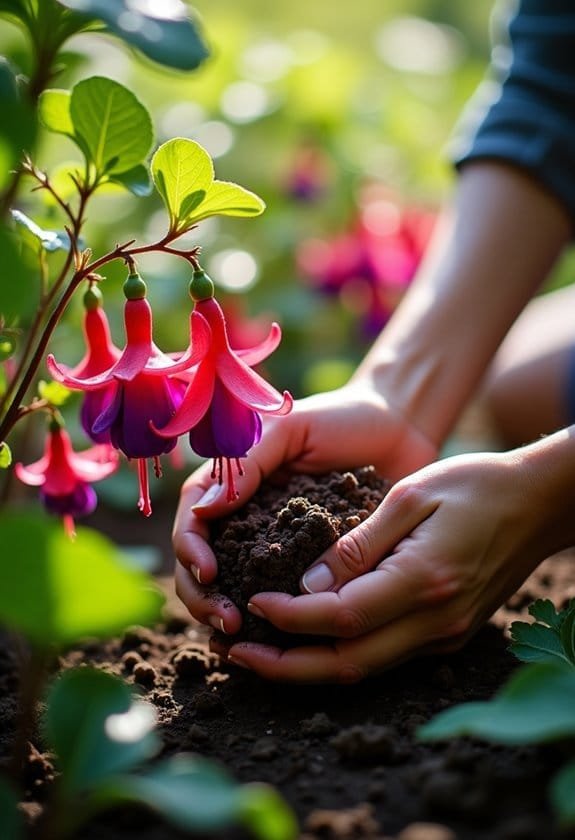
Caring for fuchsia plants involves a harmonious blend of proper planting techniques and ongoing maintenance strategies that are essential for their vibrant health.
Regular watering, especially during the early years, helps establish deep, resilient roots, while monthly fertilization during the growing season guarantees flourishing blooms.
Additionally, selecting suitable companions and implementing protective measures, such as mulching, can greatly enhance their growth and vitality in various environments.
Planting Tips
Ideal growth for hardy fuchsias hinges on careful planning and attention to detail when planting and maintaining them. Timing is essential; gardeners should plant these vibrant perennials after the last frost date, typically between mid-May and June, to foster best rooting and initial growth.
Ensuring the soil is well-drained yet rich in nutrients is equally significant, as this environment supports healthy development necessary for robust blooms.
During dry spells, it's important to provide regular watering, preferably in the early morning. This practice prevents rust and drooping while maintaining adequate moisture levels in the soil.
Moreover, to protect the fuchsia's crown from harsh winter conditions, mulching in the fall is an effective strategy; it retains moisture and enhances winter survival.
Pruning dead or damaged growth in mid to late April not only improves the plant's overall shape but also encourages new growth, allowing hardy fuchsias to flourish.
Ongoing Care
Ongoing care plays an essential role in the health and vibrancy of hardy fuchsias following their establishment in the garden. Regular watering is imperative, particularly during dry spells, where weekly applications often suffice during the summer months.
To enhance moisture retention, gardening enthusiasts should consider mulching; this practice not only suppresses weeds but also provides insulation against the frigid temperatures of winter.
Pruning, scheduled for mid to late April, proves beneficial as it removes dead growth and encourages the emergence of healthy new shoots, ultimately fostering vigorous blooming, including those alluring white flowers gardeners admire.
Throughout the growing season, fertilization is highly recommended, with monthly applications of a balanced fertilizer—such as 20-20-20 or 16-16-16—boosting the fuchsia's flowering potential and overall health.
Moreover, vigilant monitoring for pests and diseases, including the dreaded powdery mildew and aphids, is essential for sustaining the vibrancy of these plants.
Suggested Companions
When planning a garden with hardy fuchsias, choosing the right companion plants can make a significant difference in aesthetics and overall plant health. To create a vibrant landscape, fuchsias thrive alongside plants like hostas and astilbes, which enjoy similar light and moisture conditions, resulting in an eye-catching display.
Incorporating perennial herbs, such as chives and mint, provides additional benefits, as these herbs can repel pests that threaten fuchsias.
For a sun-kissed portion of the garden, including lavender and salvia not only complements the fuchsia's colorful blooms but also attracts essential pollinators, thereby enhancing biodiversity.
When arranging these companions, it's important to allow ample space—at least 18 to 24 inches—between the fuchsias and their neighbors, fostering healthy growth and promoting airflow.
Additionally, regular checks on moisture levels are essential during the establishment phase, ensuring all plants receive the hydration they need.
The visual harmony created by arranging fuchsias with flowers featuring white sepals alongside these companions leads to a cohesive and thriving garden that's both functional and beautiful.
Common Issues
Hardy fuchsias often face challenges from various pests and diseases that can threaten their vigor.
Common culprits, such as powdery mildew, aphids, and rust disease, require prompt attention to prevent significant damage and guarantee flourishing growth.
Pests/Diseases
Fuchsia plants often face a range of pests and diseases that can challenge their growth and significance. One of the prevalent diseases is powdery mildew, which flourishes in humid conditions and particularly affects the lush foliage, including dark pink flowers if not adequately addressed.
Common pests, such as aphids, whiteflies, spider mites, and thrips, threaten fuchsias by feeding on their sap, ultimately weakening the plants and facilitating disease transmission.
In the spring, slugs and root weevils tend to exploit tender new growth, making vigilance imperative for gardeners.
Botrytis mold poses another seasonal threat, often emerging in cooler months when plants are tightly packed, leading to poor air circulation and consequent damage to the foliage and vibrant flowers.
Moreover, rust disease identifies itself through raised orange bumps on the leaves, signaling an urgent need for action to prevent its spread.
Each of these pests and diseases undermines the beauty and liveliness of fuchsias, particularly those adorned with dark pink blooms, highlighting the necessity for vigilant monitoring and prompt management in maintaining their health.
Solutions
Addressing the issues caused by pests and diseases in fuchsia plants requires proactive measures and sound practices. Home gardeners should employ regular monitoring strategies, particularly for common pests like aphids and spider mites, which tend to multiply quickly on these vibrant plants.
Utilizing insecticidal soap can effectively deter these nuisances, protecting the delicate blue pollen responsible for fuchsia reproduction.
Moreover, gardeners must remain vigilant during spring to check for slugs and root weevils that may threaten new growth. Implementing barriers such as copper tape or organic slug bait can greatly reduce these hazards.
Fungal infections, especially powdery mildew and Botrytis mold, thrive in environments with poor air circulation. Gardeners can alleviate these issues by ensuring adequate spacing between plants and engaging in routine pruning practices to promote airflow.
When observing raised orange bumps indicative of rust disease, immediate removal of affected leaves is essential to curb potential outbreaks.
Are Ice Plants Similar to Hardy Fuchsia Types and Suitable for Similar Growing Conditions?
Yes, delosperma floribundum, also known as ice plant, is similar to hardy fuchsia types and can thrive in similar growing conditions. Both are resilient, drought-tolerant plants that prefer well-drained soil and full sun. They also add vibrant color to the garden and attract pollinators, making them excellent choices for any landscape.
Summary
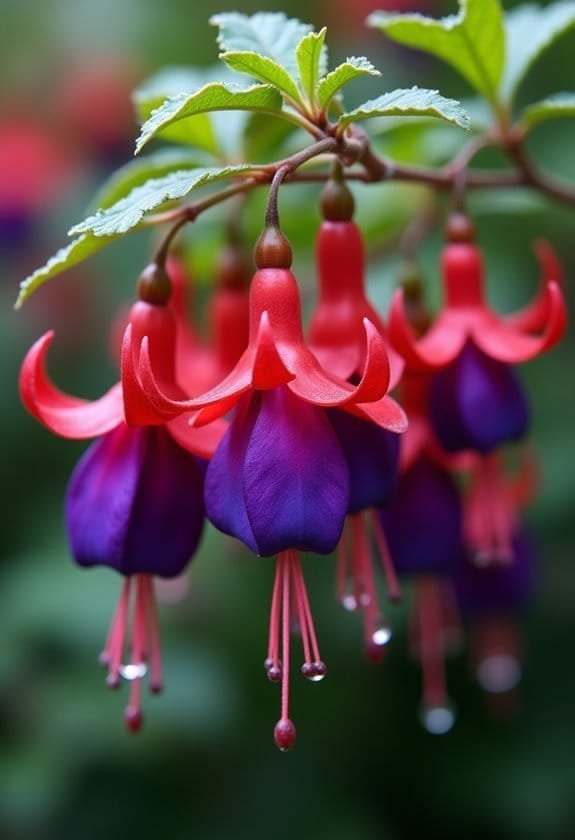
Over 100 species of resilient fuchsias thrive in various conditions, making them a popular choice among gardeners. Among these, Fuchsia magellanica stands out due to its remarkable adaptability, flourishing in USDA Hardiness Zones 6-11.
These hardy fuchsias exhibit a stunning array of colors, blooming from late spring until the first frost with vibrant flowers in shades of pink, purple, white, and peach.
Varieties like Fuchsia Checkerboard and Fuchsia Debrons Black Cherry capture attention with their unique bi-colored flowers and diverse growth habits, which include both upright and trailing forms.
Once established, these plants require minimal maintenance, favoring well-drained, fertile soil. Their ability to thrive in conditions ranging from full sun to partial shade, complemented by regular watering, enhances their appeal for both novice and experienced gardeners alike.
Moreover, the fruits produced by hardy fuchsias aren't only visually appealing but also edible, offering a flavor reminiscent of grapes with a subtle hint of black pepper.
Essentially, the diverse and hardy nature of fuchsias, especially Fuchsia magellanica, places them as an invaluable asset in any garden landscape, blending beauty with practicality.