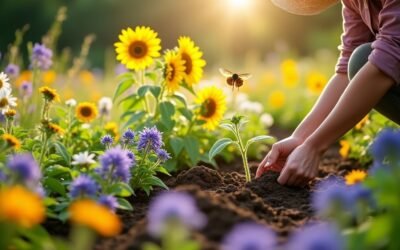
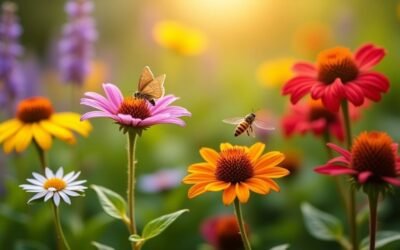
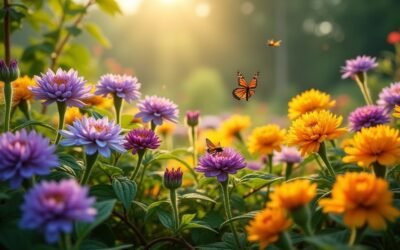
Geranium pratense, commonly known as Meadow Cranesbill, is a robust perennial that enchants with its vivid blue to violet flowers, reaching heights of 2 to 3 feet. Best admired from late spring through mid-summer, its five-petaled blooms allure pollinators, particularly bees and butterflies, thanks to their high nectar content. Thriving in USDA zones 3-9, this plant prefers well-drained loamy soil and exhibits moderate drought tolerance once established. Regular maintenance, including pruning and proper spacing of 18 to 24 inches, fosters healthy growth. With its ornamental charm and ecological importance, Meadow Cranesbill offers gardeners a delightful experience; one can discover even more benefits soon.
Main Points
- Geranium pratense, or Meadow Cranesbill, is a perennial plant that exhibits vibrant blue to violet blooms from late spring to mid-summer.
- This plant thrives in USDA hardiness zones 3-9, preferring well-drained loamy soils and full sun to partial shade.
- It attracts pollinators, especially bees and butterflies, due to its nectar-rich flowers with high sugar content.
- Regular maintenance includes cutting back spent flowers and providing adequate spacing of 18 to 24 inches for optimal growth.
- Common issues include pests like vine weevils and powdery mildew; integrated pest management strategies are recommended for effective control.
Introduction
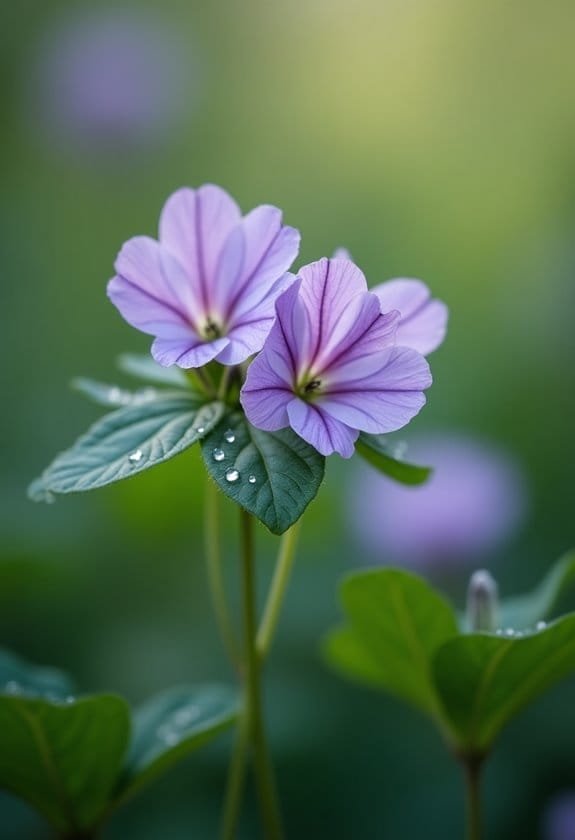
Geranium pratense, widely recognized as Meadow Cranesbill, stands out within the Geraniaceae family for its vibrant blooms and striking foliage.
Reaching heights of 2 to 3 feet, this perennial showcases large, saucer-shaped blue or violet flowers that flower in a stunning display from late spring to mid-summer, attracting essential pollinators to gardens and meadows alike.
Its adaptability to diverse soils and light conditions, paired with its historical significance in herbal remedies, underscores the importance of this remarkable plant in both ecological and ornamental contexts. Additionally, its nectar-rich flowers support a variety of pollinators, contributing to the overall biodiversity of the garden ecosystem.
Common Name
Known commonly as Meadow Cranesbill, this delightful perennial captures attention with its striking blue to violet flowers and lush foliage.
Geranium pratense, also referred to as Common Cranesbill or Wild Geranium, thrives in various environments, particularly in meadows and woodland edges. It typically grows to an impressive height of 2 to 3 feet (60 to 90 cm), making it a majestic presence in any garden.
The large, saucer-shaped blooms emerge from late spring to mid-summer, providing a striking accent against its deeply lobed green to bluish-green leaves. As fall approaches, the foliage transforms, turning bronze and enriching the seasonal palette of the landscape.
Historically, Meadow Cranesbill hasn't only captivated gardeners with its aesthetic qualities but has also been utilized in traditional herbal remedies, enhancing its appeal as a multifunctional plant.
Its combination of beauty and utility has earned Geranium pratense an Award of Garden merit in many horticultural circles, recognizing its significance in both cultivated gardens and naturalized settings.
This plant's resilience and charm make it a beloved addition to diverse ecosystems, fostering a connection between nature and garden artistry.
Scientific Name
Herbaceous perennials like Meadow Cranesbill are often defined by their scientific classification, which for this plant is Geranium pratense. This fascinating species, belonging to the Geraniaceae family, captivates with its large, saucer-shaped flowers that bring vivid color from late spring through mid-summer.
Typically, Geranium pratense stands proudly at heights of 2 to 3 feet, showcasing deeply-lobed green leaves that change to a striking bronze hue in the fall.
Native to Europe and parts of Asia, this perennial thrives in naturalized areas and wildflower meadows where it establishes a robust presence. The flowers of Geranium pratense aren't only visually alluring but also essential for various pollinators, as the plant produces nectar at an impressive rate of 1.3 to 1.5 mg every 24 hours. The sugar content, ranging from 57% to 71%, further enhances its attractiveness.
In exploring its scientific name, one appreciates how Geranium pratense embodies ecological beauty and functionality, highlighting the significant role it plays within its native habitats. This classification not only labels the plant but invites a deeper understanding of its environmental significance.
Overview
Amidst vibrant wildflower meadows and lush naturalized areas, Meadow Cranesbill, or Geranium pratense, stands out as an enchanting addition to gardens and landscapes. This clump-forming perennial herbaceous plant typically grows to a height of 2-3 feet (60-90 cm), making it an eye-catching focal point. Its large, saucer-shaped flowers bloom from late spring to mid-summer, presenting a stunning array of colors ranging from purple to blue. Each flower features five delicate petals and prominent stamens, contributing to its visual appeal.
Geranium pratense thrives in USDA hardiness zones 3-9 and prefers conditions best in full sun to part shade, alongside well-drained loamy soils. Once established, it exhibits moderate drought tolerance, making it manageable for diverse gardens.
Remarkably, Meadow Cranesbill plays a significant role in supporting local biodiversity, attracting pollinators with its nectar production, which averages 1.3 – 1.5 mg per 24 hours and boasts a sugar content of 57% to 71%. Additionally, like Scabiosa, it provides essential nectar for pollinators, enhancing the ecological interactions within garden environments.
Commonly found across Europe and Asia, its ornamental contributions enhance the ecological fabric of gardens while fostering a connection with nature, a metaphorical bridge between cultivated spaces and wildflower habitats.
Key Features
Geranium pratense, or Meadow Cranesbill, exhibits an impressive growth size, typically reaching heights between 2 to 3 feet (60 to 90 cm).
Its striking appearance features large, vibrant blue to violet, saucer-shaped flowers that bloom from late spring through mid-summer, while its deeply-lobed leaves change to a rich bronze in the fall.
These key features not only enhance its ornamental value but also reflect its adaptability to various habitats, allowing this perennial to thrive across diverse landscapes.
Growth Size
Height and presence define the enchanting charm of Geranium pratense, commonly known as Meadow Cranesbill. This perennial plant typically reaches an impressive height of 2 to 3 feet (60 to 90 cm), making it a remarkable addition to any garden. The Meadow Cranesbill's upright growth is supported by a robust fibrous root system, which allows it to flourish in a variety of soil conditions.
With a clump-forming habit, this plant effectively self-seeds, effortlessly naturalizing in landscaped areas.
In addition to its impressive stature, Geranium pratense showcases large, saucer-shaped flowers that bloom in intriguing shades ranging from blue to violet, sometimes even hinting at dark purple tones. These blooms grace the garden from late spring to mid-summer, complementing the greenery that consists of deeply lobed leaves.
The foliage, typically a rich green to bluish-green, changes beautifully to a warm bronze as autumn approaches. This seasonal shift adds another layer of character, enhancing the overall charm of the Meadow Cranesbill.
Ultimately, its growth size and resilience contribute greatly to its allure, making it a favored choice among horticulturists and garden enthusiasts alike. Moreover, its ability to attract pollinators like butterflies enhances the ecological value of any garden it occupies.
Appearance
When you gaze upon Meadow Cranesbill, its striking features captivate the eye. Geranium pratense showcases large, saucer-shaped flowers that typically exhibit hues ranging from vibrant purple to soft blue, creating a delightful display in any garden. Each flower contains five distinct petals adorned with prominent stamens, enhancing their visual allure while drawing in enthusiastic pollinators.
The leaves, an equally notable characteristic, are deeply lobed and palmate, featuring 7 to 9 lobes that lend an intricate texture to the plant's form. In the fall, these leaves shift to a rich bronze, further contributing to its ornamental appeal throughout the seasons.
With a height ranging between 2 to 3 feet (60 to 90 cm), Meadow Cranesbill forms attractive clumps that add dimension and softness to garden landscapes. Additionally, the blossoms are marked by darker veins, acting as natural guides for pollinators in search of nectar, which underscores the interconnection between beauty and function in nature.
As the plant matures, long, slender capsules develop, containing seeds that enable Geranium pratense to self-seed and flourish in new areas, showcasing its resilience and adaptability.
Flowering Season
During the flowering season, which spans from late spring to mid-summer, Meadow Cranesbill bursts forth with vibrant blue to violet flowers that captivate garden enthusiasts. Each Geranium pratense flower features five petals adorned with striking darker veins, enticing pollinators toward their nectar-rich centers. The blossoms, producing 1.3 to 1.5 mg of nectar per 24 hours, attract a myriad of pollinators, particularly bees, which boosts local biodiversity and honey production.
The prominent stamens and dark purple anthers add to the visual allure of the flowers during this significant period.
As the flowering season progresses, it's essential for gardeners to recognize the importance of regular maintenance. By cutting back spent blooms, they can encourage fresh growth and promote additional blooms throughout the season, ensuring continuous visual interest in gardens or natural settings.
This practice not only enhances the plant's aesthetic appeal but also contributes to the extended presence of pollinators, fostering a thriving ecosystem. Consequently, Geranium pratense serves not only as a beautiful landscape element but also as a critical player in maintaining ecological balance during its enchanting flowering season.
Growing Requirements
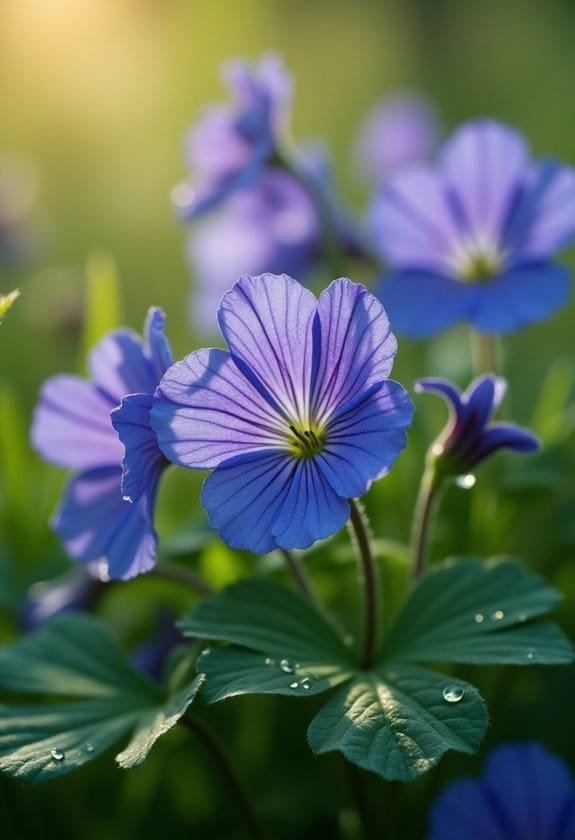
Geranium pratense showcases remarkable adaptability, flourishing across USDA hardiness zones 3-9, where it comfortably handles both full sun and partial shade conditions. Its preference for well-drained loamy soils allows it to thrive in a variety of environments, including clay and disturbed areas, while moderate watering guarantees its resilience against drought once established. Additionally, similar to Horseshoe Vetch(Hippocrepis Comosa), it benefits from well-draining conditions to prevent root rot. Moreover, this perennial may attract essential pollinators due to its vibrant flowers, enhancing its ecological role in the garden. Understanding these growing requirements not only enhances garden aesthetics but also promotes robust health for this perennial beauty.
Light
Thriving in prime conditions, Geranium pratense prefers a range of light from full sun to part shade, although it can adapt to full shade with reduced flowering potential.
The Royal Horticultural Society notes that while plants achieve their peak growth and dazzling displays of blue to violet flowers during the late spring to mid-summer under full sunlight, those grown in shaded areas mightn't showcase as many flowers.
In garden settings across the United States, the adaptability of Geranium pratense allows it to tolerate less light, though this may curtail its vibrant floral contributions. Red Campion shares similar characteristics, thriving in well-drained, moderately fertile soil and thriving with ample light as well.
A real benefit of growing Meadow Cranesbill in well-lit environments is the plant's ability to self-seed and naturalize effectively, filling spaces with lush greenery and delightful blooms.
Moderate watering is essential to support peak growth, as overly waterlogged soil can impede the plant's health and flowering capacity.
To cultivate Geranium pratense successfully, gardeners should verify their plants receive adequate light while simultaneously managing moisture levels.
Such attention to light conditions not only enhances the plant's aesthetic appeal but also creates a thriving habitat that encourages biodiversity within garden ecosystems. Additionally, ensuring that plants are placed in well-drained, sunny locations can further promote their overall health and flowering success.
Soil
To cultivate Geranium pratense successfully, it's vital to provide well-drained, loamy soil that promotes root aeration. This perennial thrives ideally in moderately fertile conditions, enriched with organic compost to boost nutrient availability.
While it tolerates various soil types, including clay, ensuring proper drainage is essential; waterlogged soils can lead to detrimental root rot, severely impacting plant health.
Understanding the drainage importance can't be underestimated, as excessive moisture or compacted earth hinders root development, depriving them of necessary oxygen and nutrients. The perfect soil structure allows water to percolate without pooling, fostering a balanced environment for growth.
Geranium pratense prefers a pH level ranging from 6.0 to 7.0, marking a sweet spot for nutrient uptake.
Furthermore, established plants exhibit some drought tolerance, illustrating their adaptability to changing conditions. By prioritizing soil enrichment during initial planting, gardeners set the foundation for vibrant blooms and robust foliage, ensuring that Meadow Cranesbill flourishes.
Proper preparation and consideration of soil types amalgamate to create a thriving ecosystem, engaging all ecological components for long-lasting success. In sum, carefully managing soil conditions pays dividends in both beauty and plant resilience.
Water
Maintaining a balanced watering routine is important for the health of Geranium pratense. This remarkable plant thrives in well-drained, loamy soils, which must maintain consistent moisture without becoming soggy. Moderate watering forms the cornerstone of its cultivation, as both under- and over-watering can pose significant threats to its well-being.
A careful attention to watering frequency is essential; gardeners should aim to provide enough moisture to prevent stress while avoiding conditions that could lead to root rot.
Interestingly, once established, Geranium pratense exhibits impressive drought adaptability, requiring less frequent irrigation during dry spells. Seasonal fluctuations in water needs should be considered, particularly during the flowering period from late spring to mid-summer, when the plant demands increased moisture retention to support its vibrant blooms. Furthermore, ensuring proper soil drainage is crucial to prevent root rot, which is a common issue for many flowering plants.
During this time, a steady supply of water guarantees that the plant remains healthy and vigorous. Ultimately, understanding the delicate balance of moisture for Geranium pratense enhances its growth potential and resilience.
Temperature
For ideal growth, Geranium pratense flourishes in USDA hardiness zones 3-9, showcasing its adaptability to a range of temperate climates. The plant exhibits impressive temperature tolerance, thriving in both cooler and warmer environments.
Although it primarily prefers temperate conditions, it can withstand heat across zones 1-8, demonstrating remarkable resilience.
Moreover, its seasonal adaptations allow it to adjust to varying climatic preferences, making it a versatile choice for gardeners. While Geranium pratense favors full sun or part shade, it can adapt to full shade, offering flexibility in planting options. The plant's ability to thrive in diverse lighting conditions accentuates its suitability for many landscapes.
Additionally, Geranium pratense grows best in well-drained, loamy soils, yet it can adapt to clay and other soil types, underscoring its hardy nature. Once established, it exhibits moderate water needs and is drought-tolerant, further cementing its reputation as a resilient species.
Ultimately, understanding these temperature and environmental requirements will empower gardeners to cultivate this exquisite perennial with confidence, ensuring vibrant blooms and robust growth throughout the growing season.
Pollinator Criteria
Geranium pratense serves as an essential resource for various pollinators, particularly bees, due to its nectar's high sugar content and attractive floral structure.
The plant's dark purple anthers and veined petals act like a map, guiding pollinators to the nectar, which they avidly seek during the flowering period from late spring to mid-summer. Moreover, the extended blooming period of G. pratense ensures that it provides a continuous nectar source throughout the growing season, further benefiting local pollinator populations.
Understanding the specific pollinators attracted to G. pratense and its effective pollination method not only sheds light on its ecological role but also emphasizes its importance in supporting local biodiversity and honey production. Additionally, the presence of plants like Ox-Eye Daisy, which also supports pollinators, highlights the significance of planting a variety of flowering species in gardens for enhanced ecological benefits.
Attracted Pollinators
During the peak blooming season from late spring to mid-summer, Geranium pratense serves as a essential nectar source for a variety of pollinators. This melliferous herb produces nectar at a remarkable rate of 1.3 to 1.5 mg per 24 hours, with a sugar content ranging from 57% to 71%, rendering it highly attractive to bees among other creatures.
The plant's striking bluish violet flowers boast darker veins, which act as intrinsic nectar guides, leading pollinators directly to the rich nectar hidden within. These visual cues greatly enhance pollinator attraction, promoting efficient foraging encounters. As a result, Geranium pratense supports not only bee populations but also contributes considerably to local honey production.
Moreover, its adaptability to diverse habitats makes it an essential component in garden designs aiming to enhance habitat diversity. By incorporating this plant, gardeners can foster a flourishing ecosystem that supports various pollinators. Additionally, its presence contributes to the pollinator populations in spring, which is critical for maintaining ecological balance. The ecological benefits of incorporating plants like Geranium pratense are echoed in the characteristics of Poached Egg Flower, as both enhance local biodiversity.
This symbiotic relationship underscores the importance of Geranium pratense in promoting ecological balance while simultaneously providing crucial resources for pollinators during peak activity periods. In this way, the Meadow Cranesbill plays a notable role in nurturing both biodiversity and the essential contributions of pollinators.
Pollination Method
Pollinators rely on specific characteristics of flowers to determine their suitability for foraging, and Geranium pratense excels in meeting these criteria. Its impressive nectar production, averaging 1.3 to 1.5 mg per 24 hours, boasts a sugar content between 57% and 71%, enticing various pollinators. The large, saucer-shaped blue or violet flowers, adorned with prominent dark purple anthers, enhance pollinator behavior by guiding them toward the nectar through the darker veins on the petals. This effective design can be seen as a result of natural selection, favoring traits that attract bees and butterflies. Blooming from late spring to mid-summer harmonizes with peak pollinator activity, increasing the chances of successful pollination. Additionally, Meadow Vetchling's attraction to pollinators complements the efforts of G. pratense in supporting a diverse ecosystem.
As a melliferous herb, G. pratense plays an essential role in supporting bee populations and contributes to local honey production while enriching biodiversity in its ecosystem. Additionally, its ability to serve as a nectar source for various species highlights the ecological importance of flowering plants in supporting pollinator health.
Ultimately, the interaction between Geranium pratense and its pollinators exemplifies a beautiful relationship where plant adaptations and pollinator behavior intertwine, showcasing nature's intricate design in sustaining life.
Through these mechanisms, the meadow cranesbill remains integral in maintaining ecological balance in gardens and natural habitats alike.
Care & Maintenance
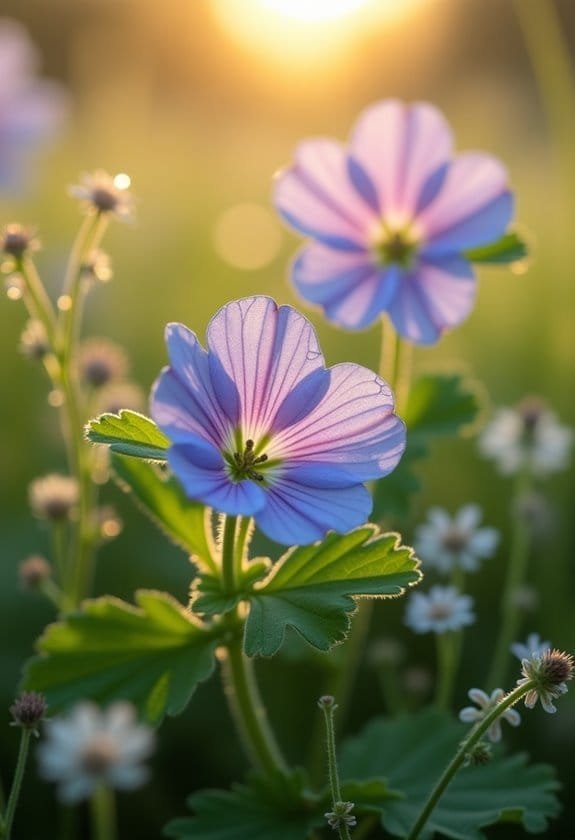
When caring for Geranium pratense, gardeners should focus on ideal planting conditions combined with ongoing maintenance strategies for vibrant growth. The plant thrives in well-drained, loamy soils, and regular pruning of spent flowers not only encourages new blooms but also maintains an aesthetically pleasing appearance. As Geranium pratense flourishes alongside compatible companions, understanding its specific care requirements becomes essential for a flourishing garden environment. Additionally, creating competition with native species can help prevent the invasion of aggressive plants like Creeping Buttercup. Planting alongside species like Vipers Bugloss can enhance local biodiversity by providing essential food sources for pollinators.
Planting Tips
Planting and maintaining Geranium pratense requires attention to a few key conditions to guarantee robust growth. Initially, gardeners should focus on selecting well-drained, loamy soils, as these provide the ideal environment for this perennial.
While Geranium pratense thrives in full sun to part shade, it can also tolerate full shade, making it versatile for various garden settings.
When considering planting techniques, spacing is essential; position plants approximately 18 to 24 inches apart to allow for their natural tendency to spread. This plant also benefits from companion planting—pairing it with other perennials or herbs that share similar moisture and light requirements can enhance both growth and aesthetic appeal.
For those interested in seed propagation, it's best to sow seeds in spring, taking advantage of the plant's ability to self-seed and naturalize effectively. However, be cautious about waterlogged conditions during establishment, as this can lead to root rot.
Minimal fertilization with organic compost supports healthy growth without overwhelming the plant. Regularly removing flowered stems and old leaves promotes fresh growth, contributing to a vibrant garden display that resonates with nature's harmony. Additionally, ensuring proper drainage in soil helps prevent issues like root rot that can affect various plants, including Geranium pratense.
Ongoing Care
Geranium pratense thrives on minimal care once it's established, making it an ideal choice for low-maintenance gardens. To guarantee the plant remains vigorous, gardeners should regularly employ effective pruning techniques. By removing flowered stems and old leaves, one can stimulate fresh growth, thereby extending the blooming period from late spring to mid-summer. Additionally, gardeners may find that Field Scabious can complement Geranium pratense well in creating a diverse pollinator-friendly habitat.
Seasonal adjustments play a crucial role; during the growing season, moderate watering is essential, as too much moisture can lead to waterlogged conditions detrimental to root health. Although generally resistant to disease, vigilance against common pests like vine weevils and powdery mildew is advisable, as proactive measures can minimize potential issues.
Incorporating organic compost into the soil can greatly enhance nutrient availability, making fertilizer application minimal. Additionally, mulching benefits can't be overlooked; a layer of mulch retains soil moisture while regulating temperature fluctuations, creating a favorable microenvironment for growth. Resilience to salt exposure is another advantage of incorporating diverse species like Geranium pratense into gardens.
Suggested Companions
A variety of companion plants can enhance the beauty and health of a garden featuring Geranium pratense. Pairing Meadow Cranesbill with perennials such as Daylilies and Black-eyed Susans maximizes growth, as they thrive in similar soil and light conditions.
Additionally, selecting companions that bloom in its flowering season, extending from late spring to mid-summer, enriches the garden's aesthetic through vibrant flowering combinations with species like Salvia or Astilbe.
Incorporating ground covers such as Creeping Thyme can be especially beneficial; these plants suppress weed growth while retaining soil moisture, nurturing the surrounding environment.
Moreover, promoting biodiversity enhancement is essential. By growing Geranium pratense alongside pollinator-friendly plants, including Liatris or Coneflower, gardeners can attract beneficial insects, ecosystems' fundamental architects. This aligns with the role of plant pollination, which is vital for the reproductive success of many flowering species.
Limiting competition for critical resources remains a priority. By planting Meadow Cranesbill with species that share its height and water needs, one not only guarantees peak growth but also cultivates a harmonious landscape.
This thoughtful arrangement ultimately transforms a space, making it a vibrant sanctuary that celebrates nature's beauty while fostering ecological balance.
Regularly evaluating these companion plants can reveal new opportunities for additional refinement and improvement within the garden.
Common Issues
While Meadow Cranesbill (Geranium pratense) typically resists pests and diseases, certain challenges can arise.
It's essential for gardeners to keep a watchful eye for intruders like vine weevil or complications such as powdery mildew, which can thrive in damp conditions.
Proactive maintenance, including regular pruning and mindful watering, can greatly mitigate these issues and promote vibrant growth.
Pests/Diseases
Meadow Cranesbill, or Geranium pratense, is generally robust against pests and diseases, but it isn't completely immune. Among the common threats, vine weevil can severely affect root systems, potentially leading to plant decline.
Capsid bugs pose another risk, feeding on the foliage, which results in stippled leaves; therefore, employing effective pest identification techniques and maintaining vigilant monitoring can be essential for early detection. Additionally, the larvae of sawflies can devastate leaves, leading to significant defoliation; organic control methods, such as handpicking or applying insecticidal soap, can be advantageous for managing these pesky invaders.
Moreover, under humid conditions, Meadow Cranesbill might suffer from powdery mildew, characterized by a distinct white, powdery coating on leaves. This fungal issue can disrupt plant vigor, but implementing disease prevention strategies, such as ensuring adequate air circulation and avoiding overcrowding, enhances resilience.
Regularly removing flowered stems and old leaves not only promotes fresh growth but also diminishes the likelihood of both pest and disease occurrences. By employing these proactive measures, gardeners can foster healthier plants while minimizing potential threats to the beauty and liveliness of their Geranium pratense.
Solutions
Gardeners facing common issues with Geranium pratense can implement several effective solutions to guarantee the plant's health and vigor. First, regular monitoring for pests such as vine weevil and capsid bugs is essential.
Employing integrated pest management strategies, including natural predators and organic solutions, secures a balanced ecosystem. Gardeners should consider plant propagation techniques, as this can help manage overcrowding caused by self-seeding. By creating divisions every few years, they can promote healthier growth while preventing competition among plants.
Moreover, adhering to sustainable gardening practices is fundamental. Because Geranium pratense thrives in well-drained loamy soils, it's imperative to avoid areas prone to waterlogging, which can lead to destructive root rot.
Adequate drainage can be improved through the incorporation of organic compost, which not only enriches the soil but also minimizes the need for fertilizers. Gardeners should also routinely remove flowered stems and old leaves, particularly post-flowering in late summer, to stimulate fresh growth and maintain the plant's robustness.
With these strategies in mind, enthusiasts can successfully cultivate vibrant Geranium pratense that contributes to the beauty of any garden.
Summary
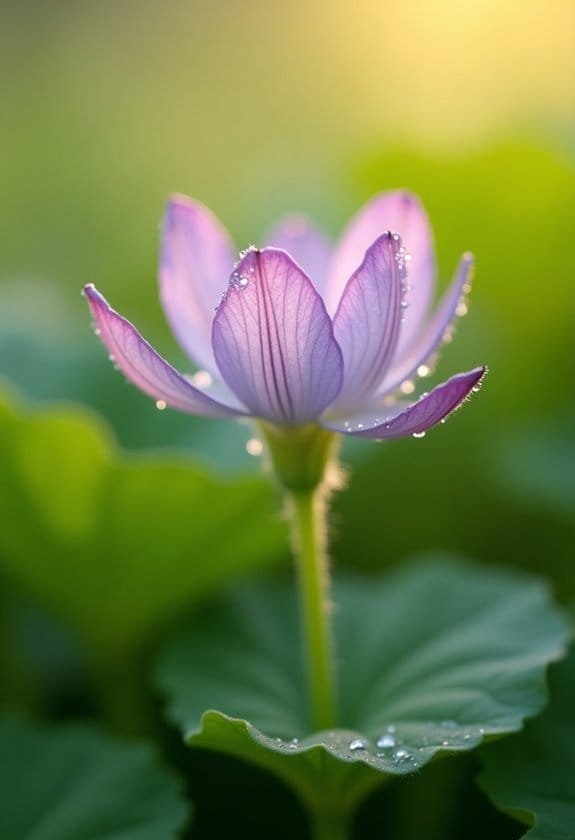
Geranium pratense, commonly referred to as Meadow Cranesbill, captivates with its vibrant blue to violet flowers and unique deeply-lobed leaves. Reaching heights of 2-3 feet, this perennial exhibits beauty from late spring to mid-summer, flourishing in USDA hardiness zones 3-9. Its preference for well-drained loamy soils and moderate drought tolerance enhances its ornamental value, making it a favored choice for cottage gardens and meadows.
Beyond aesthetics, G. pratense plays an important role in promoting biodiversity. The plant self-seeds prolifically, establishing itself in various landscapes while creating habitats for pollinators, including bees that are drawn to its nectar-rich blossoms. This nectar, which contains a sugar content ranging from 57% to 71%, enables the plant to support essential insect populations.
Additionally, Geranium pratense has medicinal uses, lending to its reputation as a versatile species. Its leaves, which transform into striking bronze in the fall, further embellish gardens, showcasing a variety of seasonal colors.
Collectively, these characteristics underscore the significance of Meadow Cranesbill not only for its aesthetic charm but also for its ecological contributions and practical applications in horticulture.