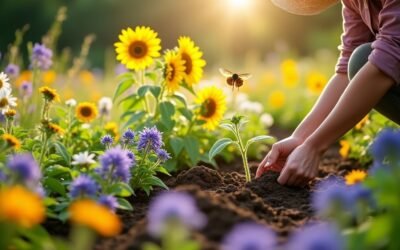
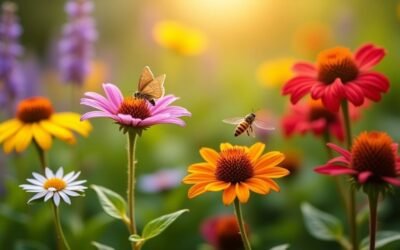
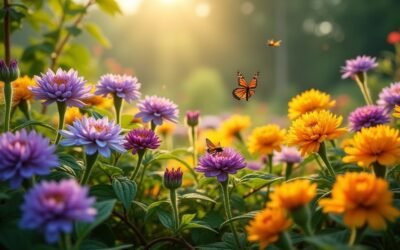
Glandularia × hybrida, or Garden Verbena, is a semi-evergreen perennial that typically grows 1.5 feet tall and spreads 6 inches to 2 feet wide, showcasing its vibrant, star-shaped flowers in colors like purple and pink. Thriving in full sun and well-drained soil, this drought-tolerant plant requires regular deadheading to maintain continuous blooming, thereby attracting essential pollinators such as butterflies and bees. With a pH range of 6.0 to 8.0, it benefits from moderate fertilization and compost. Gardeners should watch for pests and diseases, ensuring vibrant health and beauty across diverse landscapes, inviting further exploration into its cultivation and ecological contribution.
Main Points
- Garden Verbena (Glandularia × hybrida) is a semi-evergreen perennial known for its vibrant, star-shaped flowers that bloom continuously with regular deadheading.
- This plant thrives in full sun and well-drained soil, making it drought-tolerant once established, suitable for various garden settings.
- Common challenges include pests like aphids and diseases such as powdery mildew; proactive care can mitigate these issues.
- It attracts beneficial pollinators like butterflies and bees, supporting biodiversity in the garden ecosystem.
- Garden Verbena pairs well with drought-tolerant and low-growing plants, enhancing landscapes and promoting sustainable gardening practices.
Introduction
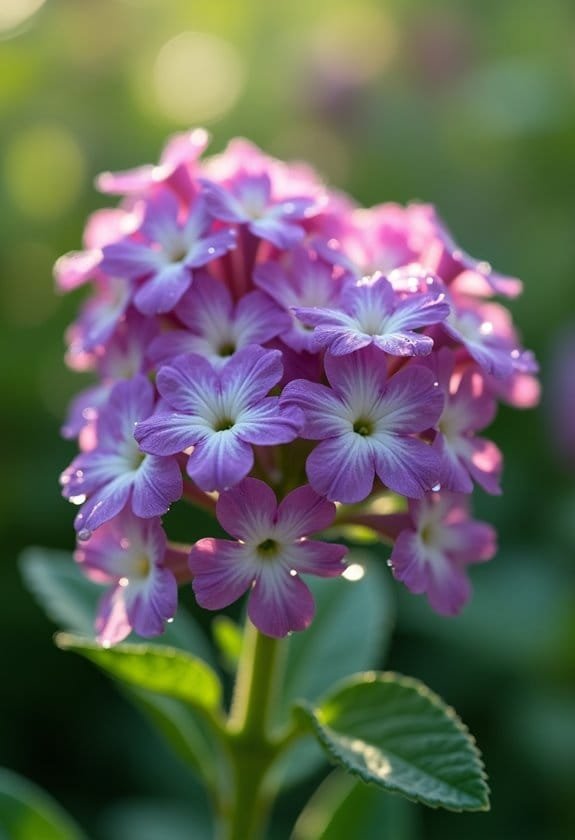
Garden Verbena, scientifically known as Glandularia × hybrida, stands out as a beloved semi-evergreen perennial in the Verbenaceae family, often enjoyed for its brilliant display of star-shaped flowers.
Growing up to 1 foot 6 inches tall and spreading between 6 inches and 2 feet wide, this plant effortlessly transforms garden spaces with its vibrant colors and creeping growth habit.
Suitable for full sun and well-drained soil, Garden Verbena not only enhances landscapes but also adapts well to various gardening needs, making it a popular choice among horticulturists.
Common Name
Known commonly as Florists verbenas, Garden Verbena captivates with its vibrant blooms and hardy nature. This lovely herbaceous plant, belonging to the Verbenaceae family, offers a dazzling array of flowers in a range of colours that includes purple, pink, white, and red.
Its scientific identity has evolved over time; it was formerly identified as Verbena hybrida before receiving its current designation, Glandularia × hybrida.
Garden Verbena stands out as a popular choice among gardeners, largely due to the myriad hybrid series cultivated for aesthetic appeal. Varieties such as Obsession Twister, Tuscany, and Superbena exemplify the plant's versatility and resilience in diverse garden settings.
Remarkably, when properly maintained through regular deadheading, it can bloom continuously throughout the growing season, creating a sustained spectacle of colour.
Beyond its visual allure, Garden Verbena also plays an essential role in enhancing garden biodiversity. Its flowers attract numerous pollinators, particularly butterflies, which not only enrich the garden's ecosystem but also provide enchanting scenes for any observer.
Consequently, Garden Verbena offers both aesthetic pleasure and ecological benefits, making it an invaluable addition to any garden.
Scientific Name
The scientific name for Garden Verbena, Glandularia × hybrida, highlights its hybrid origins and reflects significant changes in plant classification. This name underscores its diverse genetic background, as it represents a cross between various species. Originally classified under the genus Verbena, taxonomic revisions now position it within the Glandularia genus, illustrating the evolving understanding of these plants.
Glandularia × hybrida is a semi-evergreen perennial, typically reaching heights of around 30 centimeters, making it an attractive option for various gardening applications. The plant features star-shaped flowers that bloom in rounded terminal clusters, with individual blossoms measuring up to 7 centimeters in diameter.
Such vibrant flowers, coupled with their robust adaptability, make Glandularia × hybrida a popular choice among florists verbenas, as it offers an appealing palette of colors, suitable for bedding and landscaping.
The significance of the scientific name lies not only in its classification but also in the breadth of gardening possibilities it enables, inviting enthusiasts to explore the diverse world of hybrid plant varieties.
Ultimately, understanding the taxonomy enriches one's appreciation for this striking and versatile garden staple.
Overview
With its vibrant flowers and resilient nature, Glandularia × hybrida, or Garden Verbena, has become a favorite among gardening enthusiasts. This semi-evergreen perennial typically grows to about 30 cm (1 foot) tall and displays a charming spreading habit.
Its square-stemmed, creeping growth supports small, toothed leaves that range from mid- to dark green, forming an attractive backdrop for its star-shaped flowers.
Garden Verbena blooms in a wide range of enchanting colors, enhancing the aesthetic appeal of various gardens and landscapes.
Thriving in full sun, it flourishes in well-drained soil, which allows it to conserve moisture effectively; hence, it proves drought-tolerant, adapting seamlessly to diverse garden styles.
The plant's continuous flowering potential can be amplified through regular deadheading. This practice not only maximizes blooms but also attracts essential pollinators, such as butterflies and bees, fostering biodiversity within the garden ecosystem.
Key Features
Garden Verbena, a remarkable perennial, showcases an impressive growth size, typically spanning from 6 inches to 1 foot 6 inches in height, with a spread of up to 2 feet.
Its clusters of star-shaped flowers, vibrant in various colors and reaching up to 3 inches across, create a breathtaking display that draws the eye.
As it blooms throughout the growing season, this resilient plant combines aesthetic appeal with practicality, thriving in the warm embrace of full sun and well-drained soil.
Growth Size
Typically, Garden Verbena showcases a compact growth size, reaching heights between 6 inches and 1 foot 6 inches while spreading from 6 inches to 2 feet wide. This plant exhibits a versatile growth habit, presenting itself in mounding, trailing, or upright forms, depending on the specific cultivar chosen. Each growth form contributes to the overall landscape, whether nestled in flower beds or cascading from hanging baskets, enhancing the garden's aesthetic appeal.
Garden Verbena's leaves, measuring 2 to 4 inches long, can be found in shades ranging from gray-green to dark green, featuring a deeply lobed and rough texture that adds to its unique character. This adaptability in form and size makes Garden Verbena suitable for various garden settings. When cultivated, it's often treated as an annual, primarily due to its enchanting seasonal floral display.
When properly established within well-drained garden soil or potting mix, Garden Verbena demonstrates admirable drought tolerance. This resilience highlights the plant's capability to thrive even in less-than-favorable conditions, making it a favored choice for gardeners seeking low-maintenance yet visually striking options.
Appearance
Known for its striking visual appeal, Garden Verbena (Glandularia × hybrida) features a unique growth pattern characterized by square stems that creep along the ground. This perennial marvel typically reaches heights between 6 inches and 1 foot 6 inches, while its spread can vary from 6 inches to 2 feet, creating an engaging tapestry of foliage and flowers.
Its leaves, small and intricately lobed, exhibit a mid- to dark green hue, approximately 2-4 inches long, enhanced by a rough texture that adds to their visual fascination. These toothed leaves contribute to a dense canopy, inviting attention as they complement the plant's extensive blooming potential.
Clusters of vibrant, star-shaped blooms emerge throughout the growing season, often forming up to 3 inches wide, showcasing a gorgeous palette that includes rich shades of purple, pink, white, and red.
Remarkable cultivars such as Lanai, Superbena, and Magelana demonstrate the plant's ability to create enchanting displays, capturing the eye of any passerby. With consistent care, including regular deadheading, Garden Verbena thrives, rewarding gardeners with a lively, continuous floral spectacle.
Flowering Season
During summer months, Garden Verbena (Glandularia × hybrida) bursts into a spectacular display of color, producing clusters of small star-shaped flowers that can reach up to 3 inches wide.
This flowering season generally spans from late spring into early fall, with plants showcasing their luxurious blooms in vibrant hues, including purple, red, pink, and white. Unique cultivars may exhibit remarkable combinations, offering clusters that dazzle with single or multiple colors.
To maintain this lavish bloom throughout the growing season, regular deadheading is crucial; this practice involves removing spent flowers to prompt further flowering. Comfrey's ability to attract beneficial insects enhances the biodiversity of the garden.
By encouraging new growth, gardeners can continuously enjoy the enchanting sight of fresh blossoms, while also supporting local biodiversity, as these flowers attract pollinators like bees and butterflies. Additionally, like Echinops, Garden Verbena's drought tolerance makes it a reliable choice for sustainable gardening practices.
In essence, the Garden Verbena not only enhances the aesthetic appeal of garden landscapes but also contributes considerably to ecological health.
With proper care, including timely deadheading, this hardy perennial guarantees a vibrant tapestry of colors that captivates those who admire its beauty, making it a favorite for both novice and seasoned gardeners alike.
Growing Requirements
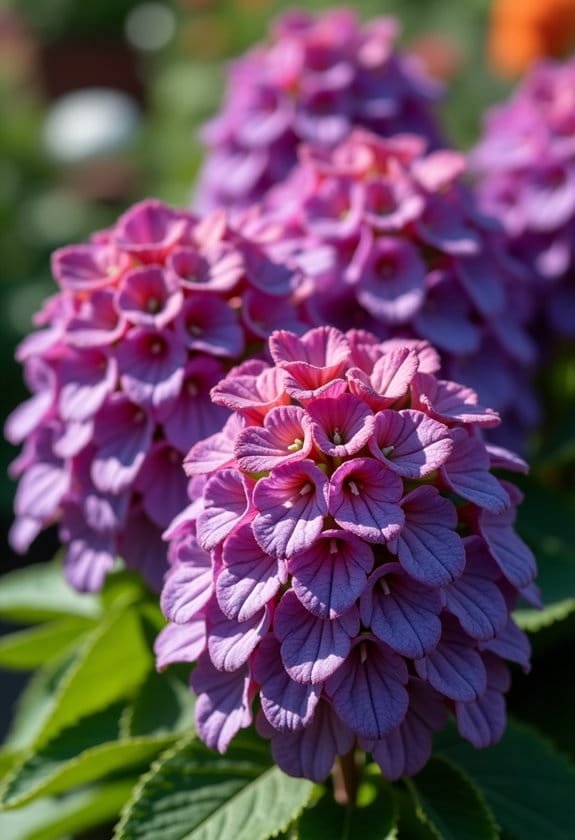
To guarantee robust growth and vibrant blooms, Garden Verbena's requirements are quite specific. The plant thrives in full sun, basking in 6 to 8 hours of direct light each day, while it also demands well-drained soil that maintains a pH between 6.0 and 8.0.
Adequate watering practices, combined with an understanding of temperature preferences, contribute greatly to its overall health and flowering potential.
Light
Garden Verbena thrives in full sun, demanding at least 6 to 8 hours of direct sunlight each day for its vibrant blooms. This exposure not only promotes healthy growth but also guarantees a profusion of flowers throughout the growing season, creating a striking visual display in any garden.
Although Verbena can tolerate some light shade, insufficient sunlight leads to leggy growth and diminishes the abundance of blooming.
In particular, consistent sunlight is crucial for stimulating the plant's energy and encouraging continuous blooming. Regular deadheading, the practice of removing spent flowers, aids in prolonging the blooming period, especially when the plants bask in full sun.
When adequately illuminated, Garden Verbena exhibits remarkable resilience, including drought tolerance once established, making it an excellent choice for regions experiencing variable rainfall or dry spells.
For peak flowering and health, gardeners should take care to position their Verbena where it receives adequate sunshine, as this beautiful hybrid seeks the warmth and light of the sun like a performer craving the spotlight.
Meeting its light requirements guarantees the achievement of lush foliage and a bountiful display of blossoms that are a joy to behold.
Soil
Achieving vibrant blooms in Garden Verbena isn't just about ample sunlight; the right soil conditions play a significant role too. These plants thrive best in well-drained garden soil or potting mix, as too much moisture can lead to detrimental root rot.
Ideally, the soil should contain moderate fertility with a pH range of 6.0 to 8.0 to guarantee adequate nutrient availability.
Garden Verbena is often grown as annuals, favoring regular moisture without the threat of sogginess, which can hinder healthy root development. Once established, these resilient plants exhibit impressive drought tolerance, hence requiring less frequent watering compared to many other flowering options.
To promote ideal growth, particularly in heavy or clay soils, gardeners might consider utilizing raised beds or amending their soil to improve drainage.
With their erect to spreading growth habit, Garden Verbena can adapt to a variety of environments, enhancing both garden aesthetics and overall durability in diverse weather conditions.
Water
Maintaining the right watering routine is fundamental for the health of Garden Verbena. This resilient plant thrives on moderate watering, requiring consistently moist soil without becoming soggy; excess moisture can lead to root rot.
Employing effective watering techniques helps manage the necessary moisture levels, particularly in sandy or poor-draining soils that dry out quickly.
Garden Verbena exhibits remarkable drought resilience once established, allowing it to flourish even during periods of water scarcity. However, during its growing season, it benefits from regular hydration to support its vibrant blooms and overall vigor.
To guarantee optimal conditions, it's essential to provide well-drained soil, which facilitates proper moisture retention while preventing waterlogging—a primary enemy of healthy root systems.
Garden Verbena's ability to navigate adverse conditions is a proof of its adaptability, but it thrives best with attentive care.
Overwatering remains a concern, so maintaining a careful balance in hydration is crucial.
Temperature
For best growth, Garden Verbena thrives in warm temperatures, ideally between 70°F to 85°F (21°C to 29°C) during its growing season. This plant's sensitivity to frost means it should only be planted outdoors after the last frost date, as exposure to cold temperatures can lead to significant damage.
Garden Verbena can endure heat and drought once established, making it an excellent choice for warmer climates, where it flourishes under the right conditions. Temperature extremes can adversely affect the plant, limiting its growth and diminishing its vibrant blooms. Consistent temperatures above 50°F (10°C) are essential for germination when propagating from seeds, underscoring the importance of proper temperature management.
Additionally, protection from sudden cold snaps can preserve plant health, ensuring colorful displays persist throughout the growing season.
Furthermore, understanding temperature effects on Garden Verbena allows gardeners to create an ideal environment, enhancing resilience and longevity. Monitoring temperature shifts and making necessary adjustments will certainly yield better results, showcasing this resilient plant's beauty.
Ultimately, thoughtful temperature management is fundamental for successfully cultivating Garden Verbena, enabling it to thrive through varied climatic conditions.
Pollinator Criteria
Garden Verbena serves as an inviting haven for a range of pollinators, particularly butterflies and bees, due to its continuous bloom and nectar-rich flowers.
With a pollination mechanism primarily driven by these crucial insects, the plant nurtures both the ecosystem and its visual splendor, showcasing a vibrant palette that attracts these essential species. Ajuga reptans, for instance, is noted for its ability to attract key pollinators through its striking bloom and nutrient offerings.
Understanding which pollinators are drawn to this resilient plant and how they interact with it provides insight into enhancing biodiversity within garden environments. The bright composite flowerhead of nearby plants like the English daisy also plays a significant role in attracting similar pollinators.
Attracted Pollinators
Although many plants offer nectar for pollinators, garden verbena (Glandularia × hybrida) stands out as a beacon for butterflies and other beneficial insects. Its vibrant clusters of star-shaped flowers serve as essential nectar sources, enticing a variety of pollinators throughout the growing season.
The plant's continuous blooming, encouraged by regular deadheading, greatly enhances its attractiveness, leading to notable pollinator benefits in gardens. Additionally, garden verbena can thrive alongside white clover(Trifolium%20repens), which provides critical nectar sources and supports essential pollinator populations.
Moreover, garden verbena's impressive resistance to deer means it can thrive without the pressures of heavy grazing, contributing to habitat stability for these insects. In areas where other flowering plants might struggle, this drought-tolerant species excels, maintaining critical resources for pollinators even during dry spells.
The range of colors, from deep purples to soft pinks and whites, appeals to numerous pollinator species, enticing them to different cultivars within the garden verbena series.
Beyond aesthetics, its resilience and consistent flowering make garden verbena a cornerstone plant in pollinator-friendly gardens, fostering a thriving ecosystem. The strategic selection and cultivation of this plant not only enrich gardens visually but also serve to sustain and support vulnerable pollinator populations. Additionally, incorporating viper's bugloss(Echium%20vulgare) alongside garden verbena can further enhance biodiversity by providing diverse nectar sources for pollinators.
Pollination Method
Pollinators are drawn to garden verbena not just for its visual appeal but also for its effective pollination method. The intricate flower morphology of Garden Verbena (Glandularia × hybrida) features clusters of star-shaped blooms, which are particularly inviting to a variety of pollinators, including butterflies and bees.
With their bright colors and appealing shape, these flowers create a vibrant spectacle in garden environments, enhancing their attractiveness to insects that seek out nectar. Additionally, Salad Burnet's ability to attract beneficial pollinators through its crimson flower clusters highlights the importance of diverse plantings in enhancing garden ecosystems.
Pollinator behavior is greatly influenced by nectar preferences, and the abundant nectar produced by Garden Verbena makes it an irresistible target. This sustained nectar supply, coupled with the plant's continuous blooming throughout the growing season, guarantees a reliable food source for pollinators.
As pollinators access the flowers, they inadvertently facilitate the transfer of pollen, ensuring successful fertilization and seed production. Furthermore, like Birds Foot Trefoil, Garden Verbena can also provide critical support for local pollinator populations through its nectar-rich blooms.
Through their essential role in pollination, Garden Verbena contributes crucial nutrition to local ecosystems, thereby promoting biodiversity. By attracting diverse insect species, it not only supports the health of pollinator populations but also enhances the overall resilience and gardening pleasure of the environment.
Care & Maintenance
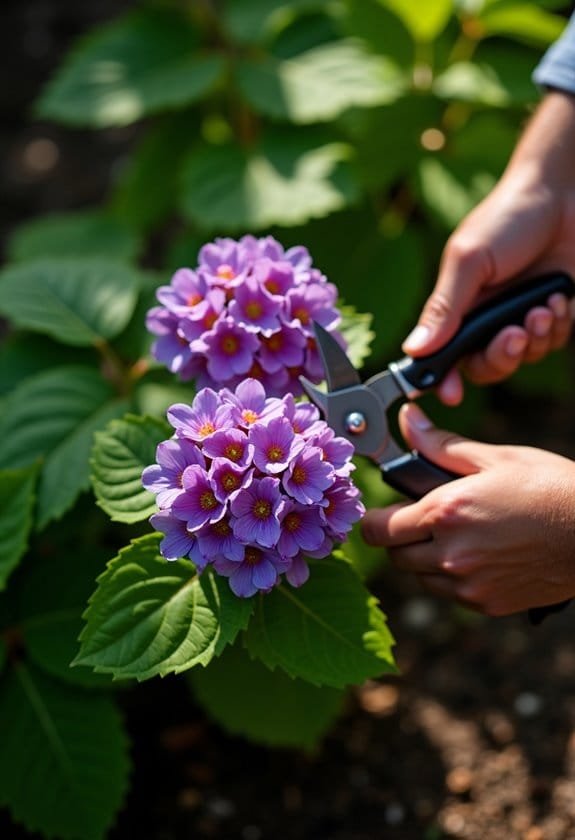
When considering the care and maintenance of Garden Verbena, one should begin with proper planting techniques to guarantee robust growth.
This resilient plant thrives in well-drained soil and benefits from full sun exposure, while ongoing care includes regular deadheading to encourage lasting blooms and moderate watering to prevent root rot.
Pairing Garden Verbena with compatible companions can enhance the garden's aesthetic and ecological value, creating a vibrant and harmonious environment.
Planting Tips
Planting Garden Verbena successfully starts with selecting well-drained soil or potting mix to prevent root rot. These plants flourish in bright, full sun, making proper positioning essential for maximizing their vibrant blooms.
When considering planting methods, gardeners should aim for ideal spacing, ideally placing plants 12 to 18 inches apart to promote air circulation, which further reduces diseases.
Incorporating soil amendments, such as compost or well-rotted manure, enhances nutrient availability while improving soil structure.
Fertilizer types play a crucial role in healthy growth; a slow-release fertilizer rich in phosphorus works wonders when blooming begins. Regular fertilization encourages robust flower production, ensuring a dazzling display throughout the growing season.
Watering practices require diligence, as consistent moisture is essential during the establishment phase, though one must avoid soggy conditions that can lead to detrimental effects on root health.
Implementing deadheading—removing spent flowers—prolongs the flowering period and stimulates new growth, fostering an extended display of beauty and color.
With these foundational steps, gardeners can set the stage for lush and vibrant Garden Verbena, creating enchanting garden spaces that truly thrive.
Ongoing Care
Ongoing care for Garden Verbena is essential to assure vibrant blooms and overall plant health. This perennial thrives in full sun, demanding at least six hours of direct sunlight daily to reach its blooming potential.
Regular deadheading of spent flowers plays a significant role in prolonging the flowering season, prompting the plant to generate new buds continuously throughout the growing months.
Maintaining well-drained soil is critical; moderate watering is recommended while avoiding overwatering to prevent root rot, a condition to which Garden Verbena is particularly susceptible.
Gardeners should also consider light fertilization every few weeks during the growing season, as it can enhance blooming and overall vigor, guaranteeing the plant thrives.
Seasonal adjustments should be integral to the care routine, with certain plant propagation techniques applied in early spring to encourage new growth.
Regular monitoring for pests such as aphids, spider mites, and whiteflies is imperative.
Additionally, paying attention to diseases like powdery mildew guarantees that Garden Verbena remains healthy, vibrant, and ready to adorn gardens with its cheerful blooms throughout the season. The plant's early blooming period enhances its appeal in combination with other perennials like Common Cowslip.
With attentive care, this resilient plant can offer a stunning display for much of the growing season.
Suggested Companions
Pairing Garden Verbena with complementary plants enhances both aesthetics and health in the garden. The companion plant benefits become evident when combining Garden Verbena with drought-tolerant species like Lantana and Sedum, guaranteeing sustainability through effective drought tolerance strategies. These resilient partners share similar water needs, allowing for efficient maintenance and a harmonized ecosystem.
Moreover, incorporating low-growing plants such as Creeping Thyme offers a vibrant ground cover that contrasts beautifully with the erect growth of Garden Verbena. This dynamic not only creates visual interest but also protects soil moisture.
In addition, planting pollinator-attracting flowers, such as Echinacea and Salvia, supports local wildlife while enriching the garden's array of colors. Incorporating aromatic foliage from companion plants like Nepeta can further attract beneficial insects to the garden.
To achieve the best results, gardeners should verify adequate spacing between plants to promote air circulation, thereby mitigating the risk of diseases like powdery mildew. Regularly deadheading both Garden Verbena and its companions is crucial, as it prolongs blooming and maintains aesthetic appeal throughout the growing season.
Common Issues
Garden Verbena, while a vibrant addition to any garden, faces notable challenges from pests and diseases that can hinder its growth and blooming potential.
Aphids, spider mites, and whiteflies may invade, while conditions such as poor air circulation and over-watering can lead to afflictions like powdery mildew and root rot.
To combat these common issues, gardeners should implement solutions including regular monitoring, ensuring well-drained soil, and practicing deadheading, which not only preserves the plant's energy but also promotes an extended blooming season.
Pests/Diseases
While fostering a lush environment for Garden Verbena, one should be aware that these plants can fall prey to various pests and diseases. Aphids, spider mites, and whiteflies are notorious for compromising the health and visual appeal of these vibrant flowers.
Common diseases affecting Garden Verbena include powdery mildew and root rot, which frequently arise from the overly moist conditions sometimes created by excessive watering.
Implementing effective pest management strategies starts with regular inspections of the plants. Identifying infestations early allows for swift interventions, thereby minimizing damage.
Additionally, practicing proper spacing between plants enhances air circulation, serving as an essential disease prevention tip that helps reduce the likelihood of powdery mildew.
For those seeking organic treatment options, both neem oil and specific organic pesticides offer viable solutions to pest problems, safeguarding beneficial insects that contribute to a healthy ecosystem.
Solutions
Addressing common issues with Garden Verbena requires a proactive approach, focusing on both prevention and immediate solutions. Regular monitoring stands as a key pest management strategy, allowing gardeners to detect early signs of pests like aphids, spider mites, and whiteflies before they escalate.
Additionally, implementing soil health techniques is essential; avoiding overwatering and ensuring well-drained soil, especially in container gardening, helps prevent detrimental root rot.
Another effective measure is deadheading spent flowers, which not only prolongs the plant's blooming season but also promotes overall vibrancy and health. Gardeners may also enhance air circulation through proper plant spacing, further reducing the risk of disease and encouraging robust growth.
Moreover, selecting specific cultivars of Garden Verbena that exhibit resistance to powdery mildew and root rot presents significant plant selection benefits. These resilient varieties require less maintenance and stand stronger against environmental stressors.
In addition, integrating companion planting with common pollinators can further enhance garden ecology and overall plant health.
Collectively, these strategies form a thorough framework for nurturing healthy Garden Verbena, fostering an environment where beautiful blooms can flourish without the burden of common ailments.
Summary
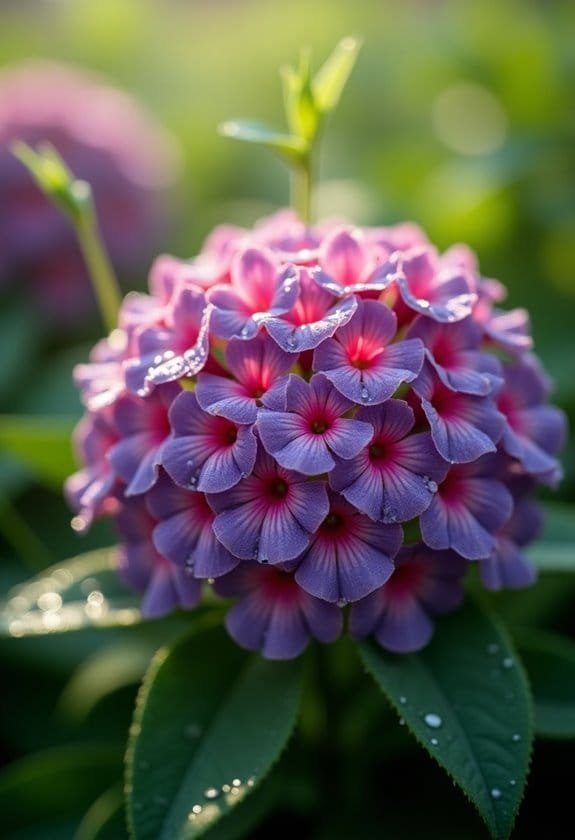
Known for its vibrant beauty, Garden Verbena (Glandularia × hybrida) is a semi-evergreen perennial that typically reaches heights of up to 1.5 feet and widths ranging from 6 inches to 2 feet. This stunning plant showcases star-shaped flowers that cluster together, exhibiting a dazzling array of color combinations—from soft pastels to vibrant hues—making it a favorite in garden design.
Its continuous blooming potential, aided by regular deadheading, enhances its visual appeal throughout the growing season.
Beyond aesthetics, Garden Verbena offers numerous plant benefits. Thriving in full sun and well-drained soil, it demonstrates remarkable drought tolerance, making it a low-maintenance option for gardeners. Additionally, specific cultivars show resistance to common diseases, including powdery mildew and root rot, thereby boosting their longevity and performance in diverse landscapes.
In addition to its ornamental uses, Garden Verbena attracts essential pollinators like bees and butterflies, promoting biodiversity and ecological balance in the environment.
Collectively, these features render Garden Verbena not only a visually striking choice for outdoor spaces but also an indispensable ally in sustainable gardening practices. Its allure lies in both its beauty and its contributions to a healthier ecosystem.