Common Sunflower (*Helianthus annuus*) stands as a striking annual plant, typically soaring between 3 to 10 feet tall, adorned with large, radiant flower heads that can reach up to 12 inches in diameter. This North American native thrives in well-drained, humus-rich soil, requiring 6-8 hours of direct sunlight daily. Its vibrant blooms attract a variety of pollinators, supporting biodiversity, while its seeds contribute considerably to commercial oil markets. Despite its resilience, sunflowers are susceptible to pests and diseases, necessitating mindful care and maintenance. Discovering the nuances of their cultivation and impact reveals even more enthralling aspects of this remarkable species.
Main Points
- The Common Sunflower (*Helianthus annuus*) can grow between 3 to 10 feet and displays large flower heads with vibrant yellow petals.
- It is native to North America and was domesticated in Mexico around 2600 BCE, known for its annual life cycle.
- Adapted to attract pollinators, Common Sunflowers bloom from late May through fall, supporting biodiversity and serving as a larval host for certain butterflies.
- They thrive in full sun, well-drained, humus-rich soil, and require consistent moisture while avoiding waterlogging for optimal growth.
- Sunflower seeds are economically significant for their oil, and the plant symbolizes hope in cultures, notably in Kansas and Ukraine.
Introduction
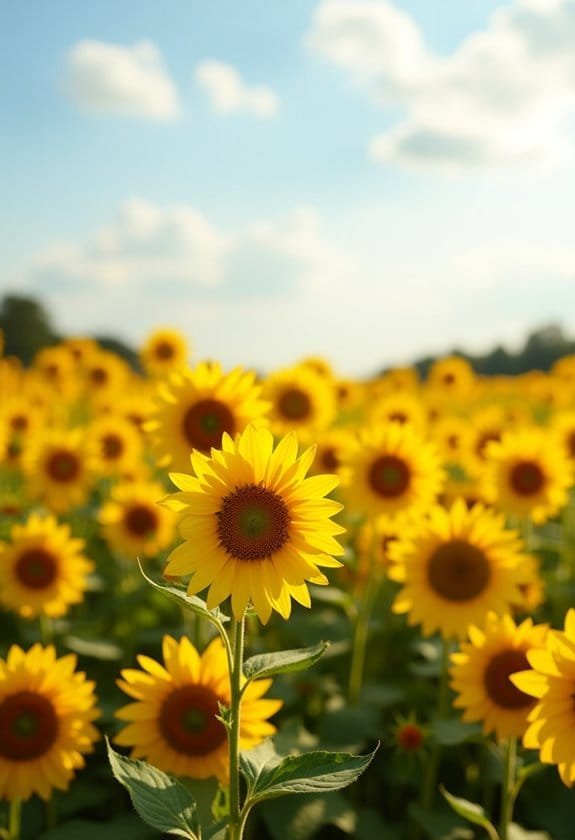
Helianthus annuus, widely recognized as the Common Sunflower, is an impressive annual plant belonging to the Asteraceae family, typically achieving heights between 3 and 10 feet.
Known for its eye-catching flower heads, which can span an impressive 12 inches in diameter, this species has captivated many with its vibrant yellow petals encircling a dark center.
Native to North America, the Common Sunflower not only flourishes in sunny conditions and well-drained soil but also boasts a remarkable historical lineage, having been domesticated in Mexico around 2600 BCE.
Common Name
One of the most recognizable flowers in the world, the Common Sunflower, showcases its vibrant yellow petals and large flower heads in gardens and fields alike. Known for its striking appearance, the common sunflower stands tall, often reaching heights between 1.5 to 10 feet, depending on the cultivar.
This impressive growth enables it to capture sunlight effectively, enhancing its role in photosynthesis, a vital process for life on Earth. Commonly referred to as the Sunflower or Wild Sunflower, this staggering plant holds the distinction of being the state flower of Kansas.
Its allure isn't limited to color alone; centuries of hybridization have birthed varieties exhibiting a palette that includes not only the traditional yellow but also shades of red, white, and bronze. As part of the diverse Asteraceae family, which encompasses daisies and asters, the common sunflower plays a significant ecological role, attracting pollinators like bees and butterflies.
Its phonetic spelling, hee-lee-AN-thus AN-yoo-us, reflects its heritage, inviting enthusiasts and gardeners alike to appreciate the beauty and complexity of this extraordinary flower.
Scientific Name
The scientific name for the Common Sunflower, *Helianthus annuus*, highlights both its botanical significance and its unique characteristics.
The genus name, *Helianthus*, originates from the Greek words "helios," meaning sun, and "anthos," meaning flower, effectively illustrating the plant's remarkable heliotropic behavior—its ability to track the sun throughout the day. This enchanting trait contributes to the plant's liveliness and energy.
The species name, *annuus*, designates it as an annual plant, which means *Helianthus annuus* completes its life cycle within a single growing season, swiftly changing from seed germination to blooming and seed production. This adaptability to environmental conditions plays an essential role in its widespread cultivation.
In addition to its heliotropic habits, *Helianthus annuus* is easily recognizable by its large, vibrant yellow flower heads, boasting diameters of up to 12 inches.
The striking contrast between the petals and the dark central disk, composed of numerous smaller florets, captures the eye.
Moreover, the species has a diploid genome with a base chromosome number of 17, contributing to its overall genetic diversity and resilience, with total genomic estimates around 3.5 billion base pairs.
Overview
Common Sunflower, or *Helianthus annuus*, captivates with its towering stature and vibrant blooms that dominate gardens and fields alike. This annual herbaceous plant grows between 3 to 10 feet tall, displaying large, striking flowers adorned with bright yellow petals surrounding dark central disks.
Originating in Mexico around 2600 BCE, the Common Sunflower has woven itself into cultural identities, serving as the national flower of Ukraine and the state flower of Kansas.
Notably, young blooms exhibit heliotropism, a fascinating behavior of following the sun's movement across the sky, while mature flowers settle into an eastward orientation, patiently awaiting the first light of day.
Widely cultivated for its nutritious seeds, which are processed into sunflower oil, they also serve as snacks and animal feed, with global production reaching an impressive 50 million tonnes by 2020.
Moreover, the Common Sunflower plays an crucial role in supporting biodiversity, attracting pollinators, and providing sustenance for seed-eating birds.
Fundamentally, this remarkable plant embodies both aesthetic grandeur and ecological significance, forming important connections within various ecosystems while enriching the lives of people worldwide.
Key Features
Helianthus annuus, or the Common Sunflower, exhibits a remarkable growth range, reaching heights of 2 to 10 feet, which makes it a striking addition to any garden or landscape.
Its broad, coarsely toothed leaves, coupled with large, vibrant flower heads measuring between 3 to 12 inches in diameter, create a visually stunning display.
With a flowering season that thrives in full sunlight, these resilient plants not only showcase their key physical features but also embody a natural elegance that attracts both pollinators and admirers alike.
Growth Size
Sunflowers typically reach impressive heights ranging from 3 to 10 feet, varying with the specific variety and growing conditions. Their growth size is particularly remarkable, as these plants not only tower over shorter flora but also create a striking visual presence in gardens and landscapes. The width of these vibrant plants spans 1.5 to 3 feet, providing ample space for each sunflower, which guarantees they can flourish without overcrowding.
Moreover, the flowers display a range of sizes, measuring between 3 to 12 inches in diameter. Each bloom features striking yellow ray petals that encircle a prominent dark central disk, enchanting those who admire them.
Sunflowers are classified as annuals, which means they complete their entire growth cycle within a single season, typically from late May through the fall.
Significantly, extensive hybridization has produced numerous cultivars, resulting in diverse colors and flower shapes that enhance their adaptability and aesthetic appeal. This genetic variation allows for a wide array of growth sizes, enabling gardeners to select sunflowers that best suit their specific needs and environmental conditions.
Ultimately, the growth size of Helianthus annuus contributes both beauty and utility to various horticultural settings.
Appearance
With striking hues and impressive stature, the appearance of Helianthus annuus captivates observers. This remarkable plant displays large flower heads that vary in size, measuring between 7.5 and 12.5 centimeters (approximately 3 to 5 inches) in diameter.
These flower heads are adorned with vibrant yellow ray flowers, encircling a central disk filled with small, dark florets, creating a visually stunning contrast. The Common Sunflower can tower between 3 and 10 feet tall, with extraordinary specimens boasting heights of up to 9.17 meters (30 feet 1 inch).
The broad, coarsely toothed leaves, typically heart-shaped and reaching lengths of up to 12 inches, complement the sunflower's striking floral display. Erect stems covered with rough hairs provide strength, while the plant's unique heliotropic behavior enables it to follow the sun's path during the day, optimizing light absorption.
Cultivated varieties introduce an array of colors, including red, orange, creamy-white, and intriguing bicolor combinations, resulting from extensive hybridization efforts. Collectively, these features form a powerful botanical presence that not only enhances gardens and landscapes but also symbolizes warmth and adoration in diverse cultural contexts.
Flowering Season
The flowering season of Helianthus annuus spans from late May through fall, reaching its peak during the summer months. During this vibrant period, sunflower heads typically measure between 7.5 to 12.5 cm (3 to 5 inches) in diameter. Each head consists of numerous individual florets, showcasing a spectrum of ray flower coloration that can delight the eyes of any observer.
Interestingly, young sunflowers exhibit heliotropism—they turn to track the sun's movement across the sky throughout the day. This behavior changes as the flowers mature, culminating in a fixed orientation; mature sunflowers tend to face east, creating a stunning visual landscape.
The flowering process is intricately regulated by a circadian rhythm, a biological clock that governs their growth cycles. Additionally, each sunflower head may contain hundreds of disk flowers, which are essential in seed production, making the flowering season important not just for aesthetic appeal but also for agricultural yields.
Understanding this natural phenomenon helps in appreciating the ecological and economic significance of the common sunflower within various ecosystems while highlighting its role in biodiversity and food supply chains.
Growing Requirements
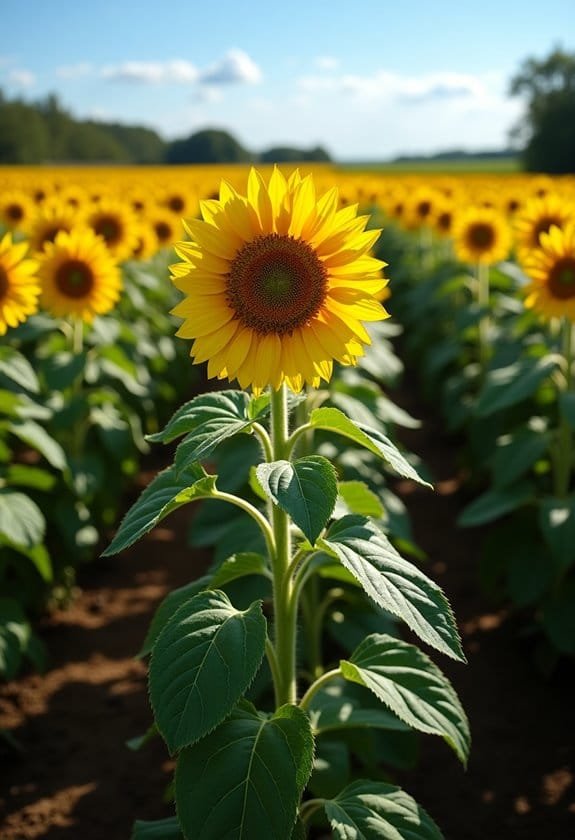
Common Sunflowers, or Helianthus annuus, thrive best in full sunlight and require well-drained, humus-rich soil to flourish.
These vibrant annuals adapt well to various soil conditions, from neutral to alkaline, but prefer moderate fertility for ideal growth.
Adequate watering, particularly in moist conditions, and attentive temperature management guarantee these towering plants—reaching heights of 3 to 10 feet—can display their spectacular blooms with vigor and grace.
Light
Sunflower plants thrive on abundant sunlight, requiring at least 6-8 hours of direct exposure each day for ideal growth. This need for full sun is essential, as it greatly influences the plant's overall height and vigor. With bright light, sunflowers grow taller and bushier, their vibrant blossoms becoming more pronounced as they benefit from maximal photosynthesis.
An intriguing aspect of these plants is their heliotropic behavior. Young sunflowers actively track the sun's movement across the sky, ensuring they capture best light during the day. This natural tendency aids immensely in energy absorption, heightening their growth potential during their formative stages.
Once mature, however, they face eastward—this fixed orientation promotes effective energy conservation, allowing the plant to focus resources on flower development instead of continual movement.
Additionally, sunflowers exhibit remarkable drought tolerance, thriving in sunny, arid conditions often characterized by poor water retention. Their adaptability to such environments, coupled with the requirement for full sun, makes sunflowers an excellent choice for gardens that receive ample sunlight, ensuring they flourish as radiant symbols of summer.
Soil
Growing sunflowers successfully hinges on the right soil conditions. The Common Sunflower (Helianthus annuus) flourishes in well-drained, humus-rich soils that possess a moderate fertility level. Such environments provide the essential nutrients that support robust growth.
Ideally, sunflower plants prefer a soil pH that leans towards neutral to alkaline; this balance enhances nutrient availability, contributing to the overall health of the plant.
Interestingly, sunflowers exhibit a remarkable tolerance for poor soil conditions, showcasing their resiliency and adaptability. Despite this hardiness, soil moisture remains a critical factor; while these plants require ample moisture for healthy growth, excessively saturated soil can hinder their development. This underscores the importance of having a drainage system that prevents waterlogging, which can suffocate roots and diminish vigor.
Moreover, ensuring proper soil aeration is crucial, as compacted soils can stifle root expansion and reduce nutrient uptake. By prioritizing well-structured, loose soil that allows for air circulation, gardeners can create an ideal foundation for sunflowers.
With these considerations in mind, cultivating healthy sunflowers will yield vibrant blooms, ultimately enriching any landscape they inhabit.
Water
While sunflowers can tolerate periods of drought, they thrive best with consistent moisture throughout their growth cycle. This plant, Helianthus annuus, benefits markedly from adequate water, especially during critical stages like germination and flowering. Although it possesses some drought-tolerant characteristics, appropriate irrigation is essential for peak development.
To encourage vigorous growth, one should water sunflowers deeply but infrequently. This method allows for a thorough soak of the roots while ensuring that the topsoil dries out between watering sessions. Such practice helps to prevent over-saturation, which can lead to root rot, a common issue that can hinder healthy development.
Ideal moisture conditions involve keeping the soil consistently moist but not waterlogged. Sunflowers prefer well-drained, humus-rich soil, ideally maintaining moderate fertility and a neutral to alkaline pH level.
Given sunlight's crucial role in photosynthesis, sunflowers thrive in full sun, requiring at least 6 to 8 hours daily. Therefore, a harmonious balance of sunlight and water, alongside well-suited soil conditions, creates an environment where these magnificent flowers can flourish, showcasing their beauty to all who behold them.
Temperature
For optimal growth, Helianthus annuus thrives within a temperature range of 70°F to 80°F (21°C to 27°C). This vibrant plant flourishes in warm climates, showcasing its full potential when temperatures align with its natural preferences.
Sunflowers are particularly sensitive to frost; consequently, they require frost-free conditions for both germination and growth.
Planting typically occurs after the last frost date in spring, as seeds necessitate warm soil temperatures of at least 50°F (10°C) to germinate effectively. Additionally, while sunflowers can endure heat and drought, making them well-suited for regions experiencing soaring summer temperatures, they still favor a controlled climate for ideal development.
The optimal temperature range for seed development and maturation extends slightly higher, between 70°F to 85°F (21°C to 29°C), ensuring robust growth and prolific seed production.
When weather conditions align with these temperature needs, Helianthus annuus rewards growers with stunning blooms and plentiful seeds, reflecting the intricate relationship between temperature and plant significance.
Through understanding these requirements, cultivators can create environments that maximize the sunflower's growth potential and harness its beauty.
Pollinator Criteria
Pollinator criteria for Helianthus annuus are essential in understanding its role within ecosystems.
Attracting a variety of pollinators, particularly honeybees and butterflies, the sunflower provides abundant nectar while facilitating effective cross-pollination through its tall structure and highly visible yellow flowers.
This interaction not only supports biodiversity but also enhances the plant's capacity to thrive across various climatic conditions, ensuring the continuity of multiple butterfly species that rely on sunflowers as larval host plants.
Attracted Pollinators
Common sunflowers (Helianthus annuus) serve as an important resource for a wide array of pollinators, thanks to their rich nectar offerings and large flower heads. The abundant nectar, coupled with easy accessibility, particularly attracts bees, including honeybees, bumblebees, and specialized native bees like Andrena and Melissodes.
These pollinators play a critical role in maintaining biodiversity and ecological balance. Sunflowers attract a diverse range of early-season pollinators, similar to how the Common Cowslip supports various species in a temperate ecosystem.
Sunflowers aren't only inviting for bees; they also provide a major food source for various butterflies. Notable species, such as the Monarch, Painted Lady, and Silvery Crescentspot, frequently visit, drawn by the sunflowers' vibrant blooms to sip the nourishing nectar.
This attraction extends throughout the blooming period, from late May through fall, ensuring that pollinators have a continuous food supply, which is essential for both adults and their developing larvae. Additionally, Common Sunflowers serve as larval host plants for species like the Silvery Checkerspot butterfly, which can produce 1-4 broods depending on environmental conditions. The plant's ability to attract pollinators enhances not only its own reproductive success but also supports a diverse range of wildlife in the ecosystem.
Pollination Method
Insect pollination is fundamental to the reproductive success of Helianthus annuus, largely dependent on the activity of bees that are drawn to the plant's large, vibrant flower heads.
These sunflowers exhibit a fascinating pollination behavior known as "buzz pollination." During this process, specific bee species, such as certain bumblebees, vibrate their bodies to release pollen from the tightly packed anthers, maximizing pollen availability.
Each sunflower head may contain several thousand individual florets, enhancing the flower's reproductive potential and attracting a diverse array of pollinators. Among these, native solitary bees, like Andrena and Melissodes, play an essential role.
These industrious pollinators, nesting in the ground, are vital for maintaining healthy ecosystems through their diligent pollination activities.
The timing of sunflower flowering is no accident; it synchronizes with the peak activity periods of these pollinators. This strategic alignment guarantees a high rate of successful fertilization and seed production.
As sunflowers bloom, they become a stunning spectacle of nature, exemplifying the intricate relationships between plants and their pollinators, ultimately contributing to biodiversity and ecosystem resilience. Additionally, their extended flowering period resembling that of Origanum vulgare, ensures continued availability of resources for pollinators.
Consequently, the pollination method of Helianthus annuus is an enchanting example of evolutionary adaptation and ecological interdependence.
Care & Maintenance
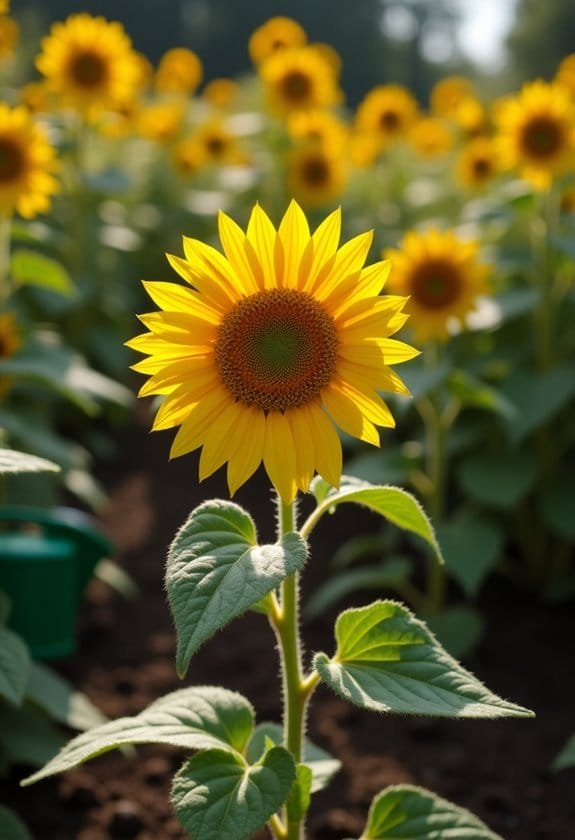
Care and maintenance of Helianthus annuus involve more than just planting these vibrant sunflowers; they require thoughtful attention to their growing conditions.
With at least 6-8 hours of daily sunlight, appropriate watering, and proper spacing of 18-36 inches for airflow, gardeners can notably enhance the health and vigor of their plants.
Additionally, recognizing suitable companion plants can create harmonious ecosystems that benefit all species involved, showcasing the beauty of biodiversity.
Planting Tips
To successfully plant Helianthus annuus, also known as sunflowers, gardeners should focus on their ideal growing conditions. These vibrant plants thrive in full sun, so selecting a location that receives ample sunlight is fundamental.
Moreover, sunflowers prefer well-drained, humus-rich soil, ideally with a pH ranging from neutral to slightly alkaline, enhancing their growth potential.
When it comes to sowing seeds, they should be placed one to two inches deep and spaced approximately 1.5 to 3 feet apart to guarantee adequate airflow and nutrient access. Consistent moisture is essential during germination; however, gardeners must be cautious to avoid waterlogging, as sunflowers favor moderately fertile soil.
For best growth, applying a nitrogen-based fertilizer when the plants are young and again during flowering can greatly enhance their vigor.
Additionally, regular monitoring for pests such as aphids or caterpillars is critical, as these can adversely affect plant health. Managing weeds is also fundamental, as competition for resources can impede the sunflowers' growth.
Ongoing Care
Once sunflowers are established in the garden, ongoing care becomes crucial for their continued health and vibrancy. Regular watering is essential, particularly during dry spells, as sunflowers thrive in moist soils. However, growers must be cautious not to overwater, which can lead to detrimental root rot.
Additionally, fertilization using nitrogen-based fertilizers at the beginning of the growing season can greatly enhance growth and flower production, contributing to a more prolific bloom.
Sunflowers require full sunlight, so positioning them in areas that receive at least 6 to 8 hours of direct sun daily promotes ideal health and flowering potential. To prolong the blooming period throughout summer and fall, gardeners can practice deadheading by removing spent flowers, encouraging the plants to produce more blooms in response.
For taller varieties, providing support through stakes or selecting sheltered planting locations becomes necessary, as this prevents potential wind damage and fosters healthy stalk development.
Suggested Companions
Sunflower enthusiasts find that pairing their plants with the right companions can greatly enhance overall health and productivity. Companion planting with Helianthus annuus, or common sunflower, boosts their growth while facilitating a thriving ecosystem.
For instance, planting borage and corn alongside sunflowers not only provides beneficial shade but also attracts pollinators, which are vital for ideal flowering.
Integrating beans into this mix can markedly improve nitrogen levels in the soil, fulfilling the nutrient demands of sunflowers. The sunflowers' vertical stature lends support to the climbing beans, fostering a mutually beneficial relationship.
Additionally, marigolds serve as excellent companions, as they deter pests and encourage beneficial insects, promoting a healthier garden environment.
Cucumbers, sharing similar hydration needs and sun-loving tendencies, can benefit from the sunflowers' sturdy structure, effectively acting as natural trellises.
To maximize growth and flowering, gardeners should space sunflowers adequately, maintaining a distance of 12-18 inches apart to promote air circulation and guarantee ample sunlight reaches all companion plants.
Through these careful selections, enthusiasts can cultivate a more resilient and productive garden.
Common Issues
Helianthus annuus often encounters various challenges that threaten its growth and productivity.
Pests like aphids and spider mites can wreak havoc, while fungal diseases such as downy and powdery mildew thrive in humid conditions, potentially leading to diminished vigor and yield.
To combat these issues, implementing effective pest management strategies and ensuring proper spacing and soil health are essential for fostering robust sunflowers.
Pests/Diseases
In fields where sunflowers thrive, various pests and diseases pose significant threats to their health and productivity.
Aphids, small but voracious pests, often infest sunflowers, leaving behind honeydew that attracts sooty mold, consequently impairing photosynthesis and overall vigor.
Another notable pest, the sunflower beetle (Zygogramma exclamationis), can devastate crops through severe defoliation, drastically reducing yield potential if not managed properly.
Furthermore, sunflowers are susceptible to downy mildew, a fungal disease that flourishes in humid, poorly ventilated environments.
This affliction results in yellowing leaves, diminishing the plant's strength and liveliness.
Equally concerning is sunflower rust, caused by Puccinia helianthi, which manifests as reddish-brown pustules on leaves, leading to premature leaf drop and lower seed production rates.
These pests and diseases present formidable challenges that can threaten the sustainability of sunflower cultivation.
Consequently, implementing integrated pest management strategies and utilizing resistant cultivars enhance the resilience of sunflowers, safeguarding their yields in the face of these adversities.
Understanding the complex interplay of pests and diseases remains essential for farmers aiming to maintain robust sunflower health and optimize production.
Solutions
To tackle common issues in sunflower cultivation, growers should address factors such as pest control, disease management, and nutrient requirements.
The Helianthus annuus, a member of the daisy family, is particularly susceptible to diseases like downy mildew and powdery mildew, which flourish under humid conditions. Proper spacing and ventilation can greatly mitigate these risks.
Pests, including aphids, sunflower beetles, and caterpillars, pose another challenge to sunflower health. Regular monitoring and the application of insecticidal soap or neem oil serve as effective strategies for pest control.
In addition, nutrient deficiencies, often evident through yellowing leaves, can impede growth. Growers should consider using nitrogen-based fertilizers, as sunflowers are heavy feeders, requiring robust nutrient inputs.
Watering practices also play an essential role; excessive moisture can lead to root rot, while insufficient water may stunt growth. Sunflowers thrive in well-drained soil, necessitating consistent moisture without becoming waterlogged.
Finally, environmental stressors like drought or strong winds can damage these tall plants. Employing windbreaks or selecting sheltered locations can safeguard against such external challenges, fostering resilience and vibrancy in sunflower crops.
Summary
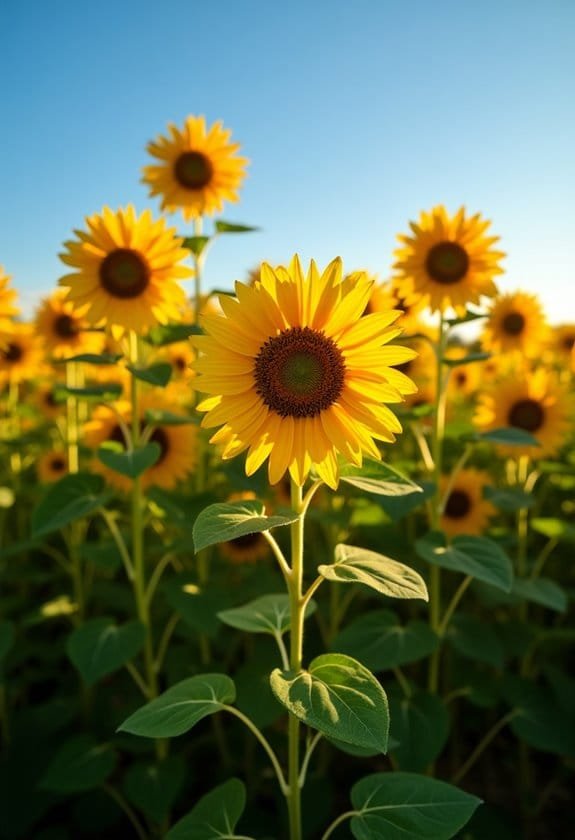
As one of the most notable cultivated plants, the Common Sunflower (Helianthus annuus) stands out due to its height, reaching up to 10 feet, and its impressive flower heads that can span 12 inches in diameter. Domesticated around 2600 BCE in Mexico, this annual herbaceous plant has evolved into a crucial agricultural crop, exemplified by the global production of 50 million tonnes in 2020, mainly in Russia and Ukraine.
Known for its heliotropic behavior, the Common Sunflower adeptly adjusts its floral orientation toward the sun during its growth, which aids in maximizing photosynthesis.
The cultivation of the Common Sunflower primarily focuses on its nutrient-rich seeds, yielding valuable oil that has garnered significant commercial interest. Additionally, the plant's by-products are utilized as animal feed, showcasing its broad economic impact. Beyond agriculture, it plays an ecological role, attracting pollinators and promoting soil health.
Furthermore, the sunflower holds cultural significance, symbolizing hope and resilience, especially notable as the state flower of Kansas and a powerful emblem of pride in Ukraine during challenging times. This multifaceted plant demonstrates the intertwined relationship between agriculture and culture, emphasizing its importance in human history and the environment.