Heracleum sphondylium, or hogweed, is an intriguing plant that can grow up to 2 meters tall and features large, lobed leaves and hollow stems. Its stunning white flowers bloom in umbrella-shaped clusters, attracting various pollinators, like bees and wasps, highlighting its ecological significance. Preferred habitats include moist, nitrogen-rich soils in meadows and along roadways, promoting biodiversity. Thriving in full sun or light shade, it requires consistent moisture and care. Although hogweed boasts culinary potential with its edible shoots, caution is warranted due to its skin-irritating sap. Those interested in horticultural practices will uncover more fascinating aspects related to this plant's cultivation and management.
Main Points
- *Heracleum sphondylium*, or hogweed, is a large herbaceous plant thriving in moist, nitrogen-rich soils across Europe, Asia, and Africa.
- It features distinctive white or pinkish-white flowers in umbrella-shaped clusters, attracting various pollinators crucial for biodiversity.
- Hogweed prefers full sun or light shade and requires consistent moisture for optimal growth and flowering from June to September.
- Although young shoots and stems are edible, the sap can cause skin irritation, necessitating caution during handling.
- This plant supports local ecosystems but can be invasive, requiring management practices like regular monitoring and cutting back mature plants.
Introduction
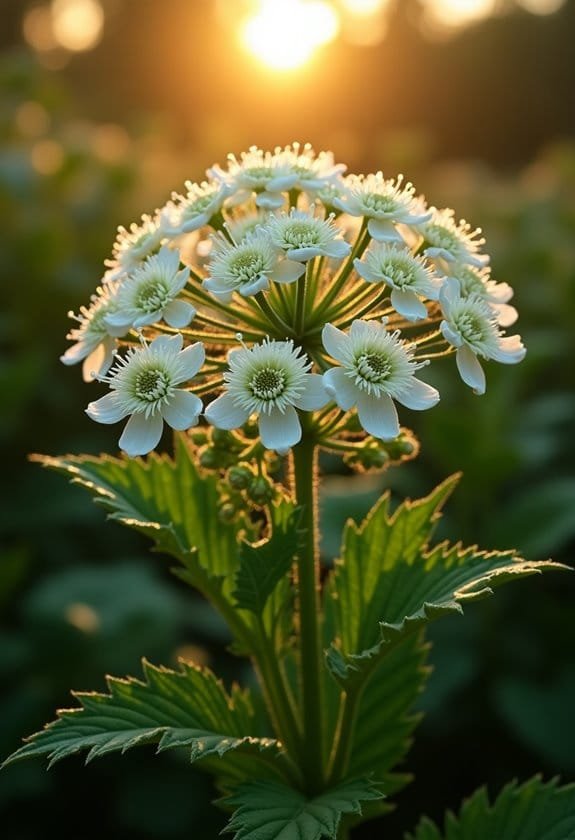
Heracleum sphondylium, better known as European cow-parsnip or hogweed, is a remarkable herbaceous flowering plant that can soar to heights of up to 2 meters.
This striking species features large, hollow, ribbed stems and expansive lobed leaves that can extend to 50 cm in length, making it a formidable presence in its natural habitat.
Originating from Europe and parts of Asia and Africa, hogweed thrives in moist, nitrogen-rich soils, often gracing meadows and riverbanks with its distinctive white or pinkish-white flowers that gather in large umbrella-shaped clusters.
Common Name
Hogweed, known scientifically as Heracleum sphondylium, is a fascinating plant with a range of common names that can vary by region. One of its alternate names, "European Cow-Parsnip," reflects its close relationship to other plants in the Apiaceae family, which includes familiar vegetables like carrots and parsley.
This common naming can also lead to confusion; for instance, the term "hogweed" is often mistakenly applied to the invasive Giant Hogweed (Heracleum mantegazzianum), a much larger and potentially harmful species.
In various cultures, Hogweed's young shoots and stems are considered edible, contributing to traditional dishes like borscht, which showcases the plant's versatility.
Additionally, Hogweed plays an essential ecological role by providing nectar and pollen for diverse pollinators, greatly enhancing biodiversity within its habitat.
This multifaceted plant, often encountered in meadows and roadside areas, demonstrates the interplay between local culture, culinary practices, and environmental balance.
Scientific Name
The scientific name of hogweed, *Heracleum sphondylium*, reflects its place within the diverse Apiaceae family, which includes a variety of well-known plants. This native plant was first described by the renowned botanist Carl Linnaeus in 1753, establishing its historical significance in the world of botany. Classified under the Heracleum genus, *Heracleum sphondylium* is notable for its distinctive morphological traits, demonstrating variability with multiple recognized subspecies that showcase different characteristics.
Hogweed typically features large, flat-topped clusters of white or pinkish-white flowers arranged in umbels, peaking during the flowering season in July and August. The flower clusters can reach impressive diameters, often exceeding 10 centimeters and providing a striking visual presence.
Taxonomically, it stands as one of five species within the Heracleum genus, contributing to the plant's ecological diversity across regions where it thrives.
Understanding *Heracleum sphondylium* not only elevates its botanical importance but also informs discussions surrounding its common names, regional adaptations, and potential impact on local ecosystems. This rich tapestry of knowledge encourages a greater appreciation for both the plant and the intricate lives it supports.
Overview
Commonly referred to as European cow-parsnip, *Heracleum sphondylium* is a striking herbaceous plant known for its impressive size and characteristic flower clusters. Reaching heights of up to 2 meters (6 ft 7 in), this perennial herb belongs to the Apiaceae family and displays large, lobed leaves that can grow as long as 50 cm (20 in).
From June to September, hogweed showcases its beautiful umbels, adorned with 10–25 hairy rays, producing blooms that range from white to pinkish-white.
Native to various regions, including Europe, western Asia, and northern Africa, *Heracleum sphondylium* thrives in moist, nitrogen-rich soils, typically found in grasslands, meadows, and along riverbanks.
Although it plays a crucial ecological role by attracting numerous pollinators and generating significant nectar, particularly from July to August, its invasiveness can pose challenges. The plant's aggressive growth can lead to local competition issues, making it a topic of concern for some ecosystems.
Despite these implications, cow parsley's aesthetic allure and ecological contributions render it a notable addition to the botanical world, often stirring discussions about managing invasive plants effectively.
Key Features
Heracleum sphondylium, or hogweed, stands impressively tall, reaching heights of up to 2 meters (6 ft 7 in), with its striking hollow, ridged stems adorned in bristly hairs.
The large, once or twice pinnate leaves, measuring up to 50 cm (20 in) long, exhibit serrated, lobed segments that add to the plant's complex beauty.
Flowering from June to September, with a peak in July and August, hogweed not only captivates the eye with its flat-topped umbels in shades of white and pink but also serves as an essential nectar source for pollinators. It is important to note that furanocoumarins in young shoots can cause severe skin reactions if mishandled.
Growth Size
Reaching impressive heights of up to 2 meters (6 ft 7 in) under ideal growing conditions, Heracleum sphondylium showcases its robust stature. This species, commonly known as hogweed, is a striking example of herbaceous perennials that thrive in diverse environments.
The plant's hollow, ridged stem, often adorned with bristly hairs, contributes considerably to its sturdy appearance and structural integrity.
As hogweed expands, its leaves can reach lengths of 50 cm (20 in), displaying an intricate division into 3–5 lobed segments. This distinctive foliage not only enhances its aesthetic appeal but also plays a role in photosynthesis, allowing the plant to absorb ample sunlight.
Additionally, the sizeable tap root establishes a firm foundation in fertile, moist soils, providing the necessary nutrients and stability for the towering plant.
The flowers, arranged in large umbels measuring 4–25 cm in diameter, bloom exquisitely in shades of white, pinkish-white, or purplish. These beautiful clusters moreover embellish what many consider a giant hogweed, underscoring its majestic growth size and ecological importance within its habitat.
Collectively, these features delineate Heracleum sphondylium as an enchanting component of the botanical landscape.
Appearance
Standing out in various landscapes, hogweed boasts several distinctive key features that make it easily recognizable. This robust perennial can reach heights of up to 2 meters (6 feet 7 inches), showcasing a hollow, ribbed stem adorned with bristly hairs that further enhance its rugged appearance.
The impressive leaves of hogweed are particularly notable; they can be as long as 50 centimeters (20 inches) and exhibit a once or twice pinnate structure, displaying serrated edges and lobed segments (3 to 5), which resemble intricately crafted green lace.
Hogweed also captivates with its striking flowers, arranged in large, umbrella-like clusters known as umbels, measuring between 4 to 25 centimeters in diameter. Each umbel features 10 to 25 hairy rays, supporting petals that range in color from pristine white or soft pinkish-white to striking purplish hues.
The remarkable variability in hogweed's morphology—evident in its recognized subspecies—adds layers of complexity to its appearance, with differences in flower color, leaf shape, and symmetry. Consequently, with its towering stature and intricate foliage, hogweed creates a profound visual impact, becoming a key element in diverse ecosystems.
Flowering Season
During the flowering season, typically from June to September, hogweed showcases its remarkable beauty, peaking in July and August. This period reveals large, umbrella-shaped clusters called umbels, which can measure between 4 to 25 centimeters in diameter. Each umbel displays 10 to 25 hairy rays, adorned with individual flowers that often exhibit a delicate palette of white or pinkish-white to purplish hues.
Hogweed plays a crucial role during this time, attracting a diverse array of pollinators such as beetles, wasps, and flies. These creatures, drawn by the plant's generous nectar supply, contribute considerably to local ecosystems. The act of pollination not only facilitates seed production but also supports the overall health of a habitat rich in biodiversity.
The flowering season isn't merely a visual spectacle; it's instrumental in promoting ecological balance, enabling hogweed to proliferate and enrich its surroundings. As the flowers bloom and release their sweet fragrance into the air, they gently sway in the breeze, acting as beacons for essential pollinators, thereby ensuring the ongoing cycle of life in their environment.
Growing Requirements
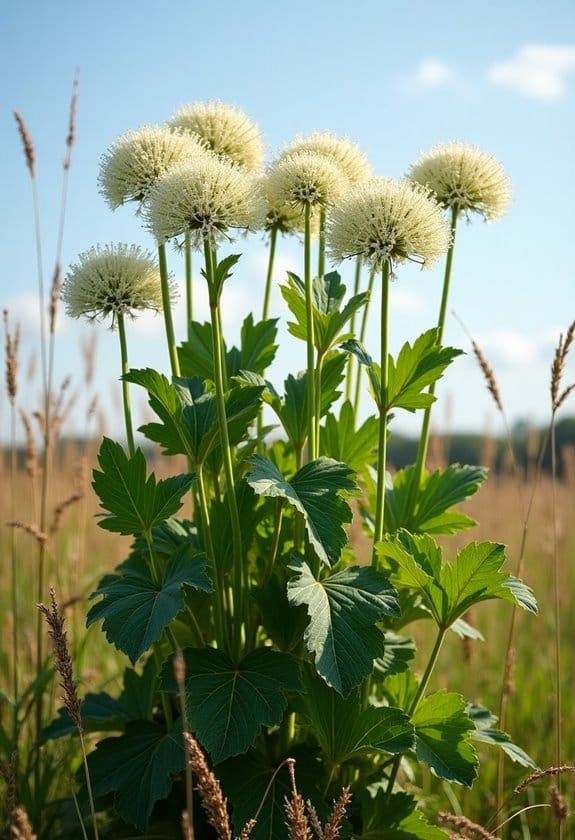
Heracleum sphondylium, commonly known as hogweed, has specific growing requirements that are essential for its health and vigor.
It thrives in moist, nitrogen-rich soils, often basking in full sun or light shade, and can adapt to various soil types—from clay to sandy textures.
To flourish, it not only demands ample space due to its potential height of up to 2 meters but also needs consistent moisture, especially during its flowering phase that lasts from June to September.
Light
Light plays an essential role in the growth and liveliness of Heracleum sphondylium. This robust herbaceous plant, commonly known as hogweed, flourishes best in full sun, although it demonstrates adaptability to partial shade. Its native habitats frequently feature moist soils, enriched with nitrogen, which facilitate vigorous growth alongside ample sunlight.
Typically, hogweed can endure moderate shade, making it suitable for growth in woodland edges and hedgerows where light filters through the dense foliage of trees. Such environments support its remarkable ability to thrive in varying conditions.
Flowering peaks from June to September, with July and August presenting ideal light levels for blooming. During this significant period, the plentiful sunlight bolsters the plant's health, encouraging the development of its striking, large flower umbels and lush green leaves.
Moreover, adequate sunlight is essential for the overall vitality of hogweed, as it directly influences the plant's capacity to photosynthesize efficiently.
Therefore, gardeners should aim to plant hogweed in locales that harness maximum sunlight, promoting not only growth but also aesthetic appeal through its magnificent blossoms. This careful consideration of light conditions will enhance any garden featuring this beautiful, perennial species.
Soil
Ideal growing conditions for Heracleum sphondylium depend largely on the soil. The plant flourishes in moist, nitrogen-rich soils that are well-drained and fertile, characteristics typically found in grasslands and meadows. This specific soil composition not only supports robust growth but also contributes to the impressive heights that hogweed can achieve—up to 2 meters under ideal circumstances.
Heracleum sphondylium demonstrates a remarkable adaptability to a variety of soil types, including clay, loam, and sandy soils; however, it particularly favors those that retain moisture. Such fertile environments, rich in essential nutrients, foster healthy development and vigorous growth.
Conversely, the plant struggles in dry, compacted, or heavily contaminated soils where nutrient availability is limited, hampering its potential.
In essence, for successful cultivation, one must prioritize the establishment of moist, nitrogen-rich conditions to guarantee hogweed thrives. When these soil criteria are met, it creates a nurturing platform where this remarkable plant can flourish, capturing the essence of its natural habitat and sustaining its growth effectively in various climates.
Water
Water plays an important role in the thriving growth of Heracleum sphondylium. This magnificent plant flourishes in moist, nitrogen-rich soils, favoring areas where water retention is ideal. Commonly found along riverbanks, roadsides, and in meadows, Heracleum sphondylium seeks locations with consistent moisture to nurture its development.
It's adaptable and tolerates various soil types, including both clay and sandy soils, but maintaining adequate moisture is critical for its health.
Regular watering becomes essential, especially during dry spells, as young plants require adequate hydration to support their robust growth and overall liveliness. However, caution is necessary; over-watering can induce root rot and other moisture-related issues, detrimentally affecting the plant's health.
At its core, the delicate balance of moisture must be carefully managed to prevent waterlogging while ensuring the plant's nutritional needs are met through its nitrogen-rich soil habitat. Additionally, a diverse range of pollinators can benefit from its presence, promoting ecological health in the surrounding area.
Thus, gardeners must embrace the dual responsibility of providing sufficient water while diligently avoiding excessive moisture, cultivating an environment where Heracleum sphondylium can truly thrive amidst the delicate interplay of nature's resources.
Temperature
For successful growth, Heracleum sphondylium prefers a temperate climate, thriving best in hardiness zones 3 to 9. This native plant, known as Hogweed, responds positively to conditions that provide full sun to partial shade. These light scenarios considerably enhance both its growth and flowering potential.
Ideally, Hogweed flourishes in moist, nitrogen-rich soils, typically found in fertile grasslands, meadows, and along riverbanks. While it exhibits some tolerance to various soil types—including clay and sandy soils—its best growth hinges on the availability of fertile, moisture-retentive soils.
Such conditions nourish the plant, allowing it to establish robust roots and strong stems, crucial for its towering stature, which can reach up to 5 feet or more.
The growing season for Heracleum sphondylium peaks during the warmer months, with flowering generally occurring from June to September. During this time, the plant becomes a magnificent display of large, umbrella-like clusters of small white flowers, attracting pollinators and enriching the ecosystem.
Pollinator Criteria
Heracleum sphondylium, commonly known as hogweed, attracts a multitude of pollinators including beetles, wasps, and various flies, drawn to its large, umbrella-shaped flower clusters.
This plant engages in a fascinating pollination method where the consistent nectar flow not only sustains the visiting insects but also supports diverse pollinator populations, enhancing local biodiversity.
Attracted Pollinators
Blooming from June to September, hogweed draws a diverse array of pollinators with its striking white to pink flowers. These large umbels, featuring delicate floral structures, serve as a rich source of nectar, especially during July and August when flowering peaks.
Pollinators such as bees, beetles, wasps, and flies flock to the hogweed, benefiting from its abundant nectar supply and contributing to their energy needs.
A UK survey conducted by AgriLand ranks hogweed among the top 10 plants for nectar production, highlighting its essential role as a food source for various insect species.
In addition to providing nectar, hogweed plays a significant ecological role by hosting the larvae of specific insects, such as the leaf miner Phytomyza spondylii. This interaction not only supports local biodiversity but also fosters a thriving environment for adult pollinators.
Pollination Method
Insect pollination is key for the reproduction of hogweed, with a variety of visitors actively contributing to this process. Heracleum sphondylium, known for its large, flat-topped umbels of white or pinkish-white flowers, attracts numerous pollinators such as beetles, wasps, and flies. These creatures are drawn to the plant's exceptional nectar production, especially during its peak flowering season in July and August.
During this critical time, hogweed becomes an essential food source for its pollinators, often ranked among the top 10 plants for nectar production in the UK. Its abundant nectar serves as a reward, encouraging pollinators to visit multiple flowers in a single foraging trip, thereby enhancing the chances of successful pollination.
The structural design of hogweed's flowers maximizes visibility and accessibility, making it easy for pollinators to engage.
Moreover, by attracting a diverse array of pollinators, hogweed plays a significant role in supporting biodiversity within its ecosystem. This interaction not only enhances the reproductive success of H. sphondylium itself but also positively impacts other flowering plants, showcasing the intricate relationships within our natural world.
Care & Maintenance
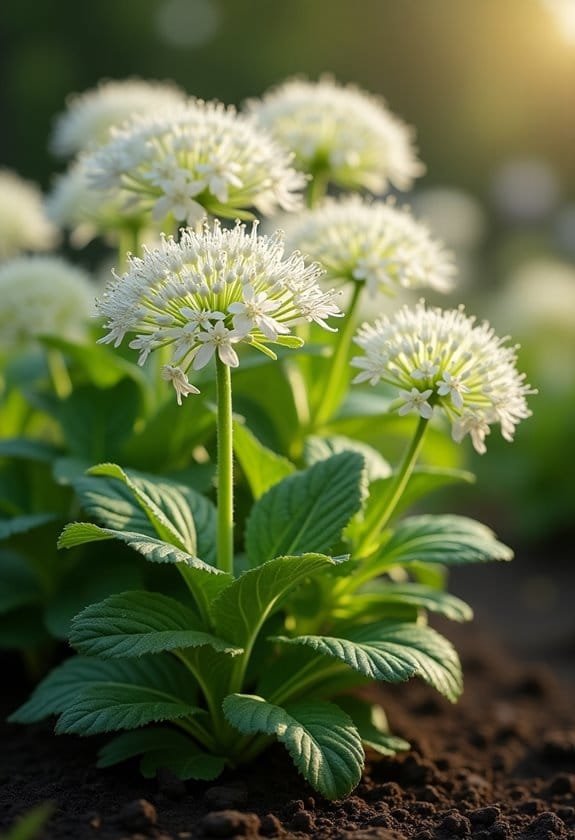
Heracleum sphondylium, with its adaptable nature, thrives in various garden conditions, benefiting from fertile, moisture-retentive soil and ample sunlight.
Ongoing care for this low-maintenance plant involves regular pruning to manage its growth, ensuring it remains visually appealing while preventing unwanted spread.
Additionally, selecting suitable companion plants can enhance its overall health and beauty, creating a harmonious garden environment that delights the senses.
Planting Tips
When planting Heracleum sphondylium, it's essential to take into account a few key factors to assure robust growth. This spectacular plant, commonly referred to as hogweed, flourishes in moist, nitrogen-rich soils. Consequently, amending the earth with organic matter before planting greatly enhances fertility.
Planting in full sun to partial shade is important, as the hogweed prefers locations that offer at least six hours of sunlight daily. Additionally, watering the plants regularly guarantees consistent moisture, particularly during dry spells, as Heracleum sphondylium can grow to impressive heights of up to two meters, creating a striking presence in any garden.
Pruning spent flowers and old leaves encourages healthier growth while controlling self-seeding, which could lead to unwelcome spreading in gardens across western Asia and northern areas.
Finally, one must monitor for potential pest infestations, including leaf miners, and consider utilizing organic pest control methods. Such approaches maintain the health of the common hogweed while minimizing ecological impact, creating a harmonious balance between plant health and environmental preservation.
With attentive planting practices, gardeners can cultivate this striking species successfully.
Ongoing Care
To guarantee ongoing care for Heracleum sphondylium, gardeners should focus on maintaining ideal soil conditions and regular maintenance practices. This lush plant thrives in fertile, moist soil, requiring consistent watering, particularly during dry spells. Without adequate hydration, the vigor of Hogweed (Heracleum mantegazzianum) can diminish greatly.
To encourage a bushier growth habit and prevent overreach, it's advisable to trim back flower stalks after blooming, which typically happens from June to September.
Regular weeding is essential, especially in areas infested with tough competitors like ground elder and other invasive plants that vie for nutrients and light. Such practices promote a healthier, more robust growth environment.
Additionally, vigilant monitoring for pests and diseases mustn't be overlooked. Although Hogweed is generally resilient, issues such as aphid infestations or fungal infections can occur and must be managed swiftly to preserve plant health.
When tending to the foliage, gardeners should use gloves to guard against potential skin irritation caused by sap. Cultivating this plant requires a delicate balance of care and proactive management to guarantee that it flourishes for years to come, much like nurturing a young cow in its habitat.
Suggested Companions
Choosing the right companion plants for Heracleum sphondylium can greatly enhance its growth and overall health. Opting for species like comfrey (Symphytum officinale) and purple loosestrife (Lythrum salicaria) can provide significant companion benefits, as these plants flourish in similar moist, nitrogen-rich soils. Meadow Vetchling is another excellent companion due to its nitrogen-fixing abilities, which enrich the soil for surrounding plants.
To guarantee healthy development, maintaining ideal spacing of at least 12 to 18 inches between Hogweed and its companions is essential. This distance helps prevent overcrowding, which can hinder proper growth and flowering, creating an environment where each plant thrives independently.
Regularly deadheading the spent flowers of companion plants not only encourages continued blooming but also reduces nutrient competition, thereby allowing Hogweed to access critical resources.
Throughout the growing season, vigilant monitoring of both companion plants and Hogweed is necessary, with care practices such as appropriate watering and mulching adjusted as necessary.
Employing organic mulches serves a dual purpose: it suppresses unwanted weeds while retaining soil moisture, particularly during the active growth of Hogweed. Additionally, incorporating plants like Ragged Robin which attract pollinators can further enhance the biodiversity and ecological health of the garden environment.
Common Issues
Heracleum sphondylium, often referred to as common hogweed, faces several common issues that can hinder its growth and ecological balance.
Pests, such as aphids and leafhoppers, along with diseases like powdery mildew, threaten the plant's health, while effective management strategies such as regular monitoring and timely interventions can mitigate these effects. Red clover's(nitrogen-fixing ability) ability to enhance soil fertility can also support plants like hogweed through healthier ecosystems.
Addressing these concerns promptly protects not only the hogweed itself but also the surrounding ecosystem, ensuring the plant contributes positively rather than becoming a detrimental influence. Additionally, maintaining well-draining soil and consistent moisture is vital for the overall health of native plant species like Bird Cherry, which can support the ecosystem alongside hogweed.
Pests/Diseases
A variety of pests and diseases can affect Heracleum sphondylium, commonly known as hogweed, posing threats to its health and growth. Among the common pests, aphids and leaf miners considerably damage the plant's leaves, leading to reduced vigor. Insect feeding not only disturbs the plant by extracting sap but also causes wilting and deformation, impacting both growth and flowering potential.
Additionally, root-knot nematodes can infest hogweed's roots, forming galls that hinder nutrient and water uptake, which stresses the overall plant.
Fungal diseases also threaten hogweed, with powdery mildew often occurring in humid conditions. This disease manifests as white fungal growth on leaves, diminishing the plant's ability to photosynthesize effectively.
To counteract these issues, practices in pest management and disease prevention are essential. Regular monitoring allows for the immediate removal of affected plant parts, while maintaining good air circulation and appropriate watering practices can greatly mitigate growth impacts caused by these pests and diseases.
Ultimately, being proactive in addressing these challenges helps guarantee the healthy development of hogweed, enabling it to thrive in its natural habitat.
Solutions
To maintain the health of Heracleum sphondylium and manage its proliferation, several practical solutions can be implemented to address common issues. Invasive control strategies are essential; regularly cutting back mature plants can considerably curb their spread in gardens.
It's imperative, however, to remove cuttings promptly to prevent them from establishing a soil seed bank, which can exacerbate the problem.
Public education initiatives play a fundamental role in mitigating the risks associated with hogweed. By equipping the community with knowledge about how to identify this plant and the potential for skin irritation upon contact, accidental encounters can be reduced, thereby minimizing injuries.
Furthermore, ecological assessments are needed to understand the impact of hogweed on local ecosystems. Its ability to outcompete native flora may disrupt biodiversity, prompting the necessity for thorough ecological monitoring.
Lastly, landowners should familiarize themselves with local regulations, as the cultivation of hogweed is often restricted or prohibited, reinforcing the importance of compliance in effective management.
Through these collective efforts, communities can't only manage Heracleum sphondylium but also preserve the integrity of their ecosystems.
Are There Any Similarities Between Hogweed and Common Fennel?
Yes, there are some similarities between hogweed and common fennel. Both belong to the Apiaceae family and have similar umbrella-shaped flower clusters. However, common fennel benefits include its culinary uses and medicinal properties, while hogweed is considered invasive and potentially harmful due to its toxic sap.
Summary
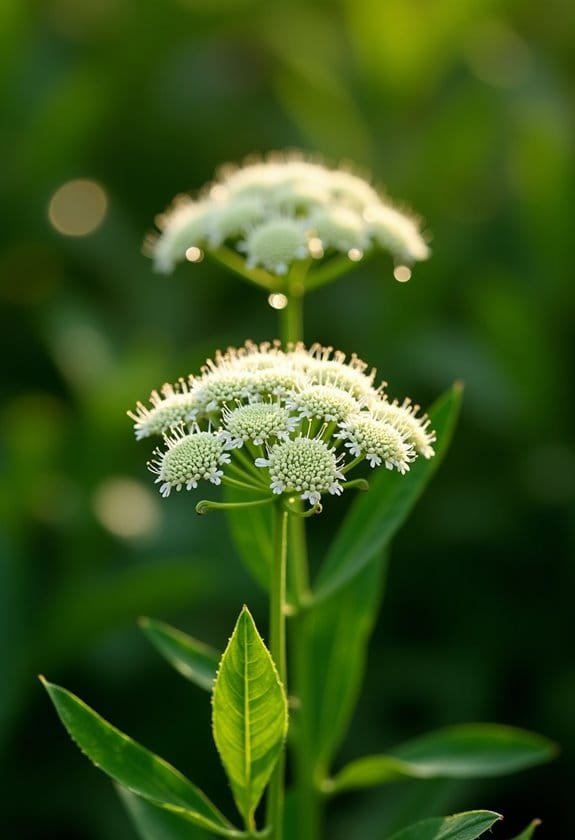
European cow-parsnip, also known as Heracleum sphondylium, is a striking herbaceous flowering plant that can grow up to 2 meters tall.
This remarkable species, native to Europe, western Asia, and northern Africa, thrives in moist, nitrogen-rich soils and is often found along roadsides and riverbanks.
Its large, lobed leaves and white or pinkish flowers create an impressive visual display.
The cultural significance of cow-parsnip extends beyond its beauty; it serves critical ecological benefits by providing essential nectar for pollinators, thereby enhancing biodiversity.
During its primary flowering season from June to September, it supports various insects, including the larvae of the leaf miner Phytomyza spondylii.
Additionally, European cow-parsnip has culinary uses, with young stems and seeds incorporated into various dishes.
However, one must exercise caution due to the plant's sap, which contains furanocoumarins, capable of causing skin irritation and photosensitivity.