Hydrotelephium spectabile, commonly known as Ice Plant, is a fascinating succulent that thrives across various climates, reaching heights and widths of 1 to 2 feet. Its enchanting pink to deep rose flowers bloom from late summer to fall, attracting essential pollinators like bees and butterflies. Preferred by gardeners, it requires well-drained soil, full sun, and minimal watering, exhibiting drought resistance that supports ecological health. With a moderate growth rate and low toxicity, it necessitates simple maintenance, including pest management and thoughtful pruning. As a versatile choice for xeriscaping, it enhances garden aesthetics while supporting biodiversity—discovering further intriguing aspects awaits.
Main Points
- Hylotelephium spectabile, commonly known as Ice Plant, features vibrant pink to deep rose star-shaped flowers in late summer to fall.
- This plant is hardy in USDA zones 3-9, showcasing drought resistance and suitability for xeriscaping due to water-storing leaves.
- The Ice Plant thrives in full sun and well-drained sandy or gravelly soil, requiring minimal care once established.
- Pollinator-friendly, it attracts bees and butterflies, playing a vital role in enhancing local biodiversity during its blooming period.
- Hylotelephium spectabile can be easily propagated through stem cuttings, making it accessible for gardeners looking to expand their collections.
Introduction
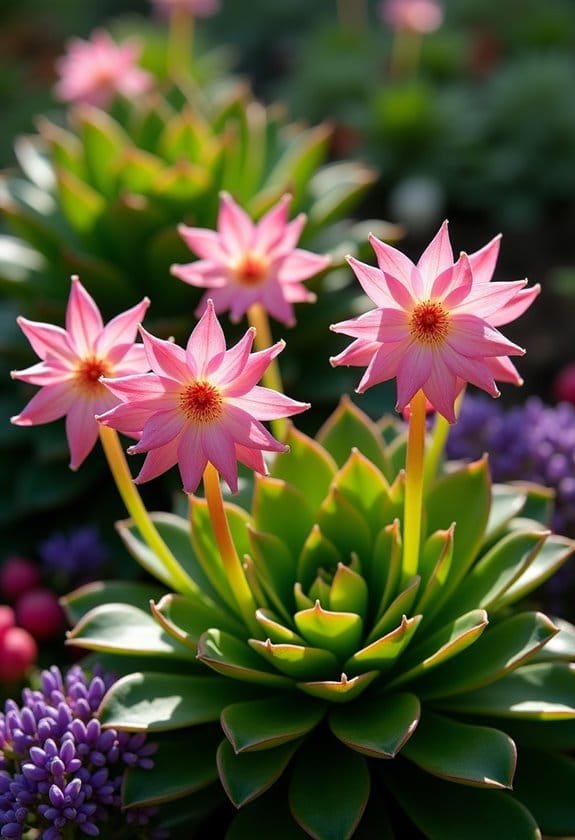
Hylotelephium spectabile, or Ice Plant, stands out as a remarkable perennial succulent that flourishes in diverse environments.
This resilient plant, native to China and Korea, showcases vibrant pink to deep rose flowers, attracting a plethora of butterflies and songbirds to gardens during late summer and fall.
With its ability to thrive in well-drained soil and tolerate drought, this species exemplifies the beauty and functionality of low-maintenance landscaping.
Common Name
Known for its vibrant blooms and hardy nature, Hylotelephium spectabile goes by several common names, including Ice Plant, Showy Stonecrop, and simply Stonecrop. These designations aptly reflect the plant's attractive appearance and resilience. Often dubbed Autumn Joy, this perennial showcases fleshy leaves and striking late summer to fall flowers that charm not only garden enthusiasts but also essential pollinators.
Native to China and Korea, Hylotelephium spectabile has garnered a loyal following among gardeners for its remarkable drought tolerance and minimal care needs. Typically reaching a height and width of 1 to 2 feet, this adaptable plant fits snugly into various garden designs, serving beautifully as a specimen plant, in rock gardens, or along borders where its lush foliage can be fully appreciated.
Its low toxicity enhances its appeal, making it a trusted choice for both novice and experienced gardeners alike.
As the seasons change, the enchanting displays of Hylotelephium spectabile not only brighten gardens but also contribute to local ecosystems, solidifying its status as a favorite among those seeking beauty and practicality in their horticultural pursuits.
Scientific Name
Classified under the scientific name Hylotelephium spectabile, this plant was once part of the Sedum genus, showcasing a fascinating evolution in botanical classification.
Belonging to the Crassulaceae family, Hylotelephium spectabile thrives in arid conditions, exhibiting characteristics typical of succulent plants. Native to China and Korea, it flourishes particularly well in full sun and well-drained soils, adapting efficiently to its environment.
Typically reaching heights and widths of 1 to 2 feet, this Ice Plant fits comfortably into diverse garden settings, providing an aesthetic appeal without overwhelming its surroundings. The fleshy, succulent leaves store water, enabling the plant to withstand dry spells while adding a texture that enhances landscape designs.
From late summer to fall, Hylotelephium spectabile bursts into vibrant pink to deep rose flowers, acting as a magnet for pollinators, including bees and butterflies.
This not only enriches the biodiversity of the garden but also creates a lively, dynamic atmosphere. Overall, Hylotelephium spectabile exemplifies resilience and beauty in the plant kingdom, offering both practicality and visual allure for gardeners and nature lovers alike.
Overview
Often admired for its striking appearance and resilience, Hylotelephium spectabile, or Ice Plant, captivates gardeners and plant enthusiasts alike.
This remarkable succulent perennial, belonging to the Crassulaceae family and native to China and Korea, typically flourishes at heights ranging between 1-2 feet. It thrives in environments that offer full sun or partial shade, demanding well-drained soil to prevent root rot—a condition it can suffer from if overwatered.
Blooming from late summer to fall, Hylotelephium spectabile produces clusters of flowers that shift from delicate pink to deep rose, effectively attracting valuable pollinators like bees and butterflies to the garden. Its drought tolerance makes it an excellent choice for rock gardens and drought-tolerant landscapes, allowing it to maintain beauty without extensive irrigation.
Propagation is remarkably easy; stem cuttings or individual leaves can sprout new plants, further expanding one's garden with minimal effort once established.
In addition to its pure form, hybrid plants created from Hylotelephium spectabile demonstrate enhanced varieties, showcasing a broad spectrum of colors and shapes that continue to intrigue horticulturists and collectors alike.
Key Features
Hylotelephium spectabile, often celebrated for its remarkable stature of 1-2 feet in height and width, showcases thick, succulent leaves that are nature's intricate reservoirs.
Its stunning flower clusters, shifting from a soft pink to a rich rose and finally to rust, grace gardens from late summer to fall, thereby enchanting both pollinators and horticulturists alike.
Understanding these key features not only highlights the plant's botanical elegance but also its adaptability and minimal care requirements, making it a prized addition to any garden landscape.
Growth Size
Ice Plants, or Showy Stonecrop, typically reach a height and width of 1-2 feet, making them an ideal choice for garden borders or rock gardens. Their compact growth size allows for effective space utilization, enhancing visual interest in various landscape designs.
Specifically, the Hylotelephium telephium Herbstfreude showcases this desirable trait, delivering striking aesthetics while maintaining a manageable dimension.
Mature Ice Plants exhibit a moderate growth rate, thriving particularly well when planted in early spring, prior to the hotter summer months. This timing not only encourages strong root establishment but also promotes overall plant vigor.
Remarkably, the drought-resistant, succulent leaves enable these perennials to flourish in challenging, arid environments, thereby marking them as exemplary specimens for xeriscaping.
Adaptable across different climates and soil types, Ice Plants can thrive in USDA zones 3-9, given that the soil remains well-drained.
Their perfect blend of resilience and charm allows gardeners to enjoy their vibrant blooms from late summer to fall, shifting from delicate pinks to rich rust shades, attracting a host of pollinators, like bees and butterflies—an enticing reward indeed.
Appearance
With their compact growth size, Ice Plants present a striking appearance that enhances any garden.
Hylotelephium spectabile, commonly known as Ice Plant, boasts fleshy, succulent leaves that typically range from vibrant green to a revitalizing bluish-green hue, growing up to 2 inches in length. The leaves arrange oppositely along the stems, forming a dense, bushy silhouette that increases the plant's ornamental appeal.
Standing between 1 to 2 feet tall, the Ice Plant can spread the same width, making it an excellent choice for borders and mass plantings.
A defining feature of the telephium is its enchanting clusters of star-shaped flowers. These blossoms initially exhibit a delicate pale pink shade, gradually transforming into deep rose and, ultimately, a warm rust color as they mature.
This color evolution captivates not only the human eye but also attracts various pollinators, enriching the garden's biodiversity. Additionally, the plant's flowering period aligns with peak pollinator activity, ensuring it plays a crucial role in sustaining local ecosystems.
Flowering Season
During the flowering season, typically spanning late summer to fall, Ice Plants come alive with vibrant blooms that shift in color from soft pink to deep rose and finally to a warm rust. This transformation epitomizes the beauty of nature's palette and invites observers to relish its allure.
The flowering heads, large and star-shaped, can grow exponentially, reaching heights of up to 2 feet, making an impressive statement in any garden.
As these exquisite blooms unfurl, they play an essential role in attracting a variety of pollinators, including bees and butterflies, thereby enhancing biodiversity.
These pollinators not only impart life to the garden but also serve significant roles within the ecosystem, fostering the growth of numerous species. The blooms in the late summer ignite a seasonal celebration, where floral abundance meets ecological necessity.
Moreover, the plant's flowering coincides with maturity, leveraging the warmest months for best blooming conditions. This flourishing extends into autumn, a time often coined "Autumn Joy," when the Ice Plant provides not only visual splendor but also important sustenance, reinforcing its significance in sustainable gardening practices.
Growing Requirements
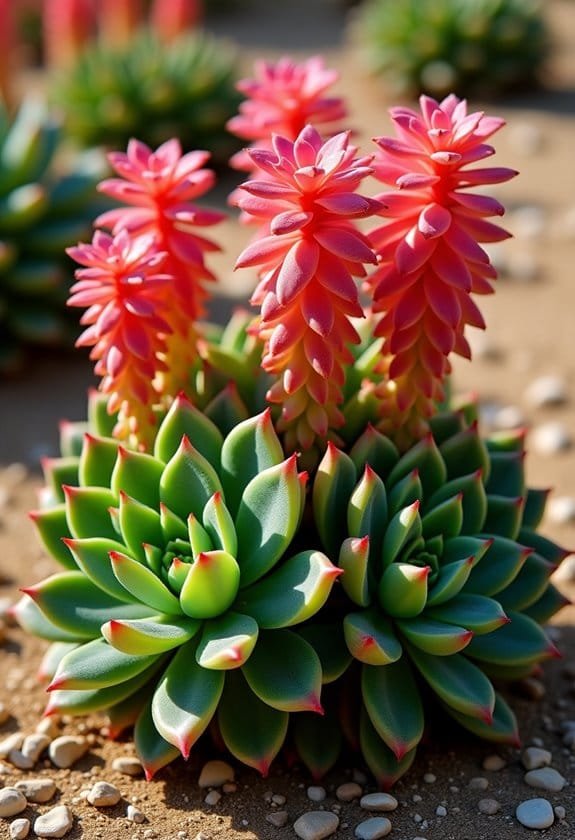
To thrive, Hydrotelephium Spectabile demands specific growing conditions that greatly influence its vigor and blooming.
This resilient plant flourishes in full sun, needing at least six hours of direct light daily, while well-drained, sandy, or gravelly soil is essential to prevent root rot from overly moist environments.
With light watering approximately every two weeks during summer, combined with its remarkable drought tolerance and capacity to endure temperatures down to 30°F, gardeners can easily cultivate this vibrant species in diverse landscapes.
Light
Full sunlight is fundamental for Hylotelephium spectabile, or Ice Plant, as it thrives with a minimum of six hours of direct sunlight daily. This exposure guarantees robust growth and stimulates vibrant flowering, important for the plant's visual appeal.
While Hylotelephium spectabile can tolerate partial shade, excessive shade induces leggy growth and dulls its colorful blooms, resulting in a lackluster display overall. Consequently, gardeners aiming for splendid blooms should prioritize locations with full sun to enhance plant health.
Furthermore, the plant's need for well-drained conditions complements its light requirements. Though it can adapt to various soil types, Ice Plant flourishes best in sandy or gravelly substrates, where aeration is ideal.
Moist soil could lead to root rot, hindering its vigor, so guaranteeing good drainage is essential. The vitality of these plants greatly hinges on the interplay of sunlight and soil conditions.
As spring approaches, the importance of direct sunlight becomes especially pronounced, triggering growth and enhancing the overall vigor of the plant. Sufficient light not only encourages flowering but also builds a resilient structure, preparing it for the challenges of the growing season.
Soil
For Hylotelephium spectabile, perfect soil conditions are vital for its growth and flowering success. This resilient plant thrives best in sandy or gravelly soil that boasts excellent drainage, as it can't tolerate waterlogged conditions. A pH level between 6.0 and 7.0 is most favorable, indicating slightly acidic to neutral soil that promotes vigorous growth.
Its adaptability allows it to flourish in various soil types; however, Ice Plant performs exceptionally well in nutrient-poor or less fertile soils, which mimics its native environment. While this plant can tolerate loamy soil, ensuring outstanding drainage is imperative, especially in humid climates where root rot may occur.
When planting, maintaining a spacing of at least 12 inches between each specimen allows for gradual filling and enhances airflow, further supporting soil health. As a drought-resistant species, Hylotelephium spectabile benefits from a growing environment that stays relatively dry. Additionally, monitoring for soil pH imbalances can help optimize conditions for growth.
When establishing these plants, it's important to water thoroughly but infrequently, allowing the soil to dry between watering sessions. This balance helps create a perfect habitat for Ice Plant, promoting both robust growth and breathtaking blooms.
Water
When it comes to water requirements, Hylotelephium spectabile thrives best in environments that strike a balance between dryness and sufficient moisture during its initial establishment. During the first growing season, consistent watering is necessary, as it helps the plant develop a robust root system. Experts generally recommend light watering every two weeks in summer, allowing the soil to dry out between sessions.
This adaptation showcases the Ice Plant's remarkable drought tolerance, making it an excellent choice for low-water gardens or regions with limited irrigation resources. However, it's vital to avoid overwatering, as soggy soil can lead to root rot—a fate that's surprisingly common in moisture-retentive settings. Comfrey's deep taproot system allows efficient resource utilization, which can complement the growth conditions of Hylotelephium spectabile.
Significantly, while Hylotelephium spectabile can endure high humidity levels, it needs protection from excessive moisture on the soil surface, particularly in especially humid climates.
Thus, gardeners should take care to guarantee excellent drainage while monitoring their watering regimen. Striking this delicate balance helps cultivate a thriving environment for this resilient, enchanting plant, highlighting the importance of water management in its growth and overall health. Additionally, it is essential to use well-drained soil to prevent issues related to excess moisture, ensuring the plant's longevity and vibrant growth.
Temperature
Temperature plays an essential role in the growth of Hylotelephium spectabile, commonly known as the Ice Plant. This resilient succulent thrives in temperatures that range from scorching heat to a chilly 30°F, showcasing its adaptability across various climates.
However, while the plant tolerates extreme conditions, it isn't frost-hardy; prolonged exposure to frost will lead to dieback, prompting the plant to enter a dormant phase during the winter months.
Hylotelephium spectabile flourishes particularly well in USDA zones 3 to 9, indicating its capacity to cope with a diverse array of environmental settings. Consistent sunlight is vital for ideal development, as the plant requires at least six hours of direct exposure daily to enhance blooming.
Though it tolerates higher humidity levels, excessive moisture in the soil can cause detrimental rot, highlighting the need for well-draining conditions.
Understanding the intricate relationship between temperature and growth is essential for successful cultivation. Gardeners should aim to provide an environment that balances warmth during active growth periods while protecting the plant from frost's unforgiving grip, ensuring the Ice Plant remains a vibrant addition to their landscape.
Pollinator Criteria
Hylotelephium spectabile, commonly known as the Ice Plant, is a magnet for various pollinators, particularly bees and butterflies, thanks to its vibrant flowers that bloom from late summer to fall.
Its intricate structure not only provides an accessible feeding platform but also guarantees effective pollination through the attraction of these essential species, whose roles in plant reproduction are critical for sustaining biodiversity.
As this plant flourishes in gardens, it not only offers aesthetic beauty but also fosters a harmonious ecosystem where pollinators can thrive, highlighting its significance in sustainable gardening practices.
Attracted Pollinators
Ice Plant's vibrant blooms are a magnet for pollinators, especially bees and butterflies, during their late summer and autumn flowering period. The Hylotelephium spectabile, also known as telephium, showcases flowers that shift from soft pink to deep rose and rust, enhancing visual appeal and attracting various pollinator species. Additionally, the flowering period of Ice Plants aligns well with that of Bellis perennis, inviting a diverse array of pollinators.
These nectar-rich blossoms provide crucial resources, allowing pollinators to thrive and fostering healthy local ecosystems.
In addition to their visual charm, Ice Plants are drought-resistant, flourishing in arid conditions where many other pollinator-friendly plants struggle. This hardiness guarantees that gardens can sustain diverse populations of pollinators year-round.
Positioning Hylotelephium spectabile in sunny locations promotes ideal foraging opportunities, as bees and butterflies prefer blooms basking in full sunlight.
As pollinators visit these vibrant flowers, they play an essential role in the pollination process, helping to maintain plant diversity and resilience in ecosystems. Furthermore, the relationship between pollinators and flowering plants is crucial for ecological balance and species survival.
By cultivating Ice Plants in gardens, enthusiasts can attract these important insects, contributing to their lifecycle while enjoying the beauty and unique characteristics of this remarkable species.
Consequently, Ice Plant serves as both an ecological ally and a stunning addition to flowering gardens.
Pollination Method
The vibrant structure of Ice Plant flowers plays a significant role in attracting pollinators like bees and butterflies, making them effective partners in the pollination process.
Hylotelephium spectabile showcases striking pink to deep rose flowers, which bloom from late summer to fall. These blossoms are designed with an open structure that not only allows easy access to nectar but also invites pollinators enthusiastic for sustenance. Vipers Bugloss, another pollinator-friendly plant, also produces abundant nectar that attracts diverse pollinators.
The abundant nectar produced acts as an essential food source, encouraging frequent visits from pollinators and enhancing the likelihood of effective pollination.
During this important blooming period, the availability of flowers coincides with the time when pollinators, preparing for winter, seek nourishment. An increase in pollinator activity directly influences seed production, promoting genetic diversity within local ecosystems.
As these pollinators diligently travel from one bloom to another, they inadvertently transfer pollen, facilitating fertilization and ensuring the continuation of the Ice Plant's lineage. The role of nitrogen-fixing abilities in nearby plants like white clover also supports healthier soil and flowering conditions in the ecosystem.
This delicate interplay between flowers and their pollinators exemplifies the interconnectedness of ecosystem health and highlights the significant role that Hylotelephium spectabile plays within its habitat, nurturing both plant and animal life.
Care & Maintenance
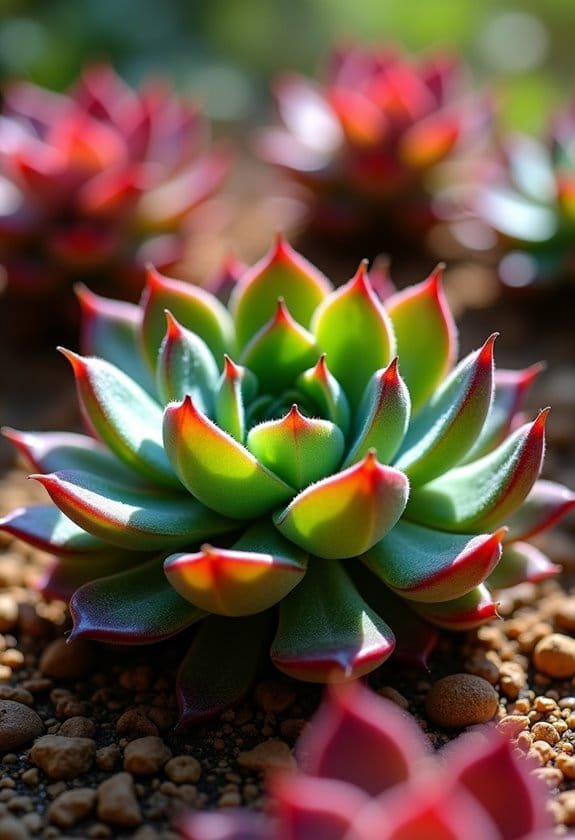
When considering the care and maintenance of Hylotelephium spectabile, understanding its specific planting requirements is essential for best growth.
This drought-tolerant succulent flourishes in sandy or gravelly soil, necessitating excellent drainage and a sunlight-rich environment, ideally receiving six hours of direct sunlight daily.
Ongoing care involves diligent watering during establishment and thoughtful pruning to enhance both aesthetics and wildlife support, ensuring this resilient plant thrives in a diverse garden setting.
Planting Tips
Planting Hylotelephium spectabile successfully hinges on providing the right environment for ideal growth. This fascinating member of the Sedum family thrives in well-drained, sandy, or gravelly soil, which is essential to preventing root rot and fostering peak growth conditions.
Ideally, planting should occur in late Autumn, allowing the roots to establish before colder weather sets in. Additionally, Common Yarrow's drought resilience highlights the importance of selecting plants that complement each other's capabilities in the garden.
To guarantee the plant's health, it's crucial to offer full sun for at least six hours daily, although partial shade may lead to leggy growth that detracts from its natural beauty. During the summer months, watering every two weeks is sufficient; the soil must dry between waterings, as Hylotelephium spectabile exhibits excellent drought tolerance.
Fertilizing with a balanced dry fertilizer in spring can boost growth in less than ideal soils, though established plants generally require minimal attention in this area.
To maintain a tidy appearance, gardeners should cut back dead foliage to about two inches in winter, while leaving the stems intact can provide winter interest and sustenance for wildlife. Additionally, incorporating companion plants like corncockle(Agrostemma githago) can enhance garden aesthetics while attracting beneficial pollinators.
This thoughtful approach guarantees that Hylotelephium spectabile flourishes, showcasing its vibrant blooms year after year.
Ongoing Care
Ongoing care for Hylotelephium spectabile is key to maintaining its vibrant appearance and health. These resilient ice plants thrive in well-drained or gravelly soil, as excessive moisture can lead to root rot, thereby necessitating excellent drainage for ideal growth.
Once established, they demand minimal maintenance. Cutting back dead foliage to about 2 inches in winter is advisable, although leaving stems intact can enhance winter interest while providing sustenance for beneficial wildlife.
Moreover, these plants flourish in full sun and are remarkably drought-tolerant. Light watering every two weeks during the summer months is generally sufficient, particularly when planted in well-drained soil that minimizes moisture retention.
An optional spring feeding with a balanced fertilizer can promote growth, yet Hylotelephium spectabile often thrives without additional fertilization due to their low nutrient needs.
Propagation is straightforward and just an enjoyable process. Gardeners can easily regenerate plants through stem cuttings or individual leaves, making it accessible for ongoing cultivation.
This simplicity allows enthusiasts to expand their gardens while ensuring a continuous display of beauty, demonstrating that superior care translates into a flourishing, sustainable landscape.
Suggested Companions
Pairing Hylotelephium spectabile with the right companion plants enhances both beauty and functionality in the garden. Choosing drought-tolerant perennials like Echinacea (Coneflower) and Rudbeckia (Black-eyed Susan) creates a vibrant tableau, as these plants thrive alongside Ice Plant in full sun and well-drained soil. Additionally, the presence of such perennials can contribute to a healthy ecosystem, supporting local biodiversity.
In addition, incorporating ornamental grasses such as Miscanthus or Panicum introduces texture, enhancing the visual appeal while luring beneficial pollinators to the space.
Low-growing ground covers like Sedum or creeping thyme not only enrich the aesthetic but also play an essential role in preventing soil erosion, acting like a protective blanket around the Ice Plant.
Moreover, creating stunning arrangements with Hylotelephium spectabile's bright blooms next to the rich colors of autumn foliage from Amsonia or Aster fosters year-round interest in the garden's landscape.
It's essential to maintain adequate spacing of at least one foot between the Ice Plant and its companions. This distance supports healthy growth and air circulation, avoiding the pitfalls of overcrowding while allowing each plant to flourish in its designated niche.
Additionally, incorporating plants like Salad Burnet can provide a cucumber-like flavor that complements the aesthetic and culinary diversity of the garden.
Thoughtfully chosen companions elevate the garden's harmony, transforming ordinary spaces into lively ecosystems.
Common Issues
Common issues that Hydrotelephium spectabile and its hybrids face can considerably challenge their well-being.
Insect infestations, such as aphids and mealybugs, along with diseases related to overwatering, threaten the plant's health, making vigilant monitoring crucial.
Addressing these concerns not only guarantees robust growth but also enhances the overall energy and aesthetic allure of these remarkable succulents.
Pests/Diseases
Pests and diseases can considerably impact the health of Hydrotelephium spectabile and its hybrids. Common pests, such as aphids, mealybugs, slugs, and weevils, tend to weaken the plant's overall vigor, leading to stunted growth and poor aesthetics. Infected plants often display symptoms like sticky residue, known as honeydew, on their leaves, along with distorted foliage or the presence of visible insects on the stems and undersides.
Furthermore, these plants are particularly susceptible to rot, a debilitating condition primarily resulting from excessively moist soils. Situations leading to rot frequently arise from overwatering or planting in poorly drained locations, which creates an unfavorable environment for thriving ice plants.
To combat rot and guarantee robust growth, it's vital to cultivate well-drained soil, especially in humid climates where moisture retention can exacerbate rot development. Maintaining vigilance through regular monitoring allows gardeners to catch pest infestations early, facilitating timely interventions.
This proactive approach can involve employing insecticidal soap or introducing natural predators, effectively managing pest populations before they wreak havoc on these vibrant plants. To conclude, the careful management of pests and diseases is imperative for promoting the health of Hydrotelephium spectabile and its hybrids.
Solutions
Addressing the challenges faced by Hydrotelephium spectabile, gardeners can implement several effective solutions to improve plant health and appearance.
First and foremost, ensuring proper soil drainage is essential, as overly moist conditions can lead to root rot—a common affliction of these plants. Gardeners should opt for well-drained, gravelly soil, ideally with a pH of 6.0 to 7.0, which will encourage robust root growth and resistance to diseases.
Additionally, regular monitoring for pests, such as aphids and mealybugs, will help catch potential infestations early. Implementing integrated pest management strategies can be particularly effective, involving methods like introducing beneficial insects or using insecticidal soap.
Moreover, while Ice Plants are drought-tolerant, providing consistent watering during their initial growing season fosters healthy roots, enabling them to thrive under adverse conditions.
Gardeners should also exercise caution when handling Hydrotelephium spectabile, as contact with the plant can cause dermatitis in sensitive individuals.
Summary
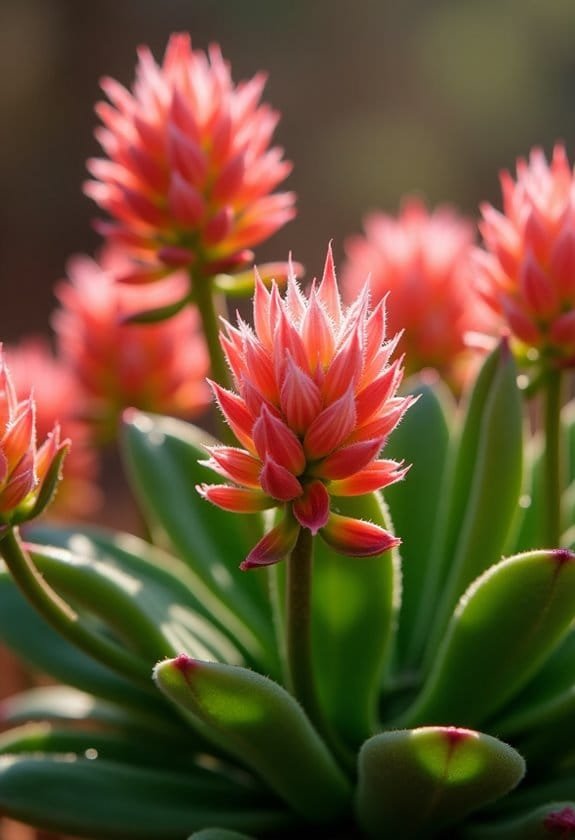
Hydrotelephium spectabile, also known as Ice Plant or Showy Stonecrop, offers a stunning display of color and resilience in the garden. This hardy perennial, native to China and Korea, typically reaches 1-2 feet in height and width, making it an excellent choice for various garden designs.
Thriving in full sun or partial shade, Hylotelephium spectabile prefers well-drained or gravelly soil, rendering it perfect for drought-tolerant and rock gardens. Additionally, it excels in alkaline soils that enhance its growth and stability.
During late summer to autumn, the plant showcases vibrant flowers that shift from soft pink to deep rose and rust, creating eye-catching visual interest and attracting essential pollinators like bees and butterflies.
It's worth noting that this species is easily propagated through stem cuttings, making it manageable for even novice gardeners, while its low maintenance requirements provide added convenience.
Though they tolerate drought, gardeners should avoid excessively moist soils to guarantee health.
Importantly, caution is warranted, as the plant contains alkaloids that may lead to mild toxicity if consumed or improperly handled.
Furthermore, its ability to attract pollinators like bees and butterflies during its blooming period enhances local ecosystems, making it an ideal addition to any garden.
Ultimately, establishing Hydrotelephium spectabile in one's garden not only enhances aesthetic appeal but also supports local biodiversity, presenting a responsible choice for conscientious gardeners.