Kalmia latifolia, commonly referred to as Mountain Laurel, is a remarkable evergreen shrub or small tree native to eastern North America, typically growing between 6 to 10 feet tall. Its showy, bell-shaped flowers bloom from late spring to early summer, showcasing hues of light pink to white, complemented by unique purple markings. Mountain Laurel thrives in cool, moist, acidic soils with partial shade, forming dense thickets that support various wildlife. However, all parts of the plant contain grayanotoxin, making it toxic to humans and pets. This plant's unique characteristics and ecological contributions provide exciting avenues for exploration and understanding.
Main Points
- Kalmia latifolia, or Mountain Laurel, is an evergreen shrub native to eastern North America, growing 6 to 32 feet tall.
- It features distinctive bell-shaped flowers that bloom from late spring to early summer, sporting colors from light pink to white.
- This plant thrives in well-drained, cool, moist, acidic soils and prefers partial shade to avoid excessive sunlight.
- Mountain Laurel is toxic to humans and pets due to grayanotoxin, making proper handling and education essential for safety.
- It attracts pollinators like bees and butterflies, playing a significant role in local ecosystems while providing wildlife habitat.
Introduction
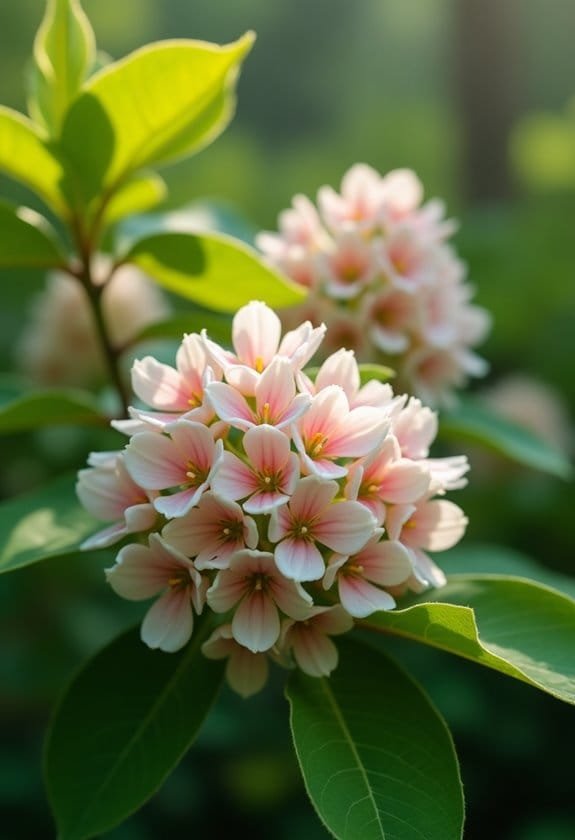
Kalmia latifolia, widely recognized as Mountain Laurel, stands out as an evergreen shrub or small tree native to eastern North America.
This remarkable plant typically reaches heights of 6 to 10 feet, but can sometimes impressively grow up to 32 feet as a tree, showcasing its adaptability to rocky and sandy environments.
Its striking clusters of bell-shaped flowers, which blossom in late spring and early summer, not only enhance its aesthetic appeal with hues of light pink to white but also highlight its ecological importance, despite the inherent toxicity present in all its parts.
Common Name
Mountain Laurel, with its elegant clusters of bell-shaped flowers, is a name that aptly captures the essence of this striking shrub found in the mountainous regions of eastern North America. While commonly referred to as Mountain Laurel, it also goes by the names Calico Bush and Ivy Bush, reflecting the plant's adaptability and diverse regional presence. This nomenclature underscores the shrub's affinity for rocky and acidic environments that define its habitat, enabling it to flourish where other plants might struggle.
The beauty of Mountain Laurel lies not only in its stunning appearance but also in its ecological role. The large clusters of flowers, blooming from late spring to early summer, present a vibrant spectacle that attracts various pollinators, including bees and butterflies.
Additionally, its evergreen leaves, adorned with unique purple markings inside the flowers, enhance its allure, making it a cherished addition to gardens and landscapes. As a decorative shrub, Mountain Laurel thrives in well-drained soils, showcasing its resilience and offering aesthetic value that complements natural and cultivated settings alike, firmly establishing its place in botanical and horticultural discussions.
Scientific Name
Originating from the rich ecosystems of eastern North America, Kalmia latifolia encapsulates the beauty and resilience of the region's flora. This evergreen shrub, commonly known as Mountain Laurel, belongs to the family Ericaceae and thrives in a variety of habitats, including wooded areas and mountainous slopes. The species name "latifolia" aptly describes its broad, leathery leaves, which range from 3 to 12 cm in length and 1 to 4 cm in width.
Kalmia latifolia typically reaches impressive heights of 3 to 9 meters (approximately 9.8 to 29.5 feet), often presenting itself as a medium to large shrub or a small tree. Its hallmark features are the stunning, hexagonal flowers that emerge in vibrant displays from late spring to early summer, showcasing a gradient of colors from soft white to delicate pink, with some cultivars exhibiting even deeper hues.
However, despite its alluring appearance, all parts of Kalmia latifolia contain grayanotoxin and arbutin, rendering them toxic to both humans and pets. Understanding the scientific basis of this remarkable shrub not only highlights its ecological significance but also underscores the importance of caution when interacting with this enchanting yet potentially hazardous plant.
Overview
The enchanting allure of Kalmia latifolia captivates nature enthusiasts and gardeners alike with its stunning floral displays and unique characteristics. This evergreen shrub, commonly known as Mountain Laurel, thrives in the rocky slopes of mountainous forest areas throughout eastern North America. With a potential height of up to 32 feet when mature, it often forms a visually appealing specimen in suitable landscapes.
Mountain Laurel is renowned for its large, showy flower clusters, which bloom from late spring to early summer—a spectacle of colors ranging from soft pink to crisp white. The plant's preference for cool, moist, and acidic soils, along with partial shade, allows it to flourish in rocky or sandy environments where other species might struggle.
However, caution is advised, as Kalmia latifolia contains grayanotoxin, a potent compound that, if ingested, may result in severe health complications manifesting as digestive disturbances and coordination loss. Despite this risk, it holds significant ecological value, attracting a variety of pollinators such as hummingbirds and butterflies, while also providing essential winter cover for diverse wildlife species, thereby enriching its natural habitat.
Key Features
Kalmia latifolia, commonly known as Mountain Laurel, showcases a remarkable growth size, typically ranging from 6 to 10 feet, though under ideal conditions, it can ascend to an impressive 32 feet.
Sporting evergreen, leathery leaves that measure between 3 to 12 centimeters in length and 1 to 4 centimeters in width, the shrub provides continuous aesthetic appeal throughout the year.
From late spring to early summer, its enchanting terminal clusters of bell-shaped flowers bloom, displaying shades of light pink to white with striking purple markings, drawing in a host of pollinators.
Growth Size
Typically found in diverse landscapes, Kalmia latifolia grows as a medium to large evergreen shrub, reaching heights of 6 to 10 feet. Under ideal conditions, however, it can ascend to astonishing heights of up to 32 feet, exhibiting a tree-like form. This remarkable growth size contributes to its versatility in various habitats, thriving in both wet lowlands and drier upland areas, often forming dense thickets where moisture abounds.
The shrub's dense foliage comprises elliptic, leathery leaves, which range from 3 to 12 cm in length and 1 to 4 cm in width, creating a lush, vibrant cover that speaks to its adaptability. Characterized by a sympodial growth habit, older trunks develop a gnarled, crooked appearance, adding a unique charm to its structure.
As growth persists, Mountain Laurel not only enhances the landscape with its impressive stature, but it also contributes considerably to local ecosystems, providing shelter and sustenance to various wildlife.
As a result, understanding its growth size and characteristics is vital for appreciation and management, highlighting Kalmia latifolia's role as an integral component of its native environment.
Appearance
Displaying a striking presence in gardens and natural landscapes, Mountain Laurel features glossy, leathery leaves that add a vibrant touch year-round. This evergreen shrub typically reaches heights of 6 to 10 feet, but under ideal conditions, it can soar up to 32 feet, creating an impressive focal point.
The leaves, measuring 3 to 12 centimeters in length and 1 to 4 centimeters in width, exhibit a rich, dark green hue, offering visual interest throughout every season.
In addition to its lush foliage, Mountain Laurel boasts unique bark that's gnarly, cracked, and crooked, lending a distinctive texture to its overall appearance.
The plant's most remarkable attribute lies in its potential for showy clusters of bell-shaped flowers. While this article doesn't explore flowering specifics, it's worth noting that Kalmia latifolia's height and leaf structure compel admiration even before bloom.
These glossy evergreen leaves not only enhance garden aesthetics but also provide crucial shelter for various birds and insects, fostering a rich ecosystem.
With its various features, Mountain Laurel effortlessly complements any landscape, embodying both beauty and liveliness.
Flowering Season
The enchanting spectacle of Mountain Laurel's flowering season captivates gardeners and nature enthusiasts alike. Typically, Kalmia latifolia blooms in late spring, with its peak flowering occurring in the brilliant months of May and June.
During this time, these magnificent shrubs showcase their large, showy flower clusters, which boast eye-catching colors that range from soft pink to pristine white.
Each flower, possessing a distinct hexagonal shape, features alluring purple markings on the inside. These vivid patterns serve a crucial purpose, enticing pollinators such as butterflies and hummingbirds to visit the blossoms. An extraordinary characteristic of Mountain Laurel is its pollen dispensing mechanism. The stamens catapult pollen onto unwitting insects as they feed, ensuring effective pollination and reproduction.
Moreover, the flower clusters don't simply fade away. After blooming, they transform into subtle, 5-valved capsules that can persist into winter, offering year-round interest in the landscape.
As a result, Mountain Laurel stands as a perennial delight, gracefully adapting through the seasons while continuing to enchant those lucky enough to experience its vibrant displays. This flowering season transforms gardens into magical spaces, embodying nature's intricate beauty in the heart of the wild.
Growing Requirements
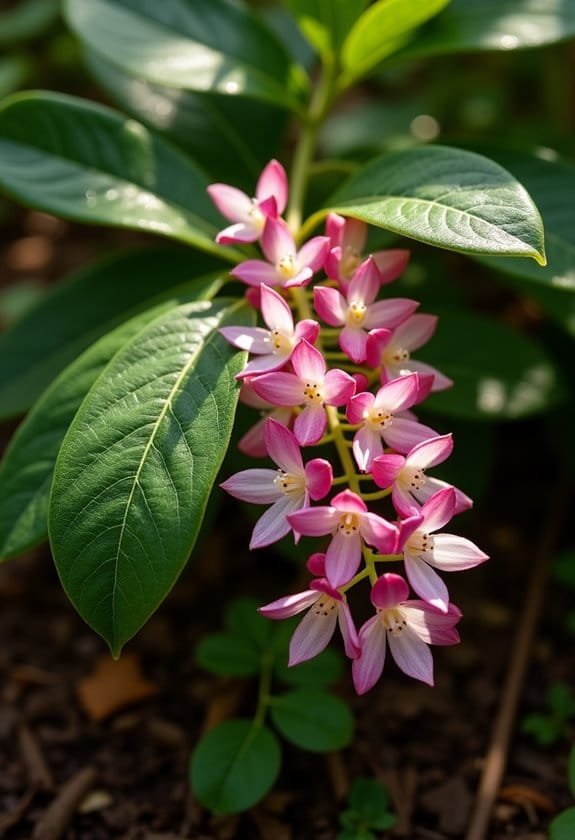
When considering the growing requirements for Kalmia latifolia, one must pay close attention to its light, soil, water, and temperature needs.
This beautiful shrub flourishes in partial shade, thriving in cool, moist, and well-drained acidic soils with a pH range of 4.5 to 5.5.
An understanding of these essential conditions will guarantee successful cultivation, allowing gardeners to appreciate the mountain laurel's remarkable beauty in their landscapes.
Light
For ideal growth, mountain laurel needs a balanced light environment, ideally basking in partial shade with about 4 to 6 hours of sunlight daily. This unique shrub flourishes when it receives dappled sunlight, often found in the protective embrace of taller trees. Such conditions not only enhance its overall vigor but also encourage vibrant blooms that range from light pink to white, enchanting onlookers.
While mountain laurel can endure full sun to full shade, excessive sunlight may lead to leaf yellowing and hinder growth, particularly in warmer climates. Insufficient light can diminish blooming intensity and result in thinner foliage, compromising its aesthetic appeal.
Additionally, with too much direct sunlight, the plant may experience increased water stress, adversely affecting its health and resilience against pests and diseases.
Maintaining a balanced light environment is thus essential. The interplay of light and shade contributes to this shrub's splendid display in the garden, reminding us how delicate balance can yield remarkable beauty.
Soil
Acidic soils serve as a foundation for Kalmia latifolia's thriving growth. This beautiful plant flourishes in soils with a pH ranging from 4.5 to 5.5, making proper soil composition critical for its success.
Well-drained, cool, and moist soils are ideal, as they retain essential humidity while providing an adequate environment for roots to flourish. In regions with heavy clay soils, which can retain excessive moisture, raised plantings are recommended. This adaptation guarantees that the roots aren't submerged, preventing dangerous root rot and other ailments.
To further enhance conditions for Kalmia latifolia, mulching around the base of the plant is advisable, as it aids in moisture retention and moderates soil temperature.
The quality of the soil plays a significant role in the overall health of the Mountain Laurel; poor soil conditions can hinder blooming and lead to serious health concerns. Consequently, it's critical to plant in areas with good drainage.
Kalmia latifolia's sensitivity to soggy conditions makes attention to soil quality not just an option, but a necessary component of successful cultivation, guaranteeing robust growth and stunning blooms throughout the season.
Water
To guarantee healthy growth, Kalmia latifolia requires consistently moist yet well-drained soil. This delicate balance is critical; while mountain laurel thrives in cool, humid conditions, waterlogged soil can lead to root rot, severely compromising the plant's health.
Regular monitoring of soil moisture becomes imperative, especially during prolonged dry spells. It's crucial to water the plant whenever the top inch of soil feels dry, ensuring hydration without risking fungal diseases from overwatering.
Applying mulch around the base not only helps retain moisture but also keeps the root zone cool during sweltering summer months. This strategy minimizes evaporation, allowing essential water to penetrate deeper into the soil.
Additionally, during peak growth periods, mountain laurel may need supplemental watering to sustain its vibrant blooms. Planting Jacobs Ladder nearby provides pollinator attraction that benefits both plants and enhances overall garden biodiversity.
Finding the right balance is key; too much water can hinder its ability to thrive, while too little can stunt growth or lead to wilting. By carefully managing these water needs and monitoring soil conditions, gardeners can cultivate a healthy mountain laurel that flourishes in its unique environment, providing stunning displays of beauty.
Temperature
Kalmia latifolia thrives best in USDA hardiness zones 4 to 9, showcasing its adaptability across various temperate climates. This remarkable plant flourishes in cooler temperatures, demonstrating impressive resilience against harsh winter conditions often found in mountainous regions.
Its natural habitat typically experiences cooler climates, which contribute to the plant's overall health and vigor. During periods of extreme summer heat, Kalmia latifolia benefits considerably from full shade. This protection helps mitigate leaf yellowing and reduces plant stress, ensuring a more vibrant blooming display.
The plant's ideal environment features acidic soil pH levels ranging between 4.5 and 5.5, aligning with its preference for cooler, moist conditions that further enhance growth. To maintain optimal well-being and to regulate soil temperature, mulching around the base of the plant is highly recommended.
This practice not only retains moisture, crucial for Kalmia latifolia's survival, but it also promotes an environment conducive to development. Protecting the roots from extreme temperature fluctuations is essential, as it supports sustained growth throughout changing seasons.
Pollinator Criteria
Kalmia latifolia, or Mountain Laurel, captivates a variety of essential pollinators, including hummingbirds and butterflies, drawn to its stunning and aromatic flowers.
Its specialized floral structure ingeniously propels pollen, greatly increasing the efficiency of pollination as insects visit for nectar.
Attracted Pollinators
Numerous pollinators flock to Kalmia latifolia, drawn by its fragrant, showy flower clusters that bloom from late spring to early summer. These stunning blooms primarily attract butterflies and hummingbirds, which are essential for the plant's reproduction and, by extension, the health of surrounding ecosystems. The floral display serves as a critical source of nectar, providing much-needed sustenance during a season when food resources can be scarce.
Furthermore, the Mountain Laurel's unique pollen dispensing mechanism enhances its appeal; its stamens catapult pollen onto visiting pollinators, ensuring efficient transfer to other plants. This fascinating adaptation not only maximizes pollination effectiveness but also increases the likelihood of genetic diversity within the species.
Kalmia latifolia also plays a significant role in supporting various pollinators as it serves as a host plant for the Laurel Sphinx Moth, whose larvae develop on its foliage.
Pollination Method
With its innovative pollination method, Mountain Laurel stands out among flowering plants. This unique flowering shrub employs a remarkable strategy to guarantee effective pollen transfer; it catapults pollen directly onto visiting insects. When pollinators engage with its beautifully structured flowers, the stamens propel pollen up to 15 centimeters, increasing the likelihood of successful reproduction.
Each bloom is intricately designed, featuring a hexagonal shape that provides a stable landing platform for pollinators like butterflies and hummingbirds. The ten anther pockets in each flower facilitate a seamless transfer of pollen, allowing these insects to become essential agents of pollination as they flit between blossoms.
Mountain Laurel's fragrant and colorful flowers primarily open during May and June, serving as a significant food source for early-season pollinators that have adapted to the plant's unique characteristics.
This specialized pollination method not only underscores the complexity of Mountain Laurel's reproductive strategies but also highlights the intricate relationships between this flowering shrub and its pollinator companions. Together, they participate in a delicate dance of life, sustaining ecosystems and nurturing biodiversity in their habitats.
Care & Maintenance
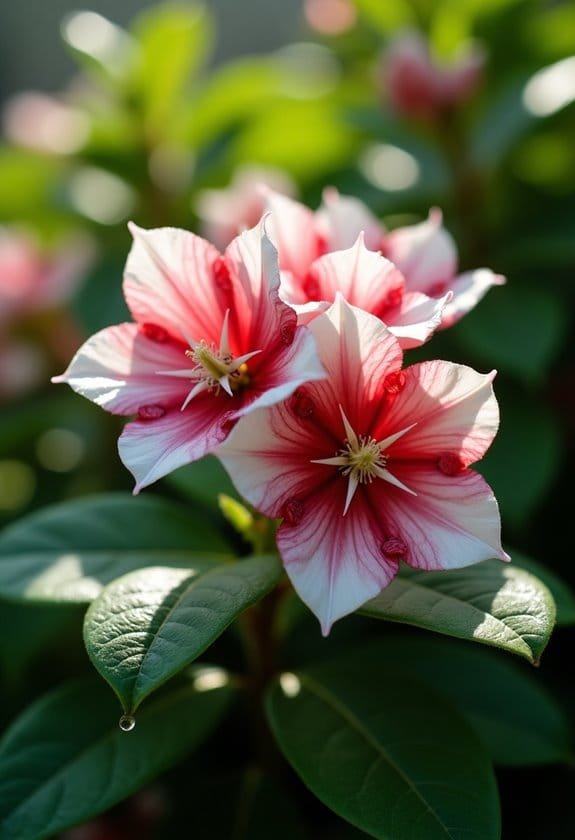
When cultivating Kalmia latifolia, proper planting and ongoing care are essential for its thriving beauty.
Ideally, this stunning shrub should be nestled in cool, moist, well-drained, and acidic soils, spaced 4-6 feet apart to guarantee adequate air circulation.
Continued vigilance in care, including periodic mulching and attentive pruning, helps maintain the plant's health while maximizing its enchanting bloom potential.
Planting Tips
Successfully planting Kalmia latifolia, or Mountain Laurel, involves a few key steps that guarantee the plant thrives in its environment.
First, timing is essential; plant these shrubs from spring to early summer, ensuring that the soil remains cool, moist, and well-drained. Mountain Laurel prefers acidic soil, ideally with a pH range of 4.5 to 5.5, as this fosters ideal growth and development.
When positioning the shrubs, leave 4-6 feet of space between them to allow for adequate air circulation, mitigating the risks associated with overcrowding. Avoid placing them in windy locations, as strong winds can induce considerable stress.
A significant planting tip includes monitoring the crown of the shrub, ensuring it remains above soil level. This practice helps prevent rot and encourages healthy growth.
Mulching around the base of the plant acts as a protective barrier, retaining moisture and regulating root temperature. Regular inspection for pests and diseases is essential, and dead or broken branches should be promptly removed.
Additionally, deadheading spent flowers encourages bushier growth, promoting the shrub's overall health. By following these guidelines, gardeners can cultivate a respectful and flourishing relationship with Mountain Laurel.
Ongoing Care
Ongoing care is crucial for maintaining the health and beauty of Kalmia latifolia, or Mountain Laurel. To support vigorous growth and aesthetic appeal, regular maintenance practices must be employed.
Minimal pruning is necessary, mainly limited to the removal of dead or broken branches at any time, while shaping should ideally take place post-bloom each spring. As an added benefit, promptly deadheading spent flower clusters fosters new growth and abundant flowering.
For those seeking to control excessive height, severe pruning—cutting back the shrub to ground level—can be executed, though it may require up to a decade for robust regrowth. Regular inspections for pests and diseases are important; particularly, leaf spots and aphids can impact foliage vitality. Guaranteeing proper air circulation and drainage helps mitigate these issues effectively.
Furthermore, applying a layer of mulch around the base is advantageous. Not only does it retain moisture, but it also keeps the root zone cool and suppresses weeds, thereby enhancing the overall health of the Mountain Laurel shrub.
Through diligent ongoing care, gardeners can guarantee that their Mountain Laurel remains vibrant and thrive in their outdoor spaces.
Suggested Companions
Choosing the right companion plants for Kalmia latifolia can greatly enhance its beauty and overall health. Ideal companions include native species like Rhododendron and Pieris, which thrive in acidic, well-drained soils, similar to mountain laurel's preferences. These plants not only complement Kalmia's striking aesthetic but also support a harmonious ecosystem.
Incorporating ferns such as Christmas fern (Polystichum acrostichoides) enriches the environment by improving soil moisture retention while providing a contrasting texture that complements the laurel's glossy leaves. Ground covers, like Creeping Juniper (Juniperus horizontalis), maintain a tidy appearance and successfully suppress weeds without detracting from the mountain laurel's preferred growing conditions.
When selecting companions, it's crucial to choose species that thrive in partial shade and can tolerate cooler, moist climates, fostering ideal growth and minimizing competition for nutrients.
Regular mulching around Kalmia and its companions not only helps retain moisture but also suppresses weeds and maintains an acidic growing medium. This careful selection and maintenance of companion plants guarantees a vibrant, flourishing landscape that delights the eye while nurturing the health of Kalmia latifolia.
Common Issues
Mountain laurel, or Kalmia latifolia, faces several common issues that can threaten its health, including a range of pests and fungal diseases.
Aphids, scale insects, and whiteflies often invade its foliage, while inadequate air circulation may lead to detrimental leaf spots and blights, underscoring the need for attentive care.
Gardeners must remain vigilant, inspecting their plants regularly to address these threats proactively, ensuring the beautiful blooms of this exquisite species continue to thrive.
Pests/Diseases
When caring for Kalmia latifolia, it's crucial to be aware of the various pests and diseases that can affect its health.
This stunning shrub is susceptible to several pests, including aphids, scale insects, borers, whiteflies, and lace bugs, each of which can lead to significant foliage damage, ultimately compromising the plant's well-being.
Additionally, fungal diseases often manifest as leaf spots and blights, causing aesthetic concerns and contributing to overall distress in the plant.
Maintaining good air circulation around Kalmia latifolia helps mitigate these issues, as proper airflow reduces humidity and dampness, factors that often facilitate fungal growth.
Equally important is ensuring proper soil drainage; planting mountain laurel in wet, heavy soils may lead to root rot, a common condition that hinders nutrient absorption and weakens the plant.
Regular inspection of the plant is essential to detect early signs of pest infestations or disease.
Since all parts of the mountain laurel are toxic, vigilance is necessary to protect both pets and people from potential harmful effects.
Awareness and prompt action can safeguard this beautiful addition to any landscape.
Solutions
Addressing issues that arise with Kalmia latifolia requires a proactive approach. Pest management is essential in maintaining the health of this beautiful shrub. Regular inspections for common pests like aphids, scale, and lace bugs can prevent significant damage.
In instances of infestation, appropriate treatments, such as insecticidal soap or horticultural oils, can be effective.
Additionally, to combat fungal diseases such as leaf spots and blights, cultivating good air circulation around the plant is vital. Pruning away any overcrowded branches helps maintain airflow while ensuring proper drainage minimizes the risk of root rot, a common issue in poorly-drained soils.
Moreover, minimal pruning is beneficial for Kalmia latifolia. Deadheading spent flowers not only enhances aesthetics but also encourages a healthier and bushier growth habit.
For those interested in propagation, taking stem cuttings in late summer or fall can yield successful results, while patience is key as seeds may take years to germinate and flower.
Summary
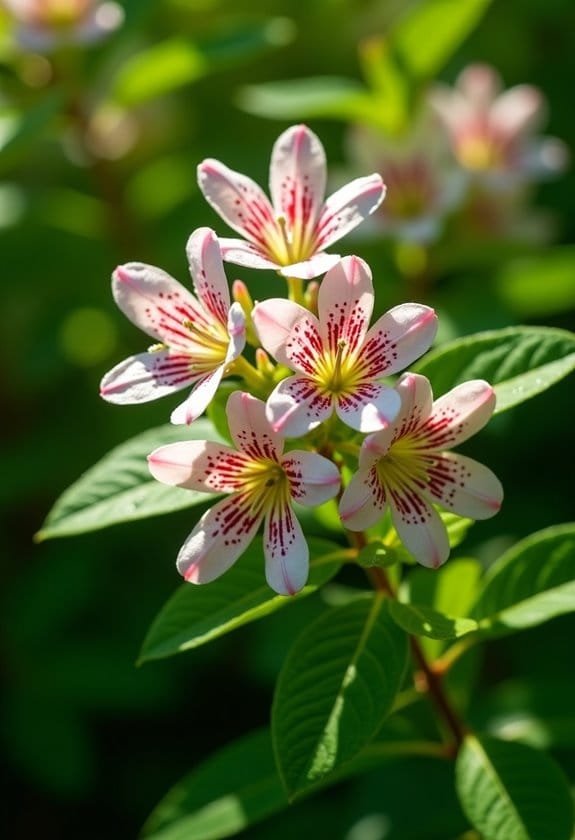
Known for its striking beauty, Kalmia latifolia, or Mountain Laurel, is an evergreen shrub native to the eastern United States. Typically growing between 6 to 10 feet tall, this remarkable plant can occasionally reach heights of up to 32 feet, resembling a small tree in some instances.
The Mountain Laurel captivates observers with its showy, bell-shaped flowers, which bloom from late spring to early summer, adorned with a delicate spectrum of colors ranging from light pink to white, featuring distinctive purple markings inside.
This resilient shrub flourishes in acidic, well-drained soils and prefers partial shade, as it struggles in heavy clay or wet environments. Consequently, gardeners often opt for raised plantings to guarantee proper drainage.
Despite its beauty, all parts of the Mountain Laurel are toxic, containing grayanotoxins and andromedotoxin that can lead to serious symptoms, such as digestive upset and coordination loss when ingested.
Moreover, Mountain Laurel plays a crucial ecological role, drawing pollinators like butterflies and hummingbirds while offering winter cover for various wildlife species.
Its unique combination of aesthetic appeal and ecological significance makes Kalmia latifolia an important addition to landscapes across the eastern United States.