Lathyrus latifolius, or Broad-Leaved Everlasting Pea, is an impressive climbing perennial vine that can reach heights of up to 10 feet. This vibrant plant features unique blue-green compound leaves and produces purplish-pink flowers in racemes during summer, attracting diverse pollinators like bees and butterflies. Thriving in well-drained, nutrient-rich soil under full sun, it requires diligent care to prevent invasiveness due to its prolific growth. While its young fruits and seeds are edible when cooked, caution is advised as parts can be toxic to pets. Understanding its ecological role and care needs reveals its potential for enriching gardens further.
Main Points
- Broad-Leaved Everlasting Pea is a climbing perennial vine that can grow 6 to 10 feet tall and thrives in full sun.
- It features attractive blue-green compound leaves and purplish-pink flowers that bloom in summer, adding visual appeal to gardens.
- The plant is nitrogen-fixing, enhancing soil fertility, and can also act as excellent ground cover when managed properly.
- While it attracts pollinators like bees and butterflies, parts of the plant are toxic to pets, requiring careful garden planning.
- Regular maintenance includes annual cutbacks, pest monitoring, and ensuring well-drained, nutrient-rich soil for optimal growth.
Introduction
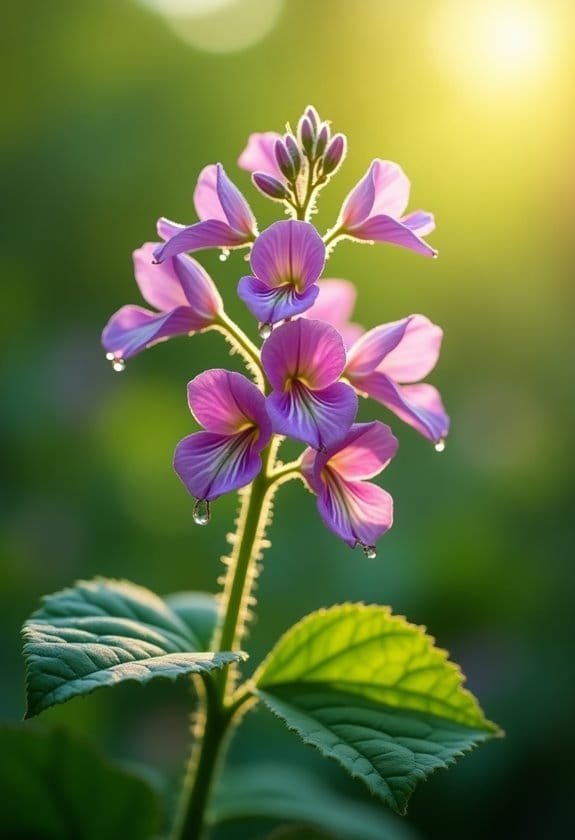
The Broad-Leaved Everlasting Pea, scientifically known as Lathyrus latifolius, presents a striking example of a climbing perennial vine that can reach impressive heights of up to 10 feet.
With its vibrant, racemes of purple, pink, or white flowers and unique 3-part leaves, this plant not only enhances gardens but also showcases its adaptable nature, thriving in well-drained soil.
While it captivates with its ornamental qualities, it's important to recognize its potential for invasiveness, particularly in regions where it has naturalized since the 1700s.
Common Name
Often referred to as the Broad-Leaved Everlasting Pea, Lathyrus latifolius captures attention with its climbing vines and vibrant flowers. This perennial vine can reach impressive heights of up to 10 feet, making it a striking addition to any garden. Known by several other names, such as Everlasting Pea, Perennial Pea, and Hardy Sweet Pea, the plant flaunts its long-lasting blossoms that bloom in enchanting clusters during the summer months.
Gardeners appreciate Lathyrus latifolius not just for its aesthetic appeal but also for its remarkable adaptability. The plant thrives in various environmental conditions, which enhances its popularity among horticulturists.
Characterized by a unique 3-part leaf structure, it features tendrils that aid in climbing, providing a whimsical, winged appearance to its stems. The vibrant, pea-like flowers emerge gracefully above the lush blue-green foliage, creating a picturesque scene.
Consequently, the Broad-Leaved Everlasting Pea stands out as an iconic member of the garden, embodying both beauty and resilience in nature. With its common names reflecting distinct attributes, it captures the essence of what many seek in ornamental plants.
Scientific Name
Known scientifically as Lathyrus latifolius, the Broad-Leaved Everlasting Pea belongs to the diverse Fabaceae family, celebrated for its myriad of flowering plants. This herbaceous perennial exhibits remarkable climbing abilities, attaining heights between 6 to 10 feet, providing an impressive focal point in gardens and landscapes.
The genus Lathyrus is particularly known for its nitrogen-fixing capabilities, enhancing soil fertility through specialized root systems that enrich surrounding environments.
Natively found in Eastern Central and Southern Europe, as well as Northwest Africa, Lathyrus latifolius has adapted successfully and naturalized in various regions, including North America. Its distinctive morphology includes a unique 3-part leaf structure, where the third component transforms into a branched tendril, skillfully aiding in climbing and providing support.
Engaging with this species not only contributes aesthetically to gardens but also serves ecological functions.
Overview
Throughout the growing season, Broad-Leaved Everlasting Pea captivates gardeners and nature enthusiasts alike with its lush, climbing vines and vibrant blooms. Known scientifically as Lathyrus latifolius, this perennial vine can reach impressive heights of up to 10 feet, featuring distinctive winged stems and a unique 3-part leaf structure.
During summer, it showcases clusters of pea-like flowers, typically measuring about 1 inch, that bloom in a delightful array of purplish-pink and white shades.
Thriving best in open woodlands, Lathyrus latifolius prefers full sun and well-drained, nutrient-rich soils, making it an ideal candidate for gardens aiming to achieve both aesthetic and functional purposes.
Its vigorous growth makes it an excellent ground cover, although gardeners must remain vigilant, as it can exhibit invasive tendencies through self-seeding.
Moreover, the young fruits and seeds of this species are edible when cooked, adding an element of utility to its ornamental charm.
Consequently, while Broad-Leaved Everlasting Pea enhances outdoor spaces with its beauty and versatility, it's crucial to manage its growth wisely to prevent it from overtaking other plants.
Key Features
Lathyrus latifolius, or Broad-Leaved Everlasting Pea, can reach impressive heights of up to 10 feet, showcasing its vigorous climbing abilities.
This perennial vine is adorned with striking blue-green compound leaves, featuring a unique 3-part structure that enhances its display and support.
Throughout the summer, it bursts into bloom with short racemes of 5 to 11 unscented flowers, their purplish-pink petals creating a visual spectacle that captivates garden enthusiasts.
Growth Size
With its robust climbing habit and impressive reach, the Broad-Leaved Everlasting Pea thrives as a perennial vine, often soaring up to 10 feet (3 meters) tall in ideal conditions. This remarkable growth is supported by its winged, hairless stems, allowing the plant to spread efficiently between 3 to 6 feet (90 to 180 cm) wide.
The Broad-Leaved Everlasting Pea exhibits mesmerizing compound leaves, characterized by a distinct three-part structure, with individual leaflets measuring up to 3 inches (76 mm) long and showcasing an appealing blue-green hue.
As a member of the pea family, this plant not only excels in vertical landscapes but also demonstrates remarkable adaptability in garden settings. The flowers, typically appearing in summer, contribute to its expansive nature, with racemes containing 4 to 11 pea-like blooms that range in size from 3/4 to 1 inch (19 to 25 mm) across, mainly in purplish-pink.
The Royal Horticultural Society recognizes its capability for propagation through both rhizome expansion and self-seeding, making it an ideal choice for gardeners seeking a colorful and resilient addition to their spaces. This plant can truly transform an area with its vigorous growth.
Appearance
The Broad-Leaved Everlasting Pea, a striking addition to any garden, showcases several key features that set it apart. This remarkable plant features climbing vines that can reach impressive heights of up to 10 feet. Its winged, hairless stems not only contribute to its ornamental appeal but also provide sturdy support for its growth.
The leaves, with their unique 3-part structure, consist of a pair of oblong to elliptic leaflets complemented by a branched tendril, resulting in an enchanting fern-like appearance.
Adding to its charm, the plant produces clusters of 5 to 11 unscented purplish-pink flowers, each measuring approximately 3/4 to 1 inch (19-25mm). These eye-catching blooms generally grace the garden for up to two months during the summer, creating a visual feast.
The distinctive blue-green coloration of the leaflets, coupled with the racemes of flowers that rise elegantly above the foliage, enhances its aesthetic appeal.
The flattened, narrow legumes that form in the autumn house multiple dark oblong to reniform seeds, ensuring the plant's propagation. For its unique characteristics, it has earned the prestigious Award of Garden, reaffirming its status as a beloved ornamental plant.
Flowering Season
Blooming from late spring through summer, Broad-Leaved Everlasting Pea showcases a stunning display of flowers that fascinates gardeners and pollinators alike. This plant typically exhibits a flowering duration of about two months, creating a vibrant spectacle during the warmer months.
The flowers emerge in short racemes, consisting of 4 to 11 unscented, pea-like blooms that measure between three-quarters to one inch (19-25 mm) across. The fascinating bloom colors range from delicate purplish-pink to pure white, with petals that gracefully fade as they mature, enriching the garden's visual appeal.
This unique characteristic not only draws the attention of onlookers but also enhances the seasonal appeal of any landscape. Flowers cluster loosely above the foliage, adding an elegant, vertical dimension to garden designs.
To optimize the flowering process, the Broad-Leaved Everlasting Pea flourishes in full sun to partial shade, requiring well-drained and nutrient-rich soil.
Growing Requirements
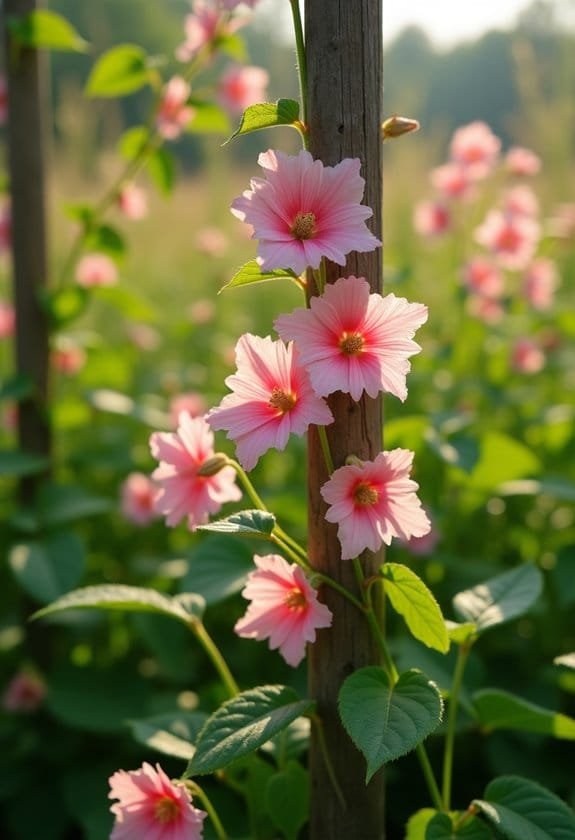
To cultivate Lathyrus latifolius effectively, gardeners must consider several key growing requirements.
This resilient perennial flourishes in well-draining, fertile soil that maintains a medium level of moisture, while its preference for full sun to light shade guarantees ideal photosynthesis and growth.
Understanding these light and soil conditions, alongside appropriate watering practices to prevent disease, will enable gardeners to support the vigorous climbing nature of this plant as it reaches impressive heights of 6 to 9 feet.
Light
Given that Lathyrus latifolius flourishes in full sun or light shade, it's essential to provide at least six hours of direct sunlight daily for ideal growth. The sunlight impact on this perennial is significant, as ample light promotes vigorous life cycles, including flowering and overall plant health.
While it exhibits shade tolerance, thriving best under optimal sunlight exposure, insufficient light can stifle its growth potential.
To achieve growth enhancement, one must be attentive to coinciding factors such as air circulation and soil conditions, which complement light requirements. Even though established plants demonstrate drought tolerance, consistent moisture during their growth phase—especially in partial shade—can enhance vigor and flowering capacity.
Implementing strategies that guarantee adequate light exposure while avoiding overly wet conditions will help cultivate a robust Lathyrus latifolius.
Emphasizing the balance between sunlight and moisture not only supports sustainable growth but also encourages the plant's resilience against varying temperatures, making it an admirable choice for various landscapes.
Therefore, gardeners aspiring to cultivate this hearty perennial should prioritize its lighting conditions to fully harness its beauty and ecological contributions.
Soil
For ideal growth, Lathyrus latifolius flourishes in well-drained, nutrient-rich soil that maintains medium moisture levels. This remarkable plant thrives in various soil types, particularly loamy and clay-loam soils, which contribute considerably to its adaptability in different garden settings.
Ensuring excellent soil fertility is essential; regular applications of organic fertilizers during the growing season can enhance nutrient availability, promoting vigorous growth and profuse blooming.
Moisture retention plays a key role in the early stages, as consistent moisture is beneficial for establishing robust roots. However, once established, Lathyrus latifolius exhibits a remarkable tolerance to drought conditions, making it resilient and low-maintenance.
Additionally, the plant performs best in cool soils that allow for good air circulation. To achieve this, gardeners should avoid overhead watering, which may impede aeration and create conditions conducive to root issues.
Water
Providing consistent moisture is essential for the growing requirements of Lathyrus latifolius. This plant thrives in well-drained, fertile soils that maintain medium moisture levels, especially during its growing season.
Regular watering techniques, such as deep watering rather than frequent shallow applications, help support robust root development. Overhead watering should be avoided to prevent the risk of fungal diseases, allowing good air circulation to promote overall health.
Early in its life cycle, maintaining appropriate moisture levels is fundamental, fostering strong roots and vibrant growth. Once established, Lathyrus latifolius exhibits impressive drought tolerance, adapting well to varying water availability. This resilience serves as a proof of its ability to withstand fluctuations in environmental conditions.
Moreover, optimal moisture management contributes not only to plant vigor but also enhances flowering potential, displaying the plant's full aesthetic capabilities.
Observing the balance between adequate hydration and well-drained soil is essential for gardeners wishing to cultivate this perennial successfully. With diligence, they can guarantee that their everlasting pea flourishes, creating a beautiful landscape while enjoying the benefits of this hardy species.
Temperature
How does temperature influence the growth of Lathyrus latifolius? This frost-hardy perennial thrives in USDA hardiness zones 5-9, showcasing remarkable climate adaptability.
It flourishes within a temperature range that typically aligns with mild to cool climates, perfect for its growth. Seasonal variations, particularly in soil temperature, play a critical role, as Lathyrus latifolius prefers cooler soils that provide ideal air circulation.
While it requires regular moisture during the active growing season, the plant exhibits resilience, tolerating temperature extremes once established; this means it can withstand occasional drought without significant detriment.
However, care must be taken to avoid overhead watering, which can trigger fungal diseases, particularly during warmer months when temperatures rise.
To promote robust growth, it's advisable to cut the plant back to ground level in the fall, allowing it to regenerate with vigor in the following season.
In well-drained, fertile, medium moisture soils, Lathyrus latifolius can achieve its full climbing potential while maintaining overall health.
Understanding these temperature dynamics allows gardeners to create ideal conditions for this enchanting plant, promoting a vibrant display in gardens across diverse climates.
Pollinator Criteria
Broad-Leaved Everlasting Pea, or Lathyrus latifolius, attracts a diverse array of pollinators, particularly bees and butterflies.
These insects engage in pollination by landing on the plant's visually striking purplish-pink flowers, facilitating cross-pollination that enhances genetic diversity within the species.
As they seek nectar, the flowers' reliance on visual cues rather than scent underscores the importance of maintaining robust pollinator populations for local biodiversity and garden health. The presence of nectar-rich flowers also encourages the sustainability of various pollinator species in the ecosystem. Additionally, the success of pioneer species like Rosebay Willowherb illustrates the role of plants in establishing habitats for pollinators after disturbances.
Attracted Pollinators
Attracting a diverse array of pollinators, Lathyrus latifolius showcases bright, pea-like flowers that thrive in summer. These flowers, characterized by their typical Faboideae structure, create an ideal landing platform for insects requiring stable access to nectar. Pollinator behavior shifts with the visual appeal of these flower clusters, which sit prominently above the foliage, making them easily locatable from a distance, enhancing butterfly attraction greatly.
While the flowers lack fragrance—potentially reducing their allure for some pollinators—visual stimulation compensates for this deficiency. Bees, drawn by their nectar preferences, frequent these vibrant blooms, sustaining themselves and contributing to the ecological web around them. Additionally, similar to White Stonecrop's role in attracting pollinators with its star-shaped flowers, Lathyrus latifolius effectively garners interest from a variety of beneficial insects.
The non-fragrant nature of Lathyrus latifolius may deter certain more selective species, yet it continues to invite a healthy visitation from others, facilitating diverse interactions among various pollinator populations.
In supporting local ecosystems, Lathyrus latifolius plays a crucial role by providing essential nectar and pollen. This inclusiveness not only nurtures the immediate pollinators but also fortifies the broader biodiversity, reaffirming the nuanced balance of nature. Additionally, similar to Birds Foot Trefoil's role in supporting pollinators, Lathyrus latifolius enhances the overall health of its habitat.
As these pollinators flourish, they contribute to the continued vitality of their habitats.
Pollination Method
Pollination in Lathyrus latifolius heavily depends on suitable insect visitors, particularly bees, for effective reproduction. These non-fragrant flowers produce a plentiful nectar supply, enticing various pollinators to engage in their essential role.
The plant's flowering occurs in racemes of 4-11 blooms, emerging from summer to autumn, which aligns seamlessly with the active seasons of many pollinators, therefore enhancing pollination efficiency.
Pollinator behavior plays a significant role, as bees are drawn to the bright hues of the flowers. This visual guidance, combined with nectar availability, maximizes the frequency of pollinator visits.
By facilitating cross-pollination, Lathyrus latifolius promotes genetic diversity within its population, an important factor for resilience against environmental stressors.
During the two-month blooming period, these plants provide a continuous food source, which encourages persistent visits from pollinator species. Each visit not only guarantees the transfer of pollen but also supports the broader ecosystem through enhanced pollinator health.
This interdependence between Lathyrus latifolius and its insect allies illustrates nature's intricate web, highlighting the necessity of preserving biodiversity for successful reproduction in various plant species.
Care & Maintenance
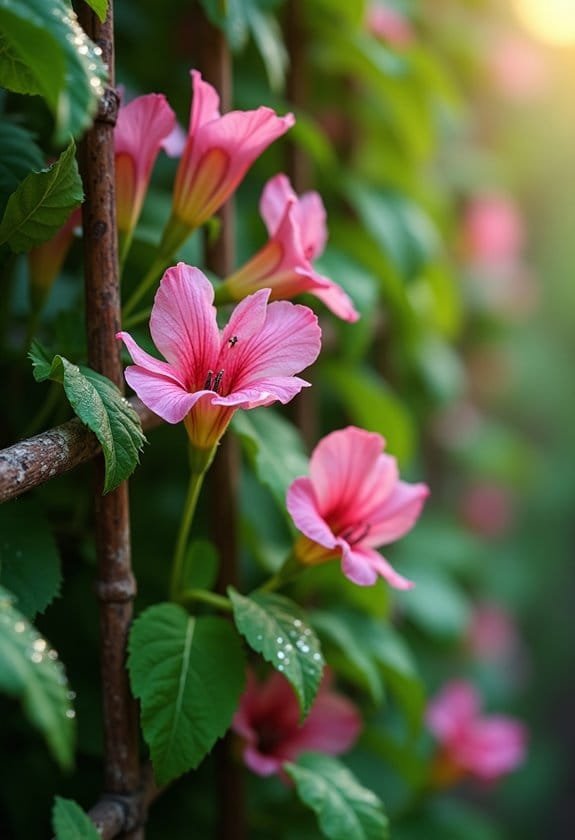
To cultivate a thriving broad-leaved everlasting pea, gardeners should focus on several essential aspects of care and maintenance.
This resilient perennial vine flourishes in nutrient-rich, well-draining soil, basking in abundant sunlight while requiring regular moisture during its growing season.
Additionally, integrating plants like white clover can improve soil health through nitrogen fixation, enriching the garden's ecosystem.
With thoughtful planning and ongoing attention, including suitable companions and timely pruning, this plant can enhance any garden setting.
Planting Tips
Growing Broad-Leaved Everlasting Pea (Lathyrus latifolius) successfully requires attention to a few key care and maintenance tips.
First, proper soil preparation is fundamental; this plant thrives in well-drained, nutrient-rich soils, ideally with a pH between 6.0 and 7.0. Incorporating organic matter, like compost, enhances soil fertility and structure, fostering robust growth. Additionally, alkaline to neutral soils are ideal for many perennial plants, including Nettle-Leaved Bellflower.
When deploying effective planting techniques, it's essential to establish ideal spacing between plants—typically around 12 to 18 inches apart. This guarantees adequate air circulation, minimizing the risk of diseases such as Pythium root rot while facilitating growth.
Selecting the right location is equally important. Lathyrus latifolius prefers full sun but can tolerate partial shade, particularly in warmer regions where cool temperatures are a benefit.
After planting, regular but cautious watering is necessary; overhead watering can lead to powdery mildew. During the growing season, established plants display impressive drought tolerance, reducing watering frequency. Additionally, incorporating native species like Grey Willow can enhance the overall health of the garden ecosystem.
Lastly, consider an annual cutback in late fall to encourage vigorous flowering and growth in the coming season. Following these practices provides a solid foundation for a flourishing garden, showcasing the beauty of this hardy perennial.
Ongoing Care
After establishing broad-leaved everlasting pea, ongoing care plays an essential role in ensuring its continued health and liveliness. Seasonal pruning techniques serve as the backbone of maintaining this resilient plant. An annual cutback to ground level in fall not only revitalizes the plant but also fosters robust growth come spring. This practice encourages lush foliage and vibrant blooms, enhancing overall performance.
Moisture management strategies should be adopted to sustain ideal conditions. While broad-leaved everlasting pea demonstrates drought tolerance once established, regular moisture during the growing season remains paramount. The soil, preferably well-drained and fertile, needs consistent hydration to promote healthy roots and blooming cycles.
In addition to moisture, organic fertilization methods enrich the soil, ensuring essential nutrients are accessible. Utilizing compost or well-rotted manure during the early growing season can support vigorous growth and flowering.
Regular monitoring for pests like slugs and snails is advisable, though significant issues are rare. By adhering to these methods, gardeners can cultivate a thriving environment for Lathyrus latifolius, blending low maintenance with bountiful beauty.
Suggested Companions
Creating a vibrant garden can be achieved by choosing the right companions for broad-leaved everlasting pea (Lathyrus latifolius). Companion plants like climbing roses, clematis, and asters offer structural support while enhancing aesthetic combinations, creating a visually appealing tapestry in the garden.
These companions flourish under similar conditions, thriving in full sun and well-drained, nutrient-rich soil—ideal for the perennial sweet pea.
Moreover, pairing Lathyrus latifolius with nitrogen-fixing plants, such as clover, can notably improve soil fertility. Nitrogen fixation enriches the planting environment, benefiting not only the everlasting pea but also the surrounding flora.
However, gardeners should avoid aggressive competitors like certain grasses, which may easily outcompete the sweet pea for essential space and nutrients, leading to a decline in overall health.
Regularly monitoring companion planting combinations is important, as Lathyrus latifolius can become invasive, potentially suffocating neighboring species if left unmanaged.
Consequently, carefully selecting companions that harmonize with Lathyrus latifolius will guarantee both a thriving garden ecosystem and an ongoing showcase of botanical beauty, maximizing companion benefits for all involved.
Common Issues
The Broad-Leaved Everlasting Pea can encounter several challenges, particularly concerning pests and diseases that may threaten its vigorous growth.
While pests like slugs and snails occasionally appear, more significant threats stem from diseases such as Pythium root rot and powdery mildew, which require vigilant monitoring for early detection and effective mitigation.
Additionally, it's vital to recognize the plant's toxic properties to pets, necessitating careful management of their access to planted areas to guarantee their safety.
Pests/Diseases
When cultivating Broad-Leaved Everlasting Pea (Lathyrus latifolius), gardeners typically find that serious pest issues are rare. This resilient plant faces occasional challenges, including pests such as slugs and snails, which thrive in moist conditions and can inflict damage on delicate leaves and vibrant flowers.
To mitigate these threats, effective pest management strategies, such as introducing natural predators or using barriers, can prove beneficial.
Diseases, although less frequent, can arise if conditions favor their development. For instance, Pythium root rot and powdery mildew may manifest in instances where the plant is overwatered or overly crowded.
Employing diligent disease prevention methods, such as proper spacing and regulated watering techniques, helps maintain the overall health of the Broad-Leaved Everlasting Pea.
Additionally, while the plant's invasive tendencies may cause some concern, its tolerance to various environmental stresses simplifies pest and disease control.
By implementing invasive control techniques, such as monitoring and targeted removal, gardeners can ascertain that their beautiful Lathyrus latifolius thrives without overwhelming their garden spaces.
Regular monitoring for signs of both pests and diseases fosters a proactive approach, promoting a flourishing, low-maintenance landscape.
Solutions
Effective management of Broad-Leaved Everlasting Pea involves addressing common issues that may arise during cultivation. Due to its potential as an invasive species, regular monitoring is important. Gardeners should employ management techniques such as cultivating this plant in contained spaces or using physical barriers. This helps prevent its rapid spread, which occurs through vegetative reproduction via rhizomes and prolific self-seeding.
To promote best growth, it's crucial to provide well-draining, medium moisture soil. This particular plant thrives best under these conditions, as overly wet environments can lead to stress and disease vulnerability. Additionally, ensuring that the soil is well-drained can significantly improve overall plant vigor.
Implementing annual cutbacks to ground level in the fall can greatly enhance plant health, encouraging robust regrowth in the spring. These cutbacks can also mitigate its invasive tendencies.
Pest control is a fundamental aspect of management, as Lathyrus latifolius can attract pests like slugs and snails, and be susceptible to diseases such as powdery mildew. Monitoring for these afflictions allows gardeners to take prompt action, preserving the plant's health. Additionally, incorporating native species can create competitive barriers against Hounds Tongue and other invasive plants, fostering healthier ecosystems.
Ultimately, combining these strategies fosters a sustainable and enjoyable growth experience, maintaining the balance between aesthetic appeal and ecological integrity.
Summary
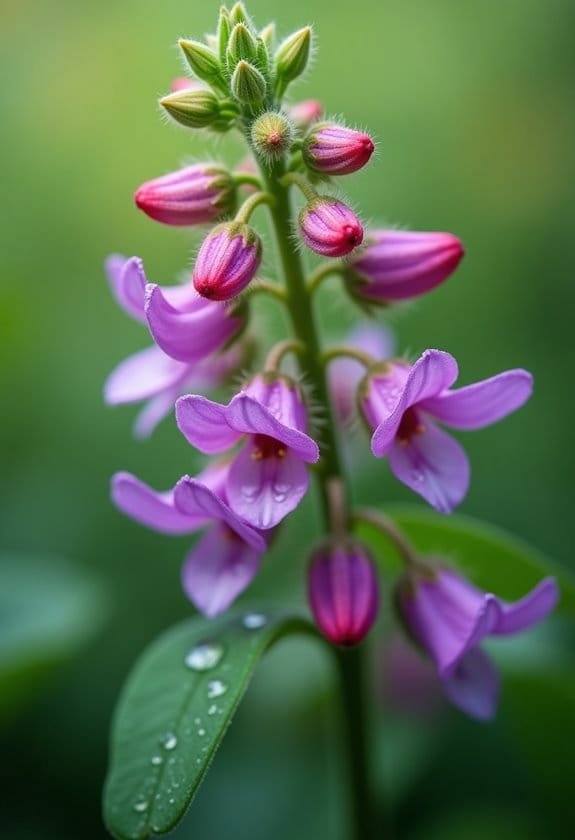
Broad-Leaved Everlasting Pea, scientifically known as Lathyrus latifolius, is a robust climbing perennial that can reach heights of 6 to 10 feet. Renowned for its attractive purplish-pink or white flowers, this hardy plant thrives in full sun and nutrient-rich, well-drained soils. It typically flourishes in cool conditions and is hardy across USDA zones 5-9, where it creates stunning landscape uses, often cascading over fences or trellises.
The cultural significance of Lathyrus latifolius goes beyond its aesthetic appeal; it represents resilience and adaptability in various biomes. Propagation techniques are notable, as the species reproduces vegetatively through rhizomes and self-seeds, which, while advantageous for cultivation, can lead to invasiveness in certain regions.
Blooming during the summer, this plant showcases short racemes of up to 11 attractive flowers that arise above paired blue-green leaflets.
However, caution is warranted, as parts of the Broad-Leaved Everlasting Pea are toxic to pets, particularly dogs, cats, and horses. Consequently, gardeners must consider both the appealing and cautionary aspects when integrating this perennial into their outdoor spaces, ensuring a balance between beauty and safety.