Lavandula stoechas, or French Lavender, is a striking perennial that reaches heights of 2 to 3 feet, showcasing bushy growth and scalloped leaves. This ornamental plant flourishes in USDA zones 8-11, thriving in full sun and well-drained, alkaline soil. Blooming from spring to early summer, it produces clusters of small white flowers adorned with vibrant lilac bracts, attracting bees and butterflies. Known for its remarkable drought resistance, French Lavender requires minimal care, thriving with strategic pruning and spacing. Its aromatic properties also deter common pests, enhancing garden health and biodiversity, inviting gardeners to explore its myriad benefits further.
Main Points
- French Lavender (Lavandula stoechas) is a drought-resistant perennial, thriving in full sun with well-drained, alkaline soil.
- It features fragrant scalloped leaves and lilac bracts surrounding small white flowers, providing ornamental value.
- Blooming occurs from spring to early summer, attracting pollinators like bees and butterflies to enhance local biodiversity.
- Regular pruning at the end of the growing season promotes healthy growth and longevity, which lasts about five years.
- It serves as a natural pest deterrent while complementing other drought-resistant herbs, making it suitable for companion planting.
Introduction
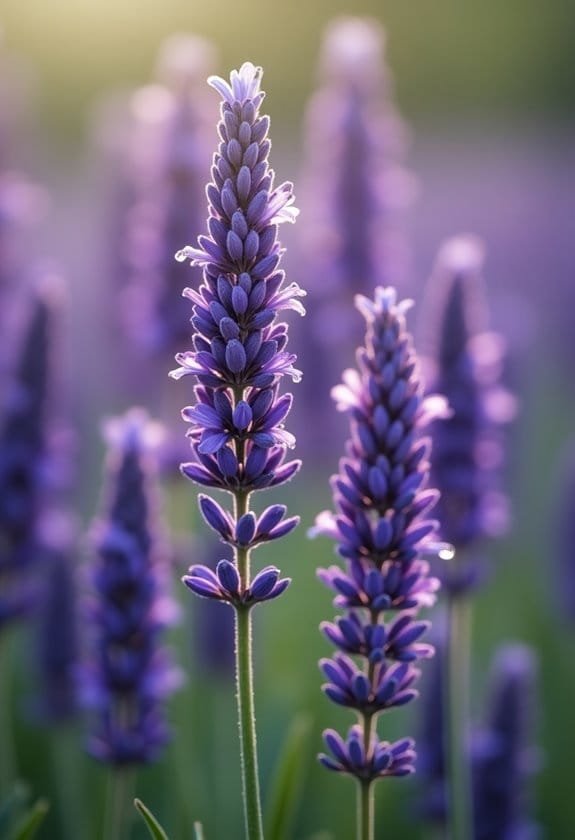
French Lavender, scientifically recognized as Lavandula stoechas, stands as a striking perennial shrub native to the Mediterranean region.
Reaching heights of approximately 2 feet, it showcases densely-packed flower spikes and uniquely scalloped leaves, known as dentata, that contribute to its ornamental appeal.
Valued mainly for its aromatic qualities, this resilient plant flourishes in well-drained, alkaline soil and offers a longer blooming period compared to other lavender varieties, making it a favored choice among gardeners in warmer climates.
Common Name
Commonly cherished for its striking appearance and aromatic qualities, Lavandula stoechas is widely known as French lavender. This common name encompasses more than its primary designation, as it's also referred to as Bract Lavender, Butterfly Lavender, or Topped Lavender. Each of these alternative names reflects unique characteristics of the plant, enhancing its appeal in gardening and landscaping.
French lavender is renowned for its distinctive scalloped leaves, which botanists describe as dentata, and its eye-catching flower heads adorned with little white flowers nestled beneath vibrant lilac bracts. Blooming in the spring and summer months, this plant showcases its full splendor with lively purple to lilac spikes, outlasting many of its lavender counterparts in the floral display.
While French lavender can occasionally be utilized in culinary pursuits, its strong aroma often overshadows flavor, making it less favored for cooking.
Thriving in warmer, Mediterranean climates, this resilient species flourishes in USDA hardiness zones 8-11, enabling gardens across various regions to showcase this delightful ornamental treasure. Consequently, the common name French lavender aptly captures its essence, highlighting both beauty and versatility. Additionally, like other lavenders, French lavender benefits from full sun exposure to maximize its growth potential and aromatic qualities.
Scientific Name
Recognized for its unique traits, Lavandula stoechas, commonly known as French lavender, stands out in the diverse landscape of the Lamiaceae family. This enchanting plant, native to the sun-drenched Mediterranean region, particularly thrives in areas such as Spain and Morocco. The scientific classification—Lavandula stoechas—distinguishes it from other lavender species, which often leads to confusion due to its alternative names like bract lavender or topped lavender.
French lavender is easily identifiable by its distinctive floral display, featuring small white flowers encircled by striking lilac bracts. These bracts not only enhance its aesthetic appeal but also contribute to its prolonged blooming period, enchanting gardeners and nature enthusiasts alike.
Unlike many of its relatives, Lavandula stoechas demonstrates a remarkable adaptability to alkaline, well-drained soils, highlighting its drought resistance. This species flourishes in dry, sunny environments, showcasing a resilience that makes it an exemplary choice for arid gardens.
Overview
Lavandula stoechas, or French lavender, embodies the charm and resilience of Mediterranean flora, enchanting gardeners with its stunning blooms and adaptability. This perennial plant stands out with its unique scalloped leaves and distinctive flower spikes that primarily bloom during spring and early summer, offering a mesmerizing display in any garden.
Thriving in USDA hardiness zones 8-11, French lavender requires full sunlight and well-drained soil. Its preference for low-organic matter alkaline soil guarantees robust growth, making it a popular choice among horticulturists.
Unlike its culinary lavender counterparts, French lavender's strong aroma holds more value than its flavor, positioning it largely as an ornamental plant rather than a culinary herb.
Regular maintenance is essential; pruning at season's end fosters healthier growth while preserving its desired shape. Additionally, French lavender plays a key role in enhancing biodiversity, attracting beneficial insects such as bees and butterflies, which pollinate blooms and promote ecological balance.
Remarkably resilient, these plants tend to resist deer damage, making them ideal for varied landscapes. With such outstanding attributes, French lavender presents itself as a versatile choice for both novice and seasoned gardeners alike.
Key Features
French Lavender, or Lavandula stoechas, typically grows to a height of 2 to 3 feet, exuding an appealing presence through its woody evergreen structure.
Its striking appearance features scalloped-edged leaves and distinctive flower heads, which bloom vibrantly from spring into early summer, enchanting both the eye and the nose.
Understanding its growth size, visual characteristics, and flowering season sheds light on why this plant is a favored choice for ornamental gardens.
Growth Size
With its bushy mound shape, French Lavender typically reaches a height of about 2 feet, spreading 2 to 3 feet wide. This robust growth size allows the lavender plant to create a striking presence in any garden setting. The plant's woody stems support densely-packed flower spikes, showcasing a fascinating display that blooms from spring through early summer.
Additionally, mature French Lavender features scalloped-edged (dentata) leaves, which contribute to its distinctive profile when compared with other lavender species. With small white flowers at its core, the flowering heads are elegantly adorned with showy lilac bracts, inviting admiration and visual interest throughout the blooming season.
As a perennial, French Lavender can live for approximately five years, highlighting its potential as a long-term garden addition. This longevity, coupled with its pleasant aroma and drought-resistant qualities, makes the lavender plant not only a beautiful choice but also a sustainable one.
Proper care is essential for maintaining its health and vibrancy, ensuring that this resilient herb continues to thrive in your garden year after year. Therefore, understanding its growth size and character can greatly enrich one's gardening experience.
Appearance
Standing out in any garden, French Lavender captures attention with its unique scalloped-edged leaves, known as dentata, which enhance its distinctive look.
This woody evergreen sub-shrub typically grows to about 24-30 inches tall, forming a bushy mound that visually enthralls. French Lavender blooms with striking flower heads adorned with small, insignificant white flowers, which are topped by vibrant lilac bracts.
These purple bracts are essential for its ornamental appeal, as they create a stunning contrast against the rich green foliage.
The elongated blooming period of French Lavender guarantees it maintains visual intrigue far longer than many other lavender varieties, delighting gardeners throughout the growing season.
Notably, a unique variant of this species, known as Yellow Lavender, showcases mesmerizing chartreuse leaves paired with creamy beige petals, adding an extra layer of diversity to the French Lavender family.
Flowering Season
Blooming primarily from spring to early summer, Lavandula stoechas exhibits an impressive flowering season that can extend year-round in warmer climates. Its remarkable bloom time begins as early as March in frost-free regions, making it one of the first flowering plants to brighten gardens after winter's end.
The enchanting flower spikes of French Lavender showcase clusters of small, insignificant white flowers, artfully enveloped by lilac bracts that resemble delicate butterfly wings. This stunning display continues into the summer months, inviting pollinators and onlookers alike to appreciate its charm.
Compared to other lavender varieties, French Lavender boasts a longer blooming season, solidifying its role as an attractive choice for ornamental gardens. Regular deadheading of spent flowers proves beneficial; it not only encourages prolonged blooming but also enhances the plant's aesthetic appeal, ensuring a lush visual experience throughout its flowering cycle.
In warmer temperate regions, the flowering season can seemingly melt into a perpetual display, providing color and fragrance year-round. This resilience and vivid beauty make Lavandula stoechas a cherished specimen for gardeners yearning for both ornamental value and ecological enhancement. Additionally, its blooming period aligns with the activity of various pollinators like bees, further supporting local ecosystems.
Growing Requirements
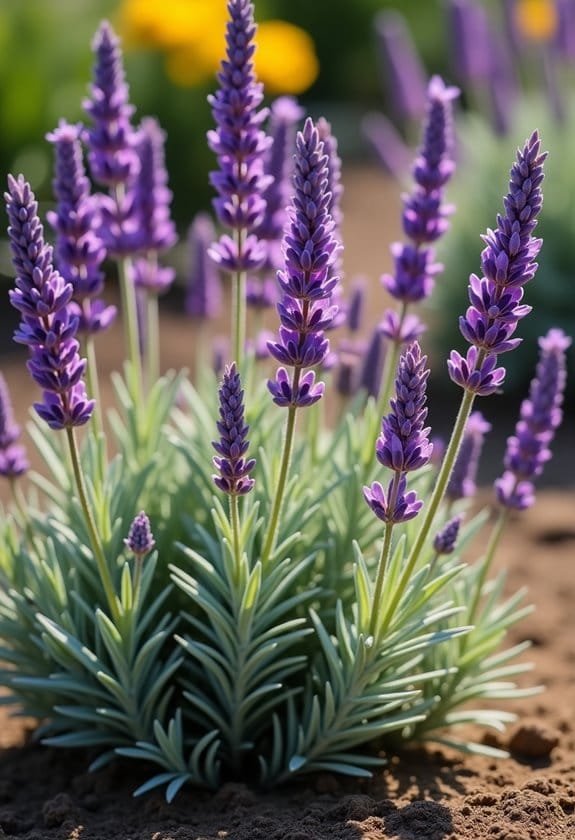
French Lavender, or Lavandula stoechas, flourishes under specific growing conditions that guarantee its vibrant health and impressive blooms.
This plant demands full sun, ideally basking in 6-8 hours of direct light each day. It prefers well-drained, alkaline soil with a low organic matter content, and exhibits remarkable drought resistance, requiring only infrequent watering.
Understanding its temperature needs, along with proper light, soil type, and water management, shapes the foundation for successful cultivation of this aromatic and resilient herb.
Light
Ideal light conditions are vital for the healthy growth of Lavandula stoechas. This remarkable plant requires full sun exposure, ideally basking in 6 to 8 hours of direct sunlight each day to achieve peak growth.
Thriving in warm climates, French Lavender flourishes specifically in USDA hardiness zones 8 to 11, making it a perfect candidate for sunny, hot locations.
In these vibrant environments, the plant benefits immensely from regular sunlight, which fosters longer blooming periods. Its enchanting flowers, resplendent in shades of purple, typically grace gardens from spring through early fall in regions shielded from frost.
For growers in colder areas, strategically planting Lavandula stoechas in spots that capture maximum sunlight becomes essential, as it mitigates the potential risks associated with frost while promoting robust growth.
When nurtured gradually under such light conditions, French Lavender not only endures but thrives, producing a lush and fragrant display.
This illumination not only bolsters the plant's health but also enhances the overall aesthetic of the garden, making Lavandula stoechas a desirable addition to any landscape.
Embracing these light requirements paves the way for gardening success and flourishing blooms.
Soil
To thrive, Lavandula stoechas demands specific soil conditions that cater to its unique growth needs. This enchanting French Lavender flourishes best in dry, nutrient-poor, and alkaline soils, ideally with a pH ranging from 6.0 to 8.0. A neutral soil around 7.0 is acceptable, but it's crucial to verify the ground is well-drained.
French Lavender's sensitivity to moisture makes it prone to root rot if the soil retains excess water. Consequently, incorporating gravel or sand can greatly enhance drainage and promote air circulation, essential for the plant's development.
Furthermore, spacing plants 2 to 3 feet apart fosters adequate airflow, reducing the likelihood of disease and enabling healthier growth. These meticulous planting practices not only create an ideal environment for Lavandula stoechas but also mirror nature's own designs in the wild, where it thrives among rocky terrains and sun-drenched hillsides.
Water
Proper watering is essential for the health of Lavandula stoechas, particularly given its preference for dry conditions. This aromatic plant thrives with minimal water, showcasing impressive drought tolerance, which makes it ideal for arid gardens.
Newly planted French lavender requires initial watering to establish robust roots, but established plants typically need only infrequent hydration. It's important to allow the soil to dry out completely between waterings, as overwatering can lead to drooping flowers and unsightly root rot, ultimately harming the plant's overall vitality.
During mild winters, outdoor French lavender competently relies on natural moisture from rainfall, requiring no additional water.
For potted varieties, though, caregivers should exercise caution. Sparing water during the winter months is advisable to avert excess moisture, which can threaten the plant's well-being.
Regularly observing the soil moisture levels aids in understanding lavender's needs, ensuring the plant flourishes while avoiding the dangers of waterlogged conditions.
Ultimately, mastering the watering routine contributes greatly to the success of growing Lavandula stoechas, creating a vibrant and healthy specimen that enchants with its beauty and fragrance.
Temperature
Lavandula stoechas flourishes in warm climates, thriving in USDA hardiness zones 8-11. This French Lavender enjoys full sun exposure, ideally basking in 6 to 8 hours of direct sunlight each day, which is essential for its robust growth.
When considering temperature, it's important to understand that French Lavender is quite sensitive to frost; thus, it must be adequately protected during any cold spells.
In its native Mediterranean environment, French Lavender resides in regions characterized by dry, nutrient-poor, alkaline soil that allows for excellent drainage. This specific soil composition not only contributes to its successful growth but also mirrors the temperature conditions it prefers—warm and dry.
High humidity, conversely, can be detrimental, as the plant doesn't tolerate excessive moisture.
Once established, French Lavender demonstrates remarkable drought resistance, requiring minimal irrigation, particularly in the cooler fall and winter months. This resilience allows it to thrive even amidst fluctuating environmental conditions, reinforcing its presence as a resilient addition to gardens in warmer landscapes.
Careful attention to temperature and soil will guarantee that French Lavender continues to thrive magnificently.
Pollinator Criteria
French Lavender, known for its nectar-rich blooms, draws various pollinators such as bees and butterflies, establishing a dynamic relationship within garden ecosystems.
The plant's unique morphology facilitates efficient nectar extraction, enabling these beneficial insects to thrive during their peak active seasons in spring and early summer.
Attracted Pollinators
Attracting a diverse range of pollinators, French Lavender's fragrant flowers appeal especially to bees seeking nectar and pollen. These blooms, characterized by small white flowers nestled amid striking lilac bracts, create a visually enticing spectacle, drawing not only bees but also butterflies and various beneficial insects.
Typically blooming from spring to early summer, French Lavender synchronizes its flowering with the active foraging period of these crucial pollinators, ensuring they find a reliable food source when it's needed most. The plant's extended blooming season, lasting several weeks, greatly enhances its role in supporting pollinator populations. Additionally, the attractive blooms and nectar produced by French Lavender can help deter competition from aggressive species like Great Willowherb that threaten to dominate local ecosystems.
By providing consistent nourishment, it fortifies local ecosystems, strengthening the delicate balance between flora and fauna. In addition to its ecological benefits, French Lavender's resistance to deer plays a critical role in establishing resilient habitats, allowing it to thrive undeterred by herbivorous animals that could otherwise disrupt or diminish pollinator-friendly environments. Furthermore, its early blooming period complements the availability of resources for pollinators during critical months in the spring, thereby enhancing its ecological contributions.
As such, French Lavender not only captivates the eye with its stunning appearance, but it also nurtures and sustains essential pollinator populations, thereby contributing to biodiversity and the overall health of gardens and natural landscapes alike.
Pollination Method
While many flowering plants depend on a range of pollination strategies, French Lavender primarily attracts insects like bees and butterflies for its reproduction. Characterized by its exquisite small white flowers, French Lavender (Lavandula stoechas) showcases prominent lilac bracts that enhance its visual appeal, effectively enticing pollinators.
This plant blooms chiefly in spring and early summer, synchronized with the active feeding periods of its primary pollinators, maximizing opportunities for successful pollination. Notably, the extended flowering season of certain plants, such as Yellowwort(Blackstonia perfoliata), contributes significantly to supporting a diverse range of pollinators.
The fragrant aroma and nectar serve as key lures, drawing in insect visitors to indulge in the nutrient-rich offerings. The presence of consistently blooming flowers guarantees ongoing food sources, which can greatly increase pollinator visitation. More visits equate to higher rates of pollen transfer, facilitating increased seed production and securing genetic diversity in future generations.
Moreover, French Lavender thrives in environments that foster diverse pollinator populations. By creating habitats that support such biodiversity, gardeners contribute to a balanced ecosystem, wherein each flowering season enriches the ecological tapestry. Chicory provides essential nectar sources for pollinators as it blooms from midsummer to frost, extending the foraging period.
Ultimately, the intricate relationship between French Lavender and its pollinators illustrates the delicate symbiotic connections that sustain garden resilience and beauty, making it an essential component in horticultural practices.
Care & Maintenance
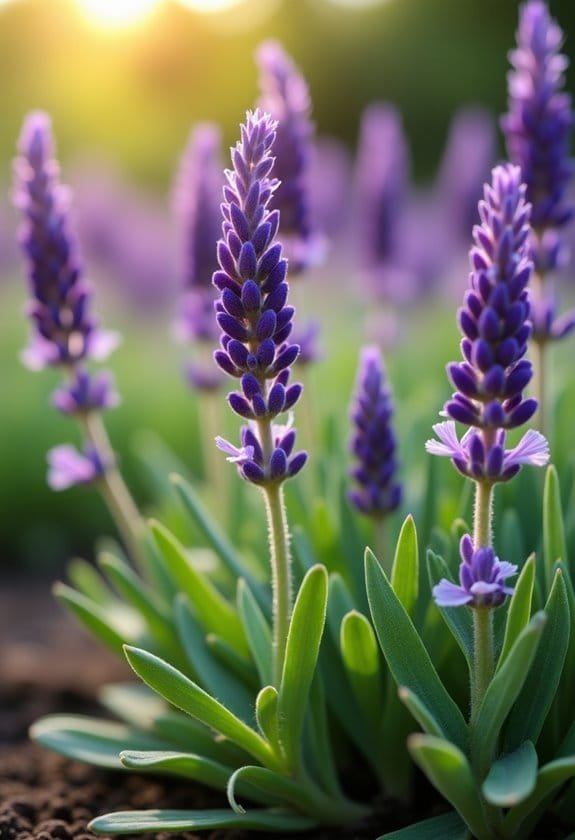
When it comes to caring for Lavandula stoechas, understanding its unique needs is crucial for fostering healthy growth.
This delightful French Lavender benefits from well-drained, nutrient-poor alkaline soil and should bask in at least 6-8 hours of sunlight each day, mimicking its native Mediterranean habitat.
Regular pruning, adequate mulching, and vigilance against pests are essential practices that not only preserve the plant's shape but also enhance its resilience and vitality.
Planting Tips
Successful planting and care of Lavandula stoechas requires attention to a few key factors. First, this striking French Lavender flourishes in full sunlight and demands well-draining, dry, alkaline soil, making it particularly well-suited for Mediterranean climates.
When planting, confirm the site receives at least six hours of sunlight per day, which encourages robust growth and vibrant blooms. Newly planted specimens need regular watering to establish their root systems, while established plants exhibit remarkable drought tolerance.
Employing mulching techniques around the base assists not only in moisture retention but also in suppressing undesirable weeds that could compete for nutrients.
Pruning is also vital; at the end of the growing season, trimming helps maintain the plant's shape, prevents overgrowth, and fosters healthy new growth.
Observing your lavender for signs of pests or diseases is essential; look out for drooping flowers or yellowing leaves, which can indicate overwatering or other health issues.
Ongoing Care
Ongoing care for Lavandula stoechas is essential to guarantee a healthy and thriving plant. Regularly, gardeners should cut back about one-third of the plant at the end of the growing season. This pruning not only maintains the desired shape but also encourages robust new growth.
It's vital to inspect the French Lavender periodically for any pests or diseases—though healthy specimens generally resist issues, they can be vulnerable to root rot in poorly drained soils.
To create a favorable environment, mulching around the plant's base proves beneficial, as it helps retain moisture while suppressing pesky weeds. Additionally, the need for fertilization is minimal; using organic options sparingly, once or twice yearly, aligns with the lavender's preference for poor, low-nutrient soils.
Despite the plant's outstanding drought resistance, established Lavandula stoechas requires infrequent deep watering during the growing season, with little to no moisture needed in fall and winter.
Suggested Companions
Creating a stunning garden often involves choosing the right companions for each plant, and French Lavender (Lavandula stoechas) is no exception. To cultivate an aesthetically pleasing and harmonious environment, gardeners should pair French Lavender with drought-resistant companion plants that share similar growing conditions. Ideal choices include heat-loving herbs like rosemary and thyme, which not only thrive in well-drained, poor soil but also enhance the Mediterranean garden aesthetic. Large Thyme, for example, is known for its resilience in adapting to various growing conditions, making it a fantastic choice for companion planting.
Spacing is vital; planting French Lavender and its companions 2 to 3 feet apart guarantees adequate air circulation, preventing overcrowding that can lead to moisture retention and root rot. Maintaining the shape of the French Lavender can be easily achieved through regular pruning of neighboring plants, promoting vibrant growth and prolonged blooming.
Additionally, incorporating annuals such as marigolds and zinnias adds splendid contrasts to the lavender's purple hues while attracting beneficial pollinators, fostering a lively garden ecosystem. Wild Thyme, known for its pollinator-friendly clusters, is particularly beneficial when paired with French Lavender, further enhancing the garden's ecological value.
It's important to select companion plants that also thrive in full sun and require minimal watering, aligning with the drought-resistant nature of French Lavender, thereby achieving a thriving, low-maintenance garden tapestry.
Common Issues
Lavandula stoechas can encounter several common issues that may hinder its growth and vigor. Although this resilient plant is generally resistant to pests and diseases, frequent inspections are crucial, as early detection can prevent minor concerns from escalating into significant problems.
Addressing root rot, preventing excessive moisture, and implementing a regular pruning schedule are essential strategies for ensuring the plant's health and promoting vibrant blooms.
Pests/Diseases
French lavender (Lavandula stoechas) typically combats pests and diseases effectively, thanks to its strong aromatic properties that naturally deter insects. This natural defense mechanism makes it a preferable choice for gardens, as common nuisances like aphids and whiteflies pose minimal threats when they occasionally appear.
However, while the fragrant plant's resistance to pests is commendable, it's essential to monitor for signs of root rot, a prevalent disease due to overwatering, particularly in poorly drained soils.
Root rot manifests through wilting and yellowing leaves, signaling that the plant's health is in jeopardy. Such symptoms require immediate attention to reinstate health and prevent further decay.
Encouraging healthy growth is important; thus, maintaining well-drained soil, practicing appropriate watering habits, and performing occasional pruning minimizes stress, ensuring the plant remains robust and resilient. By fostering a favorable environment, gardeners can greatly diminish the risk of disease, allowing the lavender to thrive.
Hence, while pests may occasionally intrude and root rot lurks beneath the surface, the combination of vigilance and proper care can help French lavender flourish, adding beauty and fragrance to any landscape.
Solutions
Healthy growth of French lavender can be compromised by common issues like overwatering and inadequate sunlight. Overwatering, in particular, creates an environment prone to root rot, severely impacting the plant's vitality. Barberry (Berberis vulgaris), like French lavender, also thrives best in well-drained soil to prevent disease and stress.
To maintain robust growth, guaranteeing well-drained soil is essential, allowing excess moisture to escape while providing necessary hydration sparingly. When observing yellowing leaves or browning tips, a gardener should immediately reconsider their watering schedule and examine drainage to avert permanent damage.
Inadequate sunlight often leads to spindly growth, characterized by fewer blooms and weakened stems. As a result, planting French lavender in full sun—at least six to eight hours of direct light daily—fosters ideal flowering conditions, invigorating the plant's overall health. Many plants, including ornamental shrubs like barberry, prefer similar sun exposure to flourish.
Additionally, regular pruning at the end of the growing season helps limit overgrowth, thereby maintaining the lavender's shape while promoting air circulation. Comfrey, known for its wound healing properties, can also be grown alongside lavender to offer complementary benefits in a garden setting.
While French lavender exhibits a natural resistance to pests and diseases, vigilance remains important. Periodic inspections for early signs of rot or other issues can preemptively address potential problems, enabling the gardener to cultivate a flourishing, vibrant lavender display.
Through mindful practices, one guarantees that their French lavender thrives, creating a fragrant and visually stunning garden.
Summary
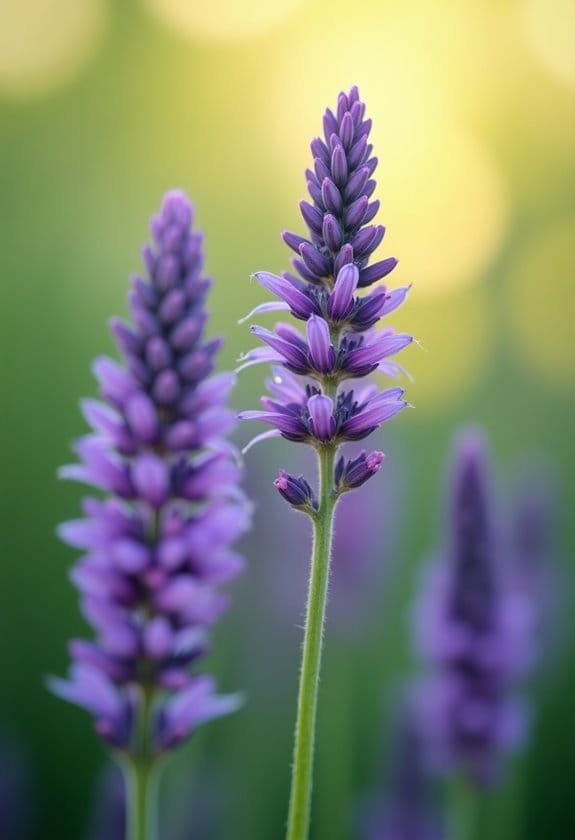
Known for its striking appearance and aroma, Lavandula stoechas, commonly referred to as French Lavender, is an evergreen sub-shrub that thrives in warmer climates, particularly in USDA plant hardiness zones 8-11.
This magnificent plant showcases scalloped leaves called dentata, bordered by unique flower heads comprising small white flowers, topped with prominent lilac bracts. Although its distinct aroma is enchanting, French Lavender finds its primary role as an ornamental plant rather than a culinary one.
To cultivate this resilient lavender successfully, conditions must include full sunlight, well-drained, nutrient-poor alkaline soil, and minimal watering, which highlights its drought-resistant nature. Rosemary's similarity in growing requirements showcases the adaptability of Mediterranean evergreen shrubs.
Regular pruning is essential for maintaining the plant's overall shape and health; this delicate process should occur at the season's end to encourage sustained growth and prevent overgrowth, preserving its aesthetic charm.
With its essential oils known for promoting relaxation and well-being, French Lavender continues to fascinate gardeners and enthusiasts alike.
Ultimately, this exquisite plant stands as a proof of nature's artistry, combining visual appeal with purpose, creating serene garden spaces filled with grace and tranquility.