Lavatera olbia, commonly referred to as Tree Lavatera or Tree Mallow, is a striking perennial that can reach heights of 2.5 meters (8 feet) and wide bushy forms. This plant features engaging purplish-red flowers, which can grow up to 3 inches in diameter, blooming abundantly from early summer through autumn. Thriving in hardiness zones 4a to 9b, it requires full sunlight and well-draining soil for ideal growth. Additionally, Tree Lavatera plays an essential role in attracting pollinators, contributing to ecological diversity. Understanding its care requirements can enhance its flourishing beauty in any garden setting, inviting further exploration into gardening practices.
Main Points
- Lavatera olbia, commonly known as Tree Lavatera, is a vigorous perennial native to the Western Mediterranean and introduced in California.
- This plant grows up to 2.5 meters tall, thriving in full sun and well-drained, moderately fertile soils.
- Tree Lavatera blooms large purplish-red flowers from early summer to autumn, attracting pollinators like butterflies and bees.
- Regular watering, pruning, and monitoring for pests and diseases are essential for maintaining its health and promoting robust flowering.
- Planting strategies should include pairing with white clover for improved soil fertility and ensuring adequate sunlight for optimal growth.
Introduction
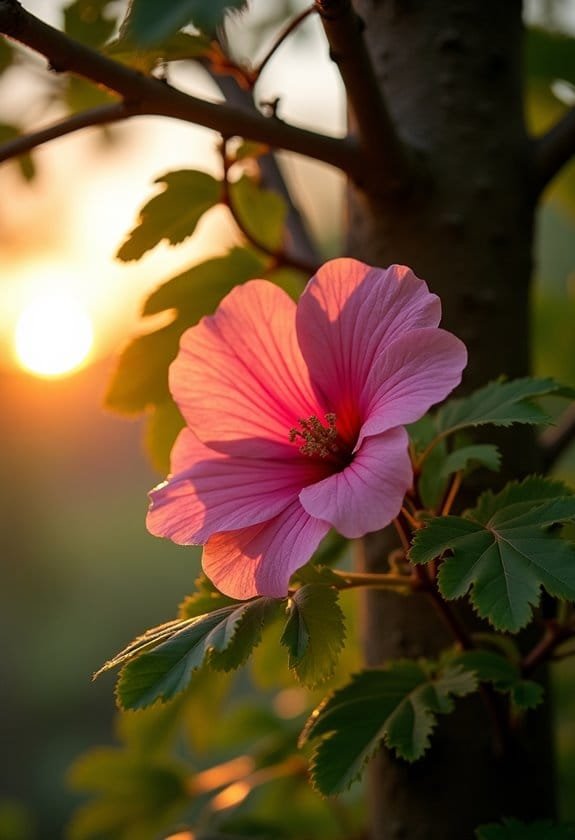
Lavatera olbia, commonly referred to as the Tree Lavatera, stands as a striking perennial shrub native to the vibrant Western Mediterranean region and importantly introduced to California.
Renowned for its impressive stature, reaching upwards of 2.5 meters, this dynamic species enchants gardeners with its large, vivid blooms that attract various pollinators, particularly butterflies.
With its ornamental significance highlighted by the Royal Horticultural Society, Lavatera olbia presents an appealing option for enhancing garden landscapes while requiring only low to moderate maintenance.
Common Name
Often called Tree Lavatera, this perennial shrub is known for its vigorous growth and striking appearance. Botanically recognized as Lavatera olbia, it catches the eye in any garden with its considerable height, often reaching up to 2.5 meters (8 feet) and forming a bushy silhouette.
The appeal of this mallow lies in its large, showy, rose-colored flowers that bloom abundantly throughout the growing season, adding vibrant splashes of color to floral displays.
These pink flowers not only allure gardeners but also attract a variety of pollinators such as bees and butterflies, further enhancing the ecosystem's health. Tree Lavatera serves as an excellent ornamental choice, thriving in diverse landscape settings, from cottage gardens to more formal arrangements.
Additionally, the plant is sometimes referenced by its synonyms, Lavatera hispida and Malva hispida, which highlight its affiliation within the Malvaceae family.
Its resilience and adaptability further elevate its status, making Lavatera olbia a favored fixture among horticulturists seeking to create stunning visual impacts while supporting local wildlife.
Thus, this remarkable shrub embodies beauty and ecological function.
Scientific Name
The scientific name of Tree Lavatera, Malva olbia, reflects its classification within the Malvaceae family. Previously known as Lavatera olbia, this plant has synonyms such as Malva hispida and Olbia hastata, illustrating its diverse botanical history. Native to the Western Mediterranean, Malva olbia has also found its way to regions like California, showcasing its adaptability.
The tree mallow, as it's commonly called, can reach impressive heights of up to 2.5 meters (8 feet), demonstrating vigorous perennial growth. Renowned for its stunning blooms, this species is a true delight for garden enthusiasts. It's highly regarded by the Royal Horticultural Society, which recommends it for both aesthetic appeal and ecological benefits.
In gardens, Malva olbia draws numerous pollinators, making it an invaluable addition for promoting biodiversity. The plant's attractive flowers, sometimes referred to as mallow Rosea, contribute to vibrant landscapes while supporting local ecosystems.
Understanding the scientific name and classification of this plant deepens appreciation for its role in horticulture and conservation, emphasizing both beauty and utility in the natural world.
Overview
Celebrating its vibrant blooms, Malva olbia, commonly known as Tree Lavatera, stands out as a remarkable perennial shrub in the Western Mediterranean. This vigorous plant can grow up to 2.5 meters (8 feet) tall, showcasing large, engrossing rose-colored flowers that bloom continuously from early summer into fall.
Its abundant blooms not only provide visual delight but also play an essential role in attracting important pollinators such as butterflies, thereby enhancing local biodiversity.
Tree Lavatera thrives in full sun and well-draining soil, preferring light, moderately fertile conditions. Once established, it becomes drought-tolerant, making it a resilient choice for gardens in various climates, including those in California, where it has been widely introduced.
Acknowledged with the Royal Horticultural Society's Award of Garden Merit, Malva olbia represents a significant contribution to horticulture and ornamental gardening.
This award underscores its aesthetic appeal and practical benefits, marking it as a preferred choice for both landscape enhancement and biodiversity promotion.
Key Features
Lavatera olbia, or Tree Lavatera, showcases remarkable key features that make it a standout perennial shrub.
This robust plant can grow up to 2.5 meters tall, adorned with impressive pink flowers that bloom continuously from early summer to fall, drawing the eye and enhancing garden aesthetics.
Its distinct maple-shaped, gray-green leaves support the bushy habit, ensuring that this vibrant species thrives in full sun while attracting butterflies and beneficial insects, enriching local biodiversity.
Growth Size
With a striking growth height of up to 2.5 meters (8 feet), Lavatera olbia makes a vibrant addition to any garden. This perennial shrub exhibits impressive growth potential, with a bushy frame comprised of soft-stemmed branches that can extend 5 to 6 feet high.
Its upright growth habit allows it to dominate the landscape, creating a focal point that beckons attention amidst surrounding flora.
The leaves of Lavatera olbia further contribute to its overall plant height, reaching up to 6 inches long, where lower leaves display an enchanting three-to-five lobed structure while the upper leaves adopt an elongated, lanceolate shape.
This variation not only enhances the plant's aesthetic appeal but also showcases the diversity of its foliage.
Blooming continuously from early summer through fall, Lavatera olbia undergoes seasonal variation, providing an ongoing spectacle of vibrant flowers that enrich any outdoor space.
As it flourishes throughout the growing season, gardeners can appreciate its consistent size and magnificent coloring, ensuring that Lavatera olbia remains a striking and engaging garden presence, regardless of seasonal progression.
Appearance
Standing tall at impressive heights, this vigorous perennial shrub presents a striking visual impact with its bushy, upright growth habit. Lavatera olbia typically reaches up to 2.5 meters (8 feet), allowing it to become a prominent feature within any landscape.
Its leaf structure is distinctive, with lower leaves displaying a fascinating three-to-five lobed configuration, while upper leaves take on a more lanceolate or oblong-lanceolate form. The enchanting gray-green hue of the foliage adds an appealing contrast to the plant's blooms.
Speaking of blooms, Lavatera olbia produces large, alluring flowers that remarkably display color variations, mainly in purplish-red shades, with petals measuring between 5/8 to 1 1/8 inches in length. This combination of striking foliage and vibrant blooms makes the shrub an eye-catching attraction in gardens.
Additionally, its upright growth habit enhances the overall structure, enabling it to attract pollinators and contribute to garden biodiversity. As a cornerstone in the domain of perennial shrubs, Lavatera olbia encapsulates visual allure and ecological function, making it a beloved choice for gardeners seeking continuous seasonal interest and charm.
Flowering Season
During the flowering season from midsummer to autumn, Lavatera olbia showcases a spectacular display of vibrant blooms. This period, characterized by an impressive flowering duration, allows observers to relish its beauty for several months.
The breathtaking flowers, adorned with large, purplish-red petals that measure between 5/8 to 1 1/8 inches long and can span up to 3 inches wide, can appear either singly or in pairs nestled in the leaf-axils.
Under ideal conditions, such as well-drained soil and ample sunlight, Lavatera olbia flourishes, resulting in continuous blooming that captivates garden enthusiasts.
The bloom colors deepen throughout summer, offering an ever-changing palette that shifts smoothly into autumn splendor.
Seasonal care is critical; well-maintained plants benefit from regular watering and pruning, promoting healthy growth and prolonged flowering.
Growing Requirements
Lavatera olbia requires specific growing conditions to flourish, emphasizing the importance of light, soil, and temperature.
This vibrant plant thrives in full sun, demanding at least six hours of direct sunlight daily, while moderately fertile, well-drained soils are essential for optimal wellness.
Additionally, once established, its drought tolerance allows it to flourish in drier conditions, underscoring the plant's adaptability and resilience in various landscapes.
Light
For ideal growth, Lavatera olbia thrives in full sun, requiring at least six hours of direct sunlight each day. The effects of sun exposure are profound, as adequate light intensity promotes robust, vigorous growth.
With strong light, the plant exhibits an abundance of flowers during the summer and fall, enhancing its visual appeal. Conversely, Lavatera olbia possesses limited shade tolerance, struggling when exposed to extended periods of low light, which can inhibit its flowering potential.
Establishing this plant in open, sheltered locations maximizes its exposure to sunlight, mitigating the adverse effects of cold winds that can impact its growth.
While Lavatera olbia demonstrates drought tolerance once established, ideal sunlight supports its early hydration needs, allowing it to establish a solid root system before the hotter months.
Soil
Maximizing Lavatera olbia's growth involves understanding its preference for soil conditions.
This remarkable plant flourishes best in well-draining soil types, which effectively prevent root rot, a common concern in overly saturated environments. It's vital to avoid heavy or sour soils, as these can lead to significant drainage issues that hinder development.
Lavatera olbia thrives in light to moderately fertile compositions, and its health greatly benefits from a careful nutrient balance. Occasional feeding can help enhance the availability of important nutrients, supporting vibrant growth and abundant flowering.
Additionally, this plant shows remarkable adaptability to chalky soils, which often contribute positively to its overall development.
Once established, Lavatera olbia exhibits exceptional drought tolerance, gaining an affinity for drier soils as it matures.
However, during its initial growth phase, regular watering is imperative to foster robust development and healthy blooming. This approach guarantees that the plant can sustain itself and its aesthetic contributions while thriving in moderately demanding conditions.
Water
While establishing Lavatera olbia, regular hydration plays an important role in its thriving development. This plant demands consistent watering techniques to guarantee ideal growth, particularly when first planted.
It prefers well-draining soil that maintains moderate moisture levels without becoming waterlogged. Over time, established plants exhibit a remarkable drought tolerance, allowing garden enthusiasts to reduce watering frequency considerably once maturity is achieved. Additionally, Musk Mallow's adaptability to different garden conditions enhances the overall resiliency of mixed plantings.
Incorporating seasonal adjustments is essential; during winter months, maintaining slightly dry conditions helps prevent root rot and other moisture-related issues that can harm the plant.
For best results, gardeners should focus on moisture retention through techniques such as mulch application, which helps retain important soil moisture while shielding roots from harsh elements.
Additionally, given its preference for light, moderately fertile soils, supplemental watering during dry spells—from early summer to autumn—is crucial for supporting blooming and overall health. Field Forget-Me-Not, with its preference for well-drained soils, demonstrates the importance of soil drainage in plant health and growth.
Temperature
Concerning temperature, Lavatera olbia flourishes within hardiness zones 4a to 9b, showcasing its adaptability to a diverse range of climates. This remarkable plant thrives best in a temperature range that supports its full sun exposure, crucial for maximum growth and vibrant blooming.
While Lavatera olbia can manage certain temperature variations, it's not immune to extremes; excessive heat or cold can greatly impact its health and flowering potential.
In particular, once established, Lavatera olbia demonstrates drought tolerance, making it suitable for warmer climates with infrequent rainfall. However, it's important to provide protection from cold winds, as sheltered locations foster better growth by mitigating any detrimental temperature impact.
The plant's resilience allows it to endure chills typical of hardiness zones 4a, yet it prefers conditions that avoid the harshest effects of winter.
Thus, gardeners should carefully monitor their environment, ensuring that the temperature remains within favorable limits to promote thriving plants.
Pollinator Criteria
Lavatera olbia thrives in creating a vibrant ecosystem by attracting a range of pollinators, particularly butterflies and bees.
With its vivid rose-hued blooms, the plant acts as a critical nectar source, facilitating cross-pollination through its appealing structure.
Attracted Pollinators
Trees such as Lavatera olbia play an important role in attracting various pollinators, including butterflies and bees. From early summer to fall, this species boasts large, showy pink flowers that offer a crucial nectar source, thereby attracting a multitude of wildlife.
The continuous blooming period guarantees that pollinators have access to fundamental nourishment throughout their peak activity seasons, greatly enhancing biodiversity. Additionally, these trees are renowned for their ability to attract excellent pollinator partners, providing a vital resource for local ecosystems.
Moreover, Lavatera olbia's upright growth habit and preference for full sun make it an ideal choice for gardeners seeking to promote ecological health. Its vibrant blooms not only provide immediate pollinator benefits but also create a conducive environment for a diverse range of species, thereby fostering a robust ecosystem.
The presence of butterflies and bees contributes to the crucial process of plant reproduction while supporting the surrounding flora and fauna.
The Royal Horticultural Society acknowledges that plants like Lavatera olbia are valuable additions to butterfly gardens. By planting these trees, gardeners can actively participate in attracting wildlife and enhancing biodiversity, ensuring that ecosystems thrive.
Essentially, Lavatera olbia serves as both a decorative feature and a linchpin for environmental vitality. Additionally, its capacity to attract various pollinators strengthens the overall health of garden ecosystems.
Pollination Method
Pollinators are drawn to Lavatera olbia due to its well-constructed flowers, which feature a wide opening that allows easy access to both nectar and pollen. This effective design caters to pollinator preferences, particularly appealing to butterflies, bees, and other beneficial insects.
The abundant and colorful blooms create a vibrant nectar availability throughout the flowering season, which typically spans from midsummer to autumn. This period coincides with peak activity times for various pollinator species, ensuring a thriving ecosystem. Additionally, this blooming period aligns with the important role of pollinator interactions in maintaining genetic diversity among plant species.
As a result, the consistent upright growth habit of Lavatera olbia fosters an inviting environment, where continuous blooming attracts pollinators across its flowering duration. These interactions not only facilitate effective pollination but also enhance garden biodiversity by promoting numerous insect visits.
Furthermore, the presence of Lavatera olbia contributes considerably to ecosystem benefits, enhancing natural pest control methods. By supporting populations of beneficial insects, such as predatory wasps and ladybugs, Lavatera olbia indirectly sustains the garden's health. Overall, this plant serves as a robust ally in preserving ecological balance while providing essential resources for diverse pollinator communities. Additionally, Wild Candytuft(Iberis amara) also exhibits a similar trait, attracting pollinators with its clusters of sweetly scented blooms.
Consequently, Lavatera olbia embodies the intricate relationship between plants and pollinators, highlighting the importance of fostering such connections in garden designs.
Care & Maintenance
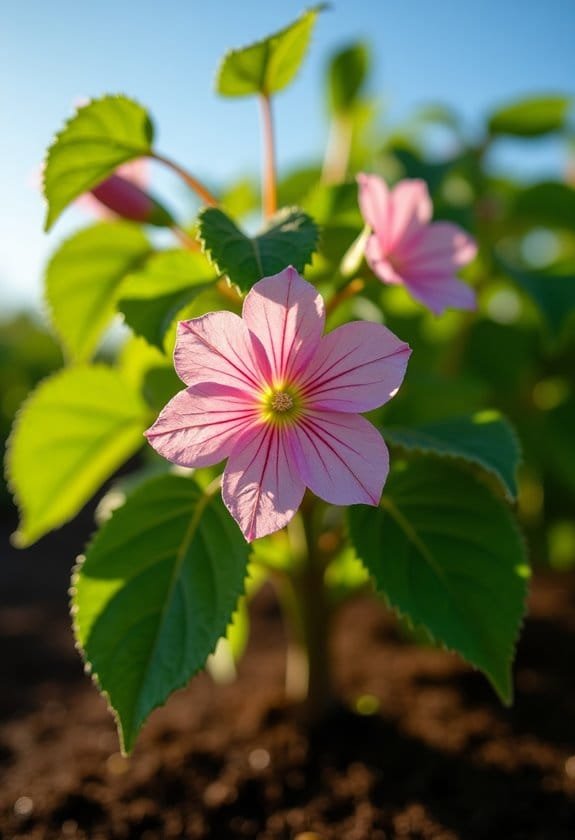
When considering the care and maintenance of Lavatera olbia, understanding planting techniques and ongoing care is essential for its thriving growth.
This plant flourishes best in well-draining soil, requiring careful attention to watering, especially during arid periods, and it benefits from regular pruning to promote robust flowering.
Additionally, pairing it with suitable companion plants can enhance its aesthetic charm while enabling a more vibrant garden ecosystem.
Planting Tips
Selecting the right location and conditions is vital for successful Lavatera olbia cultivation. This shrub flourishes in well-draining soil, which prevents root rot, and it thrives best in light, moderately fertile settings. Additionally, white clover can enhance nutrient availability in the soil by fixing nitrogen, benefiting neighboring plants.
When considering planting techniques, confirm that the site receives full sun, aiming for at least six hours of sunlight daily. Ideal locations can range from sunny borders to garden beds where Lavatera can showcase its robust blooms.
Incorporating companion planting could enhance growth; consider pairing Lavatera with drought-tolerant perennials that share similar water needs. During the initial establishment phase, regular watering proves essential, as Lavatera prefers drier conditions once mature, demonstrating impressive drought tolerance.
Pruning the shrub back to about one foot in early spring not only promotes strong growth but also maintains an attractive shape, readying it for the growing season.
Additionally, one must be vigilant for potential issues such as stem rot or rust. While Lavatera is generally pest-free, vigilant monitoring for diseases can greatly extend the plant's lifespan in the garden, confirming vibrant blooms and healthy foliage for years to come. The attentive care of Lavatera olbia can create thriving environments that support pollinator populations similar to those enhanced by other flowering plants like Pileostegia viburnoides.
Ongoing Care
Ongoing care for Lavatera olbia is crucial to certify its robust growth and stunning blooms throughout the growing season. Establishing a consistent watering schedule is important; these plants require regular hydration, particularly during dry spells, to guarantee their vibrant displays remain intact.
To foster ideal health, Lavatera thrives in well-draining soil. Incorporating soil amendments such as compost can enhance soil fertility and drainage, thereby diminishing the risk of root rot—an affliction common in overly saturated conditions.
Occasional feeding with a balanced fertilizer during the growing season bolsters blooming, encouraging an even more fascinating floral experience.
Seasonal pruning is another essential aspect of ongoing care. In early spring, performing a hard prune down to about 1 foot (30 cm) prompts bushier growth and maintains an attractive shape.
While generally pest-free, gardeners should remain vigilant for signs of stem rot or rust, especially in heavier clay soils, as these issues can decimate healthy specimens. Should these problems arise, timely plant replacement certifies the garden's beauty remains undiminished.
Collectively, these care practices contribute considerably to the ongoing vitality and aesthetic appeal of Lavatera olbia.
Suggested Companions
Creating a vibrant garden with Lavatera olbia involves pairing it with compatible companions that enhance both beauty and biodiversity. Ideal planting combinations include butterfly-attracting plants like Nepeta (catmint) and Salvia (sage), which not only bring visual delight but also support essential pollinator populations.
This shrub flourishes in well-draining soil, making it an excellent partner for drought-tolerant companions such as Lavender and Echinacea, effectively minimizing water requirements while maintaining aesthetic harmony. The addition of nectar-rich flowers can further attract pollinators to the garden.
To elevate visual appeal, one might consider planting alongside robust perennials like Roses and Hollyhocks. These companions thrive under similar care conditions, benefiting from Lavatera's presence in the garden. Regular maintenance is vital; hard pruning in early spring guarantees that Lavatera olbia, along with its companions, remains vibrant and healthy throughout the growing season.
Moreover, ideal growing conditions for Lavatera olbia include full sun exposure, positioning it favorably with sun-loving plants like Ornamental Grasses and Geraniums. This adaptability allows for exceptional cold tolerance similar to other hardy perennials like Bergenia, enhancing its resilience within diverse garden ecosystems.
This thoughtful selection of companion plants not only amplifies companion benefits but also establishes a resilient, diverse ecosystem within the garden. Such careful planning ultimately creates a picturesque and sustainable landscape.
Common Issues
Lavatera olbia faces several common issues, primarily pests and diseases that can severely impact its health.
Stem rot thrives in excessively wet conditions, while soil-borne diseases lead to symptoms like wilting or yellowing leaves, indicating deeper problems.
To guarantee plant vitality, vigilant monitoring and prompt action against pests, including the rust manifested as orange or brown pustules, remain crucial in maintaining robust growth.
Pests/Diseases
Occasionally, Lavatera olbia plants face challenges from pests and diseases that can affect their health and energy. One important concern is stem rot, particularly in overly damp conditions, which can lead to wilting and eventual decline of the plant.
Additionally, soil-borne diseases like root rot largely occur in poorly drained or heavy clay soils; therefore, ensuring well-draining soil is essential for healthy growth.
Lavatera olbia also attracts rust, a fungal disease presenting as yellow-orange pustules on leaves, necessitating vigilant growth health monitoring and potential treatment with fungicides.
While the plant is generally pest-free, occasional infestations by aphids or spider mites can arise. Pest management techniques, such as introducing beneficial insects or applying insecticidal soaps, prove effective in these scenarios.
To minimize the risk of diseases impacting Lavatera olbia, regular maintenance is important.
Implementing disease prevention strategies—including effective pruning and ensuring adequate airflow around the plants—can greatly reduce the likelihood of infections.
Solutions
To tackle common issues faced by Lavatera olbia, gardeners should focus on proactive measures that promote healthy growth and minimize disease risk. Selecting appropriate planting techniques is essential; planting in well-draining soil prevents the dreaded stem rot, a notable threat in poorly drained conditions.
Moreover, ensuring Lavatera olbia receives full sun enhances blooming and overall vigor, mitigating the adverse effects of insufficient light.
Implementing effective pruning strategies also plays an important role in maintaining plant health. Regularly hard pruning, ideally down to about 1 foot in early spring, helps shape the plant and encourages robust growth, curbing the likelihood of disease.
Additionally, proper air circulation can greatly reduce the risk of fungal diseases, including rust, emphasizing the importance of spacing plants adequately.
For pest management, although Lavatera olbia generally evades serious infestations, vigilance is key. Maintaining a careful regimen—such as avoiding overhead watering—minimizes fungal risks.
Finally, gardeners in areas with heavy clay soils should consider replacing plants every 5-6 years, as prolonged exposure in such conditions can precipitate health issues that inhibit the plant's natural beauty.
Summary
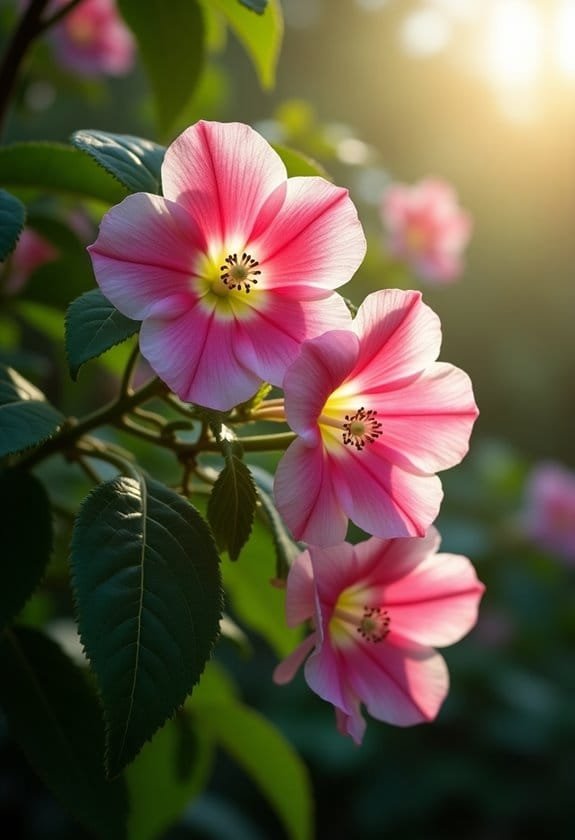
Known as Tree Lavatera, Lavatera olbia is a striking perennial shrub that boasts impressive height and vibrant, rose-colored blooms. This robust plant can reach up to 2.5 meters (8 feet) tall and flowers from early summer through autumn, creating a stunning focal point in any garden layout.
Originating from the western Mediterranean region, it thrives in well-draining, moderately fertile soils with full sun exposure, making it an excellent choice for various plant decorations.
A highlight of Lavatera olbia is its ability to attract pollinators such as butterflies and beneficial insects, promoting biodiversity within pollinator gardens. Its appeal extends beyond aesthetics, as the Royal Horticultural Society recognizes it for its low-maintenance nature, requiring just regular watering and occasional pruning to keep it flourishing.
The availability of hybrid varieties, like 'Rosea' and 'RedRum,' enhances its garden merit, offering diverse color options for cultivation.