*Ligustrum sinense*, or Chinese privet, is a fast-growing shrub introduced to the U.S. around 1852. Typically reaching heights of 6 to 15 feet, it can soar up to 30 feet under ideal conditions. While prized for its dense foliage and ornamental use, it poses significant ecological threats as an invasive species, especially in the Southeastern U.S. Its aggressive growth habits compete with native plants, diminishing local biodiversity. Chinese privet produces small, fragrant flowers in late spring, attracting some pollinators but deterring others. Effective management strategies are essential to mitigate its destructive impact on ecosystems, revealing deeper considerations for its cultivation.
Main Points
- Chinese privet (*Ligustrum sinense*) is an invasive species in the U.S., predominantly affecting ecosystems in the Southeastern region.
- It produces purple drupes that are consumed by birds, aiding in its rapid spread and dominance.
- The plant thrives in diverse conditions, preferring moist, well-drained soils and can grow up to 30 feet tall.
- Its dense foliage displaces native plants, leading to reduced biodiversity and disrupted ecological relationships.
- Effective management includes early removal of flowers, regular pruning, and community education on its ecological impacts.
Introduction
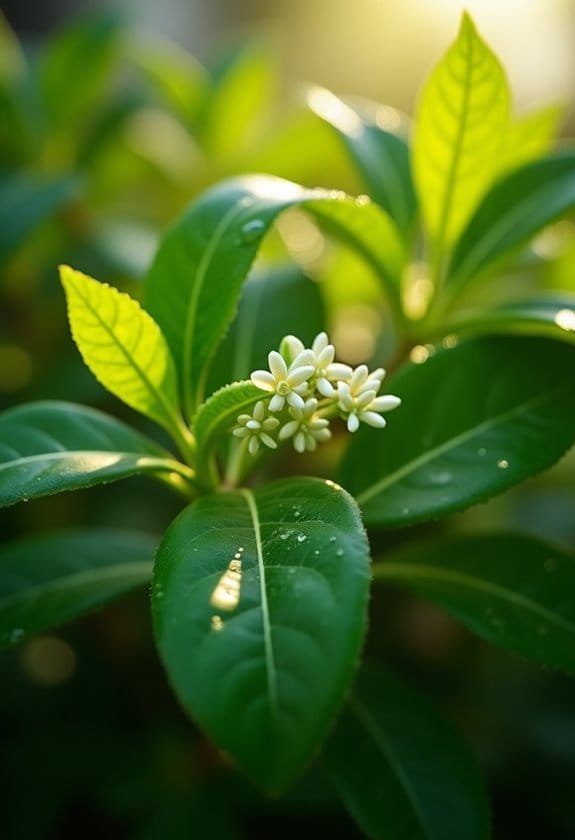
Chinese privet, or Ligustrum sinense, holds a fascinating yet concerning position within U.S. flora. Initially celebrated for its ornamental appeal and utility in hedging, this evergreen shrub can reach heights of 6 to 15 feet, showcasing resilience across diverse soil and light conditions. However, its invasive tendencies, fueled by prolific reproduction, pose significant challenges to native ecosystems, urging a closer look at its impacts and management. Furthermore, its adaptability to moist, acidic soil can exacerbate the challenges faced by local vegetation.
Common Name
Often referred to as Chinese privet, Ligustrum sinense finds its roots in China and was introduced to the United States in 1852. With its dense, green foliage, this shrub became a popular choice for ornamental purposes, often employed in landscape design and planted as hedgerows.
However, despite its aesthetic appeal, Chinese privet has gained notoriety as an invasive species, particularly in the Southeastern United States, where it disrupts local ecosystems by displacing native plant species.
In states like North Carolina, the NC Invasive Plant Council specifically highlights Chinese privet as a significant ecological threat. This aggressive shrub not only competes with indigenous flora but also reduces biodiversity, fundamentally altering habitats.
Furthermore, its malodorous flowers and potential toxicity of its fruits contribute to concerns regarding its use, as it poses a low severity poison risk to humans and animals who may ingest them.
While its widespread cultivation continues, stakeholders must weigh the visual benefits against the environmental repercussions of planting an invasive species that undermines natural ecosystems and challenges conservation efforts.
Understanding these implications is vital for maintaining ecological balance in affected regions.
Scientific Name
The scientific name for Chinese privet is *Ligustrum sinense*, which belongs to the Oleaceae family. This plant, native to Asia, made its way to the United States in 1852, where it was initially valued for its ornamental appeal.
Typically, *Ligustrum sinense* grows to a height of 6 to 15 feet, but under ideal conditions, it can reach an impressive 30 feet, showcasing its vigorous growth potential.
Reproduction in *Ligustrum sinense* occurs through two primary methods: sexually, via seeds dispersed by birds, and vegetatively, through root suckers that allow the plant to clone itself.
While its lush foliage and hardy nature are appealing, it's important to recognize that *Ligustrum sinense* has been labeled an invasive species in several regions, particularly in the southeastern United States. This designation stems from its tendency to outcompete native flora, disrupting local ecosystems and diminishing biodiversity.
Thus, while *Ligustrum sinense* presents ornamental benefits, it also poses significant ecological challenges that warrant careful management and consideration in landscaping and natural areas.
Overview
Growing rapidly across various landscapes, *Ligustrum sinense*, or Chinese privet, stands out as a resilient shrub that has both ornamental charm and controversial ecological implications. Originally native to Asia, this evergreen or semi-evergreen shrub was introduced to the United States in 1852, primarily as an attractive landscaping option. It typically reaches heights between 6 to 15 feet and can spread up to 15 feet wide, thriving in a variety of soil types and sunlight conditions.
However, its beauty comes with a caveat, as Chinese privet is recognized as a highly invasive plant. Its small, fragrant, white flowers bloom in late spring, giving way to purple drupes that birds enthusiastically consume and disperse, exacerbating its invasive spread. These characteristics enable Chinese privet to form dense monocultures, which severely disrupt local ecosystems and diminish biodiversity.
Management practices for combating this invasive plant include the early removal of new growth and continuous monitoring, essential to preventing further ecological damage.
The challenge lies in balancing the ornamental appeal of *Ligustrum sinense* with its potential to overpower native flora, making awareness imperative for environmentally conscious gardening and landscaping efforts.
Key Features
Chinese Privet, or Ligustrum sinense, presents a striking growth habit, typically reaching heights between 6 and 15 feet with a width that mirrors its stature.
Its appearance is defined by dense foliage and small, creamy white flowers that bloom in late spring, filling the air with a strong, unpleasant odor that can turn heads, albeit for the wrong reasons.
This shrub's ecological significance is profound, as its purple drupes attract various birds and mammals, contributing to its invasive nature and the eventual displacement of native flora.
Growth Size
Typically reaching heights of 6 to 15 feet, Chinese privet (Ligustrum sinense) can thrive under ideal conditions, sometimes surpassing 30 feet. Its impressive growth size makes this shrub particularly notable in landscaping and ecological discussions.
With a width ranging from 10 to 15 feet, Chinese privet establishes dense thickets, often outcompeting native vegetation. This capacity to spread not only highlights the plant's vigor but also raises concerns regarding invasive tendencies in certain regions.
Chinese privet exhibits a remarkable adaptability to various soil types, thriving best in moist environments, though it can tolerate conditions from full sun to partial shade. This versatility allows it to colonize diverse habitats effectively.
The shrub's growth habit is further complemented by its ability to reproduce both sexually through seeds and vegetatively by producing root suckers, which can lead to rapid population increases.
Interestingly, the evergreen or semi-evergreen foliage of Chinese privet remains vibrant through winter, ensuring a consistent visual presence even in colder months. This enduring greenery contributes to its appeal in many gardens, but it simultaneously reinforces the need for mindful cultivation to prevent ecological imbalance.
Appearance
Characterized by its evergreen or semi-evergreen nature, Ligustrum sinense showcases glossy, opposite leaves that range from 2 to 7 cm in length, creating a lush appearance throughout the year.
This native shrub typically grows between 6 to 15 feet tall while spreading 10 to 15 feet wide, resulting in a potentially imposing presence in gardens or landscapes.
The leaves' glossy texture adds a vibrant green hue, enhancing any setting with an inviting aesthetic. The branches are yellowish-gray and hairy, contributing to the shrub's bushy growth habit that often leads to dense monocultures—an ecological consideration worth noting for those deciding to cultivate it.
In late spring, Ligustrum sinense produces small, creamy white flowers arranged in terminal clusters. These flowers, while visually appealing and fragrant, emit a strong malodorous scent, which some may find offensive.
Although the subsequent purple drupes attract birds, contributing to seed dispersion, it's vital to recognize that these fruits are toxic to mammals, posing risks to pets and livestock.
Consequently, while the shrub offers visual interest, careful consideration of its ecological implications is important for responsible horticulture.
Flowering Season
In late spring, around May, Ligustrum sinense bursts into bloom, showcasing small, creamy white flowers that appear in terminal clusters and upper leaf axils. Typically, these diminutive blooms measure less than one inch in size and form attractive panicles, boasting 4-5 delicate petals each.
However, the flowering season brings a distinctive malodorous scent, often deemed unpleasant and offensive, which can deter some pollinators from engaging with the flowers.
As the plant shifts beyond its flowering phase, it proceeds to develop purple drupes, which are essential for birds and mammals, serving as a significant food source while facilitating seed dispersal. This dual purpose underscores the ecological importance of Ligustrum sinense in its environment.
It's critical to remember that the small white flowers bloom on new growth, making the timing of pruning essential. Pruning activities must be carefully scheduled to avoid sacrificing next year's blossoms.
Fundamentally, the flowering season, while picturesque, carries complex interactions that affect both the plant's reproductive success and its role in the ecosystem. Each year, this cycle weaves a tapestry of life, important for maintaining balance within its habitat.
Growing Requirements
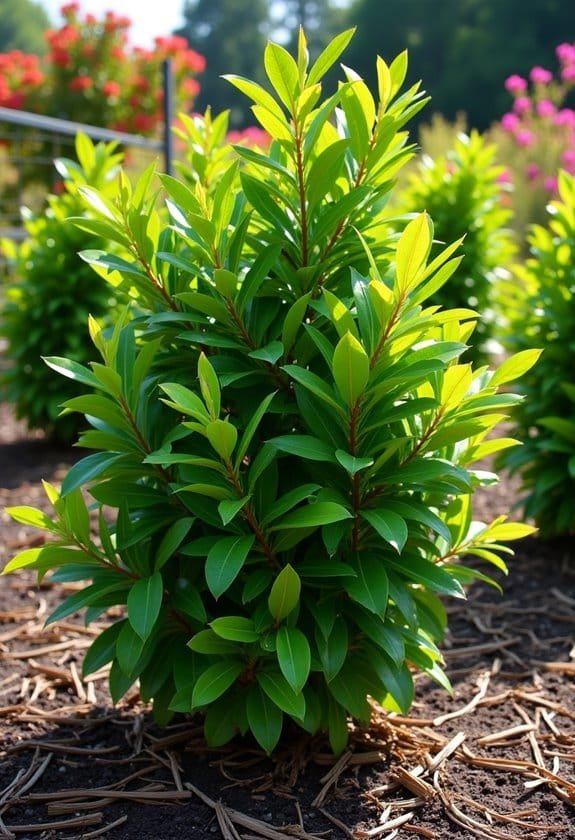
Chinese Privet flourishes under the bright embrace of full sunlight but can also manage in partial shade, demonstrating its adaptability to various light conditions.
It thrives best in moist, well-drained soils, successfully maneuvering through a diversity of soil types, even those that are alkaline.
Considering its impressive growth—often reaching heights between 6 and 15 feet—that makes it a prime candidate for hedging, careful attention to its environmental requirements is essential for ideal health and maintenance.
Light
Thriving in full sun while also tolerating partial shade, Chinese Privet (Ligustrum sinense) adapts well to various garden environments. This versatility in light conditions allows it to fill diverse spaces, from full sun gardens to areas with filtered light. However, to achieve optimal growth, it's essential to understand these light requirements.
In full sunlight, Chinese Privet produces denser foliage and abundant blossoms, enhancing its aesthetic appeal. Such vibrant growth stems from the plant's ability to photosynthesize efficiently, harnessing the sun's energy to promote robust development.
Conversely, in partial shade, although it remains adaptable, the shrub's growth may be slower, and flowering becomes less prolific—a trade-off for its adaptability.
Gardening enthusiasts should recognize that sufficient exposure to sunlight can increase the plant's competitiveness, potentially overshadowing native flora. This aspect is significant in regions where preserving local biodiversity is necessary.
Therefore, while Chinese Privet may thrive under varied conditions, gardeners must guarantee adequate light exposure to manage its growth and mitigate its invasive tendencies effectively. Cultivating awareness of light conditions can lead to a healthier, more balanced garden ecosystem, highlighting the importance of enlightened care in plant management.
Soil
Growing in a variety of soil types, Chinese Privet (Ligustrum sinense) demonstrates impressive adaptability. This resilient plant thrives in sandy, clay, and loamy soils, showcasing its versatility across diverse environments.
While it prefers moist, well-drained soil for ideal growth, it proves tolerant of drier conditions once established, making it suitable for various light conditions.
Chinese Privet can flourish in both alkaline and slightly acidic soils, allowing it to inhabit a wide range of geographic areas. The adaptability of its root system, which effectively navigates different soil compositions, facilitates its growth even in disturbed lands.
When planted in soil that retains moisture, this species will exhibit increased vigor and enhanced flower production.
Interestingly, while full sun promotes the healthiest growth, the Chinese Privet can survive in partial shade. However, reduced light may impact its overall vigor and flowering, as the plant relies on sunlight to produce energy.
The interplay of soil and light conditions ultimately shapes the performance of this species, illustrating the importance of selecting appropriate locations for cultivation. Through such adaptability, Chinese Privet continues to thrive, establishing a strong presence in a variety of landscapes.
Water
Adequate moisture is vital for the establishment of Chinese Privet (Ligustrum sinense), especially during its initial growth phase. This shrub requires sufficient water to promote robust root development, guaranteeing a healthy foundation for future growth. Typically, the plant flourishes in well-drained soil, accommodating a range of conditions, including alkaline environments.
However, during early cultivation, it's imperative to monitor soil moisture levels diligently. While Chinese Privet can later tolerate periods of drought, it's during these formative weeks that water availability is essential.
Overly saturated soil can pose significant risks, such as root rot, jeopardizing the shrub's overall health. Consequently, it's advisable to avoid excessive irrigation and focus on maintaining a balanced moisture level.
Notably, Chinese Privet proves resilient in disturbed habitats, like roadside areas, where water availability fluctuates. Gardeners should guarantee adequate drainage to prevent any pooling that could lead to detrimental effects.
Temperature
Adapting to a wide range of temperatures, Chinese Privet (Ligustrum sinense) flourishes in USDA hardiness zones 6 to 9, making it suitable for various climates. This resilient shrub not only thrives in warm environments but also exhibits remarkable tolerance to cooler temperatures. Achieving optimal growth is essential; temperatures ideally range between 70°F to 85°F. At this temperature range, Chinese Privet showcases robust flowering and fruit production, significant for its overall vigor.
While it prefers full sun, it can tolerate partial shade, a trait that further enhances its adaptability. This versatility allows it to flourish even in diverse environments where temperatures fluctuate throughout the day.
Once established, the shrub can endure short drought periods but requires consistent moisture during the hot summer months to maintain its health and liveliness.
Chinese Privet stands as an excellent choice for gardeners in southern regions, as its heat tolerance allows it to thrive in elevated temperatures. Conversely, it can withstand occasional cold snaps in northern areas, accentuating its adaptability in varying climates.
Therefore, understanding temperature's role in growth guarantees a thriving garden of this versatile shrub.
Pollinator Criteria
Chinese Privet's flowers, while visually delicate and creamy white, struggle to attract pollinators due to their unpleasant scent.
Many beneficial insects might only visit these blooms intermittently, hoping for nectar, but overall, their numbers are far less than those gravitating toward more fragrant native species.
Consequently, this lack of effective pollination can hinder not only the reproductive success of the plant itself but also the importance of local ecosystems, as it competes with indigenous flora that typically provides superior resources for pollinators.
Attracted Pollinators
With its late spring blooms, Chinese privet (Ligustrum sinense) plays an imperative role in attracting various pollinators, including bees and butterflies.
The plant produces small, creamy white flowers, grouped in terminal clusters, which bloom when few other plants are flowering. This time frame offers a critical food source for attracted pollinators, ensuring a steady supply of nectar. Curiously, the flowers emit a malodorous scent that, while off-putting to some humans, may intrigue specific pollinators that rely on olfactory cues to locate food. Additionally, the timing of its blooms complements the pollinator activity of other flowering plants, maximizing foraging opportunities.
Furthermore, the dense foliage of privet shrubs creates a microhabitat, providing shelter for these significant creatures while they forage for nourishment.
However, while Chinese privet attracts numerous pollinators, its invasive nature may disrupt local ecosystems by outcompeting native plants. This competition can lead to a decline in native flowering plants, ultimately impacting pollinator species that depend on them for sustenance and habitat.
Thus, while Chinese privet serves as an important food resource in late spring, its ecological consequences raise concerns about the long-term well-being of local pollinator populations.
Additionally, invasive plants like Chinese privet can significantly reduce local biodiversity by outcompeting native flora essential for pollinator survival.
Balancing its benefits and drawbacks is imperative for maintaining healthy ecosystems.
Pollination Method
Pollination in Chinese privet occurs mainly through insects, with bees playing an important role in transferring pollen between flowers. The small white flowers, grouped in terminal panicles, produce a malodorous scent that attracts specific pollinators, despite being unpleasant to human noses.
This unique olfactory signal is vital during the flowering period in late spring, when Chinese privet displays its four-lobed corolla, measuring approximately 3.5–5.5 mm long. These flowers offer a brief window for effective pollination, significant for the plant's sexual reproduction.
Successful pollination enables Chinese privet to generate large quantities of fruit, resulting in purple drupes that birds and mammals consume, thereby furthering the species' invasive spread. However, the efficiency of this pollination process can be compromised by various environmental factors, such as competition from other native plants and the availability of suitable pollinators in the ecosystem.
Thus, while Chinese privet thrives through interactions with its insect partners, the delicate balance of its pollination method is influenced by both its surroundings and the biodiversity within, highlighting the intricate web of life in which it exists.
Care & Maintenance
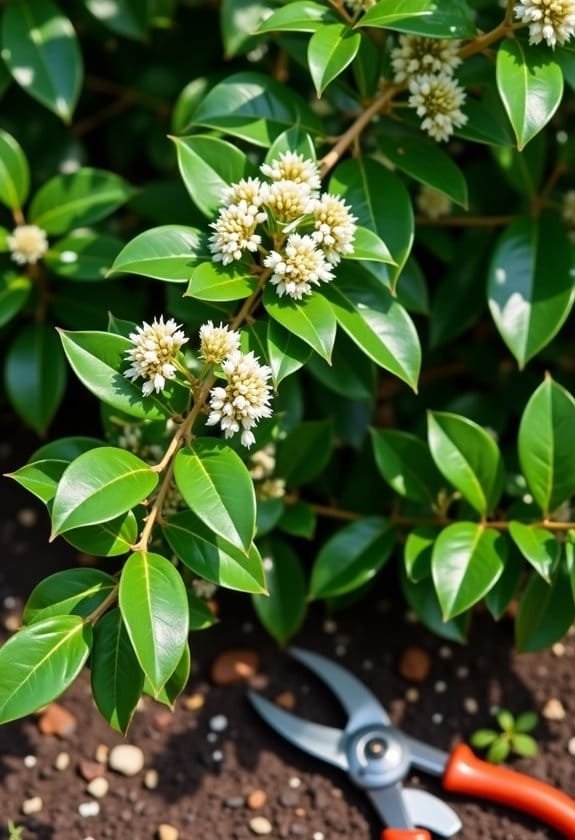
When it comes to the care and maintenance of Chinese privet, understanding its planting tips, ongoing care requirements, and suitable companion plants is essential for ideal growth.
Once established, the plant thrives with minimal intervention, preferring a variety of soil types and tolerating both full sun and partial shade.
Regular pruning in late winter or early spring not only controls its vigorous growth but also shapes the plant, ensuring it flourishes alongside compatible species in a well-planned garden ecosystem.
Planting Tips
Planting Chinese Privet requires thoughtful consideration of its growing conditions to guarantee a thriving environment. Ideally, this versatile plant flourishes in full sun, though it can tolerate partial shade, allowing gardeners to incorporate it in various landscapes. Additionally, like Herb Robert, Chinese Privet thrives in various soil types, making it adaptable to different gardening conditions.
Before planting, it's essential to select a site with well-drained soil; while Chinese Privet can adapt to a range of soil types, it prefers a moisture-rich medium for best growth.
To encourage air circulation and control its size, regular pruning is important. Gardeners should prune Chinese Privet in late winter or early spring, before the onset of new growth, ensuring a healthier, more visually appealing plant.
In addition, caution is advised when planting, as this species can pose ecological risks by outcompeting native plants and establishing monocultures. The complexity of managing these invasive tendencies can be highlighted by observing the impacts of similar plants like Common Honeysuckle in local ecosystems.
To effectively manage its invasive tendencies, consider removing flowering clusters before seeds mature, thereby curbing unwanted spread. Similarly, vigilant monitoring for new growth is necessary, providing an opportunity to maintain balance within the local ecosystem.
Ongoing Care
Ongoing care for Chinese Privet is essential to maintaining its presence while minimizing its invasive nature. As a member of the olive family (Oleaceae), this plant can quickly take over landscapes, so regular monitoring is vital.
Gardeners should promptly detect and remove any new saplings before they establish themselves in the ecosystem, as this will mitigate the potential spread of the species. High priority should be placed on eliminating flowering plants to prevent seed production, which can further propagate Chinese Privet.
Controlling young privet plants, particularly those under an inch in diameter, requires continuous pulling or digging. If larger infestations arise, applying herbicides directly to the stumps after cutting is an effective method for preventing regrowth and managing existing populations.
Integrating native plant substitutes, such as American Holly and Eastern Red Cedar, not only enhances the landscape's aesthetic appeal but also reduces the ecological impact of privet.
This strategic substitution cultivates a healthier ecosystem while still providing the visual richness that gardeners desire. By following these care guidelines, one can effectively control and maintain the balance between the presence of Chinese Privet and the surrounding native flora.
Suggested Companions
Choosing the right companions for Chinese Privet can greatly enhance both the aesthetic and ecological value of your garden. Native to China, this versatile shrub pairs well with other native plants, such as blackhaw, devil wood, and Carolina cherry laurel. These companions not only beautify the landscape but also support local wildlife and contribute to ecosystem restoration.
Incorporating flowering natives like butterfly bush and azaleas can attract pollinators, further enriching the garden's biodiversity. Additionally, pairing with plants like Dorset Heath can create a diverse habitat that contributes significantly to pollinator habitat preservation and enhances overall ecosystem health.
When selecting companion plants, it's crucial to verify they've similar sunlight, moisture, and soil preferences; Chinese Privet flourishes in full sun and well-drained or moist soils.
Selective pruning of Chinese Privet fosters healthy interactions with its companions, shaping its growth while preventing it from overrunning more delicate species.
Regular maintenance is key, as monitoring for invasive tendencies and managing its growth will keep the overall ecosystem thriving.
Common Issues
Chinese Privet presents several significant challenges that can hinder local ecosystems and aesthetic landscapes alike.
Its resilience against common insect pests, such as whiteflies and weevils, along with susceptibility to diseases like anthracnose, exacerbate its invasive nature, allowing it to thrive unchecked in many environments.
Addressing these concerns requires a multifaceted approach, incorporating both targeted pest management techniques and broader ecological strategies to restore balance.
Pests/Diseases
When it comes to maintaining the health of Chinese privet, awareness of common pests and diseases is imperative. This perennial shrub, known scientifically as Ligustrum sinense, faces notable threats from insect infestations. Whiteflies, weevils, and white peach scale are among the most concerning pests, as they can stress the plant and impede its growth.
The dense foliage of the privet often creates a microclimate that facilitates the proliferation of these invasive pests.
Moreover, certain diseases, including anthracnose, twig blight, cankers, and powdery mildew, pose challenges that require vigilant observation and management to minimize their adverse effects. Without timely intervention, these conditions can't only compromise the vigor of individual plants but also exacerbate the invasive nature of Chinese privet, promoting broader colonization of surrounding ecosystems.
Interestingly, while Chinese privet is resistant to deer damage, it remains essential to uphold plant health through effective monitoring and management of pests and diseases. This guarantees that the plant doesn't weaken considerably, which could lead to detrimental effects on local biodiversity and ecosystem stability.
Being proactive in pest and disease identification is critical for preserving this species' overall ecological impact.
Solutions
To effectively manage the common issues associated with Chinese privet, landowners should prioritize a multi-faceted approach. This invasive species forms dense monocultures, outcompeting native flora.
First, removing flowering plants is vital; this action limits seed production and decreases future infestations. For larger growths, landowners can employ a combination of manual removal and herbicide application, effectively curtailing the spread of this robust invader.
Monitoring new growth remains essential, as Chinese privet reproduces both sexually through seeds and vegetatively via root suckers. Continuous vigilance is necessary to prevent its resurgence and maintain native biodiversity.
Community education plays a pivotal role; raising awareness encourages community members to recognize and report privet populations, amplifying collective management efforts.
Replacing privet with native alternatives, such as blackhaw or Carolina cherry laurel, not only mitigates ecological impacts but also fosters local biodiversity. Such replacements can be viewed as planting seeds of hope, nurturing an environment that thrives.
Ultimately, a combination of careful removal techniques, community involvement, and promoting native species will culminate in a significant reduction of the invasive Chinese privet's prevalence.
Summary
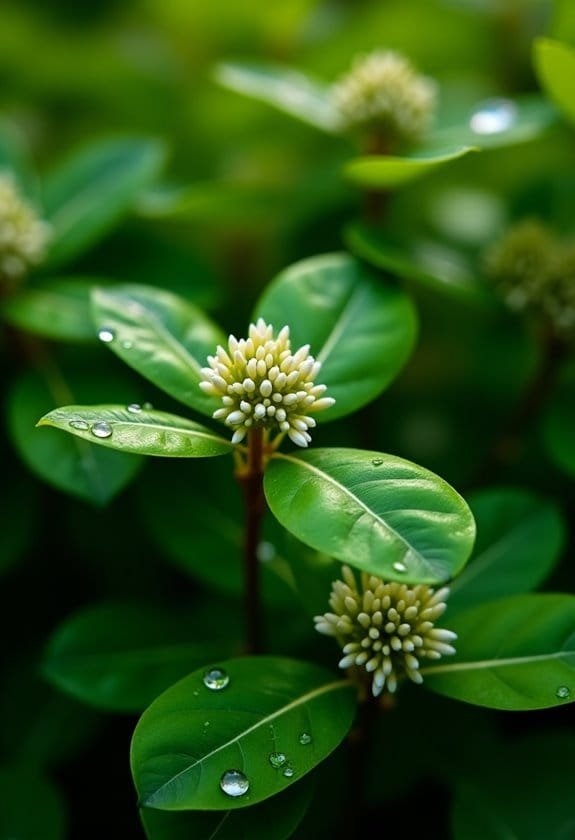
Understanding the impact of Chinese Privet (Ligustrum sinense) is vital for managing its spread in non-native environments. Since its introduction to the U.S. in 1852, this evergreen shrub, native to Asia, has become widely recognized as an invasive species.
Typically reaching heights of 6 to 15 feet, Chinese Privet can form dense monocultures that displace native vegetation, markedly altering local ecosystems, particularly in the Southeast. As the shrub flourishes, it produces small, cream-colored flowers in late spring, emitting an unpleasant odor. These flowers eventually give way to purple drupes, which birds readily consume, facilitating further dispersal of the plant.
The widespread growth of Chinese Privet not only threatens the health of existing flora but also disrupts ecological balance. Effective management strategies focus on early removal of flowering plants and promoting the use of native alternatives for landscaping.
By choosing native species in garden designs, individuals can mitigate the ecological impact and help restore local habitats.