Limnanthes douglasii, or Poached Egg Flower, is an enchanting annual plant known for its delightful white blooms featuring vibrant yellow centers. Growing between 6 to 12 inches tall and spreading up to 30 inches wide, it flourishes in moist environments, mainly in California's vernal pools and spring meadows. Ideal growth occurs in full sun with well-drained soil, typically germinating in 14 to 21 days. Beyond its picturesque appearance, this plant serves as an essential nectar source for pollinators like bees, enhancing biodiversity. Maintaining proper spacing and moisture levels guarantees a thriving garden, enticing further exploration of its ecological impacts and delightful care tips.
Main Points
- Limnanthes douglasii, commonly known as Poached Egg Flower, features white blooms with yellow centers and thrives in moist habitats.
- This annual plant grows 6 to 12 inches tall and spreads up to 30 inches wide, blooming within 15 to 20 days after sowing.
- It prefers full sun, moist, well-drained soil, and should be sown directly in early spring or late fall for optimal growth.
- Poached Egg Flowers are low maintenance, self-seeding annually, and attract beneficial insects, enhancing garden biodiversity.
- Regular cutting back after flowering improves plant health and prevents fungal risks from overcrowding.
Introduction
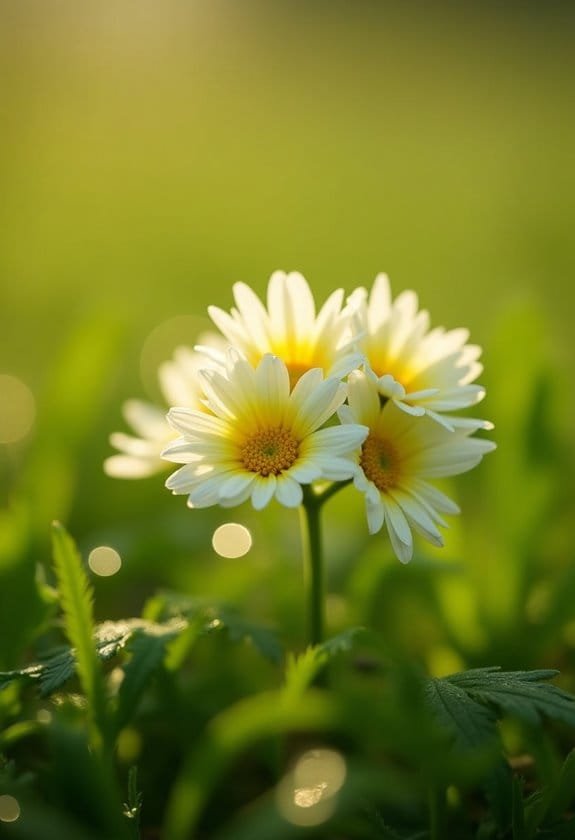
Limnanthes douglasii, affectionately known as the Poached Egg Flower, captivates with its charming white blooms, each boasting a vibrant yellow center about one inch across.
Native to the wetlands of California and Oregon, this annual plant thrives in its native, moist habitats, showcasing resilience and beauty.
Its ability to self-seed, combined with its appeal to essential pollinators, underscores its significance in both gardens and local ecosystems.
Common Name
Poached Egg Flower is a charming common name for Limnanthes douglasii, aptly describing its eye-catching white flowers with vibrant lemon-yellow centers that evoke the look of a perfectly cooked egg. This delightful plant, also known as meadowfoam, thrives in the lush surroundings of meadows and grassy areas, where it flourishes in moist, well-drained soils.
The Poached Egg Flower, an annual plant, boasts attractive blooms that catch the eye of garden enthusiasts, contributing to its increasing popularity in ornamental gardening.
One of its notable ecological roles lies in attracting important pollinators like bees and hoverflies, promoting biodiversity within garden ecosystems. This attraction in part stems from its colorful display and sweet nectar, which serves as a food source for these beneficial insects.
Moreover, Limnanthes douglasii is recognized for earning the Royal Horticultural Society's Award of Garden Merit, highlighting its aesthetic appeal and ease of cultivation, making it an excellent addition for gardeners.
Scientific Name
The scientific name of the Poached Egg Flower, Limnanthes douglasii, reflects its unique identity within the plant kingdom. This charming annual, belonging to the family Limnanthaceae, showcases the intricate beauty of biodiversity.
Native to the wet, grassy habitats of California and Oregon, Limnanthes douglasii flourishes primarily in vernal pools and spring meadows, where its attractive white flowers, adorned with distinct yellow centers, beckon pollinators and admirers alike.
Originally collected by the botanist David Douglas in the 1820s, this species has considerable historical significance that continues to enrich botanical studies today.
Within Limnanthes douglasii, several subspecies exist, including L. douglasii subsp. nivea and L. douglasii subsp. rosea, each displaying unique floral characteristics and diverse geographic distributions throughout their native regions.
This biodiversity highlights the plant's adaptability to varying environmental conditions.
Overview
Celebrating its vibrant presence in gardens and natural landscapes, Limnanthes douglasii, commonly known as the Poached Egg Flower, offers a delightful blend of beauty and ecological value. Hailing from the moist, grassy habitats of California and Oregon, this annual plant thrives in vernal pools and spring meadows.
Limnanthes douglasii showcases charming white flowers adorned with striking yellow centers, which serve as beacons for beneficial pollinators such as bees and hoverflies, thereby enhancing biodiversity in garden settings.
Reaching heights of 6 to 12 inches and spreading up to 30 inches, Limnanthes douglasii exhibits a fast-growing, bushy habit, making it a versatile choice for various garden layouts, including beds, borders, and informal spaces. Its low maintenance requirements, coupled with its propensity to self-seed, make it an attractive option for gardeners across all skill levels.
Additionally, since Limnanthes douglasii is virtually pest and disease-free, it minimizes the need for chemical interventions.
Acknowledged by the Royal Horticultural Society with an Award of Garden Merit, Limnanthes douglasii is celebrated not only for its ornamental splendor but also for its ecological contributions, making it a true asset to cultivated landscapes.
Key Features
Limnanthes douglasii, or the Poached Egg Flower, boasts a distinctive growth size, typically reaching between 6 to 12 inches in height.
Its cheerful appearance, characterized by bright yellow blooms adorned with white petal tips, creates an enchanting display during its flowering season. This plant not only draws the eye but also thrives in various climates, demonstrating versatility in gardens and landscapes.
Growth Size
With its striking yellow flowers and bushy form, Limnanthes douglasii typically grows to a height of 6 to 12 inches (15 to 30 cm) and can spread impressively up to 30 inches (76 cm) wide. This plant's growth size is one of its most notable features, as it presents an attractive, lush cover that quickly fills garden spaces.
The bushy and spreading habit not only enhances its visual appeal but also enables it to function effectively as ground cover, suppressing weeds while self-seeding readily for continued blooms in subsequent seasons.
Optimal growing conditions play an essential role in achieving this robust growth size. Thriving in full sun with moist, well-drained soil, Limnanthes douglasii can achieve its maximum potential.
Remarkably, it often reaches full bloom within just 15 to 20 days after sowing, showcasing its fast-growing nature. This swift growth allows gardeners and landscape designers to enjoy vibrant displays of color and greenery in a short span, making it a favored choice for creating dazzling, colorful patches in flower beds or borders.
Collectively, these characteristics make Limnanthes douglasii not only aesthetically pleasing but also a practical addition to various gardens.
Appearance
The Poached Egg Flower captivates with its striking appearance, characterized by white blooms adorned with vibrant yellow centers. Each delicate flower measures approximately 1 inch (2.5 cm) across and features four to five petals, providing a beautiful contrast that catches the eye.
This botanical gem typically flourishes in a bushy, spreading growth habit, reaching heights between 6 to 12 inches (15-30 cm). The low-growing nature of Limnanthes douglasii allows it to function effectively as ground cover, creating a lush tapestry of color in garden landscapes.
The flowers bloom on stems that extend around 8 inches, allowing them to showcase their poached egg-like allure appropriately above the glossy, green foliage. This shiny undergrowth not only frames the blooms beautifully but also enhances the overall aesthetics, bringing joy and vibrancy to garden designs.
Known for its long blooming period, the Poached Egg Flower can self-seed, ensuring that the vibrant displays return season after season. Gardeners appreciate this trait, as it means that the delightfully cheerful blooms can become a perennial aspect of their garden, celebrating nature's cyclical beauty with each new season of growth.
Flowering Season
Blooming vibrantly from spring to early summer, the Poached Egg Flower delights gardeners with its cheerful white and yellow displays. This fascinating plant, Limnanthes douglasii, typically showcases its delightful flowers during this key flowering season. Each flower measures about one inch across, featuring a striking yellow center encircled by delicate white petal tips, creating an enchanting visual contrast.
To thrive, these charming blooms prefer full sun and moist, well-drained soil, conditions that allow them to reach a blooming height of six to twelve inches. This stature makes them versatile for various garden arrangements, from borders to mixed beds.
One of the remarkable traits of the Poached Egg Flower is its self-seeding nature; it readily disperses seeds, ensuring the flowering period extends beyond the initial season. As these seeds germinate in subsequent years, the promise of new life emerges, reminiscent of a sunny day brimming with potential.
Through this self-sustainability, Limnanthes douglasii continues to brighten garden spaces with its endearing white flowers, extending the joy of the flowering season year after year. Its lifecycle creates a harmonious relationship with both nature and gardeners alike, fostering a lively garden atmosphere.
Growing Requirements
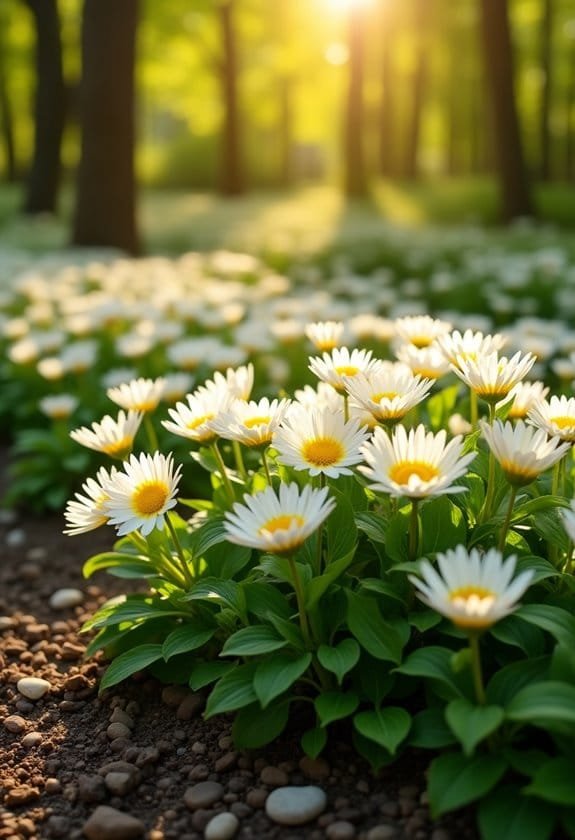
Limnanthes douglasii flourishes in full sun, thriving best in moist, well-drained soil, which makes it well-suited for vibrant garden beds and borders.
With ideal germination occurring between 50°-60°F, gardeners should consider this temperature range as an essential factor for successful planting, typically seen 14-21 days after sowing.
To achieve the healthiest growth, regular maintenance practices such as spacing seedlings four inches apart and cutting back after flowering can enhance its robust, natural beauty.
Light
Growing successfully in light conditions, Limnanthes douglasii flourishes when provided with at least 6 hours of direct sunlight daily. This charming annual plant revels in full sun, where its delicate flowers can fully develop and display their vibrant colors. Such ample light not only promotes robust growth but also enhances the plant's ability to flower profusely, creating a picturesque scene in any garden.
While it thrives in sunlight, Limnanthes douglasii exhibits versatile adaptability, tolerating part shade as well. This characteristic makes it a suitable choice for diverse garden environments, where certain areas may receive limited natural light. However, for peak performance, gardeners should aim for conditions that maximize exposure to light, thereby encouraging the plant's growth potential.
To guarantee individual plants receive sufficient light, seedlings should be thinned to a distance of about 4 inches apart. This practice not only allows adequate light penetration to each growing plant but also provides essential space for healthy development.
Ultimately, understanding the light requirements of Limnanthes douglasii is important for promoting its beautiful blossoms and overall health in the garden.
Soil
Successful flowering and overall health aren't just about light; soil quality plays an equally significant role in the growth of Limnanthes douglasii. This charming plant flourishes in moist, well-drained soils, particularly those dominated by poorly drained clay, akin to the vernal pools and spring meadows from which it originates.
Its unique tolerance for wet conditions enables it to thrive in meadows and informal garden settings that experience frequent moisture. To guarantee ideal germination, soil temperatures should ideally remain between 50°-60°F, allowing seeds to sprout vigorously.
Preparing the garden soil is vital before direct sowing seeds in early spring or late fall; seedlings should be thinned to a spacing of about 4 inches for effective growth. The resilience of Limnanthes douglasii also lies in its ability to self-seed, adapting remarkably to various soil types, provided they remain well-drained.
This adaptability contributes to the plant's appeal in diverse gardening landscapes, where its vibrant flowers ignite the atmosphere with life and color. By offering the right soil conditions, gardeners can enjoy the joyous spectacle of Limnanthes douglasii in their own blooming spaces.
Water
With its preference for consistent moisture, ensuring that Limnanthes douglasii receives ample water is essential for its well-being. This delightful flower thrives in moist, well-drained soil, making it particularly suitable for gardens where water management is vital. It can tolerate wet soil conditions, a considerable advantage for those planting in areas prone to waterlogging.
Nonetheless, gardeners should aim to regularly water the soil, which maintains an even moisture level. This practice is particularly important during dry spells, as it not only supports the plant's health but also prolongs the blooming period, allowing for more vibrant displays. Additionally, maintaining consistent moisture is crucial, as temporary drought conditions can impair flowering, similar to the needs of Water Plantain Alisma plantago-aquatica.
Interestingly, while Limnanthes douglasii prefers full sun exposure, it can adapt to part shade if moisture levels are adequately maintained. During germination, which typically occurs within 15-20 days, the soil temperature must remain between 50°-60°F to encourage ideal sprouting conditions.
Additionally, like Ladys bedstraw (Galium verum), Limnanthes douglasii can also attract various pollinators, contributing to local biodiversity and pollinator support within the garden ecosystem.
Ultimately, consistent water availability noticeably influences this plant's growth and flowering potential, highlighting the importance of balanced hydration throughout its life cycle. Remember, healthy water management leads to stunning displays, beautifying any garden setting.
Temperature
Understanding the temperature requirements for Limnanthes douglasii is vital for ideal growth and development. This resilient plant thrives in USDA hardiness zones 2 to 11, showcasing its adaptability to a wide range of climates. For maximum seed germination, the ideal soil temperature rests between 50°F and 60°F (10°C to 15.5°C). Maintaining these temperature conditions encourages strong, healthy seedlings that will flourish in garden environments.
While Limnanthes douglasii prefers full sun exposure, requiring at least six hours of sunlight daily, it can tolerate partial shade as well. This versatility allows it to adapt to various settings, from cottage gardens to more formal landscapes.
Care must be taken to guarantee that the plant enjoys moist, well-drained soil conditions, which are essential for overall health during its growth cycle.
Once established, this charming flower demonstrates remarkable resilience, with a capacity to endure varying soil moisture levels, including wet conditions.
Pollinator Criteria
Limnanthes douglasii, or the Poached Egg Flower, remarkably attracts a diverse array of pollinators, particularly bees and hoverflies, that play significant roles in its pollination process.
These visually striking flowers, adorned with vibrant yellow centers and delicate white petals, not only provide ample nectar and pollen but also serve as beacons for these beneficial insects throughout their blooming season from spring to early summer.
Attracted Pollinators
As the Poached Egg Flower blooms, it becomes a beacon for various pollinators, showcasing its vibrant white petals and yellow centers that irresistibly draw in bees and hoverflies.
These beneficial insects rely heavily on Limnanthes douglasii during essential times in the growing season. The flowers bloom at a period when few other sources of nectar and pollen are available, providing fundamental sustenance for these pollinators.
In addition to attracting hoverflies and bees, the Poached Egg Flower supports increased biodiversity and fosters healthy ecosystems within garden settings. Its conspicuous coloration acts as a visual cue, leading these beneficial insects directly to their food source.
The plant's self-seeding nature guarantees a continuous presence, creating an ongoing sanctuary for pollinators year after year, crucial to maintaining a thriving garden environment.
Moreover, by inviting such diverse pollinators, Limnanthes douglasii plays an important role in the intricate web of life, contributing to the stability and resilience of local ecosystems.
The interaction between these flowers and pollinators not only enhances the beauty of the garden but also underscores the important relationship between pollination and ecological health.
Pollination Method
Pollination in Limnanthes douglasii relies heavily on specific pollinator interactions, particularly with bees and hoverflies. These visitors are drawn to the plant's striking flowers, characterized by white petals surrounding a bright yellow center. This vivid color pattern acts as a visual signal, leading pollinators to nectar-rich sources, which are essential for reproduction.
As the plant's flowers open, their unique arrangement encourages these insects to engage in pollination. When pollinators visit, they inadvertently transfer pollen from the male anthers to the female stigma, facilitating fertilization. This natural process results in the production of seeds that exhibit extraordinary adaptability, easily germinating in various soil types.
Besides reproduction, Limnanthes douglasii plays a pivotal role in supporting local ecosystems. By providing essential food resources for pollinators, it fosters biodiversity and sustains numerous insect populations.
In addition, the plant's capability for self-seeding guarantees its longevity and presence in different habitats, allowing it to flourish through successive generations. Overall, the symbiotic relationship between Limnanthes douglasii and its pollinators exemplifies the intricate balance of nature, reinforcing the importance of these interactions for ecological health and stability.
Care & Maintenance
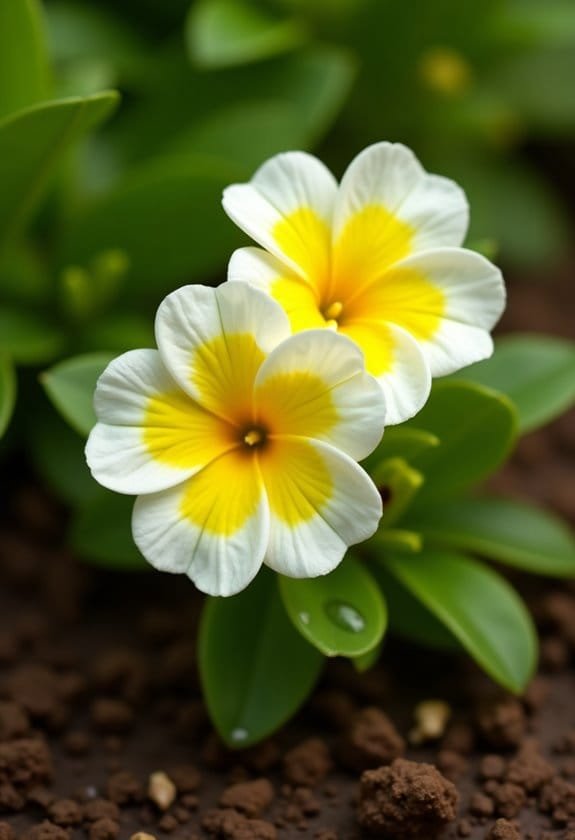
Caring for Limnanthes douglasii, known for its charming blooms, requires a simple yet effective approach.
To guarantee ideal growth, gardeners should focus on planting in sunny areas with well-drained soil, while maintaining adequate moisture, particularly during drier periods.
Planting Tips
Planting Limnanthes douglasii requires attention to a few key factors for ideal success. To achieve optimal growth and vibrant blooms, gardeners should directly sow these seeds in well-drained soil during early spring or late fall. This timing aligns with the natural growth cycle, allowing the plants to flourish.
Successful germination hinges on maintaining consistent soil moisture, with temperatures ideally resting between 50°-60°F. Germination typically occurs within 14-21 days; consequently, patience is a virtue. Once seedlings emerge, it's essential to thin them to about 4 inches apart. This spacing prevents overcrowding, ensuring each plant has sufficient room for growth and enhancing air circulation.
Limnanthes douglasii thrives in full sun or part shade, displaying remarkable tolerance for wet soil conditions, making it versatile for various garden settings.
After flowering, gently cutting back the plants promotes healthy regrowth and preserves the garden's aesthetics for subsequent seasons. With these thoughtful strategies in place, those who plant Limnanthes douglasii can cultivate a flourishing display, enriching their garden with its charming poached egg-like flowers while enjoying a low-maintenance annual.
Ongoing Care
Ongoing care for Limnanthes douglasii is key to maintaining its vibrant blooms and overall health. This charming plant, adorned with distinctive white petals, flourishes in moist, well-drained soil and thrives under full sun.
To encourage advantageous growth and future flowering, gardeners must prune the plant after it completes its bloom cycle, allowing for better air circulation and promoting self-seeding. Regularly thinning seedlings to approximately four inches apart enhances their development and prevents overcrowding, which can inhibit flowering potential.
Interestingly, Limnanthes douglasii exhibits an impressive resilience to wet soil conditions, making it an excellent choice for spaces prone to temporary flooding. Given its low-maintenance nature, this annual plant is largely pest and disease-free, requiring minimal intervention.
However, attentive gardeners should still monitor soil moisture and light exposure to maintain ideal growth conditions. Additionally, keeping these plants well-watered, especially during dry spells, sustains their vibrancy and health.
Ultimately, dedicated ongoing care will guarantee a stunning display of white petals that will continue to enchant as it self-seeds and reappears season after season.
Suggested Companions
Pairing Limnanthes douglasii with carefully chosen companions can enhance the garden's visual appeal and support the plants' overall health. The poached egg plant thrives alongside annuals such as nigella, calendula, and marigolds, creating a vibrant palette that captivates the eye.
Since Limnanthes douglasii prefers full sun and moist, well-drained soil, it's prudent to select companions with similar requirements, ensuring the garden flourishes collectively.
Integrating low-growing herbs like thyme or chamomile adds texture and diversity to the garden, enticing pollinators and enhancing the overall aesthetic. These herbs contrast beautifully with the delicate blooms of meadowfoam, enriching the garden's charm.
Furthermore, the self-sowing nature of the poached egg plant can perfectly complement perennial flowers, filling gaps during their initial blooming phases with charming, continuous color.
To maintain a healthy garden ecosystem, regularly cutting back the meadowfoam after flowering is essential. This practice reduces competition for nutrients and space, allowing companion plants to thrive with more vigor.
With thoughtful pairings and proper maintenance, one can achieve a flourishing garden, where each plant enhances the beauty and significance of its neighbors.
Common Issues
Though Limnanthes douglasii is largely free from pests and diseases, gardeners should remain vigilant for potential overcrowding and moisture-related issues.
With its rapid self-seeding capabilities, unchecked growth can lead to poor air circulation, increasing the likelihood of mold or fungal outbreaks.
Proper management, including maintaining ideal moisture levels and space between plants, guarantees that this charming annual thrives without the interference of common garden problems.
Pests/Diseases
Limnanthes douglasii is largely free from pests and diseases, making it an ideal choice for low-maintenance gardening. This resilient plant exhibits remarkable resistance to common ailments that typically plague other flowering species. This natural fortitude greatly contributes to its attractiveness for various garden settings, where gardeners often seek low-care options.
One of the most advantageous features of Limnanthes douglasii is its self-seeding capacity. It thrives effortlessly without chemical interventions that might otherwise attract unwanted pests. Furthermore, the presence of natural pollinators, such as bees and hoverflies, fosters a healthy ecosystem around the plant, promoting growth while simultaneously reducing potential disease incidents.
Though Limnanthes douglasii is robust, adopting simple upkeep practices can enhance its health. Regular cutting back after flowering not only helps to prevent any potential fungal issues that might arise but also encourages vigorous regrowth, ensuring that the plant remains visually appealing during future blooming seasons.
Solutions
Gardeners can easily tackle common issues associated with Limnanthes douglasii by employing straightforward solutions. This robust plant, often utilized as ground cover, thrives in full sun and well-drained, moist soil, making it a suitable choice for novice gardeners.
To combat leggy growth, thinning seedlings to a distance of four inches apart guarantees proper airflow and sunlight exposure, encouraging ideal development.
While Limnanthes douglasii is generally pest and disease-free, self-seeding can sometimes become excessive. To maintain an organized garden layout, cutting back the plants post-flowering prevents overwhelming spread.
The adaptability of this species further enhances its appeal; it can withstand temporarily wet conditions, proving resilient in areas prone to flooding or waterlogged soil.
These solutions empower gardeners to harness the incredible versatility of Limnanthes douglasii. By effectively managing growth habits and encouraging healthy development, they can enjoy a vibrant display of Poached Egg Flowers, enriching their landscapes with a delightful visual feast.
Ultimately, these straightforward strategies not only simplify plant care but also guarantee a flourishing garden that brings joy and beauty to any outdoor space.
Summary
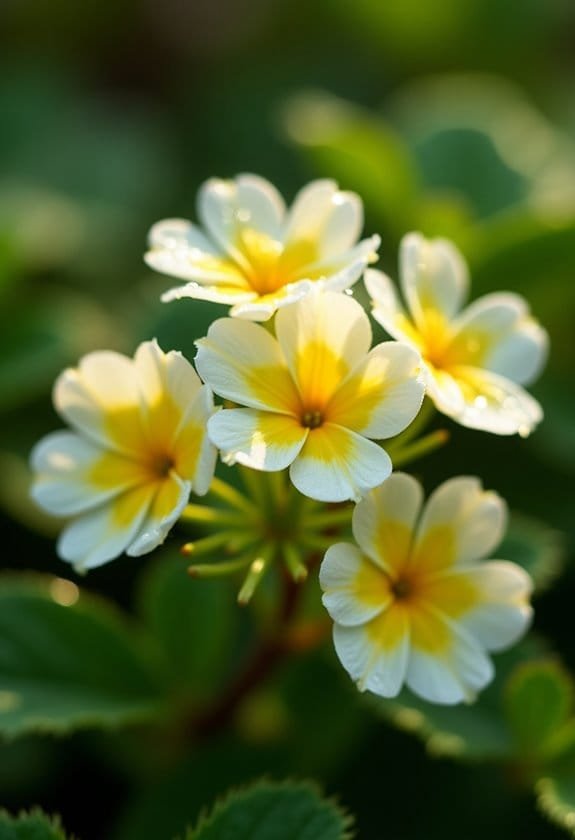
The Poached Egg Flower, known scientifically as Limnanthes douglasii, is a charming annual plant celebrated for its striking yellow and white blooms that attract essential pollinators like bees and hoverflies.
Growing between 6 to 12 inches tall and wide, this delightful poached egg plant flourishes in full sun, thriving in moist, well-drained soils. Not only does it enhance garden aesthetics with its vibrant colors, but it also supports biodiversity, making it a valuable addition to any landscape.
With its low maintenance requirements, Limnanthes douglasii has garnered the prestigious Royal Horticultural Society's Award of Garden Merit, signifying its resilience and ease of care.
When sown directly into gardens during the spring or fall, the seeds germinate within 14 to 21 days, ideally sprouting in soil temperatures between 50° and 60°F.
Curiously, various subspecies showcase different floral characteristics, adapting seamlessly to their respective habitats in California and Oregon.