Lysimachia vulgaris, known as Yellow Loosestrife, is a vigorous perennial plant native to Eurasia, standing between 50 to 150 cm tall. It blooms from June to August, showcasing striking yellow cup-shaped flowers, while its ovate leaves exhibit distinct orange spots. Preferring moist, humusy soils, this species can thrive in USDA zones 4 to 8, although its aggressive growth often outcompetes native flora, causing ecological imbalance. This beautiful plant attracts diverse pollinators, greatly aiding ecosystem health. However, managing its invasive tendencies is essential. Understanding these dynamics can enrich one's appreciation of this multifaceted species and its role in the environment.
Main Points
- Yellow loosestrife (Lysimachia vulgaris) is a perennial plant known for its vibrant yellow cup-shaped flowers and upright growth habit.
- Native to Eurasia, it can be invasive in some U.S. states, outcompeting native species for resources.
- The plant thrives in full sun and moisture-retentive soils, commonly found in wetlands and fens.
- Yellow loosestrife supports biodiversity by attracting various pollinators, including bees and butterflies, through its abundant nectar.
- Historically, it has been used for its medicinal properties, notably for anti-inflammatory effects and wound healing.
Introduction
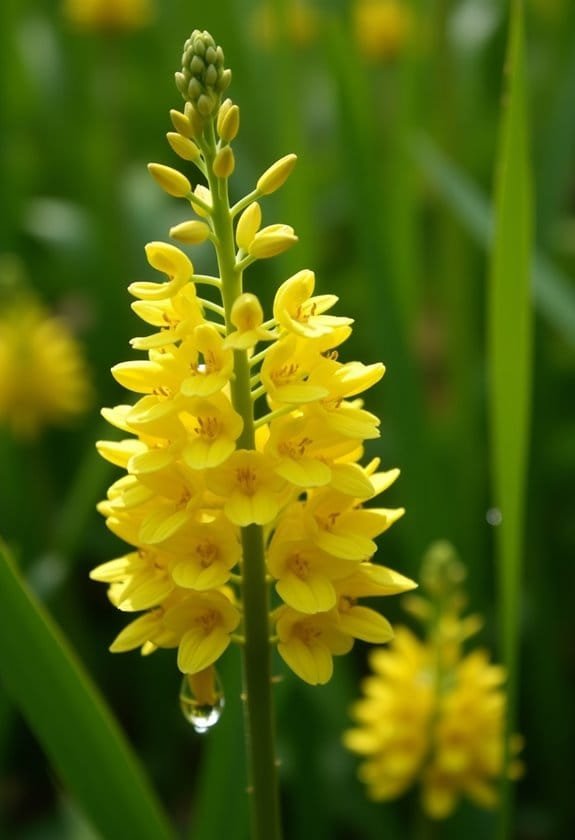
Lysimachia vulgaris, commonly called Yellow Loosestrife, stands out with its striking yellow blooms that grace wet habitats from June to August.
This perennial species, reaching heights of up to 150 cm, plays a dual role in ecosystems; while it showcases a unique leaf structure with translucent gland spots, it also presents significant challenges as an invasive plant, competing aggressively against native flora.
Its historical use in traditional medicine further underscores its complex identity, maneuvering the fine line between beauty and ecological disruption.
Common Name
Commonly known as Yellow Loosestrife, Garden Loosestrife, and Willowwort, this plant boasts a variety of names that reflect its widespread recognition across different regions. Yellow Loosestrife is particularly admired for its vibrant, golden yellow, cup-shaped flowers that bloom profusely from June to August. This visually striking display enchants gardeners and nature lovers alike.
However, Yellow Loosestrife often faces confusion with its close relative, purple loosestrife, which shares similar habitats but presents distinct aesthetic differences.
In Wisconsin, this species is classified as a restricted plant due to its invasive tendencies, which can threaten native ecosystems when left unchecked. Consequently, some states, including Connecticut and Washington, have banned the sale of Yellow Loosestrife, realizing its aggressive growth has adverse impacts on local flora and wetland habitats.
Despite its potential dangers, this plant offers aesthetic appeal and ecological benefits, attracting pollinators such as bees and butterflies, which enhance biodiversity in garden settings. This duality highlights that, while it can enrich landscapes, careful management is essential to prevent it from overwhelming native species and ecosystems.
Scientific Name
Understanding the scientific name of Yellow Loosestrife—Lysimachia vulgaris—reveals much about its identity and biology. The name derives from the genus "Lysimachia," meaning "ending strife," a nod to King Lysimachus of Thrace, who historically symbolizes resolution. The specific epithet "vulgaris," translating to "common" or "usual," underscores the plant's prevalent presence in various habitats across Europe and North America.
Lysimachia vulgaris belongs to the Myrsinaceae family, a diverse group of species that often exhibit similar traits. The perennial plant typically reaches heights of 50 to 150 cm (20 to 59 inches) and showcases upright panicles adorned with vibrant yellow flowers. Its leaves, arranged oppositely or in whorls of three to four, possess distinctive translucent orange gland spots, a notable characteristic that helps differentiate it from its close relative, Lysimachia punctata.
The scientific nomenclature serves as a crucial reference for botanists and horticulturists, providing clarity and precision in identifying species. Through this careful classification, enthusiasts can explore the ecological significance of Lysimachia vulgaris and its role in native ecosystems.
Overview
Yellow loosestrife, or Lysimachia vulgaris, serves as an intriguing example of a plant that combines beauty with complexity. This tall, semi-evergreen perennial, typically reaching heights of 50-150 cm (20-59 inches), blooms vibrantly from June to August. Its erect panicles of bright yellow flowers attract various pollinators, while the plant's leaves, arranged oppositely or in whorls of 3-4, display ovate to lanceolate shapes measuring 5-12 cm.
Specifically, the leaves often feature translucent orange gland spots, which contribute to their aesthetic charm.
Native to Eurasia, Lysimachia vulgaris has made its way to North America, flourishing in moist environments such as fens, wet woodlands, and riverbanks. However, despite its ornamental allure, it's considered a noxious weed in several regions, including Washington State and Oregon, due to its invasive tendencies.
Competitively, it can outpace native species, asserting its dominance in local ecosystems. The plant shares similarities with its relative, Lysimachia punctata, known for its yellow blooms.
Historically, yellow loosestrife has also been prized for its medicinal properties, offering anti-inflammatory benefits and treatment for ailments ranging from fevers to wounds. Additionally, its ability to attract diverse pollinators including bees highlights its ecological significance in sustaining local biodiversity.
Key Features
Lysimachia vulgaris, or Yellow Loosestrife, impresses with its remarkable growth size, reaching up to 150 cm tall.
This semi-evergreen perennial showcases striking erect panicles adorned with vibrant yellow flowers that bloom beautifully from June to August, while its uniquely patterned leaves enhance its visual appeal.
Thriving in moist habitats, this plant's characteristics make it not just a botanical wonder, but also a potential concern in non-native regions due to its invasive tendencies. Additionally, its aggressive spreading can significantly impact local ecosystems by outcompeting native flora.
Growth Size
Typically ranging from 50 to 150 cm (20 to 59 inches) in height, the yellow loosestrife exhibits an upright growth form characterized by erect panicles of bright yellow flowers. This perennial plant boasts a robust structure, with leaves typically arranged opposite or in 3-4 whorls, each measuring 5-12 cm long. Their ovate to lanceolate shape often displays distinct translucent orange gland spots, adding to the plant's unique character.
Yellow loosestrife blooms primarily from June to August, presenting vibrant yellow flowers devoid of the hairy fringes found in related species like L. punctata. This plant can extend its reach through long rhizomes, allowing it to colonize vast areas rapidly. Consequently, its aggressive growth necessitates careful management to prevent it from overpowering native vegetation.
Moreover, the yellow loosestrife's dense root structure enables it to offer effective ground cover in wetland areas, contributing greatly to soil stabilization and erosion control.
With its dual roles of beautification and environmental support, yellow loosestrife illustrates the delicate balance between nature's allure and the need for responsible stewardship in managing aggressive plant species.
Appearance
Standing out in any landscape, yellow loosestrife captivates with its vibrant yellow flowers and robust structure. This perennial plant, scientifically labeled as Lysimachia vulgaris, typically reaches heights between 50 to 150 cm (20 to 59 inches), showcasing an upright growth habit that commands attention.
Its erect panicles, adorned with brilliant yellow, starburst-shaped flowers, create a striking visual display, particularly during peak blooming months from June to August.
The foliage complements this colorful spectacle, with leaves arranged in opposite pairs or whorled in sets of three to four. Each leaf measures between 5 to 12 cm in length, embodying an ovate to lanceolate shape that adds an elegant touch to the overall appearance.
Of particular note are the hairy, triangular sepals with distinctive orange margins, which serve as a distinguishing feature within the Lysimachia genus. Unlike related species such as Lysimachia punctata, yellow loosestrife's petals lack the hairy fringe, enhancing its unique aesthetics.
This combination of features not only captivates with its visual allure but also plays an essential role in supporting local ecosystems, attracting pollinators and enriching the biodiversity of its habitat.
Flowering Season
From June to August, yellow loosestrife bursts into bloom, showcasing an eye-catching display of brilliant yellow starburst-shaped flowers. Each flowering spike exhibits numerous flowers arranged in terminal inflorescences, creating a fascinating visual feast for any garden enthusiast. This impressive arrangement can elevate the aesthetic value of garden landscapes, making yellow loosestrife a popular ornamental plant.
During its flowering season, which lasts several weeks, yellow loosestrife attracts a plethora of pollinators, including bees and butterflies. These essential creatures play a critical role in the broader ecosystem, enhancing biodiversity and contributing to the plant's reproductive success.
The flowering thrives under favorable conditions, specifically in full sun to part shade and especially in moisture-retentive soils. This environment not only supports the health of yellow loosestrife but also enhances the overall bloom quality, resulting in an even more spectacular display.
As these vivid flowers reach their peak, the harmonious chorus of nature comes alive, with buzzing bees and fluttering butterflies creating a lively atmosphere. Consequently, the flowering season of yellow loosestrife serves not just as a period of beauty but as a crucial link in maintaining ecological balance.
Growing Requirements
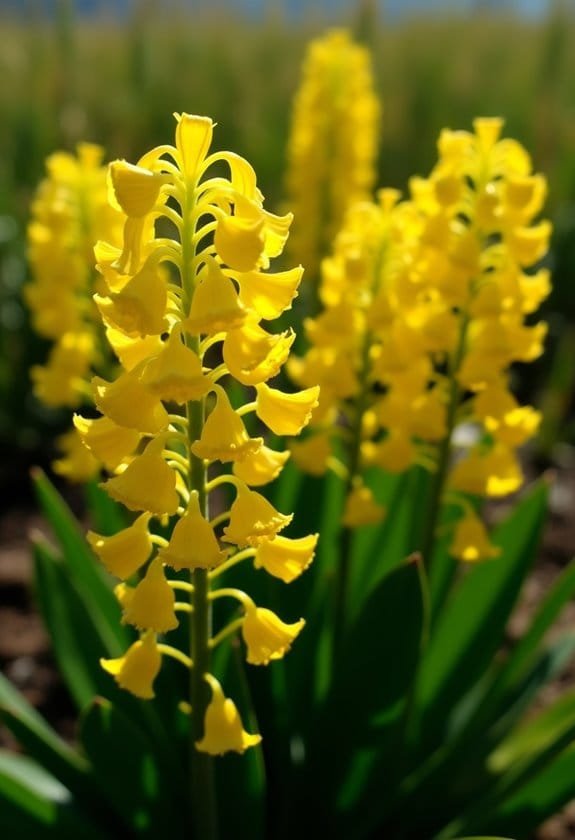
Lysimachia vulgaris demands specific growing conditions to thrive, particularly regarding light, soil, and water.
This perennial flourishes best in full sun but appreciates partial shade, especially in hot summer climates, while its preference for humusy, moisture-retentive soils highlights its connection to wetland habitats.
Hardy across USDA zones 4-8, this adaptable plant can withstand drier conditions, though proper moisture levels are vital for maintaining its vigor and abundant flowering.
Light
For ideal growth, Lysimachia vulgaris flourishes in full sun to part shade, with partial shade being particularly important in regions experiencing scorching summers. This beautifully vibrant perennial prefers to bask in sunlight, as adequate exposure is vital for encouraging its abundant blooms, which grace gardens from late spring to late summer, particularly between June and August.
However, in regions where heat becomes oppressive, this plant, often confused with its relative Lysimachia punctata, benefits greatly from some reprieve; too much high-intensity light can stress it, leading to slower growth. While it can tolerate drier conditions in partially shaded spots, its overall vigor diminishes, hampering the development of its striking yellow flowers. Moreover, like the Water Forget-Me-Not(Weed species), its extended blooming period can encourage a vibrant garden filled with diverse flora that attracts pollinators.
Lysimachia vulgaris exhibits remarkable hardiness in USDA zones 4-8, allowing it to adapt to varying light conditions within these zones. Additionally, just like red clover, it contributes to soil health through its interaction with nitrogen-fixing bacteria that benefit plant growth.
Nevertheless, sufficient lighting remains essential for robust development, as plants in sunnier locations tend to thrive more than their counterparts in the shade.
Therefore, garden enthusiasts should strategically place yellow loosestrife to appreciate its fullest potential, ensuring it receives the light it craves for best health and aesthetic appeal.
Soil
To cultivate Lysimachia vulgaris successfully, gardeners should focus on providing moist, well-drained soils that ideally feature loamy conditions.
This perennial thrives in humusy, moisture-retentive soils, often found in wetlands, meadows, and along stream banks. Such environments highlight its preference for nutrient-rich media conducive to vigorous growth. Additionally, the plant's growth can be hindered by invasive species like garlic mustard, which can compete for essential resources in similar habitats.
While it can tolerate drier soils, especially in partial shade, growth may slow considerably in these less suitable conditions, underscoring the importance of maintaining an appropriate moisture balance.
The adaptability of yellow loosestrife across USDA zones 4-8 enables it to flourish in various soil types, but prime performance remains linked to consistent soil quality and moisture retention.
Gardeners should regularly assess their soil's condition, ensuring it remains fertile and capable of holding moisture. Additionally, an annual division every 2-3 years proves beneficial, as it manages the plant's aggressive spreading habit, preventing it from overtaking neighboring flora. Tormentil's preference for well-drained soils illustrates how critical soil conditions contribute to plant health and stability in diverse landscapes.
Water
While providing consistent moisture is crucial for healthy growth, yellow loosestrife also benefits from well-distributed watering practices throughout its growing season. Lysimachia vulgaris thrives in moist, well-drained soils that retain humidity, ideally preferring loamy conditions, which supply both nutrients and moisture. Additionally, it can enhance local biodiversity by attracting pollinators such as bees and butterflies, similar to its close relative common mallow.
This perennial, commonly found in wetlands and alongside stream banks, demonstrates a clear affinity for its origin. It often flourishes under full sun to part shade, yet in hotter climates, partial shade can help alleviate stress, ensuring liveliness.
Although yellow loosestrife can withstand drier soils, especially in those shaded areas, it performs best when soil moisture remains consistently high. Regular watering not only nurtures root health but also supports the plant's rapid growth.
Additionally, gardeners should consider the benefits of dividing plants every 2-3 years during spring or fall. This practice not only prevents overcrowding but also promotes ideal water availability for each plant.
Furthermore, like common valerian, yellow loosestrife also supports local ecosystems through its flowering properties, attracting various beneficial insects.
Lysimachia punctata, a closely related species, can similarly thrive in comparable conditions, underscoring the significance of moisture in the growth of such flowering perennials.
Temperature
Ideal temperature conditions play an essential role in the growth of Lysimachia vulgaris, which flourishes in USDA hardiness zones 4-8. This plant prefers full sun to part shade, with partial shade becoming increasingly advantageous in exceptionally hot summer climates.
Optimal growth occurs when Lysimachia vulgaris is planted in moist, well-drained soils, particularly loamy types that effectively retain humidity. When thriving under these specified conditions, the plant exhibits vigorous growth and abundant blooming.
Comparatively, growth in partially shaded areas tends to slow, demonstrating how essential sunlight is for its development. On those particularly sunny days, the bright yellow flowers of Lysimachia vulgaris boldly attract attention, rivaling even the beauty of its close relative, Lysimachia punctata, known for its fresh coloration and sturdy composition.
As a perennial, yellow loosestrife can withstand seasonal temperature fluctuations, showcasing remarkable resilience. However, in northern regions, where extreme cold may occur, providing adequate protection becomes critical for the plant's survival.
Consequently, understanding its temperature requirements allows gardeners to create ideal environments for the flourishing growth of this stunning perennial.
Pollinator Criteria
Pollinator criteria for yellow loosestrife (Lysimachia vulgaris) highlight its role as a vibrant attraction for a range of insects, especially bees and butterflies.
With its bright yellow, cup-shaped flowers offering a substantial nectar source, particularly for specialist solitary bees like Macropis europaea, this plant becomes an essential contributor to local biodiversity.
Pollination chiefly occurs from June to August, when the plant's abundant blooms create a visually striking environment that invites and sustains various pollinator populations, ultimately supporting ecosystem health.
Attracted Pollinators
Yellow loosestrife (Lysimachia vulgaris) plays an essential role in attracting diverse pollinators, thanks to its vibrant, cup-shaped yellow flowers that offer ample nectar. This plant lures various pollinators, particularly bees and butterflies, drawn to its rich nectar supply.
The flowering period, spanning from June to August, coincides with peak pollinator activity, markedly increasing the chances of attracting these important insects. Among them, solitary bees, including Macropis europaea, exhibit a particular reliance on yellow loosestrife for nectar, emphasizing the plant's significance to certain pollinator species. Additionally, Meadow Thistles such as Cirsium dissectum can be found in similar habitats, contributing to pollinator diversity.
Moreover, the dense foliage and upright growth habit of yellow loosestrife create a favorable habitat that provides both shelter and foraging opportunities for these insects. The supportive environment not only enhances their foraging efficiency but also encourages them to thrive.
Furthermore, by promoting biodiversity in gardens and natural settings, yellow loosestrife contributes to the sustenance of various pollinators fundamental for ecosystem health and agricultural productivity. For instance, its similarity to Lysimachia punctata illustrates the shared benefits these species offer. Additionally, yellow loosestrife complements other flowering plants such as Ajuga reptans that also attract key pollinators like bumblebees and butterflies.
Pollination Method
The vibrant cup-shaped flowers of Lysimachia vulgaris utilize specific traits to attract pollinators effectively. Primarily, these flowers draw in bees and butterflies, leveraging their bright yellow hue and abundant nectar to entice these essential agents of pollination. Blooming from June to August, the timing aligns seamlessly with the heightened activity of various pollinators, enhancing the plant's reproductive capabilities. Additionally, research shows that such flowering plants can enhance native pollinator populations, creating a more supportive ecosystem.
The flower's terminal inflorescences facilitate easy access to nectar and pollen, promoting efficient cross-pollination among neighboring plants. Such interactions guarantee genetic diversity, crucial for the resilience of populations.
Additionally, glandular spots present on the leaves may attract additional insect pollinators, augmenting the reproductive success of L. vulgaris. Furthermore, pollinator interactions are crucial for the reproductive success and genetic diversity of various wetland plant species.
Comparatively, Lysimachia punctata shares similar pollination strategies, showcasing the importance of flower morphology in attracting specific insects. Effective pollination not only aids in the formation of viable seeds but also amplifies the genetic variation vital for adapting to environmental changes.
Care & Maintenance
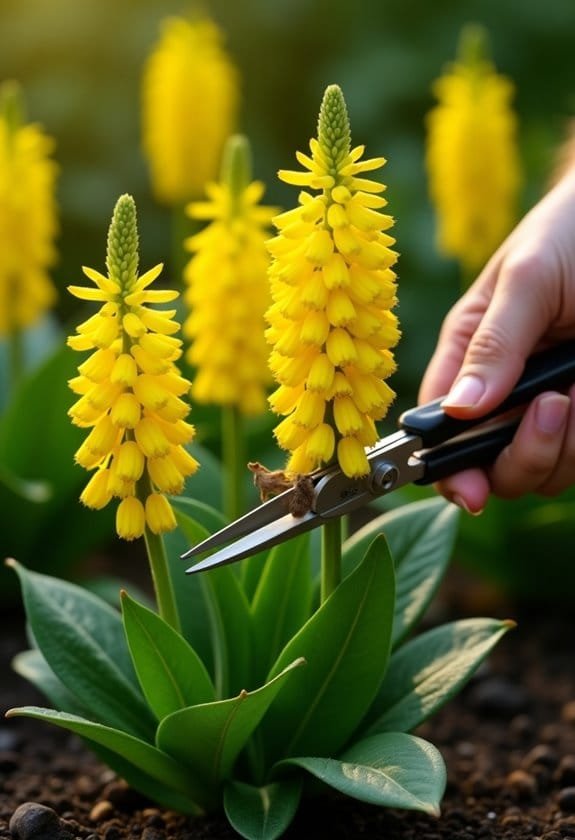
When cultivating Lysimachia vulgaris, gardeners must consider its preference for moist, well-drained soil, ideally enriched with organic matter to retain necessary moisture.
Regular maintenance becomes essential, as dividing the plants every 2-3 years helps manage growth and prevent invasiveness in various environments, while careful observation for pests is vital for health.
Additionally, pairing this vibrant perennial with compatible companions can enhance garden aesthetics and promote ecological balance, ensuring a thriving landscape.
Planting Tips
To guarantee vibrant growth and blooming of Lysimachia vulgaris, gardeners should plant it in full sun to part shade and prioritize well-drained, humusy soils that retain moisture. This species thrives in conditions similar to its close relative, Lysimachia punctata, favoring environments where moisture is consistently available.
Gardeners must also consider spacing when planting; giving each plant adequate room helps control the aggressive spreading tendencies often exhibited by this perennial. Dividing Lysimachia vulgaris every 2-3 years in the spring or fall not only curtails its growth but also invigorates the plant, enhancing its blooming potential during the summer months, particularly from June to August.
Moreover, regular pruning is vital for maintaining an organized garden layout, as it prevents overgrowth and invasiveness. Consistent watering is essential, especially during dry spells, to support its moisture-loving nature and produce healthier blossoms.
Finally, vigilant monitoring for pests and diseases, such as rust or leaf spots, guarantees that any issues are managed promptly, preserving the lushness and beauty of these striking plants throughout their growing season. Additionally, incorporating pollinator-friendly plants can further enhance garden ecology by attracting beneficial insects.
Ongoing Care
Maintaining a healthy Lysimachia vulgaris requires regular attention and care to prevent it from becoming invasive. Regular pruning is vital, ideally performing this task every 2-3 years during spring or fall. This not only curtails its rapid growth, but also helps to preserve surrounding flora.
Gardeners should remain vigilant for signs of disease, such as rust and leaf spots, taking corrective measures promptly to maintain plant health.
Dividing mature plants serves a dual purpose: it controls the spread of Lysimachia vulgaris while promoting vigorous growth. This division should typically occur in early spring or early fall. Planting in well-drained, moisture-retentive soil guarantees that it thrives, as this species prefers humusy conditions.
Additionally, implementing regular checks to remove unwanted seedlings or rhizomes is essential. Such actions prevent the establishment of large colonies that might overshadow native plants.
It's worth noting that gardeners may find themselves comparing this care to similar species, like Lysimachia punctata, both of which require similar management techniques to coexist harmoniously in the garden. By adhering to these practices, one can enjoy the vibrant beauty of this perennial without compromising the ecological balance. The importance of managing aggressive invaders like Hounds Tongue highlights the need for careful cultivation to maintain healthy ecosystems.
Suggested Companions
Finding the right companions for Lysimachia vulgaris can greatly enhance both its growth and the overall aesthetic of a garden. This moisture-loving perennial flourishes alongside plants like Joe Pye weed (Eutrochium purpureum) and swamp milkweed (Asclepias incarnata), creating vibrant, biodiverse settings. Furthermore, the addition of Ajuga reptans, known for its weed-suppressing rosettes, can help create a lush ground cover that thrives in similarly moist conditions.
Integrating native grasses, such as bluejoint grass (Calamagrostis canadensis), provides much-needed structure, helping to mitigate yellow loosestrife's invasive tendencies by promoting ecological balance.
To further enhance species compatibility, gardeners should consider incorporating Lysimachia punctata, another loosestrife variety that complements yellow loosestrife while maintaining a cohesive appearance. Regular division of yellow loosestrife every 2-3 years during spring or fall not only controls its spread but also allows for the careful introduction of new companions, ensuring a harmonious garden.
Maintaining well-drained yet moisture-retentive soil conditions is essential, benefiting both yellow loosestrife and its companions, while preventing drought stress in neighboring plants.
Additionally, the inclusion of bee balm (Monarda spp.) enriches visual appeal and attracts important pollinators, increasing garden biodiversity. For optimal growth, yellow loosestrife thrives in well-drained, alkaline to neutral soil conditions, similar to those preferred by other compatible species.
Common Issues
Lysimachia vulgaris, while visually striking, grapples with significant pest and disease challenges that can compromise its health.
Common afflictions such as rust and leaf spots create vulnerabilities, often leading to reduced health and vigor in already susceptible specimens.
To mitigate these issues, effective solutions like mechanical removal, landscape fabric, and targeted herbicide application can help maintain balance within affected ecosystems.
Pests/Diseases
In managing Yellow Loosestrife, gardeners must be vigilant about common pests and diseases that can affect its health. One prevalent issue is rust, identified by brown to orange pustules on leaves and stems. Left unchecked, rust can lead to premature leaf drop and considerable decline in the plant's overall health.
Another concern involves leaf spots, caused by various fungal pathogens, which manifest as dark, necrotic lesions on the foliage. These lesions not only diminish the aesthetic appeal but also impair the strength of Yellow Loosestrife if not promptly addressed.
Regular monitoring is paramount to prevent the escalation of these pests and diseases, as detection at early stages facilitates timely interventions. Infected leaves should be carefully pruned and disposed of to prevent further spread of both rust and leaf spots.
Additionally, implementing robust cultural practices such as ensuring adequate spacing between plants and avoiding overhead watering can greatly mitigate the incidence of these common issues, fostering a healthier growth environment.
Solutions
Managing common issues with Yellow Loosestrife involves implementing effective solutions to curb its rapid spread and maintain a balanced garden. This perennial, specifically Lysimachia punctata, can become invasive due to its robust rhizomes and prolific self-seeding tendencies. One effective strategy is to divide the plants every 2-3 years, which helps control its growth and prevents dominance over neighboring flora. Fine-leaved water dropwort (Oenanthe aquatica) shares similar growth patterns, but its toxicity poses different challenges when managing plant populations.
Mechanical methods also prove beneficial; hand-pulling individual plants and carefully removing entire rhizomes can greatly reduce populations. Regular monitoring is essential to guarantee no re-growth occurs from unremoved rhizomes. The continuous vigilance required mirrors that needed for plants like Oenanthe aquatica, which are also susceptible to environmental changes.
Another approach is covering areas afflicted with Yellow Loosestrife using black landscape fabric for one growing season, effectively suppressing its resurgence.
For regions near water, aquatically-approved herbicides like glyphosate, triclopyr, and imazapyr can be employed to manage infestations, assuring they're applied cautiously to minimize environmental impact.
Regular pruning and vigilant monitoring further assist in maintaining biodiversity within the garden, preventing Yellow Loosestrife from overshadowing less resilient plants. Implementing these techniques can also help mitigate the invasive impact associated with its aggressive growth patterns. These solutions, when consistently applied, support a harmonious garden ecosystem while allowing Lysimachia punctata to coexist in a controlled manner.
Summary
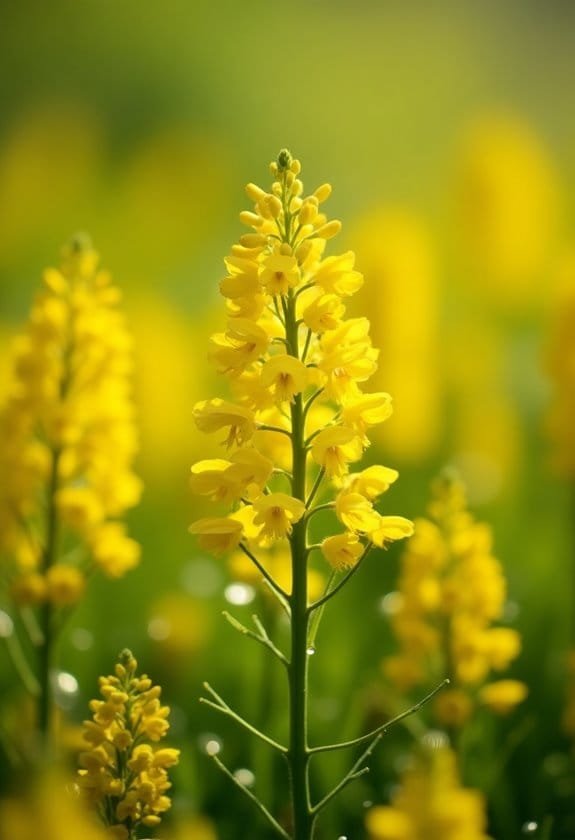
Yellow Loosestrife, scientifically known as Lysimachia vulgaris, is a striking perennial plant native to Eurasia, notable for its erect growth and vibrant spikes of cup-shaped yellow flowers that bloom from June to August. With heights reaching between 50 and 150 cm (20 to 59 inches), its opposite or whorled ovate leaves, adorned with translucent orange gland spots, provide essential identification features.
This resilient species flourishes in moist habitats, such as wetlands, marshes, and stream banks. While it serves important ecological functions – providing nectar for specialist solitary bees and offering habitat cover – it's also considered invasive in certain regions of North America.
This dual nature underscores the importance of careful management to prevent it from outcompeting native flora.
Historically, Lysimachia vulgaris has been utilized for its medicinal properties, showcasing potential anti-inflammatory and analgesic effects. Furthermore, it draws comparisons to its close relative, Lysimachia punctata, which also captivates gardeners with similar attributes.
The balance between its benefits and challenges remains pivotal for conservationists and horticulturists alike, emphasizing the necessity for ongoing awareness and management strategies.