*Matthiola incana*, known as hoary stock or gillyflower, showcases fragrant flowers that bloom in an array of colors, including white, pink, and purple. This perennial plant typically reaches heights between 12 and 36 inches, thriving in well-draining, slightly alkaline soils. It flourishes in full sun, requiring about 1 inch of water weekly while benefiting from regular deadheading to promote new blooms. Additionally, its sweet, clove-like aroma attracts essential pollinators, enhancing local biodiversity. However, gardeners should watch for pests like aphids and monitor for common diseases. Exploring its historical significance reveals further layers of this enchanting species.
Main Points
- *Matthiola incana*, commonly known as hoary stock, thrives in well-draining, fertile soil with slightly alkaline pH of 7.0 to 7.5.
- This perennial plant features fragrant flowers in various colors, such as white, pink, lavender, purple, and red, blooming from late spring to mid-summer.
- It attracts beneficial pollinators like bees and butterflies, contributing to increased biodiversity in garden environments.
- Regular care includes watering about 1 inch per week, spacing plants 12 to 18 inches apart, and applying fertilizer every 4-6 weeks.
- Historically known as gillyflower, it symbolizes deep affection and is valued for its long vase life and ornamental appeal.
Introduction
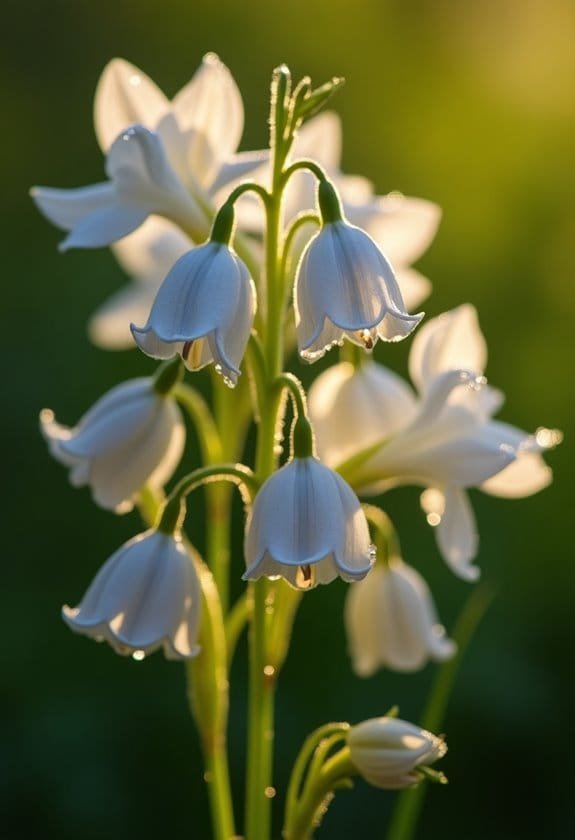
Matthiola incana, widely recognized as hoary stock, is an enchanting member of the Brassicaceae family that originates from the Mediterranean region.
This ornamental plant enchants gardeners with its fragrant blooms, which display a vibrant palette of colors and typically flourish from late spring to mid-summer.
Measuring between 12 to 36 inches in height, hoary stock not only enhances borders and cutting gardens but also invites essential pollinators, adding ecological value to any landscape.
Common Name
The fragrant blooms of Matthiola incana earned it several common names, with "stock" and "gillyflower" being the most recognized. These names reflect the plant's alluring nature and historical significance. The term "gillyflower" harks back to the Victorian era, where vibrant stock flowers symbolized deep affection when gifted, making them emblematic of enduring relationships.
Farmers and gardeners appreciate its ability to produce stunning fragrant flowers available in an array of colors, including white, pink, lavender, purple, and red. As a popular choice for floral arrangements, Matthiola incana's long vase life period enhances its desirability, allowing it to grace homes and events with beauty for extended periods.
Interestingly, the common name "hoary stock" arises from the plant's slightly fuzzy, grayish-green leaves, which lend a unique texture in garden settings, distinguishing it from other flowers easily.
The plant belongs to the Brassicaceae family, which includes important cultivated crops like cabbage and broccoli; however, its appeal lies in its ornamental value rather than culinary use.
Scientific Name
Known scientifically as Matthiola incana, this plant belongs to the Brassicaceae family, which includes several well-known cultivars such as cabbages and mustards. The species, commonly referred to as hoary stock, ten-week stock, or gillyflower, enjoys considerable popularity in garden cultivation and floral arrangements.
Native to the Mediterranean region, Matthiola incana flourishes in various temperate zones, demonstrating an impressive adaptability to different soil types.
Typically reaching a height of 12 to 36 inches, the plant displays a striking appearance, characterized by its grayish-green, fuzzy leaves that contribute to its ornamental value.
Beyond its physical allure, Matthiola incana is renowned for its fragrant flowers, which bloom in a range of vibrant colors that include white, pink, lavender, and purple. These blossoms not only enrich gardens but also enhance floral displays, offering diverse aesthetic options for gardeners and floral designers alike.
The successful cultivation of Matthiola incana reflects its robust nature, as it provides an enduring source of beauty and fragrance.
Consequently, understanding its scientific classification and native origins helps gardeners appreciate the significance of this remarkable plant in horticulture.
Overview
As spring approaches, gardeners often seek vibrant and fragrant flowers to enrich their outdoor spaces. Matthiola incana, commonly known as hoary stock, is a splendid choice. This lovely plant, belonging to the Brassicaceae family, thrives in the Mediterranean climate and can grow between 12 to 36 inches tall.
Its charming clusters of blooms are available in alluring colors such as white, pink, lavender, and purple. Blooming from late spring to mid-summer, Matthiola incana offers approximately four to six weeks of delightful fragrance, drawing in beneficial pollinators, including bees and butterflies.
Given its adaptability, it flourishes best in well-draining, fertile soil that maintains a slightly alkaline pH, with a preference for full sun, although it can tolerate light shade.
Low-maintenance and resilient, hoary stock can be directly sown outdoors after the last frost or started indoors six to eight weeks prior for those keen to enjoy earlier blossoms.
With its beautiful blooms and alluring scent, Matthiola incana not only enhances garden aesthetics but also contributes to the health of local ecosystems.
Key Features
Matthiola incana, or hoary stock, presents a striking growth size, typically reaching heights of 12 to 36 inches and widths of 12 to 18 inches.
Its lance-shaped, grayish-green leaves, which possess a subtle fuzziness, serve as a lovely backdrop for the vibrant clusters of fragrant flowers that bloom in a spectrum of colors from late spring to mid-summer.
As the blossoms emerge, their sweet, clove-like fragrance not only captivates the senses but also attracts essential pollinators, enhancing both the garden's beauty and ecological health.
Growth Size
Although this plant thrives in various conditions, it typically achieves heights between 12 to 36 inches (30 to 90 cm) and spreads about 12 to 18 inches (30 to 45 cm) wide.
Matthiola incana possesses a compact growth habit characterized by its dense structure, which supports the vibrant displays of blooms. These flowers, found in dazzling colors such as white, pink, lavender, purple, and red, flourish in dense clusters, adding to the plant's ornamental appeal.
The growth size of this species allows it to fit comfortably into both gardens and containers, making it a versatile choice for landscape design.
During the blooming period from late spring to mid-summer, stock flowers last approximately 4 to 6 weeks, occasionally extending into the fall, further enhancing the garden's aesthetic.
However, the robust growth structure might necessitate staking for the taller varieties to prevent wind damage, especially when burdened by their heavy blooms.
Accordingly, this plant not only enhances visual appeal with its vibrant colors and compact form but also requires thoughtful consideration in garden planning to maintain its exquisite beauty throughout the blooming season.
Appearance
With its compact growth and vibrant blooms, Matthiola incana, or hoary stock, makes a striking addition to any garden.
This delightful flowering stock typically reaches heights between 12 to 36 inches (30 to 90 cm), while its width spans 12 to 18 inches (30 to 45 cm), creating a lush focal point. The plant's lance-shaped, grayish-green leaves, slightly fuzzy in texture, contribute to its overall aesthetic appeal, offering a soft contrast to the vivid flowers.
In dense clusters, hoary stock produces showy flowers in an array of colors, including white, pink, lavender, purple, and red. These colorful displays not only enhance the visual dynamics of a garden but also attract pollinators, enriching the garden's ecosystem.
Perhaps the most enchanting feature is the sweet, spicy, clove-like fragrance each bloom emits. This delightful aroma elevates the garden experience, making hoary stock a sought-after choice for fragrant spaces and elegant floral arrangements.
The flowers typically last for about 4 to 6 weeks, mainly blooming from late spring to mid-summer.
Consequently, Matthiola incana serves as both a sensory delight and an aesthetic triumph in any horticultural endeavor.
Flowering Season
Typically, hoary stock flowers from late spring to mid-summer, showcasing its vibrant blooms for about 4 to 6 weeks. This flowering plant delights gardeners and passersby with fragrant clusters of single or double flowers, presenting a fascinating display of colorful blooms—ranging from crisp white and soft pink to rich lavender, purple, and even bold red.
The bloom time for Matthiola incana generally follows cooler weather patterns, as excessive heat—specifically temperatures exceeding 65°F—can greatly inhibit its flowering capabilities. For ideal growth, gardeners are encouraged to practice deadheading, which involves removing spent flowers during the growing season, promoting further blooming while preserving the plant's aesthetic appeal.
In certain favorable regions, where conditions remain suitable, hoary stock may surprise observers by extending its blooming period into the fall, providing an unexpected burst of late-season color.
This adaptability makes it an excellent choice for extending visual interest in gardens well beyond the typical summer flowering. Overall, Matthiola incana exemplifies resilience and beauty, enriching landscapes with its impressive floral display year after year.
Growing Requirements
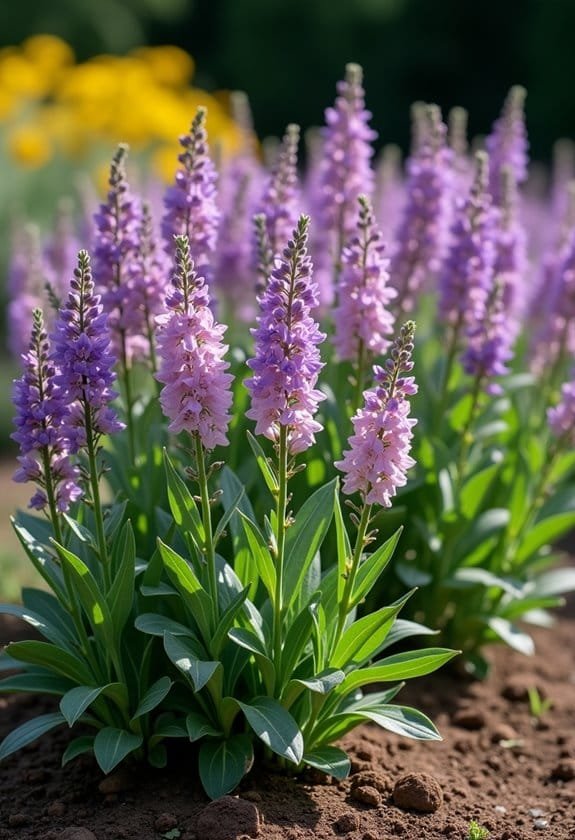
Matthiola incana flourishes under specific environmental conditions that greatly influence its growth.
It requires full sun exposure for at least six hours each day, well-draining fertile soil with an alkaline pH from 7.0 to 7.5, and consistent moisture without over-saturation, all contributing to its vibrant blooms.
Understanding these requirements not only guarantees the plant's health but also enhances its resilience against potential diseases and environmental stressors.
Light
Thriving in full sun, Matthiola incana requires a minimum of 6 hours of direct sunlight each day to achieve ideal growth and blooming. When grown in conditions where light shade is available, especially in hotter climates, it can tolerate 2-3 hours of indirect sunlight daily, a strategy that effectively mitigates heat stress. Such adaptation is beneficial for improving overall plant health and ensuring a more robust flower production.
Conversely, exposure to insufficient sunlight can lead to leggy plants, often with sparse flowering. This not only detracts from the aesthetic appeal of Matthiola incana but also diminishes its overall health.
Cooler ambient temperatures, ideally maintained below 65°F, further enhance bud setting and flower production, while excessively high heat can stifle blooming.
When selecting locations for planting, it's essential to prioritize areas that maximize sunlight exposure, taking into account local climatic variations that can affect performance.
Establishing the right balance between full sun and occasional light shade ultimately supports the plant's durability, ensuring each bloom remains vibrant and expressive, enhancing garden landscapes with their striking presence.
Soil
Successful blooming of Matthiola incana is closely linked to the quality of the soil in which it's planted. This plant prefers well-draining, fertile soil that maintains a slightly alkaline pH range of 7.0 to 7.5. This balance encourages ideal growth and showcases the plant's vibrant flowers.
While Matthiola incana can adapt to various soil types, it thrives particularly in rich, humusy soils that retain moisture without becoming overly saturated, thereby minimizing the risk of root rot.
To achieve ideal conditions, gardeners should consider amending acidic soils by incorporating lime to adjust the pH level appropriately. In addition, enriching the soil with organic matter—such as compost—enhances nutrient availability and moisture retention, critical for vigor.
To prevent overcrowding and competition for nutrients, spacing plants 12-18 inches (30-45 cm) apart is essential, allowing proper air circulation and facilitating growth.
Water
Adequate watering is fundamental for the healthy growth of Matthiola incana, especially during hot weather and dry spells. This plant thrives when its soil is consistently moist; generally, around 1 inch of water per week is recommended.
Focusing on the soil, rather than the foliage, helps minimize the risk of fungal diseases that could compromise its vigor. To support ideal moisture levels, it's essential to guarantee that the soil remains well-draining. Poor drainage can lead to waterlogging, which often results in root rot and other complications that could jeopardize plant health. White clover's natural nitrogen-fixing abilities can enhance soil health, benefiting the surrounding plants.
Signs of overwatering include yellowing leaves, which typically indicate excessive moisture or inadequate drainage. Watering early in the day allows any excess moisture on the leaves to evaporate quickly, further reducing disease risks. Additionally, ensuring that the soil remains well-oxygenated is crucial for overall plant health and vitality.
This practice not only promotes a healthy relationship between plant and environment but also encourages robust growth. By adhering to these guidelines, gardeners can facilitate a flourishing garden of Matthiola incana, transforming vibrant blooms into a breathtaking display.
Keeping these water requirements in mind is critical for achieving the best results.
Temperature
How does temperature influence the growth of Matthiola incana? This intriguing plant thrives best in cooler temperatures, ideally ranging from 60°F to 65°F, which provide ideal growth and flowering conditions. The favorable climate aligns perfectly with early spring gardens, allowing these plants to showcase their stunning blooms.
In fact, ideal bud setting occurs when temperatures dip below 60°F, yielding higher-quality flowers.
While Matthiola incana exhibits a rejuvenating resilience, consistent heat exposure beyond 80°F can greatly hinder its performance. Such warm conditions often shorten the flowering duration and diminish vigor.
In regions with heightened temperatures, providing partial shade becomes crucial, helping to shield the plants from excessive heat while maintaining their energy.
Regular monitoring of temperature is essential for successful cultivation, particularly in warm indoor settings, where prior exposure may interfere with germination and establishment during early spring.
By understanding and managing temperature conditions, gardeners can guarantee the robust health and vibrant blooming of Matthiola incana, transforming their gardens into lively displays of color and fragrance.
Therefore, managing temperature requirements becomes a foundational step in nurturing this beautiful plant.
Pollinator Criteria
Matthiola incana serves as a vibrant beacon for pollinators, specifically attracting an array of bees and butterflies with its fragrant, colorful blooms. These flowers employ a combination of visual allure and sweet aroma, enticing beneficial insects that play vital roles in ecosystems. Additionally, like Aubrieta, Matthiola incana blooms abundantly in spring, providing essential nectar stations for pollinators during this crucial period. Its ability to thrive in various light conditions contributes to its overall success as a plant that supports pollinator populations throughout the growing season.
Attracted Pollinators
Many garden enthusiasts appreciate the role of Matthiola incana, or hoary stock, in attracting valuable pollinators. This remarkable plant enchants bees and butterflies with its sweet, spicy fragrance, enhancing biodiversity within garden ecosystems. The flowers' vibrant colors—ranging from pure white to shades of pink, lavender, and deep purple—serve as visual lures, effectively enticing these essential pollinators. Furthermore, the presence of similar plants like Jacobs Ladder can support healthy pollinator populations by providing additional nectar sources through their rich blooms.
From late spring to mid-summer, hoary stock blooms continuously for approximately 4 to 6 weeks, providing an extended window of opportunity for pollinators to visit. The rich source of nectar within these flowers nourishes pollinator populations, supporting them during critical life stages and contributing to their overall health. Additionally, the presence of flora such as Myosotis sylvatica Wood Forget-Me-Not in nearby gardens can further enhance pollinator visitation rates by offering diverse food sources.
This symbiotic relationship benefits the garden, promoting a healthier ecosystem where biodiversity can flourish. Moreover, the presence of hoary stock not only elevates the aesthetic appeal of garden spaces but also guarantees that pollinators have access to essential food resources.
Pollination Method
Pollination in hoary stock is largely driven by bees and butterflies drawn to its enticing fragrance and colorful flowers. The sweet, spicy scent of Matthiola incana's blossoms captivates these crucial pollinators, encouraging them to visit during the plant's flourishing period from late spring to mid-summer.
While the flowers possess both male and female reproductive structures that allow for self-fertilization, cross-pollination greatly enhances genetic diversity, producing stronger seeds. During their 4 to 6 weeks of blooming, dense clusters of flowers create inviting landing spaces, providing ample food sources for pollinators.
This biodiversity fosters a symbiotic relationship; as bees and butterflies feed on nectar, they inadvertently transfer pollen between flowers. Ideal blooming typically occurs at around 65°F, which coincides with peak foraging behavior among local insect populations.
The interaction between hoary stock and its pollinators is essential not just for the plant's reproductive success, but also for maintaining the ecological balance. The vibrant beauty of Matthiola incana—both in its flowers and its role in the environment—underscores the importance of nurturing such pollinator-friendly gardens, benefiting both plants and pollinators alike.
Care & Maintenance
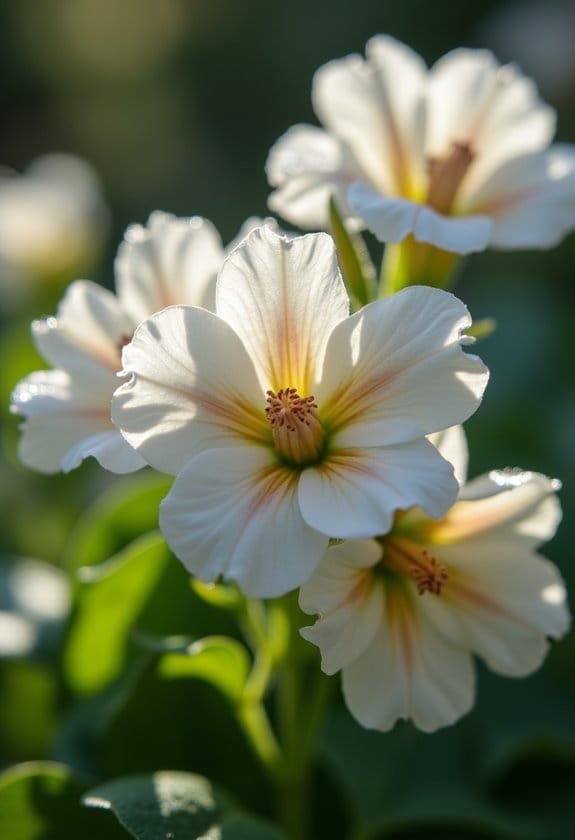
When caring for Matthiola incana, enthusiasts should focus on essential planting tips and ongoing maintenance strategies.
Proper watering techniques and regular fertilization every 4-6 weeks are vital for fostering resilient growth and vibrant blooms, while deadheading spent flowers not only enhances the plant's appearance but also encourages a continual display of blossoms.
Additionally, pairing this striking flower with compatible companions can promote a healthier garden ecosystem, enriching biodiversity and enhancing aesthetic appeal.
Planting Tips
For successful planting and care of Matthiola incana, it's essential to provide the right conditions for growth. This perennial thrives in full sun to light shade, necessitating at least six hours of sunlight daily to foster ideal blooming.
Selecting appropriate plant material is necessary; aim for well-draining, fertile soil with a slightly alkaline pH between 7.0 and 7.5. To adjust acidic soils, amending with lime is highly effective. Additionally, ensuring a diverse garden can enhance native plant biodiversity, which contributes positively to overall ecosystem health.
When planting flower seeds, spacing them adequately allows for air circulation and light penetration, which further enhances growth. Maintaining consistent soil moisture is important; water regularly, ensuring about one inch per week while avoiding overwatering, which can lead to detrimental root rot.
Fertilization should be carried out using a balanced, slow-release fertilizer every four to six weeks during the growing season. This practice supports healthy growth and promotes vibrant blooms, enriching the gardening experience.
Additionally, deadheading spent flowers throughout the blooming season encourages further blooms, ensuring that Matthiola incana remains visually appealing and productive. By establishing these foundational practices, gardeners can enjoy the beauty and resilience of this remarkable plant. Furthermore, incorporating plants such as Sea Kale, known for its coastal adaptability and pollinator attraction, can enhance the overall ecosystem health in the garden.
Ongoing Care
Matthiola incana's ongoing care is fundamental for maintaining its health and beauty throughout the growing season.
Regularly watering the plant helps maintain moist soil, yet it's essential to avoid overwatering, which can lead to detrimental problems like root rot and yellowing leaves.
During the flourishing months, fertilizing with a balanced, slow-release fertilizer every 4–6 weeks promotes robust growth and abundant blooms, enhancing its visual appeal.
Deadheading spent flowers promptly encourages the emergence of new blooms, sustaining the plant's overall vibrancy and aesthetic throughout the blooming period.
Some taller varieties may require staking to provide necessary support against wind, ensuring they maintain an upright posture, which is crucial for aesthetic symmetry.
Additionally, vigilance against pests such as aphids and managing diseases like powdery mildew is critical.
Not only should gardeners monitor for these issues, but ensuring adequate air circulation around the plants markedly reduces the risk of ailments.
Suggested Companions
Choosing the right companions for Matthiola incana can considerably enhance the garden's beauty and health. Pairing stock flowers with companion plants such as dianthus, larkspur, and snapdragons not only aligns with their shared light and soil requirements but also creates an artful tapestry reminiscent of Impressionist paintings, thanks to the vibrant hues of these annuals and biennials.
To guarantee peak growth, gardeners should space Matthiola incana 12 to 18 inches apart from its companions. This spacing promotes air circulation, minimizes competition for nutrients, and allows each plant to thrive.
Regularly practicing deadheading on stock flowers maintains their visual appeal by encouraging more blooms while simultaneously improving performance of nearby plants through reduced resource competition.
Moreover, the fragrant blooms of Matthiola incana attract beneficial pollinators, making it an excellent partner to other wildlife-friendly plants. This symbiotic relationship fosters a dynamic ecosystem within the garden, enhancing flora and fauna interactions.
Ultimately, the careful selection of companion plants not only enriches the aesthetic charm of the garden but also bolsters the health and vigor of Matthiola incana itself.
Common Issues
Matthiola incana, while beautiful and resilient, faces several common challenges that can hinder its growth and importance.
Pests such as aphids and flea beetles, along with diseases like fusarium wilt and gray mold, threaten the health of these plants, necessitating vigilant care and effective solutions.
Pests/Diseases
What common challenges do gardeners face with Matthiola incana? This delightful plant, often admired for its vibrant blooms, isn't immune to various pests and diseases.
Aphids frequently invade, sap the plant's energy, and create sticky residue, attracting secondary pests. Additionally, flea beetles and cabbage white caterpillars often rear their troublesome heads, making pest control essential through regular monitoring and intervention.
On the disease front, gray mold, or botrytis blight, flourishes in humid environments, particularly when air circulation is poor. This mold can decimate foliage and flowers alike.
Moreover, conditions like fusarium wilt and root rot emerge from overwatering or poorly draining soil, emphasizing the necessity for balanced moisture levels. Yellowing leaves often signify potential problems; poor air circulation or even verticillium wilt may be at fault.
To mitigate these challenges, gardeners may find organic treatments effective, such as neem oil, which serves as an eco-friendly option for managing pest populations.
Not only do these strategies enhance the health of Matthiola incana, but they also contribute to a more sustainable gardening practice, fostering resilience in the face of common horticultural hurdles.
Solutions
Gardeners' strategies to address the common issues faced by Matthiola incana can greatly improve plant health and resilience.
To effectively manage pests such as aphids, flea beetles, and cabbage white caterpillars, manual removal or the application of neem oil proves advantageous. These actions not only protect the plant but also harmonize the garden's ecosystem.
Preventing diseases like gray mold and fusarium wilt requires vigilance; improving air circulation and avoiding excessive watering plays an essential role. Careful observation of the leaves can reveal issues like yellowing, often indicative of poor air circulation or verticillium wilt.
Rotating plantings regularly mitigates these problems while promoting stronger growth over time.
In addition, regular deadheading—removing spent blooms—maintains the plant's aesthetic appeal and encourages the production of new blooms, though reblooming may be limited based on variety.
Gardeners should continually monitor for signs of distress, such as wilting or discoloration, allowing for timely intervention. This proactive approach is fundamental for preventing significant health issues and ensuring the liveliness of Matthiola incana in their gardens.
Consequently, diligent care fosters a thriving display of enchanting blooms throughout the growing season.
Summary
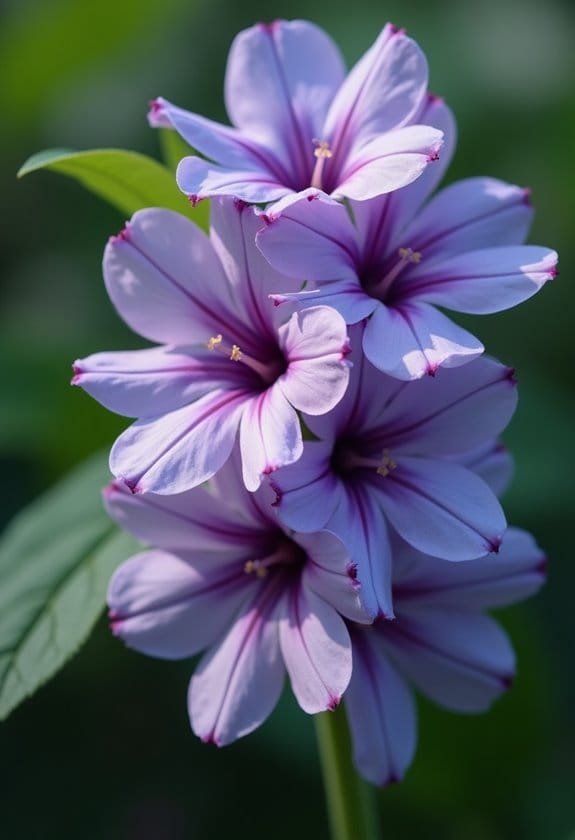
Known for its delightful fragrance and colorful blooms, Matthiola incana, or hoary stock, stands out in the world of ornamental plants. This herbaceous perennial, often characterized by its fragrant blooms in shades of white, pink, lavender, and purple, typically grows between 12 to 36 inches tall.
Originally native to the Mediterranean, it flourishes in well-draining, fertile soil with a slightly alkaline pH and thrives best in full sun to light shade.
Matthiola incana is primarily grown as annuals in most habitats, thanks to their ability to produce striking flowers from late spring to mid-summer. Gardeners commonly sow seeds directly outdoors following the last frost, or indoors six to eight weeks prior to planting.
The plant's sweet, spicy, clove-like fragrance not only enchants gardeners but also attracts beneficial pollinators like bees and butterflies, enhancing the garden's ecosystem.
Despite its need for regular watering, caution is necessary to prevent overwatering, which can lead to root rot.