The Myosotis species, often called Forget-Me-Nots, comprises over 510 varieties, renowned for their tiny, actinomorphic flowers, typically measuring 1 cm or less. These charming blooms emerge in spring, showcasing colors like blue, pink, and white while thriving in moist environments such as wetlands. Myosotis plants heighten biodiversity by supporting pollinators and providing nourishment for Lepidoptera larvae. Ideal growth occurs in well-drained soils with rich organic content, requiring consistent moisture but avoiding excess water to prevent root rot. These delicate flowers not only captivate garden enthusiasts but also symbolize cherished memories, tying nature's beauty to emotions. Exploring further reveals even more fascinating details.
Main Points
- Myosotis, commonly known as Forget-Me-Nots, includes over 510 species with notable cultural significance symbolizing cherished memories and connections.
- These flowers, typically blooming in spring, come in various colors including blue, pink, white, and yellow, attracting pollinators and supporting biodiversity.
- They thrive in moist, organically rich soils and prefer full sun to part shade, with ideal temperatures ranging from 60°F to 75°F.
- Myosotis species require regular deadheading to encourage new blooms and monitor moisture levels to prevent root rot and pest issues.
- Pollination is aided by their vibrant colors and nectar, enhancing overall ecosystem health and supporting early-season pollinator needs.
Introduction
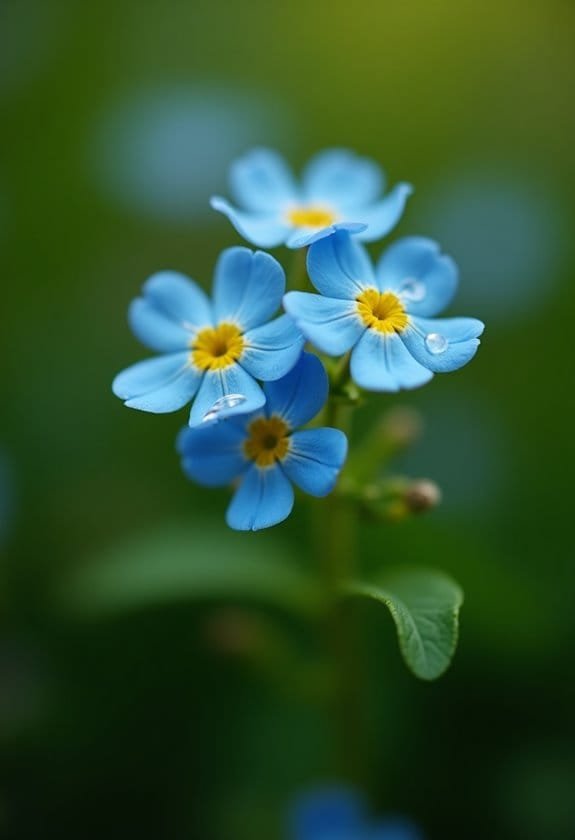
Commonly known as Forget-Me-Nots, the Myosotis genus encompasses over 510 recorded species, with 156 currently recognized.
These delicate herbaceous plants, characterized by their actinomorphic flowers measuring around 1 cm or less, mainly bloom in spring, showcasing a variety of colors including blue, pink, white, and yellow.
Thriving in moist environments like wetlands and riverbanks, Myosotis species not only play an essential ecological role but also carry significant cultural meanings, symbolizing remembrance and honoring those impacted by historical events and health issues.
Common Name
The enchanting Myosotis genus, known colloquially as "Forget-me-not," evokes deep sentiments of remembrance and love. This delicate flower, primarily characterized by its small, striking blue blossoms, symbolizes cherished memories and enduring bonds. The Forget-me-not, part of the Boraginaceae family, showcases a rich diversity with around 40 species native to New Zealand while several others have become naturalized across North America.
Their ecological significance extends beyond mere aesthetics; these flowers provide critical sustenance for larvae of various Lepidoptera species, underscoring their role in local ecosystems. In addition, Forget-me-nots attract a myriad of pollinators, such as bees and butterflies, enhancing their reproductive success and ensuring the continuity of their fascinating blooms.
Culturally, Forget-me-nots hold profound importance, often serving as emblems of remembrance across different contexts, from commemorating soldiers who've bravely served to raising awareness for Alzheimer's disease. Furthermore, the Wood Forget-Me-Not is a vital nectar source for pollinators(buzzing species), highlighting its contribution to biodiversity in garden ecosystems.
Consequently, the Myosotis species not only enriches gardens and landscapes but also fosters connections among individuals and communities, making them collectively significant to our shared human experience.
Scientific Name
Recognized scientifically as Myosotis, the Forget-me-not genus encompasses over 510 recorded species, with 156 currently accepted based on ongoing taxonomic studies. The foundation of Myosotis taxonomy began with Carl Linnaeus, who described Myosotis scorpioides as the type species. This classification acts as a reference point for identifying and categorizing other Forget-me-not species.
Diversity within Myosotis is remarkable, with accepted species including Myosotis abyssinica, Myosotis arvensis, and Myosotis sylvatica, each showcasing unique characteristics.
These plants typically feature small, actinomorphic flowers, with sizes measuring around 1 cm or less, and presenting a palette of colors—blue, pink, white, or yellow—that further illustrates their ecologically adaptive traits.
The role of genetic analysis in understanding Myosotis species can't be overstated. Such analysis reveals insights into the ecological relationships and diversification processes within the genus.
Overview
Throughout history, the Myosotis genus has captivated botanists and plant enthusiasts alike with its enchanting charm. Commonly known as Forget-Me-Not, this genus comprises over 510 recorded species, of which 156 are formally accepted. Varieties such as Myosotis sylvatica and Myosotis arvensis showcase the diversity of these herbaceous plants. Typically, the flowers measure up to 1 cm, featuring hues of blue, pink, white, or yellow, gracing moist environments like wetlands and riverbanks.
Myosotis species play a crucial role in horticulture, celebrated for their aesthetic appeal and adaptability; they flourish in well-drained, organically rich soils, preferring full sun to partial shade. Such conditions enable them to be cultivated effectively as annuals or biennials.
Ecologically, these plants offer essential support, serving as food sources for Lepidoptera larvae and attracting pollinators, which enhances their reproductive success and highlights their importance within local ecosystems. Additionally, Field Forget-Me-Not attracts a variety of pollinators during its extended blooming period, showcasing its ecological value.
Moreover, Myosotis holds profound cultural significance, symbolizing remembrance and everlasting love. Its presence is prominent in commemorative practices across various regions, particularly in honoring fallen soldiers and those affected by Alzheimer's disease, further enriching human connection to nature.
Key Features
Myosotis species exhibit a diverse range of growth sizes, typically reaching heights of 10 to 30 centimeters.
Their enchanting appearance, characterized by clusters of vivid blue, pink, and white flowers, often attracts garden enthusiasts and naturalists alike during the spring to early summer flowering season.
These plants not only showcase their vibrant lobed blooms but also present an intriguing set of adaptations that enhance their survival in various habitats.
Growth Size
Typically ranging from 6 inches to 1 foot in height, Myosotis species exhibit a compact growth size that varies based on both species and environmental conditions.
These charming plants often thrive in diverse habitats, leading to variations that can surprise even seasoned gardeners. The leaves, generally arranged alternately along the stem, are broadest above the middle, typically measuring between 1 to 3 inches long, and decrease in size as they ascend towards the flowering stalks.
In spring, Myosotis bursts into bloom, forming colonies that can blanket the ground with their vibrant colors. The plants spread effortlessly through rhizomes, allowing them to create dense patches that catch the eye and promote biodiversity.
The characteristic raceme structure enhances their appeal, featuring stalked flowers with a tubular shape consisting of five lobes and frequently displaying hues of blue, pink, white, or yellow.
This impressive growth size and the formation of colonies not only enrich the landscape but also offer habitats for beneficial insects, demonstrating the essential role Myosotis species play in their ecosystems, particularly during the lively spring months.
Appearance
With their striking appearance, Myosotis species, commonly known as Forget-Me-Nots, showcase clusters of small, tubular flowers that capture attention. Typically, these flowers measure about 1 cm (½ inch) across and present an enchanting array of colors, including blue, pink, white, or yellow, each adorned with a distinctive yellow collar at the throat.
Each flower features five spreading lobes that are densely covered in soft, spreading hairs, while the lower calyx hairs possess hooked tips, aiding in effective seed dispersal.
Complementing this floral display, the leaves of Myosotis are alternate and broadest above the middle, tapering to rounded tips, achieving lengths ranging from 1 to 3 inches. These leaves are characterized by a sparse to moderate covering of hairs along their surfaces.
The stems, often round or angled in cross-section, stand erect and can become widely branched. They originate from a base that frequently forms dense colonies through spreading rhizomes, giving rise to a dynamic growth pattern.
Finally, the fruit of Myosotis takes the form of a schizocarp, consisting of four dark, shiny, egg-shaped nutlets, each measuring less than 1/10 inch long, conveniently concealed within the persistent calyx.
Flowering Season
During the vibrant spring months, Forget-Me-Nots begin their spectacular display, peaking in April and May. These delightful blue flowers, measuring about 1 cm across, often showcase a range of colors, including pink, white, and yellow, frequently adorned with distinct yellow eyes.
The flowering season is essential, as it not only enhances the aesthetic appeal of gardens but also plays a crucial role in attracting a variety of pollinators, such as bees and butterflies, to these moist environments.
Forget-Me-Nots thrive in well-drained soils, enriched by consistent moisture, and prefer locations with full sun to part shade for maximum flowering. Their ecological significance can't be overstated; the blooms create inviting habitats for pollinators while establishing a network of life in their surroundings.
Additionally, many species within the Myosotis genus are self-seeding, contributing to the formation of persistent colonies that offer a continuous supply of blooms in subsequent years. This self-sustaining characteristic guarantees that the stunning displays of blue flowers remain a perennial favorite for both gardeners and wildlife alike.
As a result, the flowering season stands as a celebration of beauty, diversity, and ecological harmony.
Growing Requirements
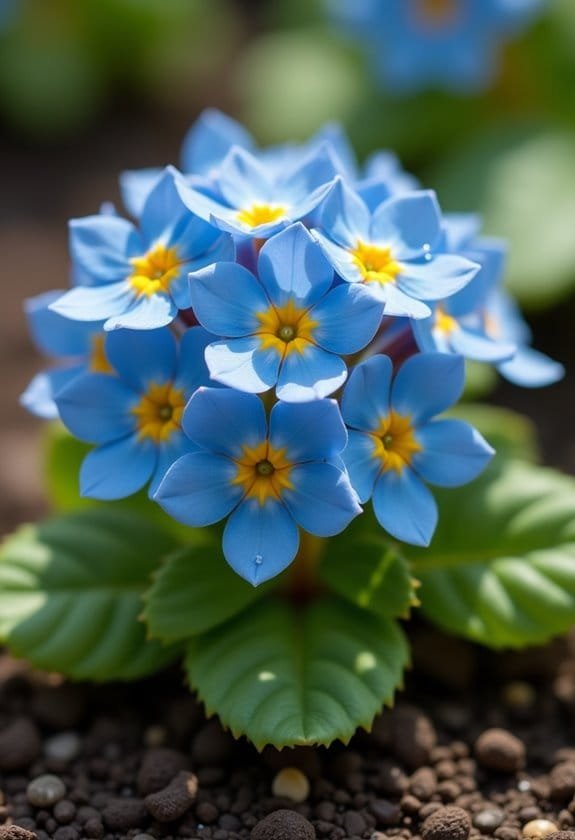
Myosotis species demand specific growing conditions to thrive effectively, particularly favoring full sun to part shade.
These plants require organically rich, moist but well-drained soils to achieve paramount health and robust growth, an essential foundation for their stunning blooms.
Additionally, understanding their water and temperature needs will further enhance successful cultivation, ensuring that gardeners can enjoy the vibrant beauty of these charming flowers in their landscapes.
Light
Light plays an essential role in the growth and flourishing of Myosotis species. These charming plants thrive in conditions ranging from full sun to part shade, demonstrating their adaptability to various garden settings. The right light exposure not only promotes lush foliage but also greatly enhances their flowering capacity in spring.
For ideal growth, Myosotis prefers organically rich, moist soils that allow for sufficient moisture levels while ensuring proper drainage. When planted in environments that provide adequate sunlight alongside these moisture requirements, these species can yield stunning displays of blooms, enchanting gardeners and pollinators alike.
Additionally, careful management of light conditions helps regulate self-seeding tendencies, which can be critical for creating a persistent and desired colony in one's garden. Interestingly, many Myosotis species exhibit a remarkable tolerance for shallow standing water, further showcasing their versatility.
These plants are resilient, but striking a balance between light exposure and moisture levels is essential for impressive flowering and overall health. By understanding and implementing these light requirements, gardeners can cultivate vibrant Myosotis species that bring beauty and longevity to their landscapes.
Soil
Proper soil conditions are essential for the thriving of Myosotis species. These charming plants prefer organically rich, moist, well-drained soils that promote ideal growth.
While they adapt well to various soil types, such as loam or clay-loam, the presence of adequate moisture considerably enhances their health. Myosotis can even tolerate shallow standing water, but gardeners must guarantee that the soil remains moist without becoming soggy, as overly wet conditions can lead to root rot, a nemesis of these delicate perennials.
Incorporating organic matter into the soil not only improves its structure but also elevates the nutrient content, providing necessary support for the vigorous development of Myosotis plants. Such organic amendments, like compost, enrich the soil and guarantee consistent moisture levels—key factors for their success.
Although they're often categorized as short-lived perennials, successful cultivation often sees them grown as annuals or biennials due to their preference for nutrient availability.
With thoughtful attention to soil characteristics, gardeners can create an environment where Myosotis can flourish, showcasing their vibrant hues and delicate beauty.
Water
Water is essential for the healthy growth of Myosotis species, as these plants thrive in consistently damp environments. They flourish in moist environments, often found in wetlands and along riverbanks, where the soil remains evenly moist. This consistent moisture is particularly important during spring, their flowering period, when growth accelerates.
Myosotis species prefer organically rich, well-drained soils and can withstand shallow standing water, making them ideal candidates for gardens designed with good moisture retention.
However, proper watering practices are critical. While these plants enjoy adequate soil moisture levels, excessive water can lead to overwatering, causing root rot and stunted growth. As a result, gardeners must strike a balance between under-watering—which can severely hinder the plants' health—and overwatering, which greatly risks their vitality.
Monitoring soil moisture is key; a simple finger test can determine if the soil feels too dry or remains excessively wet. By ensuring consistently damp soil without waterlogging, one can achieve healthy Myosotis cultivation, promoting lush foliage and vibrant blooms.
Recognizing these water requirements helps nurture these lovely yet delicate plants, ensuring they remain a delightful addition to any garden. Additionally, regular monitoring of soil moisture levels is essential, particularly during the hot months when the plants face increased stress.
Temperature
Temperatures play an essential role in the growth and flowering of Myosotis species. These delightful plants thrive best in temperate climates, ideally experiencing ideal growing temperatures between 60°F and 75°F (15°C to 24°C) during daylight hours.
The importance of cool nights can't be overstated, as temperatures dropping below 50°F (10°C) can greatly hinder their flowering potential, impacting the overall beauty of their blooms.
Moreover, Myosotis species prefer moist soils that promote healthy root development, flourishing in well-drained environments where excess heat doesn't lead to soil drought stress. Typically, the flowering season occurs in spring when favorable temperature ranges allow these plants to showcase their vivid colors.
Although some species can tolerate slightly warmer summer conditions, they remain sensitive to extreme heat, which can stunt their growth.
For gardeners living in warmer climates, it's wise to take into account cultivating Myosotis as annuals, especially since prolonged exposure to high temperatures can severely diminish their viability.
Cultivating these beautiful blooms requires an understanding of how temperature interacts with their growth and flowering dynamics, underscoring the delicate balance necessary for ideal health and aesthetics.
Pollinator Criteria
Myosotis species attract a range of pollinators, most prominently small butterflies and dance flies, due to their vibrant colors and accessible flower structures.
These plants rely on the specific pollination methods employed by these insects, which efficiently navigate the tubular shapes of the blooms, ensuring effective nectar transfer.
As a result, the interaction not only boosts the reproductive success of Myosotis but also enriches the genetic diversity within local ecosystems, fostering ecological resilience. In addition, their attraction to pollinators supports essential species like honey bees and bumblebees found in other flowering plants, promoting a balanced ecosystem.
Attracted Pollinators
A diverse array of pollinators, including small butterflies and bees, flock to Myosotis species, commonly known as Forget-me-nots. These vibrant blue flowers, blooming primarily in spring, offer a rich source of nectar that entices pollinators with its accessibility and unique aroma. The tubular shape of the flowers provides exceptional landing platforms, allowing these beneficial insects to easily extract nectar while transferring pollen, facilitating the plant's reproductive success. Additionally, Vipers Bugloss exhibits similar traits, attracting a wide range of pollinators, ensuring mutual benefits in thriving ecosystems.
Approximately 40 species of Myosotis are endemic to New Zealand, playing an essential role in local ecosystems. They support biodiversity by attracting both native and non-native pollinators, ensuring a healthy interaction among flora and fauna in their habitats. Notably, like Ladys bedstraw, Myosotis species also play a role in supporting local pollinator populations during their flowering periods.
The presence of Myosotis gardens fosters nearby wildlife habitats, enhancing the overall ecological landscape. As early-season pollinators emerge from winter dormancy, these flowering plants coincide perfectly with their foraging needs, providing vital sustenance that promotes survival.
In essence, Myosotis species not only beautify gardens and natural landscapes but also contribute notably to the delicate balance of ecosystems, underscoring the importance of preserving these charming plants to sustain pollinator populations and overall biodiversity.
Pollination Method
Pollination in Myosotis species hinges on the intricate relationship between the flowers and their pollinators. These delicate plants, commonly known as Forget-me-nots, flourish during spring, synchronizing their blooming period with the active seasons of numerous pollinators, particularly bees and various insects. The vibrant colors, mainly blue, pink, and white, serve as visual beacons, attracting these essential allies.
Myosotis flowers possess a nectar-rich structure that provides crucial sustenance for pollinators, strengthening the mutualistic bond critical for cross-pollination. This process not only facilitates the reproductive success of Myosotis but also bolsters overall biodiversity in their habitats. Additionally, like the Common Cowslip, Myosotis plants play a vital role in attracting various early-season pollinators, enhancing the ecological interactions in their environment.
When these flowers are present in gardens, they draw a variety of pollinators, leading to improved pollination outcomes not just for themselves, but for surrounding flora as well. The efficiency of cross-pollination enhances genetic diversity, ensuring a robust population that can adapt to environmental changes.
Consequently, promoting Myosotis species contributes markedly to ecosystem health, illustrating the profound interconnections within nature. Overall, Forget-me-nots encapsulate the beauty of plant-pollinator relationships, highlighting their essential role in sustaining both individual species and the broader ecological community.
Care & Maintenance
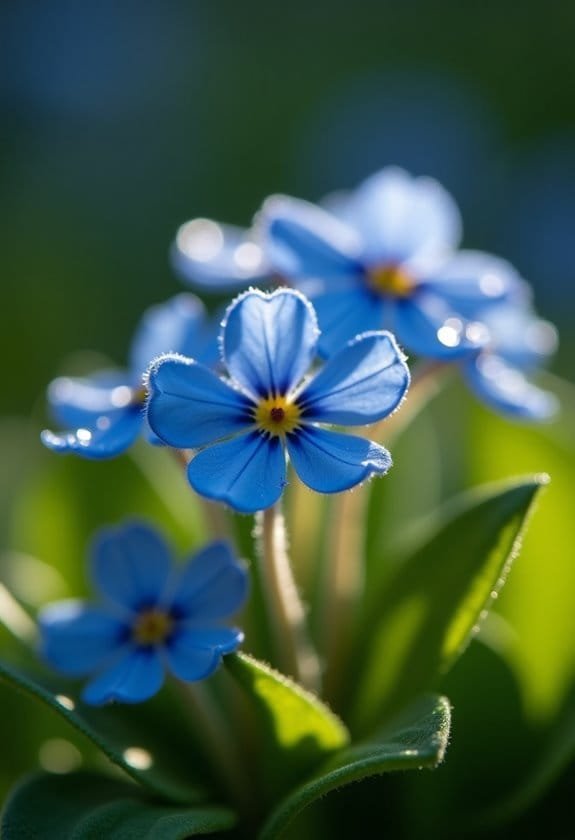
When cultivating Myosotis species, proper planting and ongoing care are essential for their vibrant growth.
These charming plants, which typically reach heights of 6 inches to 1 foot and spread 6 to 10 inches wide, require well-drained, organically rich soils with ideal exposure to light for flourishing blooms in spring.
Planting Tips
Planting Myosotis species in the right conditions sets the stage for vibrant blooms and healthy growth. For ideal growth, gardeners should choose organically rich, moist, well-drained soils, ideally basking in full sun to part shade. Starting seeds indoors 8-10 weeks before the last frost can be vital for encouraging spring flowering; an early start facilitates robust development and lush displays.
Additionally, while cultivating Myosotis as biennials often yields the most consistent results, they can be grown as short-lived perennials or annuals. A strategic approach involves deadheading spent flowers, which not only promotes additional blooms but also helps manage unwanted self-seeding and the spread of these charming plants in gardens.
However, it's important to monitor invasiveness, especially with certain Myosotis species like the Field Forget-me-not, notorious for establishing persistent colonies and being considered noxious weeds in some areas.
Ongoing Care
Maintaining the health and vibrancy of Myosotis species requires consistent attention and care. These charming plants thrive in consistently moist, organically rich soils, making regular watering essential, particularly during dry spells. Ensuring the soil remains adequately moist not only supports robust growth but also enhances the overall blooming experience, offering gardens a picturesque display.
To promote continuous blooming and prevent unwanted self-seeding, deadheading spent flowers is necessary. This practice effectively encourages new blooms while curbing the spread of Myosotis in garden spaces. When cultivating these plants as annuals, starting seeds indoors 8 to 10 weeks before the last frost can yield earlier blossoms, adding to their appeal.
For long-term success, it's important to maintain healthy plants by thinning out dense colonies every few years; this prevents overcrowding, allowing for improved airflow and better access to nutrients. Additionally, fertilizing with a balanced, water-soluble fertilizer once in spring can greatly bolster plant vigor, leading to more vibrant flowering.
Moreover, incorporating species such as Common Yarrow can provide additional pollinator attraction benefits in your garden, enhancing both biodiversity and overall ecosystem health.
With consistent care, gardeners can enjoy the enduring beauty of these lovely forget-me-nots throughout the growing season.
Suggested Companions
Choosing the right companions for Myosotis species can profoundly enhance their growth and blooming potential. These moisture-loving plants thrive alongside similar companions, such as Irises and Astilbes, which share compatible soil requirements.
To maintain the vibrant hue of Forget-Me-Nots, pairing them with contrasting flowering plants like Primroses or Hostas not only boosts visual appeal but also assists in soil moisture retention.
Regular maintenance, particularly deadheading Myosotis, can be seamlessly integrated with the pruning of neighboring perennials. This practice not only promotes a longer flowering period but also contributes considerably to overall garden aesthetics.
For those seeking a shield against wind, taller plants like Delphiniums or Peonies serve a dual purpose. They provide essential support for Myosotis, guaranteeing both stability and healthy growth.
It is vital to confirm that all chosen companions share similar conditions, as Myosotis prefers organically rich, well-drained soils, alongside ample sunlight or partial shade.
Common Issues
Common issues faced by Myosotis species include pest infestations and diseases that can threaten their well-being.
Particularly, certain Lepidoptera larvae pose a notable risk, as they feed on the foliage, potentially leading to diminished health and visual appeal.
Addressing these challenges requires understanding effective management strategies, ensuring that these delicate plants continue to thrive in various environments.
Pests/Diseases
Dealing with pests and diseases is essential for the health of Myosotis species, as they're particularly prone to various issues that can affect their growth and flowering. Among these, fungal diseases, like powdery mildew, thrive in humid conditions, manifesting as a white, powdery coating that hinders photosynthesis and overall vigor.
Additionally, aphids, while small, can cause substantial damage, distorting growth and potentially transmitting viruses that compromise plant health.
Excessive moisture often leads to leaf spot diseases, where discolored patches appear on leaves, weakening the plant and reducing aesthetic appeal. Furthermore, slugs and snails lurk in moist environments, voraciously feeding on tender foliage, which can lead to unsightly holes and stress on the Myosotis.
To mitigate these pests and diseases, it's imperative to monitor environmental conditions and implement control measures. Regularly checking for signs of distress in plants can help address issues early, as Creeping Buttercup's invasive nature can complicate garden health by outcompeting native species.
Properly spacing and pruning plants not only improves airflow but also reduces humidity around the foliage, ultimately lowering the likelihood of infections.
Solutions
Gardeners facing challenges with Myosotis species can implement several effective solutions to address common issues.
To begin with, understanding that certain Myosotis species, like the common forget-me-not (Myosotis sylvatica), can behave as invasive species necessitates diligent garden management practices.
To control self-seeding, which often leads to persistent colonies, gardeners should practice deadheading, removing spent flowers to curb unwanted propagation.
Proper identification of species is essential, especially since Myosotis arvensis and M. sylvatica can often be mistaken for one another.
Significantly, their hair characteristics on the calyxes help distinguish them, aiding in effective management.
Additionally, awareness of regulations regarding noxious weeds in regions like Minnesota underscores the importance of early intervention and monitoring.
Summary
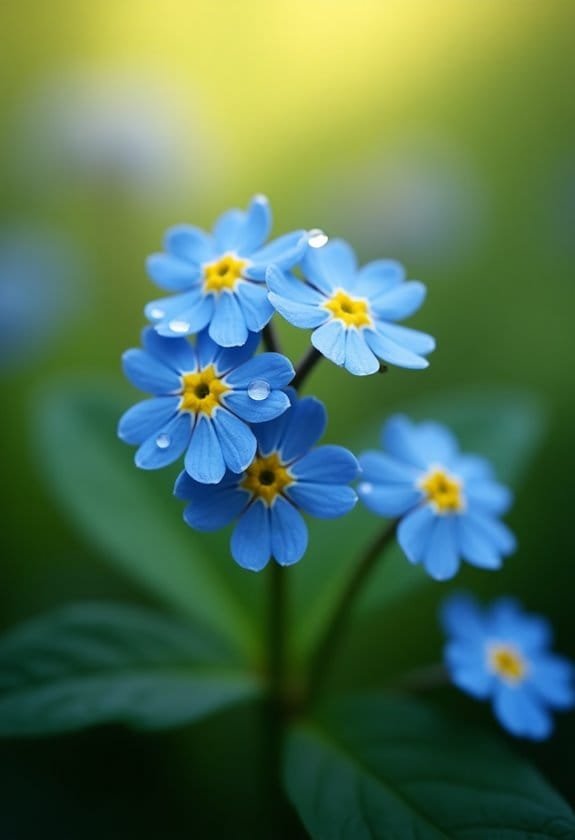
While often recognized for their charming appearance, the Myosotis genus, or forget-me-nots, encompasses over 510 species that primarily thrive in western Eurasia and New Zealand.
These herbaceous plants are adorned with delicate flowers, typically measuring 1 cm or less, showcasing hues of blue, pink, white, or yellow, often arranged in visually pleasing scorpioid cymes. Many Myosotis species flourish in moist, well-drained soils, making them a popular choice for ornamental gardening, especially during the vibrant spring season.
However, it's vital to note that certain species can become invasive outside their native ranges, posing risks to local ecosystems. Beyond their aesthetic value, forget-me-nots are emblematic, symbolizing remembrance and love, which resonates in various cultural contexts, including soldier memorials and Alzheimer's awareness campaigns.
Ecologically, Myosotis species play an important role by supporting various pollinators and serving as a food source for certain butterfly larvae, which underscores their significance within local ecosystems.
Accordingly, while they capture hearts with their beauty, forget-me-nots also sustain the biodiversity necessary for thriving, healthy environments, embodying a delicate balance between ornamental charm and ecological importance.