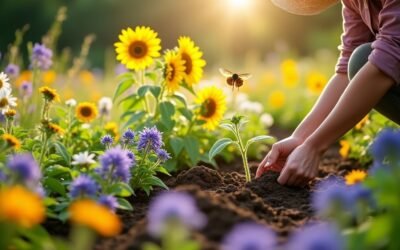
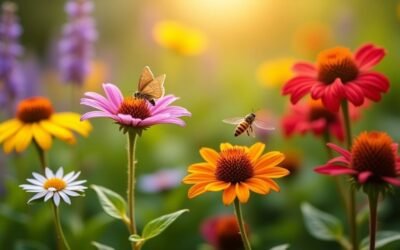
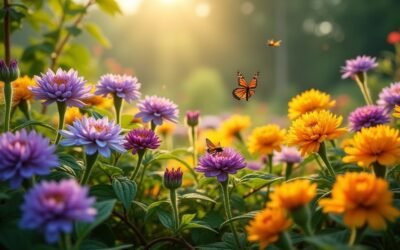
Olearia, known as Daisy Bush, is an enchanting genus within the Asteraceae family, featuring around 112 species endemic to Australia. With impressive heights of 4 to 6 feet, these plants exhibit leathery, gray-green leaves and delightful clusters of daisy-like flowers measuring 2 to 2.5 cm in diameter. Thriving in well-drained, fertile soils and full sunlight, Olearia showcases remarkable drought resistance once established. These plants not only beautify gardens but also attract essential pollinators like bees and butterflies, enhancing local biodiversity and ecological balance. By understanding their care and requirements, enthusiasts can appreciate their full potential in promoting vibrant ecosystems.
Main Points
- Olearia, or Daisy Bush, is a genus in the Asteraceae family with about 112 species endemic to Australia.
- The hybrid Olearia x scilloniensis is known for its ornamental flowers that attract bees and butterflies.
- Olearia thrives in well-drained, fertile soils and requires at least six hours of sunlight daily.
- It is drought-tolerant once established, making it suitable for low-water gardens or xeriscaping.
- Common issues include aphid infestations, necessitating monitoring and light pruning for healthy plant maintenance.
Introduction
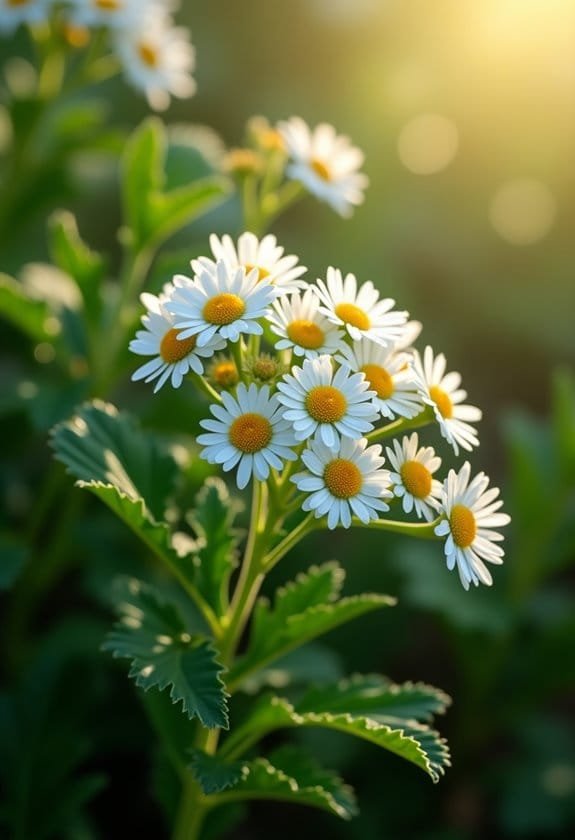
Olearia, commonly referred to as Daisy Bush, represents a diverse genus of shrubs within the Asteraceae family, boasting approximately 112 endemic species primarily found in Australia.
With their striking composite flower heads showcasing daisy-like blooms, often featuring delicate white or pale blue petals, these plants not only contribute aesthetically to their environments but also serve vital ecological functions.
Understanding the scientific classification and unique characteristics of Olearia species is essential for appreciating their role in local ecosystems, including pollinator attraction and erosion control.
Common Name
Known commonly as Daisy Bush, the Olearia genus encompasses a variety of flowering shrubs that showcase clusters of daisy-like blooms. With their characteristic clusters of both ray and disc florets, these plants are particularly admired for their attractive white and pale blue flowers, which often emerge in late spring to early summer.
The term "Daisy Bush" specifically refers to numerous Olearia species, each remarkable for unique qualities and aesthetic appeal.
One standout variety, Olearia x scilloniensis, is well-regarded for its evergreen foliage, thriving especially in coastal regions where it elevates local landscaping. This resilience makes the Daisy Bush a favorite choice for gardeners aiming to enhance both beauty and biodiversity in their plantscapes.
Significantly, regions like Australia and New Zealand cherish these shrubs for their ornamental value and their role in supporting local ecosystems.
Furthermore, some Olearia species emit a distinct vanilla fragrance, adding an enchanting sensory experience to gardens and natural habitats alike.
Collectively, the Daisy Bush serves not just as a visual delight but also as an essential component of the environments where it grows, fostering connection between flora and fauna.
Scientific Name
Typically classified within the Asteraceae family, the scientific name for the Daisy Bush is Olearia x scilloniensis, a hybrid that showcases the diverse characteristics of the genus. The term Olearia x signifies this hybrid nature, representing a combination of genetic traits from its parent species, which enriches its adaptability and visual appeal.
This remarkable genus, first described in 1802 by the botanist Conrad Moench, honors the 17th-century scholar Johann Gottfried Olearius.
The Asteraceae family, known for its composite flower heads, includes around 180 recognized species of Olearia, with approximately 112 of those endemic to Australia. This extensive variety illustrates the evolutionary versatility within the genus, which ranges from small shrubs to considerable tree-like forms.
As Olearia continues to evolve, ongoing taxonomic revisions reveal intricate adaptations and morphological changes that challenge botanists' understanding and classification methods.
These dynamic features emphasize the importance of Olearia x not merely as a stunning ornamental plant but also as a reflection of nature's complexity and the intricate web of life, prompting further exploration and appreciation among horticulturists and ecologists alike.
Overview
Olearia x scilloniensis, commonly called the Daisy Bush, stands out among the 180 recognized species within the Olearia genus for its unique hybrid characteristics and adaptability. This evergreen shrub, classified under the Asteraceae family, reaches a height of 4 to 6 feet and is distinguished by its compact growth habit.
Its small, thick, gray-green leaves serve as a striking backdrop for the clusters of white, daisy-like flowers that grace the plant from late spring to early summer, showcasing bright yellow centers.
Native to Australia, Olearia x scilloniensis plays a pivotal role in local ecosystems by enticing pollinators, such as bees and butterflies, with its abundant flowers.
Thriving in well-drained soils and basking in full sun, this New Zealand Daisy exhibits remarkable durability in coastal gardens and arid climates. It's significantly hardy in USDA zones 8 to 10.
Once established, Olearia x scilloniensis requires minimal maintenance and is celebrated for its drought tolerance.
Its contributions to supporting biodiversity in garden landscapes make it a valuable choice for horticulturists seeking to create vibrant, pollinator-friendly environments.
Key Features
Olearia species, often referred to as Daisy Bush, typically grow to a height of 4 to 6 feet, displaying a compact and well-structured form.
Their striking appearance is complemented by small, leathery gray-green leaves that emit a delightful vanilla scent, combined with clusters of white, daisy-like flowers that bloom vibrantly from late spring to early summer.
These characteristics not only enhance their ornamental value but also signify their adaptability to coastal environments, thriving in conditions that many other plants might find challenging.
Growth Size
Ranging from 4 to 6 feet in height and width, Olearia x scilloniensis makes for a compact evergreen shrub that fits nicely into various landscapes.
This robust species showcases an impressive growth rate, potentially expanding to a maximum of 6 x 7 feet within a mere five years when nurtured under ideal conditions. The leaves, small and wavy-edged, display an attractive mix of gray-green and dark green tones, contributing greatly to the shrub's overall aesthetic.
Flowering typically occurs during late spring through summer, presenting enchanting clusters of white, daisy-like flowers adorned with cheerful yellow centers.
These flower heads not only enhance the ornamental appeal of the shrub but also attract pollinators, enriching the garden's ecosystem. Once established, Olearia x scilloniensis becomes markedly drought-tolerant, making it an excellent candidate for low-water gardens and coastal environments.
Its ability to thrive in challenging conditions underscores its resilience, mirroring nature's steadfast spirit.
Appearance
This compact evergreen shrub boasts striking features that make it a standout in any garden. Olearia x scilloniensis, commonly known as Daisy Bush, typically reaches heights and widths of 4 to 6 feet, forming a dense, bushy structure. Its small, wavy-edged leaves display an alluring gray-green hue. Narrow and leathery, the leaves possess a dark green upper surface that contrasts with a nearly white underside, creating a visually dynamic effect.
One of the most enchanting aspects of this shrub is its distinct vanilla scent, which the leaves release, enriching the sensory experience of any garden space.
Regarding flowering, Daisy Bush produces clusters of charming white daisies, each decorated with vibrant yellow centers. These flowers bloom from late spring to early summer, creating a delightful spectacle that enhances the overall garden aesthetic.
Upon maturation, the blooms yield fluffy tan seed heads, adding an additional layer of interest. The combination of eye-catching foliage and delightful flowering showcases the Daisy Bush as an exceptional choice for gardeners seeking to elevate their landscape's visual and aromatic appeal.
Flowering Season
The flowering season of Olearia x scilloniensis is a vibrant highlight in any garden, typically occurring from late spring to early summer. During this period, the plant showcases clusters of white, daisy-like flowers, each adorned with striking yellow centers. This enchanting display not only adds beauty but also invites various pollinators, including bees and butterflies, crucial for maintaining local biodiversity.
The coloration of the blooms can range from pure white to delicate pale blue, enhancing their visual appeal and making them a focal point among flowering plants. Each flower, measuring about 2 to 2.5 centimeters in diameter, contributes to a spectacle that draws the eye and enriches the garden's ecosystem.
Once established, Olearia x scilloniensis flourishes with minimal maintenance, often thriving in full sun. This resilience allows gardeners to enjoy its beauty without excessive care.
In addition, this species' ability to attract beneficial insects promotes a healthy garden environment. The flowering period not only enhances aesthetic enjoyment but also plays a crucial role in supporting pollinator populations, underscoring the interconnectedness of life within the garden ecosystem.
Growing Requirements
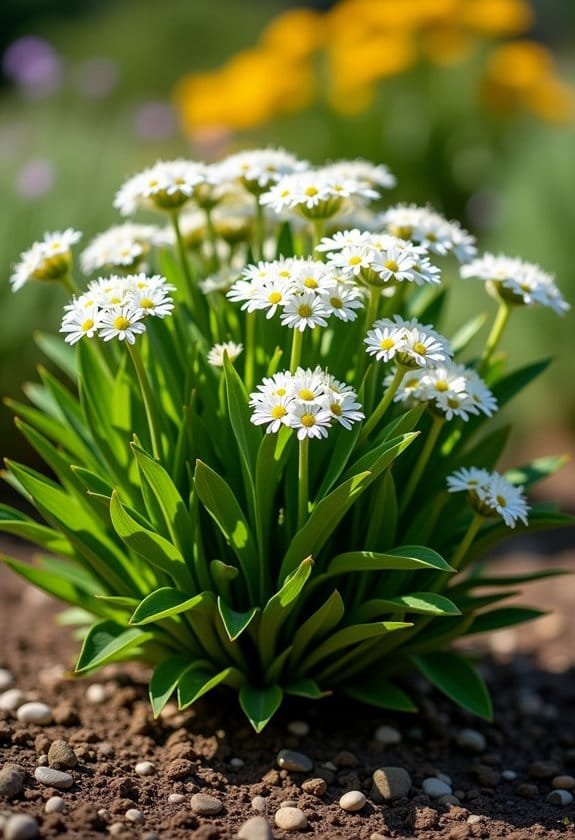
Olearia species require specific conditions to flourish, with well-drained, fertile soils and full sun exposure acting as essential elements for their growth and vibrant flowering.
These hardy plants thrive in USDA zones 8-10, where they can withstand a variety of climates, particularly benefiting from coastal influences.
With established trees showcasing remarkable drought tolerance, their watering needs become minimal during dry periods, allowing for a resilient and sustainable gardening choice.
Light
Ideal growth and flowering of Olearia x scilloniensis depend on abundant sunlight, with at least six hours of direct exposure daily. This species thrives in full sun, making it particularly suitable for coastal gardens where exposure to salt-laden air enhances its resilience. Under bright light conditions, the plant not only flourishes but also develops an impressive structure, as adequate sunlight fosters robust growth and vibrant blooms.
When deprived of light, Olearia x scilloniensis struggles noticeably; prolonged periods of shade can lead to diminished flowering and a leggy growth habit, reflecting the crucial role of light in its lifecycle.
The plant exhibits considerable drought tolerance once well-established, yet regular exposure to full sun can greatly fortify its overall health and energy. Moreover, consistent sunlight helps optimize nutrient absorption which is essential for thriving in its preferred well-drained, fertile soils.
Therefore, gardeners should prioritize sun exposure in their planting schemes, as this requirement is fundamental for revealing the full potential of the Daisy Bush, providing stunning displays of flowers and robust vegetative growth.
It's the symbiotic relationship between sunlight and plant health that reigns supreme.
Soil
Achieving vibrant growth in Olearia x scilloniensis hinges on its preference for fertile, well-drained soils. The plant thrives in environments where proper soil drainage is essential, as stagnant water can hinder its health.
Notably, Olearia x scilloniensis also shows adaptability, often flourishing in poor to average soil conditions, allowing it to thrive even in less nutrient-rich environments. This shrub is especially well-suited to shallow chalk soils, a common characteristic of coastal regions, making it an excellent choice for such landscapes.
While Olearia x scilloniensis can tolerate drought once established, it's vital to maintain adequate soil moisture during the initial growth phase; this step guarantees its successful cultivation and promotes robust development.
Moreover, the species exhibits remarkable resilience, effectively adapting to a variety of soil types, including salt-laden soils that are frequently encountered along coastlines. Such flexibility not only enhances its survival prospects but also allows it to contribute to the coastal ecosystem.
Therefore, when planting Olearia x scilloniensis, gardeners should prioritize quality soil characteristics, guaranteeing a healthy foundation for this beautiful shrub.
Water
Proper water management plays an essential role in the growth of Olearia x scilloniensis. During the initial establishment phase, this shrub requires regular watering, particularly during dry spells, to develop robust root systems. This significant attention to watering lays the foundation for the plant's endurance.
Once established, however, Olearia x scilloniensis displays impressive drought tolerance, requiring no additional watering, which makes it an excellent choice for xeriscaping and water-wise gardening.
The soil must be well-drained, as overly saturated conditions can lead to root rot, thereby underscoring the importance of proper drainage. Gardeners should monitor soil moisture levels, especially during extreme heat, to make certain that the plant thrives without being overwatered.
Furthermore, the evergreen nature of Olearia x scilloniensis allows it to withstand the rigors of summer drought, demonstrating its adaptability to low-water environments.
For ideal health, it's advisable to prune after flowering. This maintenance task not only encourages new growth but also helps the plant conserve water by balancing its foliage with its root system.
With thoughtful care, this resilient shrub can flourish in various conditions.
Temperature
While Olearia x scilloniensis thrives in USDA zones 8-10, where temperatures range from 10º to 5ºF, it demonstrates remarkable adaptability to varying climate conditions. This evergreen shrub exhibits formidable resilience, allowing it to withstand occasional cold snaps without sustaining damage.
Once established, Olearia species become completely drought-tolerant during the summer months, enabling them to endure lower temperatures while requiring minimal moisture.
Moreover, Olearia x scilloniensis flourishes in full sunlight, necessitating ample light exposure to thrive in warmer climates, which accentuates its growth potential. The plant also favors well-drained soils adept at managing various temperature extremes.
These ideal soil conditions not only maintain moisture but also prevent the detrimental effects of waterlogging, ensuring optimum performance throughout seasonal shifts.
Understanding its temperature tolerance and environmental needs equips gardeners with the essential knowledge to cultivate this durable perennial successfully. By selecting an appropriate growing location with sufficient sun exposure and well-draining soil, enthusiasts can revel in the vibrant blooms and lush foliage of this hardy evergreen shrub, enhancing their gardens with ornamental aesthetics while promoting biodiversity.
Pollinator Criteria
Olearia species serve as a critical resource for various pollinators, especially bees and butterflies, lured by the vibrant clusters of their daisy-like flowers.
These plants employ a highly efficient pollination method, where their composite flowers provide both nectar and pollen, essential for the sustainment of pollinator populations during their peak activity season. Additionally, the dense flower clusters of Olearia species not only attract these pollinators but also contribute to local ecosystem biodiversity, similar to the role played by selfheal's pollinator strategy. Moreover, like Common Yarrow, they attract a wide range of beneficial pollinating insects, further enhancing the overall health of the ecosystem.
Attracted Pollinators
Attracting a diverse array of pollinators, Olearia species, especially Olearia x scilloniensis, play a significant role in supporting local ecosystems. These plants bloom in late spring to early summer, showcasing abundant clusters of white daisy-like flowers that draw in essential pollinators such as bees and butterflies.
The enchanting fragrance of the flowers, reminiscent of vanilla, further entices these foragers, creating a sensory feast that delights both fauna and flora alike. The composite nature of Olearia's flowers offers a rich source of nectar and pollen, providing crucial sustenance for pollinators throughout their life cycles.
By supporting such varied species, Olearia enhances biodiversity in the surrounding garden and beyond. Their native distribution in coastal environments guarantees that these plants remain well adapted to the specific needs of local pollinators, harmonizing beautifully with the existing ecosystem.
Interestingly, Olearia species can benefit from the presence of nitrogen-fixing capabilities in other plants, such as white clover, which enriches the soil and supports overall plant health.
In fostering these essential relationships, Olearia x scilloniensis not only beautifies its surroundings but also enhances the overall health of the environment. Consequently, encouraging a flourishing population of pollinators contributes greatly to the resilience and importance of local habitats, establishing a vibrant, interconnected web of life.
Pollination Method
The pollination method of Olearia species involves a symbiotic relationship with various insects, mainly bees and butterflies. These insects are drawn to the striking composite flower head, which features both ray and disc florets, creating a visually enchanting display that enthralls pollinators.
Flowering typically occurs from late spring to summer, aligning perfectly with the heightened activity of these essential pollinators. Olearia species, such as Olearia x scilloniensis, produce nectar-rich flowers that serve as indispensable food sources, supporting local ecosystems and promoting biodiversity. The intricate structure of the composite flower head not only attracts insects but also facilitates their movement between florets, guaranteeing effective pollen transfer. This process is fundamental for the production of seeds and fruits, essential for the survival and propagation of Olearia in its native habitats, similar to the pollination role of Creeping Cinquefoil in supporting local ecosystems. In addition to their role in pollination, these plants can also contribute to soil stabilization, enhancing the ecosystem much like other pioneer species such as Rosebay Willowherb.
The relationship between Olearia species and their pollinators exemplifies nature's interconnectedness; as the flowers thrive, so do the species that rely on them for nourishment. Consequently, preserving these plants is important, not only for their beauty but also for the ecological balance they help maintain. Active engagement of pollinators guarantees the continuation of these vibrant daisy bushes in our landscapes.
Care & Maintenance
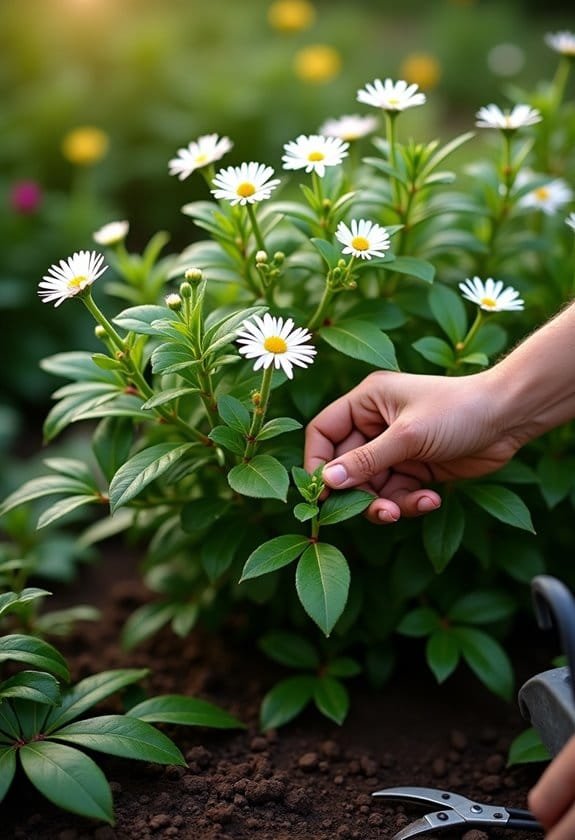
Caring for Olearia species, particularly Olearia x scilloniensis, involves understanding its needs for peak growth and health.
Once established in well-drained soil and under full sun, the plant demands minimal maintenance; however, regular watering during dry periods guarantees its vigorous drought tolerance.
Pruning after flowering not only maintains its shape but also stimulates robust growth, enhancing its overall aesthetic in any garden landscape.
Planting Tips
When planting Olearia x scilloniensis, choose a location with well-drained soil and plenty of sunlight to confirm the best growth. This hardy shrub flourishes in full sun, making it an excellent addition to coastal gardens where it can withstand salty air. Additionally, it's beneficial to incorporate native pollinator-friendly plants, which can support vital insect populations in your garden.
To secure the success of these garden plants, it's essential to maintain regular watering, particularly during dry spells. Although once established, this species exhibits remarkable drought tolerance, requiring minimal attention.
Prior to planting, consider enriching the soil with a balanced fertilizer in the growing season, which can enhance flowering and promote overall vigor. While Olearia x scilloniensis typically doesn't demand pruning, light shaping after flowering can help maintain the desired size and form, adding aesthetic appeal to your landscape.
Despite being relatively pest-resistant, vigilance against aphids is wise. Monitoring for these insects will help sustain the plant's health, allowing it to thrive in its new environment. Additionally, incorporating plants like Goat Willow can attract beneficial pollinators and enhance the ecosystem in your garden.
With the right planting techniques, Olearia x scilloniensis can transform a garden space into a vibrant tapestry of foliage and blooms, bringing both beauty and resilience.
Ongoing Care
Olearia x scilloniensis thrives with attentive ongoing care, ensuring its vibrant foliage and blooms continue to enhance the garden. This adaptable shrub, categorized among herbaceous plants, requires monitoring, particularly for aphids, despite its general pest resistance. Early detection is essential, as it can prevent potential infestations that threaten its beauty.
After the flowering period, light pruning can help maintain the desired shape of the plant while promoting healthy growth without compromising its natural form. Newly planted Olearia should receive watering during dry spells until fully established; conversely, once rooted, it exhibits complete drought tolerance and demands no further watering.
Fertilizing with a balanced fertilizer in spring enhances flowering and overall health, particularly in nutrient-poor soils where the plant may struggle. Additionally, it's imperative to periodically check soil drainage, as Olearia flourishes in well-drained conditions and can withstand poor to average soil quality.
Through these measures, gardeners can cultivate a resilient and striking feature for their landscapes, ensuring that Olearia x scilloniensis remains a robust participant among the garden's diverse ensemble of herbaceous companions.
Suggested Companions
Selecting the right companions for Olearia x scilloniensis can greatly enhance both the aesthetic appeal and ecological health of your garden. Thriving in full sun and well-drained soil, this Daisy Bush marries beautifully with Lavandula (lavender) and Rosmarinus officinalis (rosemary), promoting a vibrant and harmonious landscape. *Rosemary's ability to attract essential pollinators enriches the surrounding ecosystem and can enhance the benefits of companion planting.*
By including drought-tolerant species such as Salvia and ornamental grasses from similar plant families, gardeners can create a low-maintenance environment that highlights the evergreen structure of Olearia.
For an even more engaging display, combining Olearia with flowering perennials like Echinacea and Gaura extends the blooming season, inviting pollinators like bees and butterflies. These connections foster a pollinator-friendly ecosystem, vital for supporting local biodiversity.
However, vigilance is significant; monitoring companion plants for pests, particularly aphids, mitigates potential threats to both Olearia and its surrounding flora.
Additionally, incorporating plants like Great Willowherb can provide a colorful backdrop, though it's essential to manage its aggressive growth to prevent it from outcompeting more delicate companions.
Emphasizing visual and ecological synergy, the thoughtful selection of companion plants brings a multifaceted approach to gardening, ensuring that aesthetic appeal and environmental integrity coexist.
Hence, cultivating a diverse planting scheme not only elevates garden beauty but also contributes to a sustainable life cycle for both native species and cultivated plants.
Common Issues
Olearia species, while generally resilient, do encounter specific challenges that require attention.
Aphids can occasionally infest their leaves, and improper watering may lead to conditions like root rot, particularly in soils lacking adequate drainage.
Furthermore, gardeners must be vigilant about the potential for invasive growth in non-native regions and the risk of fungal diseases, like powdery mildew, which thrives in humid environments; consequently, maintaining good air circulation is essential for healthy plants.
Pests/Diseases
When cultivating Olearia species, especially the Daisy Bush, gardeners benefit from their general resistance to pests and diseases, resulting in low-maintenance care.
First described for their hardiness, these plants can face occasional challenges, primarily from pests like aphids. While infestations are rare, diligent monitoring is essential for early intervention, ensuring plant health and vigor.
Fungal issues, although uncommon, may arise under conditions of over-watering—highlighting the critical importance of well-drained soil to prevent root rot.
Excess humidity can lead to leaf spot diseases, so spacing plants adequately promotes air circulation, effectively reducing the likelihood of such complications.
Gardeners should regularly inspect their Olearia for signs of distress—wilting, discoloration, or stunted growth can signal underlying problems.
By attending to these issues promptly, they can maintain the beauty and resilience of their Daisy Bush.
Employing these proactive strategies not only enriches the garden environment but also enhances the overall health of these intriguing shrubs. Consequently, despite their general robustness, a watchful eye remains an invaluable tool for any gardener caring for Olearia species in their landscape.
Solutions
Gardening enthusiasts can adopt several effective solutions to address common issues with Olearia species, ensuring healthy growth and vibrant blooms. While these plants are primarily pest-resistant, occasional aphid infestations may arise; regular monitoring and timely intervention can mitigate any foliage damage.
If growth appears poor or wilting occurs, inspecting the soil for drainage issues or signs of overwatering is essential.
To maintain the plant's compact form and encourage the brilliant display of ray florets, light pruning after blooming is advisable, though excessive cutting should be avoided to prevent stress on the plant.
During prolonged dry spells, especially in the establishment phase, gardeners should be vigilant about watering; drought stress can manifest as unsightly leaf curling or browning, affecting the plant's overall health.
In non-native regions, Olearia species may become invasive, outcompeting local flora. It's imperative to monitor their spread and manage growth to safeguard native ecosystems. Additionally, providing ample sunlight exposure is crucial for promoting healthy growth and flourishing blooms in these plants.
Summary
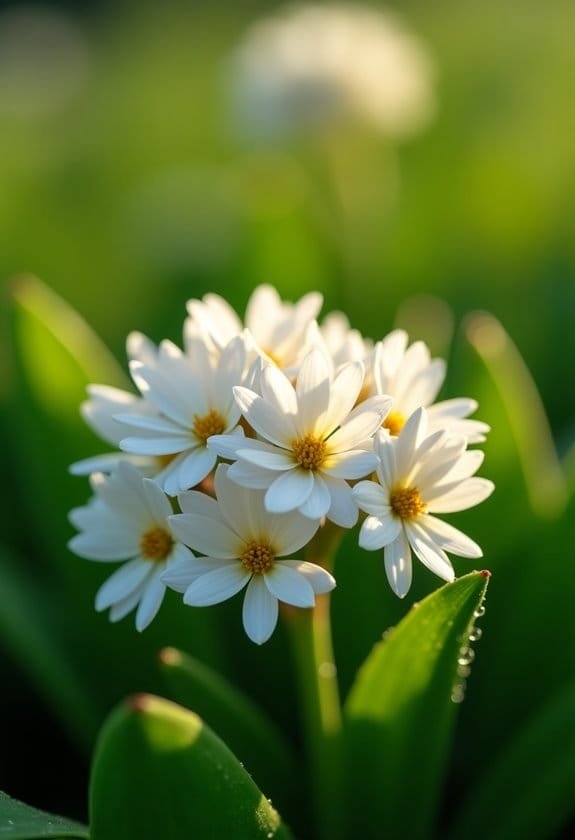
The Daisy Bush, scientifically known as Olearia x scilloniensis, is a hybrid shrub belonging to the Asteraceae family. This remarkable plant showcases compact growth, evergreen foliage, and striking clusters of white daisy-like flowers, which bloom in late spring to summer.
Each flower features florets enclosed within delicate, whorled petals, creating a visual spectacle that attracts pollinators while enhancing local biodiversity.
Thriving in well-drained soils and requiring full sun, the Daisy Bush demonstrates remarkable resilience, adapting effectively to USDA zones 8-10. Its narrow, leathery, gray-green leaves lend a unique texture, while fluffy tan seed heads emerge post-flowering, supporting the ecosystem further.
This species not only proves to be deer-resistant but also requires minimal maintenance once established, with little to no pest or disease concerns.
Native to Australia, Olearia x scilloniensis plays an important role in coastal environments by contributing to soil stabilization and erosion control.
With its hardiness and beauty, the Daisy Bush serves as an ideal choice for coastal gardens and drought-prone areas, making it an invaluable addition to sustainable landscapes.