Papaver rhoeas, known as the Corn Poppy or Flanders Poppy, captures attention with its vivid red petals and striking black spots. This biennial plant, reaching heights of 30 to 90 cm and blooming primarily from late spring to early summer, flourishes in disturbed soils across Europe, Asia, and Africa. Reproducing via self-sowing and vibrant pollinator-attracting flowers, it supports local biodiversity. Preferring well-drained, nutrient-rich soil, consistent moisture, and full sunlight, this resilient species faces issues like pests and root rot. Commonly associated with remembrance, Papaver rhoeas embodies a profound connection to history, suggesting there's much more to explore.
Main Points
- Papaver rhoeas, commonly known as Corn Poppy or Flanders Poppy, features vivid red blooms with black spots and symbolizes remembrance of fallen soldiers.
- This plant thrives in full sunlight, prefers well-drained, nutrient-rich soil, and grows best at temperatures between 60°F – 70°F.
- Capable of self-sowing, Corn Poppy produces approximately 3,200,000 seeds per pound, promoting future growth and natural expansion.
- Pollinators like bees and butterflies are attracted to its vibrant flowers, aiding in cross-pollination and enhancing genetic diversity.
- Medicinally, it contains mild sedative alkaloids, but it is also prone to pests, root rot, and common fungal diseases.
Introduction
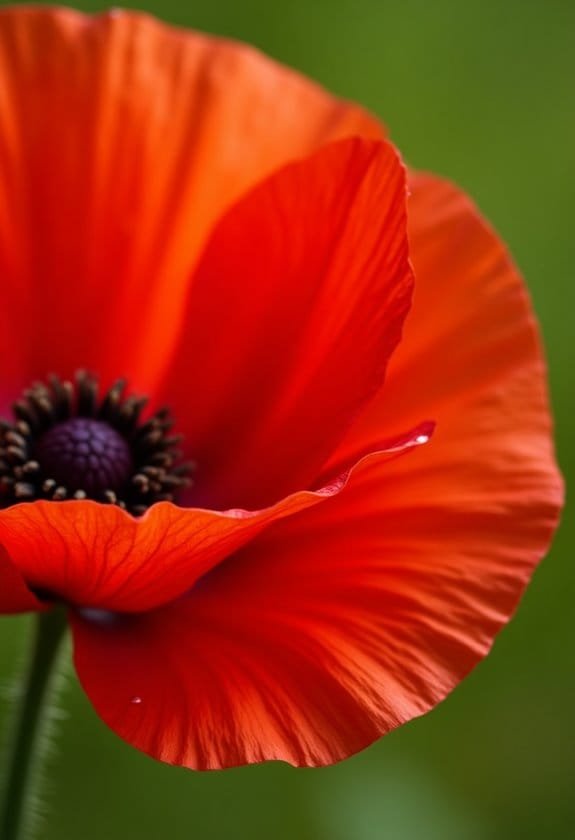
Papaver rhoeas, often recognized as the Corn Poppy or Flanders Poppy, stands out in the botanical world with its striking red blooms and distinctive black marks.
This annual herb, typically reaching heights of up to 70 cm, thrives in varied environments, particularly in disturbed soils across Europe, Asia, and parts of Africa.
Known not only for its visual allure but also for its cultural symbolism and medicinal properties, Papaver rhoeas offers an intriguing glimpse into the intersection of nature and human history.
Common Name
Vibrant beauty and historical significance intertwine in the common names of Papaver rhoeas, which include Flanders Poppy, Corn Poppy, Field Poppy, and Red Poppy. Each of these names reflects the flower's notable presence across various landscapes and cultures, resonating with deep meanings.
The designation "Corn Poppy" stems from its abundance in European grain fields, flourishing in disturbed soils, effortlessly brightening agricultural vistas.
Conversely, "Flanders Poppy" carries profound historical weight, especially linked to the somber memory of World War I. Its striking crimson blossoms blanketed the battlefields of Flanders, symbolizing remembrance for countless fallen soldiers and serving as a poignant reminder of the consequences of war.
Typically measuring between 3-6 inches in diameter, the vivid red poppy features a distinctive purplish-black center that enhances its allure.
As an emblem of both remembrance and natural beauty, Papaver rhoeas' common names encapsulate its diverse roles in human culture. Whether gracing wildflower meadows or cultivated gardens, this species continues to capture imaginations, marking the cyclical relationship between humankind and nature throughout history.
Scientific Name
The scientific name of the Common Poppy, Papaver rhoeas, plays an essential role in understanding its identity within the plant kingdom. This name effectively distinguishes it from other species and provides insight into its taxonomy.
Papaver is derived from Latin, meaning poppy, while rhoeas translates to "corn poppy" in Greek, emphasizing its historical connection to agricultural landscapes. Formally described by the esteemed botanist Carl Linnaeus in 1753, Papaver rhoeas has since become well-regarded for its striking crimson blooms that grace fields from late spring to early summer.
The classification of Papaver rhoeas within the family Papaveraceae highlights its botanical relatives, which share similar structures and properties. In addition, this species is known by several synonyms, including Papaver commutatum and Papaver insignitum, showcasing the evolving nature of its nomenclature as it relates to morphological variations and historical naming conventions.
Each term offers a glimpse into the diverse linguistic and ecological contexts that surround the common poppy. Understanding its scientific classification not only aids botanists in conservation efforts but also enriches the appreciation for its beauty and ecological importance in natural and cultivated habitats.
Overview
An iconic symbol of beauty and resilience, the Common Poppy, or Papaver rhoeas, enchants viewers with its striking red flowers. This erect annual herb typically flourishes from late spring to early summer, showcasing large, showy blooms ranging from 5 to 10 centimeters in diameter. Each flower, adorned with distinctive black spots at the base of its petals, draws attention in both natural and cultivated landscapes.
Native to Europe and temperate Asia, the Common Poppy thrives in disturbed soils, often populating fields, roadsides, and grasslands. Its vibrant presence plays a crucial role in promoting biodiversity, as it attracts various pollinators and provides habitat for many species.
Historically, these beautiful red flowers have taken on a poignant significance, serving as a symbol of remembrance for World War I, famously immortalized in the poem "In Flanders Fields" by John McCrae.
Additionally, Papaver rhoeas possesses medicinal properties, containing alkaloids such as rhoeadine, which has mild sedative effects. This herbaceous plant, with its intertwined cultural and ecological importance, illustrates the delicate relationship between nature and humanity's shared history.
Key Features
Papaver rhoeas, or the Corn Poppy, stands out with its impressive growth size, reaching heights of up to 70 cm (28 inches).
The plant showcases large, vibrant red flowers, usually measuring between 5-10 cm (2-4 inches) in diameter, adorned with distinct black spots that add to its allure.
Its flowering season, spanning from late spring to early autumn, presents a remarkable burst of color in agricultural landscapes, delighting observers with blooms that, though fleeting, leave a lasting impression.
Growth Size
Reaching heights of 30 to 90 cm (about 1 to 3 feet), common poppies display a bushy, erect growth habit that allows them to form clumps spreading up to 90 cm wide. This remarkable growth size makes Papaver rhoeas a striking flowering plant in any garden or naturalized area, enchanting observers with its dynamic presence.
The poppy's structure efficiently supports its vibrant blooms, which primarily emerge from late spring to early summer, occasionally extending into autumn when conditions are favorable.
Each flowering plant exhibits approximately 5 to 10 cm (2 to 4 inches) wide flowers, characterized by four crinkly, red petals accentuated with a potential black spot at the base. This vivid coloration and unique shape serve to attract pollinators, playing a pivotal role in its reproduction.
Additionally, common poppies possess an impressive ability to self-sow, with seeds averaging around 3,200,000 per pound, ensuring their persistence in suitable environments. Consequently, the growth size and vigorous nature of these plants not only contribute to their aesthetic appeal but also underscore their ecological importance.
Their clump-forming behavior enhances visual impact in landscapes, creating vivid displays that resonate with the beauty of nature. Furthermore, the common poppy's role in pollinator support underscores its significance within local ecosystems.
Appearance
Characterized by their enchanting visual features, Corn Poppies catch the eye with large, showy flowers that typically bloom in vivid red, accented by a distinctive black spot at the base of each petal. The flowers, measuring between 5 to 10 cm in diameter, exhibit a crinkled texture, adding an element of whimsy to their robust appearance.
As the blooms unfurl, they present a striking contrast against the plant's hairy stems, which can grow up to 70 cm tall, supporting these magnificent floral displays.
While the foliage tends to be somewhat inconspicuous, allowing the vibrant blooms to take center stage, it plays a vital role in the plant's overall health. The delicate petals flutter gently in the breeze, creating a visually enchanting scene in meadows and gardens alike.
Following the flowering period, Corn Poppies develop hairless, obovoid capsules that conceal seeds, showcasing nature's ingenious way of perpetuating life. The stigma, significantly at least as wide as these capsules, highlights the floral complexity.
Together, these features make Papaver rhoeas not just a flower, but a celebrated symbol of beauty in the natural world.
Flowering Season
The flowering season of Corn Poppies unfolds from late spring to early summer, typically ranging from May to October. During this bloom time, the flowering plant presents a breathtaking spectacle of vibrant red flowers, often displaying a remarkable size of 5–10 cm across. Each bloom showcases a striking black spot at the base of its delicate petals, creating a mesmerizing contrast that enchants observers.
Despite their beauty, individual flowers possess a fleeting existence, lasting only a day; however, the corn poppy compensates for this brief lifespan with a prolific number of blooms throughout the growing season. Additionally, some cultivars may produce flowers into autumn, extending their blooming period into the cooler months.
Gardeners can enhance this floral display by practicing deadheading, which encourages the emergence of additional blooms. This simple act not only beautifies landscapes but also fosters a continuous supply of the striking flowers.
Consequently, from May to October, and even beyond for certain varieties, the common poppy stands as a symbol of nature's resilience and cyclical beauty, enchanting hearts and enriching gardens with both color and significance.
Growing Requirements
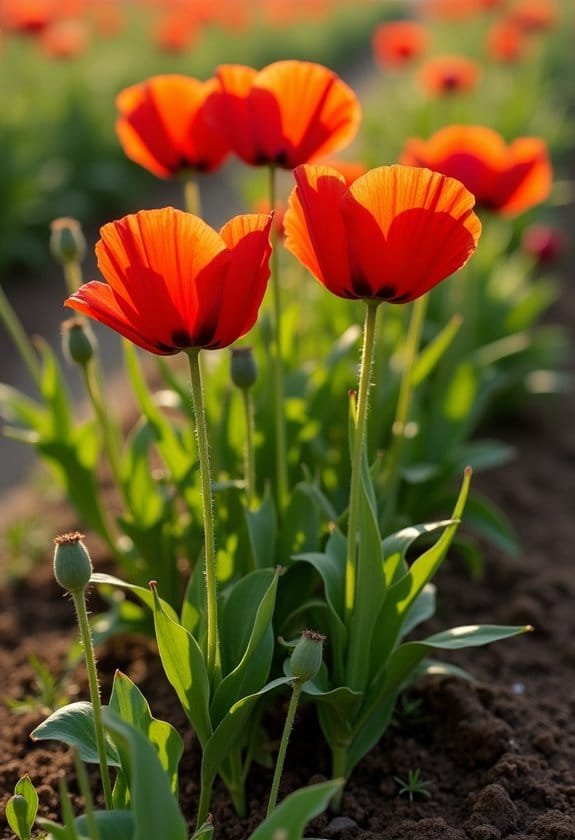
Papaver rhoeas flourishes best under the warm embrace of full sunlight and in well-drained, fertile soil that offers essential nutrients.
Seeds should be sown on the surface and require temperatures between 60°F and 70°F to germinate effectively within 10 to 30 days.
Consistent watering is vital during arid periods, while the plant's resilient nature allows it to thrive, often self-sowing in disturbed environments like fields and roadsides.
Light
When it comes to growing requirements, providing ample sunlight is key for success with Papaver rhoeas. This annual herbaceous species flourishes best under full sun, meaning it needs at least six hours of direct sunlight every day. Without this essential light, the plant struggles to reach its full potential, often resulting in spindly growth and fewer blooms.
While Papaver rhoeas can tolerate partial shade, its flowering and overall vigor thrive considerably when bathed in sunshine. Light exposure plays a vital role in the development of its large, showy flowers, which are often the main attraction in garden landscapes.
When deprived of sufficient light, these vibrant blooms can become sparse, diminishing the plant's aesthetic appeal. Additionally, ideal germination occurs when soil temperatures hover between 60°F and 70°F, aligning harmoniously with the spring and fall sowing periods that maximize light availability.
Gardeners aiming for a stunning display of Papaver rhoeas should make sure their planting location receives plenty of sunlight and warmth. By doing so, they'll promote vigorous plant health and achieve the breathtaking floral spectacle that this species is renowned for.
Soil
Achieving ideal growth with Papaver rhoeas hinges on using well-drained soil rich in organic matter. This species flourishes best in fertile soils that support its vibrant growth, allowing for ample root expansion and nutrient absorption. Notably, Common Yarrow is also resilient in poor soils, showcasing the versatility of certain perennial herbs.
Remarkably, Papaver rhoeas exhibits a notable adaptability; it thrives particularly well in disturbed soils, which are often found in agricultural fields and along roadsides where the earth has been turned over or compacted.
For best germination, maintaining a soil temperature between 60°F and 70°F is essential. Such conditions enable the seeds to sprout within 10 to 30 days, depending on environmental factors. Additionally, full sun is recommended for many flowering plants, including the poppy, to ensure they reach their full potential.
The presence of organic matter not only enhances soil fertility but also improves moisture retention, allowing the plant to withstand dry spells without additional fertilization. Regular watering is vital during these times, as sufficient soil moisture supports robust growth and vibrant flowering.
Gardeners should remember that while Papaver rhoeas can flourish in less-than-perfect conditions, enriching the soil further encourages a more vivid display of its iconic red blooms. Additionally, well-drained soils are crucial to prevent issues like root rot, which can hinder the health of the plant.
With attention to these soil requirements, the common poppy can become an enchanting feature in any landscape.
Water
Consistently providing adequate water is fundamental for the healthy growth of Papaver rhoeas. This species thrives in well-drained soil, where proper moisture management greatly impacts its development.
During germination, consistent moisture enhances the success rates of seedlings, which typically emerge within 10 to 30 days under ideal conditions. However, once established, these poppies exhibit a commendable resilience to drought, allowing them to withstand periods when the soil is disturbed or dry.
Regular watering becomes important during extended dry spells, ensuring the plants develop robustly and flower prolifically. It's essential to strike a balance, as overwatering can lead to detrimental root rot, compromising the overall health of these striking blooms.
The poppy's preference for full sunlight further amplifies the importance of adequate water, as exposure to direct light without sufficient moisture can stress the plant.
Ultimately, maintaining ideal moisture levels not only enhances immediate growth but also promotes longevity and vibrancy. Therefore, gardeners should remain vigilant, recognizing the delicate equilibrium between hydration and drainage necessary for nurturing healthy Papaver rhoeas in their gardens.
Temperature
Adequate moisture management complements the temperature requirements for thriving Papaver rhoeas. This resilient plant flourishes in USDA Zones 3-9 and showcases impressive adaptability to various climates. Its ideal soil temperature for germination lies between 60°F and 70°F (15°C to 21°C), a range that promotes rapid growth and vigorous development. With favorable conditions, seeds typically germinate within 10 to 30 days.
In northern regions, early spring is the prime time for sowing seeds, as temperatures begin to rise and sunlight becomes more abundant. This timing guarantees the seedlings receive sufficient warmth, encouraging healthy establishment.
Conversely, in southern areas, late fall sowing is preferred due to milder winters that allow seeds to germinate during the cooler months.
Papaver rhoeas demonstrates remarkable hardiness, tolerating temperatures as low as 10°F (−12°C). However, while it can survive such conditions, consistent exposure to extreme cold may hinder its growth potential.
As a result, maintaining suitable temperature conditions alongside adequate moisture guarantees that this vibrant flower can thrive, showcasing its brilliant red blooms and contributing to the ecological tapestry of its environment.
To conclude, understanding and managing these temperature requirements can lead to successful cultivation.
Pollinator Criteria
Papaver rhoeas draws a diverse array of pollinators, such as bees and butterflies, which play a vital role in its reproductive success.
These vibrant red blooms not only signal the availability of nectar but also rely on the swift visits of these insects, given the fleeting nature of each flower's one-day lifespan.
Attracted Pollinators
How do the vibrant blooms of the Corn Poppy attract a diverse array of pollinators? Papaver rhoeas, with its striking red flowers, serves as a visual beacon for bees and butterflies, ushering them towards its nectar-rich blossoms.
The Corn Poppy flowers bloom from late spring to early summer, aligning perfectly with the peak activity period of these essential pollinators. The flower structure, featuring four crinkly petals, offers easy access for pollinators aiming to gather pollen. This accessibility not only facilitates efficient feeding but also enhances the likelihood of successful pollen transfer between plants, imperative for reproduction.
Providing essential nutrients, the pollen serves not only as food for visiting insects but also contributes to their roles in the ecosystem. Additionally, the vivid coloration of the poppy is more than just beauty; it's a strategic signal indicating the availability of nectar. This mutual relationship is beneficial for both the Corn Poppy and its pollinators. Furthermore, the Corn Poppy's ability to attract various beneficial insects aids in maintaining ecosystem health, promoting biodiversity in its native habitats. Additionally, the effective pollinator attraction is supported by the poppy's extended flowering period, which aligns with the life cycles of many pollinators.
Pollination Method
What makes the pollination method of the Corn Poppy so effective? The vibrant flowers of Papaver rhoeas, commonly known as the red corn poppy, create an alluring combination of bright colors and nectar, enticing various pollinators such as bees and butterflies. These insects greatly enhance the pollination process, which is essential for fruitful seed production.
Flowering occurs from late spring to early summer, a period marked by increased pollinator activity, particularly during sunny days, when the flowers are fully open and accessible.
Though the red corn poppy can self-pollinate, its reliance on cross-pollination helps promote genetic diversity among the seeds, which is significant for the overall resilience of the species. The large, showy blooms serve as both visual and olfactory signals, attracting diurnal pollinators by providing an easily navigable food source.
Each pollinator visit contributes to an intricate dance of ecology, where pollen transfer guarantees the continuation of the poppy lineage. Consequently, the effective pollination method employed by this plant not only increases reproductive success but also underscores the essential interdependence between flowering plants and their insect allies, creating a dynamic ecosystem.
Care & Maintenance
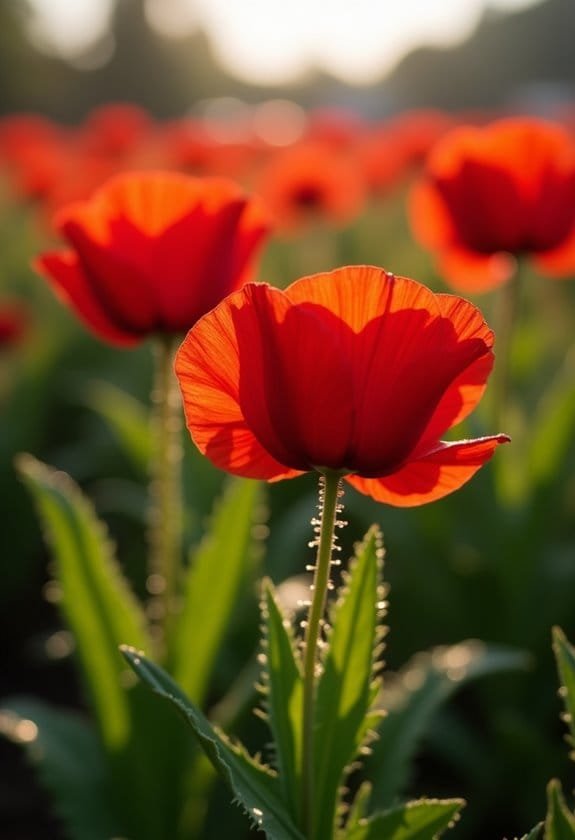
In caring for Papaver rhoeas, it's essential to take into account favorable planting conditions, ongoing maintenance, and suitable companion species.
These poppies thrive in full sun and well-drained, nutrient-poor soils, ensuring their vibrant blooms receive the light they need to flourish.
Planting Tips
To grow vibrant Papaver rhoeas, gardeners should focus on several key planting tips. First, it's important to plant the seeds in well-drained soil, ideally during early spring or late fall. This timing guarantees peak germination and blooming results.
As light plays an important role in germination, sow the seeds on the surface of the soil; they require exposure to light to sprout effectively. Maintaining soil temperatures between 60°F and 70°F will yield the best outcomes for red poppies.
Regular watering is crucial for these plants, especially during dry spells, but gardeners must be careful to avoid waterlogging, which can jeopardize root development. Additionally, choosing a sunny planting location is critical, as Papaver rhoeas thrives in full sun exposure. A spot that receives at least six hours of sunlight daily will promote vigorous growth and enhance the plant's vibrancy.
Finally, deadheading spent blooms can greatly extend the visual appeal of a garden, encouraging the production of additional flowers throughout the season. By following these planting tips, gardeners can cultivate a stunning display of red poppies, enriching their outdoor spaces with color and life.
Ongoing Care
After successfully planting Papaver rhoeas, ongoing care will assure these stunning flowers flourish throughout the growing season. Providing full sun and well-drained soil is vital, as these conditions promote peak growth.
To extend the beauty of these poppies, gardeners should regularly deadhead spent flowers, which encourages new blooms and enhances seed production throughout late spring and early summer.
During dry spells, consistent watering is significant. This hydration supports vibrant blooms and overall plant health, allowing the poppies to express their best colors and forms. Adequate moisture guarantees that growth remains vigorous, particularly in drier climates or prolonged heat.
Notably, Papaver rhoeas is known for its self-sowing abilities; therefore, allowing some flowers to go to seed at the end of the blooming period can enrich subsequent displays in future growing seasons.
Fertilization is generally unnecessary, as red poppies thrive in fertile soils, making them a low-maintenance addition to any garden.
Ultimately, with simple yet effective ongoing care practices, gardeners can enjoy the stunning spectacle of Papaver rhoeas, highlighting their vibrant hues and delicate forms in gardens for years to come.
Suggested Companions
While selecting companions for Papaver rhoeas, gardeners should focus on plants that share similar sunlight and watering needs, maximizing the visual impact of their garden. This herbaceous species of flowering delights in full sun and well-drained soil, making it vital to choose other vibrant annuals and perennials strategically.
Great companions include cosmos, snapdragons, and calendula, which not only complement the poppy's bright hues but also contribute to a striking visual display. Introducing Calendula officinalis, known for its anti-inflammatory properties, can enhance both the aesthetics and health of the garden. Additionally, pairing with Japanese Anemone will provide late-season beauty as the poppies begin to fade.
Incorporating self-sowing species like larkspur can enhance the garden's longevity, filling in gaps left by fading poppy blooms during mid-summer.
However, gardeners must avoid aggressive species that could overshadow or compete with Papaver rhoeas, because such rivalry can hinder both growth and flowering potential.
Regularly deadheading both the poppies and their companions is significant, since this practice encourages prolonged blooming throughout the hot summer months.
Common Issues
Common Poppy, or Papaver rhoeas, faces a range of issues that can considerably impact its health and growth.
From aphid infestations to overwatering, the challenges of pest management and proper irrigation are essential for maintaining vibrant blooms.
Additionally, addressing fungal diseases like powdery mildew and effectively managing weeds can simplify cultivation and guarantee that these striking plants thrive in the garden.
Pests/Diseases
Pests and diseases can seriously impact the health of Papaver rhoeas, leading to issues such as stunted growth and decreased blooming. Common pests include aphids, tiny sap-sucking insects that can cause leaf curling, ultimately hindering photosynthesis and wellbeing. Control measures like insecticidal soap or neem oil can effectively reduce aphid populations, ensuring healthier plants.
Additionally, fungal diseases such as powdery mildew thrive in humid conditions, potentially covering foliage with a white, powdery film that obstructs light and air. Adequate air circulation and proper plant spacing can mitigate this risk, promoting robust growth.
Furthermore, root rot poses a significant threat, typically resulting from overly wet or poorly drained soil. Wilting and, in severe cases, death often follow, making well-draining soil essential for healthy poppy cultivation.
Slugs and snails further complicate matters, as they feed on tender young leaves, creating unsightly holes. Implementing barriers like copper tape or simple traps can help manage these slimy intruders.
Regular monitoring of plant health, coupled with the maintenance of ideal growing conditions, is essential to minimizing these common issues and ensuring that Papaver rhoeas flourishes beautifully in a garden setting.
Solutions
Addressing the challenges faced by Papaver rhoeas requires a proactive approach to guarantee healthy growth and vibrant blooms. This popular poppy species is prone to issues like root rot and various fungal diseases, primarily stemming from excessive moisture. To mitigate these risks, gardeners must confirm well-drained soil, avoiding overwatering while effectively managing irrigation practices. Additionally, maintaining adequate drainage is crucial, as poppies are particularly susceptible to root rot if soil remains overly saturated.
Moreover, aggressive self-seeding can lead to overcrowded patches, stifling competition for essential resources. Implementing regular deadheading and selective removal of excess plants can maintain an ideal density, promoting airflow and reducing disease potential.
Additionally, pests such as aphids and caterpillars threaten poppy health; therefore, consistent monitoring, coupled with the introduction of natural predators, proves crucial in curbing infestations.
To encourage prolific blooms, one must address soil enrichment and sunlight exposure. Poppies thrive in environments bathed in full sun, and nutrient-rich soil enhances their flowering capabilities. Planting in disturbed or well-prepared soil fosters better germination, as these seeds react positively to soil disruption. Furthermore, Salad Burnet's ability to self-seed and establish colonies provides an excellent companion planting option, benefiting increased biodiversity within the garden ecosystem.
Summary
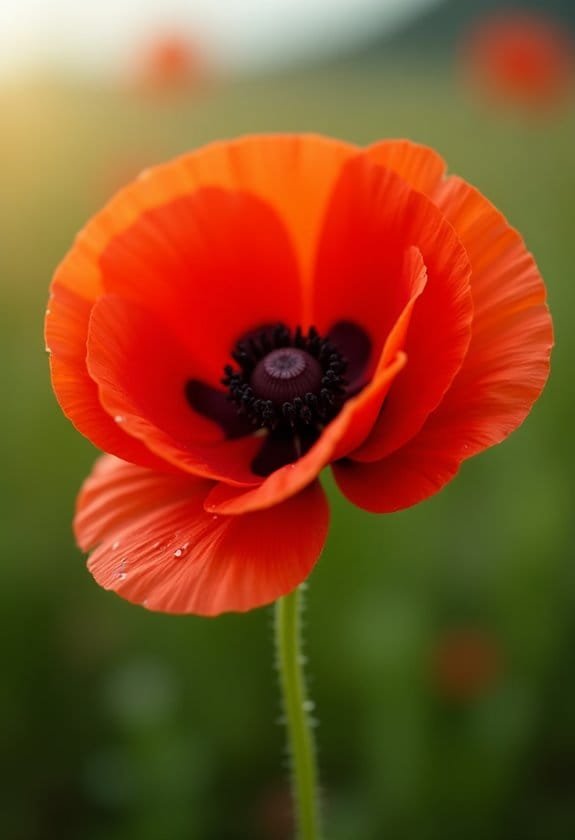
Papaver rhoeas, known as the Corn Poppy or Flanders Poppy, captivates with its striking red blooms and rich cultural heritage. This vibrant annual plant, belonging to the Papaveraceae family, typically features large flowers measuring 2 to 4 inches across, blooming from late spring to early summer, sometimes reappearing in the autumn.
Thriving in disturbed soils, these corn poppies are native to Europe and parts of Asia, often found in agricultural fields and along roadsides in temperate climates.
Beyond its botanical significance, the Corn Poppy has become a profound symbol of remembrance, particularly since its association with World War I, immortalized in the poignant poem "In Flanders Fields." As people commemorate those who sacrificed their lives, the striking red petals evoke resilience and hope.
Additionally, the plant boasts medicinal properties due to its alkaloids, known for their mild sedative effects. The seeds, which are edible, find their way into various culinary applications, enhancing baked goods and serving as an oil source.
Ultimately, Papaver rhoeas intertwines natural beauty with historical and cultural importance, making it a remarkable species deserving admiration and respect.