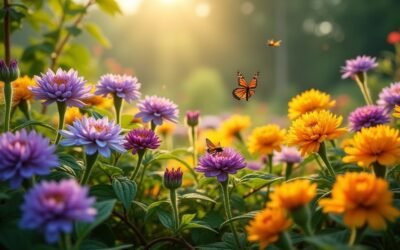
Pileostegia viburnoides, or Climbing Hydrangea, captivates gardeners with its lush foliage and ability to ascend structures, reaching heights of 15 to 30 feet. This evergreen vine thrives in USDA Zones 8a to 10b, preferring shaded areas with consistently moist, nutrient-rich soil. Its glossy, sickle-shaped leaves contrast beautifully with clusters of creamy-white flowers that bloom in late summer, attracting essential pollinators like bees and butterflies. Regular care includes strategic pruning and monitoring for pests, ensuring ideal growth and vibrant blooms. Through its unique ecological role and aesthetic appeal, this vine enriches any vertical garden, promising a delightful gardening experience ahead.
Main Points
- Climbing Hydrangea (Pileostegia viburnoides) is a broadleaf evergreen vine, reaching heights of 15 to 30 feet, ideal for vertical gardening.
- It thrives in USDA Zones 8a to 10b, preferring shade, consistently moist, well-drained soil, and neutral to slightly acidic pH.
- Creamy-white flower clusters bloom in late summer, attracting pollinators like bees and butterflies, enhancing garden biodiversity.
- Regular care includes pruning for shape, monitoring for pests like aphids, and maintaining soil moisture to prevent root rot.
- Companion plants such as ferns and hostas thrive in similar shaded conditions, promoting garden resilience and health.
Introduction
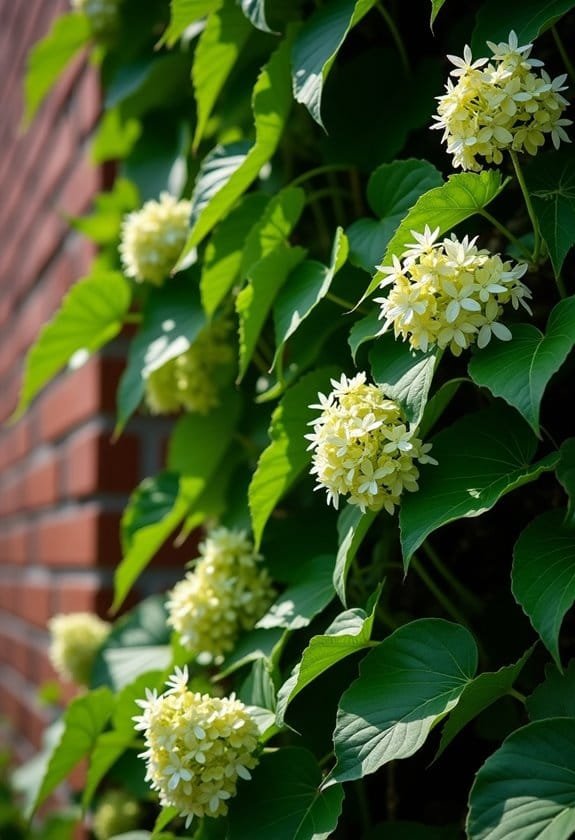
Climbing Hydrangea, scientifically known as Pileostegia viburnoides, stands out as a remarkable broadleaf evergreen vine renowned for its impressive height, reaching between 15 to 30 feet.
This perennial plant, with its glossy dark green leaves and delicate clusters of cream flowers, not only enhances landscapes but also attracts essential pollinators, contributing to local ecosystems.
Thriving in shaded environments with moist, fertile soil, Climbing Hydrangea offers both aesthetic appeal and ecological benefits within gardens and natural settings.
Common Name
Often referred to as Climbing Hydrangea, Pileostegia viburnoides is an enchanting vine that showcases its climbing nature and connection to the Hydrangea family. This common name aptly reflects the plant's habit of gracefully ascending structures and its remarkable lineage, which is evident in its striking appearance. Known for its glossy, evergreen leaves, the Climbing Hydrangea serves as an attractive ornamental vine, enhancing gardens and landscapes with both beauty and functionality.
Typically, this perennial vine reaches impressive heights of 15 to 30 feet, making it an ideal choice for covering trellises and walls in shaded areas. In the summer, creamy-white flowers bloom, providing essential nectar for pollinators such as bees, therefore playing a role in the local ecosystem.
Originally from Northern Taiwan, this vine thrives in moist, well-drained soil, revealing its preference for specific environmental conditions.
In essence, the Climbing Hydrangea's common name encapsulates its appealing attributes and significant ecological contributions, making it a cherished addition to any garden seeking to blend ornamental beauty with ecological responsibility. Its combination of elegance and utility continues to capture the interest of gardeners and nature enthusiasts alike.
Scientific Name
Recognized scientifically as Pileostegia viburnoides, this plant belongs to the Hydrangeaceae family, which encompasses a variety of other well-known flowering plants. Native to Northern Taiwan, Pileostegia viburnoides exhibits an intriguing climbing habit that allows it to ascend structures and trees, contributing to its popularity in ornamental gardening.
Its glossy, evergreen foliage provides year-round interest, while its cream flowers, which bloom during the summer months, add a delicate charm to its overall appearance.
The leaf arrangement of Pileostegia viburnoides is particularly striking, featuring hanging, sickle-shaped leaves that enhance its ornamental appeal, creating a lush, verdant backdrop. In various horticultural references, this species is sometimes classified as Hydrangea viburnoides, illustrating its intricate relationship within the hydrangea genus.
This classification reflects the plant's morphological characteristics, reinforcing the importance of its scientific name in setting it apart from other members of the family. Understanding the scientific name Pileostegia viburnoides not only aids in proper identification but also deepens appreciation for its ecological role and distinctive qualities.
Consequently, this species stands as an exemplary representative within its family, allowing enthusiasts to explore its beauty and versatility.
Overview
Known for its robust climbing ability and striking appearance, Pileostegia viburnoides thrives as a broadleaf evergreen perennial vine. Commonly referred to as climbing Hydrangea, this charming plant hails from Northern Taiwan and belongs to the esteemed Hydrangeaceae family. It exhibits vigorous growth, reaching heights of 15 to 30 feet, while spreading from 2 to 30 feet, making it an ideal choice for enveloping trellises and vertical structures.
Its glossy, leathery foliage boasts a rich dark green hue, creating an attractive backdrop for the airy clusters of creamy-white flowers that bloom during the summer months. These blooms not only enhance the visual allure of the vine but also serve to attract essential pollinators, thereby contributing to local biodiversity.
Typically flourishing in USDA Zones 8a to 10b, Pileostegia viburnoides prefers bright shade to full shade, thriving in well-drained and moist soil conditions. As a self-clinging vine, it adeptly attaches to various surfaces; however, it's prudent to avoid brick, as its powerful adhesion can lead to damage.
This climbing Hydrangea offers both aesthetic beauty and ecological benefits, enriching gardens and landscapes alike.
Key Features
Climbing Hydrangea, or Pileostegia viburnoides, boasts impressive growth, reaching heights up to 30 feet and spreading anywhere from 2 to 30 feet wide.
Its glossy, leathery leaves, which can extend up to 15 centimeters, provide a striking backdrop for the dense, creamy-white flower panicles that appear in late summer, enticing pollinators like bees.
This remarkable perennial thrives in shaded environments, drawing attention to its unique fusion of beauty and functionality in vertical gardening.
Growth Size
Reaching impressive heights, Pileostegia viburnoides showcases a vigorous climbing habit that can extend between 15 to 30 feet tall and spread widely from 2 to 30 feet.
This remarkable growth potential allows it to transform garden spaces into lush, verdant retreats. While the initial growth phase may be slow, patience will reward gardeners with a robust vine that becomes increasingly lush over time, ultimately enveloping walls, trellises, and fences.
The plant's self-clinging nature guarantees it attaches firmly to structural supports, which amplifies its extensive growth.
Glossy, leathery leaves can reach lengths of up to 15 cm, contributing to dense coverage and a polished appearance. Ideal growing conditions, such as moist, well-drained soil paired with partial to full shade, considerably influence the frequency and dates listed for best growth.
These parameters help gardeners understand when to expect notable advances and how to best care for the plant throughout its life cycle. Cultivating Pileostegia viburnoides is a commitment to nurturing a dynamic piece of nature that will elevate any garden space into a sanctuary of green beauty.
Appearance
With its impressive growth size, Pileostegia viburnoides captivates not only with height but also with its striking appearance. The glossy, leathery leaves, which can grow up to 15 cm in length, exhibit a narrow elliptic shape that enhances the plant's regal elegance. Their rich green color contrasts beautifully with the delicate clusters of small creamy-white flowers that emerge in summer.
These panicles, dense and inviting, serve both aesthetic and ecological purposes, attracting a variety of pollinators enthusiastic to partake in the seasonal spectacle.
As a climbing hydrangea, Pileostegia reaches heights of 15 to 30 feet and can spread between 2 to 30 feet wide, making it an outstanding choice for vertical gardening projects or trellises. Its self-clinging nature allows it to adhere gracefully to various structures, although gardeners should be cautious against using it on brick surfaces—its strong cling could become problematic.
Even when devoid of blooms, the elegant downward-hanging leaves resemble blades that bring a lush, vibrant quality to any green space.
This combination of structural prowess and visual appeal truly makes Pileostegia viburnoides a remarkable addition to gardens and landscapes alike.
Flowering Season
During the summer months, Pileostegia viburnoides bursts into bloom, showcasing airy clusters of creamy-white flowers that captivate both the eye and local pollinators. This flowering season typically extends from late summer, providing essential nectar and pollen for a variety of insects, particularly bees and butterflies, which play a crucial role in pollinating many plants.
The flower clusters are terminal, manifesting the plant's climbing characteristics when they drape gracefully over trellises or walls. The blooms, often not exceeding two inches across, display a delicate architecture that enhances their aesthetic appeal, while also contributing to garden biodiversity. Importantly, Pileostegia viburnoides is recognized in the RHS Plants for Pollinators list, which acknowledges its significance in attracting and sustaining local wildlife.
After the flowering season, the plant's dense, dark green foliage remains a standout feature, ensuring its attractiveness throughout the year. As an evergreen perennial vine, it retains its foliage year-round, adding structure and elegance to gardens and landscapes, even when devoid of blossoms.
Consequently, Pileostegia viburnoides serves not only as a vibrant floral presence but also as a resilient, year-round ornamental choice.
Growing Requirements
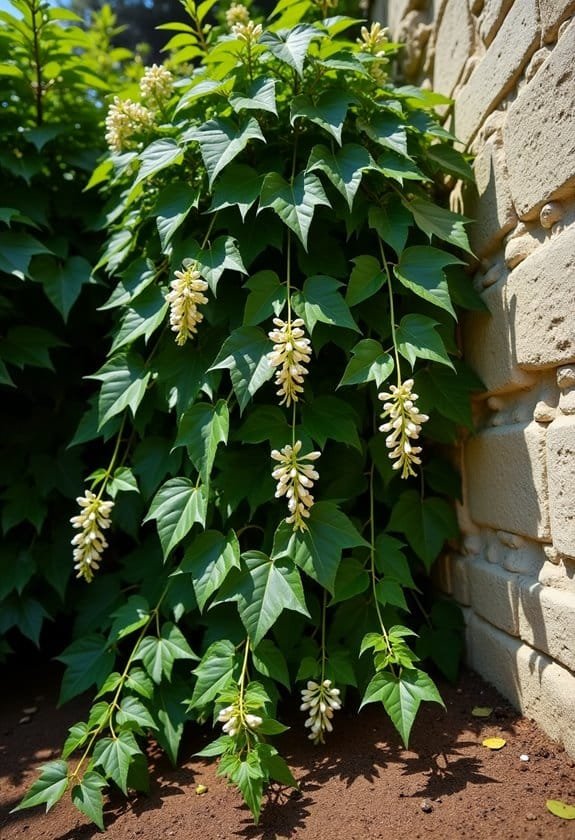
To cultivate Pileostegia viburnoides successfully, one must consider its specific growing requirements, which include light, soil, water, and temperature.
This climbing hydrangea flourishes in bright to full shade and demands evenly moist, well-drained soil, rich in nutrients, to truly thrive.
Regular watering and a balanced early spring fertilizer won't only enhance its growth but also encourage the vibrant flowers that characterize this beautiful plant during the summer months.
Light
Climbing hydrangea, or Pileostegia viburnoides, often thrives best in bright shade to full shade environments, making it an excellent choice for shaded garden areas.
This remarkable plant displays a strong adaptability to various light conditions, enabling it to flourish even beneath the canopy of larger trees that provide necessary shelter from the sun's intensity. While it can tolerate some sun exposure, Pileostegia viburnoides prefers to be safeguarded from harsh, direct heat, particularly during the summer months when temperatures soar.
To achieve ideal growth and flowering, consistent moisture paired with well-drained soil remains crucial, particularly in partial shade. Red clover, which is well-known for its nitrogen-fixing abilities, can be an excellent companion plant to enhance soil quality alongside Climbing hydrangea.
Proper light exposure greatly influences the plant's ability to bloom exquisite cream-colored flowers in the summer. These blooms not only enhance the visual appeal of any garden but also attract essential pollinators, such as bees. Additionally, incorporating native plants like ox-eye daisies can further support local biodiversity and pollinator health.
Consequently, gardeners should consider the light conditions in their planting areas to make sure that this stunning climber can reveal its full potential.
Soil
For healthy growth and vibrant foliage, climbing hydrangea thrives in average to rich, well-drained soil. This soil composition allows for proper moisture retention and aeration, essential for the plant's overall vigor. Ideally, the pH level should be neutral to slightly acidic, which enhances nutrient availability, fostering an environment conducive to flourishing.
To amplify growth performance and support robust summer flowering, gardeners should consider enriching the soil with organic matter, such as compost. This amendment improves both structure and nutrient levels, creating a nourishing foundation for the vine.
Although climbing hydrangea flourishes in ideal conditions, it demonstrates remarkable adaptability. The plant successfully coexists with larger trees, as it can thrive in shaded areas where moisture levels remain adequately maintained.
Regular care involving soil checks will help guarantee that the climbing hydrangea continues to prosper. By understanding the significance of quality soil and its influence on moisture dynamics, cultivators can support the plant's development and vigor.
Ultimately, investing in the right soil conditions serves as a cornerstone for cultivating this enchanting vine, securing its place as a stunning addition to any garden.
Water
Consistent moisture is key to the health of climbing hydrangea, as it requires regular watering to thrive. This vine flourishes in evenly moist soil, necessitating careful monitoring to prevent complete drying, which can impede its development.
Additionally, well-drained soil is essential; overly soggy conditions can lead to detrimental situations like root rot, severely affecting the plant's vitality.
For ideal growth, gardeners should water their climbing hydrangea sufficiently—typically, a charge of water every week is advisable during the growing season. In shadier spots, the watering frequency may decrease slightly, as moisture tends to linger longer and evaporation lessens.
Notably, hydration plays a significant role not just in sustaining life but also in enhancing foliage health and promoting abundant flower production.
The significance of consistent moisture can't be overstated. Maintaining adequate water levels not only supports the climbing hydrangea's lush appearance but also improves its resilience against environmental stressors.
Gardeners should prioritize hydration as an essential element in their care regimen. Ultimately, attentive watering practices will yield robust growth and vibrant blooms, showcasing the climbing hydrangea's full potential.
Temperature
Thriving in USDA Zones 8a to 10b, Pileostegia viburnoides prefers mild temperatures that range between 10°F and 40°F during the cooler months.
Its slight aversion to cold winds suggests that this climbing hydrangea flourishes best in sheltered locations, where perfect temperature conditions can be maintained.
During warmer seasons, the plant benefits substantially from shaded environments, which help preserve the vibrancy of its foliage while enhancing blooming quality.
Such conditions enable this species to regulate its moisture levels effectively, fostering a healthier growth pattern.
Consistent watering plays a key role, particularly during periods of temperature fluctuation; this guarantees the plant receives an even supply of moisture, which is essential for peak performance.
Peak growth is further promoted when Pileostegia viburnoides is planted in fertile, well-drained soil that retains a slight moisture level.
Adhering to these temperature requirements not only supports the plant's overall health but also encourages more rapid development and a robust blooming cycle.
Consequently, understanding and providing these perfect temperature conditions is necessary for any gardener seeking to cultivate this exquisite climbing hydrangea successfully.
Pollinator Criteria
Climbing hydrangea, or Pileostegia viburnoides, plays an essential role in attracting a diverse array of pollinators, particularly bees, with its abundance of nectar and pollen during the summer months. The creamy-white flowers, arranged in dense terminal panicles, not only offer sustenance to these vital insects but also drive the plant's effective pollination mechanisms, often relying on the wind and insect activity for reproductive success. Additionally, the plant's ability to thrive in wetland ecosystems makes it a valuable resource for sustaining local biodiversity. Notably, the presence of nitrogen-fixing plants in the ecosystem can enhance soil fertility, further benefiting the surrounding flora and fauna.
Attracted Pollinators
Often, Pileostegia viburnoides successfully attracts a variety of pollinators with its creamy-white flowers that bloom in late summer. These blossoms, rich in nectar and pollen, present a significant food source for various bees and other pollinating insects, fostering a vibrant ecosystem.
The climbing hydrangea holds a prestigious place on the RHS Plants for Pollinators list, underscoring its crucial role in enhancing local biodiversity.
The plant's dense terminal panicles not only elevate the visual appeal of gardens but also create an essential sanctuary for attracted pollinators, encouraging diverse species to thrive. By cultivating this resilient species, gardeners actively contribute to creating habitats that promote positive ecological interactions and bolster sustainable gardening practices.
Moreover, the glossy evergreen foliage of Pileostegia viburnoides offers more than mere ornamental charm; it serves as a refuge, providing shelter and sustenance to pollinator species throughout different seasons.
In nurturing these plants, individuals maintain not just aesthetic gardens but also dynamic living systems that support the essential roles that pollinators play in our environment—making every bloom an enduring proof of nature's intricate web of life.
Pollination Method
While Pileostegia viburnoides is known for its striking creamy-white flowers, its pollination method relies heavily on attracting specific pollinators, particularly bees.
These magnificent blooms provide not only an alluring visual display but also rich nectar and abundant pollen, which are crucial food sources for the insects. Their dense terminal panicles, characterized by prominent stamens, make it easier for bees to access these essential resources during the summer months.
As Pileostegia viburnoides climbs and adorns structures, it creates a favorable microhabitat for its pollinators.
The plant's climbing habit means it can flourish in various garden settings, enhancing local ecosystems and contributing to biodiversity by supporting bees and other pollinating insects. By being included in the RHS Plants for Pollinators list, Pileostegia viburnoides underscores its significance in promoting pollinator health and sustainability.
During the blooming season, a well-established Climbing Hydrangea becomes critical for the survival of its pollinator friends, offering them a reliable source of nourishment. Additionally, this species enhances soil quality through nitrogen fixation, benefiting both itself and surrounding plants.
Ultimately, the plant's effective pollination method guarantees not only its reproductive success but also plays a crucial role in maintaining healthy garden ecosystems.
Care & Maintenance
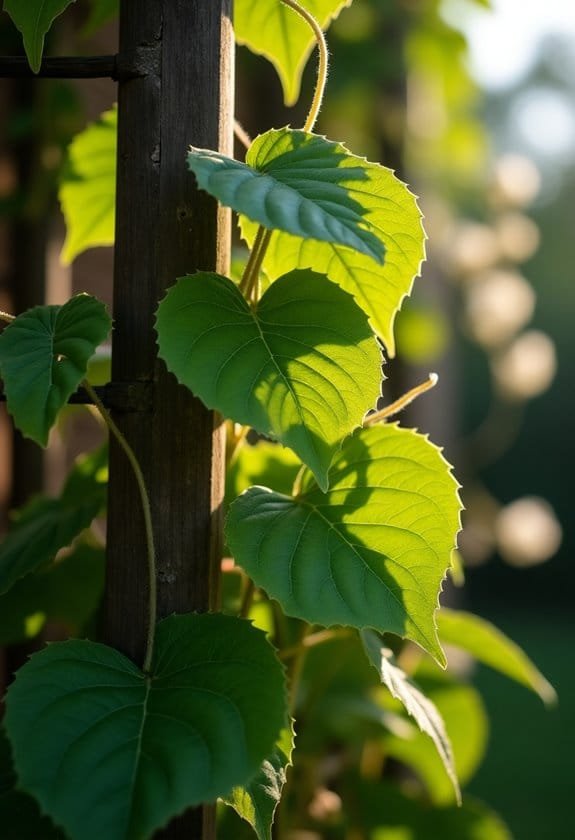
When caring for a climbing hydrangea, Pileostegia viburnoides, gardeners need to take into account multiple factors for ideal growth.
Regular feeding with a balanced fertilizer, coupled with strategic pruning to shape the plant and promote blooming, plays a vital role in its development.
Additionally, incorporating suitable companions and providing supportive structures will enhance its climbing capabilities while ensuring it thrives in favorable conditions.
Planting Tips
Planting a climbing hydrangea, specifically Pileostegia viburnoides, requires attention to its soil conditions and overall care to thrive. For peak growth, verify this vine is placed in well-drained, fertile soil, which aids in preventing detrimental waterlogging. Proper soil allows roots to absorb essential nutrients and water effectively, fostering lush foliage and vibrant blooms.
When considering planting tips, it's significant to maintain consistent moisture, particularly during the establishment phase. Regular watering helps the plant acclimate to its environment, so aim to keep the soil evenly moist, but not soggy.
To further promote robust development, apply a balanced fertilizer throughout the growing season, enhancing vigor and guaranteeing plentiful flowering.
As this climbing hydrangea can reach heights of up to 30 feet, providing a sturdy trellis or support structure becomes essential for its growth.
Finally, annual pruning post-bloom in late summer guarantees the vine retains its desired shape while encouraging healthier flowering for the following year.
Ongoing Care
Ongoing care for climbing hydrangea is important to guarantee its vibrant blooms and robust growth. Regular fertilization during the growing season greatly enhances the plant's overall health, promoting ideal growth and prolific flowering.
Annual pruning is equally important; it shapes the vine and encourages more bountiful blooms in summer months. Moreover, monitoring for common pests, such as aphids and spider mites, safeguards the climbing hydrangea's health—catching infestations early can prevent long-term damage.
A sturdy trellis or support structure is essential for effective climbing, as this self-clinging vine flourishes with vertical growth. Without adequate support, the plant may struggle to reach its full capacity.
Additionally, in colder USDA zones, providing shelter from harsh winter winds will protect this delicate species. As climbing hydrangea thrives on commitment, gardeners must view ongoing care as a recurring, not deferred purchase, ensuring both time and resources are allocated effectively.
This all-encompassing approach not only nurtures the plant's growth but also rewards the gardener with breathtaking bursts of lush greenery and exquisite blooms, transforming any garden landscape into a vibrant sanctuary.
Suggested Companions
Affinity for shade makes climbing hydrangea an excellent companion for various plants that thrive in similar conditions. This species flourishes alongside larger trees, utilizing partial shade while offering a lush backdrop to their sturdy trunks.
Compatible companions include ferns and hostas, which thrive in the dappled light cast by the climbing hydrangea, creating a harmonious tapestry of foliage. Pairing flowering plants like astilbes and ligularias can elevate garden aesthetics, introducing vibrant colors to shaded areas, making the garden an inviting retreat. Additionally, incorporating heathland plants can enhance biodiversity and make the garden more resilient.
When selecting companions, it's essential to guarantee that all plants share similar soil moisture requirements, promoting an evenly moist environment beneficial for all. The compatibility of these plants greatly aids in maintenance, as the combined lushness minimizes the need for excessive irrigation.
Regular pruning of companions is a recurring item on the gardener's agenda, preventing overshadowing of the climbing hydrangea. By keeping competing foliage in check, one allows the hydrangea to reach its full potential in vertical growth, achieving that striking visual lightness so coveted in shaded gardens, where every inch of growth plays a pivotal role in the overall composition. Additionally, consider incorporating plants like Wild Thyme that attract pollinators, enhancing the ecological balance in shaded areas.
Common Issues
Climbing hydrangeas, while stunning, often face a range of common issues that can impede their growth and health.
Pests like aphids and spider mites may infiltrate the foliage, requiring vigilant monitoring and timely interventions to guarantee the plant remains healthy.
Additionally, environmental factors, such as overly wet soil or nutrient deficiencies, can result in symptoms like yellowing leaves, emphasizing the significance of proper care and management to sustain vigorous growth and flowering.
Pests/Diseases
Pests and diseases can pose significant challenges for the health of climbing hydrangeas. The climbing hydrangea, Pileostegia viburnoides, often faces threats from common vine pests such as aphids, spider mites, and scale insects. These pests can severely hinder the plant's growth, manifesting in symptoms like leaf discoloration and fewer flowers, ultimately impacting its aesthetic appeal.
Regular monitoring is crucial, as early detection of these invasive pests can help mitigate damage before infestations escalate.
Additionally, fungal diseases can arise, particularly when conditions become favorable due to excessive moisture. Gardeners should maintain well-drained soil, coupled with a strategic approach to watering that avoids overhead saturation, thereby minimizing the risk of fungal infections.
Moreover, pruning away dead or infected foliage not only removes potential disease carriers but also enhances air circulation around the plant, effectively reducing disease risk.
Employing organic treatments like insecticidal soap or neem oil can manage pest populations safely, preserving beneficial insects in the ecosystem.
Ultimately, a proactive stance towards pest management guarantees that climbing hydrangeas thrive, retaining their lush foliage and enchanting blooms for years to come.
Solutions
Successful gardening requires careful attention to the needs of climbing hydrangeas, particularly when addressing common issues. Ensuring consistent moisture is imperative; regular watering prevents wilting or unsightly leaf drop, thereby maintaining the plant's aesthetics.
Additionally, strategic pruning plays an important role. This discipline not only shapes the plant but also promotes more abundant summer blooms.
Gardeners should vigilantly monitor for pests like aphids and spider mites, which can compromise both health and vigor if left unchecked. Moreover, it's wise to avoid planting Pileostegia viburnoides directly against brick surfaces. The vine's tenacious clinging habit can lead to structural damage over time, making proper placement essential.
To facilitate robust growth, providing a trellis or support structure is paramount, as this vine relies on such assistance to ascend effectively. Each of these solutions addresses critical aspects of climbing hydrangea care, ensuring that when one's order is fulfilled, the plant flourishes beautifully in its designated space.
When these practices are faithfully followed, gardeners can enjoy the splendor of this resilient vine, enriching their outdoor spaces with natural elegance.
Summary
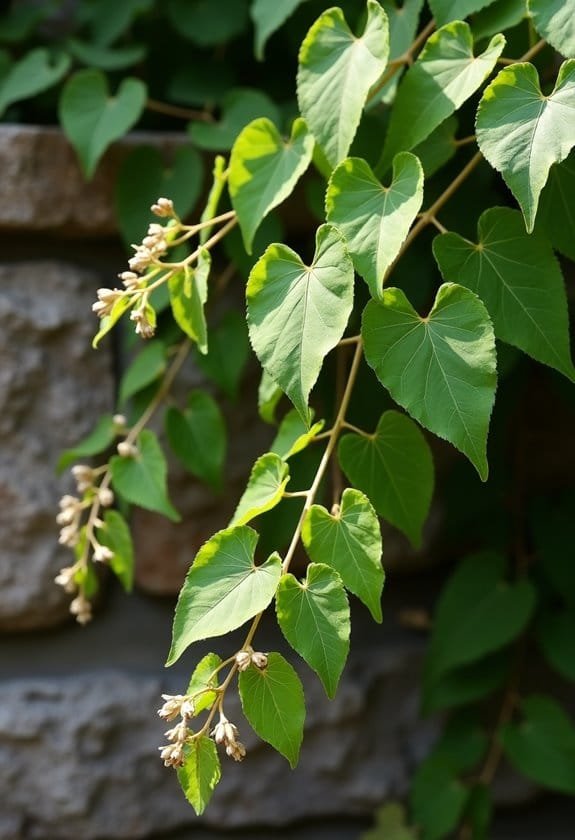
Growing as a striking addition to any garden, Pileostegia viburnoides, or Climbing Hydrangea, is a versatile evergreen vine that reaches impressive heights of 15 to 30 feet.
With its glossy green foliage and delicate cream flowers blooming in summer, this vine offers both aesthetic beauty and ecological benefits. Thriving in USDA Zones 8a to 10b, it prefers bright shade to full shade, requiring well-drained, fertile soil and regular watering to flourish.
Notably, Climbing Hydrangea exhibits self-clinging capabilities, enabling it to cover walls and trellises effectively. However, it's not recommended for brick surfaces due to its potent adhesion, which could cause damage over time.
Additionally, the vine actively supports biodiversity by providing essential nectar and pollen for pollinators, such as bees, earning recognition from the Royal Horticultural Society for its contributions to ecosystem health.
Caring for Pileostegia viburnoides involves regular fertilization and thoughtful pruning to promote shape and flowering, while also monitoring for potential pests.
With the right support structure in place, gardeners will find this remarkable vine continually charged with life and vibrancy, enhancing their green spaces throughout the seasons.