Reseda odorata, known as Garden Mignonette, thrives between 12 and 24 inches in height. It delights gardeners with its creamy white blooms, releasing a sweet and spicy fragrance from June to October. Native to Egypt, this perennial flourishes in full sun and prefers well-drained, nutrient-rich soil with a pH of 6.0 to 8.5. Attracting essential pollinators, particularly bees, it supports genetic diversity within ecosystems through its long flowering period. Careful maintenance includes regular watering and monitoring for pests like aphids. This charming plant not only enhances visual appeal but also plays a pivotal role in garden biodiversity, revealing more fascinating aspects of its nature.
Main Points
- Reseda odorata, or Garden Mignonette, features creamy white blooms and a sweet, spicy fragrance, blooming from June to October.
- This plant thrives in full sun, requiring at least six hours of sunlight and rich, well-drained soil.
- It attracts pollinators like bees, enhancing biodiversity and supporting local ecosystems with its consistent nectar supply.
- Garden Mignonette is valued for its use in cut flower arrangements due to its fragrance and aesthetic appeal.
- Regular care includes monitoring for pests, proper watering, and deadheading to encourage continuous blooming throughout the growing season.
Introduction
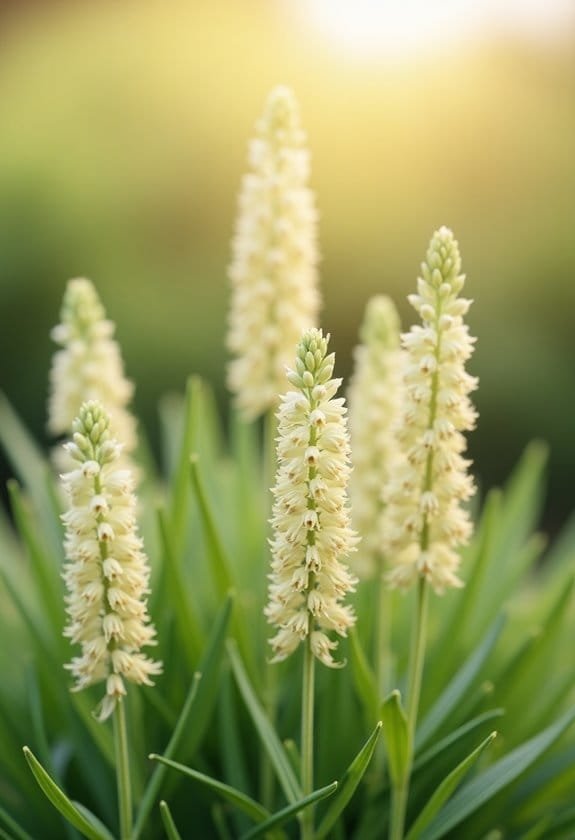
Reseda odorata, commonly known as Garden Mignonette, is an enchanting annual plant notable for its fragrant, cream-colored blossoms that emit a sweet and spicy aroma.
Standing between 12 to 24 inches tall, it flourishes in rich, moist soil under full sun, appealing not only to gardeners but also to pollinators like bees drawn to its blooms.
Originally hailing from Egypt and later embraced in European gardens, particularly during the Victorian era, this plant continues to captivate enthusiasts with its charm and utility in floral arrangements.
Common Name
Known affectionately as Mignonette, this charming plant delights gardeners and floral enthusiasts alike. Its creamy white flowers, embellished with striking orange centers, release a sweet and spicy scent that captures the senses, making it an ideal choice for both home gardens and floral arrangements. The name "Mignonette" derives from the French term for "little darling," highlighting its beloved fragrance and appeal.
Historically, Mignonette's introduction to Europe is linked to Napoleon, who brought it from Egypt for Empress Josephine's gardens, enriching horticultural traditions. The plant's graceful white flowers not only serve as a cut flower choice but also enhance garden aesthetics with their delicate beauty and enticing aroma.
After blooming, Mignonette produces distinctive lantern-shaped green pods, adding further visual interest while also showcasing the plant's unique reproductive structures.
Beyond its ornamental value, Mignonette plays a vital ecological role by attracting pollinators, which contributes greatly to the health and diversity of garden ecosystems.
Ultimately, Mignonette isn't just a visual delight; it embodies both garden charm and ecological benefits, enduringly enchanting all who encounter its lovely blooms.
Scientific Name
The scientific name of the Garden Mignonette is Reseda odorata, which belongs to the Resedaceae family. This species, native to Egypt, has gained popularity for its delightful fragrant flowers, often utilized in perfume production.
Typically, Reseda odorata reaches heights between 12 to 24 inches, showcasing pale green foliage that supports dense flower spires brimming with clusters of blossoms from June to October.
These blooms, renowned for their sweet and spicy aroma, attract a variety of pollinators, especially bees, thereby playing a vital role in the ecosystem. Following the flowering period, the plant produces distinctive green, lantern-like pods. Within these pods lie seeds, which boast a lifespan of approximately one to two years. This characteristic of resilience allows the species to propagate effectively in various environments.
The classification of Reseda odorata highlights not only its botanical significance but also its cultural relevance. The Garden Mignonette's enchanting fragrance and visual appeal guarantee its place in both gardens and the fragrance industry, cementing its legacy as a beloved ornamental plant.
Essentially, the scientific nomenclature provides insight into the plant's identity and its multifaceted roles in nature and human use.
Overview
Often celebrated for its enchanting fragrance, Garden Mignonette impresses gardeners and floral enthusiasts alike. Known botanically as Reseda odorata, this charming annual hails from Egypt but adapts remarkably well across various climates, including New England. Typically, it reaches heights of 12 to 24 inches, showcasing dense spikes adorned with creamy white flowers that bloom from June to October, creating a visual spectacle while drawing in pollinators like bees.
Garden Mignonette thrives in full sun, with a preference for rich, moist soil and a pH between 6.0 and 8.5. After the last frost, gardeners can easily sow the seeds directly into the ground, promising an abundance of fragrant blooms throughout the growing season.
The plant's medium green leaves serve as a lush backdrop to its aromatic flowers, which emit a delightful sweet and spicy scent. Significantly, these blossoms retain their fragrance even when dried, making them ideal for various floral arrangements.
This combination of allure and practicality elevates Garden Mignonette as a favorite among those seeking to imbue their gardens—and homes—with natural elegance and lasting fragrance.
Key Features
Reseda odorata, or Garden Mignonette, showcases a modest growth size, typically reaching heights of 12 to 24 inches, which makes it an excellent choice for various garden settings.
Its creamy white flowers, accentuated by vibrant orange centers, exude a sweet, spicy fragrance that enchants gardeners and pollinators alike, particularly during its flourishing season from mid-summer until frost.
Not only does its visually appealing appearance attract attention, but it also serves a practical purpose in enhancing both cut flower arrangements and potpourri, retaining that delightful scent even when dried.
Growth Size
Garden Mignonette reaches a mature height of 12 to 24 inches (30 to 60 cm), creating a charming addition to various garden landscapes. This annual plant exhibits a moderate growth size, thriving best once the danger of frost has passed, making it ideal for warm temperate regions.
As the plant grows, its medium green foliage not only enhances its aesthetic appeal but also supports dense flower spires, which develop stunning creamy white flowers throughout the blooming season from June to October.
To guarantee peak growth size and health, Mignonette benefits from being planted with a spacing of 12 inches apart. This spacing fosters both proper air circulation and adequate room for each plant to flourish.
For ideal development and vibrant flower production, Mignonette prefers rich, moist soil and thrives in full sun to partial shade. By attending to these environmental factors, gardeners can maximize the plant's potential, allowing it to not only survive but thrive in their chosen habitats. Additionally, Mignonette can enhance local biodiversity by attracting beneficial pollinators and wildlife, contributing to a healthier ecosystem in the garden.
The careful cultivation of Garden Mignonette not only contributes to the beauty of the garden but also encourages a robust growth pattern that provides delightful blooms well into the autumn months.
Appearance
During the blooming season, Garden Mignonette showcases striking spikes of cream-colored flowers that gracefully shift to a light cream hue with vibrant orange centers. This elegant transformation enhances their appeal, engaging onlookers in garden settings. Typically, the plant reaches heights between 12 to 24 inches, effortlessly fitting into borders and container gardening arrangements.
Its medium green, oblong leaves contribute a casual charm, harmonizing beautifully with the floral displays, while the distinct sweet and spicy fragrance of the blossoms elevates their desirability. This engaging aroma makes them popular for both fresh and dried floral arrangements, earning them a cherished status in gardens and homes alike.
Significantly, after the blooming period, Garden Mignonette produces lantern-like green pods, adding a delightful ornamental value that lasts well beyond the flowers' lifespan.
For those interested in cultivating this attractive plant, it's important to monitor its growth every 2 weeks. If you have questions or need guidance, don't hesitate to reach out via email address. With the right care, Garden Mignonette becomes a cherished addition that enriches any garden with its unique aesthetic appeal and delightful scent.
Flowering Season
The flowering season of the garden mignonette, stretching from June to October, showcases its vibrant display of creamy white flower spikes that gradually shift to a softer cream hue. This late summer to early autumn bloom draws attention, not just for its aesthetic appeal but also for its delightful sweet and spicy fragrance that fills the air.
Typically reaching heights of 12 to 24 inches, each plant creates a dense floral tapestry that beckons pollinators, particularly bees, adding to the garden's ecological richness through effective pollinator attraction.
The flowering duration of Reseda odorata can be extended with proper seasonal care, such as deadheading spent flowers, which encourages the development of new blooms. This practice not only promotes prolonged flowering but also maintains the plant's overall vigor.
Understanding the significance of nurturing these plants guarantees an ongoing display of beauty that can elevate any garden's atmosphere. Furthermore, the harmonious combination of fragrant blossoms and a sturdy structure makes garden mignonette an invaluable addition, enhancing both visual allure and biodiversity.
Growing Requirements
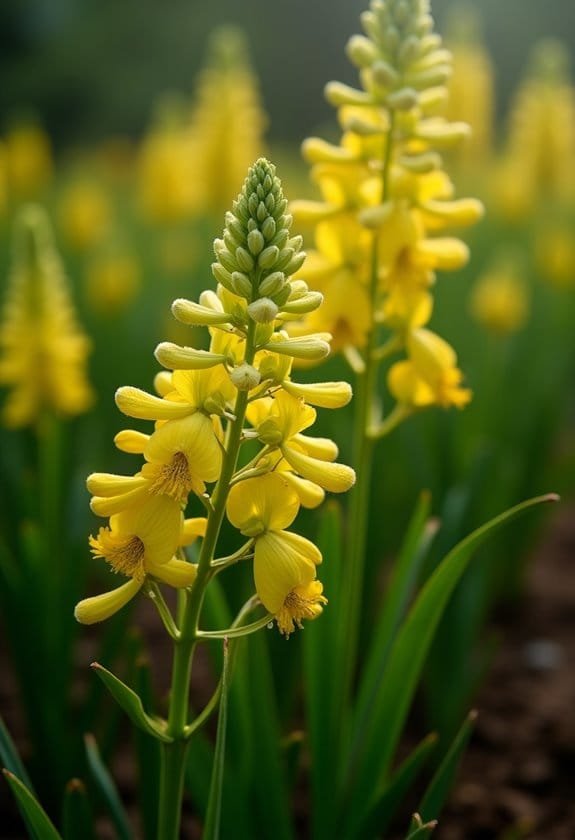
Reseda odorata flourishes in conditions where it receives full sun to partial shade, signaling its adaptable nature.
With a preference for rich, moist soil that maintains a pH between 6.0 and 8.5, it showcases a keen desire for ideal nutrients and hydration.
As it germinates best at temperatures of 70°-75°F, understanding these growing requirements guarantees success in cultivating this fragrant plant.
Light
For ideal growth, Garden Mignonette flourishes in full sun to partial shade, requiring at least six hours of sunlight each day. This exposure guarantees that the plant can effectively harness light intensity effects, essential for its robust flowering and overall health.
In colder regions, maximizing sunlight becomes imperative as seasonal light variations can impact growth, making sunny spots particularly beneficial.
Garden Mignonette's adaptability lends itself well to various lighting conditions; however, consistent exposure to adequate light is necessary. Insufficient light can lead to leggy growth and reduced flowering potential.
If natural sunlight falls short, gardeners can employ artificial lighting techniques to supplement daylight during shorter seasons. Grow lights with a balanced spectrum can mimic the sun's effects, promoting healthy development and vibrant blooms.
Additionally, understanding the nuances of light quality, including its spectral composition and intensity, can enhance the gardening experience. By observing plant responses to changes in light, cultivators can optimize conditions, guaranteeing that their mignonette thrives, exhibiting lush foliage and an abundance of fragrant flowers.
Finally, considering the beneficial role of early spring pollinators in the ecosystem can help in planning garden layouts that support both mignonette and local biodiversity.
Ultimately, proper lighting serves as a cornerstone to achieving a flourishing garden filled with the delightful essence of Reseda Odorata.
Soil
Understanding the ideal soil conditions plays a key role in growing Garden Mignonette successfully. This delightful plant, Reseda odorata, flourishes in rich, moist soil that's well-fortified with organic matter, such as compost, which provides essential soil amendments for peak growth. The ideal pH range lies between 6.0 and 8.5, a spectrum that guarantees healthy development and vibrant flowering.
When planting, gardeners should press seeds lightly into the soil at a depth of 1/16 inch after the threat of frost has subsided. It's important to reflect on drainage, as excessively waterlogged soil can hinder root growth and result in disease. Achieving effective drainage while maintaining consistent moisture balances nutrient management, allowing the plant to derive necessary vitamins and minerals from its environment.
Furthermore, Garden Mignonette requires full sun exposure, which enhances photosynthetic activity and promotes vigorous growth. By prioritizing these soil conditions and confirming the right amendments are present, gardeners can cultivate an enchanting display of fragrant blooms, transforming their spaces into aromatic havens while avoiding pitfalls associated with improper soil care.
Just as a painter relies on the right hues, each gardener must cultivate the perfect soil for Reseda odorata.
Water
Maintaining consistent moisture is essential for the healthy growth of Garden Mignonette. This plant thrives when the soil remains moist but not waterlogged, as too much water can lead to detrimental root rot.
Establishing a proper watering frequency is vital; ideally, the soil should retain adequate moisture without completely drying out, particularly during warmer months when evaporation rates increase.
Garden Mignonette prefers rich, well-draining soil to maintain moisture retention while promoting drainage importance. A routine that includes checking the soil moisture regularly will foster robust growth and maximize the plant's stunning flowering potential.
Watering should be carried out deeply but infrequently, allowing the roots to explore deeper into the soil. Additionally, placing the plant in full sun exposure supports its growth by assisting with moisture levels despite the heating effects of sunlight. Moreover, adopting proper air circulation can help prevent common issues, ensuring that the plant remains healthy and vibrant.
Temperature
Consistent care in watering sets the stage for the next significant factor in cultivating Garden Mignonette: temperature. This annual plant flourishes under ideal germination conditions, specifically within a temperature range of 70°-75°F. When these conditions are met, the seeds germinate effectively, leading to robust growth.
However, it's vital to recognize that temperature fluctuations impact this delicate process; significant variations can hinder germination and stifle young seedlings' development.
As Garden Mignonette advances through seasonal growth variations, it thrives best in full sun but can tolerate partial shade, providing flexibility in garden planning. Gardeners should lightly press seeds into the soil at a depth of 1/16 inch for the best results.
Once seedlings emerge, thinning them to 12 inches apart guarantees they've sufficient space and airflow, mitigating the risk of disease.
Maintaining consistency in moisture while considering temperature is important, as the soil needs to be moist yet well-drained; any dry conditions can stunt growth.
Ultimately, a temperature range that aligns with the plant's needs will facilitate healthy development, showcasing its fragrant blossoms and lush foliage throughout the growing season.
Pollinator Criteria
Reseda odorata, or Mignonette, plays an essential role in attracting a variety of pollinators, especially bees, with its sweet and spicy fragrance.
This compelling scent not only enhances the garden's aesthetic but also guarantees effective pollination, as bees are drawn to the rich nectar its blossoms provide.
Attracted Pollinators
Mignonette, or Reseda odorata, captivates a range of pollinators with its fragrant blooms. From June to October, this plant showcases a delightful array of sweet, spicy scents that entice bees, enhancing pollinator attraction. Bee behavior further underscores the significance of Mignonette; as these industrious insects navigate toward its blooms, their foraging activities nurture crucial ecosystem dynamics. Additionally, like Birds Foot Trefoil, Mignonette can provide critical support for pollinator populations, as its flowering helps sustain bees throughout the growing season.
Mignonette grows well in open sunlight, thriving in meadows and disturbed fields, offering essential resources for local pollinators. The plant's prolonged flowering period enables it to produce an abundance of nectar and pollen, notably contributing to the food sources available for these pollinators. By supporting diverse bee populations, this plant plays a critical role in enhancing biodiversity in garden ecosystems, yielding mutually beneficial relationships. Moreover, much like white clover's natural ability to support pollinator populations, Mignonette's fragrant blooms create an inviting habitat for various beneficial insects.
Additionally, the ecological significance of Reseda odorata extends beyond wildlife, as its fragrant flowers serve human endeavors, particularly in the perfume industry. This connection beautifully illustrates the delicate balance between nature and human activity, emphasizing the crucial ecosystem impact of Mignonette.
Pollination Method
With its fragrant flowers drawing in a multitude of pollinators, the pollination method utilized by Mignonette largely relies on its scent rather than visual appeal. The sweet and spicy aromas emitted from the flowers attract various pollinators, particularly bees, which are vital for effective cross pollination. This process, which involves transferring pollen between different plants, enhances genetic diversity and produces stronger, more resilient offspring.
Mignonette blooms from June to October, coinciding beautifully with peak foraging activity for pollinators, maximizing the opportunity for nectar access. The plant thrives in disturbed areas and along roadsides, ensuring that various pollinator species can easily reach its nectar-rich flowers, thereby promoting pollinator diversity within their habitats.
Mignonette's nectar composition plays an important role in attracting specific pollinators, offering a blend of sugars and amino acids that provide essential nourishment. Furthermore, the plant's preference for full sun exposure and consistent moisture contributes to its overall health, ensuring a reliable food source for bees and other pollinators.
Through this intricate relationship, Mignonette not only enhances its own reproductive success but supports broader ecosystem health.
Care & Maintenance
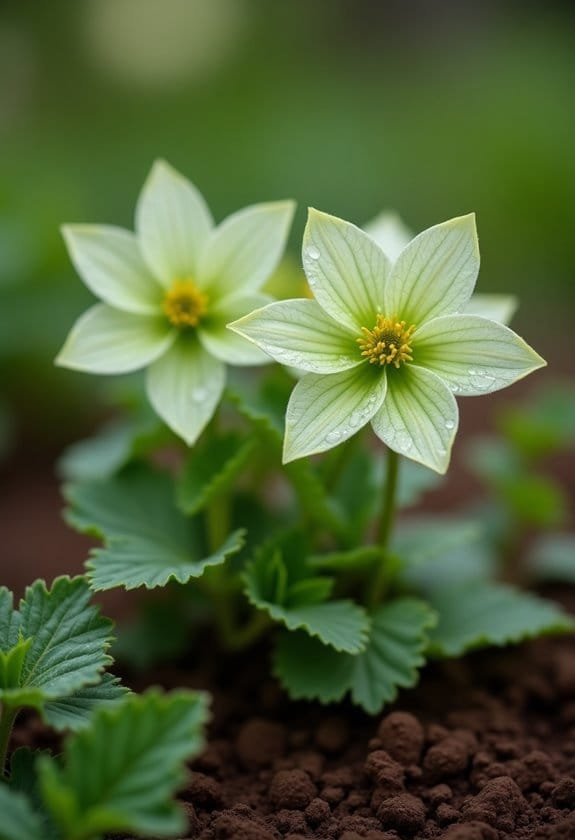
In caring for Reseda odorata, gardeners will find that planting tips and ongoing maintenance are essential for thriving specimens.
These plants flourish under full sun, prefer rich, well-drained soil, and benefit from consistent moisture, requiring close attention to soil conditions.
Additionally, selecting companion plants that also appreciate similar growing conditions can enhance both the aesthetic appeal and health of the garden, creating a harmonious ecosystem.
Planting Tips
To successfully plant Reseda odorata, gardeners should direct sow the seeds after the last frost, lightly pressing them into the soil at a depth of 1/16 inch, spaced 2-4 inches apart.
These seed starting techniques not only enhance germination but also contribute to the overall vigor of the plants.
Once the seedlings establish themselves, thinning becomes essential; spacing them 12 inches apart guarantees adequate air circulation, mitigating the risk of disease.
When employing spacing strategies, it's important to maintain moisture through consistent watering, as this prevents drought conditions that could impair growth and flowering potential.
Gardeners can also enhance blooming by pinching young plants, stimulating branching and leading to a more abundant display of fragrant flowers throughout the growing season.
Transplanting methods come into play if gardeners opt to start seeds indoors; transplanting should occur once the seedlings have developed several true leaves.
By regularly deadheading spent flowers, one can stimulate further blooming, considerably extending the flowering period into the summer months.
Implementing these planting tips effectively prepares Reseda odorata for its role as a stunning and aromatic addition to the garden landscape.
Ongoing Care
Proper ongoing care is essential for ensuring that Reseda odorata thrives and flourishes throughout its growing season. This stunning plant demands consistent moisture, so it's imperative to avoid letting the soil dry out between waterings.
To promote ideal growth, gardeners should thin seedlings to about 12 inches apart, providing each plant sufficient space to breathe and develop robustly.
Employing effective pruning techniques is also crucial; regularly deadheading spent flowers encourages additional blooming, maximizing the plant's floral display. To enhance branching and flower production, gardeners can pinch back young plants as they grow, guiding their energy towards fuller development.
In terms of fertilizer options, a balanced, water-soluble fertilizer applied every four to six weeks can bolster nutrient availability. This attention fosters vibrant growth, complementing the ongoing care regimen.
Furthermore, ensuring that Reseda odorata enjoys full sun exposure for at least six hours a day will support its healthy development and flowering.
Suggested Companions
Pairing Reseda odorata, commonly known as Mignonette, with compatible plants can elevate both its growth and the overall beauty of the garden. Ideal companion plants, such as marigolds and zinnias, thrive in full sun and can enhance gardening aesthetics while attracting beneficial insects like bees and butterflies.
To encourage a longer blooming period, gardeners should regularly deadhead Mignonette. Pairing it with other flowering species that benefit from this practice, like cosmos and snapdragons, maximizes visual appeal. Incorporating Vipers Bugloss(Echium vulgare) alongside Mignonette can also enhance local biodiversity, as its myriads of blooms provide vital nectar sources for pollinators.
Ensuring consistent moisture is essential; thus, mixing in moisture-retaining plants, such as foxgloves or ferns, can improve soil structure and aid in maintaining hydration levels.
Including culinary herbs like basil or thyme not only complements Mignonette's growth but also acts as a natural pest deterrent, shielding blossoms from common flower pests.
When designing garden layouts, it's important to maintain a distance of at least 12 inches from taller plants like sunflowers or hollyhocks. This spacing guarantees adequate sunlight exposure and promotes healthy air circulation, allowing Mignonette and its companions to flourish harmoniously amid a vibrant garden tapestry. Additionally, incorporating plants like Common Yarrow can further enhance garden biodiversity by attracting pollinators, benefiting both Mignonette and the overall ecosystem.
Common Issues
Reseda odorata, while cherished for its enchanting fragrance, faces common issues that can hinder its growth and beauty.
Among these, pests like aphids and spider mites threaten the plant's vigor, necessitating vigilant monitoring and strategic pest management.
Additionally, environmental factors such as incorrect soil pH—ideally between 6.0 and 8.5—alongside inadequate sunlight, can greatly impede flowering and lead to leggy growth, underscoring the importance of attentive care.
Pests/Diseases
Mignonette plants can face several common pests and diseases that may hinder their growth and overall health. Aphids and spider mites frequently invade Reseda odorata, leading to reduced health and distorted leaves if not managed promptly. Implementing effective pest management strategies, such as regularly inspecting plants for early signs of these pests, can assist gardeners in taking preventive measures before infestations escalate beyond control.
Additionally, powdery mildew is a prevalent disease among Mignonette, often triggered by high humidity and inadequate air circulation. To minimize the risk of such diseases, employing disease prevention techniques like ensuring proper plant spacing and avoiding overhead watering is essential. These actions help maintain an environment less hospitable to fungal growth.
Equally important is recognizing the beneficial insects' roles in pest control. Ladybugs and lacewings, for instance, naturally prey on aphids, helping keep their populations in check. Meanwhile, organic solutions like neem oil or insecticidal soap can effectively address pest issues without endangering these helpful species.
Solutions
To address common issues with Reseda odorata, gardeners should prioritize creating an excellent environment for growth. This plant thrives in full sun, requiring well-drained, rich soil with consistent moisture. A critical balance must be maintained, as overwatering can lead to root rot. Gardeners must guarantee the soil remains moist without becoming waterlogged.
Thinning seedlings to approximately 12 inches apart not only prevents overcrowding but also enhances air circulation, thereby reducing the risk of fungal diseases. Implementing appropriate pruning techniques, such as regularly deadheading spent flowers, encourages prolonged blooming, preventing the plant from expending energy on seed production.
Fertilizer recommendations emphasize using a balanced, slow-release formula during the growing season, promoting robust growth and blooming. Additionally, companion planting can enhance Reseda odorata's health. Pairing it with robust companions can deter pests and attract beneficial insects.
For ideal germination rates, sow seeds directly into the garden after the last frost, pressing them lightly into the soil at a depth of 1/16 inch. By following these guidelines, gardeners can cultivate a flourishing Reseda odorata, enhancing both the aesthetic appeal and overall health of their gardens.
Summary
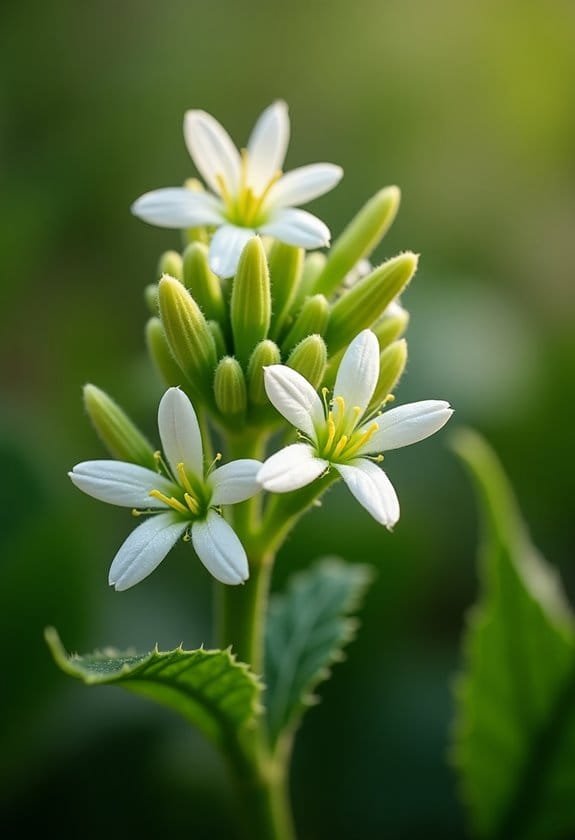
What makes Garden Mignonette a favored choice among gardeners? This enchanting plant, known scientifically as Reseda odorata, offers not only a sweet, spicy fragrance but also a rich historical context that enriches its appeal. Originally popularized by Empress Josephine, who received seeds from Napoleon, its cultural significance persists even today.
Garden Mignonette thrives in full sun, preferring well-drained, nutrient-rich soils, and can reach impressive heights of 12 to 24 inches, which makes it an excellent candidate for borders and container gardens.
The creamy white flowers with distinct orange centers bloom from June to October, attracting an array of pollinators, particularly bees, thereby enhancing garden biodiversity. Following blooming, the plant produces lantern-like green pods, adding visual interest.
Its fragrance uses extend beyond the garden; essential oils derived from Mignonette flowers are crucial in perfumery, showcasing the plant's diverse utility. Growers can direct sow seeds in prepared beds after frost danger has passed, with ideal temperatures between 70°F and 75°F for germination, typically occurring within 5-10 days.
Garden Mignonette's fragrant allure, combined with its historical roots and ecological benefits, solidifies its status as a cherished plant for both novice and seasoned gardeners.