Robinia pseudoacacia, also known as False Acacia or Black Locust, is a versatile tree that typically reaches heights of 30 to 50 feet, with some individuals soaring up to 80 feet. This species boasts compound leaves composed of 7 to 19 dark blue-green leaflets and produces fragrant, pendulous racemes of flowers from late April to June, attracting essential pollinators. It thrives in well-drained soils with a pH of 6.0 to 8.0, exhibiting impressive drought resilience. Valued for its strong, rot-resistant wood, it plays a significant role in ecological balance. Exploring more reveals the complexities of this remarkable tree's management and benefits.
Main Points
- Black Locust, or *Robinia pseudoacacia*, is a fast-growing tree known for its height and longevity, often reaching 30-50 feet.
- It enriches soil through nitrogen fixation, promoting growth in disturbed areas and supporting diverse ecosystems.
- The tree features fragrant, pea-like flowers from late April to June, attracting various pollinators, including bees.
- Black Locust wood is highly valued for its strength and durability, commonly used in furniture and construction.
- Caution is necessary due to the tree's toxicity; parts contain harmful compounds like robinine, requiring safe handling awareness.
Introduction
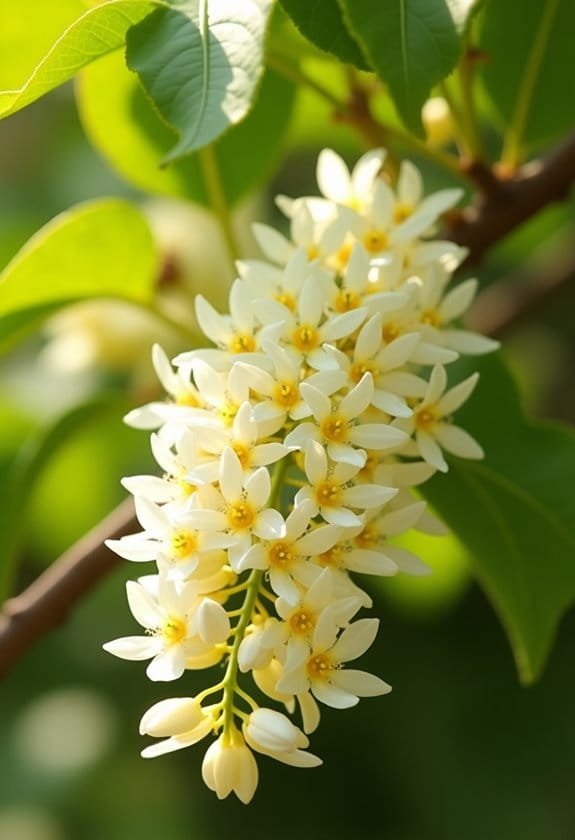
Commonly referred to as black locust, *Robinia pseudoacacia* represents a fascinating blend of ecological significance and aesthetic appeal.
Standing at heights of 30 to 50 feet, this fast-growing deciduous tree not only showcases its unique compound leaves and fragrant white flowers but also plays an essential role in soil enrichment through nitrogen fixation.
However, its invasive tendencies in certain regions remind us of the delicate balance inherent in managing diverse ecosystems.
Common Name
The *Robinia pseudoacacia* tree, widely recognized as Black Locust, stands out not just for its striking appearance but also for its array of common names that reflect its multifaceted character.
This tree is often referred to as Common Locust, False Acacia, Green Locust, and Pea Flower Locust. Each of these names highlights different aspects of its identity, from its native roots in the eastern United States to its fragrant white flowers that bloom in late spring.
The Black Locust's blossoms not only enhance gardens but also play an essential role in attracting pollinators, thereby supporting local ecosystems.
Its durability and strength have made its wood highly sought after for furniture and outdoor construction, showcasing the tree's economic importance.
The various common names assigned to *Robinia pseudoacacia* illustrate its diverse applications across cultures and regions, reflecting how its attributes resonate with the communities that cherish it.
Ultimately, the common name for *Robinia pseudoacacia*, while simply a label, encapsulates its ecological significance, aesthetic charm, and practical utility, demonstrating how one tree can transcend its scientific classification to embrace a broader identity.
Scientific Name
*Robinia pseudoacacia* serves as a prime example of a tree that bridges natural beauty and ecological function. Commonly known as the black locust, this species belongs to the Fabaceae family, often referred to as the pea family. Native to the eastern United States, *Robinia pseudoacacia* has expanded its reach worldwide, becoming a notable presence in various countries across multiple continents.
The species name "pseudoacacia" reflects its resemblance to true acacia trees, although it possesses distinct characteristics that place it firmly within its botanical classification. Black locust trees are recognizable by their compound leaves and fragrant white flowers, which attract pollinators, enhancing biodiversity.
Additionally, they're adept at fixing nitrogen in the soil, greatly contributing to soil fertility—a crucial ecological role.
Typically, *Robinia pseudoacacia* grows between 12 to 30 meters (40 to 100 feet) tall and boasts a lifespan of approximately 90 years.
However, it's essential to recognize that in some regions, this species has been categorized as an invasive species, spreading rapidly and potentially disrupting local ecosystems. Therefore, its classification emphasizes the delicate interplay between beauty and ecological balance.
Overview
Known for its rapid growth and striking appearance, the black locust captures attention in landscapes worldwide. Scientifically known as *Robinia pseudoacacia*, this deciduous tree showcases fragrant flowers that bloom in spring, adding visual and olfactory allure. Black locust typically reaches heights of 12 to 30 meters (40 to 100 feet) and boasts a trunk diameter of 0.61 to 1.22 meters (2 to 4 feet). Its deep furrowed bark and compound leaves with multiple leaflets enhance its aesthetic appeal.
Ecologically, the black locust holds significant importance as a nitrogen-fixing species. By enriching the soil, it supports surrounding plant life, which can be particularly beneficial in disturbed environments. As a pioneer species, it creates habitats for diverse wildlife, fostering ecological balance.
Additionally, *Robinia pseudoacacia* reproduces both sexually through fragrant flowers and asexually via root suckers. While this adaptive trait supports its propagation, it can lead to invasiveness in various regions.
The wood of black locust is highly sought after for its remarkable strength and rot resistance, making it an excellent choice for furniture and fencing. Its fragrant flowers aren't just ornamental; they also serve culinary purposes, producing delightful syrups and fritters.
Key Features
Black locust (*Robinia pseudoacacia*) stands out not only for its impressive growth size, reaching heights of 12 to 30 meters, but also for its distinctive appearance, featuring a straight trunk adorned with a narrow crown.
Its compound leaves, composed of 7 to 19 dark blue-green leaflets, offer a lush backdrop to the tree's striking fragrant white flowers that bloom in lush clusters during late spring to early summer.
Growth Size
Reaching impressive heights, the black locust tree (*Robinia pseudoacacia*) typically grows between 12 to 30 meters (40 to 100 feet), with some individuals soaring as high as 70 to 80 feet under ideal conditions. This deciduous tree demonstrates a remarkable growth rate, easily establishing itself in various environments, particularly disturbed areas. Its ability to thrive in poor or clay soils further underscores its resilience.
As it matures, the black locust develops a scraggly, narrow crown, complemented by a straight trunk that can reach impressive diameters between 0.61 and 1.22 meters (2 to 4 feet). The tree's compound leaves, comprised of 7 to 19 leaflets arranged alternately, not only enrich its bushy appearance but also optimize photosynthesis, fostering further growth and height.
Typically, the black locust enjoys a lifespan of approximately 90 years, a reflection of its adaptability against various environmental factors.
This combination of enviable height, swift growth, and structured longevity makes the black locust an excellent species for landscaping and reforestation projects, highlighting its practical and ecological significance in both urban and rural settings.
Appearance
The striking appearance of the black locust tree (*Robinia pseudoacacia*) captures attention with its tall stature and distinctive bark. Typically ranging from 12 to 30 meters in height, this tree commands attention alongside its impressive trunk diameter of 0.61 to 1.22 meters. The bark showcases a unique reddish-black to gray hue, deeply furrowed with diamond-shaped grooves that develop as the tree matures, creating a textured surface that fascinates passersby.
Its lush compound leaves contribute to the overall aesthetic, comprised of 7 to 19 oval leaflets arranged alternately on a central stem. This dense foliage, in a rich dark blue-green color, provides a striking contrast against the tree's bark.
While younger branches may bear spines, the spines' presence diminishes with age, illustrating the black locust's evolving character.
In late spring, the tree becomes even more enchanting as it produces fragrant white flowers, forming pendulous racemes that enhance its ornamental value. This combination of height, texture, leaf structure, and floral display makes the black locust not only an ecological marvel but also a beautiful selection for landscape design.
Flowering Season
During the flowering season, which lasts from late April to June, black locust trees showcase their spectacular blooms, peaking in May.
These enchanting trees produce fragrant white flowers, arranged in striking pendulous racemes that can reach lengths of 5 to 8 inches. Each raceme contains numerous pea-like flowers, which aren't only visually appealing but also play a crucial role in the ecosystem.
The flowers attract a plethora of pollinators, especially bees, supporting biodiversity during this critical blooming period. As the bees buzz from flower to flower, they facilitate pollination, ensuring the continuation of this species.
Furthermore, the blossoms aren't merely ornamental; they've culinary uses too. Enthusiastic cooks harvest these edible flowers to create delightful fritters and flavorful syrups, adding a unique twist to various dishes.
Post-flowering, the black locust tree develops flat, smooth seed pods, which mature from July to November. Each pod encases 4 to 8 seeds, a reflection of the tree's reproductive success, ensuring future generations thrive.
Essentially, the flowering season of *Robinia pseudoacacia* stands out as a time of beauty, utility, and ecological importance.
Growing Requirements
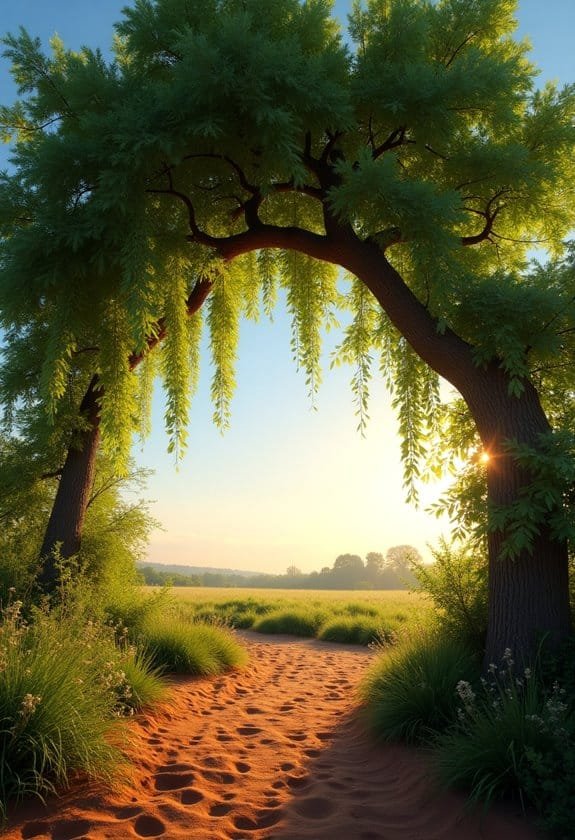
Black locust, or *Robinia pseudoacacia*, flourishes best under full sun, showcasing its adaptability to light shade while requiring well-drained soils for peak growth.
It thrives in various moisture levels, demonstrating impressive drought tolerance once established, which allows it to endure even harsh conditions unlike many other tree species.
Understanding these growing requirements—covering light, soil, water, and temperature—enables successful cultivation and guarantees robust development of this resilient tree. Additionally, incorporating nitrogen fixation techniques can enhance soil quality, benefiting the overall ecosystem.
Light
Sunlight plays an essential role in the growth of *Robinia pseudoacacia*, as it thrives in full sun and requires at least six hours of direct sunlight each day. This exposure not only encourages peak growth but also promotes abundant flowering, making it a stunning addition to any landscape.
While the black locust can tolerate light shade, insufficient sunlight can result in stunted growth and diminished flowering, impairing its aesthetic and ecological value.
Once established, this resilient tree showcases remarkable drought tolerance, allowing it to flourish in a range of environments, even where moisture is limited. The adaptability of *Robinia pseudoacacia* extends beyond its drought resistance; it can also thrive in well-drained soils, including poor or clay soils, which broadens its potential planting locations.
Suitable for hardiness zones 4-9 and heat zones 3-9, it demonstrates a remarkable ability to withstand varying climatic conditions.
Gardeners should aim for a planting site that provides ample sunlight, ensuring that their black locust tree reaches its full capacity in both growth and flowering. With appropriate care, *Robinia pseudoacacia* can be a vibrant and thriving presence in any garden setting.
Soil
Thriving in well-drained soils, *Robinia pseudoacacia* showcases impressive adaptability to various soil types, including poor and clay soils.
This remarkable tree flourishes in a soil pH range of 6.0 to 8.0, enabling it to grow effectively in both acidic and alkaline conditions.
*Robinia pseudoacacia* exhibits strong drought tolerance once established, making it an excellent choice for regions with dry to medium soil moisture levels.
The roots of this species probe deeply into the ground, allowing it to seek out water and nutrients, which enhances its survivability in challenging environments.
Additionally, *Robinia pseudoacacia* possesses the unique ability to fix nitrogen in the soil through its symbiotic relationship with specific bacteria.
This nitrogen-fixing capability not only promotes soil health but also enriches the surrounding area, encouraging the growth of other vegetation and enhancing overall biodiversity.
Water
When it comes to water requirements, *Robinia pseudoacacia* prefers well-drained soils and can adapt to a range of moisture conditions, from dry to medium levels. This remarkable adaptability allows the tree to thrive even in less than ideal environments.
Once established, the black locust exhibits strong drought tolerance, enabling it to survive in arid landscapes with minimal irrigation. During the initial growth period, adequate watering is essential; it fosters robust development and sets the foundation for long-term health.
The tree flourishes best with full sun exposure, which is vital for ideal growth and impressive flowering, while heavily shaded areas will hinder its progress. A recommended soil pH for *Robinia pseudoacacia* ranges from 6.0 to 8.0, showcasing its versatility across various soil conditions.
In essence, providing this tree with well-drained soils and sufficient sunlight not only supports its growth but enhances its resilience to drought. By understanding these hydric requirements, gardeners and landscapers can successfully cultivate black locust, transforming arid spaces into flourishing environments filled with life and beauty.
Temperature
Black locust (*Robinia pseudoacacia*) flourishes in a range of temperatures, making it a robust choice for various climates. This tree thrives in hardiness zones 4-9, able to withstand minimum temperatures as low as -30°F (-34°C) and as mild as 20°F (-6°C).
Black locust shows resilience, enduring harsh winters and recovering from existing roots after extreme cold. It requires full sun but can tolerate light shade, efficiently harnessing sunlight for its growth.
Moreover, this species demonstrates remarkable drought tolerance, making it capable of surviving prolonged dry spells typical of its native habitats. Once established, it can endure dry conditions without significant stress.
Black locust also exhibits adaptability to various soil types, although it flourishes best in well-drained soils. Its ability to thrive in both poor and clay soils further emphasizes its resilience.
Pollinator Criteria
The black locust (*Robinia pseudoacacia*) is a magnet for various pollinators, particularly bees, drawn by its fragrant white flowers that bloom in clustered racemes from April to June.
This species employs a specialized pollination method, relying on its abundant nectar supply, which supports local bee populations and fosters an increase in biodiversity.
Additionally, the tree serves as a larval host for certain butterfly species, illustrating its critical role in sustaining diverse life cycles within its ecosystem.
Attracted Pollinators
Attracting a diverse range of pollinators, *Robinia pseudoacacia* showcases its appeal through clusters of fragrant white flowers that release a strong scent, drawing in bees and other beneficial insects. Blooming from late spring to early summer, specifically between April and June, these flowers provide an important foraging resource for numerous native bee species. The availability of abundant nectar not only nourishes pollinators but also supports the production of light, sweet honey, esteemed by beekeepers and integral to local agricultural economies.
Beyond bees, the black locust's flowers attract up to 67 species of lepidoptera, including butterflies and moths, forming a critical link in their life cycles. Some lepidopteran species utilize the tree as a larval host plant, enhancing the biodiversity within their ecosystems.
The interactions between *Robinia pseudoacacia* and its pollinators considerably contribute to the tree's role as a pioneer species, promoting ecosystem health, resilience, and a diverse array of plant and animal life.
Pollination Method
Pollination of *Robinia pseudoacacia* primarily occurs through the activity of bees, including honeybees and bumblebees, which are drawn to the tree's fragrant, nectar-rich blooms. These flowers, arranged in pendulous racemes of up to 20 centimeters long, provide easy access for pollinators, allowing efficient pollen transfer during the crucial late spring season.
The unique morphology of each flower, designed to accommodate the larger bodies of these bee species, enhances the likelihood of successful pollination, showcasing nature's intricate engineering.
As black locust trees produce substantial amounts of pollen, they create an inviting environment for various pollinators, enriching the local ecosystem's biodiversity. This generous pollen production not only aids in reproduction but also fosters the growth of surrounding flora due to the tree's nitrogen-fixing capabilities.
Consequently, the plant attracts an array of pollinators essential for maintaining ecological balance and health. Through their interactions with *Robinia pseudoacacia*, these pollinators support a vibrant array of wildlife, underscoring the interdependence within ecosystems.
The dance between flowers and pollinators exemplifies a harmonious relationship, contributing considerably to the ecological mosaic.
Care & Maintenance
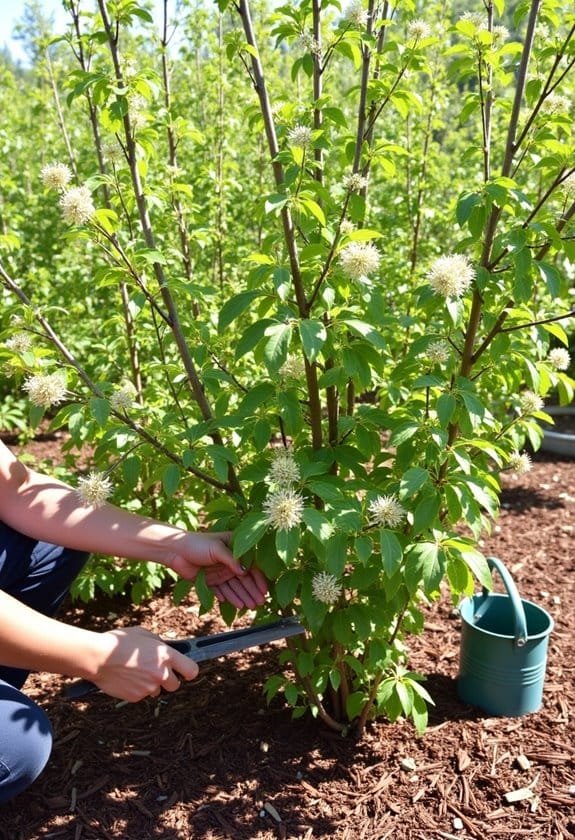
In caring for Robinia pseudoacacia, proper planting and ongoing maintenance are essential for ideal growth and aesthetic appeal.
These trees flourish in well-drained soil and full sunlight, thriving with minimal water once established, but ongoing care includes pruning and monitoring for pests that threaten overall health.
Additionally, choosing appropriate companion plants can help enhance their resilience while supporting surrounding ecosystems, ensuring a vibrant and sustainable landscape.
Planting Tips
Black locust thrives when planted in well-drained areas that receive full sun, making careful location choice paramount for maximizing its growth and flowering potential. This species prefers dry to medium soil conditions and readily adapts to a range of pH levels, from 6.0 to 8.0. For best results, individuals should focus on planting tips that promote a robust root system, ensuring ample space for root development.
Regular pruning in late summer or early fall minimizes sap bleeding and helps maintain the tree's shape. Excessive growth may lead to a scraggly appearance, adversely affecting its aesthetic value. Additionally, frequent removal of suckers is essential to controlling vigorous growth.
If left unchecked, black locust can form interconnected groves, posing a risk of becoming an invasive species in local ecosystems. Early monitoring for pests like locust borers and leaf miners can prevent significant damage, ensuring the tree retains its energy.
Finally, surrounding the plant with native species can suppress its regrowth potential, creating a more balanced ecosystem. By following these thoughtful planting tips, one can cultivate a thriving black locust that enhances landscapes while mitigating potential ecological issues.
Ongoing Care
To maintain a healthy black locust, regular ongoing care is indispensable, particularly in the early years of establishment.
Pruning is imperative; performing this task during late summer or early fall minimizes the risk of bleeding and promotes a robust, well-structured appearance. Additionally, immediate removal of root suckers is essential to control growth and curb the tree's tendency to become weedy, as black locust is notorious for its vigorous sucker production.
Furthermore, monitoring for pests such as locust borers and leaf miners is important, as their unchecked presence can inflict considerable damage on the tree.
During dry spells, remember that while black locust exhibits remarkable drought tolerance once established, young trees still need consistent moisture to thrive.
Implementing a routine observation strategy enables the effective management of root spread, preventing encroachment into unwanted areas—especially in regions where black locust is deemed invasive. Additionally, be aware that black locust can outcompete local flora, similar to the aggressive growth patterns of Common Broom, further complicating local ecosystems.
Suggested Companions
Choosing the right companions for *Robinia pseudoacacia* can enhance both the health of the tree and the overall vigor of the garden. This black locust thrives in full sun and contributes positively to soil fertility, making it an excellent choice for companion planting with nitrogen-loving plants such as clover and alfalfa. These companions not only benefit from the nitrogen-rich soil but also promote a healthy ecosystem, supporting the establishment of self-seeding colonies that can enrich the garden landscape.
It's important to take into account drought-tolerant plants like lavender and sedum, which can thrive alongside black locust, creating a resilient and low-maintenance landscape. Additionally, incorporating white clover's nitrogen-fixing capabilities can further enrich the soil around the black locust, supporting overall plant health.
To prevent competition and overcrowding, spacing is significant; companions should be planted at least 10-15 feet away to accommodate the black locust's invasive root system.
Regular monitoring for suckering is essential, as managing growth will help maintain harmony among the plants. Additionally, pruning black locust in late summer encourages healthy development, allowing light to reach nearby companions, which fosters a balanced garden ecosystem.
Common Issues
Black locust (*Robinia pseudoacacia*) faces several common issues that can threaten its health and survival.
Pests like locust borers and heart rot disease undermine the tree's structural integrity, potentially leading to leaf drop and trunk deterioration.
Environmental factors such as drought exacerbate these challenges.
Understanding these vulnerabilities empowers caretakers to implement effective management strategies, ensuring the tree remains an asset rather than a liability in the landscape.
Pests/Diseases
Robinia pseudoacacia, commonly known as black locust, faces several threats from pests and diseases that can seriously impact its health.
One of the most damaging pests is the locust borer, a beetle that can truncate the trunk through significant damage, often resulting in tree mortality. Additionally, the locust leaf miner inflicts harm on the leaves, leading to browning and decreased photosynthesis, which ultimately weakens the tree's overall vigor.
Other pests, such as caterpillars, weevils, scales, and whiteflies, also contribute to deteriorating health by feeding on foliage and sap, thereby diminishing the tree's resilience.
Regarding diseases, black locust is susceptible to canker, powdery mildew, and heart rot. These ailments manifest as leaf spots and wood rots, which stunt growth and may induce structural weakness in the tree.
Heart rot, in particular, poses a significant threat since it diminishes the wood's integrity, making routine monitoring essential.
Understanding these common issues is crucial for maintaining the health of Robinia pseudoacacia, ensuring that this remarkable species can continue to thrive in its native environments.
Solutions
Effective management of Robinia pseudoacacia requires a proactive approach to address common issues related to its invasiveness and susceptibility to pests.
Regular monitoring and removal of seedling sprouts and root suckers are essential practices, as they help prevent this invasive species from dominating local ecosystems. Employing methods such as the "cut and squirt" technique, where herbicides target freshly cut stems, can efficiently manage larger trees while minimizing collateral damage to surrounding flora.
Establishing dense plantings of native species serves as another preventative measure, competing for resources and restricting the growth opportunities of black locust.
In addition to the challenges posed by invasiveness, it's critical to remain vigilant against pest threats, such as locust borers and locust leaf miners. Early intervention with appropriate treatments can greatly mitigate damage, preserving the health of these trees.
Moreover, caution is warranted due to the toxicity of black locust parts; growers must verify that children and pets are kept away from these areas to avoid accidental ingestion.
Summary
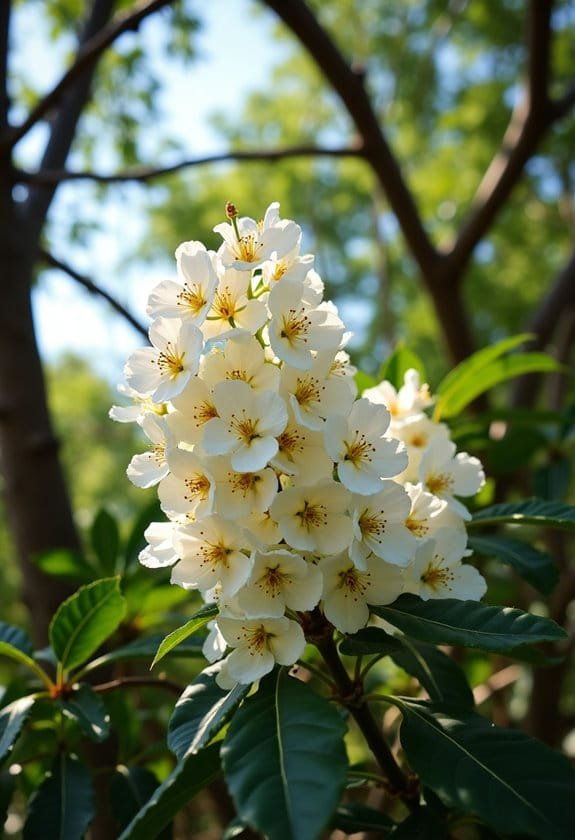
This remarkable tree, commonly known as black locust, is valued for its rapid growth and adaptability. Reaching heights of 30-50 feet, it showcases fragrant white flowers in late spring, providing both beauty and ecological benefits.
Native to the eastern United States, black locust excels at fixing nitrogen in the soil, bolstering fertility and nurturing surrounding plant life. Its wood, attaining a Janka hardness of 1,700 lbf, is economically significant, often employed in furniture and flooring.
However, black locust poses challenges as an invasive species in regions like the western U.S. and parts of the Midwest. Its aggressive reproductive strategy, which includes root suckering and seed dispersal, can overshadow native flora, leading to ecological imbalances.
Additionally, it's crucial to recognize that black locust is toxic to humans and livestock. Compounds such as robinine can cause severe health complications if ingested, necessitating caution in its handling.