Aesculus indica, or Indian Horse Chestnut, is a fascinating tree native to the Himalayan lowlands, standing 9 to 12 meters tall, with a canopy reach of up to 15 meters. Its large, glossy leaves and spectacular white flowers enhance its aesthetic appeal while supporting local ecosystems, particularly through pollinator attraction during its bloom in June and July. Thriving in USDA zones 7-9, it favors well-drained, fertile soils and requires consistent moisture, avoiding waterlogging. Regular maintenance, including strategic pruning and pest management, guarantees healthy growth and environmental interaction, emphasizing its significant ecological role. There's much more to explore about this remarkable species.
Main Points
- Aesculus indica, or Indian Horse Chestnut, thrives in Himalayan Lowlands, reaching heights of 9-12 meters with a rounded canopy.
- It features large glossy leaves and striking white flowers, blooming from June to July, primarily pollinated by bees.
- The tree grows best in well-drained, fertile soils with a neutral to slightly alkaline pH, and requires consistent moisture without waterlogging.
- Indian Horse Chestnut seeds are used as flour in local cuisine, while its leaves serve as cattle fodder, highlighting its cultural importance.
- Regular pruning and pest management are crucial for maintaining tree health and preventing common issues such as Horse Chestnut Leafminer infestations.
Introduction
Aesculus indica, known as the Indian Horse Chestnut, stands out as a remarkable tree species native to the Himalayan Lowlands.
This impressive plant reaches heights of 9 to 12 meters and boasts stunning white flowers that bloom from June to July, attracting pollinators like bees.
Its significance extends beyond aesthetics, as the seeds are traditionally processed into flour, showcasing the tree's integral role in local cultures and diets.
Common Name
The Indian horse chestnut is a distinctive tree known for its stunning ornamental qualities and rich cultural significance. Classified scientifically as Aesculus indica, this remarkable species hails from South Asia, setting it apart from other horse chestnut types. Many admire its striking white flowers, which bloom in dense clusters, and its large, lush foliage that provides a rounded canopy.
This tree can reach impressive heights of 9 to 12 meters (30 to 40 feet), making it an ideal choice for providing shade in gardens and parks.
During the mid-19th century, the Indian horse chestnut was introduced to parks and estates across the British Isles, quickly becoming a favored ornamental planting. Gardeners appreciate not just its beauty but also its adaptability to various soil types. Among its cultivars, one notable variety is the cultivar Sydney Pearce, admired for its exceptional aesthetic appeal.
In addition to its ornamental use, the Indian horse chestnut plays an intriguing role in Indian cuisine. The seeds, once processed into a bitter flour known as tattawakher, enrich various traditional dishes, showcasing the tree's multifunctional importance in both aesthetics and culture.
Scientific Name
Belonging to the family Sapindaceae, the scientific name Aesculus indica identifies the Indian horse chestnut, a striking tree celebrated for both its beauty and cultural significance.
This magnificent species, native to the Himalayan lowlands, thrives in regions primarily between Kashmir and Western Nepal, where it flourishes at elevations ranging from 900 to 3,000 meters.
Aesculus indica is distinguished by its large, glossy leaves, which can measure between 10 to 20 centimeters long, often forming a lush, rounded canopy that provides ample shade.
During the months of June and July, this tree showcases its impressive hermaphroditic flowers, blossoming with delicate white petals that attract pollinators, particularly bees.
This floral display not only enhances the ecosystem but also captivates observers with its ethereal beauty.
A remarkable feature of Aesculus indica is its hardiness; it can withstand temperatures as low as -18°C (0°F), making it suitable for growth in USDA hardiness zones 7–9.
In this manner, the Indian horse chestnut stands as a reflection of nature's resilience, harmoniously blending ecological adaptability with aesthetic allure.
Overview
Celebrated for its stunning appearance and ecological contributions, Aesculus indica, commonly known as the Indian horse chestnut, captivates everyone who encounters it. This towering deciduous tree reaches heights of 9 to 12 meters (30 to 40 feet) with an impressive canopy spread of 11 to 15 meters (35 to 50 feet).
Known for its remarkable white hermaphroditic flowers, which bloom during June and July, the tree attracts bees, playing a crucial role in local ecosystems. Beyond its aesthetic appeal, Aesculus indica holds significant cultural importance; the large leaves serve as valuable cattle fodder in Northern India, while the seeds have historically been transformed into a bitter but useful flour for cooking.
Moreover, this species has been introduced to parks and estates in regions like the British Isles and the United States, illustrating its broad ecological impact. Its ornamental characteristics have led to the creation of various cultivars, such as the Sydney Pearce, which has gained accolades from the Royal Horticultural Society.
Through its diverse applications and contributions, Aesculus indica not only enhances landscapes but also enriches the cultural narratives surrounding its historical uses and ecological value.
Key Features
Aesculus indica stands impressive at heights of 9 to 12 meters, boasting a remarkable canopy spread of 11 to 15 meters that forms an inviting rounded shape.
Its large leaves, measuring 10 to 20 centimeters long, enhance its aesthetic appeal, particularly when adorned with striking white flowers that bloom from June to July.
This seasonal display not only serves as a feast for the eyes but also attracts essential pollinators like bees, enriching the surrounding ecosystem.
Growth Size
Typically reaching heights of 9–12 meters (30–40 feet), Aesculus indica presents a striking growth profile. This robust tree features a canopy spread that ranges from 11 to 15 meters (35–50 feet), creating a visually impressive round canopy shape. Height variations arise primarily due to environmental factors and soil conditions, allowing this species to adapt to various landscapes.
The growth rate of Aesculus indica is moderate, providing enthusiastic gardeners and horticulturists the chance to cultivate this majestic tree within a manageable timeframe. As it matures, it showcases its large leaves, measuring between 10–20 cm (3.9–7.9 inches) long and 2–6 cm (0.79–2.36 inches) wide. This foliage not only enhances the tree's aesthetic appeal but also contributes to its overall health by effectively intercepting sunlight.
Additionally, the adaptability of Aesculus indica enables it to thrive in diverse climates, withstanding temperatures as low as -18°C (0°F). Such resilience guarantees its popularity across USDA zones 7–9, making it a favored choice for landscape design and urban planning.
Ultimately, Aesculus indica stands as an indication of nature's ability to flourish and inspire.
Appearance
Measuring between 9–12 meters (30–40 feet) in height, this impressive tree showcases a round canopy that spreads out to 11–15 meters (35–50 feet). The striking leaf characteristics contribute significantly to its visual appeal; each leaf measures between 10–20 cm (3.9–7.9 inches) long and 2–6 cm (0.79–2.36 inches) wide, featuring slender, pointed leaflets that create a lush, green canopy for shaded areas.
The bark texture of Aesculus indica adds to its charm; it starts smooth and grayish-red but matures into a distinctive peel that reveals long strips, which enhances its unique exterior over time. This peeling bark, reminiscent of old parchment, provides an intriguing contrast to the tree's other features.
In autumn, fruit development plays a significant role in the tree's lifecycle, as it produces spiny green capsules filled with glossy brown seeds. These capsules, which ripen in October, serve as a fascinating visual element, inviting both curiosity and admiration from onlookers.
Together, these features create a stunning specimen, embodying the magnificent presence of the Indian Horse Chestnut within landscapes.
Flowering Season
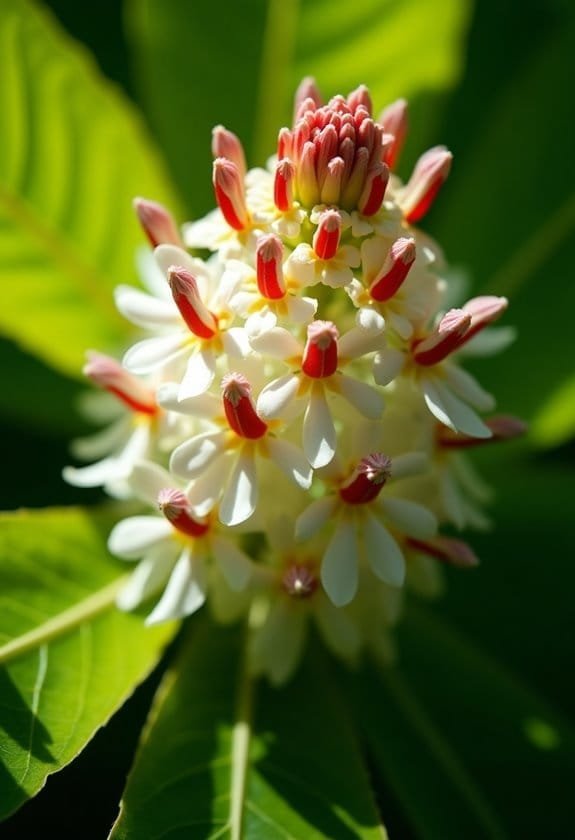
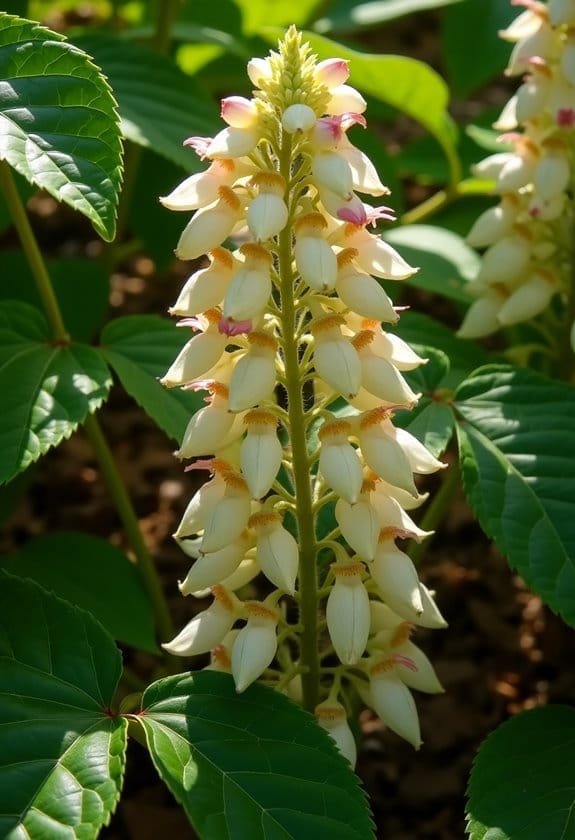
During the flowering season, Aesculus indica captivates with its stunning displays of hermaphroditic flowers. Blooming from June to July, the tree showcases mainly white blossoms that appear in upright panicles, creating a delightful, feathery effect.
The extensive flowering stages provide an impressive visual treat, with each spike hosting numerous delicate flowers. This arrangement not only enhances the tree's ornamental value but also contributes to a lush, round canopy.
Pollination plays an essential role in the flowering success of Aesculus indica. Mainly aided by bees, pollination occurs during May and June, setting the stage for fruitful blooms. This natural collaboration underscores the importance of pollinators within ecosystems; their decline could severely impact flowering vegetation and, consequently, the animals that depend on them for sustenance.
Interestingly, Aesculus indica flowers about a month later than its relative, Aesculus hippocastanum, which allows it to adapt and thrive in its environment.
Through this timing and its exquisite flowers, the Indian Horse Chestnut enriches local biodiversity, providing significant environmental impact, while also inviting admiration from nature lovers and horticulturists alike.
Growing Requirements
Aesculus indica flourishes in well-drained, chalky soils and requires an abundance of sunlight to thrive effectively.
Consistent moisture at the roots is essential, yet careful attention must be paid to avoid waterlogging, as this can impede its growth considerably.
Withstanding frigid temperatures down to -18°C (0°F), this resilient species suits USDA hardiness zones 7 to 9, showcasing its adaptability in varied climates.
Light
Light plays an essential role in the growth of Aesculus indica, as this tree thrives in full sunlight. To achieve ideal conditions, it requires ample sunlight exposure for robust growth and vibrant leaf development.
The tree flourishes in temperate climates, appreciating bright, indirect light, especially during its younger stages. This light is critical not only for photosynthesis but also for producing its spectacular white blooms, which play an essential role in attracting pollinators like bees.
When Aesculus indica receives adequate light exposure, it enjoys significant growth benefits, flowering prolifically and developing strong branches. However, insufficient light can lead to slower growth rates and diminished flowering potential, making it necessary to plant these trees in open, unobstructed areas.
While the species prefers sunny conditions, it can tolerate partial shade, but this comes with a caveat; diminished light reduces overall vigor and flowering intensity. As a result, to nurture the aesthetic charm and health of Aesculus indica, one must prioritize full sunlight, steering clear of shaded locations that could hinder its remarkable beauty and growth trajectory.
Following these guidelines will guarantee that the Indian Horse Chestnut reaches its majestic potential.
Soil
For ideal growth, Aesculus indica demands well-drained soils that are preferably chalky or loamy. This species thrives in environments where soil composition fosters excellent drainage, thereby preventing root rot and promoting healthy growth.
The tree exhibits remarkable adaptability, although it flourishes best in fertile garden soils rich in organic matter. Such conditions enhance nutrient availability, supporting robust growth patterns.
In addition, maintaining consistent moisture retention is essential, particularly during dry spells when the roots require adequate hydration. Aesculus indica flourishes in soils with a pH balance ideally ranging from neutral to slightly alkaline, which facilitates nutrient uptake and overall health.
While this tree demonstrates resilience to various soil types, cultivating it in conditions with the appropriate pH balance and organic enrichment maximizes its growth potential.
Moreover, the tree's winter hardiness suggests that suitable placement in a protected area enhances its chances of survival against late frosts. Consequently, understanding and managing soil conditions directly influences Aesculus indica's health, ultimately allowing for a thriving specimen that delights in both aesthetic and environmental contributions.
Water
Well-drained soils are important, but equally significant is the water management necessary for Aesculus indica's growth. This species thrives with generous root moisture, highlighting its preference for consistently moist soil conditions. Effective irrigation techniques play an essential role in maintaining this moisture, particularly during dry spells, where regular watering becomes vital to support robust root development, especially in the early establishment phases.
While Aesculus indica can flourish in various soil types, including chalky varieties, excessive waterlogging poses a significant risk of root rot. As a result, balancing hydration while guaranteeing proper drainage is imperative for the tree's health.
To promote moisture retention in the soil, mulching can be a beneficial practice, as it conserves water and stabilizes temperature, ultimately assisting the tree's growth.
Moreover, the tree exhibits certain drought resilience characteristics, making it adaptable; however, it still requires vigilance from caregivers. Consistently monitoring soil moisture levels helps mitigate risks associated with late frosts that can damage young growth.
This careful attention guarantees that Aesculus indica not only survives but thrives, establishing a strong foundation for its long-term prosperity in the landscape.
Temperature
Aesculus indica thrives in moderate climates, showcasing remarkable hardiness to temperatures as low as -18°C (0°F), which allows it to flourish in USDA zones 7–9. This tree exhibits impressive climate adaptability, often found at elevations ranging from 900 to 3,000 meters in its native Himalayan habitat.
While it can withstand chilling temperatures, young growth is particularly frost-sensitive, making late frosts a significant concern. These frosts can hinder its development during early spring, underscoring the significance of planting in frost-free areas.
Optimum growth conditions for Aesculus indica include warm summers, which facilitate its spectacular flowering from June to July. Such temperature fluctuations, where summers are warm and winters are cooler, create an ideal rhythm for the tree's seasonal cycle.
Additionally, the tree thrives in regions with ample sunlight and well-drained soils, enhancing its resilience against various climate challenges.
As gardeners and horticulturists consider incorporating this magnificent species, awareness of its specific temperature and environmental requirements becomes vital for ensuring robust growth and vibrant blooms.
Ultimately, providing suitable temperatures facilitates the ongoing allure of this hardy yet delicate tree in temperate gardens.
Pollinator Criteria
Aesculus indica relies heavily on pollinators, primarily bees, to achieve successful reproduction through its unique hermaphroditic flowers.
The tree's striking white blossoms, arranged in feathery spikes, draw these essential insects during their active foraging period from June to July.
This dependence on specific pollinators underscores the broader ecological significance of maintaining healthy bee populations, as their role directly impacts the tree's ability to produce ripening seeds by October.
Attracted Pollinators
The attractive flowers of Aesculus indica draw numerous pollinators, primarily bees, during their blooming period from May to June. These hermaphroditic white blossoms reach impressive heights on flower spikes, creating a visible spectacle that beckons bee foraging habits.
The fragrant blooms not only serve as a vibrant visual element in gardens but also provide essential resources, particularly important for bee populations traversing limited forage in urban and parque environments.
The flowering strategies of Aesculus indica coincide with the active foraging periods of various bee species, fostering robust pollinator diversity. As bees engage with the flowers, they collect nectar and pollen, promoting effective pollination.
This interdependence between plant and pollinator illustrates the delicate balance of ecosystems, highlighting the significance of maintaining diverse habitats that support these beneficial insects.
The successful pollination of these magnificent flowers ultimately leads to the production of seeds that ripen by October, securing the future generations of Aesculus indica.
Pollination Method
Pollination in Aesculus indica hinges on the intricate relationship between its hermaphroditic flowers and bee populations, which play an indispensable role in its reproductive success. During the flowering season, lasting from June to July, these gorgeous white blossoms arrange themselves in striking spikes, enhancing their visibility and attracting efficient pollinators.
While Aesculus indica possesses the ability for self-pollination, it primarily relies on the diligent bee behavior, as these insects contribute considerably to the transfer of pollen between flowers.
Pollination timing is critical; successful seed development requires bees to be active in May and June, aligning perfectly with the flowering period. This synchrony guarantees that the pollen is fresh and viable when the flowers open, enhancing the chances of effective fertilization.
Bee populations, hence, aren't merely helpful but crucial, as they guarantee the timely pollination necessary for mature seed formation by October. Without these external pollinators, the plant's reproductive success would markedly decline, revealing the delicate balance between plant life and their insect counterparts, akin to a finely-tuned symphony where each creature plays an indispensable role.
Care & Maintenance
When caring for Aesculus indica, it's crucial to take into account a few key aspects to guarantee its health and longevity.
Proper planting techniques set the foundation, while ongoing care—such as appropriate watering and pruning—fosters robust growth and a harmonious structure.
Additionally, selecting compatible companion plants can create a thriving ecosystem, enhancing both aesthetics and biodiversity in the landscape.
Planting Tips
How can one guarantee the healthy growth of an Aesculus indica?
First, selecting an appropriate planting location is essential. This tree thrives in areas with full sun exposure, ensuring ideal photosynthesis and growth.
Soil preparation greatly impacts establishment; consequently, the soil should be well-draining with a balanced nutrient composition. Amending the soil with organic matter, such as compost, enhances its structure and fertility.
Equally important is root spacing. When planting, one should aim to provide ample space for the roots to expand. A distance of at least 15 to 25 feet between trees promotes healthy development and reduces competition for nutrients.
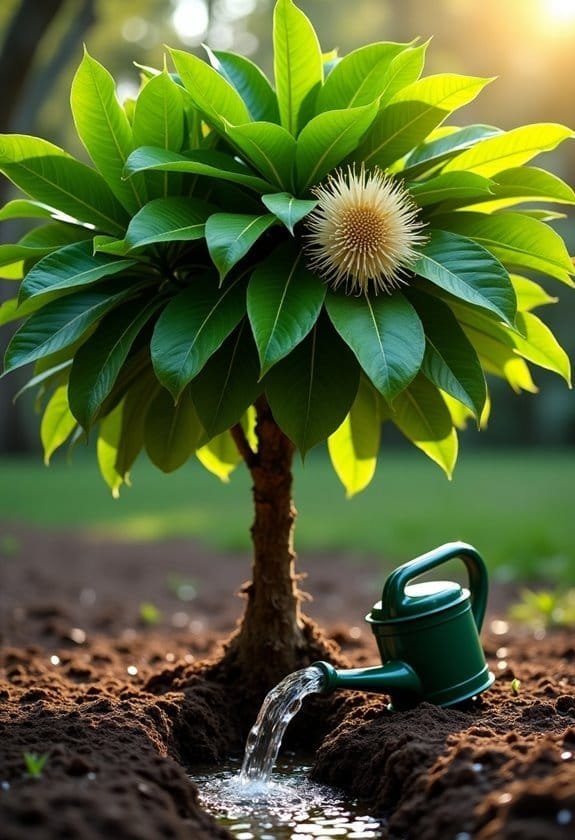
Watering practices also play a vital role. Moderation is key; while the Indian horse chestnut needs consistent moisture, avoid waterlogged conditions that can damage fragile roots. Incorporating a balanced fertilizer in early spring stimulates robust growth during the active growing season, ensuring the tree has the necessary nutrients.
Finally, periodic monitoring for pests and diseases is essential. Early detection and management of such threats will foster a thriving environment, ultimately enhancing the tree's aesthetics and health, making it a beloved addition to any landscape.
Ongoing Care
Ongoing care is necessary for maintaining the health and beauty of Aesculus indica. This stunning tree thrives best in a location receiving at least six hours of direct sunlight daily, making seasonal care important for its development.
To guarantee vigorous growth, the tree's moderate watering needs must be met; it's crucial to maintain well-drained soil and avoid waterlogging, which can lead to root rot.
Regular pruning techniques are recommended, particularly for younger specimens. By shaping the tree as it grows, gardeners can promote a robust structure and enhance air circulation, minimizing the risk of disease.
Monitoring for common pests, such as the Horse Chestnut Leafminer, is essential; proactive pest management can prevent infestations and protect the tree's foliage.
A well-planned fertilization schedule is key to supporting growth during the active growing season. Applying a balanced fertilizer in early spring supplies essential nutrients, ensuring that Aesculus indica flourishes as it expands its majestic canopy.
Adhering to these care routines not only boosts the tree's health but also enhances its ornamental value within any landscape.
Suggested Companions
Choosing the right companions for Aesculus indica can substantially enhance both its health and aesthetic appeal. To begin with, companion plantings like Acer rubrum (red maple) and Quercus rubra (northern red oak) thrive in well-drained soils similar to those preferred by Aesculus indica, offering crucial moisture balance.
Additionally, integrating Rhododendron spp. and Viburnum spp. provides partial shade and contributes significant aesthetic benefits, elevating the landscape's visual allure. Guelder Rose, for instance, is known for attracting pollinators such as bees and can enrich the garden's biodiversity.
To further improve ecosystem enhancement, consider utilizing ground cover plants like Euonymus fortunei. These plants effectively suppress weeds, preserve soil moisture, and reduce erosion, safeguarding the health of Aesculus indica.
It's important to select companions with compatible growth rates; slower-growing species are ideal, as Aesculus indica may take longer to establish itself fully.
Regular pruning of companion shrubs is vital, as it maintains an open canopy, ensuring that Aesculus indica receives adequate sunlight while minimizing competition for nutrients and water.
Further supporting biodiversity, incorporating plants like Common Hawthorn can attract various pollinators and wildlife, enhancing overall ecosystem health.
Through thoughtful selection of companion plants, garden enthusiasts can create a richly layered environment that not only supports the growth of Aesculus indica but also promotes a balanced, flourishing ecosystem.
Common Issues
Aesculus indica faces several common issues that can compromise its importance and growth. Pests like the Horse Chestnut Leafminer can substantially weaken its foliage, while the tree's tender young buds remain at risk from late frosts, which may delay spring development.
Additionally, human activities, including unsustainable seed collection, exacerbate these challenges, creating an urgent need for awareness and proactive solutions to protect this remarkable species.
Pests/Diseases
Monitoring for pests and diseases is essential for maintaining the health of Aesculus indica. Known for its resilience, this species faces threats from the Horse Chestnut Leafminer, a common pest that can cause significant defoliation if left unchecked. Implementing effective pest management strategies, such as regular inspections, helps detect these pests early, minimizing potential damage.
Moreover, the tree's foliage may be susceptible to powdery mildew in humid conditions, emphasizing the necessity for proper air circulation around the trees to deter fungal growth.
Although documentation on Aesculus indica's pest and disease issues is sparse, early detection remains critical not only for effective management but also for safeguarding the overall health of the tree. Inexperience with cultivation can impede one's confidence in pest management; hence, monitoring techniques become essential.
Practicing disease prevention practices, like maintaining healthy soil and ensuring adequate spacing between trees, can additionally mitigate risks. By combining diligent observation with informed decision-making, gardeners can better maintain Aesculus indica's beauty and health.
Ultimately, understanding these potential threats allows for a proactive approach, leading to thriving specimens that flourish in their environments.
Solutions
To guarantee Aesculus indica thrives and overcomes common issues, gardeners should focus on several key practices.
First, planting the tree in well-drained soil is essential, as waterlogged conditions can severely hamper growth and health. Adequate moisture is crucial, especially during dry spells, ensuring the roots remain hydrated to support overall vigor and vitality.
In addition, regular pruning aids in maintaining the tree's shape, encouraging healthy growth while eliminating dead or diseased branches that may harbor pests.
Monitoring for common pests like the Horse Chestnut Leafminer can prevent significant foliage damage; early detection through routine inspections serves as a primary defense mechanism.
Additionally, gardeners should avoid planting in frost-prone areas to protect tender younger shoots, which are particularly susceptible to cold damage.
Embracing these practices not only fosters a healthy Aesculus indica, but it also emphasizes its environmental benefits, such as enhancing biodiversity and promoting ecosystem health.
Furthermore, understanding the cultural significance and medicinal uses of this remarkable species deepens appreciation for the tree, making it an irreplaceable addition to gardens and landscapes alike.
Through diligence and care, gardeners can celebrate this unique tree and its many contributions.
Summary
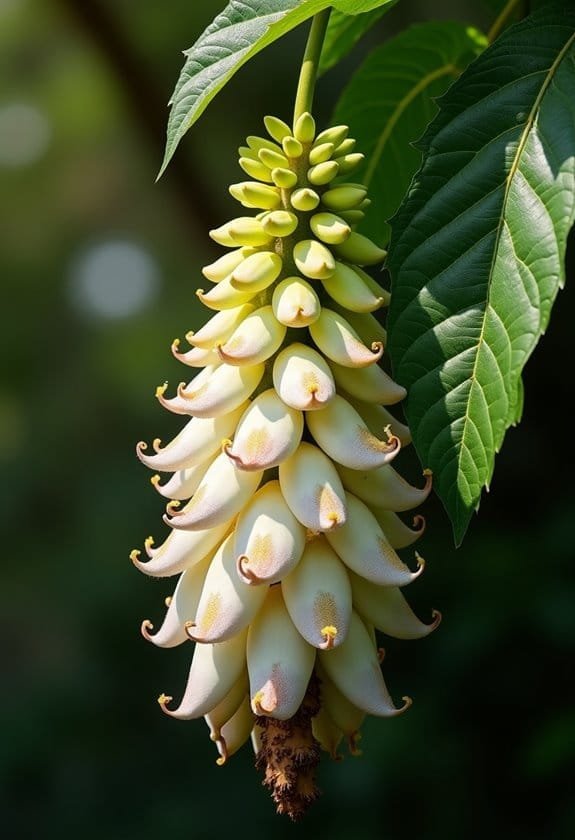
Native to the Himalayan Lowlands, Aesculus indica, or Indian Horse Chestnut, grows impressively tall, reaching heights of 9–12m (30–40ft) with a broad spread of 11–15m (35–50ft). This remarkable tree, hardy to -18°C (0°F), flourishes in USDA zones 7–9, making it a popular choice in parks and estates across the British Isles and parts of the United States since its introduction in the mid-19th century.
Aesculus indica not only boasts aesthetic appeal but also bears cultural significance in various regions. Its seeds are ground into a bitter flour known as tattawakher, often mixed with wheat for culinary uses in traditional Indian cooking. Meanwhile, the tree's large, palmate leaves serve as fodder for cattle, showcasing its practicality in agrarian societies.
This species is further cherished in bonsai cultivation, with the cultivar Sydney Pearce receiving accolades from the Royal Horticultural Society for its ornamental value.