Alpine Rock Cress is a hardy perennial groundcover that forms dense, spreading mats 8-10 inches tall and 12-18 inches wide. This resilient member of the Brassicaceae family thrives in full sun and well-drained, gritty soils across hardiness zones 3-8. Its fragrant white blooms appear from May through July, attracting diverse pollinators while adding year-round interest with evergreen gray-green foliage. The plant's exceptional drought tolerance and minimal maintenance requirements make it ideal for rock gardens and challenging alpine conditions. Understanding its specific growth requirements reveals why it's become a cornerstone of sustainable garden design.
Main Points
- Alpine Rock Cress is a low-growing perennial forming dense mats, reaching 8-10 inches tall and spreading 12-18 inches wide.
- The plant produces fragrant white flowers from May through July, attracting various pollinators and adding visual interest to gardens.
- It thrives in gritty, well-drained soils with alkaline pH, requiring full sun exposure and minimal watering once established.
- This hardy plant tolerates temperatures from -40°F to 90°F, making it suitable for USDA hardiness zones 3-8.
- Regular maintenance includes post-flowering cutbacks and monitoring for aphids, downy mildew, and white rust issues.
Introduction
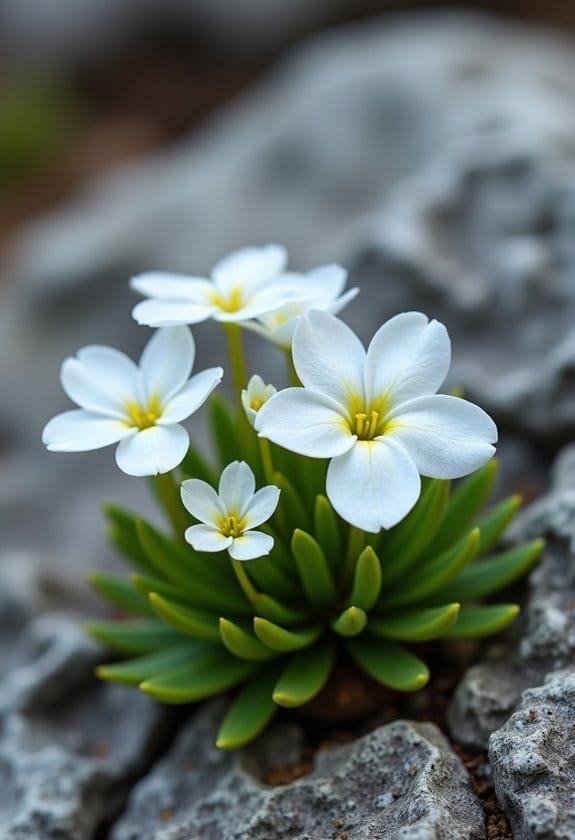
Alpine Rock Cress (Arabis alpina subsp. caucasica) stands as a resilient perennial that has earned its reputation as a mountain-dwelling champion of rocky terrains.
The plant's compact growth habit, reaching 8-10 inches in height and spreading 12-18 inches wide, makes it an excellent choice for rock gardens and challenging landscape situations.
This versatile evergreen not only graces gardens with its pristine white, four-petaled blooms from May through July but also serves as a valuable ecological contributor through its soil-stabilizing properties and pioneer species capabilities.
Common Name
Among the diverse members of the Arabis genus, the plant commonly known as Alpine Rock Cress goes by several names including Mountain Rock Cress, Caucasian Rockcress, Garden Rock Cross, Rock Cross, and Wall Rock Cross.
This versatile evergreen perennial has earned its multiple monikers through its widespread presence across mountainous regions of Europe and Asia, where it adorns limestone outcrops and alpine meadows with its delicate white flowers.
The various common names reflect both its preferred habitat and growth characteristics, with references to its rock-dwelling nature and cross-shaped flower formation being particularly prevalent.
These descriptive names have become well-established among gardeners and botanists alike, making it easier to identify and discuss this hardy plant across different regions and cultures.
Scientific Name
In scientific classification, Arabis alpina subsp. caucasica stands as the accepted taxonomic name for Alpine Rock Cress, belonging to the mustard family Brassicaceae. This designation represents the culmination of taxonomic revisions, as the plant was previously known under various names including Arabis albida.
The current scientific nomenclature reflects the plant's evolutionary history and its natural distribution across mountainous regions of Europe and Asia.
While commonly referred to as Alpine Rockcress in the northern U.S. and other regions, the subspecies caucasica distinguishes this particular variety from other members of the Arabis alpina group.
Its significance extends beyond mere classification, as this subspecies has become an invaluable model organism in contemporary genetic research, contributing to our understanding of plant adaptation and population dynamics.
Overview
The hardy and versatile Alpine Rock Cress stands out as a cherished ornamental plant in rock gardens and alpine landscapes worldwide. This mat-forming evergreen perennial, which thrives in full sun conditions, displays its resilience through a compact growth pattern reaching 8-10 inches in height and spreading 12-18 inches wide.
Native to northern mountainous regions across Europe and Asia, this adaptable plant produces delicate white flowers arranged in loose racemes during the spring and early summer months. Its four-petaled blooms not only add visual appeal but also provide essential support for pollinators in alpine ecosystems.
The plant's remarkable drought tolerance and ability to flourish in well-drained, gritty soils make it an excellent choice for gardeners in hardiness zones 3-8, particularly in challenging rocky or sandy environments.
Key Features
Mountain Rock Cress exhibits a compact, mat-forming growth pattern, reaching heights of 8-10 inches while spreading laterally up to 18 inches across the ground.
The plant's evergreen foliage creates a dense carpet of growth, serving as an attractive foundation for its prominent flowering display.
During its peak blooming period from May through July, the plant produces an abundance of fragrant white flowers arranged in loose racemes, each blossom featuring a distinctive four-petal structure that draws pollinators to the garden.
Growth Size
Reaching heights of 8-10 inches (20-25 cm) and spreading 12-18 inches (30-45 cm) wide, Alpine Rock Cress forms a compact, mat-like groundcover in gardens. Under ideal growing conditions, this versatile plant can extend upward to a maximum height of 12 inches (30 cm), creating an impressive display when flowers bloom in spring.
The plant's growth pattern is characterized by loose rosettes of gray-green, oval leaves with toothed edges, which contribute to its dense, spreading habit.
During the flowering period from May to July, delicate white blossoms emerge in loose racemes, featuring distinctive four-petal arrangements that crown the foliage. This controlled growth pattern makes Alpine Rock Cress particularly suitable for rock gardens, borders, and other spaces where a low-growing, spreading plant is desired.
Appearance
Many distinctive features characterize Alpine Rock Cress, including its loose rosettes of gray-green oval leaves with toothed edges and delicate white flowers arranged in racemes.
The plant's appearance makes it particularly appealing in parts of the northern garden landscape, where its evergreen foliage provides year-round interest and structure.
The flowers, which emerge prominently during the May-to-July blooming period, showcase a simple yet elegant four-petal structure and emit a pleasant fragrance that attracts pollinators.
After flowering, the plant develops characteristic elongated seed pods called siliques.
While the typical variety displays pristine white blooms, some cultivars, such as 'Compinkie', offer rosy-pink variations.
Despite being deer and rabbit resistant, this hardy plant maintains its neat, mat-forming habit throughout the growing season.
Flowering Season
The flowering season of Alpine Rock Cress spans from May to July, showcasing clusters of fragrant white blooms arranged in loose racemes. During this period, the plant's distinctive four-petaled flowers serve as beacons for pollinators, particularly attracting butterflies and bees to garden spaces.
While the classic white variety remains most prevalent, gardeners can also cultivate pink or rose cultivars that flower during the same timeframe, adding chromatic diversity to rock gardens and slopes.
To maintain peak flowering performance and prevent downy mildew, it's crucial to cut back the plant severely after blooming has concluded. This maintenance practice encourages the development of denser foliage and guarantees robust flowering in subsequent seasons, ultimately contributing to the plant's longevity and visual appeal.
Growing Requirements
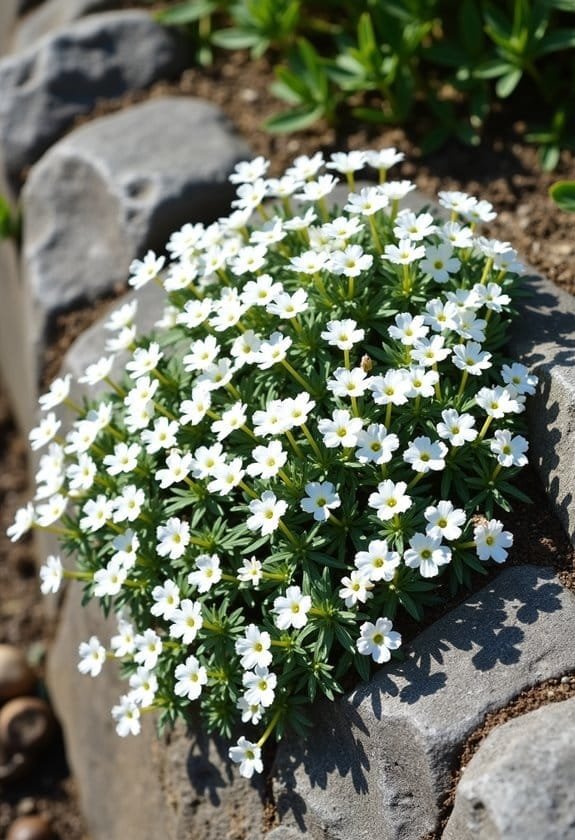
Alpine Rock Cress requires full sun exposure and thrives in gritty, alkaline soils that mirror its natural mountain habitat conditions.
The plant's remarkable drought tolerance lets gardeners maintain it with minimal watering, though proper drainage remains essential for preventing root issues in established specimens.
While adaptable across hardiness zones 3-8, this resilient perennial performs best in temperatures that fluctuate between its cold-hardy minimum of -40°F (-40°C) and summer highs of 90°F (32°C), demonstrating impressive versatility in various climates.
Light
Growing successfully in full sun conditions, Alpine Rock Cress demands at least 6 hours of direct sunlight each day to maintain vigorous growth and abundant flowering. The sunlight benefits extend beyond basic sustenance, as proper light exposure directly influences the plant's ability to produce its characteristic fragrant white blooms during the spring season.
For ideal growth optimization, positioning Alpine Rock Cress in an unshaded location guarantees it receives adequate sunlight throughout the day, particularly in zones 3-8 where light intensity can vary considerably.
The plant's remarkable adaptability to different light conditions contributes to its success across various climates, though it consistently performs best when bathed in full sunshine, which also enhances its drought tolerance and overall resilience in challenging environments.
Soil
Successfully thriving in gritty or sandy environments, Alpine Rock Cress demands well-drained soil conditions that mirror its natural mountain habitat.
The ideal soil composition features a coarse, rocky structure that facilitates excellent drainage while preventing moisture retention around the roots.
This hardy perennial demonstrates a marked preference for alkaline soil pH levels, flourishing in conditions that might prove challenging for less adaptable plants.
Its remarkable tolerance for nutrient-poor soils makes it an excellent choice for rocky gardens and slopes where soil fertility is limited.
To guarantee peak soil drainage, gardeners should incorporate plenty of grit or coarse sand into the planting medium, as excessive moisture can lead to root rot, particularly during winter months when the plant's metabolism slows considerably.
Water
Proper watering practices play a vital role in maintaining healthy Alpine Rock Cress plants. The most effective watering techniques focus on establishing a balance between adequate moisture during initial growth and utilizing the plant's natural drought resistance once mature.
During the establishment phase, consistent soil moisture is important, particularly in dry periods when young plants are developing their root systems.
However, once established, Alpine Rock Cress demonstrates remarkable drought tolerance and requires minimal supplemental watering.
It's important to avoid overwatering, as excessive moisture can lead to serious issues like downy mildew and white rust.
After flowering and pruning, the plant's water requirements naturally decrease, making it an ideal choice for water-conscious gardeners who appreciate low-maintenance perennials.
Temperature
Beyond water needs, temperature conditions greatly shape Alpine Rock Cress's growth patterns and overall success. The plant demonstrates remarkable temperature adaptation, flourishing across hardiness zones 3-8, where it manages both alpine cold and warmer climates with equal resilience.
This subspecies exhibits exceptional temperature resilience through its ability to withstand temperature extremes in zones 1-8, particularly when established in well-draining, gritty soils.
Its adaptable nature makes it an excellent choice for gardens experiencing significant seasonal variations. To maintain ideal growth in fluctuating conditions, gardeners should perform thorough cutbacks after flowering periods, which helps the plant adjust to changing temperatures while preserving its vigor and health throughout various climate cycles.
Pollinator Criteria
Alpine Rock Cress serves as a crucial nectar source for diverse pollinators, particularly specialized bees like Andrena arabis, which have evolved alongside the plant's seasonal blooming patterns.
The plant's fragrant white flowers, which emerge from May through July, create an important feeding station for both generalist and specialist pollinators in alpine environments.
Through its role in supporting pollinator populations, Alpine Rock Cress contributes considerably to ecosystem health and biodiversity, making it a cornerstone species in the RHS Plants for Pollinators initiative.
Attracted Pollinators
Mountain Rock Cress serves as a significant nectar source for various pollinators, particularly specialized bees like Andrena arabis. The plant's fragrant white blossoms attract an impressive array of pollinator diversity during its peak flowering period from May through July, creating a vibrant hub of ecological activity.
The importance of this alpine species extends beyond its role as one of the fundamental nectar sources for specialized bees. Its inclusion in the RHS Plants for Pollinators initiative underscores its essential contribution to maintaining ecological balance in garden and alpine environments.
Butterflies frequently visit the delicate white flowers, further enhancing the plant's reproductive success while simultaneously supporting the complex web of relationships that sustain healthy ecosystems in rocky and mountainous habitats.
Pollination Method
The pollination process of Alpine Rock Cress relies heavily on its specialized floral structure, featuring four accessible white petals that create an inviting landing platform for visiting insects.
During its peak blooming months from May to July, the plant's pollination dynamics demonstrate remarkable ecological significance through its interaction with specialized pollinators, particularly Andrena bees.
The plant's reproductive success depends on consistent nectar availability and strategic timing, as its flowering period synchronizes perfectly with the active season of its primary pollinators.
This intricate relationship has earned Alpine Rock Cress recognition within the RHS Plants for Pollinators program, acknowledging its crucial role in supporting pollinator populations.
The efficient cross-pollination mechanism, facilitated by its simple yet effective flower structure, guarantees genetic diversity and continued survival of both plant and pollinator species.
Care & Maintenance
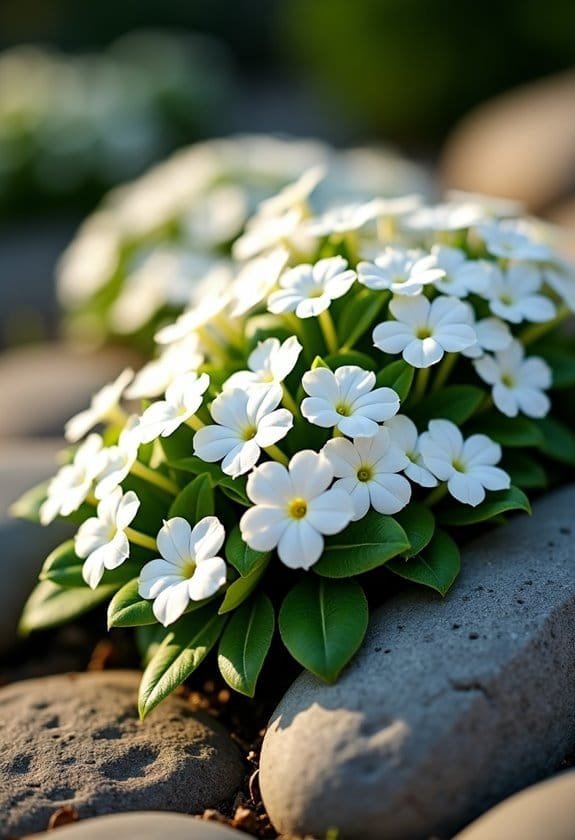
Mountain Rock Cress demands minimal attention once it's established in well-draining, gritty soil with full sun exposure.
Gardeners should perform a thorough cutback after flowering season ends, monitor for common pests like aphids, and guarantee the soil doesn't become waterlogged during rainy periods.
The plant's drought-tolerant nature and resistance to deer make it an excellent choice for low-maintenance rock gardens, where it pairs beautifully with other sun-loving perennials such as Sedum and Dianthus.
Planting Tips
Successful cultivation of Alpine Rock Cress depends on providing the right growing conditions and maintenance routine. These hardy perennials thrive in full sun exposure with well-drained, gritty soil that mimics their natural mountain habitat, making proper soil preparation essential for long-term success.
When implementing planting techniques, space plants 12-15 inches apart to allow for mature spread, and position them where they'll receive maximum sunlight throughout the growing season.
For ideal companion planting, pair Alpine Rock Cress with other drought-tolerant species like Sedum or Dianthus, which share similar cultural requirements.
The plant's cascading growth habit makes it particularly effective when planted along walls or in rock gardens, where its spreading nature can soften hard edges while providing seasonal interest.
Ongoing Care
Maintaining Alpine Rock Cress remains straightforward once proper planting techniques are established. The plant's drought-tolerant nature means minimal watering is required after establishment, making it an ideal choice for water-conscious gardeners.
Regular seasonal pruning, particularly a thorough cutback following the flowering period, encourages denser growth and more vigorous foliage development.
While fertilizer application isn't typically necessary in well-prepared soil, pest prevention requires occasional monitoring for aphids and flea beetles, though the plant demonstrates natural resistance to larger garden pests.
The key to successful ongoing care lies in providing proper drainage through gritty or sandy soil composition and ensuring full sun exposure.
For long-term sustainability, gardeners can divide established clumps or take softwood cuttings during summer months to propagate new plants.
Suggested Companions
During spring and summer months, Alpine Rock Cress creates stunning displays when paired with complementary drought-tolerant companions. Its preference for gritty, well-drained soils makes it an ideal partner for sedums and various rock garden plants, enhancing overall garden aesthetics while maintaining drought resistance throughout the growing season.
To maximize companion planting success, low-growing perennials like thyme and creeping phlox serve as excellent neighbors, forming dense ground cover that effectively suppresses weed growth while creating a tapestry of colors from May through July.
The post-flowering maintenance of Alpine Rock Cress, which involves systematic cutback, promotes vigorous growth without overwhelming its companions.
When selecting plant partners, it's crucial to choose species that share similar sunlight requirements and support the local pollinator population while thriving in minimal-water conditions.
Can Elephant Ear Plants Thrive in the Same Conditions as Alpine Rock Cress?
Elephant ear (bergenia species) plants and care thrive in different conditions than Alpine rock cress. While elephan ear plants prefer moist, well-drained soil and partial shade, Alpine rock cress thrives in full sun and well-draining soil. It’s important to consider each plant’s specific needs for optimal growth.
Common Issues
While Alpine Rock Cress typically shows strong resilience, it faces challenges from common garden pests like aphids, arabis midge, and flea beetles that can damage its foliage and flowers.
The plant's vulnerability to moisture-related diseases, particularly downy mildew and white blister, makes proper drainage and air circulation essential components of successful cultivation.
Fortunately, most pest and disease issues can be managed through regular monitoring, appropriate soil conditions, and timely post-flowering pruning, which helps maintain the plant's vigor and promotes healthier growth.
Pests/Diseases
Despite its hardy nature, Alpine Rock Cress can fall prey to several common pests and diseases. The primary pest management strategies focus on controlling aphids, arabis midge, and flea beetles through regular monitoring practices and timely intervention when infestations occur.
Disease prevention techniques become particularly essential in managing downy mildew and white blister, which thrive in overly moist conditions. Gardeners can implement effective cultural controls by guaranteeing proper air circulation and avoiding overhead watering, as these practices considerably reduce disease incidence.
While pest and disease challenges exist, Alpine Rock Cress maintains natural resilience against larger garden threats, as deer and rabbits typically avoid the plant. Regular inspection and maintenance, combined with appropriate growing conditions, help guarantee this attractive perennial's continued health and vigor.
Solutions
Many common issues affecting Alpine Rock Cress can be effectively addressed through simple preventive measures and timely interventions.
Pest management strategies focus on regular monitoring and introducing beneficial insects like ladybugs to control aphid populations naturally, while disease prevention relies heavily on maintaining proper air circulation and soil drainage.
For ideal soil health and plant vigor, gardeners should establish Alpine Rock Cress in gritty, well-drained soils and practice strategic companion planting with other drought-tolerant species.
A thorough approach to plant maintenance includes performing periodic severe cutbacks after flowering, which encourages denser growth and prevents leggy development.
Summary
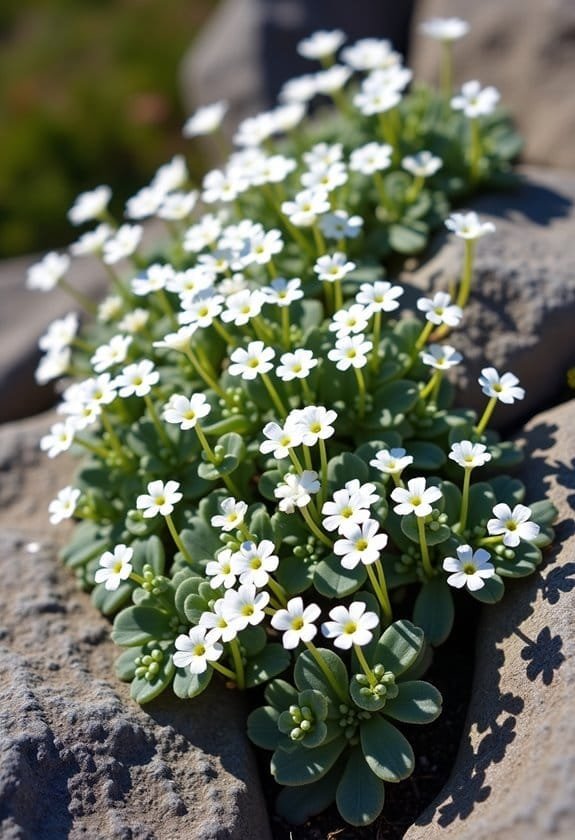
Alpine Rock Cress's elegant presence in mountainous landscapes showcases its versatility as a low-growing perennial. Its cultivation techniques are remarkably straightforward, thriving in full sun and well-drained soils while requiring minimal maintenance beyond post-flowering pruning.
The plant's ecological benefits extend far beyond its aesthetic appeal, serving as a crucial pioneer species in alpine environments and contributing to soil stabilization.
In landscape design, this hardy perennial proves indispensable, forming dense 8-10 inch tall mats that spread 12-18 inches wide, making it perfect for rock gardens and slopes. Its fragrant white blooms attract specialized pollinators from May through July, enhancing local biodiversity.
With impressive adaptability across hardiness zones 3-8 and natural resistance to pests, Alpine Rock Cress stands as an exemplary choice for sustainable gardening.