Angelica gigas, or Purple Angelica, is a enchanting biennial plant hailing from Korea, showcasing resilient growth that can reach heights of four to six feet. Its stout, ribbed stems support large, intricately dissected leaves, while striking dark purple spherical umbels bloom from August to October, attracting essential pollinators. Preferring rich, moist soil and ample sunlight, this plant flourishes in USDA Zones 5 to 9. Additionally, it possesses medicinal significance in Traditional Korean Medicine, enhancing ecological diversity through self-seeding. Remarkably, it faces few pests but requires moisture management to prevent root rot. There's much more to discover about its fascinating characteristics.
Main Points
- Purple Angelica (*Angelica gigas*) is a biennial plant native to Korea, known for its striking dark purple flowers that bloom from August to October.
- It thrives in USDA Zones 5 to 9, preferring full sun to partial shade and rich, moist, slightly acidic to neutral soils.
- This plant attracts various pollinators, including bees and butterflies, enhancing local biodiversity and providing late-season food sources.
- Recognized for its medicinal properties, its roots are used in Traditional Korean Medicine for health benefits.
- Regular care includes deadheading flowers, monitoring moisture levels, and being vigilant against root rot and pests like aphids.
Introduction
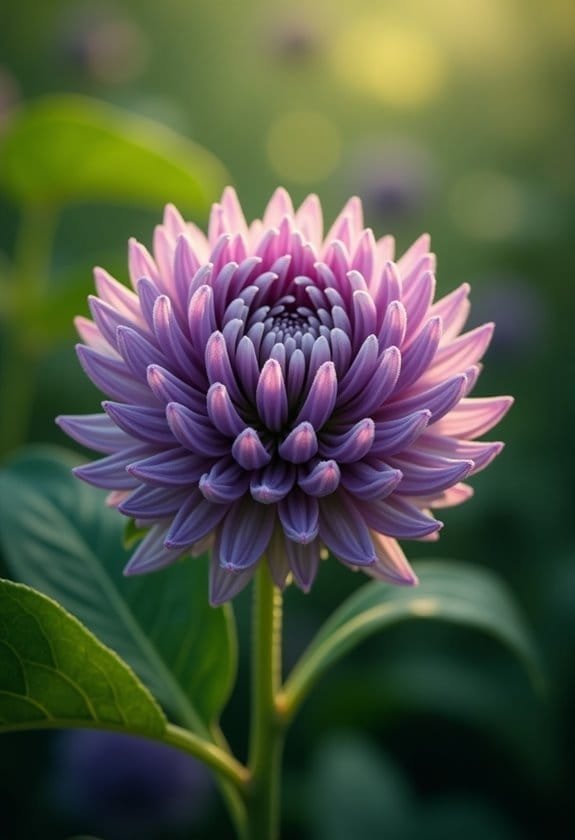
Angelica gigas, commonly referred to as Purple Angelica, captivates garden enthusiasts with its stunning purple flower umbels that bloom from August to October.
This biennial plant, native to Korea, is known for its remarkable height, reaching between 4 and 6 feet, and its architectural growth form, which adds visual interest to any landscape.
Beyond its aesthetic appeal, Angelica gigas presents practical benefits, being resistant to deer and rabbits while supporting local biodiversity by attracting pollinators and serving as a host for butterfly caterpillars.
Common Name
Known as Purple Angelica, this striking plant captures attention with its dark purple flowers and stems. Its ornamental allure is further enhanced by large, bold leaves that provide a stunning backdrop, creating an enchanting visual display in any garden.
Blooming in late summer, it showcases spherical purple umbels, adding a unique touch to landscapes.
Native to Korea, Purple Angelica is recognized for its biennial nature; it develops lush foliage during the first year and produces flowers in the second. This rhythm of life emphasizes its resilience and adaptability, as the plant often self-seeds, ensuring its continual presence in gardens while contributing to ecological diversity.
Beyond its aesthetic appeal, Purple Angelica holds significant importance in Traditional Korean Medicine, where it's revered for various medicinal properties. Its roots, known for promoting health, demonstrate the plant's dual role as both a decorative element and a crucial component of cultural herbal practices.
Scientific Name
The scientific name for the Purple Angelica is Angelica gigas, a striking member of the Apiaceae family, which is famous for its aromatic herbs.
This biennial plant, native to Korea, thrives in moist woodland environments, showcasing its adaptability to nature's ecosystems. Angelica gigas typically achieves impressive heights, ranging from 4 to 6 feet, and features robust, ribbed stems that lend it a commanding presence in any garden.
In its first year, the plant matures its bold foliage, while its second year brings a dazzling display of deep purple flowers that dance gracefully in the breeze.
These vibrant blossoms serve not only as visual focal points but also as a host plant, attracting a variety of pollinators that contribute to ecological health.
Moreover, the self-seeding characteristic of Angelica gigas guarantees its continued existence in cultivated spaces, endearing it to gardeners and enthusiasts alike.
The striking color and unique structure of this plant create an engaging dialogue between aesthetics and functionality within its habitat, making it a fascinating study for horticulturists and nature lovers.
Overview
Throughout the seasons, Angelica gigas, or Purple Angelica, captivates gardeners and nature lovers alike with its stunning appearance and ecological benefits.
This biennial plant, native to Korea, typically reaches impressive heights of 4 to 6 feet, showcasing stout growth and striking dark purple stems that stand out in any landscape. During late summer and early fall, the plant boasts remarkable dark purple spherical umbels, creating a visual spectacle that draws attention in both formal and informal gardens.
In its first year, Purple Angelica develops bold, broad leaves, setting the stage for its vibrant flowering in the second year.
Thriving in conditions ranging from full sun to part shade, this versatile plant often finds its place nestled amongst mature trees, where it enhances the surrounding biodiversity.
Beyond aesthetics, Angelica gigas serves as a valuable ecological resource, attracting native bees and wasps, which play a significant role in pollination.
Its tendency to self-seed allows for ongoing presence in gardens, making it a reliable choice for gardeners seeking both beauty and ecological impact in their planting schemes.
It's a true embodiment of nature's intricate balance.
Key Features
Angelica gigas, commonly referred to as Purple Angelica, stands impressively at heights of 4 to 6 feet, showcasing dark reddish-purple ribbed stems adorned with large, deeply dissected leaves.
Blooming in late summer, specifically from August to October, its spherical purple umbels present a striking visual resonance in any garden setting.
This biennial plant not only adds aesthetic value but also contributes functionally, as it attracts an array of pollinators, enhancing biodiversity within cultivated landscapes.
Growth Size
Growing vigorously, Angelica gigas typically reaches heights between 4 to 6 feet, occasionally stretching up to 7 feet in ideal conditions. This biennial plant, renowned in Traditional Chinese medicine, invests its first year in developing a robust leafy structure. During this initial period, it bestows a striking presence in gardens, spreading 1.5 to 2 feet wide, which enhances its architectural appeal.
The stout, ribbed purplish stems offer a bold visual contrast against the backdrop of its large, broad, and deeply dissected leaves.
These leaves not only provide a lush foliage that captivates the eye but also create a sense of depth within garden beds. The substantial growth during the first year dominates the landscape, preparing for the plant's spectacular display of deep purple umbels in its second year.
Ultimately, Angelica gigas serves as a magnificent focal point, combining remarkable height and width with a unique texture that engages the senses.
Gardeners will find that this dramatic plant's ability to thrive under ideal conditions makes it a significant addition, generating interest and admiration in various garden settings.
Appearance
Majestic in stature, Angelica gigas, or Purple Angelica, showcases a striking appearance characterized by its stout, ribbed stems that elevate it between 4 to 6 feet tall. Its broad and deeply dissected leaves add a dramatic flair, creating an impressive visual presence in any garden setting. The foliage features a rich green hue, which contrasts beautifully with the dark reddish-purple stems, enhancing the plant's charm.
Typically cultivated as a biennial, this remarkable species focuses its energy on robust growth during its first year, developing a lush, leafy structure that invites admiration. In its second year, Angelica gigas culminates its development by producing its iconic deep purple spherical umbels, which, while monumental in form, also punctuate the garden with alluring elegance.
These striking blooms, although they're not the focus here, prepare the stage for visual excitement during late summer and autumn. Whether planted in borders or as part of a naturalistic planting scheme, the presence of Purple Angelica inspires awe, drawing attention to its extraordinary physical attributes.
Gardeners often consider it a centerpiece, seamlessly integrating beauty and grandeur into outdoor landscapes.
Flowering Season
In the second year of its life cycle, the stunning flowering season of Angelica gigas begins, typically extending from late August to October. During this time, the plant showcases its distinctive dark purple globes, which consist of numerous tiny flowers intricately arranged in an umbel formation. This remarkable display not only captures attention in gardens but also signifies essential seasonal changes within its environment.
Angelica gigas flourishes best in full sun to part shade conditions, thriving in well-drained, rich soils that support its bold leaf development in the previous year. As the flowers bloom, they follow an enthralling pattern, enticing a diverse range of pollinators, including bees and butterflies.
The flowering patterns of this plant enhance garden biodiversity, creating a harmonious ecosystem during its flowering season. The pollinator benefits provided by Angelica gigas can't be overstated, as its flowers serve as valuable resources for supporting these significant species.
Growing Requirements
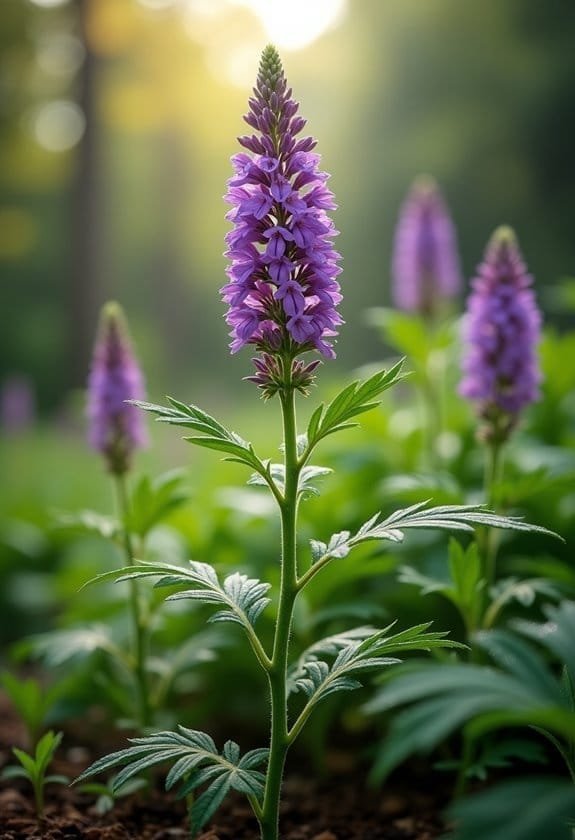
Angelica gigas flourishes when given the right conditions, including adequate light and soil type. This mighty biennial thrives in full sun to partial shade within USDA Zones 5 to 9, ideally growing in rich, moist soils enhanced with compost or organic material.
To guarantee its vibrant blooms from late August to October, gardeners must provide consistent moisture, as this plant's delicate balance of heat and humidity can greatly impact its health.
Light
Thriving under various light conditions, Angelica gigas does best when it absorbs at least six hours of sunlight each day. This level of light supports its rapid growth, enhancing the overall liveliness of the plant while promoting the development of its striking deep purple blooms.
The light duration effects play an important role; consistent exposure to full sun to partial shade guarantees prime conditions for blooming, particularly between late August and October. Angelica gigas exhibits remarkable sunlight adaptability, allowing it to thrive in diverse gardening environments. However, gardeners should be cautious about shading impacts, as excessively shaded areas can stunt the plant's growth and diminish its flowering potential.
While the species can tolerate lower light, providing sufficient sunlight notably boosts its health and vigor. Consequently, for those looking to cultivate these enchanting plants, finding the right balance of light is essential. Additionally, like Wild Thyme, which flourishes in well-drained soils, it is vital to ensure that Angelica gigas is planted in appropriate soil conditions for optimal growth.
The plant's ability to attract pollinators like hummingbirds enhances its appeal within the garden. Enlightening the garden with their bold presence, Angelica gigas flourishes in well-lit spaces, thriving on careful attention to light conditions.
Fostering healthy growth ultimately results in a stunning display of floral beauty that captures the essence of the garden.
Soil
Rich, fertile soil is essential for the ideal growth of Angelica gigas. This plant flourishes best when cultivated in environments rich in compost and organic material, reflecting its natural habitat in moist, wetland ecosystems. To promote robust growth, gardeners should employ effective soil fertility practices, such as mulching and incorporating well-rotted manure to enhance nutrient availability.
Additionally, moisture retention techniques are critical, as Angelica gigas thrives under consistently moist conditions. As a result, utilizing organic materials like straw or peat can greatly improve soil moisture levels, preventing the roots from drying out during drier periods. Ajuga reptans, for example, benefits from well-drained, medium moisture soil, emphasizing the importance of proper soil conditions.
While this species prefers nutrient-rich soil, it also demonstrates remarkable adaptability regarding pH levels. Angelica gigas can thrive in a range of pH values, which allows gardeners some flexibility in soil choice.
However, aiming for a slightly acidic to neutral pH (around 6.0 to 7.0) typically yields ideal results. Common Yarrow provides ecological benefits by attracting pollinators, showcasing the importance of selecting companion plants that support garden biodiversity. Maintaining these soil conditions not only supports the health of Angelica gigas but also enhances its blooming potential, creating a lush garden aesthetic, and inviting biodiversity into the space.
Water
While maintaining consistently moist conditions is essential for the growth of Angelica gigas, gardeners should also be aware of its sunlight needs. This herbaceous perennial flourishes in full sun or partial shade, ideally mimicking the wetland habitats it naturally inhabits.
To guarantee robust growth and remarkable heights of 4-6 feet, adequate moisture retention in the soil is indispensable. Employing effective watering techniques, such as deep watering and mulching, can greatly enhance soil moisture levels and help mitigate evaporation.
During dry spells, Angelica gigas becomes particularly vulnerable. Consequently, implementing drought strategies, including regular irrigation and monitoring of soil moisture, is crucial for maintaining plant health during prolonged dry periods.
This resilient plant also demonstrates a tolerance for humidity, allowing it to adapt to various moisture levels. However, a keen eye on environmental conditions remains imperative, especially during the key blooming period from late August to October.
Temperature
How does temperature influence the growth of Angelica gigas? This remarkable plant, thriving in USDA Zones 5 to 9, demonstrates distinct climate preferences that cater to its growth.
Favoring full sun or partial shade, Angelica gigas not only adapts to moderate climates but also tolerates temperature extremes, including heat and humidity, particularly during the sweltering summer months.
Seasonal variations play a significant role in its development; the plant flourishes best when exposed to consistent temperatures aligned with its native environments, such as forest edges and stream banks.
This alignment guarantees the moisture levels in the soil remain favorable, achieving the delicate balance necessary for peak growth.
While Angelica gigas exhibits flexibility regarding soil pH, it truly thrives in rich, well-drained soils, nourished with organic material, ensuring its roots are supported amid fluctuating temperatures.
Pollinator Criteria
Angelica gigas attracts a vibrant array of pollinators, showcasing its ecological significance.
With its large, dark purple umbels, the plant signals its abundant nectar-rich offerings, particularly from late August to October, enticing native bees, wasps, and honey bees to partake in the pollination process.
This interaction not only supports the plant's reproduction but also fosters a thriving ecosystem by enhancing biodiversity through the presence of various pollinator species. Additionally, Wild Angelica's role in attracting diverse beneficial insects further highlights the importance of such plants in maintaining ecological balance.
Attracted Pollinators
Pollinator-friendly gardens thrive with the presence of Angelica gigas, which attracts a variety of pollinators such as native bees, wasps, and honey bees. These insects contribute greatly to the ecological impact of garden biodiversity. By attracting diverse pollinators, Angelica gigas plays a vital role in enhancing garden diversity, creating a harmonious ecosystem where different species co-exist and flourish.
The plant blooms from late August to October, offering a valuable food source for pollinators just before winter arrives. This late-season bloom not only supports the immediate needs of pollinators but also bolsters the future of their populations.
Additionally, the plant serves as a host for butterfly caterpillars within the carrot family, enabling sustainable growth in butterfly numbers, particularly during their vulnerable larval stages.
Interestingly, while Angelica gigas attracts various insect pollinators, it doesn't appeal to hummingbirds. This specificity highlights its particular ecological niche in garden settings.
Its self-seeding nature guarantees that pollinator populations are supported year after year, making it a pillar in any pollinator garden initiative, thereby enhancing overall sustainability and ecological harmony. Furthermore, planting Field Scabious alongside Angelica gigas can enhance the attractiveness of the garden to even more pollinators due to its rich nectar sources.
Pollination Method
The unique morphology of Angelica gigas, particularly its large, deep purple umbels, plays a significant role in its pollination method. These vibrant inflorescences not only attract a diverse array of pollinators, such as native bees, wasps, and honey bees, but also facilitate important pollinator interactions, vital for the plant's reproductive success.
This species prefers specific pollinator species, as evidenced by its inability to attract hummingbirds, which underscores its tailored appeal within pollination biology.
Flowering primarily occurs from late August to October, aligning best with the foraging habits of late-season bees. During this time, the mutualistic relationships formed between the plant and its pollinators become particularly impactful, as pollinators obtain nectar while simultaneously aiding in cross-pollination—a vital process for genetic diversity.
Furthermore, Angelica gigas' ability to self-seed guarantees population levels remain stable, perpetuating these beneficial interactions across growing seasons.
As a host plant for butterfly caterpillars within the carrot family, Angelica gigas enhances the biodiversity of pollinator-supported ecosystems, weaving a complex tapestry of ecological connections that sustain its environment.
This interplay highlights the intrinsic value of preserving such flora for future ecological health.
Care & Maintenance
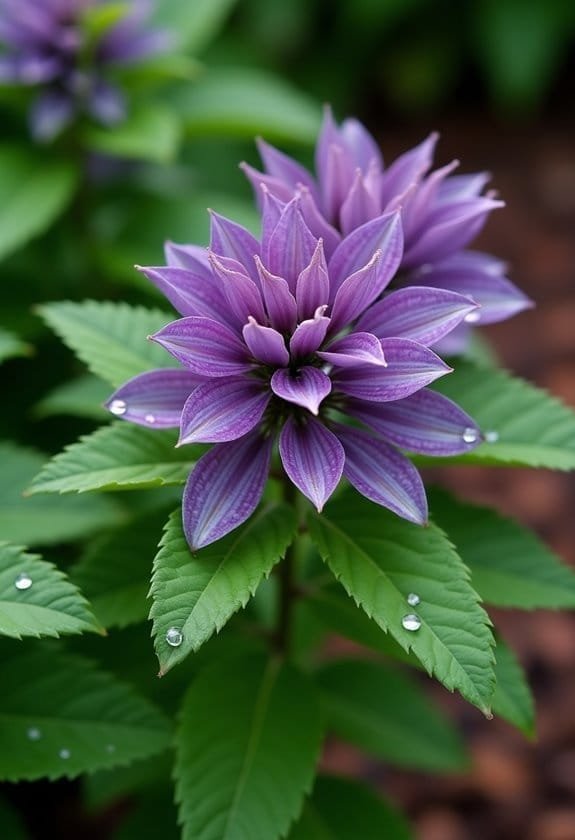
In caring for Angelica gigas, gardeners appreciate its low-maintenance nature yet must still pay attention to a few key practices.
Proper planting techniques and ongoing care, such as consistent watering and mulching, can greatly enhance the plant's growth and bloom duration.
Additionally, selecting compatible companion plants can foster a thriving garden ecosystem, promoting overall health and biodiversity.
Planting Tips
To successfully cultivate Angelica gigas, gardeners should focus on providing the right growing conditions. This striking plant flourishes in rich, well-drained soils enhanced with compost and organic materials, ensuring moisture retention.
When planning the layout, ideal spacing is essential; allow space for its mature height of 4-6 feet. Gardeners should plant Angelica in full sun or partial shade to promote robust growth, while also considering companion planting to enhance biodiversity and pest resistance.
Seasonal maintenance involves regular monitoring of moisture levels, as Angelica requires consistent watering, especially during dry spells. This medium moisture requirement is important; otherwise, the plant may struggle, weakening its overall health.
To further support its well-being, deadheading faded flowers can be beneficial, extending the blooming season and adding to the plant's visual allure.
Additionally, applying mulch around the base not only helps retain soil moisture but also suppresses weeds, which reduces overall maintenance efforts.
Ongoing Care
Providing ongoing care for Angelica gigas guarantees the plant thrives and flourishes throughout the growing season. Regularly adjusting the watering schedule is vital, especially during dry spells when the plant benefits from additional moisture. While Angelica gigas naturally thrives with available soil moisture, consistent monitoring encourages peak growth.
Incorporating seasonal adjustments such as applying a layer of mulch around the base retains soil moisture, combats weed growth, and enhances overall health, particularly in warmer months. Additionally, deadheading spent flowers not only improves the plant's visual appeal but can also extend its blooming season, creating a more vibrant landscape.
Implementing rigorous pest prevention strategies ascertains the longevity of Angelica gigas. Regular monitoring for pests and diseases allows for the early identification of potential issues, which is paramount for maintaining its health.
Finally, fertilizing with a balanced organic fertilizer in early spring promotes lush foliage and improves flower production. By focusing on these elements, gardeners can create a nurturing environment that allows their Angelica gigas to thrive, thereby ensuring stunning displays of purple inflorescences throughout its growth period.
Suggested Companions
Creating a visually stunning garden often involves pairing plants that complement each other in both aesthetics and care requirements. For Angelica gigas, companion planting plays a crucial role in enhancing the overall garden design. This majestic perennial thrives when combined with smaller flowering plants like Agastache, Phlox paniculata, and Verbena bonariensis, creating delightful flower combinations that highlight height diversity. Additionally, incorporating plants that promote biodiversity can greatly enhance the health and resilience of your garden.
To optimize its care, position Angelica gigas in the middle or foreground of beds, ensuring its dramatic purple umbels are prominent against lush companion plants. Hardy geraniums and Aruncus are excellent choices, as they share similar soil and moisture needs, fostering a harmonious relationship.
Moreover, deadheading spent flowers from companions such as Hosta and tall-blooming Hemerocallis improves the blooming season's visual appeal and keeps the garden looking fresh.
Regularly mulching around Angelica gigas and its companions not only aids in moisture retention but also suppresses weeds, further enhancing maintenance ease. Additionally, incorporating plants like comfrey can improve your soil's nutrient extraction due to its deep-rooted system. A thoughtfully arranged garden design, rooted in these principles of companion planting, positions Angelica gigas as a striking centerpiece while promoting a diverse and vibrant ecosystem.
Common Issues
While Angelica gigas exhibits notable resistance to common pests like deer and rabbits, gardeners should remain vigilant against issues such as root rot and self-seeding.
To maintain its health, monitoring soil drainage and ensuring consistent moisture levels are essential practices that help prevent these complications. Additionally, Water Avens acts as a vital nectar source, highlighting the importance of maintaining beneficial plant relationships in the garden.
Managing seed production through careful observation can mitigate the risk of uncontrolled spreading, safeguarding the garden's intended aesthetics. Incorporating proper soil moisture practices is crucial for avoiding issues related to root rot, ensuring the plant's vitality.
Pests/Diseases
When it comes to pests and diseases, gardeners should be aware that Angelica gigas is largely resistant to common threats like deer and rabbits. This inherent resilience is advantageous for maintaining the plant's health.
However, vigilance remains vital, as fungal diseases like powdery mildew can arise under excessively moist conditions or when air circulation is inadequate. To guarantee longevity and vigor, gardeners should implement effective fungal disease prevention practices.
Aphids, while not inherently destructive, may occasionally infest Angelica gigas, leading to distorted growth and the potential transmission of viral diseases. Thus, employing timely aphid control methods is essential. Regular monitoring can greatly prevent infestations from developing into more serious issues.
Additionally, gardeners should be cautious about root rot, a concern often stemming from overwatering or poorly draining soil conditions; this makes proper moisture management critical.
Regular inspections for pests and diseases, along with sound cultural practices such as crop rotation and appropriate spacing, can enhance overall plant health.
Solutions
To secure the health and vigor of Angelica gigas, gardeners should implement several practical solutions for common issues.
First and foremost, consistent moisture is essential for this species; soil should remain moist, particularly in dry conditions where drought can impair growth considerably.
Seasonal care also plays a fundamental role, as observing and responding to changes in the plant's environment guarantees robust health.
Moreover, monitoring for pests and diseases enhances resilience, even though Angelica gigas exhibits natural resistance to deer and rabbits.
Regular deadheading of spent flowers not only beautifies the plant but may encourage prolonged blooming, enriching your garden's aesthetics.
When considering propagation methods, gardeners should take care of self-seeded seedlings, given the extensive tap root system that complicates moving established plants.
To promote ideal growth, utilizing soil amendments such as compost and organic material enriches the soil, fostering enhanced blooming potential. Additionally, ensuring that the soil has a slightly acidic pH of 5.4-6.8 can further support plant health and growth.
Summary
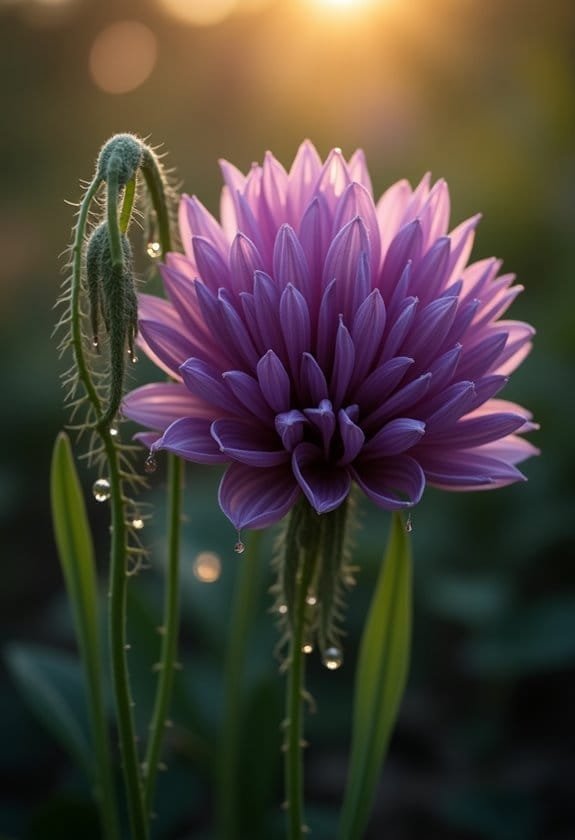
Angelica gigas, commonly known as Purple Angelica, stands out as a stunning biennial plant that grows 4 to 6 feet tall, showcasing vibrant dark purple flower globes in its second year of growth.
This eye-catching plant is often used in gardens to add a dramatic flair with its impressive height and unique coloration.