Anthemis tinctoria, commonly known as Dyer's Chamomile, is a enchanting perennial herb that flourishes in Southern, Eastern, and Central Europe. Growing 1 to 2 feet tall, it displays striking yellow flowers, approximately 3 inches in diameter, and feathery blue-green leaves. This adaptable plant thrives in USDA zones 3-8, prefers well-drained soil, and requires full sun. Importantly, it attracts pollinators, supporting biodiversity, while its flowers yield a vibrant yellow dye. With proper care—such as regular watering and deadheading—Dyer's Chamomile enhances both garden aesthetics and ecological balance, enriching local ecosystems; further insights await those intrigued by this remarkable plant.
Main Points
- Dyer's Chamomile (Anthemis tinctoria) is a hardy perennial from the Asteraceae family, known for its vibrant yellow flowers and feathery blue-green leaves.
- It thrives in well-drained soil with full sun exposure and grows best in USDA zones 3-8.
- The plant is notable for producing a natural yellow dye safe for children's crafts, making it valuable for artistic projects.
- Dyer's Chamomile attracts pollinators like bees and butterflies, contributing to garden biodiversity and ecological balance.
- Regular care includes deadheading, consistent watering during establishment, and monitoring for pests to maintain plant health.
Introduction
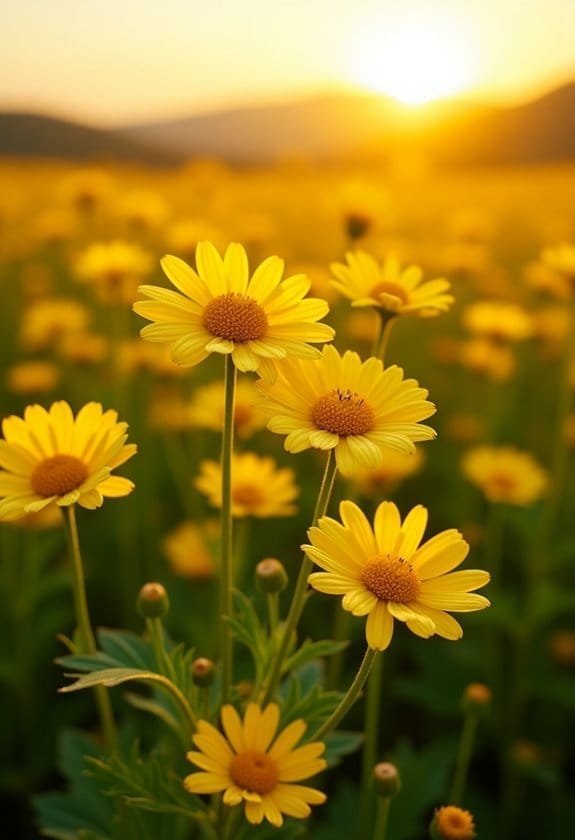
Anthemis tinctoria, often referred to as Dyer's Chamomile, captures attention with its striking yellow flowers and remarkable dyeing capabilities.
This perennial plant, reaching heights of 1 to 2 feet, thrives in full sun, showcasing delicate, feathery leaves and fragrant blooms that invite exploration.
Known for its non-toxic nature, Dyer's Chamomile not only offers a sustainable solution for craft projects, particularly those involving children, but also enriches gardens with its diverse cultivars and aesthetic appeal.
Common Name
Dyer's Chamomile is often referred to as Golden Marguerite, a name that highlights its striking yellow flowers reminiscent of daisies. This enchanting perennial plant not only beautifies gardens but also serves practical purposes.
Found mainly in Southern, Eastern, and Central Europe, Dyer's Chamomile flourishes in well-drained soil under full sunlight, making it an excellent choice for sunny gardens.
The golden blooms, which can reach up to 3 inches in diameter, attract a variety of pollinators, adding life to any landscape. Curiously, Dyer's Chamomile is distinct from true chamomile species, despite the shared name.
Its aesthetic charm is complemented by feathery, blue-green leaves that enhance its visual appeal, creating a vivid contrast with the vibrancy of its flowers.
Moreover, Dyer's Chamomile holds significant value in dyeing practices. It produces a warm, rich yellow dye considered safe and non-toxic, making it suitable for crafting projects involving children.
Consequently, gardeners appreciate Dyer's Chamomile not only for its beauty but also for its versatility, which enriches both artistic and horticultural endeavors.
Scientific Name
One might find it intriguing that the scientific name for Dyer's Chamomile, Anthemis tinctoria, reveals its classification within the Asteraceae family, which is known for a diverse array of flowering plants.
This perennial herb, native to Southern, Eastern, and Central Europe, adapts remarkably well to various soil types, showcasing its resilience in garden settings. Typically growing to a height of 1-2 feet, Anthemis tinctoria captivates observers with its fragrant, daisy-like flowers that radiate vibrant yellow hues, evoking images of sun-kissed fields.
Given its ability to self-seed, this plant efficiently propagates and regenerates, making it a reliable choice for gardeners seeking low-maintenance yet visually striking options.
Its hardiness allows it to thrive across USDA hardiness zones 3-8, enduring temperatures as low as -30°F (-34°C). This adaptability not only highlights its ecological tenacity but also underscores its value in cultivation across varied climates.
As a member of the extensive Asteraceae family, Anthemis tinctoria embodies the intersection of beauty and utility in nature, capturing the attention of both botanists and gardening enthusiasts alike.
Overview
A resilient and visually striking perennial, Anthemis tinctoria, commonly known as Dyer's Chamomile or Golden Marguerite, captivates with its stunning yellow flowers that not only enhance gardens but also produce a rich dye. This hardy plant, native to Europe, typically reaches a height of 1-2 feet and showcases feathery, blue-green leaves that complement its daisy-like blooms, which last for 2-3 weeks.
Dyer's Chamomile flourishes best in well-drained soil under full sun, ideally planted in spring after the last frost. This timing optimizes growth and maximizes the dye's quality. The flowering period extends from summer to fall, and to harness its dye potential, flowers should be harvested every 2-3 weeks at maturity. During the drying process, controlling moisture levels becomes essential to prevent mold formation.
Although Dyer's Chamomile has a relatively brief lifespan, it often self-seeds, promoting ongoing cultivation. However, replanting every few years guarantees robust results. Fundamentally, Dyer's Chamomile not only serves as a vibrant addition to any garden but also illustrates the unique relationship between aesthetic beauty and practical application in dye production.
Key Features
Anthemis tinctoria stands out with its impressive growth size, reaching heights of up to 2-3 feet, and its striking appearance characterized by vibrant daisy-like flowers that feature a rich yellow center surrounded by creamy white petals.
This perennial plant flourishes in full sun and well-drained soil, blooming profusely from summer through fall, which attracts beneficial pollinators and enriches any garden setting.
Not only does its delightful foliage consist of finely dissected, aromatic leaves, but it also contributes to an evergreen landscape in milder climates, showcasing nature's beauty year-round.
Growth Size
Growing robustly, Dyer's Chamomile reaches heights of 1 to 2 feet and can spread up to 3 feet wide. This hardy perennial exhibits a growth size that balances both stature and breadth, making it a resilient choice for various garden settings. Under ideal growth conditions, it develops vigorously, showcasing its capacity for expansion and energy.
Thriving in USDA hardiness zones 3-8, Dyer's Chamomile can handle temperatures as low as -30°F (-34°C), which highlights its adaptability. The combination of length and width in its growth size allows for effective ground cover, creating a lush environment that enhances garden aesthetics.
The medium green foliage, often with a grayish tint, further complements its structure, contributing to a layered visual appeal. During the summer to fall blooming season, this plant becomes a significant visual feature, accentuated by its vibrant yellow daisy-like flowers.
Hence, the growth size of Dyer's Chamomile not only provides physical substance but also enriches the ecological tapestry of any garden, making it a delightful, enduring addition.
Appearance
Radiating charm, Dyer's Chamomile (Anthemis tinctoria) showcases bright yellow daisy-like flowers that feature vibrant centers surrounded by petals ranging from lemon yellow to creamy white. These exquisite flowers, measuring about 1-2 inches across, emerge profusely during the warmer summer months and shift into fall.
The plant typically stands 1-2 feet tall, presenting an inviting appearance that adds a delightful touch to any garden. Dyer's Chamomile forms a lush mound, reaching widths of 2-3 feet, which makes it an eye-catching centerpiece.
The finely dissected, feathery leaves, adorned with a medium green hue, complement its bright flowers remarkably well. Moreover, these aromatic leaves contribute to the foliage's overall allure, attracting gardeners and pollinators alike.
This hardy perennial thrives in USDA zones 3-8, demonstrating resilience by withstanding temperatures as low as -30°F (-34°C). Its natural habit of self-seeding guarantees that the vibrant flowers will continue to grace gardens year after year, transforming landscapes into vibrant canvases.
With its enchanting appearance and robust characteristics, Dyer's Chamomile remains a cherished choice for both novice and experienced horticulturists.
Flowering Season
Blooming profusely from summer through early fall, Dyer's Chamomile (Anthemis tinctoria) captivates with its vibrant yellow flowers that elevate any garden's aesthetics. This flowering season typically spans several weeks, during which each bloom graces the landscape for approximately 2-3 weeks, offering a continuous display of color.
The daisy-like flowers, characterized by their bright yellow centers, may feature petals ranging from lemon yellow to creamy white, enhancing their visual appeal.
To maximize the flowering season, regular harvesting is essential; this practice encourages the plant to produce additional blooms, ensuring a more extended period of floral display. Furthermore, the plant's height, reaching 1-2 feet, makes it versatile for garden designs, whether used in borders or mixed arrangements.
Notably, practitioners can extend the flowering season by employing deadheading techniques, which involve removing spent flowers. This simple act prompts the development of new flower buds, invigorating the plant.
Consequently, Dyer's Chamomile not only delights with its beauty but also thrives on attentive care, creating a dynamic and vibrant garden atmosphere throughout its flourishing months.
Growing Requirements
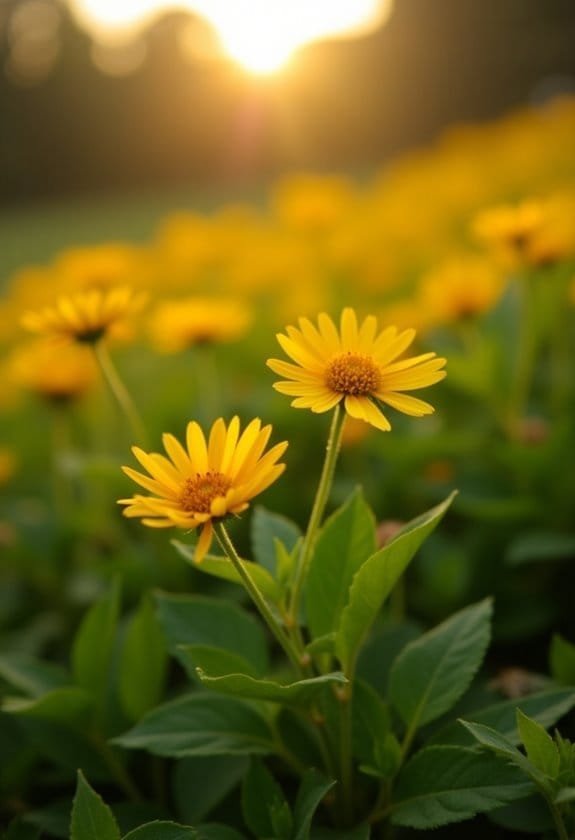
Dyer's Chamomile, or Anthemis tinctoria, flourishes under specific growing conditions that play a vital role in its overall development.
It thrives in well-drained soil and requires a generous dose of sunlight, ideally basking in at least six hours of direct light daily, akin to how a sun-seeking flower unfurls its petals.
Maintaining a temperature range of 65-70°F allows seeds to germinate effectively, typically sprouting within 14 to 28 days, laying the groundwork for healthy plants.
Light
For ideal growth, Dyer's Chamomile thrives in full sun, demanding at least six hours of direct light each day. This sun-loving perennial flourishes best in warm environments, ideally between 65-70°F during the vital germination and establishment phases.
Light doesn't just influence growth; it greatly impacts flowering potential and overall plant aesthetics. Insufficient sunlight can lead to elongated stems, which detracts from its visual appeal and diminishes dye yield.
Moreover, the germination process is intricately tied to light exposure; seeds should be sown on the soil surface rather than buried, as they rely on light for successful germination.
Inadequate lighting conditions can stunt development, while ideal exposure enhances flower production, resulting in vibrant blooms that draw attention. Additionally, consistent moisture is essential for promoting healthy growth, ensuring the plant receives about one inch of water weekly to thrive in its optimal conditions.
Soil
Healthy growth of Anthemis tinctoria relies heavily on well-drained soil, which prevents root rot and promotes strong development. This valuable herb prefers a slightly acidic to neutral soil pH, specifically between 6.0 and 7.0. This range creates ideal conditions for nutrient availability, which is essential for robust plant health.
To enhance drainage and aeration, gardeners should consider amending heavy clay soil with compost or sand, facilitating a looser structure that benefits the root system. While regular moisture is necessary, particularly during dry spells, it's imperative that the soil remains well-drained; prolonged waterlogged conditions can suffocate the roots, stunting growth and compromising health.
Incorporating proper crop rotation practices with Anthemis tinctoria can further enhance soil quality by reducing the accumulation of pathogens and pests. This practice maintains the ecological balance and supports the sustainability of the growing environment.
Water
Moisture plays an essential role in the growth of Anthemis tinctoria, especially during its initial establishment phase. Water is vital for developing robust root systems, enabling the plant to access nutrients effectively.
Dyer's Chamomile prefers consistent moisture, thriving in well-drained soil while avoiding waterlogged conditions that could lead to root rot—a dangerous affliction that could sabotage its health. The presence of rich, loamy substrate found in some aquatic plants can significantly enhance moisture retention and nutrient availability in the soil.
Regular watering is necessary, particularly during dry periods, to maintain ideal moisture levels that foster both growth and the dye-producing capabilities of the plant. Although Anthemis tinctoria exhibits moderate drought tolerance once established, supplemental watering during prolonged dry spells considerably enhances flowering vigor, ensuring vibrant blooms and a steady dye yield.
The ideal environment for this resilient species includes full sun exposure, requiring at least six hours of direct light daily. This sunlight not only supports photosynthesis, allowing the plant to produce essential energy, but also aids in moisture retention, creating a harmonious balance that benefits overall growth. Additionally, Common Yarrow can provide beneficial nectar for pollinators in close proximity, enhancing the ecological value of your garden.
Temperature
While Dyer's Chamomile (Anthemis tinctoria) flourishes in a variety of climates, it particularly excels in USDA hardiness zones 3-8. This perennial exhibits remarkable resilience, thriving in areas where temperatures can fluctuate widely. For peak growth, gardeners should aim for a soil temperature between 65-70°F (18-21°C) during germination. Under these ideal conditions, seeds will typically sprout within 14-28 days, showcasing their vigorous potential.
Dyer's Chamomile prefers full sun, demanding at least six hours of direct sunlight each day, which not only promotes healthy growth but also enhances its vibrant blooms. Once established, this hardy plant can endure temperatures plunging as low as -30°F (-34°C), highlighting its impressive adaptability.
For best results, it's advisable to plant Dyer's Chamomile outdoors after the last frost in spring. Alternatively, early indoor planting between mid-March and early April can give seeds a head start.
Understanding the effects of temperature on this plant's growth allows gardeners to create the ideal environment, ensuring that the Dyer's Chamomile flourishes beautifully and colorfully in their gardens.
Pollinator Criteria
Dyer's Chamomile, with its vibrant yellow flowers, draws a diverse array of pollinators, particularly bees and butterflies, essential for successful pollination and the overall health of ecosystems.
The plant employs a generalized pollination method, utilizing its open flower structure to allow easy access for foraging insects, while the delightful fragrance serves as an aromatic invitation to nectar-seekers. Additionally, the presence of diverse nectar sources, like Blue Eryngo, can enhance pollinator activity in nearby gardens, benefiting species like Dyer's Chamomile.
This symbiotic relationship not only enhances the reproductive success of Anthemis tinctoria but also underscores the significance of fostering environments that support thriving pollinator populations. Additionally, nurturing plants that attract key pollinators contributes to ecosystem diversity and health.
Attracted Pollinators
As the vibrant yellow flowers of Anthemis tinctoria bloom, they draw in a variety of pollinators, especially bees and butterflies, thanks to their rich nectar and striking color. These flowers, blooming from summer to fall, provide a sustained food source that benefits numerous pollinator species throughout the growing season.
Each flower head can attract multiple types of pollinators, effectively acting as a magnet for those essential to ecosystem health and biodiversity. Additionally, the presence of plants like Rough Hawkbit can further increase pollinator diversity, creating a more resilient garden ecosystem.
In addition to the allure of their bright petals, the aromatic foliage of Dyer's Chamomile can further entice pollinators, offering an enticing sensory experience that goes beyond the visual appeal of the blossoms. By wisely incorporating Anthemis tinctoria into garden designs, gardeners can foster a harmonious environment that welcomes pollinators.
This not only facilitates natural pollination but also enhances the overall significance of the garden. Thus, Dyer's Chamomile stands out as a beneficial plant, serving not just as an ornamental feature but as a fundamental player in maintaining ecological balance. The component of attracting diverse pollinators significantly strengthens the resilience and productivity of surrounding plant life.
Supporting a diverse community of pollinators ultimately strengthens the resilience and productivity of surrounding plant life.
Pollination Method
Anthemis tinctoria's pollination method relies chiefly on its vibrant flowers, which are designed to attract a variety of insects, including bees and butterflies. These striking, daisy-like blooms, characterized by their brilliant yellow hue, serve as a beacon for pollinators seeking sustenance in the form of nectar and pollen.
Throughout the blooming period, which typically spans several weeks, the flowers provide a continuous food source that supports local insect populations.
Each flower head is composed of numerous small florets. This intricate structure not only enhances the plant's appeal but also optimizes its pollination efficiency by offering ample feeding opportunities. The plant's open and flattened flower architecture allows pollinators unobstructed access, facilitating their foraging activities.
This accessibility is critical for effective pollination, which guarantees the transfer of pollen from one flower to another, fostering genetic diversity.
Moreover, successful pollination is essential for the self-seeding capability of Anthemis tinctoria, allowing it to flourish naturally in garden ecosystems. The process not only aids in the plant's reproduction but also contributes to the overall biodiversity of its environment, perpetuating healthy and vibrant habitats.
Care & Maintenance
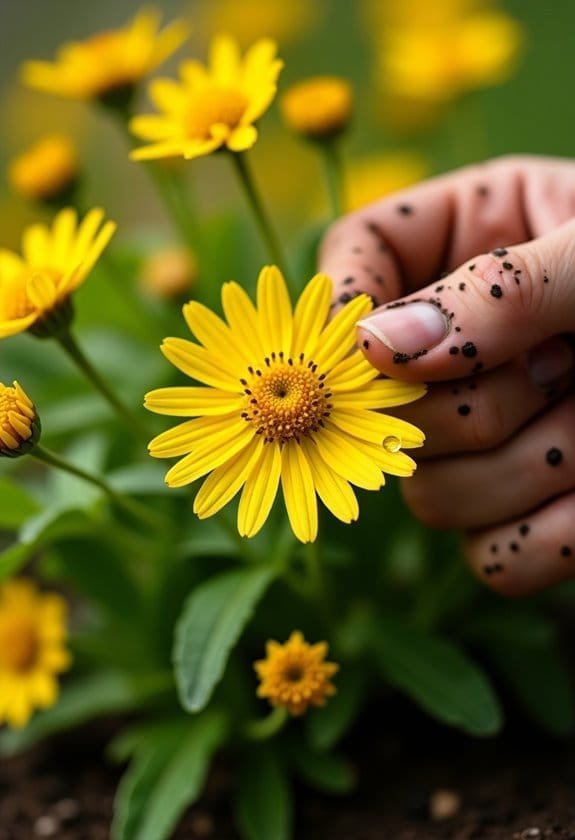
Caring for Anthemis tinctoria, commonly known as Dyer's Chamomile, requires attentive planting and ongoing maintenance to achieve vibrant blooms and effective dye production.
When establishing these hardy perennials, gardeners should prioritize full sun exposure and well-drained soil, while ensuring regular watering and timely deadheading to enhance flowering and manage self-seeding.
Proper companion planting can further foster a thriving garden environment, as the right nearby flora not only supports Dyer's Chamomile's growth but also promotes overall ecosystem health.
Planting Tips
Successful planting of Dyer's Chamomile begins with choosing the right location. This vibrant perennial thrives best in full sun, requiring at least six hours of direct sunlight daily to guarantee peak growth and striking blooms.
To set the stage for success, make sure the chosen soil is well-drained; heavy clay soils should be amended with compost or sand, aiding drainage and supporting healthy root development.
Spacing is vital, with plants ideally placed approximately 18 inches apart. This permits the necessary air circulation essential for mitigating the risk of fungal diseases, which can compromise plant health.
After planting, thoroughly water the young plants, maintaining consistent moisture, especially during their early growth phase and in dry conditions, as Dyer's Chamomile displays moderate drought tolerance once established.
Additionally, regular deadheading of spent blooms encourages continuous flowering and prevents unwanted self-seeding, preserving the plant's vigor and aesthetic appeal.
Ongoing Care
Regular attention to ongoing care guarantees that Dyer's Chamomile remains vibrant and productive throughout its growing season. Deadheading the flowers is fundamental; it encourages continuous blooming while preventing self-seeding, which can lead to invasiveness in garden spaces.
After flowering, it's essential to cut back the plants to stimulate new growth, thereby extending their life cycle and fostering healthier, more vigorous regeneration.
During the establishment phase, regular watering plays a significant role in helping the plant acclimate. Once established, however, Dyer's Chamomile becomes moderately drought-tolerant, allowing for greater resilience in various conditions.
Monitoring for pests, particularly aphids, slugs, and snails, is equally important, especially during the initial growth stages. If such pests appear, employing protective measures becomes necessary to maintain the plant's overall health.
Furthermore, dividing Dyer's Chamomile every two to three years will prevent overcrowding within the garden. This practice not only secures robust growth but also enhances blooming performance, providing a splendid display of color.
Ultimately, these ongoing care practices solidify the foundation for thriving plants and flourishing garden aesthetics.
Suggested Companions
Incorporating companion plants with Dyer's Chamomile can greatly enhance both the aesthetic appeal and health of the garden. Salvia, with its tall, spiky flowers, provides a striking color contrast against the golden blooms of this dye plant. Both thrive in full sun and well-drained soil, making them a perfect match. Erysimum species, known for their vibrant flowers and ecological role, can further enrich the garden by attracting beneficial insects.
Lavender, boasting silvery foliage and purple flowers, completes the palette while benefiting from their mutual dislike for excess moisture, fostering a harmonious growing environment. Erysimum blooms, featuring four-petaled structures, are also ideal for pollinator landing.
Echinacea not only shares similar growing conditions but also attracts essential pollinators, enhancing the ecosystem surrounding Dyer's Chamomile. Accompanying them, ornamental grasses contribute texture and visual diversity, creating an enthralling tapestry of contrasting growth habits.
Additionally, Coreopsis introduces bright red or pink flowers, further magnifying the visual charm of a garden bed featuring Dyer's Chamomile.
In integrative gardening, these companions not only complement each other visually but also promote a healthier growth environment by diversifying plant relationships. Common Cowslip, an early-season pollinator attractor, can also be included as it supports biodiversity in the garden with its early blooming period.
With thoughtful plant pairings, gardeners can cultivate a landscape that's both vibrant and ecologically sound, effectively transforming their gardens into functional art.
Common Issues
Anthemis Tinctoria, or Dyer's Chamomile, often faces challenges from pests and diseases that can hinder both its growth and dye production.
Slugs and snails frequently target young plants, necessitating protective measures such as barrier methods, while poor air circulation can lead to vulnerable fungal infections, underscoring the significance of proper spacing.
Additionally, regular maintenance practices like timely harvesting and deadheading become essential to guarantee that the plant not only thrives but continues to offer vibrant, high-quality dye yields.
Pests/Diseases
While Dyer's Chamomile is generally resilient, it's important to stay vigilant against a few pests and diseases that can threaten its health. Although this plant boasts hardiness, it can still fall victim to pests like aphids, which may sap its energy and hinder growth.
Slugs and snails pose a significant threat especially during the plant's initial growth phases, making protective measures—such as barriers or traps—crucial for safeguarding this delicate stage.
Moreover, Dyer's Chamomile can experience root rot if grown in poorly drained soils, highlighting the importance of well-drained conditions to promote healthy root systems. Fungal diseases, particularly powdery mildew, may arise in overly humid environments, underscoring the necessity for good air circulation and proper spacing between plants to prevent overcrowding.
Additionally, employing crop rotation can be instrumental in preventing the buildup of soil-borne diseases, thereby preserving the overall vigor of Dyer's Chamomile. By maintaining a keen eye on these potential issues, gardeners can guarantee the continued health and flourishing of this remarkable herb, allowing its vibrant blooms and potential applications to thrive.
Solutions
Addressing common issues with Dyer's Chamomile requires a proactive approach to guarantee its health and energy.
One of the most pressing concerns involves the potential damage from slugs and snails during the plant's initial growth phases. Employing barriers or organic deterrents can effectively protect young plants.
Additionally, since Dyer's Chamomile has a tendency to self-seed, monitoring its spread is vital to prevent overcrowding, which might compromise neighboring plant health.
Regular deadheading, which involves removing spent flowers, not only encourages additional blooming but also enhances the overall aesthetic of the garden.
Furthermore, preventing fungal diseases necessitates ensuring adequate air circulation around Dyer's Chamomile and avoiding overly moist soil conditions. This environmental control is essential to prevent fungal issues that could devastate the plant.
If grown in heavy clay, amending the soil with compost or sand greatly improves drainage, fostering ideal growth conditions.
Summary
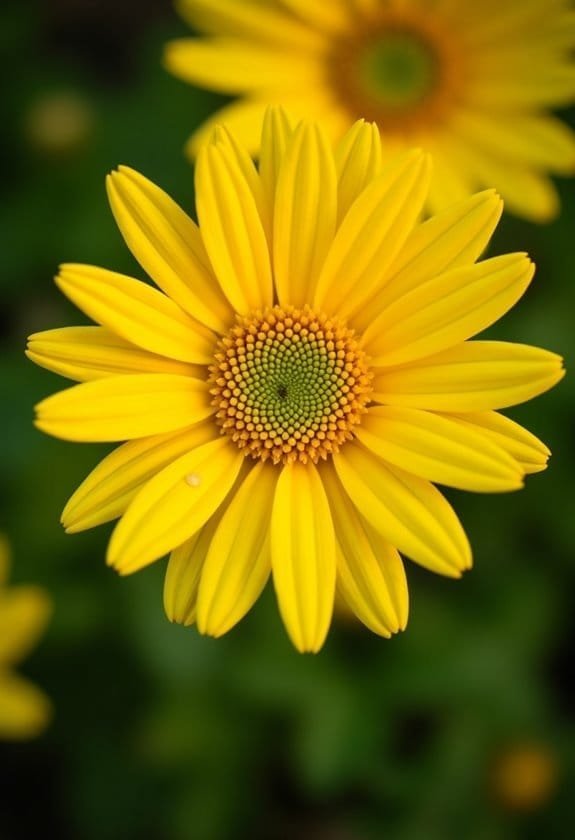
Dyer's Chamomile, known scientifically as Anthemis tinctoria, is a vibrant perennial plant celebrated for its striking yellow flowers and usefulness in natural dyeing.
This plant typically reaches a height of 1-2 feet and produces flower heads measuring 1-2 inches across, which bloom profusely throughout the summer and fall. Best suited for full sun and well-drained soil, Dyer's Chamomile thrives when planted in spring, ideally allowing for close spacing to suppress weeds effectively.
The remarkable self-seeding capability of this plant means that, if left undisturbed, it can create a delightful carpet of flowers year after year.
The dye extraction process is quite fascinating; it involves harvesting and drying the flowers to produce a dye that varies from pale yellow to deep gold. This range of colors is influenced by the pH levels during the infusion process, highlighting the intricate dance between nature and chemistry.