Antirrhinum majus, or Snapdragon, captivates with its distinctive, dragon-shaped flowers that bloom from early spring to autumn, showcasing vibrant colors from red to white. This short-lived perennial typically grows between 6 inches and 3 feet and flourishes in USDA hardiness zones 7-10. Preferring well-drained, moderately fertile soil with a pH of 6.2-7.0, Snapdragons require six or more hours of sunlight daily, supplemented with consistent moisture. They attract bumblebees, benefiting from their zygomorphic flower structure designed for selective pollination. With proper care and management, these plants enhance garden aesthetics while fostering ecological health, revealing even more unique aspects essential for gardeners to explore.
Main Points
- Antirrhinum majus, or Snapdragon, is a perennial flower commonly grown for its colorful blooms and distinctive dragon-shaped flowers.
- Snapdragons thrive in well-drained, moderately fertile soil with a pH of 6.2 – 7.0 and require full sun for optimal growth.
- Regular deadheading and consistent moisture are essential practices to promote prolonged blooming and prevent diseases in Snapdragons.
- The flowers primarily attract bumblebees, contributing to pollination and biodiversity in gardens.
- Various cultivated series and companion plants, like Nemesia and Delphiniums, enhance garden aesthetics and support ecological health.
Introduction
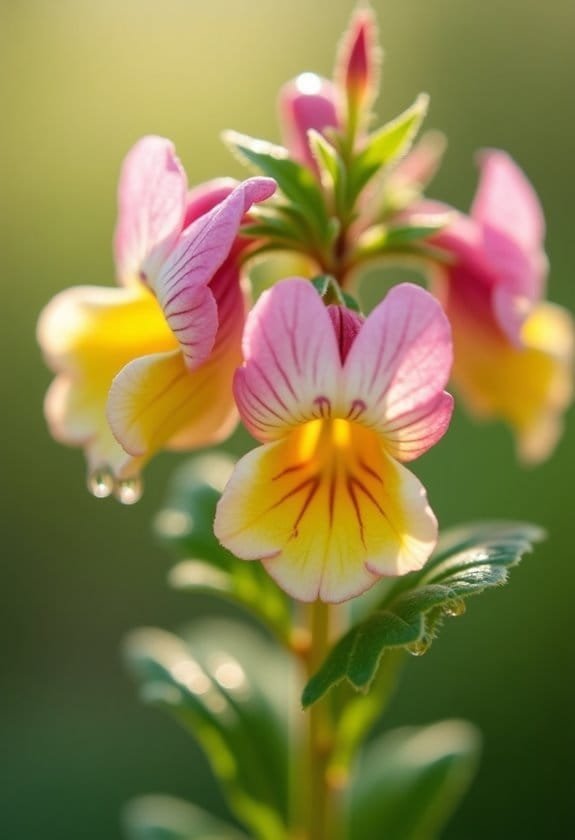
Antirrhinum majus, widely known as Snapdragon, showcases a remarkable array of vibrant flowers that captivate garden enthusiasts.
This short-lived perennial, often treated as an annual, stands between 6 inches and 3 feet tall, blooming splendidly from early spring until autumn, thereby attracting an abundant variety of pollinators.
Understanding its growing conditions and popular varieties is essential for anyone looking to enhance their garden's aesthetic and ecological value.
Common Name
Known for its distinctive flower shape that resembles a dragon's mouth, Antirrhinum majus is commonly referred to as the Snapdragon. This charming plant, belonging to the Plantaginaceae family, features brightly colored tubular flowers that bloom in an array of shades, including vibrant red, soft pink, fiery orange, sunny yellow, and elegant white.
The common name, Snapdragon, aptly captures the whimsical nature of its blossoms, which open and close when gently squeezed, resembling a dragon's mouth. Other popular names include Common Snapdragon and Garden Snapdragon, along with the alternative Dog's Mouth, hinting at its peculiar appearance.
While gardeners often classify Snapdragons as annuals due to their short lifespan, they're technically short-lived perennials, thriving best in cooler weather. Their blooming period typically extends from spring to autumn, providing an extended display of color.
Garden enthusiasts appreciate Snapdragons not just for their visual appeal, but also for their adaptability, enhancing gardens and landscapes across various climates. This versatility, coupled with their enchanting form, guarantees that Antirrhinum majus remains a beloved choice among florists and gardeners alike.
Scientific Name
The intriguing scientific name for the Snapdragon, *Antirrhinum majus*, reflects the plant's unique characteristics. Derived from Greek words, its name translates to "like a nose," aptly describing the flower's distinctive shape that resembles a dragon's mouth.
This herbaceous perennial often grows between 0.5 to 3 feet tall, producing vibrant flower spikes that come in a variety of shades, including purple, red, yellow, and white.
*Antirrhinum majus* belongs to the Plantaginaceae family and consists of several subspecies, such as *Antirrhinum cirrhigerum* and *Antirrhinum tortuosum*.
It's fascinating how the structure of its flowers is zygomorphic, which means they exhibit bilateral symmetry—a trait that enhances their appeal to specific pollinators, particularly bumblebees. Each bloom features a two-lipped corolla, facilitating easy access for insects, which is essential for reproduction.
Often cultivated as an annual due to its fleeting life cycle and seasonal blooming habits, *Antirrhinum majus* captivates gardeners and enthusiasts alike.
This combination of botanic beauty and ethological importance makes the Snapdragon a remarkable specimen in both natural and cultivated settings.
Overview
With their charming blooms and intriguing name, Snapdragons, or *Antirrhinum majus*, have captured the hearts of gardeners and flower enthusiasts alike. This short-lived perennial, often cultivated as an annual, showcases upright growth and branching stems that can reach heights ranging from 6 to 48 inches.
Known for their fragrant, zygomorphic flowers, Snapdragons display a delightful variety of colorful blooms, including striking shades of red, pink, orange, yellow, and white. These blossoms are uniquely shaped, resembling a dragon's mouth that opens and closes with a gentle squeeze.
Ideal for well-drained, moderately fertile, slightly acidic soil, Snapdragons flourish in full sun to partial shade, making them an attractive addition to gardens in USDA hardiness zones 7-10. With an impressive blooming period from spring through autumn, they serve various purposes, such as enhancing flower beds, attracting pollinators like bees and butterflies, and creating vibrant cut flower arrangements.
Notable cultivated varieties, including the Liberty Series, Rocket Series, and Candy Showers Series, offer diverse heights and flower characteristics, catering to various landscaping needs and enriching the aesthetic appeal of outdoor spaces.
Key Features
Antirrhinum majus, or Snapdragon, showcases a remarkable growth size, typically reaching between 0.5 to 3 feet in height.
Its striking appearance features upright spikes adorned with 8 to 30 fragrant, zygomorphic flowers that bloom continuously from spring through autumn, presenting a vibrant palette of pink, orange, yellow, and white hues.
This enchanting combination of size and beauty not only enhances garden aesthetics but also underscores the species' ability to adapt and thrive in various environments.
Growth Size
Typically reaching heights between 0.5 to 3 feet, Antirrhinum majus is categorized into various growth forms, including dwarf, short, intermediate, and tall varieties. This classification allows gardeners to select specific plants based on available space and desired visual impact in their landscapes.
Tall plants of majus boast elegant, upright growth habits, with flowering spikes that can produce between 8 to 30 short-stalked flowers, offering an appealing vertical element in gardens.
The vibrant green leaves, spirally arranged and varying in length from 1 to 7 cm, serve as a perfect backdrop for the striking inflorescences. These flower buds deliver a striking visual display in a myriad of colors, ranging from soft pastels to bold brights, enhancing the plant's ornamental value.
It's essential to recognize that proper spacing—around six to ten inches apart—encourages ideal growth by allowing adequate air circulation and sunlight penetration.
Snapdragon plants thrive best in well-drained, moderately fertile soil, which contributes to their robust growth. The overall size and structure of Antirrhinum majus provide gardeners with an opportunity to create visually appealing arrangements, showcasing both their height and colorful blossoms.
Appearance
The striking appearance of Antirrhinum majus, commonly known as the Snapdragon, captivates gardeners and flower enthusiasts alike. This stunning plant features zygomorphic Snapdragon flowers, characterized by their unique two-lipped morphology that resembles a dragon's mouth—an enchanting detail that draws attention. Each flower spans approximately 3.5 to 4.5 cm in length, showcasing an impressive array of colors such as purple-red, red, pink, orange, yellow, and white, contributing to a vivid visual spectacle in gardens.
Upright branching stems, which can reach heights between 0.5 to 3 feet, create an elegant form, with variations classified as dwarf, short, intermediate, and tall. The spirally arranged leaves are lanceolate to ovate in shape, measuring between 1 to 7 cm long, and exhibit a vibrant green hue.
This rich green backdrop enhances the colorful display of flowers, creating a delightful contrast that's visually appealing.
Flowering Season
During the flowering season, snapdragons show off their vibrant array of colors from early spring to autumn. Antirrhinum majus typically experiences a blooming period that lasts several weeks, showcasing shades of pink, orange, yellow, and purple. These hues create a fascinating display, making them a favorite among gardeners.
Notably, their flowering season peaks during cooler weather in spring or fall, as snapdragons thrive in mild temperatures. Extreme summer heat often hampers their blooming capacity, leading to shorter flowering intervals.
Another intriguing feature of snapdragons is their zygomorphic blooms, which can open and close like a dragon's mouth, adding unique visual dynamics to any garden setting.
To maximize their flowering potential, regular deadheading—removing spent flowers—is essential; this simple practice encourages further blooming and prolongs the enchanting spectacle of flowers throughout their growing season.
Ultimately, the resilience and beauty of snapdragons guarantee that they not only adorn gardens across many climates but also serve as a confirmation of nature's ability to inspire with vibrant, living color.
Through attentive care, one can appreciate their remarkable contributions from early spring to the crispness of autumn.
Growing Requirements
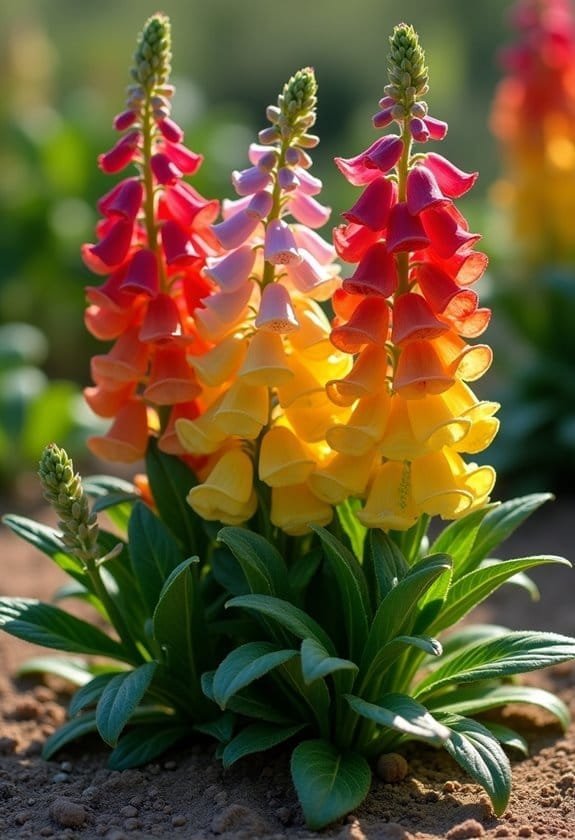
To guarantee successful cultivation of Antirrhinum majus, one must pay careful attention to its growing requirements, which encompass light, soil, water, and temperature.
These vibrant plants flourish best in well-drained, moderately fertile soil with a neutral to slightly acidic pH, alongside at least six hours of sunlight each day to promote their stunning blooms.
Additionally, maintaining consistent moisture and ideal temperatures encourages healthy growth, ultimately resulting in an enchanting display throughout the blooming season.
Light
Requiring full sun for ideal blooming, snapdragons thrive best when they receive at least six hours of sunlight daily. This abundant light encourages the development of vibrant flowers and robust growth, vital for the plant's overall health.
While full sun is best, in particularly hot summer climates, providing part shade can alleviate stress, ensuring these delicate blooms remain vibrant throughout the season.
The ideal soil pH for growing snapdragons falls between 6.2 and 7.0, encompassing neutral to slightly acidic conditions. This specific pH range facilitates nutrient absorption and enhances blooming potential.
During their initial growth phase, consistent moisture is significant; snapdragons require well-drained, moderately fertile soil that retains enough dampness to support their establishment.
Snapdragons can withstand light frost, which grants them the ability to flourish in cooler temperatures, extending their growing season. Gardeners should monitor these factors closely, as best growing conditions directly impact the success of their stunning blooms.
Soil
What type of soil do snapdragons thrive in? Antirrhinum majus flourishes in well-drained, moderately fertile soil, ideally within a pH range of 6.2 to 7.0, which allows for optimal growth.
Though these resilient plants can adapt to various soil types, they perform best in rich substrates that maintain some moisture without becoming excessively soggy, as overly saturated soils may lead to root rot and diseases.
During the essential seedling stage, consistent moisture is critical, necessitating approximately one inch of water weekly for established plants.
To support flowering, gardeners should enrich the soil with balanced fertilizers in spring and apply liquid nutrients during peak bloom, ensuring that snapdragons receive the necessary elements for robust growth.
Moreover, good soil moisture management remains important, preventing waterlogging while promoting healthy root development.
By carefully selecting a growing medium, enthusiasts can cultivate vibrant snapdragons that display their characteristic colors and forms, creating an enchanting floral spectacle.
Fundamentally, the right soil conditions set the foundation for these charming blooms, underscoring the intimate relationship between plant health and environmental factors.
Water
Successful cultivation of Antirrhinum majus relies heavily on proper water management throughout its growth stages. These vibrant flowers prefer consistently moist soil, especially during their vulnerable seedling phase, requiring approximately one inch of water weekly for established plants.
Adequate moisture is essential for promoting healthy growth and extending blooming periods, yet caution must prevail after plants establish. Excessive watering can lead to waterlogging, a condition detrimental to root health and potentially resulting in root rot.
To maintain the ideal moisture balance, growers should guarantee the soil is well-drained, safeguarding against excessive water retention during periods of heavy rainfall.
While it may be tempting to use overhead watering methods, this approach increases the risk of fungal diseases, so it's advisable to focus on watering at the base of the plant instead. This practice not only cultivates a targeted moisture delivery system but also nurtures the plants effectively, promoting robust development.
During dry spells, vigilant attention to soil moisture becomes paramount to sustain the plants' health. Ultimately, mastering the intricacies of water management forms a cornerstone of flourishing Antirrhinum majus, leading to splendid floral displays.
Temperature
Antirrhinum majus flourishes best within a specific temperature range, where nighttime lows sit in the low 40s°F and daytime highs linger around the low 70s°F. This ideal temperature environment promotes healthy growth, especially for young plants.
These striking flowers exhibit remarkable hardiness, thriving in USDA hardiness zones 7-10, which allows them to withstand light frost and cooler conditions.
Snapdragons, also known for their vibrant blooms, particularly favor cooler climates, especially from early spring to autumn. Prolonged exposure to extreme summer heat can adversely affect their health, hindering growth and reducing blossoming potential.
This makes it essential for gardeners in hotter regions to monitor environmental conditions carefully, as sustained high temperatures can lead to wilting or even plant decline.
While established snapdragons require about one inch of water weekly to maintain soil moisture, attention to temperature remains paramount.
Proper temperature regulation not only guarantees that these flowers showcase their full beauty but also allows them to flourish robustly, contributing to vibrant garden displays.
Pollinator Criteria
Antirrhinum majus, commonly known as snapdragon, primarily attracts bumblebees, whose unique body structure allows them to access the flower's specialized shape for effective pollination.
With a zygomorphic design, these blossoms favor pollinators that can navigate their intricate anatomy, making the interplay between flower morphology and pollinator preferences crucial for successful reproduction. The extended flowering period of snapdragons can provide a consistent food supply for pollinators like bees, enhancing their foraging opportunities.
The diverse floral traits, coupled with enticing scents produced from phenylpropanoids and isoprenoids, invite not only bumblebees but also butterflies, reinforcing the significant role of snapdragons in promoting ecological health and biodiversity. Additionally, like Water Plantain, snapdragons support pollinator diversity and highlight the importance of maintaining healthy ecosystems.
Attracted Pollinators
Snapdragons attract a variety of pollinators, primarily bumblebees, due to their unique flower structure and scents. Antirrhinum majus features zygomorphic flowers that resemble the opening and closing of a dragon's mouth, effectively enticing these pollinators.
This distinctive design provides a stable landing platform while guiding bumblebees directly to the pollen and nectar, making it difficult for honeybees to navigate and access these precious resources.
Floral scents play an essential role in attracting pollinators, as the synthesis of phenylpropanoids and isoprenoids, facilitated by specific enzymes, creates irresistible aromas. These scents direct pollinators toward the flowers, increasing the likelihood of successful interactions.
Additionally, snapdragons' vibrant colors—ranging from delicate pastels to striking brights—not only captivate the human eye but also entice a multitude of pollinator species, including butterflies.
As various pollinators engage with Antirrhinum majus, the ecological interactions enrich garden environments and enhance the flowers' reproductive success.
Each pollinator contributes to the delicate balance within ecosystems, illustrating how snapdragons serve not only as beautiful garden additions but as significant players in the pollinator landscape.
Pollination Method
Pollination in snapdragons primarily depends on the capabilities of their key pollinators, particularly bumblebees. These robust insects possess a crucial advantage, as their size and strength enable them to access the unique zygomorphic structure of Antirrhinum majus flowers, which honeybees struggle to navigate. The conical-papillate design of the petals not only provides a stable landing platform but also allows bumblebees to maneuver effortlessly, maximizing pollination opportunities.
Research indicates that variations in floral scent generated by snapdragons considerably affect the attraction of these essential pollinators. Specific enzymes produce distinctive scents that help bumblebees locate the flowers, showcasing the ecological interdependence between Antirrhinum majus and its environment. Additionally, selfheal (Prunella vulgaris) has a similar role in ecosystems, providing a source of nectar that attracts diverse pollinators, further emphasizing the importance of biodiversity preservation(biodiversity preservation).
Additionally, evolutionary adaptations, such as mutations at the MIXTA locus, can alter flower morphology, impacting floral accessibility and ultimately influencing pollination success rates. The interconnectedness of these traits illustrates how floral design, scent production, and pollinator efficiency contribute to the reproductive success of snapdragons. In this delicate balance, bumblebees not only fulfill their role as pollinators but also help sustain the intricate ecosystems surrounding these vibrant blooms. Moreover, like the Vipers Bugloss(a vital nectar source), snapdragons also provide essential resources for local pollinator populations, aiding in biodiversity preservation.
Care & Maintenance
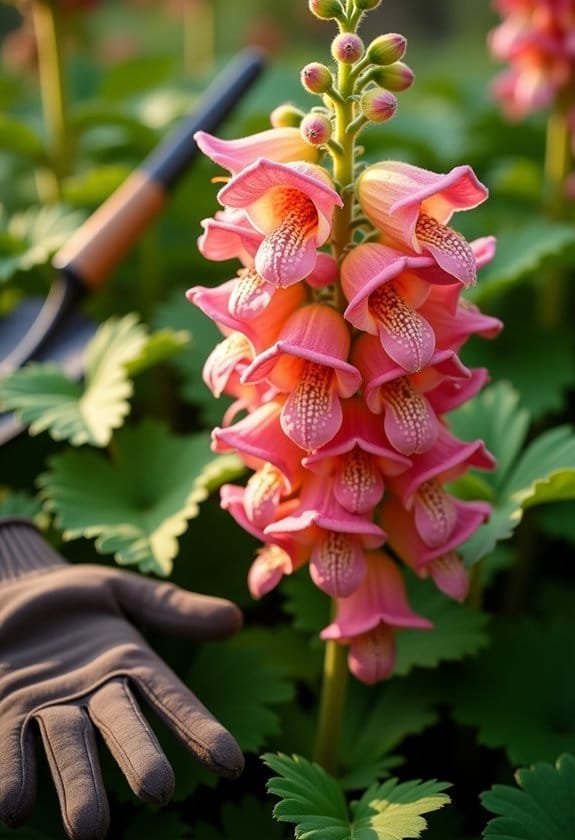
Caring for Antirrhinum majus involves several crucial practices to guarantee vibrant growth and extended blooming.
From planting in well-drained, moderately fertile soil to maintaining regular watering and fertilization routines, each step notably influences their vitality.
Companion planting with complementary species can also enhance their resilience against environmental stressors, fostering a flourishing garden ecosystem.
Planting Tips
For thriving snapdragons, ideal planting starts with choosing well-drained, moderately fertile soil that has a pH level between 6.2 and 7.0. This specific range aids in optimizing nutrient availability, ensuring robust growth.
Full sun to partial shade is significant for maximum blooming; as a result, site selection should favor sunny, sheltered spots.
Maintaining proper soil moisture is important, especially when caring for seedlings, which require consistent hydration. Established plants, however, generally need about one inch of water weekly, though it's essential to avoid waterlogging, as excess moisture can lead to root rot.
Applying a balanced fertilizer in early spring—followed by liquid applications during peak blooming—promotes vibrant flowers and healthy foliage.
Regularly deadheading spent flowers not only enhances the garden's aesthetic, but it also encourages bushiness and prolongs the blooming period.
Snapdragons, while enchanting, can attract common pests like aphids and spider mites. Vigilant observation for early signs of infestations, as well as implementing preventative measures such as appropriate plant spacing, are imperative to minimize potential issues, thus ensuring an enduring display of delightful blooms.
Ongoing Care
While growing snapdragons can be rewarding, ongoing care is imperative to maintain their health and vibrancy. To support ideal blooming and prevent wilting, gardeners should maintain soil moisture during the early growth phase, providing approximately one inch of water weekly for established plants.
Additionally, applying a balanced fertilizer in spring and utilizing a liquid fertilizer during peak blooming periods fosters robust growth and stunning flowers.
Regularly deadhead your snapdragons by removing spent flowers, which encourages further blooming and promotes bushier growth, achieved through the practice of pinching back the stem tips.
It's also essential to guarantee proper spacing of six to ten inches apart, facilitating good air circulation and considerably reducing the risk of diseases such as rust and powdery mildew.
Vigilance is crucial; thus, one must monitor for pests like aphids and spider mites.
Avoiding overhead watering is another proactive measure to minimize humidity on leaves, which can contribute to fungal diseases.
Suggested Companions
Enhancing a garden's visual appeal is easily achieved by pairing snapdragons with complementary companion plants. Among the most effective companions are Nemesia and Angelonia, both of which thrive under similar care conditions. Their vibrant blooms not only enliven the summer landscape but also greatly enhance garden aesthetics.
Larkspur can be introduced to create an eye-catching contrast, as its unique flower shapes and varied blooming season add delightful variety to flower beds.
Further enriching this floral ensemble, delphiniums provide a striking visual height with their tall stature. Planted alongside snapdragons, they create a breathtaking layered effect, making mixed borders more dynamic and visually compelling.
Additionally, integrating plants with large, bold leaves and small clumping shrubs can promote a sense of harmony and depth, further enriching the overall garden design. Notably, companion plants that are drought-tolerant can help to minimize resource competition, ensuring a flourishing garden environment.
These carefully considered pairings facilitate an evolving tableau, allowing gardeners to enjoy diverse visual experiences throughout the seasons.
Common Issues
Common issues faced by snapdragons, or Antirrhinum majus, primarily stem from pests and diseases that can greatly impact their health.
Aphids and spider mites sap the plant's energy, while rust and downy mildew thrive in conditions of excess moisture, often stemming from improper watering.
To combat these challenges, gardeners can employ strategies like regular deadheading, ensuring proper spacing for air circulation, and practicing mindful watering techniques.
Pests/Diseases
One major challenge comes from various pests and diseases that can substantially impact plant health and vigor. Rust disease is a notable issue, presenting as yellow flecks on leaves that advance to brown pustules, often necessitating relocation to curb its spread.
Fungal infections, particularly downy mildew and gray mold, result in wilting and unsightly brown patches on foliage. These diseases thrive in conditions of high humidity and poor air circulation, making it essential for gardeners to maintain proper airflow and avoid overhead watering.
Additionally, snapdragons attract pests like aphids, which feed on sap from terminal growth. This weakens the plants, leading to stunted growth and deformities in flowers and leaves.
Another common adversary is spider mites, notorious for causing bronzing or stippled foliage, especially during hot, dry spells. Gardens with increased humidity may better manage these pests.
To protect their beloved snapdragons, gardeners must employ effective pest management practices, including regular inspections for early signs of infestation and ensuring proper plant spacing for adequate air circulation.
Solutions
Gardeners can tackle the challenges associated with Antirrhinum majus through a combination of preventative measures and timely interventions.
To combat diseases like rust, gray mold, and downy mildew, they should prioritize proper air circulation by spacing plants adequately, ensuring that leaves dry quickly after rainfall. It's essential to avoid overhead watering, as it greatly increases the risk of fungal infections, thus encouraging healthier plants.
Monitoring for pests, particularly aphids, is important; these tiny insects can severely weaken the snapdragons by sucking sap from their terminal growth.
Early intervention with insecticidal soap can effectively halt their advance before more drastic measures are required.
Maintaining consistent soil moisture, while preventing waterlogging, is fundamental for established plants, as this mitigates risks of root rot.
If snapdragons display decreased blooming in their second year, gardeners should consider cutting them back after the first flowering. This proactive approach encourages new blooms, revitalizing the plants for another interesting display in subsequent seasons.
Ultimately, with diligence and attention, gardeners can foster resilient specimens that brighten their landscapes, reinforcing nature's relentless beauty.
Summary
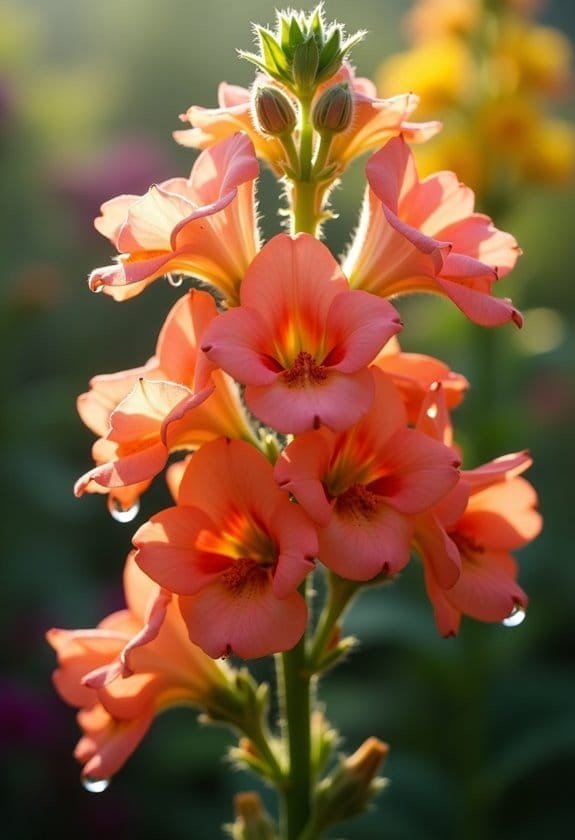
With vibrant flowers that resemble a dragon's mouth, Antirrhinum majus, or Snapdragon, captivates many. This short-lived perennial, often cultivated as an annual, showcases a delightful array of colors including red, pink, yellow, and white. It ranges in height from 6 to 48 inches, making it versatile for various garden designs or as a cut flower.
Snapdragons thrive in USDA hardiness zones 7-10, requiring well-drained, moderately fertile soil with a neutral to slightly acidic pH. Consistent moisture and regular fertilization guarantee prime growth.
Cultural practices like deadheading and pinching promote bushiness and enhance the flower's visual appeal. However, gardeners must remain vigilant against common pests such as aphids and be alert to fungal diseases like rust and powdery mildew, which can hinder the plant's health.
Beyond their ornamental value, Antirrhinum majus flowers contain beneficial compounds, such as anthocyanins. These compounds may serve medicinal purposes, including topical applications for inflammation and skin ailments.