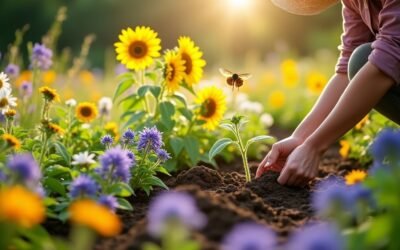
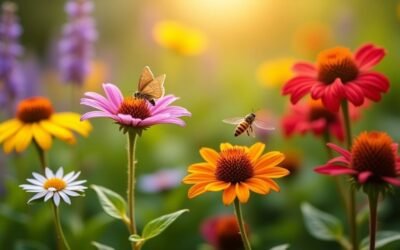
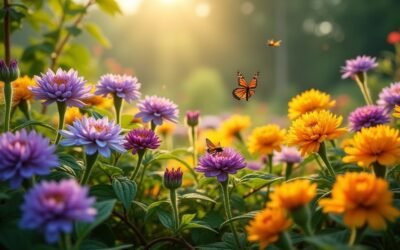
Aquilegia species, commonly referred to as Columbine, constitutes a collection of approximately 60-70 flowering plants in the Ranunculaceae family. These perennial beauties flourish in meadows and woodlands across the Northern Hemisphere, typically reaching heights between 1 to 3 feet, with some varieties extending up to 4 feet. Their intricate, spurred flowers—often likened to eagle's talons—bloom vibrantly from late spring to early summer. Thriving in USDA hardiness zones 3 to 9, Columbines prefer well-drained soils and moderate sunlight. They charm pollinators like hummingbirds and bees, enhancing garden diversity and aesthetics, hence hinting at the myriad ways they enrich ecosystems.
Main Points
- Aquilegia, commonly known as Columbine, features 60-70 species with vibrant, spurred flowers in various colors that attract pollinators like hummingbirds and bees.
- They thrive in well-drained, moist soil rich in organic matter, preferring USDA hardiness zones 3 to 9.
- Columbines bloom from late spring to early summer, providing a month-long display of colorful flowers and enhancing garden aesthetics.
- Regular care includes deadheading, watering for moisture, and using balanced fertilizers in spring, with a lifespan of about 2 to 3 years.
- Common types include Aquilegia canadensis (Eastern Red Columbine) and Aquilegia caerulea (Rocky Mountain Columbine), each offering unique visual appeal in garden designs.
Introduction
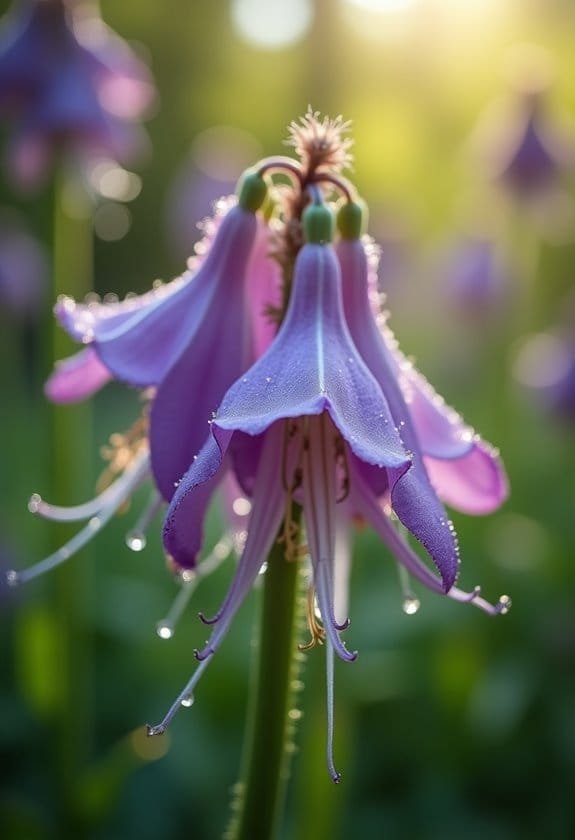
The genus Aquilegia, commonly referred to as columbine, encompasses approximately 60 to 70 species within the diverse Ranunculaceae family.
Celebrated for their engaging flower shapes and vibrant hues, these perennial plants are native to the Northern Hemisphere, flourishing in meadows and woodlands where they typically reach heights of 1 to 3 feet.
With a variety of notable species, such as Aquilegia canadensis and Aquilegia caerulea, columbines not only enhance the beauty of gardens but also play an essential role in attracting pollinators, creating a lively ecosystem.
Common Name
Columbine, a name that emanates from the Latin word "aquila," vividly captures the flower's spurred shape, which resembles an eagle's talons. This evocative common name applies to various species within the Aquilegia genus, comprising approximately 60 to 70 distinct species primarily found in the Northern Hemisphere. One particularly notable example is Aquilegia canadensis, widely known as Eastern Red Columbine, celebrated for its striking hues and ornamental appeal.
Columbines are easily recognizable by their vibrant, showy blooms, which exhibit a diverse palette of colors, including rich blue, radiant red, sunny yellow, and delicate pink. These variations contribute not only to their aesthetic value but also to their ecological importance.
The flowers serve as a critical nectar source for diverse pollinators, including hummingbirds, bees, and butterflies, fostering a flourishing ecosystem in gardens and natural landscapes alike.
The name "Columbine" embodies both the plant's ornamental beauty and functional benefits, establishing its significant role in horticulture. Engaging in the cultivation of such remarkable species encourages biodiversity, essential for maintaining ecological balance.
Consequently, Columbines inspire admiration and underscore the interconnectedness of nature.
Scientific Name
Often regarded for their striking beauty, the scientific classification of the common genus of columbines is Aquilegia. This genus name encompasses approximately 60 to 70 species that belong to the diverse Ranunculaceae family.
The etymology of Aquilegia derives from the Latin word *Aquila*, which translates to "eagle." This intriguing origin references the remarkable shape of the plant's spurs, which resemble an eagle's talons.
Within the Aquilegia genus, notable species include Aquilegia vulgaris, commonly known as the European Columbine, Aquilegia canadensis, the Eastern Red Columbine, and Aquilegia caerulea, recognized as the Rocky Mountain Columbine. Each of these species boasts unique colorations and characteristics, contributing to the genus's appeal.
Typically, the flowering season for Aquilegia species spans from late spring to early summer, delighting various pollinators that are drawn to their nectar-rich blooms.
Many Aquilegia species exhibit remarkable adaptability, thriving in USDA hardiness zones 3 to 9, and they prefer well-drained, moist soils, making them resilient choices for diverse growing conditions.
Overview
With around 60 to 70 species, Aquilegia, commonly called columbine, captivates gardeners and enthusiasts alike. This perennial flowering plant belongs to the Ranunculaceae family and is mainly found in the Northern Hemisphere. Standing between 1 to 3 feet tall, these plants enchant with their distinctive long spurs and upward-facing petals, which showcase an alluring palette of colors, including blue, red, yellow, pink, and white.
Blooming from late spring to early summer, Aquilegia flowers are a veritable treasure for pollinators such as hummingbirds, bees, and butterflies, thanks to their rich nectar. Importantly, species like Aquilegia canadensis and Aquilegia caerulea have gained acclaim in native plant gardens, celebrated for their ornamental value and ability to thrive in USDA hardiness zones 3-9.
These versatile plants flourish in well-drained soil with partial shade, making them adaptable to various garden settings. Additionally, they require minimal maintenance, which not only simplifies care but also allows gardeners to enjoy their spectacular beauty effortlessly.
What makes Aquilegia truly remarkable is its ability to blend aesthetic appeal with ecological significance, enriching both landscapes and local biodiversity.
Key Features
Aquilegia species, known for their enchanting appearance, typically grow to a height of 1-3 feet and can spread 1-2 feet.
Their striking flowers, adorned with upward-facing petals and elegant long spurs, bloom mainly in late spring through early summer, adding a vibrant touch to gardens.
With an adaptable nature, these resilient plants thrive in well-draining soils and partial shade, making them suitable for various landscapes, from cottage to woodland gardens.
Growth Size
Many Aquilegia species display a remarkable growth size that typically ranges from 1 to 3 feet (30 to 90 cm) in height, with some varieties even reaching up to 4 feet under ideal conditions.
These enchanting plants generally spread 1 to 2 feet (30 to 60 cm) wide, making them an excellent choice for both borders and wildflower gardens.
Each species of columbine exhibits a robust growth habit, characterized by a thick rhizomatous root system that allows them to thrive in a variety of soil types.
This adaptability is crucial to their survival, enabling them to establish strong footholds in diverse environments.
Significantly, while some species may top out at 4 feet, there are compact varieties that stand as short as 6 inches, offering a delightful range of choices for gardeners.
The lovely foliage, composed of intricately lobed and compound leaves, contributes to the overall height and form of these plants, enhancing their ornamental appeal.
Typically, Aquilegia flowers bloom in late spring to early summer and, despite a lifespan of 2 to 3 years, their propensity for self-seeding perpetuates their presence in natural landscapes.
Appearance
In the world of flowering plants, columbines stand out for their striking appearance and unique features. These charming plants typically reach heights of 1 to 3 feet (30-90 cm) and can spread 1 to 2 feet (30-60 cm) wide in garden settings, making them a formidable presence in any landscape.
Their flowers are particularly notable, characterized by long spurs and upward-facing petals, which can boast a luminous palette of colors, including blue, red, yellow, pink, and white.
The foliage of columbines enhances their appeal, featuring compound, lobed leaves that often create attractive mounds at the base of the plants. Even when the flowers aren't in bloom, this lush greenery provides visual interest.
Different species showcase distinctive characteristics; for example, Aquilegia vulgaris typically exhibits shades of blue, purple, and pink, while Aquilegia canadensis flourishes with striking red and yellow blooms, further diversifying their aesthetic allure.
Together, the combination of vibrant flowers and appealing foliage guarantees that columbines serve as vibrant accent plants, inviting admiration and curiosity during their blooming period in late spring to early summer. Such features make columbines a fascinating addition to gardens and landscapes alike.
Flowering Season
Columbines put on a stunning display during their flowering season, typically occurring from late spring to early summer. This vibrant exhibition usually peaks between May and June, but species variations and local climate can influence timing.
For instance, Aquilegia canadensis often bursts forth with color slightly earlier than its counterparts, such as Aquilegia chrysantha, showcasing striking yellow blooms during the same period.
Each columbine flower lasts for about one month, offering a nectar-rich feast that entices various pollinators, including hummingbirds and bees. These flowering plants are celebrated for their diverse color palette, which includes shades of blue, red, yellow, pink, and white, along with many bi-colored or multi-colored varieties that further enhance their aesthetic appeal.
In ideal growing conditions, mature columbine plants can produce successive blooms, especially when gardeners practice deadheading—removing spent flowers to encourage new growth.
This strategy extends the flowering season well into early summer, making columbines a worthy addition to any garden. Their annual performance not only beautifies the landscape but also supports essential pollinators, fostering a vibrant ecosystem.
Growing Requirements
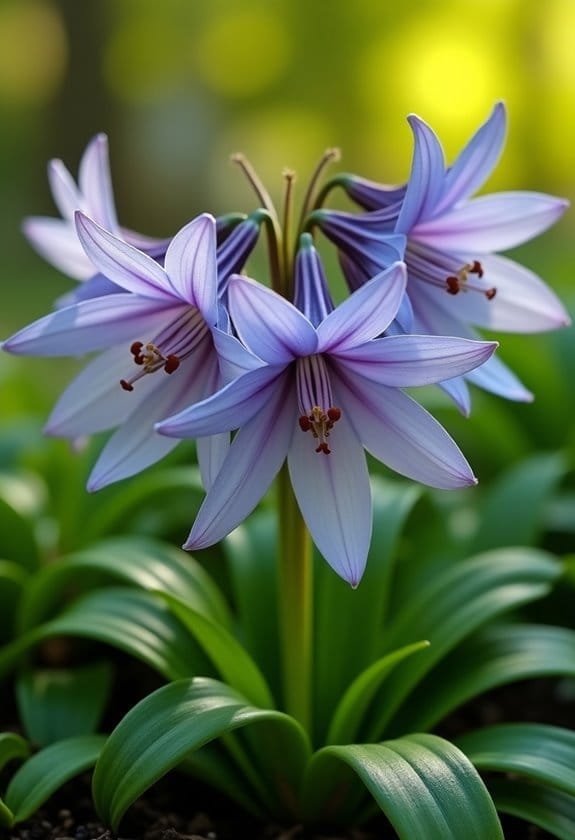
When considering the growing requirements for Columbine, one must acknowledge its preference for well-draining soil with a pH level ideally ranging from 6.0 to 7.0.
While these plants thrive in partial shade, many species exhibit resilience under full sunlight, provided they receive adequate moisture, especially in warmer regions.
Understanding these conditions guarantees not only the successful cultivation of Aquilegia but also the vibrancy of its characteristic blooms.
Light
Many gardeners find that columbine flowers thrive in a range of light conditions, but proper sunlight is essential for their overall health and blooming potential. Ideally, these plants flourish with 4 to 6 hours of direct sunlight daily.
Morning sun is particularly beneficial, as it helps reduce leaf dampness, thereby minimizing the risk of fungal diseases. While columbines can tolerate varied lighting, those receiving inadequate sunlight often exhibit fewer blooms and weaker growth.
In hotter climates, providing partial shade in the afternoon is vital to protect the delicate foliage from scorching. Yet even in shadier areas, columbines can still prosper; bright indirect light fosters robust growth, revealing their remarkable adaptability.
Native species, like Aquilegia canadensis, are exceptionally well-suited for diverse environments, thriving in both open woodlands and sunny garden plots.
Understanding these light preferences allows gardeners to position their columbines for ideal growth, ensuring healthy plants that can display their enchanting blooms throughout the growing season.
Balancing light exposure remains a fundamental factor in nurturing these mesmerizing flowers, ultimately enhancing their alluring characteristics and vibrancy in any garden setting.
Soil
Successful growth of columbine flowers greatly depends on the quality of their soil. These enchanting plants flourish in well-drained, moist, average soil enriched with organic matter, which enhances both fertility and drainage.
While Aquilegia species can tolerate a variety of soil types, they struggle in wet, poorly drained conditions; such environments can considerably increase the risk of devastating root rot.
To guarantee vibrant blooms and healthy foliage, gardeners should prioritize soil with good drainage, especially after transplanting. The ideal soil pH for columbine thrives between 6.0 and 7.0, which is mildly acidic to neutral. This pH range allows essential nutrients to be readily available, promoting vigorous growth.
Additionally, while columbine can adapt to full sun with appropriate moisture, they prefer light to moderate shade, which mirrors the conditions found beneath deciduous trees in their natural habitats.
Consequently, choosing the right soil not only nurtures the plant but also creates an environment that mimics their native surroundings. As careful gardeners attend to the soil's moisture content and texture, they pave the way for the delightful blooms of Aquilegia to grace their gardens.
Water
Keeping columbines well-watered is fundamental for their growth and flourishing blooms. These enchanting plants thrive when provided with consistent moisture, favoring well-draining yet moist average soil.
While mature columbines display a commendable drought tolerance once established, regular watering remains essential during sweltering summer months and prolonged dry spells. To guarantee health and vigor, gardeners must monitor water levels carefully, as overwatering can induce root rot. Good drainage is critical to avoid waterlogged conditions, which can jeopardize the integrity of the root system.
During the flowering stage, maintaining adequately moist conditions becomes essential, fostering maximum blooming and extending the duration of vibrant floral displays. Additionally, water mint's preference for moist, nutrient-rich soil can provide a useful reference for ensuring other plants receive the appropriate growing conditions. The foundational requirement for consistent water is similar to that of Water Forget-Me-Not, highlighting the importance of moisture in plant health.
Additionally, employing mulch around the base of columbines serves multiple purposes, helping to retain moisture, regulate soil temperature, and suppress the growth of competing weeds. By integrating these watering strategies, gardeners cultivate a thriving environment, allowing columbines to flourish.
Understanding and managing the delicate balance of water and moisture not only enhances the plants' aesthetic appeal but also contributes substantially to their overall health, creating a fascinating spectacle in any garden.
As a result, diligent care guarantees the successful growth of these beloved perennial blooms.
Temperature
Temperature plays an essential role in the growth and development of Aquilegia species, influencing their ability to thrive in various environments.
These columbines flourish in USDA hardiness zones 3-9, showcasing their adaptability to a wide array of temperature extremes across diverse climates. Ideally, they prefer moderate growing conditions, with ideal growth occurring in the cool to warm temperatures of late spring to early summer. Common foxglove, which also thrives in similar zones, demonstrates that certain biennial plants can adapt well to varying climates and conditions.
Some species, like Aquilegia canadensis, demonstrate remarkable heat resistance, yet they still benefit from partial shade during sustained periods of high temperatures. This protection helps prevent wilting, allowing the plant to conserve moisture and maintain vigor.
While mature columbines exhibit some drought resistance, younger plants require consistent moisture to establish properly and should be shielded from extreme heat.
Understanding local climate patterns, including significant frost dates and the intensity of heat, is vital for the successful cultivation and flowering of Aquilegia species. Furthermore, these conditions can impact pollination networks that are essential for the ecological balance of their growing environments.
Consequently, by aligning their growing conditions with these temperature requirements, gardeners can guarantee vibrant blooms and healthy foliage, ultimately enhancing the beauty of their landscapes.
Pollinator Criteria
Columbine flowers, known for their extraordinary nectar-rich blooms, play an essential role in attracting an array of pollinators, including hummingbirds, bees, and butterflies.
Their unique structural adaptations, particularly long spurs, facilitate a specialized pollination method that guarantees effective pollen transfer, thereby supporting reproductive success.
Understanding how specific Aquilegia species cater to distinct pollinators not only enhances garden diversity but also fosters ecological balance in local ecosystems.
Attracted Pollinators
Aquilegia species are a magnet for pollinators, thanks to their rich nectar and vibrant blooms. These alluring flowers attract an array of pollinators, including hummingbirds, bees, and butterflies, that are fundamental for ecosystem health. The long spurs of columbine blossoms, often extending up to two inches, are specifically adapted to cater to pollinators with longer tongues, such as hummingbirds, who are enticed by the bright hues and sugary nectar.
Blooming from late spring to early summer, these flowers provide a significant food source when many native pollinators are most active. The diversity in flower color and shape not only enhances the aesthetic appeal of gardens but also encourages interactions with both generalist and specialist pollinator species, thereby promoting biodiversity. This diversity results in a rich tapestry within the ecosystem, fostering resilience against environmental changes. Additionally, like the common tufted vetch, columbine fixes nitrogen in the soil, further enhancing soil fertility for surrounding plants. Furthermore, the early bloom of Common Cowslip allows it to support pollinator populations at the beginning of the growing season, enhancing ecological balance.
Moreover, Columbine plants are low-maintenance and resistant to pests, making them an excellent choice for garden designs aimed at supporting pollinator populations. By cultivating these enchanting flowers, gardeners not only beautify their landscapes but also contribute to the well-being of essential pollinators, sustaining a delicate ecological balance.
Pollination Method
Pollinators play an essential role in the reproductive success of Aquilegia species, as their unique flower structures enhance targeted interactions with specific creatures. The pollination method employed by these plants involves their distinctive spurred flowers, which exhibit elongated nectar spurs that can measure anywhere from 1 to 4 inches long.
This design caters specifically to pollinators such as hummingbirds and certain bees, whose mouthparts are similarly adapted for efficient nectar extraction. Colorful hues, including blue, red, and yellow in columbine flowers, serve as visual signals, grabbing the attention of these pollinators during their active foraging season from late spring to early summer.
Curiously, the variation in spur length among Aquilegia species aligns closely with the mouthparts of their respective pollinators, further emphasizing a co-evolutionary relationship.
Moreover, many Aquilegia species demonstrate adaptation to distinct pollinators based on their geographic locales, revealing the intricate ecological networks at play. As these flowers bloom and beckon their targeted visitors, they not only guarantee their own reproductive efficacy but also contribute to the harmony of their surrounding ecosystems, showcasing nature's delicate balance.
Care & Maintenance
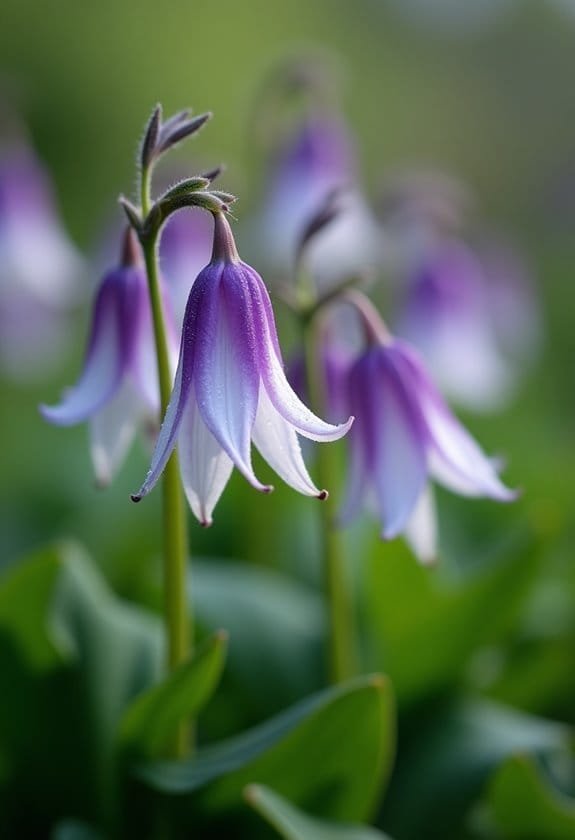
When caring for Aquilegia species, one must consider their unique planting requirements and ongoing maintenance needs.
These delicate yet resilient plants flourish in well-draining soil that retains consistent moisture, ideally positioned in partial shade or full sun with protection from scorching afternoon heat.
To promote healthy growth and vibrant blooms, regular deadheading and the application of a slow-release fertilizer in spring are essential practices that guarantee the columbine thrives throughout the growing season.
Planting Tips
In early spring or fall, gardeners can achieve stunning blooms by carefully planting columbines in the right conditions.
These beautiful perennials thrive best in well-draining soil that's rich in organic matter, so it's imperative to enrich the planting area with compost before sowing the seeds. Gardeners should choose locations that receive partial to full sunlight, particularly providing afternoon shade in hotter climates to protect the delicate foliage. Flowering plants like columbines can also provide benefits to local insect populations, such as pollinators like bees.
To optimize growth, columbine seeds should be planted either directly in the garden in fall or early spring, or started indoors six to eight weeks prior to the last frost.
During the initial growth phase, keeping the soil consistently moist is critical. Mature columbines have some drought tolerance, but they flourish best with regular watering.
Applying a balanced, slow-release fertilizer in spring can greatly enhance blooming and overall growth.
For continued health, gardeners should regularly deadhead spent flowers, encouraging the plant to produce new blooms.
In addition, dividing established plants every few years guarantees that they remain vigorous, preventing overcrowding within the garden bed and allowing each columbine to showcase its elegance fully. Furthermore, incorporating plant varieties like Yarrow can enhance overall biodiversity and attract beneficial pollinators to your garden.
Ongoing Care
To maintain the health and beauty of columbines, gardeners must prioritize ongoing care throughout their growing season.
These charming plants thrive best in well-draining, moist soil, requiring consistent moisture to establish strong root systems; once they're settled, they become relatively drought-tolerant. Gardeners should apply a balanced, slow-release fertilizer in early spring to fuel robust growth and guarantee vibrant blooms during their flowering period, which occurs from late spring to early summer.
Regular deadheading—the act of removing spent flowers—encourages new blooms while enhancing the plant's visual appeal, thereby prolonging the display of their intricate, nodding flowers.
Additionally, placing organic mulch around the bases of the plants can effectively retain moisture, suppress weeds, and regulate soil temperature, all of which greatly contribute to overall plant vitality.
For those in colder climates, insulating plant crowns with straw or mulch helps protect columbines during winter months, enhancing their longevity and fruition come spring. Horseshoe Vetch, which also thrives in similar well-drained conditions, can serve as a beneficial companion plant for columbines due to its role in promoting biodiversity.
Suggested Companions
Pairing Aquilegia species with the right companion plants enhances both their beauty and functionality in the garden. In North American settings, columbines flourish alongside shade-loving plants such as hostas and ferns, fostering a lush, layered effect characteristic of woodland gardens.
This design strategy not only showcases the delicate structure of Aquilegia but also harmonizes with the surrounding flora.
For those aiming for a vibrant cottage garden aesthetic, juxtaposing columbines with foxgloves and hollyhocks creates a visually stimulating tableau, melding their unique shapes and hues.
In rock gardens, opting for compact species of Aquilegia entwined with alpine plants generates a striking display rich in texture and color variation.
Establishing a pollinator garden is another commendable approach; planting columbines alongside nectar-rich companions attracts beneficial insects like hummingbirds, bees, and butterflies, promoting ecological health.
Regular deadheading of columbines, a crucial task that encourages new blooms, should be synchronized with companion plants such as irises and lupines to maintain a continuous cycle of flowering.
Consequently, selecting appropriate companion plants not only enhances the garden's allure but also supports the ecosystem's vibrancy.
Common Issues
Aquilegia species frequently face challenges from pests and diseases that can compromise their vibrancy and life span.
For instance, the insidious Aquilegia downy mildew leads to significant plant decline, manifesting through yellowing leaves and stunted growth, while aphids may curl leaves and weaken the plants.
Timely interventions, such as employing insecticidal soap or ensuring proper drainage to prevent root rot, are essential for maintaining the lush beauty of these delicate flowers.
Pests/Diseases
When growing columbine plants, gardeners should be mindful of potential pests and diseases that can affect their health. While Aquilegia species are generally resilient, they aren't impervious. One common disease is Aquilegia Downy Mildew, which is characterized by leaf yellowing and distortion, often leading to significant aesthetic and physiological decline.
Aphids might occasionally become a nuisance, as they sap energy from the plants; however, effective management strategies, such as applying insecticidal soap or neem oil, can help keep these pests at bay.
To minimize the risk of fungal diseases, maintaining adequate air circulation around the plants and avoiding overhead watering practices are essential. Regular monitoring for pests during blooming season can aid in early detection and intervention, preventing infestations from escalating.
Additionally, implementing preventive measures like crop rotation and proper site selection contributes to reducing recurring disease issues in various Aquilegia cultivars.
Ultimately, gardeners should adopt a proactive approach to guarantee their columbine plants thrive free from debilitating pests and diseases that threaten their health and beauty.
Solutions
Gardeners often face common issues with columbine plants, but many effective solutions exist to keep them healthy and thriving.
To combat Aquilegia downy mildew, characterized by yellowing leaves and a grayish fungal coating, proper air circulation proves essential. Avoiding overhead watering prevents excess moisture, minimizing the risk of fungal development.
Pest problems like aphids and spider mites can be effectively addressed through regular monitoring and treatment with insecticidal soap or neem oil, ensuring that infestations don't escalate.
Additionally, maintaining consistent soil moisture is vital, particularly for newly planted columbine species, as brief droughts can greatly stress these delicate garden plants.
Overcrowding can also present challenges due to columbine's tendency to self-seed. Gardeners should consider thinning seedlings or practicing deadheading to promote better air circulation and minimize nutrient competition among plants.
Moreover, in colder climates, providing insulation by mulching around plant crowns protects against extreme cold and frost heave, which can severely damage these beautiful specimens.
Incorporating acid-loving species alongside columbine can enhance soil health, benefiting the overall plant ecosystem in the garden.
Summary
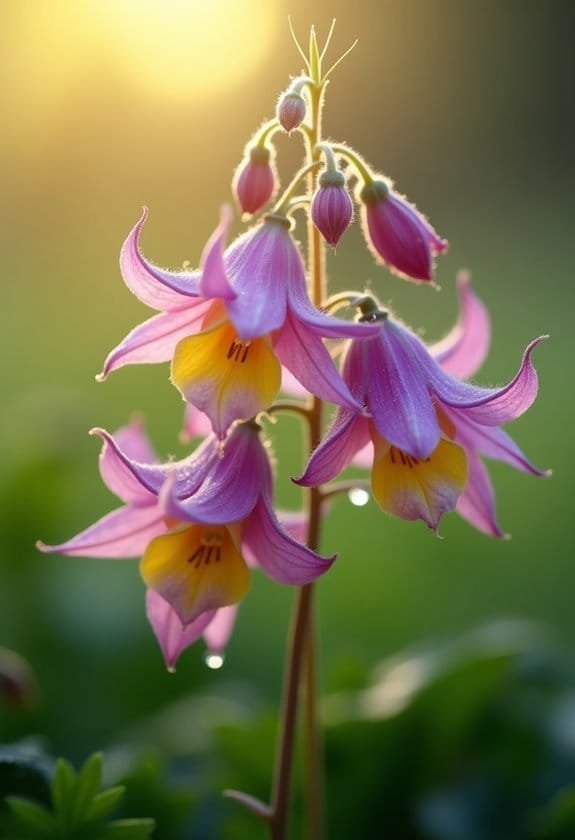
Columbine flowers, renowned for their striking beauty and unique long spurs, belong to the genus Aquilegia within the Ranunculaceae family. These vibrant perennial plants, thriving in USDA hardiness zones 3-9, typically bloom from late spring to early summer, fostering an enchanting display that attracts a diverse array of pollinators, including hummingbirds and bees, drawn to their nectar-rich flowers.
Various Aquilegia species, such as Aquilegia vulgaris and Aquilegia canadensis, present an impressive palette of colors—from deep blues to radiant reds, sunny yellows, delicate pinks, and pure whites. Some even showcase bi-colored or multi-colored blooms, enhancing their visual appeal in garden landscapes.
Preferring well-drained, moist soils, columbines flourish in partial shade, making them ideal candidates for a range of garden settings, including cottage and woodland gardens.
These plants are relatively low maintenance, demonstrating resistance to pests and diseases while possessing the ability to self-seed, thereby sustaining their populations in suitable environments. Additionally, columbines serve as an essential nectar source for pollinators, notably hummingbirds and butterflies, contributing to ecological diversity.
Their enchanting flowers and resilience not only add aesthetic charm to gardens but also contribute to the ecological balance by supporting various pollinator species.