Armeria maritima, commonly called Sea Thrift, is an evergreen perennial native to the northern hemisphere. It thrives in coastal environments, growing 6 to 12 inches tall and forming dense mats of needle-shaped foliage. From mid-spring to summer, it displays striking pom-pom-like clusters of pink or lavender flowers. Preferring well-drained sandy soils and full sunlight, it shows remarkable adaptability and salt tolerance, making it ideal for seaside landscapes. While generally low-maintenance, it requires attention to prevent root rot. This resilient plant supports pollinator populations, enhancing garden biodiversity, and offers numerous aesthetic possibilities for landscaping. There's much more to discover about this fascinating species.
Main Points
- Armeria maritima, commonly known as Sea Thrift, is an evergreen perennial native to coastal regions of the northern hemisphere.
- It produces vibrant clusters of pink to lavender pom-pom flowers, blooming from mid-spring to summer.
- The plant thrives in well-drained, sandy or gravelly soils and is highly drought-resistant once established.
- Sea Thrift attracts pollinators like bees and butterflies, contributing to local biodiversity and ecosystem health.
- It is suitable for hardiness zones 3 to 9, performing best in full sunlight with minimal care requirements.
Introduction
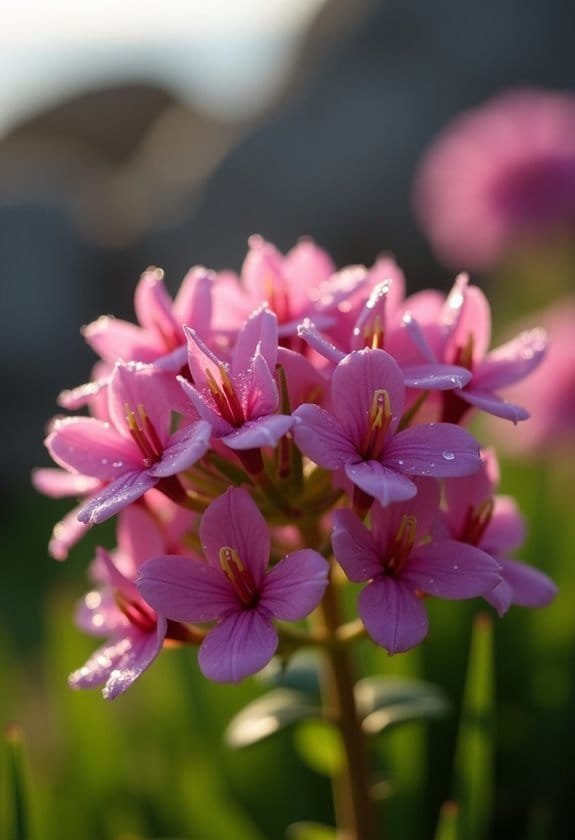
Armeria maritima, widely known as Sea Thrift, is a remarkable evergreen perennial celebrated for its stunning rose-pink flower clusters that grace gardens from mid-spring to early summer.
Thriving in hardiness zones 3 to 9, this resilient plant flourishes in well-drained, infertile soils, making it a splendid choice for arid coastal landscapes.
With a height of 6 to 12 inches, it forms compact mats of grassy foliage, proving itself to be both aesthetically pleasing and environmentally beneficial by attracting pollinators while requiring minimal care.
Common Name
Known for its charming clusters of pink to lavender blooms, Sea Thrift stands out as a popular choice among gardeners seeking low-maintenance perennial plants. Officially identified as Armeria maritima, this evergreen perennial enchants with profuse flowering during mid to late spring, transforming gardens into vibrant displays of color.
With a modest height and width ranging from 6 to 12 inches, it's versatile enough for edging, ground cover, or bold mass plantings. Sea Thrift adapts brilliantly to various environments, particularly coastal gardens and rock gardens, thriving in well-drained, infertile soils. Its remarkable resilience makes it a favorite, as it not only tolerates drought conditions but also shows impressive resistance to diseases and pests. Consequently, gardeners can enjoy its beauty without demanding maintenance. Additionally, like Silverweed, it demonstrates an ability to thrive in harsh environments, enhancing its value for gardeners looking to create resilient landscapes. Furthermore, its close relation to coastal habitats allows it to demonstrate excellent salt tolerance, making it an ideal candidate for seaside gardens.
Native to the northern hemisphere, Sea Thrift often finds its home in coastal cliffs and sandy spaces, exhibiting an ability to flourish where many other plants falter. By incorporating this stunning perennial into their gardens, enthusiasts embrace a touch of coastal charm while benefiting from an easy-care companion, enhancing both aesthetic appeal and ecological diversity.
Scientific Name
Sea Thrift, or Armeria maritima, is scientifically classified within the Plumbaginaceae family, showcasing its botanical significance. This native plant thrives primarily in the northern hemisphere, where it adorns coastal cliffs, sandy beaches, and gravely tundra.
The species name "maritima" reflects its affinity for coastal environments, including salt marshes and saline habitats, highlighting its adaptation to specific climatic conditions.
Armeria maritima typically reaches heights of 6 to 12 inches, composing clusters of enchanting pink to lavender flowers that bloom harmoniously during its flowering season. The plant's evergreen perennial nature guarantees it remains visually appealing year-round, even amidst changing seasonal landscapes.
Within this species, several recognized subspecies exist, such as Armeria maritima subsp. azorica and Armeria maritima subsp. californica. Each subspecies demonstrates unique adaptations, optimized for their particular habitats.
The remarkable versatility of Armeria maritima not only enhances biodiversity but also provides essential ecological roles in stabilizing coastal soil and supporting local wildlife. This fascinating plant offers insight into the wonders of botanical classification and ecological resilience, emphasizing the importance of understanding and conserving our natural heritage.
Overview
The allure of Sea Thrift, or Armeria maritima, captivates gardeners and nature enthusiasts alike with its compact beauty and remarkable adaptability. This evergreen perennial, typically growing to a height and width of 6 to 12 inches, showcases delightful clusters of pink to lavender flowers atop sturdy stems.
Thriving in full sun, Sea Thrift flourishes best in well-drained, infertile soils, making it an excellent choice for rock gardens and coastal landscapes, as well as an attractive ground cover.
Indigenous to the coastal and mountainous terrains of the northern hemisphere—especially in Europe and North America—this resilient plant excels in dry, sandy, and saline conditions. Its profuse blooming from mid to late spring, with occasional flowers extending into summer, not only pleases the eye but also attracts busy bees and graceful butterflies, enhancing the biodiversity of any garden.
Remarkably, Sea Thrift resists pests and diseases, proving deer-resistant while requiring minimal maintenance, a boon for gardeners seeking low-maintenance options. With its exquisite charm and environmental resilience, Sea Thrift stands as a demonstration of nature's incredible capacity to adapt and inspire.
Key Features
Armeria maritima, or Sea Thrift, exhibits notable characteristics that make it a charming addition to gardens.
Typically reaching heights and widths of 6 to 12 inches, it forms dense mats of grass-like foliage, crowned by clusters of stunning pink to lavender flowers that flourish from mid-spring to summer.
Its ability to thrive in well-drained, infertile soils under full sun not only enhances its aesthetic appeal but also underscores its resilience, making it well-suited for rocky coastal environments.
Growth Size
Typically reaching heights and widths of 6 to 12 inches, Sea Thrift showcases a compact and robust growth habit. This compact evergreen perennial displays dark green, needle-shaped leaves that form a well-defined rosette at its base, providing a striking contrast to its floral features.
This adaptability to various environments means it can thrive in rocky, coastal areas and well-drained soils, making it an excellent choice for diverse landscapes.
Furthermore, the plant's low-growing stature promotes efficient use as ground cover, effectively suppressing weeds and enhancing the visual interest of rock gardens and borders. The modest growth size emphasizes its role in creating layered designs in garden settings.
When Sea Thrift flourishes, it tends to produce clusters of pink to lavender pom-pom-like flowers atop stiff stems that can rise slightly above the lush foliage, providing not just beauty but also attracting pollinators.
Appearance
Beauty defines Sea Thrift, with its vibrant clusters of rose-pink to lavender flowers gracefully perched atop stiff stems. This evergreen perennial showcases a compact growth habit, typically reaching 6 to 12 inches in height and width, making it an ideal choice for small spaces and borders.
The striking pom-pom-like flowers create a delightful visual contrast to the plant's dark green, needle-shaped leaves, which are arranged in a basal rosette. This foliage not only provides a lush appearance throughout the growing season but also highlights the overall resilience of Sea Thrift, which thrives in various environmental conditions.
Known for its disease resistance, this hardy plant brings enduring visual interest to gardens and landscapes alike. The arrangement of the flowers atop sturdy stems enhances the plant's architectural appeal, inviting admiration while attracting pollinators to its vibrant blossoms.
Moreover, the dense, textured foliage contributes to a rich, tactile experience in outdoor spaces. With its unique combination of form and color, Sea Thrift elevates the aesthetic of any garden, demonstrating how an unassuming plant can transform landscaping when strategically placed. Its enchanting appearance is a demonstration of the beauty of nature's design.
Flowering Season
With the enchanting presence of Sea Thrift established, its flowering season reveals a dynamic display of color that enhances any landscape. Typically, Armeria maritima begins its bloom time in mid to late spring, showcasing clusters of exquisite pink to lavender pom-pom flowers perched atop sturdy stems.
This long-blooming perennial dazzles the eye and continues to flower into early summer, creating a prolonged spectacle of beauty. The flowering period can considerably vary, spanning from April to as late as October, influenced by local climate conditions and care practices.
Gardeners often employ deadheading techniques to remove faded flowers, thereby encouraging a second blossoming, which extends the blooming season and enriches the garden's visual appeal. Furthermore, these charming flowers attract a diverse array of pollinators, including bees and butterflies, thereby enhancing the local biodiversity.
The sight of Sea Thrift's vibrant blooms swaying in the breeze serves not only as a garden ornament but also as a crucial stimulant for ecological harmony. With its rich flowering season and adaptability, Armeria maritima stands as a reflection of nature's beauty and resilience, enchanting all who encounter it.
Growing Requirements
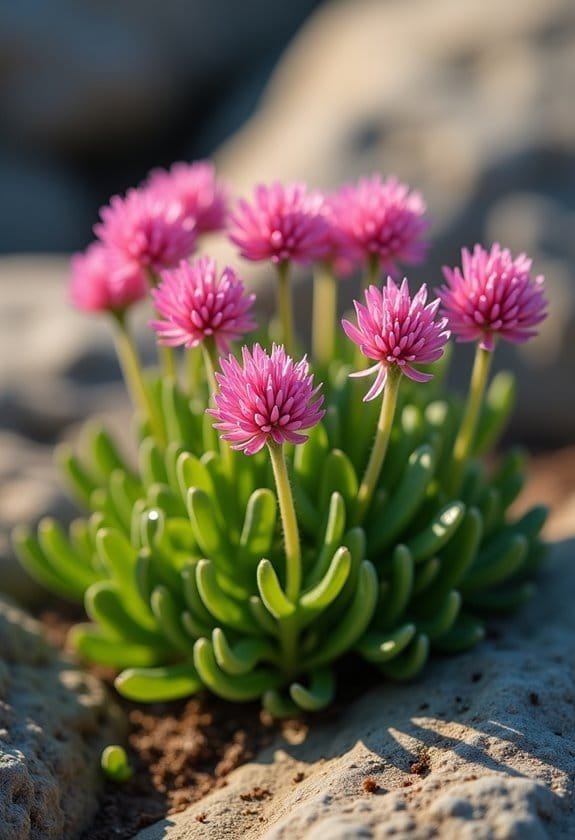
Armeria maritima flourishes in environments characterized by full sunlight and well-drained soils, particularly those with sandy or gravelly textures reminiscent of its coastal origins.
The plant thrives in low-nutrient, drought-prone areas, as it's specifically adapted to resist rot caused by excessive moisture, making it crucial for gardeners to guarantee appropriate drainage.
With its remarkable hardiness across USDA zones 3 to 9, Sea Thrift not only showcases adaptability but also invites careful consideration of light and temperature requirements, guaranteeing a vibrant blooming display in mid to late spring. Additionally, similar to rock samphire, it thrives in mineral-rich soils, highlighting its preference for coastal conditions.
Light
Sunlight is crucial for the thriving of Sea Thrift (Armeria maritima), as it needs at least six hours of direct sun each day to achieve ideal growth and blooming. This perennial plant flourishes in full sun environments, demonstrating a remarkable adaptability to hot and dry climates.
In fact, Sea Thrift is particularly well-suited for arid coastal gardens and xeriscapes, where its drought tolerance shines through. Common Cowslip (Primula veris), which also thrives in diverse conditions, illustrates the importance of selecting the right location for plant health.
To support peak development, Sea Thrift thrives best in well-drained soil, which allows for excess moisture to move away from the root system. It struggles considerably in conditions that are heavy or overly moist, such as rich loamy soil, which can lead to root rot and diminished health.
Consequently, choosing the right location with the appropriate soil composition plays a critical role in the plant's overall success. Moreover, while Sea Thrift is a hardy species, it does appreciate some shelter, especially in the morning sun. This exposure helps protect the plant from the harsh afternoon heat, ensuring it receives the energy needed for vibrant blooms while managing stress from intense sun exposure.
Hence, understanding the light requirements is imperative for fostering healthy growth in this charming plant. Additionally, the self-seeding nature of Sea Thrift allows for easy propagation and integration into diverse landscapes.
Soil
Choosing the right soil type is vital for the success of Sea Thrift. This resilient plant, scientifically known as Armeria maritima, flourishes in well-drained, infertile soils often found along coastal habitats.
Preferring dry, sandy, or gravelly conditions, it thrives where moisture levels remain low, echoing its natural environment. Drought tolerant by nature, Sea Thrift actively resists excessive moisture, which can induce root rot, especially in heavy clay or overly fertile soils.
While Sea Thrift can adapt to a variety of soil types, gardeners must avoid overly enriched conditions, as these can considerably reduce the plant's lifespan. In fact, poor soil quality may be preferable for best growth, allowing the plant to establish itself more firmly.
Furthermore, regular monitoring of soil drainage is critical; stagnant water can have harmful effects on the plant's health, fostering conditions that lead to rot and decline.
To cultivate Sea Thrift successfully, it's wise to simulate its preferred coastal conditions, ensuring that soil is both well-drained and relatively barren. In doing so, gardeners create a thriving environment, allowing this charming perennial to endure and bloom beautifully in their gardens.
Water
Watering plays an essential role in the growth of Sea Thrift, particularly during its initial establishment. This hardy perennial, Armeria maritima, benefits markedly from consistent moisture in its first year as it develops a robust root system.
However, garden enthusiasts must be cautious, as Sea Thrift thrives best in well-drained soils. Overly moist or rich conditions can lead to detrimental rot, ultimately hindering the plant's progress.
Due to its innate drought tolerance, after establishment, regular watering should taper off. The goal is to avoid over-saturation, which can ruin the plant's resilience.
Sea Thrift flourishes in dry, sandy, or gravelly environments, making it an excellent choice for coastal gardens that experience salt spray. These conditions echo the plant's adaptation to xeric environments, where limited water availability becomes a key factor.
Once established, Sea Thrift requires minimal care and very little additional water, surviving impressively in hot, dry locations. Its capacity to withstand such extremes enhances its appeal, while its fondness for full sun exposure complements its overall growing requirements.
Consequently, understanding the water needs of this exquisite plant is essential for successful cultivation. Additionally, its ability to tolerate wind and salt spray makes it a durable choice for coastal habitats that mirror its natural environment.
Temperature
Sea Thrift (Armeria maritima) demonstrates remarkable resilience across various temperatures, thriving in USDA hardiness zones 3 to 9. This range signifies its ability to endure an array of climatic conditions, from frigid winters to warm summers.
Although it prefers full sun, which indicates a fondness for warmer environments, it adeptly tolerates cooler temperatures encountered in its native coastal and mountainous habitats.
Characteristically drought-tolerant, Sea Thrift flourishes in well-drained, infertile soils that prevent over-saturation—a condition that the plant is particularly sensitive to.
Excess moisture can lead to root rot, which jeopardizes its survival. Consequently, gardeners should avoid planting in areas with high humidity or poorly drained soils, ensuring the plant's robust resilience against extreme temperature fluctuations.
Moreover, its adaptability extends into heat zones 1 to 9, showcasing an impressive capability to thrive in warmer climates while still enduring cooler regions.
For peak growth, one must prioritize well-drained conditions; this not only supports the plant's health but also enhances its stunning, perennial blooms that gracefully dance in the coastal breezes.
Ultimately, Sea Thrift's temperature versatility makes it an appealing choice for diverse gardens.
Pollinator Criteria
Armeria maritima, or Sea Thrift, attracts a diverse array of pollinators, primarily bees and butterflies, that are drawn to its vibrant clusters of pink to lavender flowers.
These blooms not only serve as an essential nectar source in mid-spring but are also well-structured for easy access, enhancing the effectiveness of the plant's pollination method. Additionally, like Creeping Buttercup, Sea Thrift plays a vital role in supporting plant biodiversity within local ecosystems, highlighting the interconnectedness of flowering plants and pollinators.
In supporting a rich pollinator community, Sea Thrift illustrates the significant role that flowering plants play in maintaining ecological balance and promoting biodiversity within local environments. Additionally, similar to Water Forget-Me-Not, Sea Thrift contributes to ecosystem health by serving as a reliable food source for these beneficial insects.
Attracted Pollinators
Many gardens benefit from the presence of pollinators, and Sea Thrift plays an important role in attracting these indispensable creatures. Commonly known as Armeria maritima, this resilient plant produces striking bright pink flowers that bloom in mid-spring, providing a significant food source during the crucial early months of the growing season.
The flower clusters, which range in color from pink to lavender, are particularly appealing to various bee species, enhancing their foraging habits and supporting their populations.
Sea Thrift thrives in coastal conditions, showcasing its adaptability to sandy and saline soils. This resilience not only helps the plant endure adverse environmental factors but also contributes to a diverse local ecosystem that supports numerous pollinators.
By planting Sea Thrift, gardeners can positively impact biodiversity, ensuring that important habitats for bees, butterflies, and other pollinators are preserved and enriched.
As the plant continues to flourish, it sustains the delicate balance between flora and fauna in the garden environment. In turn, this interaction promotes the health of pollinator populations, demonstrating how thoughtful gardening choices can foster ecological stability.
Integrating Sea Thrift into garden designs exemplifies a harmonious connection with nature.
Pollination Method
Pollination in Sea Thrift hinges on its vibrant flowers, which attract a variety of pollinators, particularly bees and butterflies. These insect visitors are drawn to the plant's enchanting pink to lavender blooms, which produce a rich nectar that serves as a motivating food source.
Blooming from mid-spring to early summer, the pom-pom shaped clusters of flowers, perched atop sturdy stems, provide an ideal landing platform for pollinators, allowing them to efficiently gather nectar while visiting.
As bees and butterflies flit from flower to flower, their activity promotes successful seed set, which considerably enhances germination rates. In these coastal areas, where Sea Thrift thrives, the plant's resilience not only fosters biodiversity but also supports local ecosystems.
The frequent visits by these pollinators help guarantee that subsequent generations of Sea Thrift can flourish, enhancing the stability and sustainability of its populations in natural habitats. Furthermore, like Common Box, Sea Thrift benefits from the role of pollinators, which are crucial for reproductive success in many flowering plants.
Care & Maintenance
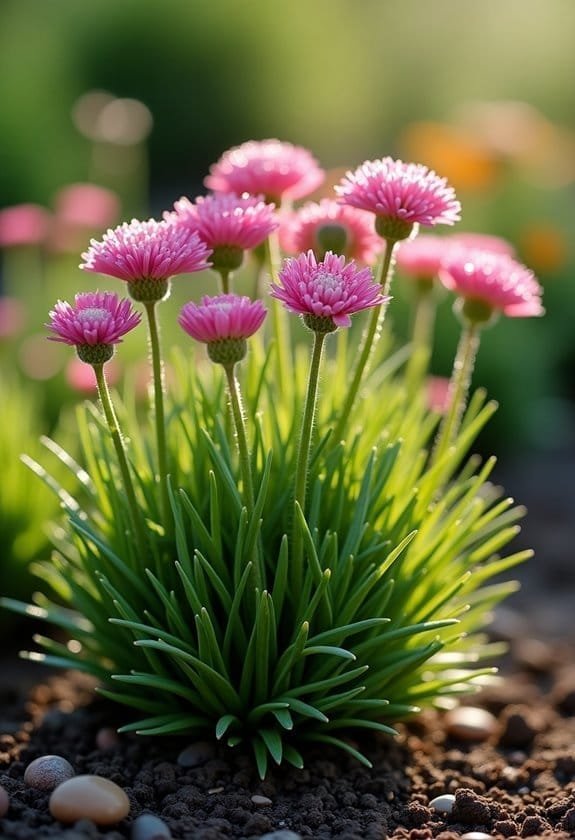
When planting Sea Thrift (Armeria maritima), gardeners should prioritize well-drained, infertile soils and ample sunlight, making it perfect for rock gardens or coastal areas.
Establishing the plant requires regular watering during its first year, while ongoing care focuses on deadheading for prolonged blooms and vigilant checks for rot in damp conditions.
Selecting suitable companions, such as drought-tolerant perennials, enhances the garden's aesthetic and functionality, ensuring a harmonious and resilient landscape.
Planting Tips
Effective planting and care for Armeria maritima, commonly known as Sea Thrift, will considerably enhance its growth and visual appeal. This resilient perennial flourishes in well-drained, infertile soils, so it's crucial to avoid overly rich loam or heavy clay that retains moisture. Such conditions can lead to rot, negatively affecting plant health. Additionally, drought-tolerant species like Sea Thrift thrive in areas with low moisture levels, making them ideal for rocky coastal gardens.
Ideally planted in groups, spacing Sea Thrift 6 to 12 inches apart allows for adequate air circulation, promoting a striking display of its pink flowers that rise well above the foliage.
To promote optimal growth, place the plants in full sun and shield them from harsh winds, particularly in coastal regions where they naturally thrive.
Once established, Sea Thrift requires minimal watering, as it's drought-tolerant and favors drier conditions; consequently, watering should be limited to the first year.
Regularly deadheading faded flowers not only sharpens the plant's appearance but can also stimulate a second flowering, extending the blooming season into summer. Additionally, incorporating nitrogen-fixing capabilities into the soil can enhance overall nutrient availability for neighboring plants.
Ongoing Care
Caring for Armeria maritima, or Sea Thrift, is straightforward and rewarding, especially for gardeners seeking low-maintenance options. This resilient plant thrives in well-drained, infertile soils and requires minimal maintenance, making it an excellent choice for hassle-free gardens.
To promote a continuous display of blooms, regular deadheading of faded flowers is essential. Gardeners should cut back these spent blooms, particularly after the initial spring flowering, ensuring that the plant conserves energy for new growth.
During the first year, Sea Thrift benefits from consistent watering to establish its root system; however, once established, it becomes remarkably drought tolerant. It prefers full sun and thrives in areas that avoid moist, heavy clay soils, as excessive moisture can lead to root rot.
Over time, occasional division, perhaps every three to four years, contributes to maintaining plant vigor. This practice not only rejuvenates the plant but also allows gardeners to share their prized specimens with friends.
Ultimately, by adhering to these simple ongoing care guidelines, individuals can enjoy the hardy beauty of Armeria maritima for many seasons to come.
Suggested Companions
Pairing Armeria maritima with complementary plants enhances both beauty and functionality in the garden. This native perennial thrives in well-drained, dry environments, making it an excellent choice for rock gardens alongside ornamental grasses. The contrasting visuals and textures created by these grass companions provide depth to the landscape while maintaining similar care requirements.
Additionally, plants like Allium, with their towering flowering spikes, capture attention and cultivate visual harmony, thriving under the same full sun conditions. Lavandula stoechas, or Spanish Lavender, is another compatible choice, known for attracting pollinators such as bees and butterflies, thereby enriching the garden's ecosystem. This attraction to pollinators is vital for the stability of garden ecosystems, just as Salad Burnet improves wildlife interactions within its habitat.
Moreover, Achillea ageratifolia showcases impressive drought tolerance, solidifying its status as a resilient partner for Sea Thrift. When arranged thoughtfully, these companion plants create stunning borders that flourish with minimal irrigation and care. This ecological strategy also supports vital wildlife, enhancing the garden's role in promoting biodiversity.
Together, they not only embody an aesthetic appeal but also form a low-maintenance garden ideal for busy gardeners. Ultimately, these suggested companions elevate Armeria maritima's prominence, transforming ordinary spaces into vibrant, thriving habitats that celebrate both nature and artistry.
Common Issues
While Sea Thrift (Armeria maritima) is largely resilient to pests and diseases, it can encounter specific issues primarily linked to environmental conditions and care practices.
Overwatering or poor soil drainage often leads to root rot, a serious concern that can compromise the plant's health and longevity.
Moreover, though most varieties thrive in well-drained, dry soils, some subspecies, like A. maritima subsp. elongata, may require closer management due to their vulnerability, illustrating the significance of targeted solutions for each plant's unique needs. Additionally, understanding soil drainage requirements is crucial to prevent conditions that lead to disease.
Pests/Diseases
Armeria maritima, often known as Sea Thrift, is a remarkably resilient plant that typically resists diseases and pests, making it a hassle-free addition to any garden. This admirable trait renders it a preferred choice for gardeners seeking low-maintenance flora.
However, it's essential to point out that, like any plant, it can face certain challenges. In heavy clay soils, Sea Thrift can be susceptible to root rot, especially if overwatered. This fungal condition can lead to significant damage if left unchecked.
Furthermore, while fungal diseases such as powdery mildew may arise during particularly humid conditions, these occurrences are relatively uncommon due to the plant's inherent hardiness. Remarkably, Sea Thrift remains largely unaffected by typical garden pests, such as aphids and spider mites, further enhancing its appeal.
Maintaining healthy plants involves regular inspection and the prompt removal of any affected plant parts. Although instances of disease or pest complications are rare, vigilance helps secure that Sea Thrift continues to thrive, showcasing its exquisite pink pom-pom flowers without interruption.
Ultimately, it stands as a proof of resilience in the diverse ecosystem of a well-tended garden.
Solutions
To guarantee Sea Thrift (Armeria maritima) remains healthy and vibrant, addressing common issues is paramount. This resilient plant is easy to grow when one considers its specific requirements and potential challenges.
Selecting well-drained, infertile soils is essential, as heavy clay or overly fertile environments can lead to root rot, a common fate for unprepared gardeners.
Proper irrigation is equally important; while Sea Thrift boasts impressive drought tolerance, overwatering can compromise its robustness. To maintain ideal health, gardeners should monitor moisture levels, ensuring the plant thrives without excess water.
Also, deadheading flowers not only enhances the aesthetic appeal but encourages a second flowering, preventing unwanted seed spread that could lead to overcrowding in your garden space.
Inadequate sunlight can also impact the plant's lifespan, so ensuring at least six hours of direct sunlight daily will improve its vitality considerably.
If these strategies are implemented, gardeners can confidently cultivate this alluring perennial, knowing that with a few mindful practices, Sea Thrift can flourish, providing lasting beauty and resilience in their landscapes.
How to Care for Eupatorium Cannabinum (Hemp Agrimony) Like Armeria Maritima (Thrift)?
To care for Eupatorium cannabinum (Hemp Agrimony) like Armeria Maritima (Thrift), provide well-drained soil, full sun, and regular watering. Eupatorium cannabinum benefits from deadheading to encourage continuous blooming and dividing every few years to maintain vigor. Like Thrift, it thrives in coastal environments and adds a lovely, naturalistic appeal to the garden.
Summary
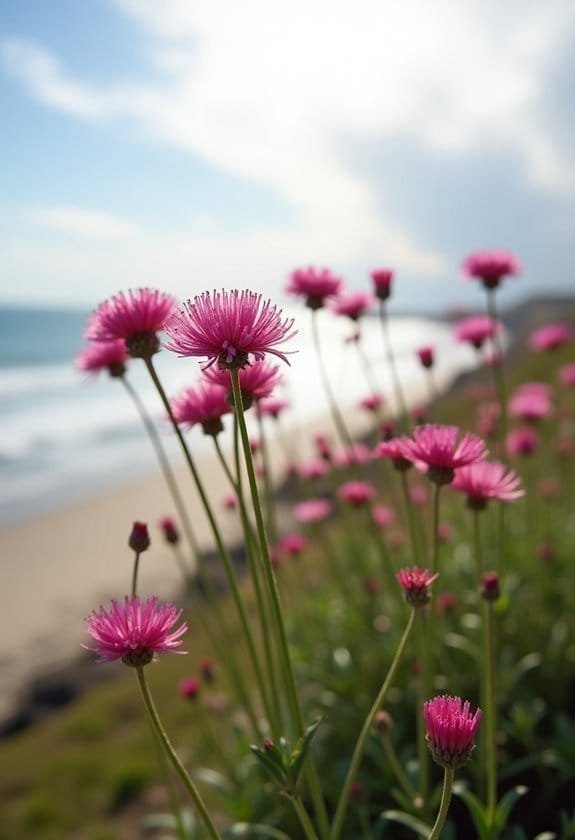
Sea Thrift, or Armeria maritima, is an evergreen perennial known for its vibrant pink to lavender flower clusters and sturdy growth, reaching heights of 6 to 12 inches.
This hardy species thrives in zones 3 to 9, favoring full sunlight and well-drained, infertile soils, making it particularly well-suited for rocky or coastal gardens.
The attraction of Sea Thrift doesn't end with its enchanting blooms; it also appeals to pollinators, including bees and butterflies, proving beneficial for local ecosystems.
Drought-tolerant and disease-resistant, this plant is ideal for gardeners seeking low-maintenance options.
Regular deadheading throughout its blooming period, from mid-spring to early summer, prolongs its vibrant displays.
Propagation can be achieved through seeds, division, or basal cuttings, offering flexibility for garden enthusiasts.
Numerous cultivars exist, such as 'Armada Rose' and 'Dusseldorf Pride,' showcasing a range of flower colors and characteristics, including some featuring eye-catching red flowers.