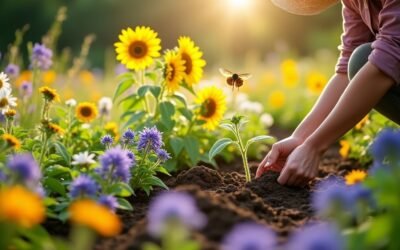
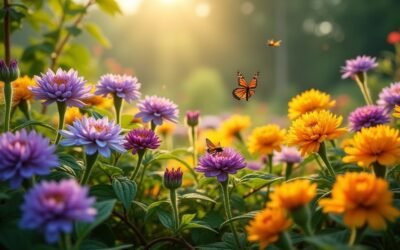
Astrantia major, known as greater masterwort, is a stunning perennial that enchants garden enthusiasts with its dome-shaped flowerheads and delicate pink blossoms. This plant reaches heights of 18-24 inches, thriving in rich, well-drained soils under part shade to full sun, particularly in cooler summer climates. Flourishing in USDA hardiness zones 4 to 7, it plays a vital role in attracting various pollinators, providing nectar for beneficial insects. With low maintenance requirements, it primarily needs regular watering and occasional deadheading. Additionally, adequate drainage is essential to prevent root rot. Exploring its cultivation can reveal even more fascinating insights about this remarkable plant.
Main Points
- Astrantia major, or greater masterwort, is a perennial plant known for its dome-shaped flowerheads and attractive pink blossoms.
- It thrives in well-drained, rich soils and prefers part shade to full sun, especially in cooler climates.
- Regular watering is essential, and the plant is most resilient in USDA hardiness zones 4 to 7.
- Greater masterwort is low maintenance, requiring minimal pruning and benefitting from deadheading for extended blooming.
- Its flowers attract various pollinators, supporting garden health and promoting biodiversity in ecosystems.
Introduction
Astrantia major, often referred to as greater masterwort, stands out in the Apiaceae family for its striking ornamental appeal and versatility.
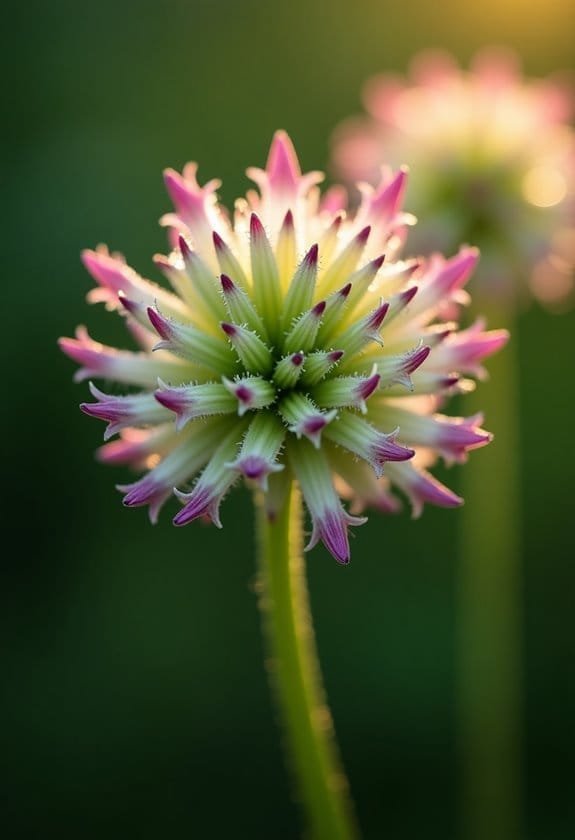
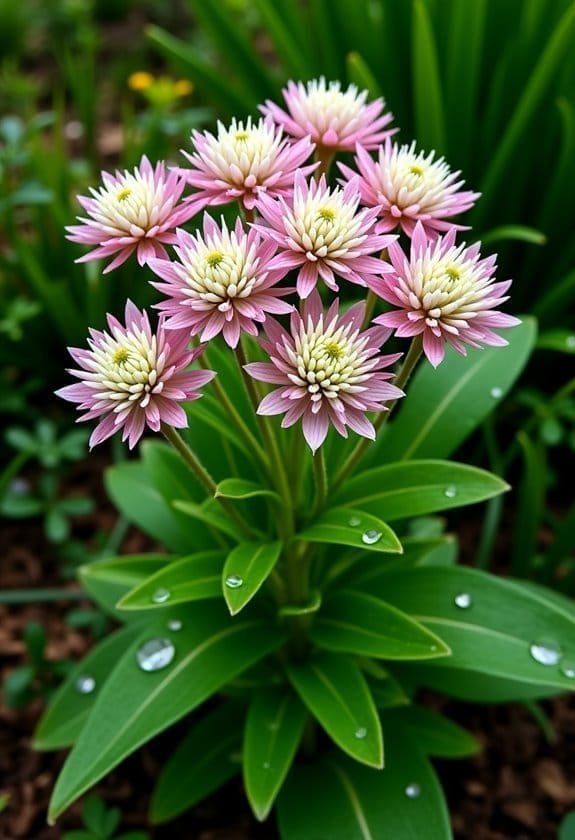
This perennial herbaceous plant, native to the verdant landscapes of Europe and western Asia, boasts dome-shaped flowerheads adorned with delicate pink blossoms, each encased in elegant, papery bracts that exude a star-like charm.
Thriving in well-drained soils with adequate moisture, it not only delights gardeners with its sporadic blooms from late spring through summer but also proves resilient against deer and pests, solidifying its status as a cherished choice for a diverse range of garden designs.
Common Name
Known as greater masterwort, this perennial flowering plant belongs to the Apiaceae family and captivates garden enthusiasts with its distinctive dome-shaped flowerheads. Astrantia major, native to Europe and western Asia, enchants observers with its clusters of small pink flowers, elegantly surrounded by papery bracts that enhance its ornamental appeal.
These unique flower structures form tight, rounded shapes, resembling whimsical little umbrellas in full bloom. Greater masterwort thrives in diverse habitats, including charming mountain meadows and serene woodland clearings.
Its long blooming season, which generally spans from late spring to early summer, allows it to produce sporadic flowers that grace gardens into the warmer months. Gardeners cherish this plant not only for its visual allure but also for its practical applications as a cut flower in floral arrangements.
The longevity of its blooms, coupled with its hardy nature and adaptability to different environments, guarantees that greater masterwort provides continuous joy to flower lovers.
Whether used as a focal point in bedding schemes or as an elegant complement in mixed arrangements, Astrantia major serves as an indication of the beauty and versatility of nature's floral creations.
Scientific Name
Belonging to the Apiaceae family, greater masterwort showcases the scientific name Astrantia major, which reflects its distinctive characteristics and botanical classification. This family is renowned for including a variety of familiar herbs, such as carrots and celery, highlighting the diversity within this group.
Astrantia major, commonly known as masterwort, is a versatile perennial plant native to Europe and western Asia. Thriving in environments like wet meadows and woodland clearings, it flourishes in hardiness zones 4 to 7.
Its unique floral structure, characterized by intricate clusters, enhances its ornamental use in gardens, making it a sought-after choice among horticulturists and garden enthusiasts. Furthermore, Astrantia major boasts several cultivars, each offering different colors and flower shapes, with popular varieties including 'Ruby Wedding' and 'Alba.'
These cultivars not only diversify the aesthetic appeal of a garden but also establish masterwort as a resilient addition to various landscapes.
Overview
The graceful beauty of Greater Masterwort (Astrantia major) enchants garden enthusiasts with its unique floral arrangements and sturdy growth habits. This remarkable herbaceous perennial, belonging to the Apiaceae family, thrives in the cool, moist environments of European mountain meadows and grasslands. It displays dome-shaped flowerheads, each adorned with clusters of delicate pink flowers encircled by elegant, papery bracts. These stunning blooms emerge from late spring to early summer, bringing vibrant life to any garden.
Typically, Astrantia grows in clumps, reaching heights of 18 to 24 inches (45 to 60 cm). Its deeply divided, glossy green leaves bear a striking resemblance to Italian parsley, adding texture to herbaceous borders. This perennial excels in rich, consistently moist soil and flourishes in partial shade or full sun, particularly in cooler summer climates.
Notably, Astrantia is deer-resistant, making it a desirable choice for those seeking low-maintenance yet visually appealing plants. Gardeners appreciate its versatility, as it enhances cottage gardens and serves beautifully as cut flowers in arrangements.
Ultimately, Astrantia major embodies the harmonious blend of beauty and resilience, enchanting those who seek to create stunning landscapes.
Key Features
Astrantia major, or greater masterwort, stands out with its impressive height of 18-24 inches and distinctive dome-shaped flowerheads, which resemble delicate pincushions adorned with tiny pink blooms.
Its striking leaves, deeply divided and glossy, provide a lush backdrop to its long blooming season that spans from late spring into the summer months.
This perennial thrives in rich, moist soils and showcases resilience in a variety of garden settings, effortlessly enhancing both herbaceous borders and cottage gardens.
Growth Size
Ranging from 18 to 24 inches in height and width, Astrantia major forms impressive clumps that enhance any garden. This species exhibits a clump-forming growth habit, contributing to its unique charm. The erect stems support exquisite flower heads, which showcase numerous tiny pink flowers surrounded by delicate, papery bracts. These dome-shaped flower heads can grow approximately 1.5 inches wide, offering a striking visual contrast against the foliage.
The leaves of Astrantia major are deeply divided, resembling those of maple trees, measuring between 3-6 inches long. This intricate foliage texture complements the overall aesthetic of the plant, creating a lush backdrop for the blooms.
While its typical growth size remains consistent, notable cultivars like 'Buckland' and 'Roma' provide gardeners with slight variations in height while preserving the characteristic structure of clumps.
As they grow, these clumps can effectively spread up to 24 inches wide, making Astrantia major a versatile option for garden designers seeking to add depth and dimension.
Ultimately, the balance of height, spread, and ornate characteristics of this plant promises to bring elegance to any landscape.
Appearance
Standing out in any garden, Astrantia major is known for its striking visual features. This elegant perennial reaches a height of 18 to 24 inches, spreading equally in width, which forms charming clumps that catch the eye.
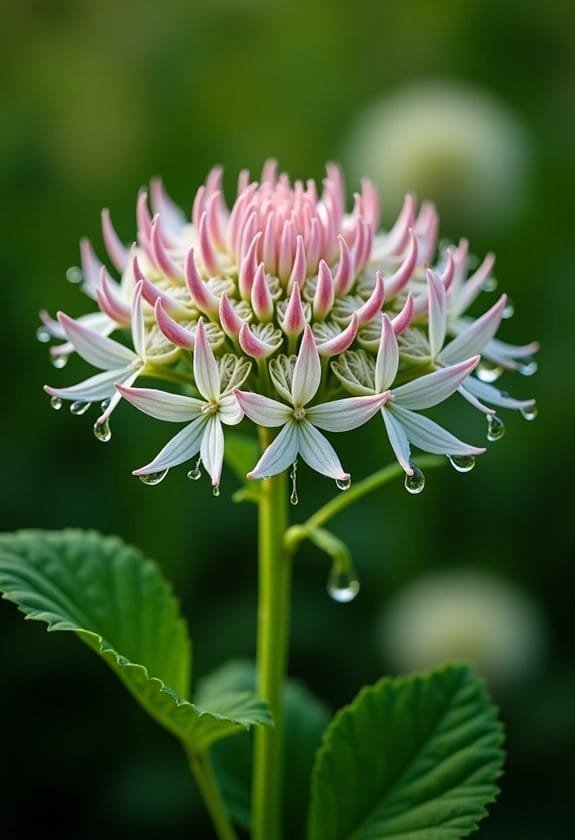
The flower heads, dome-shaped and alluring, showcase tightly packed pale greenish-white flowers, encircled by distinctive papery bracts that often exhibit appealing green tips. This layered effect creates a stunning visual display, offering depth and interest.
Complementing the flowers, the plant's foliage consists of deeply cut leaves that boast a glossy green sheen, reminiscent of Italian parsley or carrots, adding to its overall charm. The combination of exquisite blossoms, which feature soft pink, green, and white hues, enhances the plant's visual appeal from late spring through early summer.
Moreover, various cultivars like 'Major Roma,' 'Ruby Wedding,' and 'Abbey Road' present unique flower characteristics and color variations, allowing gardeners to choose according to their preferences.
With its distinct appearance and robust structure, Astrantia major certainly elevates any landscape, providing both beauty and texture throughout its growing season.
Flowering Season
During its flowering season, Astrantia major captivates with its elegant blooms, typically appearing from late spring to early summer. This plant produces distinctive dome-shaped flower heads, each measuring approximately 1.5 inches wide, populated with numerous tiny pink flowers that create a striking visual display. Surrounding these delicate blooms are notable papery bracts, which lend a pincushion effect, enhancing the overall aesthetic of the plant.
As the flowering progresses, sporadic blooms may continue throughout the summer, ensuring a prolonged period of enjoyment in the garden. Deadheading spent flowers not only encourages further flowering but also maintains the plant's visual appeal, promoting a tidy look.
The combination of erect stems rising above glossy green, deeply divided leaves creates an impressive presence in various garden settings.
Astrantia major's long-lasting blooms are especially valued for their role in bouquets and dried arrangements, providing gardeners and floral enthusiasts with versatility in decoration. The unique structure and color of these flowers elevate the garden's design, ensuring they remain a favored choice for adding visual interest to any floral setup, even days after cutting.
Growing Requirements
When it comes to growing Astrantia major, understanding its requirements is vital for fostering healthy plants.
This perennial prefers well-drained, rich soils that retain consistent moisture, thriving in locations that receive either full sun or part shade.
With its sensitivity to temperature, particularly in warmer climates, gardeners must guarantee the right conditions to cultivate flourishing specimens within USDA hardiness zones 4 to 7.
Light
Astrantia major flourishes in various light conditions, thriving best in full sun or part shade.
This plant excels when it receives a balanced amount of light, as it encourages optimal development and flowering. While Astrantia major can adapt to full shade, it becomes less prolific in blooming due to insufficient sunlight exposure.
To achieve vibrant and healthy plants, gardeners should aim for environments that strike a balance between sunlight and shade.
The requirement for consistent moisture is essential, especially in rich soils that retain moisture, which directly supports healthy growth.
In cooler summer climates, Astrantia major truly shines, as it's sensitive to heat and humidity.
Regular irrigation during dry spells guarantees that the soil remains moist, allowing the plants to flourish under these ideal conditions.
Without adequate moisture, the plants may struggle, leading to stunted growth and reduced flowering.
Soil
For ideal growth, Astrantia major flourishes in rich, well-drained soils that maintain consistent moisture. This perennial plant thrives best in soil abundant in organic material, which greatly enhances its vigor and increases flowering potential.
It prefers medium to wet conditions, ensuring that the soil remains consistently moist, allowing its roots to absorb necessary nutrients without drowning.
While Astrantia major demonstrates some tolerance for a range of soil types, it struggles in dry or overly compacted environments, which can severely inhibit its development. Regular watering is crucial, particularly during dry conditions, to maintain the suitable moisture level that this species requires.
The ideal pH range for the soil is neutral to slightly acidic, which optimally supports the plant's nutrient uptake.
Water
Maintaining consistent moisture is vital for the health of Astrantia major. This plant thrives best in rich, well-drained environments that retain moisture without being overly saturated. Ideally, the soil should remain consistently moist, as dry conditions can appreciably stress the plant and hinder its growth.
Regular watering becomes important during periods of insufficient rainfall, ensuring the roots stay hydrated and engaged in nutrient uptake. For ideal growth, Astrantia major prefers medium to wet soil while being particularly intolerant of hot, humid, or excessively dry conditions.
During the growing season, continuous moisture not only supports the plant's health but also enhances its flowering potential, culminating in vibrant blooms that grace the garden. The need for moisture extends beyond initial planting; ongoing irrigation is necessary to mitigate the risks posed by adverse weather, such as drought.
If poor drainage or overly dry soil becomes an issue, the plant's ability to flourish declines, leading to diminished flowering. Hence, gardeners must monitor the moisture levels diligently and cultivate a nurturing environment where Astrantia major can thrive, ensuring the balance between moisture-rich soil and effective watering practices is maintained.
Temperature
The ideal temperature range for growing Astrantia major lies between cool nights and mild daytime conditions, particularly favoring USDA hardiness zones 4 to 7. This perennial plant thrives best when nighttime temperatures remain below 70ºF, which promotes optimal growth and flowering.
In warmer climates, excessive heat can severely affect its performance, making part shade a preferable environment over full sun.
Astrantia major's requirement for consistently moist soil adds another layer to its temperature needs; the plant performs best in warm conditions only when the soil remains adequately hydrated. Regular irrigation during dry spells becomes essential to maintain this necessary moisture, ensuring the plant can withstand and flourish in its preferred temperate climate.
Without sufficient humidity, Astrantia may struggle to establish, making monitoring environmental conditions critical.
As temperatures fluctuate, providing care through strategic placement—either in dappled light or shaded areas—will not only enhance flower production but will also fortify the overall health of the plant.
Consequently, gardeners should remain vigilant about temperature variations, adapting their approach to nurture this stunning perennial effectively.
Pollinator Criteria
Astrantia major serves as a beacon for a variety of pollinators, including bees, flies, and beetles, drawn in by its fragrant blooms that offer both nectar and essential pollen.
The distinctive structure of its five petal-like flowers, combined with elongated stamens that extend beyond the protective bracts, facilitates easy access for these beneficial insects, enhancing their pollination efficiency.
As the flowering period unfolds from late spring to early summer, the plant not only supports local ecosystems but also thrives with thoughtful maintenance, such as deadheading, to attract pollinators across a longer span of time.
Attracted Pollinators
Attracting a diverse array of pollinators, Astrantia major features flowers that are both accessible and fragrant, drawing in bees, flies, and beetles during its blooming season. These five-petaled flowers, encircled by delicate papery bracts, serve as a rich nectar source, enticing various pollinators to forage. The blooms, which typically appear from late spring to early summer, enhance the garden's aesthetic while fulfilling an important ecological function. Moreover, like Salad Burnet, Astrantia major showcases self-seeding ability, contributing to the longevity and establishment of healthy plant populations in the garden.
The unique dome-shaped flowerheads create an inviting structure that not only maximizes visibility but also facilitates easy access for foraging insects. Long stamens protrude from the center of the flowers, simplifying the collection of pollen and supporting effective cross-pollination. This attribute notably contributes to the genetic diversity of the species, promoting resilience in local plant populations. Additionally, planting companion species such as Meadow Vetchling can further support pollinator health and improve soil quality through nitrogen fixation.
Cultivating Astrantia major in horticultural settings nurtures vibrant local ecosystems by providing sustenance for pollinators. By maintaining a healthy population of this exquisite plant, gardeners play a crucial role in sustaining biodiversity, ultimately fostering a more balanced environment.
Pollination Method
Successful pollination depends on a diverse range of insects that visit the blooms of Astrantia major. This perennial plant thrives thanks to its unique floral structure, which features long stamens extending beyond the five petal-like bracts. These bracts, resembling a pincushion, create an inviting appearance that attracts essential pollinators such as bees, flies, and beetles. Additionally, similar to Common Yarrow, its dense clusters of flowers provide an effective food source for pollinators, enhancing biodiversity in the ecosystem.
Their visits are crucial for the process of pollination, which ultimately leads to the production of seeds. These seeds develop after successful fertilization, ushering in the next generation of Astrantia major. For best germination, these seeds benefit from cold stratification, mimicking natural conditions that enhance their germination potential.
The presence of various insects during the blooming period not only facilitates effective pollination but also enriches the genetic diversity of this species. Consequently, reproductive success hinges on a robust network of pollinators, highlighting the ecological interplay between plants and insects. Additionally, the timing of flowering in Astrantia major aligns with early-season pollinator activity, creating a vital nectar bridge that supports pollinator populations during critical periods.
Care & Maintenance
To foster the vibrant growth of Astrantia major, gardeners should pay close attention to essential care and maintenance practices.
Ensuring the plant thrives in rich, well-drained soil and providing consistent moisture—particularly during dry spells—are key to its success in USDA hardiness zones 4 to 7.
Additionally, thoughtful companion planting can enhance not only its aesthetic appeal but also its health and flowering potential throughout the growing season.
Planting Tips
When planting Astrantia major, gardeners should pay close attention to soil conditions and hydration. This perennial flourishes in rich, consistently moist, well-drained soils, requiring regular watering, particularly during dry spells, to maintain its vibrant growth.
A critical aspect of successful cultivation revolves around choosing the appropriate site; Astrantia thrives best in locations that receive full sun to part shade.
To guarantee peak growth, which can lead to stunning displays of flowers, it's important to protect the plants from extreme heat and humidity, typical in regions with intense summers.
For those looking to refresh their garden, dividing clumps in early spring or fall encourages stronger development; it's crucial to verify each division contains ample roots and foliage to support reestablishment.
Another significant planting tip is deadheading spent flowers, which prolongs the blooming period, allowing for a sustained visual feast throughout late spring and summer.
In well-furnished soils, fertilization remains unnecessary, although applying a mild fertilizer in spring can bolster growth if the plants need a boost.
Ongoing Care
Ongoing care for Astrantia major is essential for maintaining its health and beauty throughout the growing season. This perennial thrives in consistently moist, rich soils that are well-drained, requiring regular watering, especially during dry spells.
To guarantee a vibrant display, gardeners should practice deadheading spent flowers; this simple task not only prolongs blooming but also enhances the plant's overall aesthetic appeal.
As the seasons change, monitoring the plant's growth becomes imperative. Division of mature clumps in early spring or fall is recommended to rejuvenate the plants and promote healthy growth. By doing so, one can effectively manage encroachment, preventing overcrowding and guaranteeing that each clump flourishes.
Although fertilization is typically unnecessary in rich soils, applying a balanced fertilizer in spring and mid-summer can benefit plants growing in less nutrient-dense environments. This supplemental feeding encourages vigorous growth and vibrant blooms, contributing to an enchanting garden display.
With attentive care focusing on moisture levels, timely deadheading, strategic division, and occasional fertilization, gardeners can cultivate a stunning Astrantia major that captivates throughout the growing season, creating a delightful showcase of color and life.
Suggested Companions
Throughout the growing season, pairing Astrantia major with suitable companions can enhance both its beauty and overall garden health. This perennial flourishes in rich, well-drained, moist soil, making it a perfect match for moisture-loving companion plants like astilbe and hostas. The lush foliage of astilbe complements Astrantia's delicate blooms, creating a tapestry of texture and color. In addition, introducing plants with robust root systems, such as common knapweed's ability to thrive in poor soils, can help improve soil structure and health.
Integrating ornamental grasses and sedums alongside Astrantia not only adds visual interest but also provides a striking contrast, enhancing the vibrant colors of the garden. Regular deadheading of Astrantia considerably prolongs its blooming season, and this can be coordinated with the flowering periods of perennials such as daylilies and peonies for a continuous display of color.
When designing mixed borders, positioning Astrantia at the front allows its intricate flowers to stand out against the backdrop of taller plants, such as delphiniums or phlox.
Additionally, dividing clumps in spring promotes plant vigor while facilitating propagation. This practice enables gardeners to expand their planting, fostering harmonious drifts of color that enrich the overall landscape, ensuring a vibrant and dynamic garden throughout the season. Moreover, consider incorporating Marsh Woundwort's role in supporting pollinator populations, which can enhance biodiversity around your Astrantia plantings.
Common Issues
Astrantia major, while generally resilient, faces a few common issues that can impact its health and charm.
Though it's rarely affected by pests or diseases, root rot can occur in overly wet conditions, necessitating careful soil management to guarantee proper drainage.
Regular deadheading not only enhances its visual appeal but also fosters extended blooming periods, emphasizing the importance of attentive care in maintaining this plant's vibrant presence.
Pests/Diseases
Growing Astrantia major presents minimal challenges, as this resilient plant is largely free from pests and diseases. Its deer-resistant nature offers an effective defense against common browsing animals, reducing overall damage in gardens.
However, gardeners should remain vigilant, as occasional pest encounters with slugs and snails can arise, particularly in moist conditions. These soft-bodied creatures thrive in damp environments, so monitoring is advisable to prevent any potential harm to the plant.
While disease is infrequent, the risk of root rot looms when soil conditions become overly wet or poorly drained. To mitigate this issue, it's crucial to ascertain that Astrantia major is planted in well-drained soil, hence promoting healthy root systems and robust growth.
Additionally, fungal diseases, though rare, can occur; maintaining good air circulation and proper spacing between plants markedly reduces the likelihood of such complications.
Solutions
Maintaining a healthy and vibrant Astrantia major involves addressing common issues that can arise during cultivation. This enchanting perennial thrives best in consistently moist, well-drained soils; neglecting this moisture can lead to wilting and poor growth.
To guarantee superior vigor and prevent overcrowding, gardeners should divide clumps of Astrantia major every few years, ideally during the spring or fall.
In addition, deadheading spent flowers is essential, as it increases the bloom's longevity while enhancing the plant's overall aesthetics. Given its sensitivity to heat and humidity, Astrantia major performs best in cooler summer climates, where its distinctive blooms can flourish without stress.
Fortunately, this delightful plant is deer-resistant and generally disease-free, requiring minimal pest control. These qualities make it an excellent choice for diverse landscapes, as it can withstand the challenges of various environmental conditions.
Are Eryngo and Greater Masterwort Similar in Care and Maintenance?
Yes, Eryngo and Greater Masterwort have similar care and maintenance requirements. Both plants prefer well-draining soil and full sun to partial shade. They also benefit from regular watering and occasional pruning to maintain their shape. For more information on Eryngo, check out this eryngium tripartitum (eryngo) article anchor text.
Summary
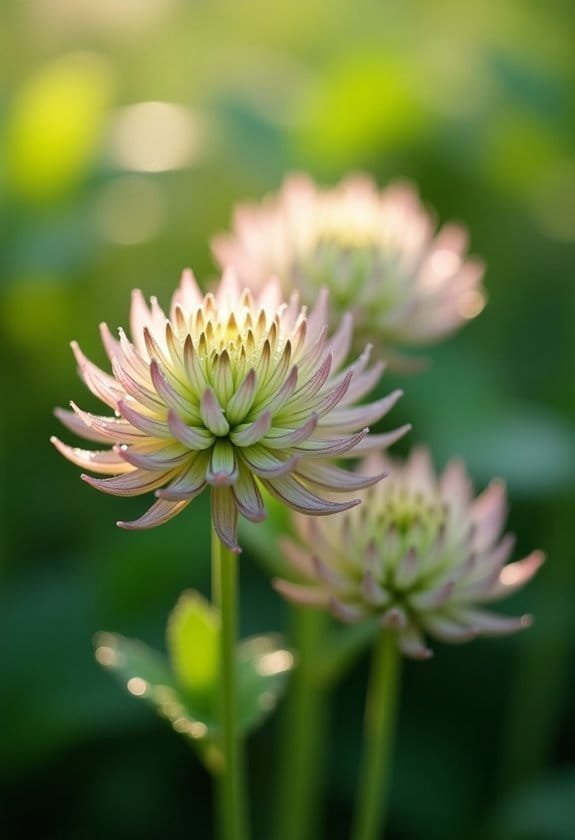
During late spring to early summer, greater masterwort, or Astrantia major, enchants gardens with its dome-shaped clusters of pink and white flowers. This perennial herbaceous plant typically reaches heights of 18 to 24 inches and features papery bracts that enhance its visual appeal.
Thriving in rich, well-drained soils with consistent moisture, Astrantia major flourishes in part shade to full sun, making it a versatile addition to various landscapes. Best suited for USDA hardiness zones 4 to 7, it performs admirably in cool summer climates, blooming from late spring into early summer while occasionally offering sporadic flowers throughout the season.
As a favored choice for cottage gardens and herbaceous borders, greater masterwort's ornamental qualities captivate gardeners seeking low-maintenance options. Its propagation can be achieved through seed sowing or dividing established clumps in spring or fall, with seeds requiring a period of cold stratification to guarantee germination success.
Moreover, Astrantia major's deer-resistant nature elevates its desirability, as it withstands typical garden threats while maintaining aesthetic charm. To conclude, greater masterwort not only provides beauty but also embodies resilience, making it a delightful choice for garden enthusiasts.