Brachyglottis monroi, or Monro's ragwort, is a stunning evergreen shrub native to New Zealand, typically achieving heights of 2-3 feet. This plant features distinctive wavy-edged leaves, glossy green on top and fuzzy white underneath, creating an eye-catching contrast. During summer, it produces dazzling yellow flowers that attract essential pollinators such as bees and butterflies. Thriving in well-drained soil and full sun, it can withstand drought conditions and cooler temperatures. With its adaptability and year-round presence, it enhances coastal gardens or low-maintenance landscapes, promising to enrich any space. The story of Monro's ragwort continues with fascinating cultivation insights.
Main Points
- Brachyglottis monroi, commonly known as Monro's ragwort, is an evergreen shrub native to New Zealand's South Island.
- This shrub features wavy-edged green leaves with a fuzzy white underside, adding ornamental value to gardens.
- It thrives in well-drained, clay soils and requires full sun with at least six hours of direct sunlight daily.
- Monro's ragwort produces vibrant yellow, daisy-like flowers in summer, attracting bees and butterflies, and enhancing biodiversity.
- The plant is resilient against drought and cooler temperatures, making it suitable for low-maintenance, deer-resistant landscapes.
Introduction
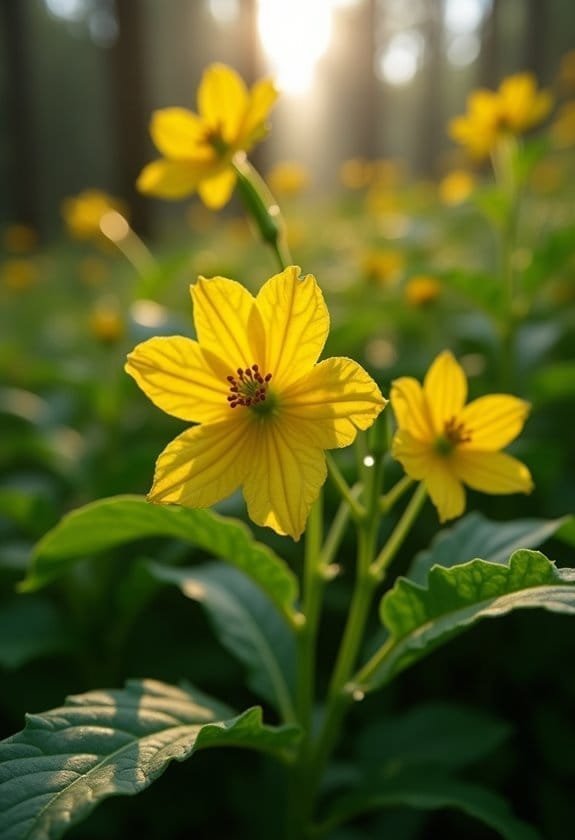
Brachyglottis monroi, commonly referred to as Monro's ragwort, is an intriguing evergreen shrub indigenous to New Zealand's South Island.
Typically reaching heights of 2-3 feet, this resilient plant boasts wavy-edged green leaves, adorned with a distinctive fuzzy white underside, and showcases vibrant yellow, daisy-like flowers each summer.
Recognized for its adaptability to coastal climates and resilient nature, Monro's ragwort proves to be an excellent choice for diverse garden environments.
Common Name
Known commonly as Monro's ragwort, this dense evergreen shrub captures attention with its ornamental foliage and vibrant yellow, daisy-like flowers. Scientifically known as Brachyglottis monroi, it holds a special place in the hearts of gardeners, especially those keen on enhancing coastal gardens.
This fascinating shrub is native to New Zealand, where it thrives remarkably in the subalpine and alpine environments of the South Island.
Monro's ragwort, also referred to as Monro's Groundsel, belongs to the Asteraceae family, known for its diverse flowering plants. The shrub typically reaches heights of about 1 to 2 meters and boasts leathery leaves that provide an attractive backdrop for its striking blooms.
In summer, clusters of bright yellow flowers emerge, turning heads and attracting a variety of pollinators, which plays a vital role in local ecosystems.
Gardening enthusiasts appreciate the shrub's low-maintenance nature and resilience, making it suitable for both novice and experienced gardeners.
With its visually appealing characteristics and ecological benefits, Monro's ragwort continues to reign as a stunning choice for garden design, reflecting the natural beauty of its New Zealand origins.
Scientific Name
The scientific name for Monro's ragwort, Brachyglottis monroi, reflects its unique attributes within the plant kingdom. This evergreen shrub belongs to the Asteraceae family, which is renowned for its diverse flowering plants. First described in 1851, Brachyglottis monroi has cemented its place in the botanical community, signifying its importance and recognition among enthusiasts.
Endemic to the South Island of New Zealand, this plant thrives in subalpine and alpine habitats, adjusting magnificently to its environmental conditions. With a preference for rocky slopes and grasslands, Brachyglottis monroi demonstrates resilience and adaptation in challenging terrains, showcasing its evolutionary prowess.
The selection of the genus name, Brachyglottis, derives from Greek roots, meaning "short tongue," referring to the morphology of its flower structures.
The specific epithet, monroi, pays homage to a notable figure in botanical exploration, ensuring that the plant's lineage is forever linked to its past.
In these ways, Brachyglottis monroi isn't merely a plant; it's a representation of the enduring relationships between nature, history, and scientific inquiry. Through exploring its scientific name, one can appreciate the intricate tapestry of life it represents.
Overview
Often celebrated for its unique characteristics, Monro's ragwort, scientifically named Brachyglottis monroi, serves as a stunning addition to gardens and landscapes.
This evergreen shrub, native to Australia and New Zealand, typically grows to heights of 2-3 feet and spreads 3-4 feet wide, presenting a splendid sight with its wavy-edged leaves. These leaves boast a lush green upper side and a soft, fuzzy white underside, making them particularly valued for their ornamental uses, even surpassing its subtle yellow, daisy-like flowers that bloom in summer.
Monro's ragwort thrives best in full sun, showcasing remarkable adaptability to various soil types—especially clay—making it an excellent fit for mild coastal gardens. Its resilience against deer and drought conditions guarantees minimal care requirements, translating into significant care benefits for busy gardeners.
Furthermore, its dense growth habit allows it to thrive in windy environments.
Beyond aesthetics, Brachyglottis monroi plays a significant role in creating wildlife habitats, providing nectar for pollinators and contributing to soil stabilization in alpine regions. Consequently, this shrub elegantly combines beauty, ecological function, and low maintenance, securing its place in modern horticultural practices.
Key Features
Brachyglottis monroi stands out as a compact evergreen shrub, typically reaching heights of 2 to 3 feet and expanding to widths of 3 to 4 feet.
Its striking wavy-edged leaves, deep green above and fuzzy white below, create a visually appealing contrast, complemented by bright yellow, daisy-like flowers that emerge during the summer months.
The combination of its modest growth size and ornamental foliage makes Monro's ragwort an attractive choice for a variety of garden settings.
Growth Size
Reaching a mature height of 2 to 3 feet and a width of 3 to 4 feet, Brachyglottis monroi forms a dense shrub that enhances various garden designs. Its bushy structure creates an inviting presence, making it a popular choice for both landscaping and naturalistic settings.
The shrub dimensions of Monro's Ragwort allow it to fill space effectively, acting as a robust backdrop for smaller plants or vibrant flowers.
Thriving in well-drained soils, Brachyglottis monroi flourishes in subalpine and alpine environments, typically found between elevations of 900 to 1800 meters. This adaptability further underscores its suitability for coastal gardens, particularly in mild climates where temperatures rarely drop below 10° to 15°F.
The plant's evergreen nature guarantees that it provides year-round coverage, enhancing the overall aesthetic appeal of any landscape.
With its striking foliage featuring wavy-edged leaves—vibrant green on top and a fuzzy white underneath—Brachyglottis monroi not only contributes solidity to garden design but also enriches visual texture.
Consequently, this resilient shrub serves both functional and ornamental roles, making it a worthy addition to any garden enthusiast's planting palette.
Appearance
Typically, Monro's ragwort stands out in gardens thanks to its distinctive appearance. This evergreen shrub, growing 2-3 feet tall and 3-4 feet wide, presents a bushy growth habit that enhances the overall landscape aesthetics. Its dense form attracts attention, especially when planted in coastal gardens, where it thrives under full sun and well-drained soils.
The most enthralling feature of Brachyglottis monroi is its leaf texture. The showy, wavy-edged leaves exhibit a dark green hue on the upper surface, while the fuzzy white undersides add a delightful contrast, inviting touch and admiration. This unique leaf structure not only contributes to the plant's ornamental appeal but also serves a practical purpose in retaining moisture.
Though known for its foliage, Monro's ragwort does produce bright yellow, daisy-like flowers primarily in summer, further enriching the visual palette of gardens. These vibrant blooms, while secondary to the striking leaves, still attract pollinators and provide a cheerful accent.
Flowering Season
During the summer season, Monro's ragwort bursts into bloom, showcasing its vibrant yellow, daisy-like flowers. This flowering period generally lasts from late spring through early autumn, depending on local climate conditions.
The bloom attractiveness of Brachyglottis monroi is evident as its flowering heads become a rich source of nectar and pollen, drawing in various pollinators. These insects play a critical role in promoting biodiversity within garden ecosystems.
Optimal growth and bloom production occur under full sun exposure, further enhancing the plant's display. Seasonal maintenance, such as ensuring adequate sunlight and moisture, greatly contributes to the quality of blooms and foliage.
In mild coastal gardens, where temperatures are favorable during summer, Monro's ragwort flourishes, offering a cheerful landscape feature. While its flowers captivate during their brief appearance, the plant's primary appeal often lies in its attractive foliage, which remains visually engaging even outside the flowering duration.
Therefore, the cyclical nature of its blooming, coupled with proper care, allows gardeners to enjoy the dynamic beauty of Monro's ragwort year-round, ultimately contributing to a flourishing habitat teeming with life.
Growing Requirements
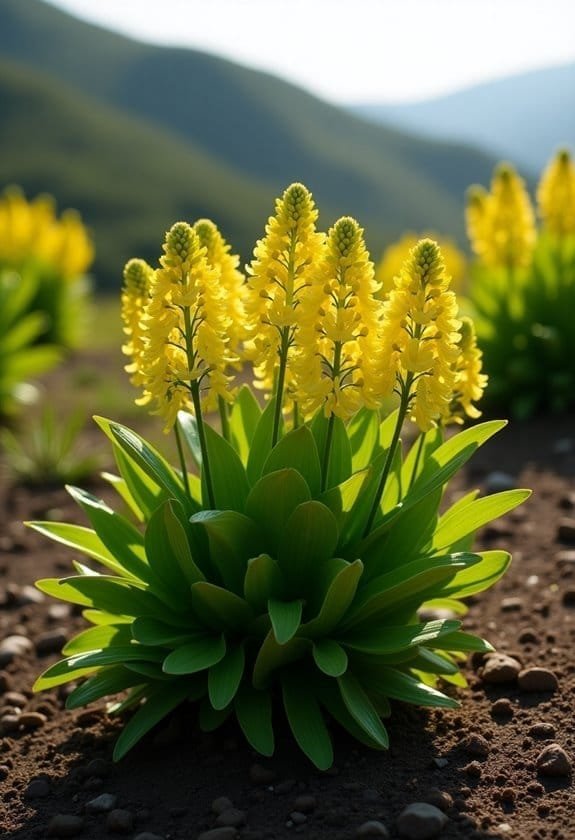
Brachyglottis monroi requires careful attention to its growing conditions to flourish fully.
Thriving in full sun, it thrives best in well-drained soil, and its adaptability to different watering arrangements guarantees flexibility for gardeners.
With a resistance to cooler temperatures of 10°-15°F, this resilient evergreen shrub can comfortably enhance mild coastal gardens while providing ample space to accommodate its eventual size of 2-3 ft in height and 3-4 ft in width.
Light
If you're looking to cultivate Brachyglottis monroi successfully, guaranteeing it gets plenty of sunlight is indispensable. This evergreen shrub thrives in full sun, ideally needing at least six hours of direct sunlight daily. Such sunlight exposure is essential for promoting healthy growth and enhancing the vibrancy of its foliage.
While Brachyglottis monroi can adapt to various light conditions, it flourishes best in bright, sunny environments, particularly those associated with mild coastal gardens. Inadequate sunlight can lead to leggy growth and diminished flowering, underscoring the importance of adequate light for optimal health.
Although this resilient plant exhibits some light tolerance and can tolerate partial shade, realizing its full ornamental appeal hinges upon garden placement in sun-drenched areas. Adequate sunlight guarantees the maintenance of its dense growth habit, allowing it to flourish beautifully.
For gardeners aiming for robust and flourishing specimens, attention to light conditions is imperative. By recognizing and providing the necessary sunlight, one can facilitate the rich growth and overall vitality of Monro's ragwort, turning any garden into a lively and inviting space.
Soil
To guarantee Brachyglottis monroi thrives, gardeners must pay attention to soil conditions. This resilient plant flourishes in well-drained soils, essential for its growth and development. When selecting a planting site, individuals should consider soil drainage solutions, as overly saturated conditions can hinder root health.
Monro's ragwort shows remarkable adaptability, tolerating clay soils thanks to its robust root system, making it suitable for a variety of coastal garden settings.
To further enhance soil health, gardeners can employ soil enrichment strategies, such as incorporating organic matter like compost or well-rotted manure, improving nutrient content and moisture retention. Ensuring a pH around neutral to slightly acidic is ideal, facilitating peak nutrient availability.
Moreover, the plant prefers full sun exposure, which complements its growth requirements; sunlight not only promotes photosynthesis but also fortifies the overall health of Brachyglottis monroi.
As the plant matures, intermittent to regular watering becomes important, particularly during dry spells. By adhering to these soil health tips, gardeners can create an inviting environment for Monro's ragwort, fostering resilience and vibrant flowering throughout its growing season.
Water
Watering plays an essential role in the growth of Brachyglottis monroi, as this plant thrives on intermittent to regular moisture. During its growing season, an appropriate watering frequency enhances the shrub's health, promoting vibrant foliage and a more abundant flowering period in summer. It's particularly important to maintain moisture retention in the soil, ensuring that the plant draws the hydration it requires.
While Brachyglottis monroi prefers consistently moist conditions, it exhibits commendable drought resilience, enduring periods of low water availability despite the challenges this may present. Its adaptability to well-drained soils mitigates the risk of root rot, a common concern in overly saturated environments. Notably, this plant tolerates clay soils, which can often struggle with drainage, illustrating its versatile nature.
Gardeners should aim for a balance: regular watering can foster lush, thriving specimens, yet the species' innate drought tolerance allows for periods of neglect.
Ultimately, understanding the specific watering needs of Brachyglottis monroi enables gardeners to create ideal growing conditions that lead to robust plants capable of withstanding environmental stressors, ensuring a beautiful display year after year.
Temperature
What temperature range truly benefits Brachyglottis monroi? This evergreen shrub thrives in mild coastal gardens, showcasing prime growth when temperatures hover between 10°-15°C, which is its minimum tolerance for cold.
It has impressive temperature adaptation capabilities, allowing it to endure the temperature fluctuations characteristic of subalpine and alpine environments in its native New Zealand.
While Brachyglottis monroi can withstand moderate temperature extremes, prolonged exposure to frigid conditions below its tolerance threshold can detrimentally affect its health.
When planted in full sun, it flourishes best in warm conditions that please not only the plant but also its pollinators, ultimately maximizing its flowering potential.
Furthermore, ensuring adequate protection from harsher winds and severe temperature extremes can substantially enhance the growth of this remarkable shrub, promoting its dense, thriving habit.
Given these factors, careful consideration of temperature conditions is essential for those cultivating Brachyglottis monroi, as a suitable climate won't only support its growth but also contribute to its vibrancy and longevity in the garden landscape.
The interplay of temperature and environmental conditions generates a flourishing ecosystem where Brachyglottis monroi can truly excel.
Pollinator Criteria
Brachyglottis monroi attracts a variety of pollinators, including bees and butterflies, with its vibrant, yellow, daisy-like flowers.
These flowers are designed to facilitate efficient pollination, relying primarily on insect visitors to transfer pollen between blooms, thereby enhancing reproductive success.
Ultimately, the presence of this plant not only sustains the local pollinator population but also contributes considerably to overall ecosystem health and biodiversity. The timing of flowering in Brachyglottis monroi coincides with the peak activity periods of many local pollinators which is crucial for maximizing pollination effectiveness.
Attracted Pollinators
Attractive to a variety of pollinators, Brachyglottis monroi stands out as a significant addition to gardens. This remarkable shrub provides both nectar and pollen, serving as a crucial food source for numerous pollinators, particularly bees, during its summer bloom. The bright yellow, daisy-like flowers appear at a time when pollinator activity peaks, ensuring maximum engagement with these beneficial insects.
Recognized by the RHS Plants for Pollinators initiative, Monro's ragwort effectively supports bee diversity and contributes to local ecosystems. By attracting a range of insect species, this plant enhances habitat quality, fostering ecological resilience. Furthermore, like Scabiosa, it thrives in well-drained soils, which is essential for promoting healthy growth and sustaining pollinator populations. This habitat enhancement aligns with the role of plants like Bogbean in maintaining ecosystem stability.
Gardens that incorporate Brachyglottis monroi not only benefit from its aesthetic appeal but also promote essential pollinator benefits, necessary for healthy plant reproduction. Moreover, the species thrives in well-drained soils, particularly under full sun conditions, making it an ideal choice for gardeners enthusiastic to create supportive environments for pollinators.
Its ability to boost biodiversity complements other native flora, cultivating balanced ecosystems. As these pollinators frequent the shrub, they nurture a web of life crucial for flourishing gardens and sustainable environmental practices. Consequently, Monro's ragwort embodies a key component in effective habitat enhancement and biodiversity stewardship.
Pollination Method
Pollinators are drawn to Brachyglottis monroi not just for its abundant nectar and pollen but also due to its unique flower structure. This plant produces vibrant yellow, daisy-like flowers, which exhibit characteristics that favor insect visitation, particularly by bees. Its flowers facilitate cross pollination, a process that not only enhances genetic diversity but also strengthens the resilience of plant populations. Additionally, the capacity of Monro's ragwort to adapt to moist environments makes it a valuable species in various habitats.
The increasing nectar production during the summer flowering season attracts various pollinators, thereby supporting crucial ecosystem functions. Pollinator behavior is essential, as these insects actively transfer pollen between flowers while foraging for sustenance.
By creating a habitat rich in resources, Monro's ragwort fosters a community of beneficial insects that contribute to local biodiversity. In doing so, it plays an important role in enhancing ecosystem health and stability. The presence of this plant in gardens encourages declining pollinator populations, offering safe and plentiful foraging opportunities.
Consequently, Brachyglottis monroi stands as a beacon of resilience, effectively showcasing the interconnection between plant reproduction and ecological well-being. Its contributions echo through the environment, proving indispensable for sustaining both pollinators and the flora that depend on them. Additionally, its ability to attract beneficial pollinators enriches the surrounding ecosystem, promoting the overall health of the habitat.
Care & Maintenance
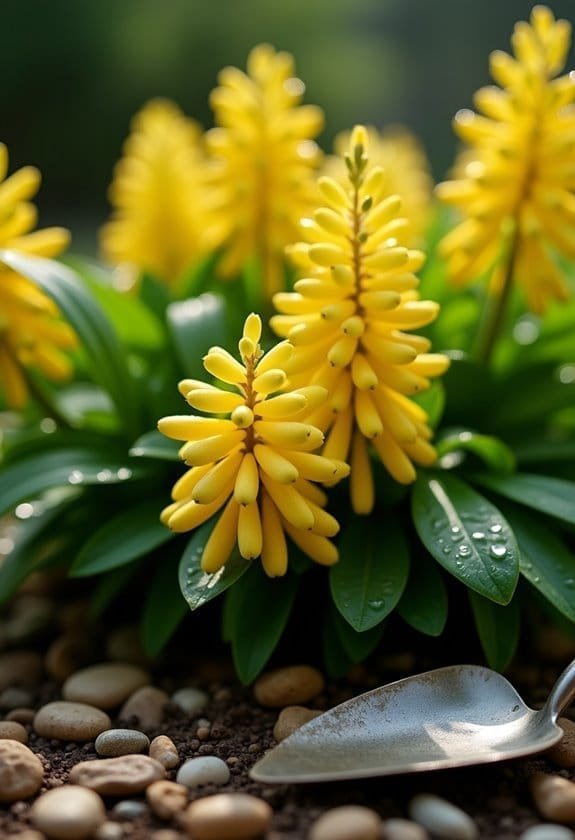
When considering the care and maintenance of Brachyglottis monroi, proper planting and ongoing care are pivotal for its thriving presence in gardens.
This resilient species flourishes best in full sun and well-drained soil, serving as a natural complement to coastal landscapes while its evergreen nature guarantees year-round visual appeal.
Additionally, selecting suitable companions can enhance both aesthetic harmony and ecological balance, fostering a vibrant garden ecosystem.
Planting Tips
For ideal growth and health, Brachyglottis monroi thrives best in well-drained soil that can handle clay. Site selection plays a vital role; choosing a location with full sun exposure guarantees vibrant foliage and robust health.
This plant harmonizes beautifully with mild coastal climates, flourishing in such conditions to reach its full potential.
Employing effective planting techniques is essential. When establishing Brachyglottis monroi, water intermittently to regularly, allowing the soil to dry out between watering sessions.
This plant exhibits remarkable drought tolerance once established, making it resilient in varying conditions.
To enhance the ornamental appeal of Monro's Ragwort, regular pruning is advisable. It not only maintains a dense growth habit but also promotes bushier foliage, creating an inviting aesthetic.
Additionally, it's important to be mindful of the plant's minimum temperature tolerance of 10°-15°F, shielding it during colder months to protect its survival.
Consider companion planting as a strategy to cultivate a diverse garden ecosystem. Pairing Brachyglottis monroi with other resilient plants can enhance overall health and provide mutual benefits, enriching the garden's environment.
Ongoing Care
Ongoing care is essential for ensuring that Brachyglottis monroi remains healthy and vibrant throughout the growing season. To establish healthy growth, maintain a consistent watering schedule, providing intermittent to regular watering, especially during dry spells.
This shrub thrives in full sun, requiring at least six hours of sunlight daily to bolster its evergreen foliage.
Good soil conditions play an important role, as Brachyglottis monroi tolerates clay but prefers well-drained soil to prevent root rot. Implementing appropriate seasonal care allows the plant to flourish, enhancing its ornamental appeal.
Regular use of pruning techniques is crucial; trimming any dead or damaged branches encourages a bushier growth habit while maintaining the desired shape.
The practice of pruning not only rejuvenates the plant but also enhances airflow, which is key in preventing disease.
Despite its resilience, vigilance against pests and diseases is important. Monitoring for early signs of trouble allows for timely intervention, keeping the plant thriving.
Suggested Companions
Choosing the right companions can importantly enhance the overall appeal and health of Brachyglottis monroi in a garden setting. Ideal companion plant selection includes sun-loving varieties like salvia and lavender, as they thrive together under full sunlight.
Ensuring growth compatibility is essential; therefore, plants such as sedum or thyme, known for their drought tolerance, complement Monro's Ragwort effectively.
Furthermore, due to its dense growth habit, Brachyglottis monroi serves as an excellent backdrop for lower-growing companions. This positioning can considerably heighten overall garden aesthetics, especially when contrasting foliage is incorporated. For visual interest, pairing it with silver or variegated plants creates a striking juxtaposition against its dark green leaves.
It's vital to engage in regular pruning of these companions to prevent overshadowing, which could adversely affect Monro's Ragwort's growth and flowering potential during the summer. Additionally, plant companions that attract pollinators, such as common mallow(Malva Sylvestris), can further enhance biodiversity in the garden.
Common Issues
Brachyglottis monroi, while a resilient native plant, may encounter several common issues that can impact its health.
Overwatering can lead to root rot, as this species prefers intermittent moisture, while infestations of aphids, despite their rarity, require meticulous monitoring to prevent potential damage.
Additionally, regular pruning can mitigate overcrowding, which not only enhances its aesthetic appeal but also boosts air circulation, reducing the risk of diseases that could arise in cramped conditions.
Pests/Diseases
Managing pests and diseases is crucial for maintaining the health of Brachyglottis monroi, though this plant is generally quite resilient. While it's a hardy choice for gardens, occasional aphid infestations can occur. These tiny pests, which suck sap from the leaves, may require treatment with insecticidal soap or neem oil if their populations escalate.
Moreover, fungal diseases like powdery mildew may arise under excessively damp conditions, underscoring the significance of proper watering practices and guaranteeing good air circulation around the plant. Leaf spot diseases can also affect Brachyglottis monroi, particularly when the plant is overcrowded with other flora. Adequate spacing not only promotes a healthier environment but also aids in effective pest management and disease prevention.
Regular foliage inspection is crucial, as it allows gardeners to catch early signs of pests or diseases before significant damage occurs. By diligently observing the plant's leaves and their condition, timely intervention can preserve the vibrancy and health of Brachyglottis monroi.
Ultimately, such proactive measures help maintain the plant's hardiness and guarantee a flourishing presence in any garden setting.
Solutions
When it comes to addressing common issues with Brachyglottis monroi, five effective solutions stand out.
First, take advantage of its drought tolerance by employing smart irrigation practices; this plant thrives even in low water, preventing water stress.
Second, incorporate this shrub into landscaping strategies that focus on creating deer-resistant gardens, as it's not favored by these browsing animals, thereby reducing plant damage and maintaining the garden's aesthetic.
Third, consider the dense growth habit of Brachyglottis monroi as a windbreak, which offers essential protection to more delicate plants from harsh weather conditions.
Fourth, utilize the plant's fuzzy white undersides as a natural deterrent for common garden pests; this inherent quality aids in minimizing the need for chemical interventions.
Finally, implement maintenance tips, such as regular pruning, to encourage healthy growth and sustained greenery, ensuring the landscape retains its visual allure year-round.
Are Brachyglottis Monroi and Cerinthe Major compatible in a garden environment?
Yes, Brachyglottis Monroi and Cerinthe Major are compatible in a garden environment. The cerinthe major purpurascens honeywort plant care is relatively easy, making it a great addition to any garden. These two plants can thrive together, adding beauty and variety to the garden landscape.
Summary
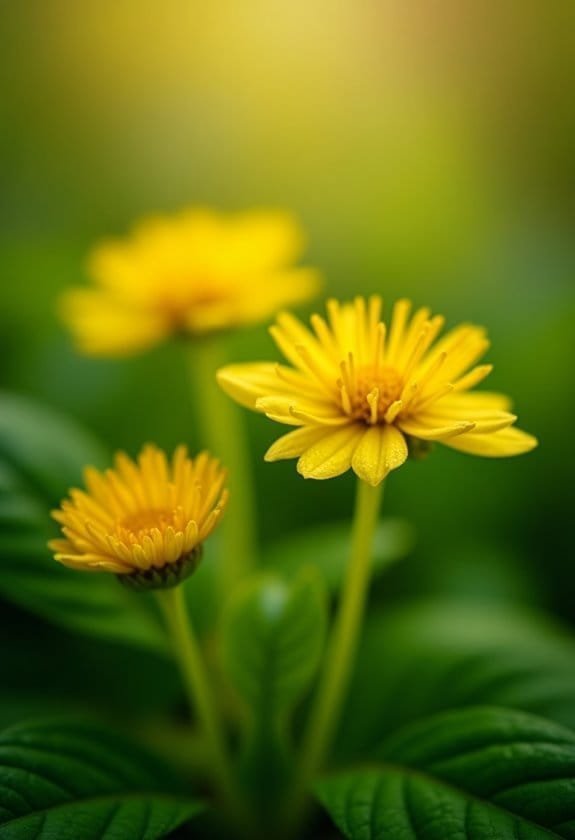
Monro's ragwort, or Brachyglottis monroi, is a versatile evergreen shrub that enhances gardens with its striking appearance and resilience. Native to New Zealand and Tasmania, it typically reaches heights of 2-3 feet and spans 3-4 feet in width, making it an attractive addition to any landscape.
The ornamental uses of its showy foliage are complemented by bright yellow, daisy-like flowers that bloom in summer, although it's primarily celebrated for its wavy-edged green leaves adorned with a fuzzy white underside.
Aside from its aesthetic appeal, Brachyglottis monroi provides numerous environmental benefits. Its ability to offer nectar for pollinators plays a crucial role in supporting local biodiversity. Additionally, it aids in soil stabilization, particularly in alpine regions.
However, cultivating this resilient shrub isn't without challenges. Gardeners must guarantee adequate sunlight while accommodating its preference for diverse soil types, including clay.
While Monro's ragwort is deer-resistant and drought-tolerant, understanding its requirements is fundamental for thriving growth. Ultimately, selecting Brachyglottis monroi can yield both aesthetic and ecological rewards, making it a worthwhile endeavor for landscape enthusiasts.